博客

  • ‘Number of fatalities’ and four injured after car drives on wrong side of motorway

    ‘Number of fatalities’ and four injured after car drives on wrong side of motorway

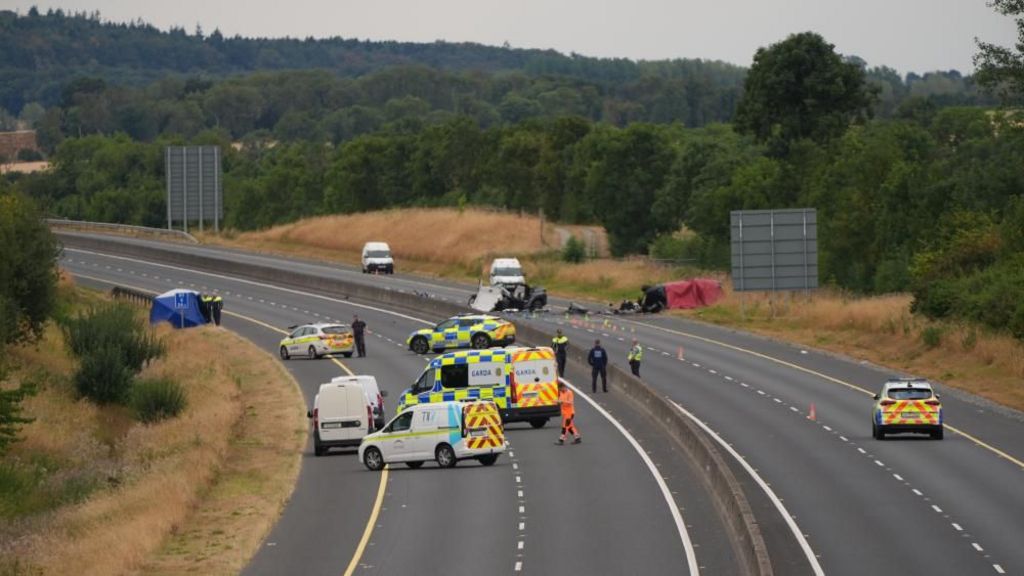
    In the early hours of Sunday local time, a devastating two-vehicle crash on the M9 Motorway in County Kildare, Republic of Ireland, has left multiple people dead and four others hospitalized with life-threatening injuries. The collision unfolded at approximately 3:00 a.m. near Junction 3 on the M9’s northbound carriageway, when one vehicle traveled the wrong direction along the road and collided head-on with a second passenger car.

    Irish national police, known as Gardaí, confirmed the fatalities in an official statement released after the incident. The four injured victims, all occupants of the second vehicle, have been transported to separate regional medical facilities across the country. The driver and front-seat passenger, both women in their 30s, are currently being treated at Tallaght University Hospital, where both remain in critical condition. A female rear-seat passenger in her 20s was admitted to St. Luke’s General Hospital in serious condition, while the fourth injured person – a child – was transferred to Children’s Health Ireland at Crumlin, also listed in serious condition.

    In the wake of the crash, authorities have closed a stretch of the M9 spanning both northbound and southbound lanes between Junction 3 and Junction 4, with signed local diversions put in place to redirect motorists. Contradicting early unconfirmed reports, state broadcaster RTÉ has confirmed that Gardaí were not engaged in a pursuit of the wrong-way vehicle at the time of the collision.

    Per standard protocol for incidents involving fatalities or severe harm linked to police interaction, the Office of the Police Ombudsman for Northern Ireland, Fiosrú, has been notified of the crash. An on-call team of independent investigators from the watchdog traveled to the crash site immediately to launch a probe. Fiosrú officials clarified that a mandatory referral for investigation does not imply any allegation of misconduct on behalf of Gardaí. Instead, the independent review is required to determine whether any action or inaction by police contributed to the deaths or serious injuries suffered in the incident.

    Garda Commissioner Justin Kelly issued a stark condemnation of the reckless driving that led to the tragedy, labeling the crash a “horrific incident.” Kelly noted that all the injured victims were “innocently traveling” family members when they were struck by the wrong-way vehicle. He drew particular attention to a dangerous growing trend of reckless driving stunts performed for social media attention, saying: “What makes this reckless behaviour even more appalling is that in some cases it is being done for social media likes regardless of the potentially devastating impact it might have on innocent people and themselves.”

    Kelly added that Gardaí officers face uniquely challenging positions when responding to these incidents, as they work to stop dangerous drivers while prioritizing the safety of other innocent road users. “Gardaí are put in a really challenging situation dealing with such incidents,” he said.

    Local political leaders have also reacted to the tragedy, expressing profound sorrow for the lives lost and those affected. Shónagh Ní Raghallaigh, Sinn Féin TD for Kildare South, described the crash scene as “absolutely catastrophic.” “My deepest sympathies go out to the families of those who have lost their lives, and for those who remain in a critical condition in hospital,” she said. “My heart also goes out to the first responders and all of those working in our emergency services who were met with the most horrific of scenes this morning. This loss of life is colossal and the effect those losses will have on their friends and families is incalculable.”

    Investigating officers are now asking for the public’s assistance to build a complete picture of the incident. Gardaí are appealing to any witnesses who saw the collision to contact investigators immediately. They are also requesting any motorists who were traveling on either the northbound or southbound M9 between 2:00 a.m. and 3:00 a.m. on Sunday, and who have dashcam footage of the crash or the surrounding area in that time frame, to share the recording with authorities.

  • Two dead and evacuation under way as fires break out on Greek island

    Two dead and evacuation under way as fires break out on Greek island

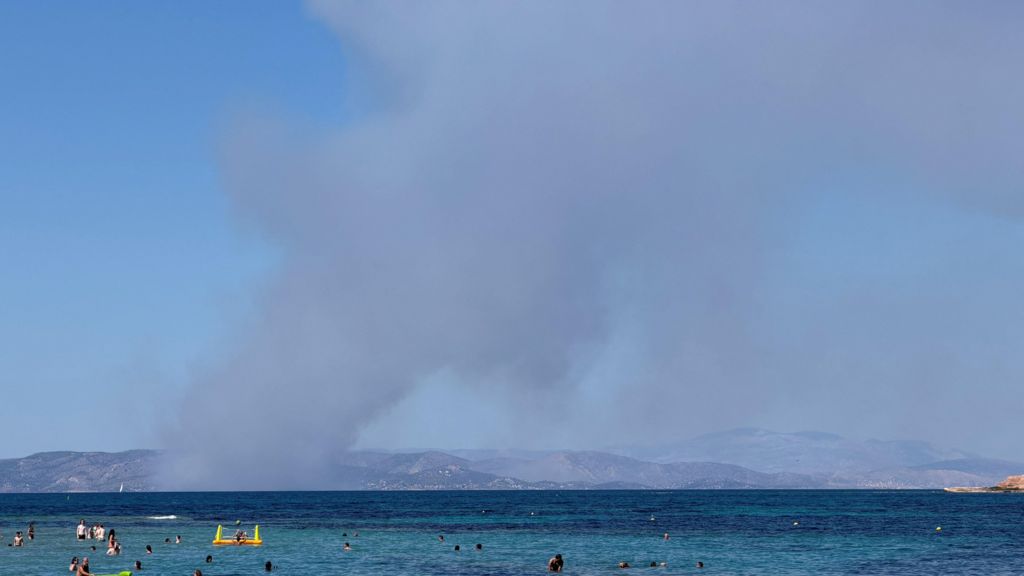
    On a Sunday marked by extreme wildfire risk, two separate blazes ignited just minutes apart on Salamina, a populated Greek island located a short distance west of Athens, leaving two people dead and triggering a large-scale emergency evacuation operation. The first fire was recorded at 14:40 local time, 12:40 GMT, and both blazes spread at an alarming speed, driven by gusty high winds that have created dangerous fire conditions across Southern Europe this weekend. Roughly 200 firefighters have been deployed to Salamina to battle the flames, backed by a fleet of air support assets, 50 fire engines, multiple coast guard patrol boats, and dozens of private watercraft that have been mobilized to assist with evacuation efforts. As of the latest updates, around 90 residents have already been evacuated from high-risk areas by sea, with more evacuation operations ongoing. Thodoris Zannis, Deputy Mayor of Salamina, noted that firefighters are working against the clock to stop the two blazes from spreading across the island’s central mountain range and merging into a single massive, uncontrollable wildfire. Salamina is home to approximately 37,000 permanent residents, a large share of whom are elderly people with limited ability to evacuate independently. This incident comes as fire crews across the entire European continent grapple with a surge in wildfire activity this weekend, fueled by a sustained period of extreme high heat that has parched vegetation and turned large swathes of Southern Europe into tinderboxes. The dual simultaneous blazes near one of Europe’s major capital cities have underscored the growing risk of extreme wildfire events linked to rising global temperatures.

  • Arsenal rout Man City in Community Shield masterclass

    Arsenal rout Man City in Community Shield masterclass

    The 2025 FA Community Shield, the traditional opening fixture of the English football season, ended in a statement 3-0 rout for reigning Premier League champions Arsenal over 2024 runner-up Manchester City at Cardiff’s Principality Stadium on Sunday. The commanding victory not only gave Arsenal their 18th Community Shield title, but also sent a clear signal that the north London club has no plans to loosen its grip on the top-flight crown after ending a two-decade title drought last season.

    Arsenal set the tone of the match inside the opening minute. Teenage midfield prospect Myles Lewis-Skelly, who has been linked with big-money moves to Chelsea and Manchester United in recent transfer windows, split City’s entire defensive line with a perfectly weighted through ball. Summer signing Riccardo Calafiori burst onto the pass, evaded slack marking to drill a composed 12-yard finish past City goalkeeper Gianluigi Donnarumma, scoring the fastest Community Shield goal since 1968.

    The Gunners doubled their lead in the 27th minute. Another of Arsenal’s close-season recruits, Christos Tzolis—signed from Club Brugge for £34 million—found himself unmarked at the far post after a floated cross from captain Martin Odegaard. The winger nodded the ball back into the six-yard box, where Kai Havertz rose above City defender Ruben Dias to head home a clinical second goal. By half-time, Mikel Arteta’s side held a comfortable two-goal advantage, with their trademark high intensity overwhelming a disjointed City side.

    Three minutes after the interval, Arsenal put the result beyond doubt. Tzolis, who turned in a lively performance that yielded two assists, rolled a perfectly timed pass into Odegaard’s path. The Arsenal captain weaved through a static City defense, pulled off a clever dummy that left Donnarumma wrong-footed, and tapped home into an empty net to seal the resounding win.

    The fixture also served as a promising first public display for Arsenal’s other marquee summer addition: Bruno Guimaraes, who joined from Newcastle United for a £75 million ($101 million) transfer fee. The Brazilian midfielder slotted seamlessly into Arteta’s system, providing consistent defensive cover and creative distribution in the center of the park.

    For new Manchester City manager Enzo Maresca, the result was a sobering wake-up call just weeks ahead of his first full season in charge. Maresca was hand-picked to replace Pep Guardiola, who departed the club after a trophy-laden decade that included 20 major honors. His side struggled for cohesion all afternoon: £116 million summer signing Elliot Anderson, recently arrived from Nottingham Forest, failed to make any meaningful impact on the game, while talismanic striker Erling Haaland was largely anonymous, wasting two clear first-half chances to get City on the scoreboard.

    Guardiola’s final season at the Etihad ended with FA Cup and League Cup trophies, but City finished seven points behind Arsenal in the Premier League table last term, failing to defend the title they had won four consecutive times between 2020 and 2024. Maresca, who left Chelsea in January after a turbulent six-month reign, now faces a clear challenge to overhaul the gap between his side and the champions ahead of City’s opening league fixture against Bournemouth on August 23.

    Arsenal, by contrast, head into the new campaign with growing momentum. Arteta insisted after the match that his side remains as hungry for silverware as ever, with their painful penalty shootout loss to Paris Saint-Germain in May’s Champions League final providing extra motivation to push for more trophies this season.

    The Gunners will start the new Premier League campaign as defending champions for the first time since the 2004-05 season, and are already installed as pre-tournament favorites to claim back-to-back titles, a feat no English top-flight side has achieved since Arsenal’s run in the 1930s. They open their title defense at the Emirates Stadium against newly promoted Coventry City on August 21, and on the evidence of Sunday’s performance, they look well-placed to establish a prolonged period of dominance in the Premier League.

    Historically, the Community Shield has been a poor predictor of future league success: only City, in 2019, has gone on to win the Premier League title after lifting the Community Shield in the last 15 editions of the fixture. But few could deny that Arsenal’s dominant display in Cardiff suggests this could be the season where Arteta’s side adds more silverware to their 2024 title triumph.

  • US House speaker gave Netanyahu an ‘Israel killed Jesus’ pamphlet

    US House speaker gave Netanyahu an ‘Israel killed Jesus’ pamphlet

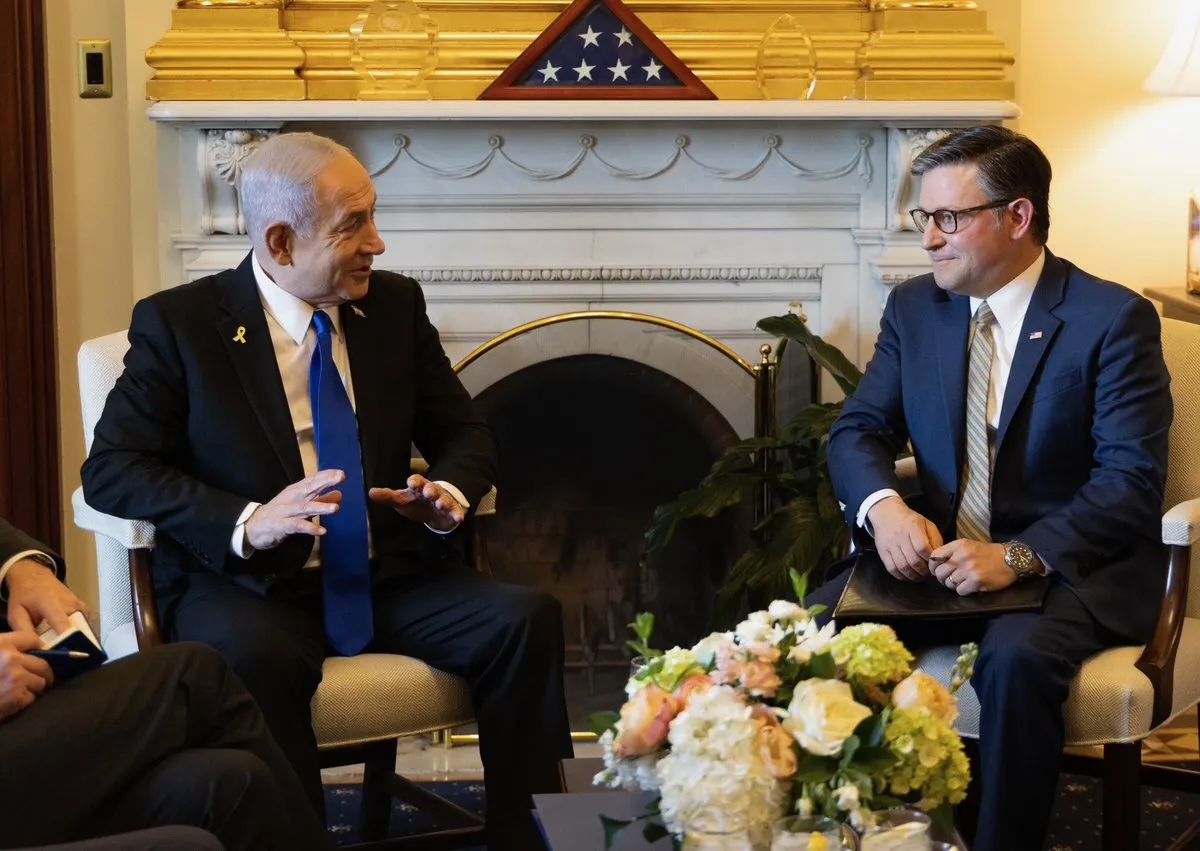
    Less than one month after Israeli strikes targeted Iranian nuclear facilities in June 2025, Israeli Prime Minister Benjamin Netanyahu traveled to Washington D.C. for a high-stakes private meeting with U.S. House Speaker Mike Johnson in his Capitol Hill office. What has remained unreported until now, however, is the controversial materials Johnson shared with Netanyahu during their discussion: a two-part Bible study pamphlet produced by Capitol Ministries that repeats the ancient, widely discredited antisemitic blood libel of deicide — the false claim that all Jewish people bear collective responsibility for the crucifixion of Jesus Christ.

    While the materials frame themselves as pro-Israel advocacy urging U.S. politicians to align with the Israeli government, they reiterate a deicide charge that has been rejected as baseless by all major world religious bodies for decades. The study, which was recycled from content first produced years earlier, was reposted in mid-June 2025 to build congressional and White House support for U.S. military intervention alongside Israel following Israel’s offensive against Iran.

    Capitol Ministries, the organization that produces Bible study groups for members of the House, Senate, White House and U.S. governors, regularly repurposes older lessons to match current political events. The 2025 materials draw on text that dates as far back as 2011, when the guide first began warning about Iran’s nuclear program. Phrasing framing the study as a timely biblical primer for U.S. support for Israel has appeared in the document since at least October 2021, meaning the content was not newly written for the 2025 escalation. A 2011 note about Iran’s “nearly-enriched nuclear threat” also remained untouched in the revised pamphlet.

    Over more than a decade, this recycled content has circulated among dozens of high-profile Republican leaders across the Trump administration and GOP-led Congress. Senate Majority Leader John Thune has been closely affiliated with Capitol Ministries and its founders Ralph and Danielle Drollinger for more than a decade, describing the group in 2015 as a guiding force that encourages elected officials to align their governance and personal conduct with Christian theology. Current Defense Secretary Pete Hegseth also regularly participates in the group’s White House Bible study, the Pentagon confirmed in 2025.

    Weeks after the study materials were circulated, then-President Donald Trump ordered three separate military strikes on Iranian nuclear targets in late June 2025. Netanyahu’s meeting with Johnson on Capitol Hill preceded his scheduled White House talks with Trump. Following their discussion, Netanyahu noted publicly that “First comes strength, then comes peace,” while Johnson released only a brief general statement about the meeting. Full details of the exchange only emerged in Capitol Ministries’ 2025 annual report, where Johnson acknowledged sharing the two-part Drollinger study titled “The Biblical Case for Defending Israel” with Netanyahu, and that the pair discussed the content at length before Netanyahu departed with a copy. Johnson called Capitol Ministries “an invaluable resource” that provides timely biblical insight that shapes both personal conduct and legislative decision-making for hundreds of members of Congress.

    The first of Drollinger’s two study guides explicitly repeats the deicide claim, arguing that the Abrahamic Covenant only applies to the Christian Church “for a time” because of Israel’s “present apostasy, having executed the Messiah.” In a companion video for the second lesson, Drollinger doubles down on the claim, stating that Jews were “sidetracked” by God “because they crucified their messiah.” Johnson is listed alongside dozens of other Republican politicians as an official sponsor of the study materials.

    Neither Johnson’s congressional office nor the Israeli Embassy in Washington D.C. responded to requests for comment or confirmation of the exchange. This revelation marks not the first controversy tied to Drollinger, who has previously made headlines for derogatory public remarks targeting women, Catholics and LGBTQ+ people. Nor is it Johnson’s first unreported act of faith-based diplomacy with major national security implications: his previously undisclosed meetings with a Ukrainian evangelical advocacy leader ultimately led him to support U.S. military aid to Ukraine.

    The incident also shines a light on a long-running debate over antisemitic rhetoric in Congress surrounding deicide claims. In 2024, then-Senate Majority Leader Chuck Schumer was advancing the Antisemitism Awareness Act, which would codify a legal definition of antisemitism that included labeling the collective deicide charge as antisemitic. Schumer warned that an unidentified Republican senator planned to introduce an amendment that would explicitly exempt deicide claims from the legal definition of antisemitism — meaning calling Jews “Christ-killers” would not be classified as a form of religious bigotry under federal policy.

    Schumer approached Johnson, who had already shepherded the bill through the House, to ask for help attaching the antisemitism legislation to a must-pass military spending bill. This procedural move would have blocked the divisive deicide amendment from reaching a floor vote, which Schumer argued would embolden antisemitism across the United States. Johnson rejected Schumer’s request. In April 2025, reporting from The Forward identified Senator Bill Cassidy, a Republican from Louisiana and a Capitol Ministries sponsor since 2013, as the lawmaker planning to introduce the amendment. Representative Josh Brecheen of Oklahoma ultimately voted against the Antisemitism Awareness Act over its inclusion of deicide as an antisemitic claim, arguing that blaming Jews for the crucifixion is a “biblical and historical fact” and that the bill mischaracterized biblical text as bigotry. The bill collapsed after a flood of bipartisan amendments cost it the needed majority support.

    Johnson only became an official sponsor of Drollinger’s House Bible study in May 2025, one month before he shared the Israel-focused study with Netanyahu. Just months earlier, senior leaders in the second Trump administration had revived the weekly White House cabinet Bible study run by Capitol Ministries. Agriculture Secretary Brooke Rollins, one of the leaders of the revived study, is currently facing a lawsuit for proselytizing to her non-religious staff. Office of Management and Budget Director Russell Vought, another key leader of the initiative, faced scrutiny during his 2017 confirmation hearing when he refused to reject the claim that non-Christians, including Jews, are “condemned” for not accepting Jesus as a savior.

    There is no public evidence confirming whether Johnson’s policy positions are shaped by Drollinger’s teachings, or if he sponsors the Bible studies because their theology already aligns with his long-held personal beliefs. When asked in 2024 if he believed there was a biblical justification for U.S. support for Israel, Johnson confirmed his personal view that the Torah’s promise that God “will bless the nation that blesses Israel and curse the nation that curses Israel” is a core reason for his support, adding that faith adds a deeper layer to his already pragmatic support for the Middle Eastern democracy.

    This position directly aligns with Drollinger’s core theology, as laid out in the study shared with Netanyahu. Drollinger argues that while Jews collectively committed deicide by killing Jesus — a claim that all major Christian denominations have formally renounced — God has only temporarily set the Jewish people aside, rather than voiding the original Abrahamic Covenant. Because of this, he argues, the promise of blessings for allies of Israel and curses for its enemies remains in effect, requiring Christian politicians to support Israel to receive divine favor. Drollinger also repeats other common antisemitic tropes in his materials, including claims that Jewish people are inherently “smart” and “good with money,” tropes that have been used to justify anti-Jewish persecution for centuries.

    The irony of the moment is hard to overstate: Netanyahu himself has explicitly referenced the long history of antisemitic violence tied to the deicide myth, telling the United Nations years ago that “For centuries the Jewish people have been demonized with blood libels and charges of deicide.” The Anti-Defamation League similarly classifies the deicide claim as a dangerous antisemitic myth, noting that “the myth that Jews collectively murdered Jesus … has been used to justify violence against Jews for centuries. Historians as well as Christian leaders have agreed that the claim is baseless.” Multiple Jewish and secular advocacy groups condemned the 2025 Bible study for repeating the harmful slur.

    Despite this, the incident offers a clear reminder that evangelical Christian theology shapes U.S. foreign policy in underreported ways. While many evangelical leaders are vocal supporters of Israel, that support is often tied to end-times theology that requires a sovereign state of Israel for Jesus Christ to return to Earth — even as that same theology perpetuates core antisemitic claims like deicide. Following the U.S. entry into the 2025 strikes on Iran, the Military Religious Freedom Foundation received reports from active-duty service members that military commanders were openly celebrating the strikes as a sign that the biblical End Times were imminent, with grinning leaders telling subordinates the attack fulfilled prophecies in the Book of Revelation.

    Drollinger argues that his work does not create new pro-Israel beliefs among members of Congress and the cabinet, but rather reinforces existing predispositions rooted in their cultural Christian backgrounds, providing a formal biblical foundation for their policy positions. “We need to buoy the convictions of our members based upon Scriptural truths … so that, when push comes to shove, they know why they believe they’re pro-Israel: from what the Bible says,” he explained. In recent years, as congressional Democrats have increasingly broken with Israeli policy and voted in growing numbers against U.S. arms transfers to Israel, Drollinger has argued that the Republican Party’s alignment with biblical teaching makes their pro-Israel stance righteous, while the Democratic Party’s departure from Mosaic law will lead to its political ruin. Drollinger insists he does not advocate for Christian nationalism or theocracy, but simply wants elected officials to align all their policy decisions with what he frames as God’s will.

    This investigative report was originally published on Jonathan Larsen’s Substack and is republished with permission. Larsen is an independent journalist and former executive producer at MSNBC.
  • BBC asks a US court for help in getting testimony from the Trump family in defamation suit

    BBC asks a US court for help in getting testimony from the Trump family in defamation suit

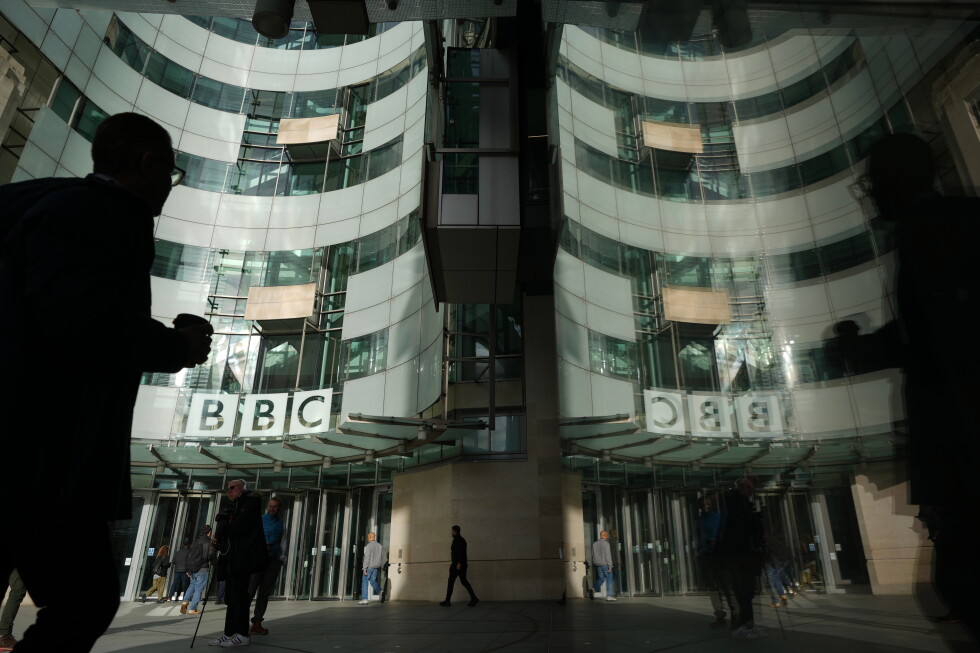
    A new development has emerged in former U.S. President Donald Trump’s high-stakes $10 billion defamation lawsuit against the British Broadcasting Corporation (BBC), with the broadcaster turning to a Florida federal court to secure access to testimony and evidence from three key members of the Trump family, newly unsealed court documents confirm.

    In a formal filing submitted Friday to the U.S. District Court for the Southern District of Florida, BBC legal representatives argue that Ivanka Trump, her husband Jared Kushner, and Donald Trump Jr. hold direct, unique information relevant to core claims at the heart of the litigation, and are likely in possession of internal records that bear directly on Trump’s allegations against the network. The filing explains that the broadcaster has been blocked from delivering formal subpoenas to the three individuals due to their constant round-the-clock Secret Service protection and layered security detail, making traditional in-person service impossible.

    The roots of the lawsuit stretch back to a 2024 BBC documentary about the January 6, 2021, attack on the U.S. Capitol. Trump brought the suit against the outlet last December, claiming $10 billion in compensatory damages over allegations that the network defamed him, engaged in deceptive editing, and violated unfair trade practice laws. The former president’s legal team argues that the documentary improperly spliced together two disconnected segments of a speech Trump delivered to supporters shortly before the Capitol riot, intentionally misrepresenting his remarks to falsely imply he incited the violence that unfolded. The suit further frames the editing as a deliberate attempt to skew the outcome of the 2024 U.S. presidential election. While the BBC has issued a public apology to Trump for the misleading edit, the network has rejected all claims of defamation.

    BBC’s legal team notes in the latest filing that the three Trump family members have direct insight into facts that are central to Trump’s core legal argument: that any implication he incited the January 6 violence is materially false. Both Donald Trump Jr. and Ivanka Trump were present in the Oval Office as Trump made final revisions to his January 6 speech, the filing points out, and Donald Trump Jr. spoke one-on-one with his father immediately after the riot broke out at the Capitol.

    According to court records, the BBC previously asked Trump to accept service of the subpoenas on behalf of his daughter and son-in-law, or to direct the U.S. Secret Service to grant access for traditional subpoena delivery. Trump refused both requests, prompting the network to file its current motion asking the judge to authorize alternative delivery via email and certified mail.

    The federal judge presiding over the case has given Trump’s legal team until this coming Friday to file a formal response to the BBC’s motion. In a preliminary statement, Trump’s legal team has lashed out at the broadcaster’s request, framing it as a calculated distraction tactic. “The BBC intentionally defamed President Donald J. Trump, and now the BBC is seeking to harass him, his family, and supporters by abusing the deposition process,” the team said in a statement, adding that the motion is nothing more than an attempt to draw attention away from the network’s own clear liability in the case.

    A trial date for the defamation suit has been provisionally scheduled for February of this year. The case already saw a recent procedural win for Trump last week, when U.S. District Judge Roy Altman granted a temporary pause on an order requiring Trump to disclose detailed financial records related to the performance of his global business empire. Altman agreed to put the disclosure order on hold while he reviews an amended complaint from Trump that narrows his claims of damage to his business interests and personal reputation. The case draws from reporting contributions from Associated Press journalists Kate Brumback, based in Atlanta, and Alanna Durkin Richer, based in Washington.

  • Europe wildfires: latest developments

    Europe wildfires: latest developments

    Across the European continent, a spreading wave of destructive wildfires amplified by extreme heat and parched vegetation left two people dead on a Greek island over the weekend, while firefighters in Belgium raced to contain the largest blaze the nation has seen in modern history. The 2024 summer of historic high temperatures has already been linked to thousands of heat-related deaths across the region, and created the perfect dry conditions that have sent wildfire risk soaring to unprecedented levels. Here’s a breakdown of the latest updates on the cross-continental crisis.

    On the Greek island of Salamis, a popular tourist destination just off the coast of Athens, two separate fire ignitions left two people dead this Sunday, prompting emergency officials to order the evacuation of hundreds of beachgoers and permanent local residents. “There are hundreds of bathers and permanent residents in the affected area, an evacuation order has been issued,” Yiannis Artopios, deputy spokesperson for Greece’s national fire service, confirmed to state public broadcaster ERT.

    In eastern Belgium, military helicopter crews and ground teams operating agricultural tractors worked around the clock to deliver massive volumes of water to firefighters battling an out-of-control wildfire raging across an isolated, hard-to-access nature reserve. While no fatalities have been reported in the Belgian blaze, the size of the fire has exploded dramatically since Friday, when it had burned just 80 hectares of land. By Sunday, the scorched area had expanded to nearly 3,000 hectares, and the origin of the ignition remains under official investigation.

    Croatian law enforcement announced Sunday that they had taken four people into custody on suspicion of deliberately starting multiple wildfires that have burned across swathes of the country’s Adriatic coastline in recent days. The four suspects are accused of setting blazes that have destroyed large areas of native pine forest and commercial olive groves, as the country fights a growing outbreak of fires driven by prolonged drought and record-breaking heat.

    In southwestern France, firefighters have successfully stabilized a major wildfire that burned 1,700 hectares of land in the Landes region after three days of coordinated ground and aerial firefighting operations. Local government official Gilles Clavreul reported that the situation is progressing “favourably”, thanks to a recent drop in air temperatures and rising humidity. When the fire first broke out Thursday, local temperatures hit 40 degrees Celsius; Sunday afternoon temperatures were forecast to reach just 28 degrees. While roughly 650 evacuated residents have been able to leave temporary emergency accommodation, they have not yet been cleared to return to their properties.

  • Four ‘extraordinary’ Renaissance paintings stolen from Italian museum

    Four ‘extraordinary’ Renaissance paintings stolen from Italian museum

    A brazen art heist has shaken Italy’s cultural heritage community, after four irreplaceable Renaissance paintings attributed to iconic Sicilian master Antonello da Messina were stolen from the Regional Interdisciplinary Museum of Messina over the weekend. Italy’s culture minister Alessandro Giuli confirmed the stolen works: three of the five surviving panels from the celebrated 1473 Polyptych of San Gregorio, and a rare double-sided panel depicting the Madonna with Child on one face and Christ in Pietà on the other. All four works are classified as being of extraordinary cultural and artistic value. According to local museum director Marisa Mercurio, the theft is believed to have unfolded around 21:50 local time on Saturday evening, leaving the cultural community reeling from the loss. “We are shocked by what happened,” Mercurio told Italian national news agency Ansa, calling the incident “a great loss for the museum, for the city, the community and the art world”. Investigators have launched an urgent probe into how perpetrators gained access to the museum without triggering its security alarm system, leaving law enforcement with no immediate alarm alert of the break-in. Initial investigative lines, reported by Ansa, point to a common pattern in high-value European art theft: the works are suspected to have been stolen to order for wealthy buyers on the illicit global black market. Unlike many portable canvases that can be rolled for smuggling, all the stolen works are painted on rigid wooden panels, making them far more difficult to conceal and transport – a detail that investigators say adds weight to the theory of pre-planned, targeted theft. Even more notably, the double-sided Madonna and Christ panel was removed directly from a locked, secure display case, indicating the thieves had intimate knowledge of the museum’s layout and security protocols. Born in 15th-century Sicily, Antonello da Messina stands as one of the most transformative figures of the early Renaissance, celebrated for merging Italian Renaissance artistic ideals with Northern European oil painting techniques. His Polyptych of San Gregorio, the artist’s 1473 commission for Sicily’s Santa Maria monastery, depicts the Virgin Mary holding infant Jesus flanked by saints Gregory and Benedict, alongside a retinue of angels. Only five panels of the original work survive to the modern day, making the theft of three of these fragments an incalculable loss to public cultural access. The smaller double-sided panel, created around the same period as the polyptych, was originally designed for private devotional worship, with a tender depiction of the Madonna holding the blessing Christ infant on one side and a somber depiction of the dead Christ in Pietà on the reverse. Messina mayor Federico Basile expressed public outrage over the targeted theft of local cultural heritage, calling the act a “heinous criminal act” that violated a treasure belonging to all the people of Messina. “Messina will not let its history be stolen,” Basile said, echoing widespread fury across the local and international art community. This latest high-profile heist comes as part of a growing string of high-value art thefts across European museums that have reignited urgent debates over the security of public cultural collections. Just days before the Messina theft, Italy’s specialist art crime unit announced the recovery of three stolen 20th-century masterpieces by Cézanne, Renoir and Matisse that had been stolen from a museum near Parma earlier in 2026. The three works, worth a combined €9 million, were stolen in a minutes-long heist that was only cut short when the museum’s alarm system triggered before thieves could take additional pieces. The debate over European museum security gained new urgency at the end of 2025, when a gang of thieves carried out a broad-daylight break-in at the Louvre in Paris, escaping with €88 million worth of historic royal jewellery. The latest theft in Sicily has left cultural leaders calling for renewed investment in security protocols for small and regional museums, which often hold irreplaceable cultural heritage but lack the funding for high-end security systems found in larger national institutions.

  • Former UAE presidential aide’s tweet mocking Pakistan exposes Emitari unease over Mecca pact

    Former UAE presidential aide’s tweet mocking Pakistan exposes Emitari unease over Mecca pact

    A high-profile Emirati political commentator and one-time aide to United Arab Emirates President Mohammed bin Zayed has sparked widespread outrage across social media after launching a scathing, derogatory attack on Pakistan amid growing tensions over a landmark regional security agreement between Saudi Arabia, Pakistan and Turkey.

    Writing on the social platform X on August 15, 2026, Abdulkhaleq Abdulla questioned Pakistan’s role in the new regional security architecture, framing it as one of modern geopolitics’ greatest contradictions. In his viral post, which has amassed more than 1 million views to date, he argued that a nation where a quarter of the population lives in poverty and a third is illiterate, which has battled decades of corrupt military rule, chronic internal unrest, and repeated conflict with its closest neighbors, was acting opportunistically to position itself as a security guarantor for one of the world’s 20 largest economies. Abdulla also pointed to Pakistan’s estimated 170 nuclear warheads, dismissing the arsenal as the country’s only major strategic qualification for its role in the alliance.

    His comments were directed at the recently signed Mecca Joint Defence Agreement, a trilateral security pact between Saudi Arabia, Turkey, and Pakistan, as well as a bilateral Strategic Mutual Defence Agreement between Pakistan and Saudi Arabia signed September 17, 2025, which obligates each nation to respond to any act of aggression against the other. Beyond the immediate controversy over his remarks on Pakistan, Abdulla’s post lays bare growing unease in the UAE over the new security bloc, which many regional analysts view as a direct counter to the growing military cooperation between the UAE and Israel.

    The backlash to Abdulla’s comments has been swift, particularly given the close economic and social ties between the UAE and Pakistan: roughly 1.6 million Pakistani expatriates live and work in the Emirates, and their remittances form a critical lifeline for Pakistan’s domestic economy. Critics have pushed back on multiple fronts, arguing that Abdulla’s core premise is deeply flawed. “Comparing poverty and the size of the economy with the political stance is misleading,” one X user wrote in response to the viral post. The user added that Pakistan is a fully sovereign nation with the right to forge its own alliances, and its standing in global affairs is not conditional on its national wealth. “Reducing its qualifications to nuclear weapons ignores its demographic and geopolitical weight and its economy, which has exceeded 400 billion dollars,” the user continued.

    Other users have exposed apparent contradictions in Abdulla’s past positions, pointing to older tweets that show he once publicly urged Pakistan to join a Saudi-led military intervention in Yemen. In a 2015 post about Operation Decisive Storm, the Saudi-led campaign in Yemen, Abdulla wrote that Gulf and Saudi diplomacy should deploy all its leverage to secure Pakistan’s participation in the operation. Critics also highlighted a previous tweet in which Abdulla condemned Gulf voices calling for normalization with Israel, a position that contrasts with the UAE’s official policy as the first Gulf state to formally normalize ties with Israel.

    Abdulla had publicly signaled his skepticism of the Mecca pact within days of its signing. On August 7, the day the agreement was finalized, he wrote: “Congratulations on the establishment of this alliance, but strengthening Gulf military and political cooperation and unifying the Gulf house is far more important than investing in regional military and political cooperation that includes countries whose credibility and ability to confront the Iranian-Israeli threat are not taken seriously.” He also questioned the core foundation of the new bloc, asking, “One of the conditions for the success of any alliance is identifying the common enemy. So who is the enemy for the countries of this alliance?”

    Abdulaziz al-Tuwaijri, former head of the Islamic World Educational, Scientific and Cultural Organisation (Isesco), the OIC’s Rabat-based cultural body, was among the most high-profile critics of Abdulla’s latest remarks. Al-Tuwaijri, who previously clashed with Abdulla over the UAE’s ties to Israel, hinting that “anyone who betrays and collaborates with the Zionists will never find security,” responded to the Pakistan tweet by writing, “It seems that the Mecca Agreement syndrome has left you dizzy.”

    This public verbal exchange is far more than a social media spat: it lays bare a deepening geopolitical rift between the UAE and Saudi Arabia, two major Gulf powers that have grown increasingly at odds in recent months. Tensions have already soured over Saudi Arabia’s support for southern Yemeni separatist groups, a position that directly conflicts with Emirati interests. The new Mecca defence pact has amplified these frictions, as it is widely interpreted as a counterweight to the growing military cooperation between the UAE and Israel, a partnership that remains deeply unpopular across most of the Middle East outside of Israeli and pro-U.S. circles.

    Theodore Singer, a former U.S. intelligence officer, told Middle East Eye that the two competing blocs offer very different value propositions for their members. “At first glance, the UAE-Israel bloc delivers more tangible gains for both parties, but the Mecca pact may ultimately resonate more broadly and less transactionally,” Singer explained.

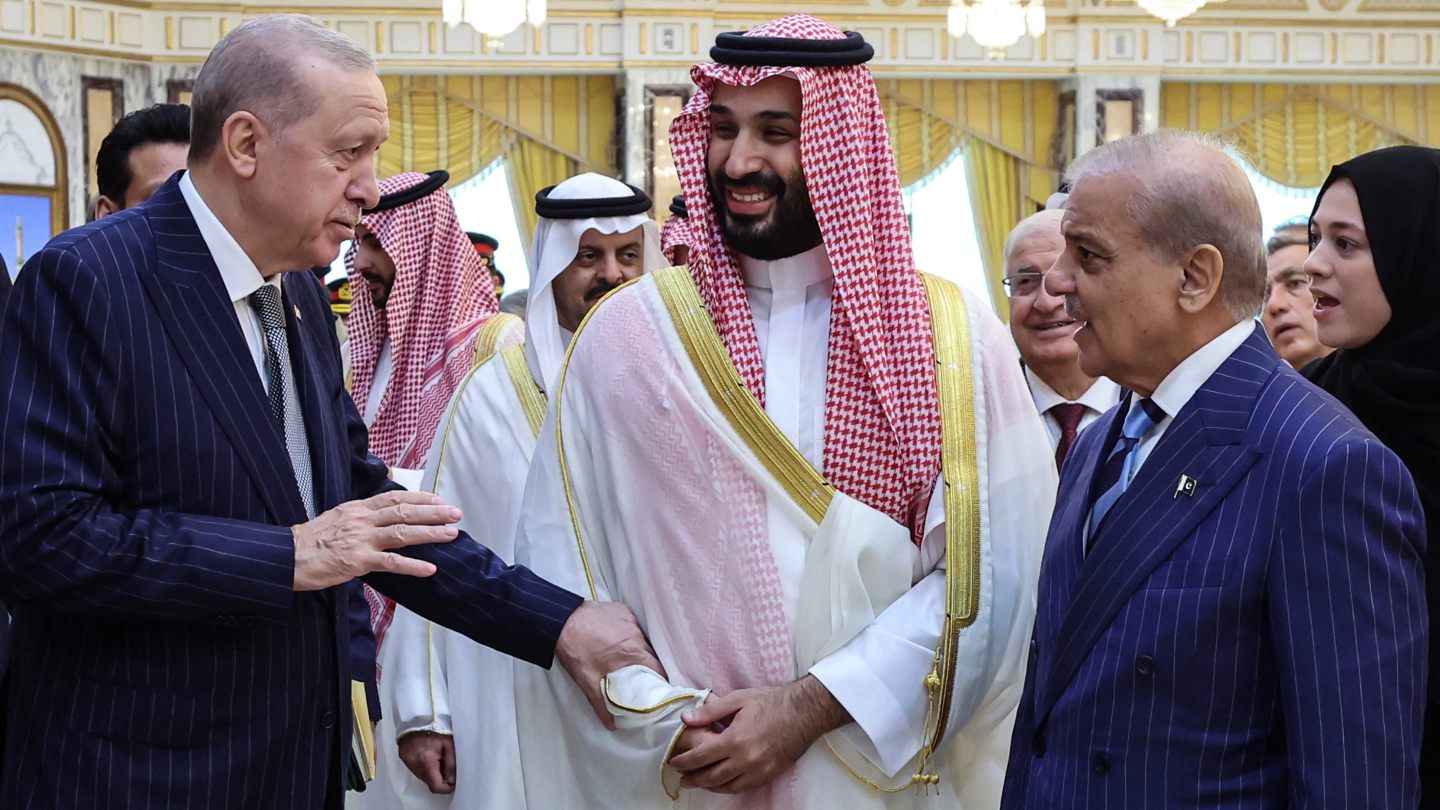
    The divide between Riyadh and Abu Dhabi has played out in very public view in recent months. In May 2026, after Israeli Prime Minister Benjamin Netanyahu claimed he had made an official visit to the UAE amid the war on Iran, Abu Dhabi swiftly issued a formal denial of the report. In contrast, the signing of the Mecca pact was accompanied by a high-profile public celebration: Saudi Crown Prince Mohammed bin Salman, Pakistani Prime Minister Shehbaz Sharif, and Turkish President Recep Tayyip Erdogan jointly led Friday prayers in Mecca, Islam’s holiest site, to mark the occasion.

    Some regional analysts argue that the public, formal codification of the Mecca pact gives the alliance unique room to grow in ways that the closed, transactional UAE-Israel bloc cannot match. The rivalry between the UAE and Saudi Arabia has also spilled over into debates over membership expansion for the new pact. Saudi Arabia has repeatedly blocked efforts by Egypt to join the bloc, with Riyadh citing growing concerns that Egyptian President Abdel Fattah el-Sisi has aligned too closely with Abu Dhabi.

    MEE has previously reported that Egypt has provided substantial military support to the UAE in recent years, deploying air defence systems and fighter jets to the Emirates in response to Iranian attacks, and Sisi has met repeatedly with UAE President Mohammed bin Zayed throughout the ongoing regional conflict. No equivalent support has been extended to Saudi Arabia, a fact that has deepened Riyadh’s mistrust of Cairo. Saudi Arabia also views a range of Emirati policies as directly contrary to Egyptian and Saudi strategic interests: these include the UAE’s deepening engagement with Somaliland, its formal strategic partnership with Israel, its public support for Ethiopia in the long-running dispute over the Grand Ethiopian Renaissance Dam, and its backing of the Rapid Support Forces in Sudan’s ongoing civil war.

    To date, Cairo has attempted to maintain neutrality between the two competing emerging blocs: one anchored by Turkey, Saudi Arabia, and Pakistan, and the other by Israel, the UAE, and India. However, Egypt’s existing defence treaty with the UAE and its deployment of fighter jets to Abu Dhabi after Iranian strikes in May have led Saudi Arabia to conclude that Egypt can no longer be counted on as a reliable partner in the region.

  • Bou Meng, a Cambodian artist and survivor of a Khmer Rouge torture center, has died at 85

    Bou Meng, a Cambodian artist and survivor of a Khmer Rouge torture center, has died at 85

    PHNOM PENH, Cambodia – The global community of genocide historians and human rights advocates is mourning the passing of Bou Meng, the last of the seven known survivors of the Khmer Rouge’s notorious S-21 torture and execution center, who died at 85 from age-related complications late last Friday.

    Bou Meng’s survival was tied directly to his artistic skill: captured during one of the Khmer Rouge regime’s violent internal purges after the group seized power in 1975, he was spared execution only because his captors realized he could paint propaganda portraits of then-leader Pol Pot and other communist figures. Detained at S-21 – the converted Phnom Penh high school better known today as Tuol Sleng – from 1977 until the regime fell in 1979, Bou Meng spent nearly two years creating propaganda art for his jailers while most of his fellow detainees were tortured and killed.

    The Khmer Rouge ruled Cambodia from 1975 to 1979, implementing radical agrarian socialist policies that left an estimated 1.7 million Cambodians dead from mass executions, starvation, forced labor, and systemic medical neglect. Over the nearly four years S-21 operated, roughly 16,000 men, women, and children were held there before being killed; only seven people are confirmed to have survived the facility. Today, the site stands as the Tuol Sleng Genocide Museum, a permanent memorial to the regime’s atrocities.

    In 2009, Bou Meng joined two other surviving S-21 detainees – fellow artist Vann Nath and mechanic Chum Mey – to testify before the Extraordinary Chambers in the Courts of Cambodia, a UN-backed special tribunal convened to prosecute senior Khmer Rouge leaders for genocide and crimes against humanity. Their testimony was central to the 2010 conviction of Kaing Guek Eav, better known by his alias Duch, the commandant of S-21. Duch was found guilty of torture, murder, and crimes against humanity, sentenced to life in prison, and died in custody in 2020 at 77.

    During his testimony, Bou Meng detailed how his artistic commissions saved his life, describing the large-scale propaganda works he was forced to complete for the regime. “I was ordered to paint a picture of Ho Chi Minh’s head on the body of a dog,” he told the tribunal, referencing the Khmer Rouge’s deep hostility toward neighboring Vietnam, which ultimately invaded in 1979 to oust the regime. His first oversize portrait of Pol Pot took three months to finish, after which Duch ordered additional portraits of Pol Pot, Mao Zedong, Kim Il Sung, and the mocking depiction of Ho Chi Minh.

    Bou Meng joined the Khmer Rouge during its 1970–1975 insurgency against the U.S.-backed Cambodian government, but fell victim to the regime’s paranoia-driven internal purges shortly after the group took power. He endured brutal torture before being assigned to his painting duties, and lost his entire first family to the regime’s violence: his first wife was arrested alongside him, disappeared from S-21, and is presumed executed, while his two young children were taken to rural work camps and never seen again, likely killed. After the regime fell, Bou Meng remarried and rebuilt his life.

    In a statement Sunday, Youk Chhang, director of the Documentation Center of Cambodia – an organization that has amassed one of the world’s most extensive archives of Khmer Rouge atrocity records – called Bou Meng a critical voice for justice whose legacy will endure. “Bou Meng’s life journey for justice has been documented and will not be forgotten by genocide history around the world,” he wrote in a text message to the Associated Press. He also called for renewed action to preserve the stories of remaining Khmer Rouge survivors, and to expand access to physical and mental health support for the millions who lived through the regime’s rule.

    In his final decades, Bou Meng was a regular presence at the Tuol Sleng Genocide Museum, where he greeted visitors and sold copies of his memoir recounting his experience of survival and trauma.

  • BBC visits smouldering Kyiv market after Russian strikes

    BBC visits smouldering Kyiv market after Russian strikes

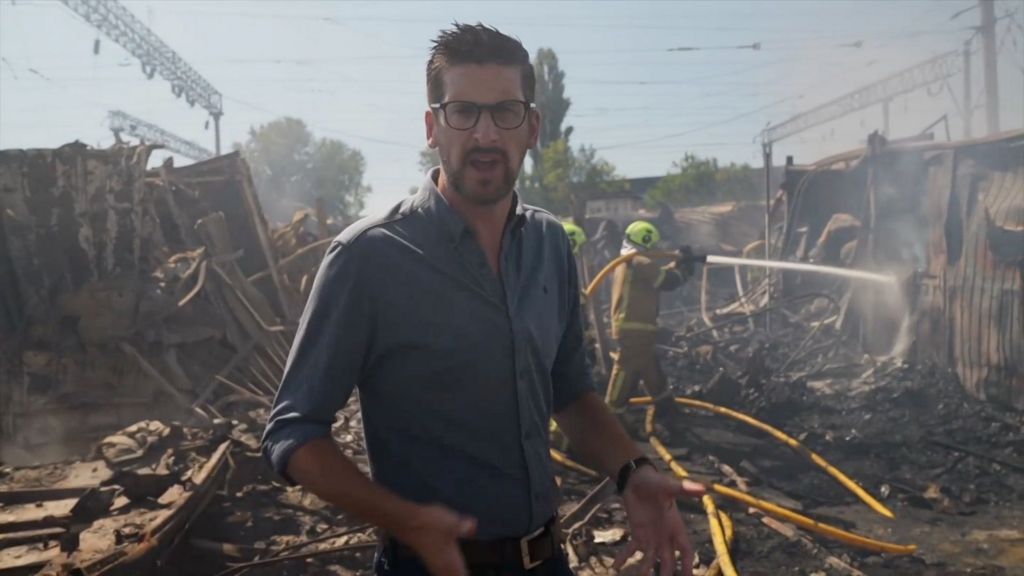
    A BBC reporting team has gained on-site access to a popular open-air street market in Kyiv in the immediate aftermath of a Russian missile strike, capturing scenes of smoldering debris and damaged stalls that once drew locals and casual shoppers alike. The attack, which unfolded on the busy trading venue, left six people with non-fatal injuries, according to on-the-ground confirmation from the BBC crew. Known as a hub for unique secondhand goods, the market had long offered a diverse array of items, from vintage vinyl records and retro promotional posters to pre-loved children’s toys and functional hand tools, serving as a low-cost community shopping space for Kyiv residents even amid ongoing conflict. In the wake of the strike, smoldering wreckage of stalls littered the market space, with many of the vendors’ goods destroyed by blasts and subsequent fires. This incident marks the latest in a series of targeted strikes on civilian infrastructure across Ukraine’s capital, underscoring the persistent risk to ordinary citizens going about daily life in the country. The BBC’s on-location reporting has documented the immediate aftermath of the attack, as emergency services responded to treat the injured and clear damaged sections of the market.