博客

  • NSW government reveals ‘nation-leading’ data centre pathway

    NSW government reveals ‘nation-leading’ data centre pathway

    The New South Wales (NSW) government in Australia has announced a sweeping set of landmark reforms designed to accelerate approval for new data centre projects across the state, conditional on developers meeting rigorous public benefit and environmental standards that protect everyday consumers and local communities. Unveiled on Monday, the NSW Data Centre Policy Framework introduces a streamlined assessment pathway for proposals that align with six core principles, headlined by a requirement for operators to adhere to world-class environmental and energy efficiency benchmarks.

    Beyond environmental standards, approved projects will be required to cover all their own infrastructure costs without passing a net financial burden onto residents or local communities. Developers must also fully fund expansions to local water and energy supply networks, deliver upgrades to local community infrastructure and public amenity, invest in domestic supply chains, and commit to ongoing workforce training and local job creation.

    NSW already hosts 65% of Australia’s total existing data centre infrastructure and future development pipeline. State government officials argue that continued targeted investment in the fast-growing tech sector has been a key bulwark against economic recession, amid ongoing global economic turbulence triggered by conflicts in the Middle East. Currently, the state is home to 19 operational data centres valued at a total of AU$50.3 billion, with more than 60 additional facilities already under construction.

    However, the rapid expansion of the sector has not been without controversy. Proposed and existing projects across NSW have faced significant community pushback in recent years, driven by complaints over excessive noise pollution, environmental degradation, and strain on local public resources. High-profile areas facing community opposition include Katoomba in the Blue Mountains, North Sydney, and Moss Vale. Earlier this year, the NSW Parliament launched a formal inquiry into the sector’s impacts, holding public hearings through July.

    NSW Environment Minister Penny Sharpe emphasized that the new framework strikes a careful balance between enabling industry growth and upholding strong environmental protections. “In NSW, this is consistent with where the federal government is at,” Sharpe told reporters. “This is about renewable energy. We’re currently moving our energy system away from coal-fired power stations that are going to be retiring in the next 15 years.” Acknowledging that data centres are inherently large energy users, Sharpe noted that the new regulatory system is designed to manage that demand responsibly. The framework requires operators to develop formal drought contingency plans and prioritizes the use of recycled water for facility operations.

    NSW Treasurer Daniel Mookhey echoed the government’s commitment to ensuring the sector supports rather than burdens households. “Data centres need to pay their own way,” he said. “They need to bring additional power and additional water to offset the demand but also to pick up some of the slack that’s otherwise would fall to households.” Under the new guidelines, qualifying projects that meet all six principles will receive a final development assessment within 75 days, a dramatic reduction from the previous timeline that could stretch to two years. The state’s Independent Pricing and Regulatory Tribunal will also conduct a separate review of water pricing frameworks for data centre operators to ensure fair cost allocation.

    In a complementary move to advance the state’s technology leadership, the reforms also include plans to establish a new AI Office within the NSW Cabinet Office. The new body will be tasked with strengthening and accelerating the government’s response to both the economic opportunities and regulatory challenges presented by the rapid expansion of artificial intelligence technologies. The package of reforms positions NSW as a national leader in balancing tech sector growth with public accountability and environmental stewardship at a time of accelerating national transition to renewable energy.

  • Sabbath cafe clash lays bare Israel faultlines

    Sabbath cafe clash lays bare Israel faultlines

    On a recent Saturday in central Jerusalem, two competing crowds of Israelis faced off on a sidewalk outside Cafe Basimta, a small coffee shop whose decision to open on Shabbat — the weekly Jewish day of religious rest — has turned it into a flashpoint for decades of simmering tension between the country’s secular majority and growing ultra-Orthodox minority. For Alma Ronen, a 20-year-old soldier who has served continuously on Israel’s frontlines in Gaza and southern Lebanon for more than two years, the confrontation was personal. Dressed in casual civilian clothes rather than military uniform, she came to the counter-protest to demand the simple right to enjoy an outdoor coffee on her day off, pushing back against ultra-Orthodox objections to the cafe’s operating hours.

    Since June, weekly protests have become a routine outside Cafe Basimta, which sits just a short distance from an ultra-Orthodox neighborhood. Dozens of ultra-Orthodox men and boys, clad in the traditional modest black garb of their community, march toward the shop each week, chanting “Shabbat!” as they go. Younger protesters often amplify the outrage, screaming and making dramatic gestures to signal their disapproval of the business opening on the holy day. Secular activists have shown up in equal force each week to counter the demonstration: they blow whistles to drown out religious chants, wear provocative pink pins displaying a middle finger, and hold up banners declaring “Our Holy Right to Drink Coffee.”

    This public street feud is far more than a local dispute over a coffee shop. It lays bare the deep cultural and political divides splitting Israeli society, just weeks ahead of the country’s October 27 parliamentary elections, which will serve as a critical referendum on Prime Minister Benjamin Netanyahu’s decade-long leadership. For nearly 20 years, Netanyahu — though personally secular — has built his political power on a coalition alliance with ultra-Orthodox parties. As leader of the most right-wing government in Israel’s history, he has steadily expanded the community’s political influence and policy clout across the country.

    The most explosive point of tension for secular Israelis right now is the long-standing exemption of ultra-Orthodox students from mandatory military service, a policy that has been expanded under Netanyahu’s watch, and grants generous government stipends for full-time religious study. This exemption has become far more bitter in the year since Hamas’ October 7, 2023 attack, which left Israel in a sustained regional conflict that has stretched its military thin and required widespread service from secular Israelis. “I feel anger in my heart that only some people must go to the army and serve,” Ronen said. “These people only care about their own lifestyle and are not open to any opinion but their own.”

    Amit Yair, a 77-year-old secular Israeli waiting in a growing line to order coffee at the shop, echoed that frustration in blunter terms. “The Orthodox are parasites. You can’t say any other word for this,” he said. “All they want is money from the government. They say it’s God’s land but they want to kill everything that is here to make it a Halachic state,” a government ruled exclusively by Jewish religious law.

    While the cafe was founded by a supporter of missionary activity aimed at converting Jews to Christianity, a movement widely condemned across Jewish communities, its secular customers say the owner’s identity is irrelevant to their fight. What matters, they say, is the principle of individual choice.

    For the ultra-Orthodox protesters, the fight is equally rooted in principle. One protester, who stopped to debate a counter-demonstrator, explained that his community chose to settle in the area to live a religious lifestyle, and public businesses open on Shabbat threaten that way of life. “I don’t want my kids to leave the house and see a coffeeshop open,” he said. “It’s not a matter of not respecting you, but this is attacking my family’s faith. When you say you’re a Jew, that means a commitment.” Most ultra-Orthodox protesters declined to speak to journalists, noting that engaging with media would itself violate the rules of Shabbat.

    Demographic and cultural shifts are amplifying this tension, experts say. A 2023 study from the Jewish People Policy Institute found that 53 percent of Jewish Israelis identify as either somewhat or fully secular, and Israeli society has gradually grown more liberal in recent decades: more businesses operate on Shabbat, public transit runs on the holy day in more areas, and LGBTQ rights have gained wider public acceptance. But at the same time, the ultra-Orthodox community has one of the highest birth rates in the developed world, meaning it makes up a growing share of Israel’s total population, shifting the demographic balance sharply in the opposite direction.

    Shlomit Ravitsky Tur Paz, head of the religion and state program at the Israel Democracy Institute, explained that public anger toward the ultra-Orthodox has surged because of their role in Netanyahu’s government. The prime minister pushed through a controversial plan to weaken the country’s judiciary last year, and has overseen the ongoing regional war since October 7. “The ultra-Orthodox sit in the government and they are part of the decision to keep the war going, but they’re not paying the price with their children being drafted or the blood of their children,” she said.

    Netanyahu’s main opposition challengers, led by former Israeli military chief Gadi Eisenkot, have made ending ultra-Orthodox military exemptions a central campaign promise, tapping into widespread secular anger over the policy. Aya Lewkowicz, an activist with the secular Pink Front movement who traveled from the overwhelmingly secular city of Tel Aviv to support the cafe, summed up the opposition’s position: “Everyone should have the freedom to rest the way they want to rest and not have it be dictated by a small minority that gets backing from the government,” she said.

    After hours of noisy confrontation, the ultra-Orthodox protesters departed the area, with plans to return for another demonstration next Saturday. But as the cafe’s standoff gains national attention, the line of secular customers waiting to buy coffee grows longer every week, a quiet signal of how this local clash has galvanized resistance to growing religious influence across the country.

  • AFL 2026: Melbourne midfielder Tom Sparrows turns back on go-home factor

    AFL 2026: Melbourne midfielder Tom Sparrows turns back on go-home factor

    In a major announcement that has shaken up this season’s AFL contracting landscape, star Melbourne Demons midfielder Tom Sparrow has confirmed he will remain at the club after signing a blockbuster five-year contract extension, turning down a lucrative and emotionally charged offer to return to his native South Australia with Port Adelaide.

    The 26-year-old, who was part of Melbourne’s 2021 premiership-winning squad, has emerged as one of the league’s most improved players in 2024, a standout contributor for a resurgent Demons side rebuilding under new senior coach Steven King. For months, Port Adelaide had actively courted Sparrow, framing a potential move as a homecoming for the South Australian-born talent that would bring him closer to his roots. But after weeks of speculation, the midfielder has formally committed to his long-term home at Melbourne, choosing to continue building his career in the Demons’ iconic red and blue guernsey.

    Melbourne’s list manager Tim Lamb welcomed the news, praising Sparrow’s evolution both on and off the field. “We’re thrilled that Tom has decided to extend his contract and continue his career at Melbourne,” Lamb said in a statement. “Tom has grown into one of the competition’s most impactful midfielders, while also establishing himself as a valued leader within our club. We look forward to seeing what Tom will continue to bring to our program over the next five years.”

    The contract call marks the second blow Sparrow has delivered to Port Adelaide in just seven days, adding extra intrigue to the ongoing AFL trade and contracting cycle. For the Demons, the retention of one of their key midfield talents comes as the club fights to lock in a top-four finish on the AFL ladder this season. Melbourne is set to face off against the Western Bulldogs at the iconic Melbourne Cricket Ground this weekend, though the side is widely expected to take the field without key forward Jacob van Rooyen. The young spearhead received a suspension for high contact on Port Adelaide defender Aliir Aliir, ruling him out of the upcoming round clash.

  • As machinery removes rubble, hopes for survivors from Colombian quake dwindle

    As machinery removes rubble, hopes for survivors from Colombian quake dwindle

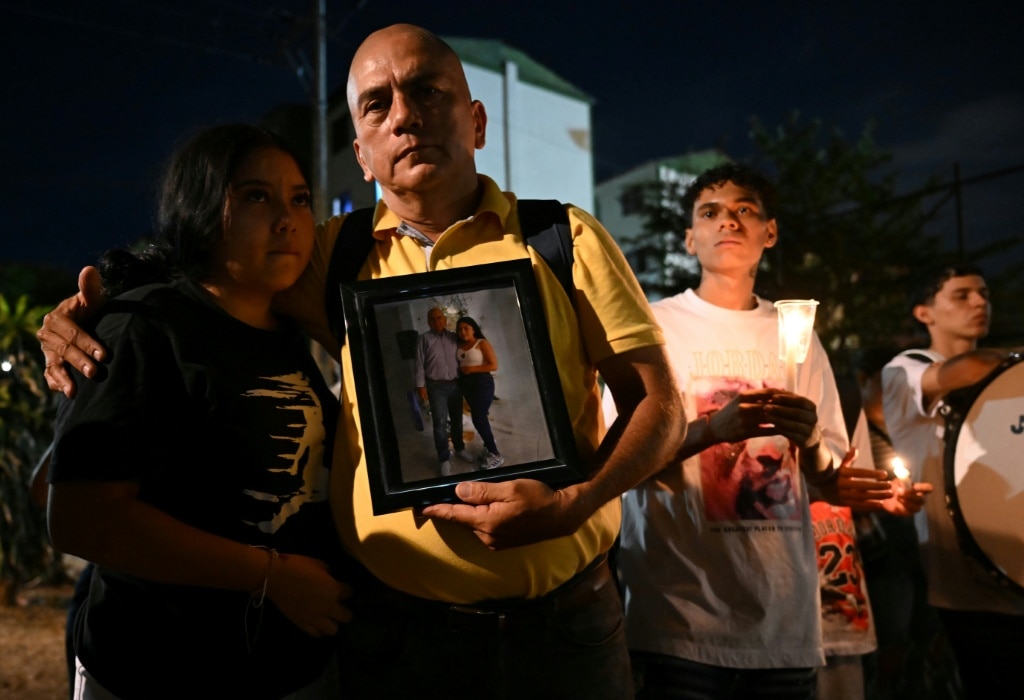
    Seven days after a devastating 7.4 magnitude earthquake tore through western and southwestern Colombia, heavy machinery rumbles across flattened urban neighborhoods as rescue and cleanup crews work through rubble to locate any remaining survivors. Even as official prospects of finding people alive under collapsed structures fade, volunteer rescuers refuse to abandon their search, amid a growing national crisis that has already claimed hundreds of lives and left tens of thousands homeless.

    The quake, which struck last Monday, has killed nearly 300 people, destroyed thousands of residential and commercial buildings, and left at least 140 residents unaccounted for, according to Colombian government figures. Of the regions impacted, the western city of Pereira and southwestern hub Cali have suffered some of the worst damage. In Pereira, one of the epicenters of destruction, 30-year-old nursing student Andres Cano stood alongside fellow volunteer rescuers clad in orange safety vests and helmets, and acknowledged the grim shift in expectations. “The hope of locating survivors is much lower now,” Cano told reporters. “You feel exhausted, it’s mostly mental fatigue.”

    The disaster comes as an early, critical test for Colombia’s new presidential administration: right-wing President Abelardo de la Espriella was sworn in just three days before the earthquake hit. Already, the new leader has moved to secure international support, asking United States President Donald Trump on Saturday to temporarily suspend bilateral tariffs to ease the country’s recovery burden.

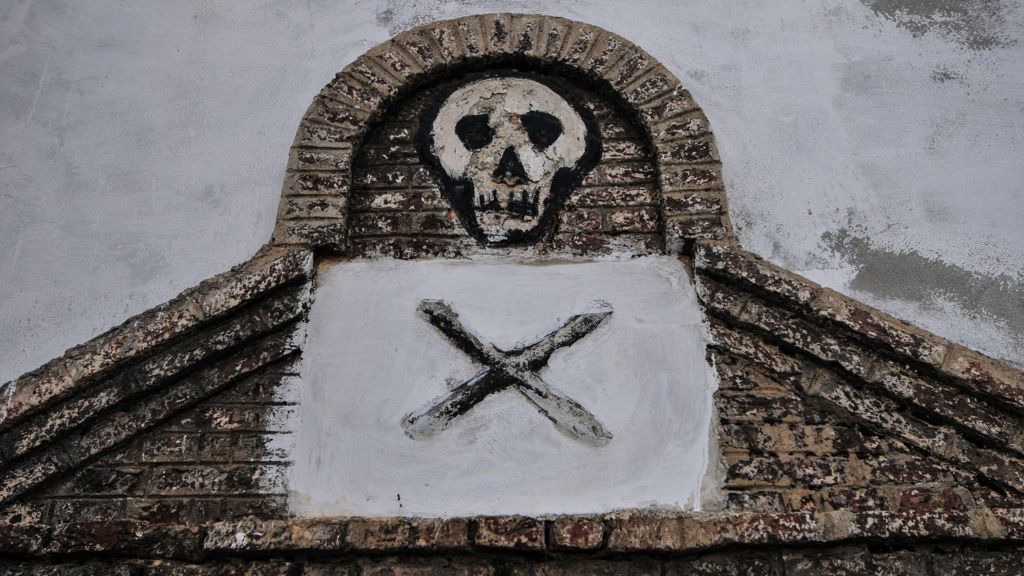
    Across impacted communities, the scale of displacement remains staggering. Officials confirm nearly 27,000 homes were completely destroyed, leaving thousands of survivors without permanent shelter. Many have been forced to sleep on mattresses and makeshift beds in open public spaces, after evacuating damaged or structurally unsound buildings. To streamline aid efforts, emergency shelters have set up QR codes that allow affected residents to digitally report missing loved ones or property damage. In the hardest-hit urban zones, dangerous buildings at risk of secondary collapse are marked with large red X’s, blocking pedestrian access to avoid further injury.

    In Cali, Colombia’s third-largest city, 41-year-old lawyer Jorge Leon stood beside a yellow moving truck loaded with the few belongings he managed to salvage from his ruined home, describing the disorienting pain of losing everything. “It feels like I’m living in a movie or a dream; I can’t quite grasp it,” Leon told Agence France-Presse. “It hurts to have to start all over again.” Cali mayor Alejandro Eder has projected that full reconstruction of the city will cost a minimum of $3.2 billion, a staggering price tag for a country already grappling with economic constraints.

    While the Colombian government has already received tens of millions of dollars in emergency aid from international partners including the United States and multilateral institutions such as the World Bank, officials warn that full recovery will take years. On the wall of a collapsed five-story apartment building in one hard-hit neighborhood, official rescuers marked a symbol indicating search operations for survivors had concluded: a red V crossed by a horizontal line. But volunteer teams have rejected calls to stand down, even though global emergency response standards hold that the chance of survival after 72 hours trapped under rubble drops drastically.

    Leading one volunteer rescue team called “Valentia” — Spanish for “courage” — 58-year-old university professor Juan Carlos Tabares says his team will keep searching to hold onto hope. “Although we’ve been told that several days have passed, we continue to search for lives because we want to keep hope alive,” Tabares said. As backhoes, cranes and bulldozers continue to clear debris across the impacted region, the quiet resolve of volunteers stands alongside the grief of families who have lost everything, as the country begins the long, slow process of rebuilding.

  • Liberal’s new Tasmania senator Chris Gatenby sworn in

    Liberal’s new Tasmania senator Chris Gatenby sworn in

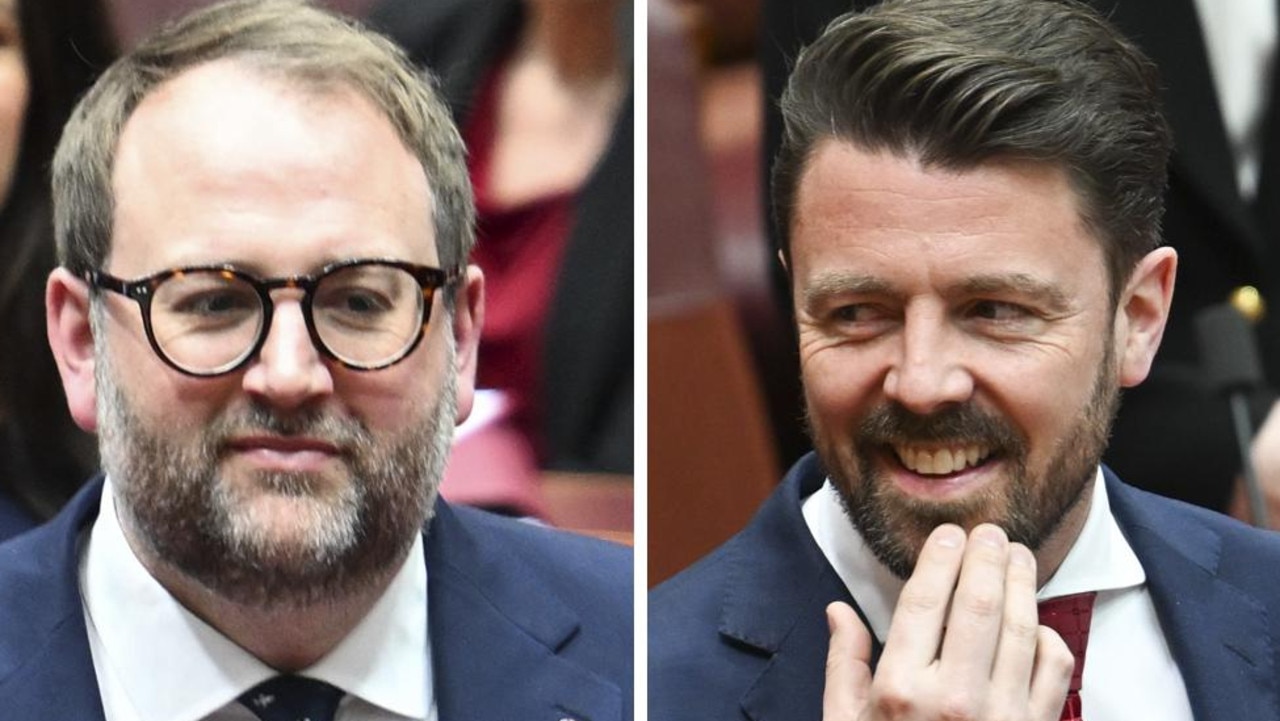
    Australia’s federal parliament has welcomed a new representative from Tasmania, with former senior Liberal Party staffer Chris Gatenby formally sworn in to fill a vacant Senate seat on Monday morning. His appointment comes as the conservative Tasmanian Liberal branch navigates a period of leadership transition, triggered by the recent announced departures of two long-serving Tasmanian senators from national politics.

    Gatenby’s path to the Senate began earlier this month, when he was tapped to replace outgoing Senator Wendy Askew. At the time of his selection, he was serving as a senior adviser to Tasmanian state Premier Jeremy Rockliff, bringing deep experience in both state and federal politics to the new role. This is not Gatenby’s first foray into elected politics: he previously ran unsuccessfully for the House of Representatives seat of Bass in the 2025 federal election, and built his career over years of senior advisory roles for federal Liberal figures, including a stint as chief of staff for former federal sports minister Richard Colbeck.

    The vacancy that Gatenby fills is one of two Senate departures from Tasmania’s Liberal parliamentary contingent. In addition to Askew’s exit, prominent Coalition frontbencher Jonno Duniam announced his plans to step down back in June, bringing a close to 25 years of public service. In his June statement, Duniam explained that his decades in politics had required placing his career ahead of family life, and it was time to reverse those priorities. “Twenty-five years is a long time in any vocation and, when you take your role seriously, it always comes first,” Duniam said. “It is time I reversed my priorities and I can’t do that if I am to stay in politics.”

    Along with taking up the vacant Senate seat immediately, Gatenby has been selected to lead the Tasmanian Liberal Party’s Senate election ticket for the 2028 federal contest. Joining him on the ticket will be Sarah Courtney, a former senior Tasmanian state minister who led the island state’s public health response to the COVID-19 pandemic, and Jacki Martin, a sitting Latrobe local government councillor.

    Tasmania’s sitting Liberal Senator Claire Chandler publicly welcomed Gatenby’s preselection earlier this month, praising his decades of experience delivering outcomes across diverse policy portfolios. A father of two, Gatenby brings a pragmatic, problem-focused approach to the federal Parliament, Chandler said. “He will bring his pragmatic, solutions-oriented mind to the Liberal senate ticket,” she noted. “I have no doubt Chris, Sarah, and Jacki will work hard to ensure success for the Liberal Party’s Tasmanian team at the next federal election.”

    The swearing-in of Gatenby stabilizes the Liberal Party’s Senate representation for Tasmania as the party prepares for upcoming national electoral contests, following a period of transition prompted by two high-profile retirements from long-serving incumbents.

  • India built the world’s biggest digital payments miracle. Now comes the bill

    India built the world’s biggest digital payments miracle. Now comes the bill

    For more than a decade, instant, no-fee digital payments via India’s Unified Payments Interface (UPI) have become a seamless part of daily life for hundreds of millions of people across the country. From street-side vegetable vendors in Kolkata to horseback riding operators on coastal beaches, businesses large and small display simple printed QR codes that let customers complete transactions in seconds, no cash, card machines, or visible charges required. But that long-standing no-fee model may be poised for change, as New Delhi paves the way for banks and payment processing firms to impose a small merchant discount rate (MDR) on certain UPI transactions, kicking off a high-stakes debate over the future of the world’s most active real-time payment network.

    The government has emphasized that consumers and person-to-person UPI transfers will remain completely free of charge. Under current proposals, fees would only apply to transactions above a set threshold at larger businesses, with the proposed MDR ranging between 0.3% and 0.5% — a small cut that merchants pay to the banks and fintech companies that process UPI payments. Officials are still finalizing the exact rate and scope of the new policy, but early frameworks are crafted to limit disruption to everyday small-value transactions.

    The stakes of this policy shift are hard to overstate. Since its launch in 2016, UPI has grown from a niche digital payments experiment to a global powerhouse, fundamentally reshaping how India does business. Official data shows that in July alone, the network processed 23.6 billion transactions worth a total of 29.87 trillion rupees, equal to roughly $313.5 billion. In the 2025-2026 financial year, total annual transactions hit nearly 241.6 billion — almost 12,000 times the volume recorded in UPI’s first full year of operation. Today, more than 550 million Indians use the system regularly, and UPI has expanded beyond India’s borders to enable digital payments in 11 other countries.

    Unlike many closed, privately owned payment networks, UPI’s unique open design has been central to its success. India built a shared, public digital infrastructure operated by the non-profit National Payments Corporation of India, allowing competing fintech providers such as Google Pay and PhonePe to battle for customers while still enabling cross-platform transactions. But what many observers overlook is the critical role that merchant incentives, specifically the zero-MDR policy, played in driving the network’s explosive growth.

    New research from economists Abhinav Motheram and Sharon Buteau confirms that widespread merchant acceptance was not just a side effect of UPI’s popularity — it was one of the core drivers of adoption. Districts with denser merchant networks consistently saw faster, higher uptake of UPI among consumers. For small, informal traders such as vegetable sellers and street food vendors, accepting UPI requires no expensive card terminal, only a cheap printed QR code. With no processing fees to absorb, there was virtually no financial barrier for these small businesses to join the network, creating a self-reinforcing cycle of adoption: more merchants attracted more users, which in turn attracted more merchants.

    The current proposal is intentionally designed to minimize disruption to this dynamic. One leading option under discussion would apply fees only to transactions above 2,000 rupees at large businesses, leaving small traders and low-value everyday purchases completely untouched. According to analysis from global brokerage firm Jefferies, transactions above this threshold make up just 4% of total UPI merchant transaction volumes, but account for roughly 67% of the total value of those transactions. This structure would allow banks and payment firms to collect up to an estimated $1 billion in new annual revenue, while leaving payments to neighborhood grocers and local vendors unchanged.

    The push for fees also addresses a growing, unignorable financial reality: while UPI feels free to users, it is not free to operate. Servers must be maintained, transactions settled in real time, fraud detected, and the entire system defended against constant cyber threats. For a decade, the Indian government has compensated banks and payment providers for these costs, framing UPI as a public infrastructure project to expand digital inclusion. But as Reserve Bank of India Governor Sanjay Malhotra recently noted, “Someone will have to pay the cost” of maintaining the network long-term.

    Still, economists warn that the impact of even a small fee depends heavily on which merchants it affects. Small informal traders operate on extremely thin profit margins, so even a nominal MDR could change their incentives to accept UPI — particularly in less developed districts where merchant networks are still growing and adoption has not yet matured. Motheram warns that if fees eventually expand to cover small and informal traders, they could slow the expansion of the merchant network that has been the backbone of UPI’s success. “Even a small fee could matter if it changes the incentives of small merchants operating on thin margins,” he explained.

    India now faces a delicate balancing act: it needs to make UPI financially sustainable for providers, without eroding the open, low-barrier conditions that turned the network into a national utility. The challenge is not unprecedented: Brazil’s successful instant payment system Pix also offers free transactions for individual users, while allowing low-cost processing fees for businesses, and it has become the world’s fastest-growing real-time payment network with more than 140 million users and 4 billion monthly transactions.

    Economist Renuka Sane argues that a well-designed fee structure could bring “commercial sanity” to India’s digital payment ecosystem, allowing providers to price risk properly, invest in infrastructure upgrades, and build a more resilient network long-term. Most experts agree that the powerful network effects of UPI make a mass exodus of users unlikely even after fees are introduced, especially with fees limited to large high-value transactions. But there are still notable risks: a 2024 survey from Indian polling firm LocalCircles found that 75% of UPI users said they would stop using the service if transaction fees were imposed, with just 22% willing to pay.

    The larger risk is more subtle: if merchant fees reduce small businesses’ enthusiasm for accepting UPI, or discourage new small traders from joining the network, UPI could lose the frictionless, universally accepted quality that made it a household name. After a first decade spent building the network and onboarding hundreds of millions of users and millions of merchants, India is now entering its third era of UPI: figuring out how to fund the system without undermining the success that made it a global model for digital public infrastructure.

  • ‘Ghana was the crime scene’ – the country leading the demand for slavery reparations

    ‘Ghana was the crime scene’ – the country leading the demand for slavery reparations

    In 2026, the global discourse surrounding the transatlantic slave trade has shifted dramatically, with growing, unignorable pressure on former colonial powers and complicit institutions to issue formal apologies, cancel unjust national debts, and pay billions in reparations for one of the worst atrocities in human history. This movement finds its most vocal and unyielding leader in Ghana, a West African nation whose soil holds the deep scars of the trade and whose political and traditional leaders are driving a global campaign for reparatory justice.

    Earlier this year, Ghana spearheaded a landmark United Nations resolution that formally classified the transatlantic slave trade as “the greatest crime against humanity.” The vote laid bare global divides on the issue: while the resolution passed, the United States voted against it, and every European nation chose to abstain. Among Western powers that built vast wealth from the trade, the United Kingdom — which alongside Portugal controlled the largest share of the transatlantic trafficking network — has repeatedly rejected calls for reparations. This refusal comes as no surprise: independent estimates put the potential value of reparations owed by the UK to affected African nations in the many trillions of pounds.

    This resistance has done nothing to weaken Ghana’s resolve. As the first sub-Saharan African nation to win independence from colonial rule, Ghana has a long history of pan-African leadership, and the African Union has formally designated the country the global champion for reparatory justice. The nation’s connection to the atrocity is deeply personal: of the roughly 12 million African people forcibly kidnapped from their homelands and shipped across the Atlantic, 10 to 15% were taken from what is now modern Ghana, and millions more passed through its coastal trading forts before embarking on the deadly Middle Passage. “Ghana was the crime scene where these atrocities took place, so Ghana cannot afford to be silent on ensuring that we hold perpetrators accountable,” Ghanaian Foreign Minister Samuel Okuzeto Ablakwa explained in an interview.

    Ablakwa has laid out a clear vision for reparatory justice that goes beyond one-off cash transfers. He proposes a systemic framework that would fund need-based educational grants across Africa, provide seed venture capital for young African entrepreneurs, and support long-term research into intergenerational health issues linked to the malnutrition and violence of enslavement. While he emphasizes that the campaign is not aimed at lining the pockets of African political leaders, one core demand agreed at the June reparations summit in Accra — which drew delegates from 80 nations — is full cancellation of odious debts owed by former slave-trading affected states to Western powers. The foreign minister also called out individual Western institutions that amassed wealth from slavery to step forward and accept accountability, singling out the Church of England as a key example.

    Historical records confirm the Church of England was deeply complicit in the trade: in the 18th century, its missionary wing operated slave plantations and owned hundreds of enslaved people, while scores of independent clergy owned enslaved people themselves. A recent internal audit of the Church’s endowment fund also confirmed the institution made massive, profitable investments in the transatlantic slave trade that generated wealth that persists to this day.

    In July, the Archbishop of Canterbury, Dame Sarah Mullally, made a high-profile visit to Ghana, one of her first international trips since taking office. Her itinerary included a stop at Cape Coast Castle, a British-built coastal fortress where tens of thousands of enslaved people were held in overcrowded, inhumane dungeons before being marched through the iconic “Door of No Return” to waiting slave ships bound for the Americas. After touring the dark holding cells and walking through the door, a visibly moved Mullally stopped to pray, and later prayed in the castle’s 17th-century chapel — a space built directly above the dungeons where enslaved people were held.

    “For me that is such a stark illustration of the way the Church was involved in the slave trade,” Mullally told reporters. “How can the church have sat above the horrors that were going on below?” The Archbishop acknowledged that the Church of England has previously apologized for its role in the trade, but said action must match words. In response, the Church established a £100 million ($135 million) social impact fund to support communities still grappling with the intergenerational legacy of slavery. Even so, the fund has faced internal resistance from Church leadership, mirroring the broader global pushback against national reparations.

    Critics of reparations often argue that some African leaders and communities were complicit in the capture and sale of fellow Africans, a point used to deflect blame from Western powers. Ablakwa has forcefully rejected this framing, calling it a deliberate divide-and-conquer tactic designed to obscure the core responsibility of Western colonial powers. “The entire architecture of chattel enslavement was curated by Western slave-owning powers, who simply utilised local actors to help carry out their plans,” he said, noting that no African representatives were present when Western powers drafted the laws, insurance policies, and financial systems that underpinned the trade. “We denounce and totally reject those claims that Africans are as guilty and complicit as those who masterminded this whole atrocity,” he added.

    Within Ghana itself, however, the conversation about local complicity is far more nuanced, and some traditional leaders have argued that acknowledging local involvement in the trade is a necessary step toward national and global healing. Earlier this year, King Tackie Teiko Tsuru II, the Ga Mantse and traditional leader of Ghana’s Ga people, made history with a public apology for the role his ancestors played as middlemen for European traders. For centuries, the Ga people operated as intermediaries, trading gold, ivory, and eventually captured enslaved people from internal African conflicts to British and Dutch traders in exchange for manufactured goods including textiles, alcohol, and firearms.

    “I stand on the same point of apologising on behalf of all traditional authorities and my ancestors and forebears for the part they also played in the slavery of our brothers and sisters,” the king said. “It has affected lives and societies up to now, and to be able to go forward, you have to look at your past. It dawns on us to admit our fault and correct it.” King Tackie Teiko Tsuru II also committed to contributing to financial reparations, arguing that taking responsibility for local involvement does not weaken the case against Western powers — instead, it strengthens Africa’s moral standing and sets an example for accountable global healing.

    Beyond its diplomatic campaign for reparations, Ghana has also led the way in efforts to heal the intergenerational trauma of the slave trade through its high-profile initiative to invite members of the African diaspora — particularly African-Americans who trace their ancestry to enslaved people shipped from West Africa — to visit and reconnect with their ancestral homeland. The initiative was originally framed as a people-centered effort to repair broken family and cultural ties, bringing a shared sense of closure for a trauma that has separated communities for centuries.

    But not all observers are satisfied with how the initiative has evolved. Yaw Asare, a Ghanaian PhD student at Howard University who previously worked for Ghana’s Presidential Diaspora Office, which administers the program, said that while the initial gatherings of diaspora and local communities were profound and focused on healing, the Ghana Tourism Authority quickly co-opted the initiative to drive commercial tourism growth. Over time, the program shifted away from trauma-informed repair to hitting visitor revenue quotas, he said, with diaspora visitors increasingly framed as a source of foreign currency rather than people seeking healing.

    Asare explained that the commercialization of the initiative has driven up local prices for basic goods and services, pushing low-income local Ghanaians to the economic margins. Even more concerning, he argues, is that the focus on profit has overshadowed the deep psychological work that is needed for both local Ghanaians and returning diaspora members to address intergenerational trauma. The impact of that trauma remains visible in Ghana today, he points out: in Accra’s historic Jamestown district, the oldest settlement built around a British slave fort, residents still build their homes in tight, clustered arrangements, a habit rooted in centuries-old fear that people living further from the community core would be kidnapped by slave traders.

    “We are dealing with humans, we are dealing with people. We cannot reduce them to, ‘come see this site, pay this entrance fee’,” Asare said, noting that it is particularly problematic that diaspora visitors are charged the same high entrance fees as white European tourists at sites like Cape Coast Castle, even though the initiative is meant to address their trauma. For Asare, true reparatory justice must prioritize human connection and healing over financial gain and tourist revenue. “We have to remove the band-aid and then look at the sore, the gaping wound that’s present,” he said. “And see how we can dress it and nurse it and heal.”

    The BBC will air a full documentary on Ghana’s reparations campaign on its program *Global Eye* on BBC Two at 19:00 Monday for UK viewers.

  • Trump says US scaling back military drills with South Korea

    Trump says US scaling back military drills with South Korea

    Just days ahead of the annual Ulchi Freedom Shield joint military exercise between the United States and South Korea, former and current US President Donald Trump has announced sweeping cutbacks to the long-planned drills, opening a new chapter of friction in alliance politics and reshaping regional security dynamics on the Korean Peninsula.

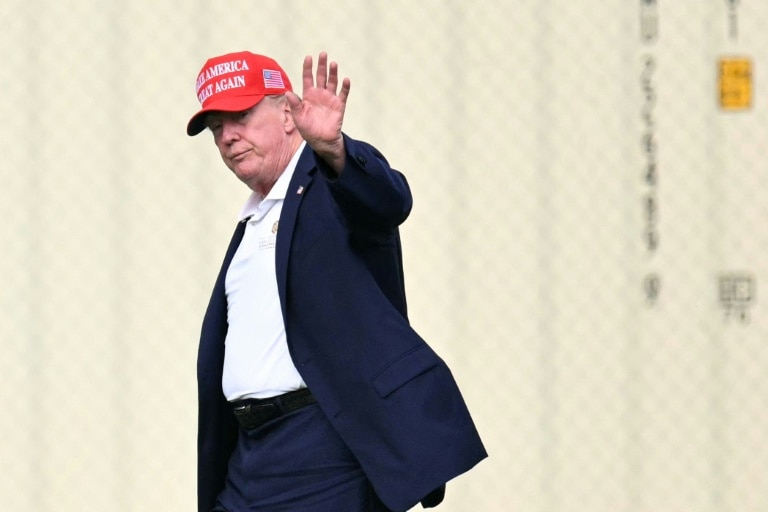
    In a public post shared to his Truth Social platform Sunday, Trump laid out his rationale for the order, tying the decision directly to his self-proclaimed positive personal relationship with North Korean leader Kim Jong Un. “Based on my very good relationship with Kim Jong Un, of North Korea, I am not happy with the fact that the United States has, long ago, agreed to participate in Joint Military Exercises with South Korea,” he wrote.

    Trump argued that the costly drills, which the US has shouldered a large share of the financial burden for for decades, send an unnecessarily hostile signal to Pyongyang, which he claimed has remained unthreatening and respectful during his current presidential term. With the exercise set to kick off Monday, Trump said a full cancellation was no longer logistically feasible, so he directed Defense Secretary Pete Hegseth to implement a substantial scaling back of the drill’s scope.

    The 11-day Ulchi Freedom Shield exercise is a core annual defense training event for South Korean and US forces, designed to prepare troops to defend against potential aggression from nuclear-armed North Korea. This year’s iteration, which was already planned to involve around 18,000 South Korean troops alongside US forces stationed in the country, was set to place an unprecedented focus on emerging modern threats, including drone warfare, GPS jamming, and large-scale cyber attacks. When contacted for comment following Trump’s announcement, South Korea’s defense ministry confirmed that the drills would “proceed as previously notified and scheduled,” leaving unclear how the US cutbacks will impact on-the-ground execution.

    North Korea has for decades decried these joint drills as invasion dress rehearsals, routinely responding with heightened military posturing and diplomatic outrage. The current presence of roughly 28,500 US troops in South Korea dates back to the 1950-1953 Korean War, which concluded with an armistice agreement rather than a formal peace treaty, leaving the Korean Peninsula technically divided in a state of ongoing conflict.

    Trump’s announcement is not an isolated shift, but rather part of a broader pattern of challenging long-standing US alliance commitments that has defined his second term. Just as he has repeatedly criticized NATO allies for failing to meet defense spending commitments and aligned his foreign policy against Iran in an ongoing military conflict that has dragged on for six months without any path to a negotiated resolution, Trump used Sunday’s post to publicly call out South Korea for declining to join the US-led effort to denuclearize Iran. “I recently asked the President of South Korea if they would like to join us in the Denuclearization of the Islamic Republic of Iran, and they said, ‘No thanks!’” he wrote.

    Regional security experts note that North Korea has significantly expanded its nuclear and missile capabilities since Trump’s first-term talks with Kim collapsed, with their last in-person meeting taking place in 2019. In the years since that breakdown, Pyongyang has also deepened its strategic partnership with Russia, following Moscow’s full-scale 2022 invasion of Ukraine. Analysts widely confirm that North Korea has supplied thousands of troops and large stockpiles of munitions to support Russia’s stalled war effort, in exchange for much-needed economic aid, food supplies, energy exports, and advanced military technology.

    Weeks ahead of the exercise, Combined Forces Command spokesman Colonel Ryan Donald noted that this year’s drill would specifically prepare troops to counter North Korean forces that have gained combat experience through their deployment alongside Russian troops in Ukraine. The shift in training priorities comes as new South Korean President Lee Jae Myung, who took office in June 2025 after defeating his hawkish predecessor, has made outreach to Pyongyang a core policy priority. Lee has repeatedly offered to hold unconditional denuclearization and peace talks with North Korea, but as of yet, Pyongyang has not responded to these overtures.

  • Thailand has a gun problem – 10 million of them

    Thailand has a gun problem – 10 million of them

    Just three days after a 14-year-old gunman killed eight people at a provincial school before taking his own life, a second fatal shooting in the same Thai province laid bare the kingdom’s long-running and deeply troubling relationship with civilian gun ownership.

    The incident involved 71-year-old Chalong Riewrang, a former local politician, who entered a regional administration building to confront the office chief Thongchai Yenprasert – a man Chalong describes as a personal friend – over an unpaid large sum of money Chalong claims he was owed. What began as a scheduled discussion quickly devolved into violence: Chalong drew a handgun and fired four shots through the window of Thongchai’s parked car, striking both Thongchai and his driver. Thongchai later succumbed to his injuries.

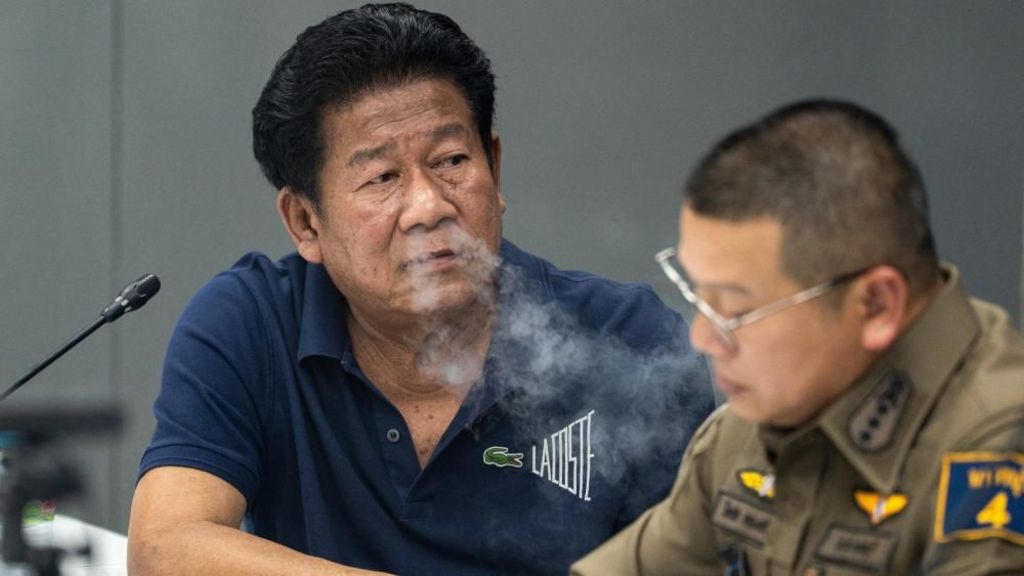
    After fleeing the scene, Chalong contacted a journalist he knew mid-way through her live YouTube broadcast to confess to the shooting. Police intercepted him shortly after and took him into custody, where he spoke to reporters while casually smoking a cigarette, showing no visible distress over the killing. Chalong told reporters he “did not intend to shoot his friend”, claiming he opened fire only after the driver drew a weapon. Investigators did recover two guns from Thongchai’s car, but confirmed neither was in a condition to be fired.

    This double tragedy was far from an isolated event on that same day. In Prachinburi, a province east of Bangkok, a police sergeant shot his wife in the head during an argument while she was driving the pair to pick up their young son. After the car crashed, the sergeant turned the gun on himself, and his wife later died in hospital treatment. Local analysts estimate many more unreported gun deaths occur across the country each day.

    While Thai authorities do not track an official annual count of gun-related fatalities, independent estimates place the yearly death toll between 2,000 and 3,000. To put this in perspective, the United Kingdom – which has a roughly similar population to Thailand – records fewer than 50 gun deaths annually.

    Gun use in hired robberies and contract killings is not unheard of in Thailand, where hitmen can be hired for relatively low fees. But most gun fatalities stem from ordinary conflicts: domestic arguments, financial disputes, and alcohol-fueled bar fights. With more than 10 million civilian-held guns circulating nationwide – 4 million of which are unregistered – even minor disagreements can quickly escalate into deadly violence.

    “It’s very unfortunate that Thailand has a very high tolerance for violence,” explained Boonwara Sumano, a researcher at the Thailand Development Research Institute. “Guns are seen as a status symbol, and there are so many ways that civilians can get them. Also, showing strength, wielding power, is seen as the right thing to do in Thai society. So, when you have a norm that promotes the possession of weapons to show your strength, and access to those weapons, this is the result.”

    On paper, Thailand’s gun laws appear relatively strict. Prospective buyers must first obtain a purchase permit, then apply for a separate possession permit after buying a firearm, and a third permit to carry the weapon outside the home. Imported firearms, which make up most of the country’s supply, carry steep price tags. But major loopholes undermine these rules: possession permits are valid for life, no mandatory mental health screening is required for gun owners, and there are no rules mandating safe gun storage. This is how the 14-year-old school shooter gained access to his grandfather’s legally owned gun and ammunition to carry out his attack.

    A long-running government program also amplifies the illegal gun market: the scheme allows police officers and public officials to purchase firearms at heavily discounted prices. Since launching in 200, an estimated 200,000 firearms, mostly sourced from the United States, have been imported through the program. Permit holders are allowed to resell the guns after five years, turning the program into a lucrative black market trade that has faced repeated corruption investigations. Combined with unregistered locally manufactured guns from informal artisans, the program is a major source of illegal firearms across the country.

    In response to the latest string of attacks, Thai Prime Minister Anutin Charnvirakul has ordered immediate emergency measures to strengthen gun control: the discounted government purchase scheme has been suspended, and all new purchase permit approvals have been halted. Anutin has also proposed limiting the validity of possession permits, offering an amnesty to encourage unlicensed gun owners to surrender their weapons, ordered parliament to draft new gun legislation, and promised harsher penalties for gun law violations.

    However, this pattern of response is nothing new for Thailand. After a 2022 mass shooting that killed 36 people at a rural nursery, carried out by a former police officer, and a 2023 mass shooting at Bangkok’s busiest shopping mall by another 14-year-old gunman, Anutin – who was serving as interior minister at the time – ordered identical crackdown measures. The discounted purchase scheme was suspended, then quickly reinstated. A ban on civilian gun carrying was also imposed after a school shooting in February 2024, but enforcement has been lax.

    Experts say the problem extends far beyond inadequate regulation. The massive existing stockpile of firearms, widespread systemic corruption, lax enforcement of all national laws, cultural glorification of gun ownership, and decades of military influence in Thai society all combine to create the current crisis. Even among sitting government ministers, gun ownership is common: public asset declarations show more than a dozen current ministers own guns, with the justice minister holding 10, the environment minister owning 12, and one female member of parliament declaring 48 registered firearms.

    Sumano points to the deep cultural roots of gun acceptance in Thailand, shaped by decades of military rule that continues to influence society even under elected civilian government. “If you notice every Children’s Day in Thailand, instead of taking children to a museum or park, many families take their children to an army or air force base to see the weapons, take photos holding guns, this kind of thing,” she explained. “It’s in the culture. You see big men in the military looking so powerful, they kind of make you want to become one of them.”

    Thailand stands out as an outlier among Southeast Asian nations. With a population four times larger than Thailand’s, Indonesia only has 82,000 registered civilian guns, while Malaysia counts just 107,000, and both nations see extremely rare gun homicides. Only the Philippines shares Thailand’s pervasive gun culture and high rates of gun violence.

    Some Thai gun rights advocates argue that new restrictions on legal ownership will not solve the crisis, and will only penalize responsible gun collectors. Yod, a 53-year-old Bangkok businessman who owns a collection of more than 70 guns that he describes as luxury collectibles, most of which he has never fired, says “Most of the gun crimes in this country are carried out by illegal weapons. New measures to control legally owned guns are not the right solution. There are blank guns and spare parts which can be assembled as real guns being imported legally into the country. Why hasn’t that been chased up?”

    Another gun shop owner with a collection of more than 40 guns, Sathit, says widespread crime and weak law enforcement are why ordinary people choose to arm themselves. “Look around this country nowadays. There are crimes every day. It is not safe. Drugs are rampant. People need to protect themselves because there are not enough police officers. People should have access to guns to survive, for their own safety.”

    As Chalong waits in custody to be charged with the murder of his friend, the former politician, who once held permits for nine guns and had reduced his collection to just one, expressed shock at how quickly a routine financial dispute turned deadly. “I can’t believe I’m in this position, sitting here. Throughout my life, I have never had to come to a police station,” he told reporters. For Chalong, and for Thailand as a whole, one easily accessible gun was enough to end a life and upend decades of normality.


  • Iran and Oman work on temporary Hormuz shipping route as Trump threatens to claim the strait

    Iran and Oman work on temporary Hormuz shipping route as Trump threatens to claim the strait

    Tensions over the strategically critical Strait of Hormuz have spiked in recent days, following a provocative territorial claim from former U.S. President Donald Trump that has drawn sharp pushback from Iranian officials, even as Tehran progresses on talks with Oman to establish a new temporary shipping lane through the waterway.

    Iranian Foreign Minister Abbas Araghchi announced Sunday that Tehran and Muscat have been in active negotiations to map out a temporary maritime route for commercial vessels, noting that the original shipping lanes currently remain non-functional after Iran imposed restrictions on navigation last month. “For now, we are designing a temporary route, which can then, at a later stage, be turned into a final route,” Araghchi stated, adding that talks are progressing and a final agreement could be reached in the near term.

    Crucially, Araghchi emphasized that discussions of the new route are entirely separate from any potential full reopening of the strait. Even after the temporary lane is finalized, he clarified, a full reopening will only move forward if the United States meets pre-existing conditions that Tehran has laid out.

    The diplomatic developments come just one day after Trump made an extraordinary threat during a speech at a New York police academy Friday. In the address, the former president claimed the U.S. had “badly defeated” Iran, and announced that Washington would “pretty soon” formally declare the Strait of Hormuz as U.S. territory. He also reiterated that the ongoing blockade remains in place, claiming “No ships get through unless we want them to.”

    Iranian officials across government levels have responded to the claim with unified, fierce rejection. Iran’s Deputy Foreign Minister Kazem Gharibabadi dismissed Trump’s declaration in a post on X, arguing that the strait cannot be seized by social media post, military deployment, political speech, or executive order. “The Strait of Hormuz has been Iranian, is Iranian, and will remain Iranian; this strait will only be closed and opened under Iran’s command,” Gharibabadi wrote, adding that Iran will maintain its blockade as long as the U.S. refuses to abandon what he called “fanciful delusions.”

    Iranian foreign ministry spokesperson Esmaeil Baghaei also weighed in, quoting a passage from Fyodor Dostoevsky’s *The Brothers Karamazov* to criticize Trump’s remarks. “The man who lies to himself and listens to his own lie comes to such a pass that he cannot distinguish the truth within him, or around him, and so loses all respect for himself and for others,” Baghaei wrote.

    On Sunday, Iran’s army chief Amir Hatami issued an additional warning, per Iranian state media, stating that Washington would face lasting regret should it attempt any move to seize control of the strait.

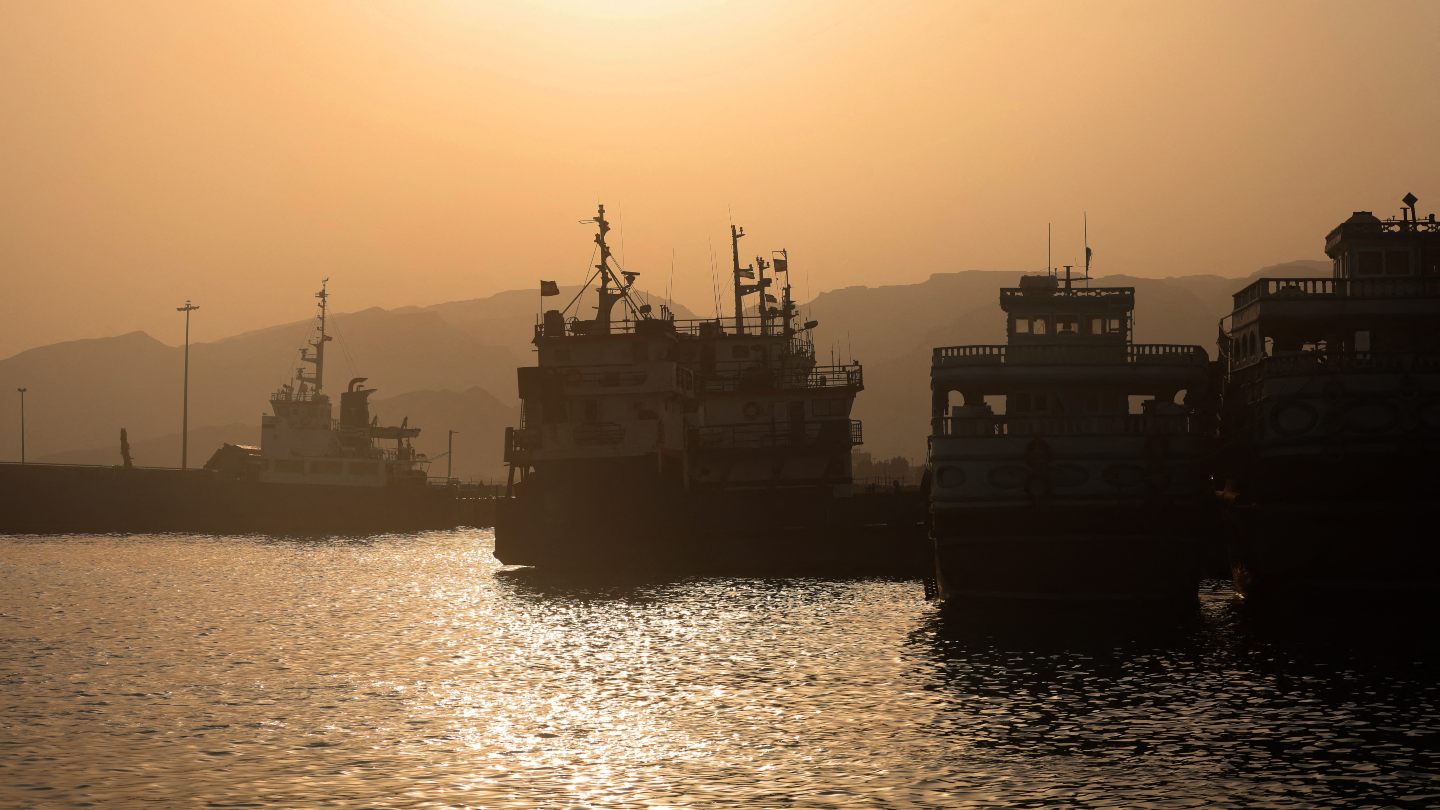
    This escalation comes amid a long-running standoff over the waterway, which has left broader diplomatic efforts to resolve the navigation dispute stalled. Iran first closed the strait on February 28 following joint military strikes carried out by the U.S. and Israel, and has since restricted all non-approved transit through the key chokepoint, which carries roughly 25% of all global seaborne crude oil trade.

    As of latest reporting, commercial oil tanker traffic through the strait remains heavily disrupted. Reuters confirmed that only two vessels were recorded passing through the waterway on the day of the report, with no large-scale crude oil shipments documented.