博客

  • A temple stampede and a hotel fire in eastern India kill 14 and injure several

    A temple stampede and a hotel fire in eastern India kill 14 and injure several

    Two separate fatal accidents at religious destinations in northern India on Monday have claimed a total of 14 lives, leaving dozens injured and renewing concerns over systemic public safety failures during large-scale religious gatherings in the country.

    The first tragedy unfolded just before dawn in the temple town of Tarapith, located in West Bengal’s Birbhum district. According to local media reports from Press Trust of India, a fire ignited around 4:30 a.m. on the ground floor of a four-story hotel that primarily hosted pilgrims visiting the town’s famous Shiva-focused temple complex. Most guests were asleep when the blaze broke out, leaving little time for organized evacuation.

    Preliminary inquiries from hotel management point to an electrical fault near the hotel’s reception area as the likely origin of the fire. Fire response teams managed to bring the blaze under control quickly, but the casualty toll reached at least seven dead, with multiple others admitted to local hospitals for critical care. Injuries ranged from severe burns to smoke inhalation and asphyxiation, per local reporting. Authorities have launched a full investigation to confirm the exact cause of the fire.

    Only two hours later, a second deadly disaster struck more than 400 kilometers west in Lakhisarai district, Bihar. Thousands of Hindu devotees had gathered near Ashok Dham Temple to mark the third Monday of Shravan, the holiest month in the Hindu religious calendar. Dedicated to the worship of Lord Shiva, the Shravan month — which falls between July and August each year — draws millions of pilgrims to sacred sites across India for prayer, fasting and seasonal religious celebrations.

    Local civil administrator Shailendra Kumar reported that the death toll from the incident stands at seven, with more than a dozen others injured, all of whom have been transferred to a local government-run hospital for treatment. While official investigations into the exact root cause are still ongoing, preliminary findings point to a snapped overhead electric wire outside the temple compound as the trigger for the disaster. The broken wire sparked widespread panic among worshippers, who feared electrocution and began a chaotic rush to escape the area.

    The sudden surge of the crowd overwhelmed temporary crowd-control barricades, causing a section of the barriers to collapse. People stumbled over one another in the chaos, resulting in the fatal crush, Kumar told Press Trust of India.

    Tragic crowd crushes and fire-related deaths at large religious gatherings are not new in India. Every year, millions of worshippers converge on confined temple and religious site locations, with event organizers and local authorities often failing to implement adequate safety protocols, crowd management infrastructure, or emergency evacuation plans.

    Deadly examples of this pattern dot recent history. In January 2023, at least 30 people lost their lives in a crush during the Maha Kumbh festival, the world’s largest religious gathering, when tens of thousands of pilgrims rushed toward the banks of a sacred river for a ritual bathing. A decade earlier, in 2013, a false rumor that a pedestrian bridge was collapsing sparked a panic at a Hindu festival in central India’s Madhya Pradesh state, leaving 115 people dead either from crushing or drowning in the river below the bridge.

  • World shares are mixed and oil prices slip after worries over stagflation pull US stocks lower

    World shares are mixed and oil prices slip after worries over stagflation pull US stocks lower

    BANGKOK – Global equity markets delivered a fragmented performance across Europe and Asia on Monday, one trading session after U.S. stocks retreated from their recent all-time peak, dragged down by a worse-than-anticipated reading on the world’s largest economy. Energy prices also edged lower amid ongoing geopolitical uncertainty affecting global supply chains.

    In early trading hours across European exchanges, benchmark indexes showed minimal movement overall. Germany’s DAX held almost entirely steady, posting near-zero change to close the early session at 26,429.59. France’s CAC 40 dipped by a modest 0.1% to land at 8,630.45, while the United Kingdom’s FTSE 100 notched a small 0.2% gain to reach 10,773.91. Looking to futures contracts tied to major U.S. indexes, the S&P 500 future ticked up 0.1% ahead of the opening bell, while futures for the Dow Jones Industrial Average slipped 0.1%.

    Across Asian markets, the picture was similarly split. Tokyo’s Nikkei 225 climbed 0.7% to hit 69,220.25, buoyed by upwardly revised GDP data from the Japanese government. The report showed the country’s economy expanded slightly faster than projected in the April-June quarter, recording a 1.1% annualized growth rate, even though private consumption and capital investment held flat and export expansion decelerated. On a quarterly basis, Japan’s GDP grew 0.3% over the first three months of the year.

    In Hong Kong, the Hang Seng Index advanced 1.6% to 25,517.88, and mainland China’s Shanghai Composite Index rose 1.4% to close at 3,982.65. South Korean markets remained closed for a national holiday. Australia’s S&P/ASX 200 retreated 0.5% to 9,073.20, while Taiwan’s Taiex gained 0.1% and India’s Sensex slipped 0.3%.

    The uneven global trading follows a pullback on Wall Street this past Friday, when the S&P 500 fell 0.2% and the Dow Jones Industrial Average also dipped 0.2%, after government data showed U.S. retail sales declined last month. While soft consumer spending could pave the way for the U.S. Federal Reserve to hold interest rates at lower levels – a dynamic that generally boosts asset valuations for investors – the weaker reading also signals potential economic slowing at a time when inflation remains elevated above the central bank’s target. The Nasdaq composite shed 0.3% in Friday’s session.

    Market participants are turning their focus to this week’s packed earnings calendar, which will feature quarterly reports from some of the U.S.’s largest retail chains. Home Depot is set to release its results on Tuesday, followed by Target and Lowe’s on Wednesday, and Walmart on Thursday. These reports are expected to offer investors granular insight into how both businesses and consumers are navigating persistently high inflation that has eroded purchasing power across much of the economy. In addition to earnings, the Federal Reserve will publish the meeting minutes from its July policy gathering this Wednesday, giving analysts more context into the central bank’s thinking on future interest rate moves.

    Stagflation, defined as a period of stalled economic growth paired with persistent high inflation, remains a worst-case scenario for markets because the Fed has no policy tools that can effectively address both problems at once. Tightening policy to curb inflation can worsen growth slowdowns, while cutting rates to stimulate growth can push already high inflation even higher.

    In energy markets on Monday, benchmark crude prices fell. Brent crude, the global pricing standard, declined 0.3% to $88.24 per barrel, and U.S. West Texas Intermediate crude slipped 0.9% to $81.65 per barrel. Oil market sentiment remains jittery amid unclear prospects for a diplomatic resolution to tensions around Iran, with the critical Strait of Hormuz – a key shipping chokepoint for Middle Eastern oil and gas exports – facing disruptions that threaten global supply stability.

    In currency markets, the U.S. dollar weakened against the Japanese yen, falling to 158.88 yen from 159.32 yen in previous trading. The euro ticked higher against the dollar, rising to $1.1611 from $1.1588.

  • Instagram and Facebook could change forever if Meta loses child privacy trial

    Instagram and Facebook could change forever if Meta loses child privacy trial

    A high-stakes jury trial that could reshape the future of social media regulation in the United States is set to kick off Tuesday, pitting 30 U.S. states against tech giant Meta Platforms over allegations that the company intentionally designed its platforms to harm and exploit young users. The case, filed in 2023 by states including California and New York, accuses Meta of widespread violations of federal and state child privacy laws, marking the most significant legal challenge the company has faced to date amid a growing string of court losses over its youth-focused product design.

    At the core of the states’ argument is the claim that Meta has deliberately built addictive, harmful features specifically designed to keep children and teenagers engaged on its platforms for as long as possible, prioritizing user growth and revenue over young people’s mental and emotional well-being. The plaintiffs are seeking more than $1 trillion in damages, alongside sweeping mandatory changes to core functionality across Meta’s two largest platforms, Instagram and Facebook. These reforms include eliminating public like counts and infinite scrolling, mandating parental verification for all teenage accounts, overhauling what the states describe as “dopamine-manipulating recommendation algorithms”, removing body-altering photo filters, ending automatic video playback, banning the creation of multiple accounts, and discontinuing ephemeral content such as Instagram Stories.

    The states also allege that Meta actively discourages reduced usage among young users, relying on frequent, targeted push notifications to lure minors back to the apps. “Meta chose to exploit” children to grow its user base and expand its bottom line, the lawsuit argues, at a time when the company boasts a total market capitalization of roughly $1.5 trillion. Meta has vigorously denied all allegations, with a company spokesperson stating in a formal response: “We strongly disagree with these allegations and are confident the evidence will show our longstanding commitment to supporting young people.”

    The trial will be overseen by Chief U.S. District Judge Yvonne Gonzalez Rogers, a California-based jurist with nearly 20 years of experience on the bench, who previously presided over the high-profile Elon Musk v. Sam Altman dispute and is widely known for her incisive, straightforward judicial approach. The upcoming case follows a recent landmark ruling against Meta in New Mexico, where Judge Bryan Biedscheid imposed a $942 million fine on the company and ordered nearly identical reforms to those sought by the 30 states. In that ruling, Judge Biedscheid made history by labeling Meta’s platform operations a “public nuisance”, comparing the firm’s harmful impact on communities to a polluting factory that inflicts widespread damage on public health. That ruling mandated that Meta eliminate public like counts for users under 18, ban the exchange of nude content between teenagers, and restrict push notifications to limited daytime hours in New Mexico. Meta has announced it will appeal the decision.

    While the New Mexico ruling only applies within the state’s borders, a ruling in favor of the 30 states would require nationwide changes to Meta’s platforms, as the plaintiffs represent approximately two-thirds of the U.S. population. A defeat for Meta would force fundamental, industry-altering changes to how millions of young people interact with social media across the country.

    The debate around features like public like counts underscores the growing body of evidence linking core Meta platform design to youth mental health harm. Likes have been a central feature of Meta’s platforms since the company’s early days as Facebook, and remain the primary mechanism for user engagement across nearly all social networks. But research conducted over the past decade, including Meta’s own internal research, has tied engagement metrics like like counts to rising rates of depression, body dysmorphia, and loneliness among young users. Meta’s internal documents, more than 2 million of which have been turned over to legal teams for the 30 states, show the company has long known that likes drive “social comparison”—the practice of measuring one’s self-worth against curated, idealized content posted by other users. This effect on Instagram, the company’s own research found, is linked to “increased loneliness, worse body image, and negative mood or affect” among teenage users.

    Testimony from earlier youth-focused cases has further illustrated these harms. Earlier this year, a young plaintiff named Kaley who won a lawsuit against Meta described creating dozens of separate Instagram and YouTube accounts as a nine-year-old to like her own posts, chasing external validation that ultimately left her clinically depressed by age 10. As Judge Biedscheid noted in his landmark ruling, the first to declare a social media company a public nuisance, Meta’s decade-long operating model has contributed directly to the growing youth mental health crisis across the U.S. Now, attorneys for 30 states will argue that Judge Gonzalez Rogers should reach the same conclusion and impose sweeping changes that could redefine social media regulation for the entire country.

  • Is this cave in Turkey where Homer wrote ‘The Odyssey’?

    Is this cave in Turkey where Homer wrote ‘The Odyssey’?

    Nestled on a sunlit hillside overlooking olive-draped slopes outside Turkey’s Aegean coastal city of Izmir, a rugged, rock-choked cave has been venerated for generations by local residents as the very spot where the ancient bard Homer composed his legendary epic *The Odyssey*. As renewed global interest in Homer surges following the release of Christopher Nolan’s hit blockbuster of the same name, scholars, local officials and residents in Bornova’s Homeros Valley are reigniting centuries-old debate over the cave’s legendary connection to one of Western literature’s most iconic figures.

    While no definitive concrete evidence has ever confirmed the cave as Homer’s creative workspace, the link between Homer and the Izmir region — anciently known as Smyrna — stretches back millennia. As far back as the 2nd century CE, Greek geographer and chronicler Pausanias recorded that Smyrna’s residents guarded a grotto along the Meles River where Homer was said to have written his works, cementing a mythic connection that has persisted to the modern day. Though other sites, most notably the Greek island of Chios, also lay claim to Homer’s origins, researchers in Bornova have recently unearthed new clues they argue lend unprecedented weight to their region’s claim.

    Turkish researcher Altan Altin, who has authored a full book on the subject of Homer’s connection to Bornova, argues that a 3rd-century BCE bas-relief frieze depicting Homer’s deification contains exact, matching geographic details that mirror the layout of the Bornova cave — a connection no scholar had previously identified. “This is the first time such a detailed geographical confirmation of the cave has come to light,” Altin explained, noting that ancient Ionia, the historic Greek region that encompassed both Smyrna and Chios on Turkey’s Aegean coast, is Homer’s true geographic home. “For me, there’s no doubt: Homer is from Bornova, and at the very least, he is from these lands.”

    Archaeological evidence from the region further supports this cultural connection, according to local archaeologist Mehmet Akif Erdem. Excavations have uncovered ancient coins minted in Smyrna that bear Homer’s likeness, indicating the city’s ancient residents already claimed the poet as their own centuries after his death. Additionally, the Ionic and Aeolic ancient Greek dialects used in both *The Iliad* and *The Odyssey* align with the language spoken in the Smyrna region during Homer’s purported lifetime, Erdem added.

    Today, Homer’s presence permeates every corner of Bornova: a Neolithic archaeological site on the town’s outskirts hosts a marble bust of the poet inscribed with the words “I compiled *The Iliad* and *The Odyssey* epics on this land. I lived in Bornova.” The town already hosts an annual book fair dedicated to Homer and features a statue of Trojan War hero Hector in its central park, and local leaders are now moving to renovate the cave to open it to international tourists, capitalizing on the new wave of Homeric interest sparked by Nolan’s film.

    “Preserving Homer’s legacy is a duty we owe to humanity. He is one of the founding fathers of literature,” Bornova Mayor Omer Eski told AFP. “The stories he tells are about this land. The question is not whether we should claim Homer or not — his story is also ours.”

    Not all local leaders share this vision, however. In 2024, officials from President Recep Tayyip Erdogan’s ruling AKP party sparked controversy by proposing to rename Homer’s Valley after a Turkish fighter pilot, arguing the culturally significant site should not carry a Greek name. Eski has pushed back forcefully against the proposal, arguing erasing Homer’s name would be an irreversible loss for Bornova’s cultural identity. His goal, he says, is to position the town as a global Homeric heritage destination that draws literary tourists from across the world.

    The release of Nolan’s *The Odyssey* has already had a visible impact on local interest: booksellers across Izmir report a sharp spike in sales of Homer’s epic, and members of the public say the film has helped them connect more deeply with their region’s ancient literary heritage. “I knew Homer was from these lands, but I didn’t know he was specifically from Izmir. We are incredibly lucky,” said Safak Tosun, a local teacher, outside a cinema screening the new film. “I feel proud, honoured and deeply privileged to be his fellow countryman.”

    For Altin, clues within Homer’s own works confirm the poet’s Anatolian roots: *The Iliad* is filled with specific anecdotes and cultural references that only would have been familiar to a resident of the Aegean Anatolian coast, he argues. Most importantly, he adds, the debate over Homer’s national or cultural origin should not fuel rivalry between modern Turkey and Greece. “Homer is 2,800 years old, while the Turkish-Greek border is only a century old,” Altin shrugged. “Homer is Greek. Homer is Anatolian. None of us is older than he is, not even our countries.”

  • Heroes actress Hayden Panettiere dies aged 36

    Heroes actress Hayden Panettiere dies aged 36

    Tributes are pouring in across the entertainment industry following the news that acclaimed American actress Hayden Panettiere, best known for her leading roles in hit series *Heroes* and *Nashville*, has passed away at the age of 36.

    In an official statement shared with U.S. media outlets, Panettiere’s father Skip Panettiere confirmed the devastating loss, speaking of his daughter’s lasting impact on everyone she encountered. “It is with profound sadness that we share the tragic passing of our beloved Hayden. She was an incredible light and a force of nature who brought immeasurable love and joy to all who knew her and to the millions who watched her onscreen,” the statement read. As of press time, no specific details regarding the circumstances of her death have been released to the public. In accordance with the family’s request, privacy is being respected as they grieve this unimaginable loss.

    Panettiere’s entertainment career began unusually early: she landed her first professional acting role at just four years old, when she was cast on the long-running American soap opera *One Life to Live*. Over the course of three decades in the industry, she built a versatile resume spanning television and film, earning critical acclaim and a loyal global fanbase.

    Her breakout role came in 2006, when she was cast as Claire Bennet, the indestructible cheerleader with extraordinary superpowers, in the groundbreaking sci-fi drama *Heroes*. The role turned Panettiere into a household name, and she went on to land a string of memorable roles in major productions, including the iconic sports drama *Remember the Titans*, the romantic comedy *Raising Helen*, the hit *Scream* horror franchise, and the rom-com *I Love You, Beth Cooper*. Most recently, she held a starring role on the country music drama *Nashville*, which further cemented her reputation as a versatile performer.

    Earlier in 2025, Panettiere released her raw, candid memoir *This Is Me: A Reckoning*, in which she opened up about the unique challenges of growing up in the public eye as a child actor, as well as her personal battles with addiction, domestic abuse, and her journey toward long-term recovery. The book was widely praised for its honesty and resonated with countless fans who shared similar experiences.

    Panettiere is survived by her 10-year-old daughter Kaya, whom she shares with former partner, former world heavyweight boxing champion Wladimir Klitschko.

  • Ebola outbreak in DR Congo becomes deadliest in its history

    Ebola outbreak in DR Congo becomes deadliest in its history

    The Democratic Republic of the Congo (DRC) is currently facing the most devastating Ebola outbreak in the nation’s recorded history, public health authorities have confirmed. As of mid-August 2026, the death toll from the outbreak, first declared on 15 May, has reached 2,325, surpassing the fatalities recorded during the country’s 2018–2020 Ebola epidemic to claim the grim title of the deadliest outbreak in DRC history.

    Just one week ahead of the new death toll announcement, United Nations Under-Secretary-General for Humanitarian Affairs Tom Fletcher described the current outbreak as the fastest-spreading on record. In a stark warning, Fletcher noted that the virus is claiming a human life every 30 minutes on average.

    On 4 August, authorities inaugurated a new Ebola treatment facility in Rwakole, located in the Bunia region of northeastern DRC, to help expand care capacity amid the surging crisis. As of the latest update from the DRC Institute of Public Health released on 10 August, the country has confirmed 4,945 total cases of the virus, with 101 new positive cases recorded in the 24 hours prior to the announcement.

    Unlike previous Ebola outbreaks that have impacted the DRC, the current epidemic is driven by the rare Bundibugyo strain of the virus, for which no globally approved vaccine currently exists. That said, multiple vaccine candidates are already in active development, including one candidate built on the same viral vector technology that powered the Oxford-AstraZeneca COVID-19 vaccine. The UK’s Medicines and Healthcare products Regulatory Agency (MHRA) has already granted regulatory approval for the first human clinical trials of this Oxford University-developed candidate, with three additional research groups also working on separate Bundibugyo vaccine candidates. The World Health Organization (WHO) is also sponsoring an independent clinical trial based in the DRC to test whether two existing antiviral therapies can improve survival rates for patients infected with the virus.

    Transmission of the virus has outpaced all recent precedents, the WHO has confirmed, noting the spread of the pathogen to six of the DRC’s 26 provinces is moving at an “exceptional” pace. To contextualize the speed: the 2014–2016 West African Ebola outbreak, the deadliest globally in recorded history, took nearly five months to reach 1,000 fatalities. The current DRC outbreak surpassed 2,000 deaths in less than three months since it was declared.

    So far, cross-border spread has been limited. As of 12 August, only 20 confirmed cases have been detected in neighboring Uganda, two patients have received treatment in Germany, and a single case has been reported in France.

    This current outbreak marks the 17th Ebola event the DRC has responded to since the virus was first identified half a century ago. Long-standing systemic challenges, including years of armed conflict in affected regions and a highly mobile population, have compounded the country’s ability to control transmission and slow the outbreak.

    Ebola is a highly lethal viral pathogen that spreads through direct contact with infected bodily fluids such as blood or vomit. Initial symptoms, which develop between two and 21 days after infection, are easily mistaken for more common illnesses like malaria or influenza, including sudden onset fever, headache, and fatigue. As the infection progresses, patients often develop severe vomiting and diarrhea that can lead to acute organ failure and death. The Bundibugyo strain responsible for the current outbreak is particularly rare, with only two documented prior outbreaks recorded globally.

    The WHO has outlined an ambitious target to reverse the trend of transmission within three months, though the organization clarifies that this goal focuses on bringing community spread under control, not fully eradicating the outbreak entirely at this stage.

  • Landslide in South Korea kills one as record rain lashes south

    Landslide in South Korea kills one as record rain lashes south

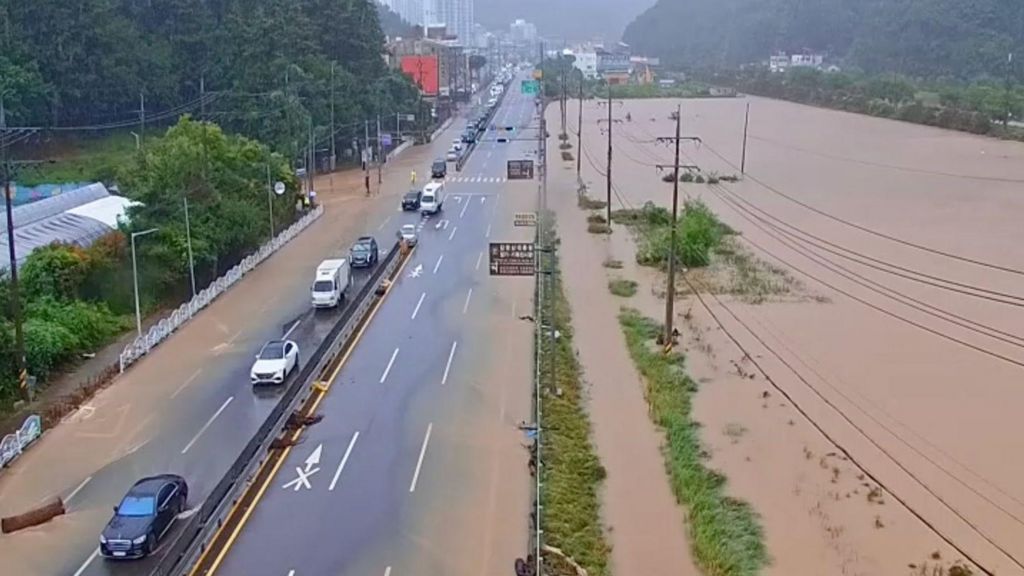
    A catastrophic wave of extreme rainfall has unleashed deadly destruction across South Korea’s southeastern Gyeongsang province, leaving one person dead and two injured after a landslide crashed into a residential building in the coastal city of Geoje. The disaster unfolded early Monday morning, when the mudslide fully engulfed the ground floor of a local apartment complex. Emergency response teams rushed to the site to extract three trapped residents, though medics later confirmed one victim had succumbed to injuries, according to local South Korean media reports.

    The deadly event came amid a historic downpour that shattered decades of weather records in Geoje. Official data from South Korea’s national meteorological agency shows the city recorded 124.5 millimeters of rainfall in just a single hour overnight between Sunday and Monday — the highest hourly precipitation total ever recorded in the city since systematic weather tracking began there in 1972. Cumulatively, Geoje received more than 400 millimeters of rain across the overnight period, overwhelming drainage systems and triggering widespread infrastructure failure.

    Witness videos shared across social media platforms paint a grim picture of the flooding: powerful, murky currents rush through downtown city streets, submerging passenger vehicles up to their windshields and sweeping loose debris across roadways. In response to the unfolding crisis, Geoje city authorities has implemented widespread service suspensions and safety measures: all popular tourist attractions in the city were closed to visitors on Monday, public bus routes have been taken offline due to flooded or damaged roads, and regular municipal household waste collection has been paused until conditions improve. As early as Sunday, local officials had already issued urgent public advisories urging residents to avoid non-essential travel, steer clear of high-risk areas including riverbanks and steep hillsides, and evacuate immediately to designated safe shelters if instructed by emergency personnel.

    This disaster in South Korea is part of a broader pattern of extreme weather sweeping across East and Southeast Asia this month, where successive storm systems have brought record flooding and landslides to populated areas of China, Japan, and the Philippines. Climate forecasters warn the 2024 typhoon season is on track to be far more intense than the historical average, a shift directly linked to a strong El Niño climate pattern that developed in June. El Niño drives elevated ocean and global atmospheric temperatures, which in turn boost the moisture content and destructive power of tropical typhoons and storm systems moving through the region.

    Just days before the Geoje landslide, Japan faced its own extreme weather catastrophe when “unprecedented” rainfall battered Chiba Prefecture, located just outside of Tokyo. That deluge claimed 10 lives and left thousands of air travelers stranded at Narita International Airport when floodwaters disrupted airport operations. More than 20,000 households across the prefecture lost power during the storm, and the 10th confirmed fatality was identified Sunday as a man in his 30s who died from carbon monoxide poisoning after running a portable generator inside his home to cope with the extended power outage, Japan’s national public broadcaster NHK reported.

  • Aussie rules footy players referred to police as detectives investigate sexual assault

    Aussie rules footy players referred to police as detectives investigate sexual assault

    An ongoing investigation into an alleged serious incident involving players from Australian Football League side Sydney Swans has rocked the Australian football community, after the club confirmed multiple squad members have been referred to Victoria Police over events that unfolded earlier this month in Melbourne.

    The controversy emerged shortly after the Swans claimed a victory at Melbourne’s iconic Melbourne Cricket Ground, with the incident alleged to have occurred in the hours following the match at an East Melbourne hotel on Wellington Parade in the early hours of Sunday morning.

    In a press conference held on Monday, Sydney Swans chief executive Matthew Pavlich confirmed that an unspecified number of players are connected to the investigation, and acknowledged the club’s profound reaction to the allegations. “Safe to say, we’re extremely shocked and disappointed that this has taken place, and that the players have found themselves in this situation,” Pavlich told reporters.

    Pavlich added that the club is still working to map out a clear timeline of exactly what occurred on the night in question, and declined to comment on the specific details of the allegations, including how many players are involved, whether any arrests have been made, or the exact nature of the claims. He also noted that widespread public speculation is unavoidable at this stage, but the ongoing police investigation means the club cannot release further details publicly.

    Victoria Police confirmed separately that its detectives are actively investigating a reported sexual assault at the East Melbourne hotel location, adding that the exact circumstances of the incident have not yet been confirmed, and the investigation remains active and ongoing.

    A spokesperson for the Australian Football League also confirmed that the Sydney Swans club promptly notified league administration of the matter as soon as it emerged, and the governing body is standing by to await the outcome of the police investigation before taking any further action.

  • Thousands in Indonesia await aid after quake kills 54, overshadowing Independence Day

    Thousands in Indonesia await aid after quake kills 54, overshadowing Independence Day

    As Indonesia marked its 79th Independence Day on Monday, thousands of survivors on the island of Flores remained stranded without critical assistance, just three days after a powerful seismic event devastated the region, claiming at least 54 lives, wounding scores of people and destroying or damaging hundreds of structures across the area.

    The weekend disaster upended life for communities across East Nusa Tenggara province, leaving residents to spend their national holiday mourning lost loved ones, searching for missing family members and enduring long waits for life-saving aid to reach cut-off villages that remain inaccessible after the quake. Official data from Indonesia’s National Disaster Management Agency confirms that more than 1,300 residential buildings suffered damage across the province, with nearly 250 homes completely reduced to rubble on Flores alone. The disaster forced roughly 5,000 people to flee their homes and seek refuge in temporary emergency shelters, while the total number of injured residents climbed to 135. On Sunday, the province’s governor officially declared a 14-day state of emergency to coordinate response efforts.

    According to measurements from the U.S. Geological Survey, the quake struck at a depth of 10 kilometers (6 miles) just before 6 a.m. local time on Saturday. Immediately after the initial tremor, authorities issued a tsunami warning that sparked panic among local residents who fled to higher ground, before the alert was ultimately lifted hours later. In the days since the main quake, geological teams have recorded more than 995 aftershocks, though only 46 have been strong enough to be felt by local communities. The persistent risk of additional strong aftershocks has forced thousands of Flores residents to camp outside damaged or destroyed homes under makeshift tarpaulin shelters overnight, too afraid to return to unstable structures.

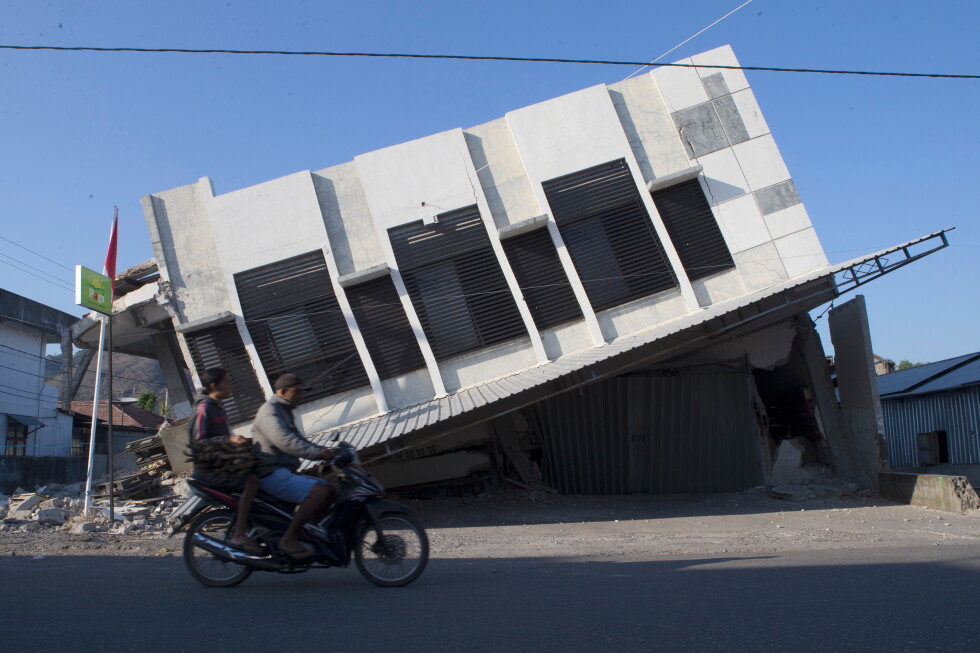
    An on-the-ground assessment by an Associated Press photojournalist revealed widespread destruction across the hardest-hit parts of the island. Fallen tree debris blocks critical access roads, while large boulders dislodged by earthquake-triggered landslides litter slopes and pathways. Entire neighborhoods have been reduced to rubble, with many homes completely shattered or left structurally unsound. Parked vehicles were crushed when adjacent multi-story buildings collapsed during the initial tremor.

    For many long-time residents of Flores, the scale of destruction has brought back traumatic memories of a devastating 1992 earthquake and tsunami that struck the same island, killing an estimated 2,500 people. Rasyid Jafar, a clothing trader based in Reo – the epicenter of the latest disaster in Manggarai regency – shared that his entire home had been reduced to rubble in the quake. “We need food, medicine and clean water urgently,” Jafar said.

    Mariana Tewu, another Reo villager, echoed that frustration, noting that even as small amounts of aid have begun to trickle into the area, survivors still lack basic infrastructure to prepare meals. “We have nothing left … Why isn’t there a public kitchen?” Tewu said.

    In response to the disaster, Indonesian authorities have deployed more than 3,500 military and police personnel to the affected zone, and approximately 275 tons of relief supplies have been allocated to the region. However, significant logistical challenges, including damaged roads and blocked access routes, have slowed delivery of aid to many of the hardest-hit remote communities.

    Indonesia, an archipelago nation made up of more than 17,000 islands, is no stranger to seismic activity. Its location along the Pacific “Ring of Fire” – a horseshoe-shaped band of active seismic faults and volcanoes that circles the Pacific Ocean – leaves the country consistently at risk of major earthquakes and volcanic eruptions. The region has seen some of the deadliest seismic disasters in modern history: a 7.5 magnitude quake in 2018 triggered a tsunami on the island of Sulawesi that killed more than 4,400 people, and the 2004 9.1 magnitude quake off the coast of Sumatra unleashed a massive Indian Ocean tsunami that killed approximately 230,000 people across 12 countries, with nearly 170,000 of those deaths occurring in Indonesia’s Aceh province alone.

  • The Iran war is forcing families to choose between school for their kids or survival

    The Iran war is forcing families to choose between school for their kids or survival

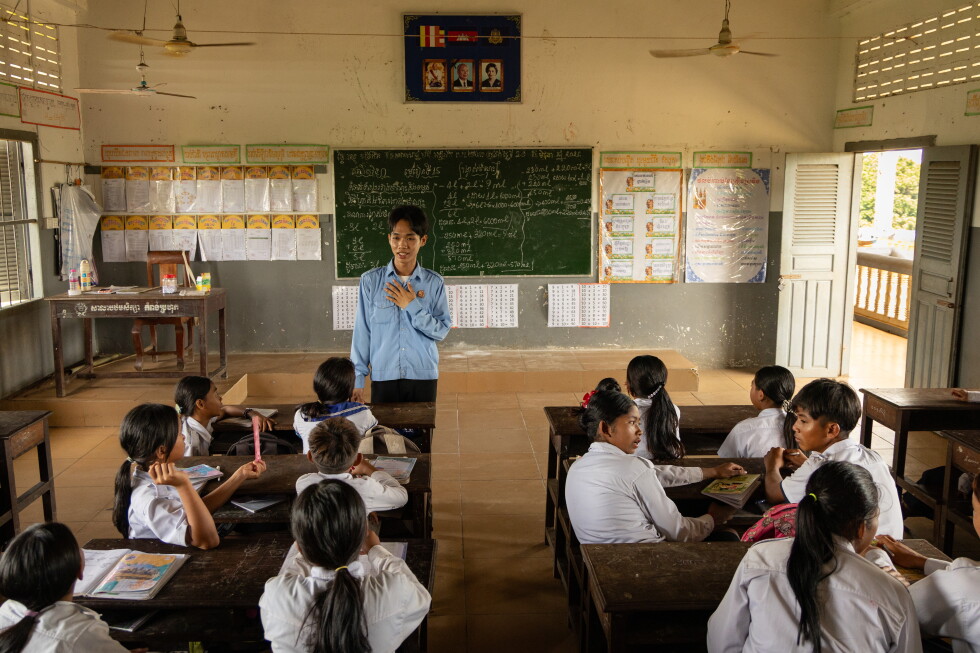
    In the floating fishing villages clustered along Cambodia’s Tonle Sap, Southeast Asia’s largest freshwater lake, 13-year-old Sou Sreynich holds tight to one quiet dream: to graduate and become a teacher. For children growing up on these volatile waters, however, reaching that goal has grown far harder in the wake of the Iran war, whose hidden economic shocks are stacking on top of decades of systemic and environmental hardship to derail education for the world’s most vulnerable children. Unlike the sudden, widely documented school closures of the COVID-19 pandemic, the war’s impact on global learning is incremental, invisible to most outside observers, and disproportionately borne by low-income families already teetering on the edge of financial collapse.

    Sreynich’s barriers to education began long before the conflict. Her mother delayed enrolling her until she turned 10, years behind most children her age, out of a common fear among Tonle Sap families: the small wooden boat trip to the local school could capsize, and only an older child could swim to safety. Even now, climate change has made lake conditions more unpredictable, with more intense, erratic floods and droughts that raise the risk of fatal travel to school. Teachers at Sreynich’s school confirm 10 students have drowned in transit over the years. Now, the war-driven spike in global gasoline prices has added an overwhelming new burden. For Sreynich’s family, which survives on small earnings from fishing, gutting fish for neighbors, and harvesting chili peppers, higher fuel costs have already cut into their income: they can no longer afford to travel to the deep-water zones of the lake where fish populations are larger and more consistent. When money runs too tight to cover the cost of boat fuel for the daily school commute, Sreynich has no choice but to skip classes to work alongside her parents. Each absence pushes her further behind, and she speaks with quiet urgency about her desire to stay on track: “I want to complete my studies.”

    The crisis playing out on Tonle Sap is not unique. A 2022 UNICEF report warns that if the conflict continues, by the end of the year it could push an additional 23.4 million children like Sreynich into extreme poverty globally, with 80% of those children concentrated across Africa and Asia. For households already struggling to cover basic costs, the ripple effects of the war force an agonizing choice: pay for fuel, food, rent and utilities, or keep every child enrolled in school.

    In Vietnam, along the country’s rocky northern coast, the same pressure has pushed children out of school and into dangerous child labor. Sixteen-year-old Ly and 13-year-old Nhi, two of nine children from a local fishing family, already bounced in and out of school for years as their parents struggled to make ends meet. When the war sent diesel prices soaring, their father’s employer could no longer afford to send fishing boats out to sea, and he lost his job. Buried under existing debt, the family could not cover the cost of feeding all nine children and keeping them in school. The two girls dropped out and moved to Hanoi, where they worked long, dangerous shifts in a local restaurant, handling sharp knives, hot cooking surfaces, and heavy loads. Nhi’s work was even illegal under Vietnamese child protection laws. It was only after intervention from Blue Dragon Children’s Foundation, a Hanoi-based nonprofit, that the sisters were able to return to class. Michael Brosowski, founder of the organization, says the war’s impact builds slowly but is catastrophic. When families hit a financial breaking point, he explains, they are forced into a kind of triage: they keep one or two children in school while pulling others out to work to support the household. Children out of school are exponentially more vulnerable to exploitation, human trafficking, and long-term homelessness. “It’s the tipping point for a lot of families,” Brosowski says.

    Higher energy costs have driven up prices across every part of education delivery, from student and teacher commute costs to the price of basic classroom supplies like pencils and chalk. For remote communities where travel is already a major barrier, it is now even more expensive for teachers and aid workers to reach students. Governments across the developing world, meanwhile, are grappling with skyrocketing domestic food and energy costs, crowding out already limited public funding for education. On Tonle Sap, where all supplies must be transported in by boat, every cost is already higher than the national average. Samphors Vorn, who works for the international nonprofit Aide et Action which supports Sreynich’s school, notes that even the cost of electricity to run the school’s computer lab is 10 times higher than it is on the Cambodian mainland.

    Developing countries dependent on imported energy have borne the brunt of the war’s economic shocks, with rising fertilizer costs and falling international remittances adding additional strain to already fragile economies. In Bangladesh, where the economy was already under significant pressure before the conflict, the war threatens to erase decades of slow, steady progress in expanding access to education and reducing childhood poverty. A recent UN Development Programme report warns that pressure on government finances from rising fuel and subsidy costs will leave far less public funding available for both health care and education. Across South Asia, girls are disproportionately affected by these economic shocks, as families facing resource scarcity often prioritize education for sons over daughters. Arshad Malik, of the global nonprofit Save the Children International, says that rising economic hardship can lead to more girls dropping out of school and a surge in child marriage. UNICEF data confirms South Asia accounts for 45% of the world’s child brides, the highest share of any global region.

    Even school meal programs, which serve as a critical lifeline to keep 466 million children in school globally, supporting healthy development and consistent learning, are at risk. Conflict-driven disruptions to fertilizer exports and higher transport costs have put these programs under severe pressure, especially in West and Central African nations that rely heavily on imported food, according to Sabrina Hervey, policy advisor with the Qatar-based Education Above All Foundation. Across northern Nigeria, aid and local health workers already report a growing number of children relapsing into malnutrition as costs rise. “I’m really afraid to see what’s going to happen,” Hervey says.

    This coverage of climate and environmental issues by The Associated Press receives financial support from multiple private foundations, with The AP retaining full editorial independence over all content. AP’s standards for working with philanthropic partners, a full list of supporters, and funded coverage areas are available at AP.org.