博客

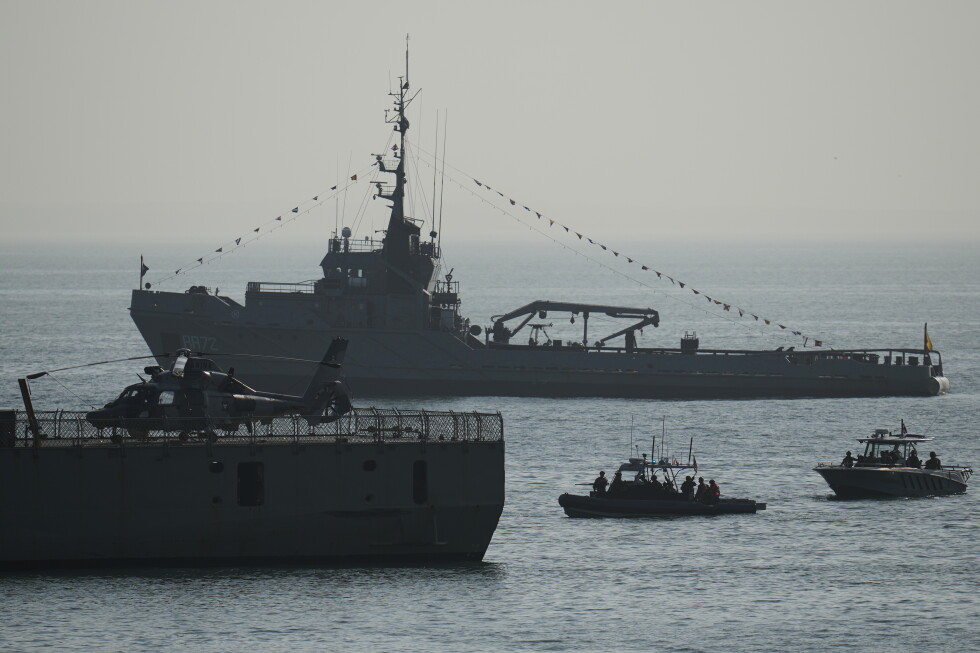
  • After killing hundreds in boat strikes, US military expands campaign on land in Latin America

    After killing hundreds in boat strikes, US military expands campaign on land in Latin America

    One year after the U.S. military launched a lethal campaign of airstrikes targeting boats accused of trafficking drugs off Latin America’s Caribbean and Pacific coasts that has killed hundreds of people, the second Trump administration is moving to expand this operation onto dry land — negotiating agreements to deploy American ground forces in partner nations across the region, a move that has already ignited fierce debate over national sovereignty and civilian harm.

    U.S. Defense Secretary Pete Hegseth made the announcement last week during an official visit to Panama, revealing that Colombia, Guatemala and Honduras had already signed on to allow joint U.S.-local military operations against organized criminal groups on their territory. Ecuador became the first country to launch such joint missions back in March, but Hegseth’s claim of a Guatemalan agreement has been flatly denied by Guatemala City.

    Speaking alongside troops during a jungle military drill in Panama, Hegseth framed the land expansion as a natural extension of the existing at-sea strikes. “Same effect on land,” he said. “And so we’re working with Ecuador. We’re working with Colombia. We’re working with partners to bring the fight to the (designated terrorist organizations) on land.”

    This planned expansion marks a definitive new phase of the Trump administration’s broader regional strategy, which aims to pressure Latin American governments to align with U.S. security priorities and cement what the White House describes as “American dominance over the Western Hemisphere.” In recent months, a growing wave of Trump-aligned conservative leaders have won election across the region, giving Washington a cohort of more receptive partners to advance its agenda. But independent analysts and regional observers warn that the widening U.S. military footprint carries severe risks: mounting civilian casualties, and a widespread popular backlash against American intervention that will outlive the current Republican administration.

    Michael Shifter, a leading Latin America expert at the Washington-based Inter-American Dialogue think tank, argued the campaign is less about cooperative counter-narcotics efforts and more about projecting American power. “What’s going on is an attempt to legitimize the increased use of the U.S. military in the region,” Shifter explained. “It projects power, demonstrates military superiority and enables Washington to impose its agenda. This is not cooperation, it’s obviously a very asymmetrical relationship.”

    The United States has maintained a military presence in Latin America for generations, providing allied governments with weapons, intelligence, and training to counter drug trafficking, but this history is marred by a controversial legacy of U.S. support for military coups and authoritarian dictatorships. Since Trump returned to the White House in January 2025, his administration has pursued the most interventionist U.S. policy toward the region in decades.

    To date, the administration has blacklisted 20 Latin American criminal groups as official “foreign terrorist organizations”, deployed U.S. special forces to Venezuela to capture former president Nicolás Maduro, and embedded CIA agents in drug lab raids across Mexico. The year-long boat strike campaign has killed more than 200 people in over 60 separate attacks across the Caribbean and eastern Pacific, but the administration has released little public evidence confirming that those killed were actually “narco-terrorists”, prompting widespread scrutiny of the strikes’ legality and proportionality.

    William LeoGrande, a Latin America specialist at American University, noted that sustained frontline combat operations conducted jointly with local forces are a sharp break from past U.S. engagement in the region, and will test long-held regional sensitivities over national sovereignty and foreign military presence on Latin American soil. “This is new and different,” LeoGrande said.

    Hegseth released few concrete details about what the planned joint operations in Colombia, Guatemala and Honduras will actually entail, including force levels, rules of engagement, or command structure. In Colombia, where Trump-backed President Abelardo de la Espriella just took office earlier this month, Hegseth raised the prospect of U.S. troops joining direct strikes against the National Liberation Army (ELN), Colombia’s last remaining large guerrilla group. According to Hegseth, de la Espriella has explicitly requested expanded U.S. military involvement. De la Espriella doubled down on this hardline position Saturday, vowing that ELN rebels would “pay a high price” for a recent drone attack on Colombian government troops.

    Hegseth framed the expanded campaign by equating drug trafficking groups with the transnational Islamic extremist networks that dominated U.S. national security strategy for decades after the 9/11 attacks. “Anywhere you traffic drugs or you threaten the American people or our partners, you are a target just like ISIS or al-Qaida,” he said.

    Ecuador already offers a clear preview of how joint operations function in practice. The country launched its bilateral raids with the U.S. earlier this year, even after 2025 a national referendum saw an overwhelming majority of Ecuadorian voters reject the establishment of any foreign military bases on Ecuadorian soil. A recent investigation by The New York Times found that one March strike targeting an alleged drug camp instead destroyed a working cattle farm, causing unreported civilian damage.

    The push for new agreements has made the most progress among the Trump administration’s ideological allies: conservative leaders who won recent elections on promises of aggressive crackdowns on rampant violent crime. Guatemala stands out as a key exception. While its progressive government has maintained close security cooperation with Washington despite political differences, President Bernardo Arévalo has explicitly denied agreeing to joint anti-drug operations, noting that any such agreement would be illegal without formal approval from Guatemala’s congress. Honduras, Colombia and Ecuador have not responded to requests for comment on Hegseth’s recent remarks. Mexico, a critical source and transit hub for fentanyl and other illicit drugs bound for the United States, has remained outside the emerging anti-trafficking alliance. Progressive Mexican President Claudia Sheinbaum has maintained close security cooperation with Washington, but has repeatedly resisted mounting U.S. pressure to allow American military forces to operate against cartels on Mexican territory.

    Adam Isacson, a defense analyst at the Washington Office on Latin America, noted that even sympathetic right-leaning governments may ultimately balk at the terms of expanded U.S. military involvement. “Ultimately, the United States will have to define what ‘joint operations’ means in each of these countries. It may discover pretty quickly that this is something most governments — even governments on the right — are quite uncomfortable with,” Isacson said.

    Regional and security experts have raised widespread questions about whether a more militarized approach will actually deliver long-term improvements in public security. Shifter argued the campaign is at least partially a public demonstration of U.S. power, coming on the heels of the capture of Maduro in Venezuela, as the Trump administration seeks to offset high-profile foreign policy setbacks in other regions, most notably the Middle East.

    Other observers warn the strategy carries a high risk of civilian casualties, particularly in Colombia, where armed groups operate embedded within civilian communities and often function as the de facto ruling authority in remote regions outside government control. Jeremy McDermott, co-director of Bogotá-based investigative outlet InSight Crime, argued that large-scale military strikes are unlikely to eliminate these groups, and will instead push them to adapt in ways that harm local populations. “The U.S. bombs an ELN camp in Colombia or in Venezuela, what is the first thing the ELN are going to do? They’re going to dismantle all their camps and move into the villages and towns,” McDermott explained.

    In the long term, experts warn that deeper U.S. military involvement will put regional leaders in a difficult position, forcing them to balance domestic demands for greater security against widespread public anger over the surrender of national sovereignty. This pressure could ultimately constrain even the Trump administration’s closest allies. “All of these presidents, no matter how far right they are, face pressure to do something about security and to make a show of pursuing the ‘bad guys’ who are making people feel unsafe. There is broad agreement on that,” Isacson said. “But they also know there is only so much sovereignty they can cede before public opinion begins turning against them.”

    This report was coordinated by DeBre from Buenos Aires, Argentina, with additional reporting from Associated Press journalists based across the region: Sonia Pérez D. in Guatemala City, Marlon González in Tegucigalpa, and Astrid Suárez in Bogotá.
  • One Nation MP David Farley had ‘great time’ at mardi gras, likens One Nation to United Nations

    One Nation MP David Farley had ‘great time’ at mardi gras, likens One Nation to United Nations

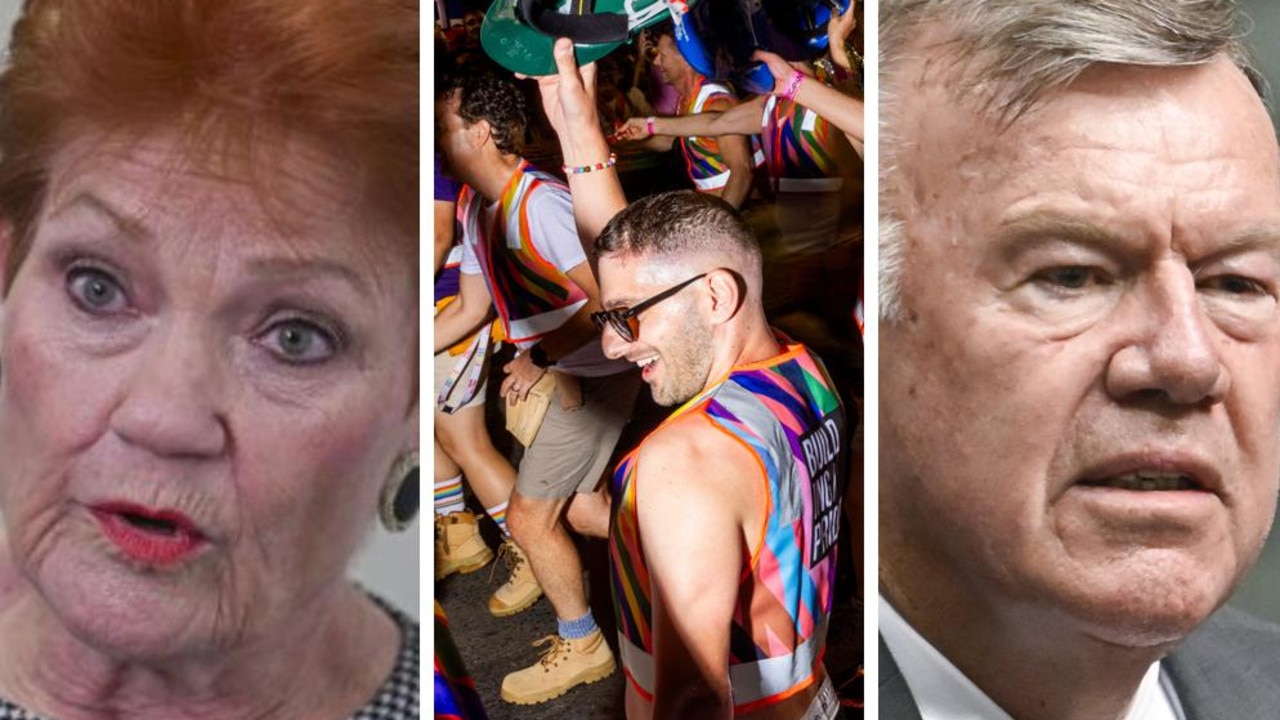
    Australia’s One Nation party has found itself mired in internal contradiction and public scrutiny over conflicting stances on Sydney’s annual LGBTQI+ Mardi Gras celebration, with party founder Pauline Hanson doubling down on her decades-long opposition to the event while one of her own sitting MPs publicly praised his experience attending as an enjoyable night of entertainment.

    The clash of views comes amid a turbulent period for the populist political party, which has already faced public backlash over harmful comments from a former One Nation candidate who incorrectly labeled gay people as mentally ill. That candidate has since issued a formal apology for the remarks, and the mixed messages around Mardi Gras have only amplified questions about the party’s internal diversity and ideological consistency on LGBTQI+ issues. Last week, former National Party leader Barnaby Joyce even drew widespread attention for his offbeat claim that One Nation is “one of the gayest parties in Australia”, adding another layer of chaos to the ongoing conversation.

    In public comments made to media on Sunday, Hanson, the party’s long-serving national leader, made clear her position has not shifted since she first became a high-profile opponent of the celebration more than 30 years ago. “I still don’t like the gay mardi gras, but that’s my opinion,” Hanson told reporters. When asked if she had ever attended the iconic annual event, she was clear: “Have I ever been to one? No. Do I intend to go? No, I don’t. I think your own personal sexuality should be kept … behind closed doors. It’s no one’s business to do it out there with the gay mardi gras anywhere.”

    But David Farley, the One Nation MP who won the regional seat of Farrer in a May by-election and delivered his maiden parliamentary speech just last week, offered a starkly different perspective when questioned about the event. Farley revealed he had already attended Mardi Gras alongside his sister, who is a member of the LGBTQI+ community, and an American friend visiting from Tennessee.

    “We started to walk our way back and we walked right into the start of the gay mardi gras,” Farley told the Australian Broadcasting Corporation. “Now, I can tell you, this gentleman comes from pretty conservative roots down there in Tennessee, and he was taken aback by it. But by the end of the night, we walked a couple of hundred – three or 400m into it – and it was a great night of entertainment.” Farley confirmed he would not attend the event again this year, and clarified his own stance: “It’s a cultural celebration for that group of people … am I for it? No, not really. But I’m not against it, put it like that.”

    Farley went on to frame the differing views within One Nation as a sign of the party’s broad inclusivity, rather than a flaw. He described the party as a “pretty broad church” that draws a diverse range of members from different backgrounds. “You look across our party now, sometimes I walk into the different offices and consider that wow, we’re part of the United Nations,” he said. “Sometimes I walk into it and I see part of it, I go, well, we’re part of the Gay mardi gras already. I think, you know, One Nation represents all Australians. We don’t have to align ourselves with one side or the other. We just want Australians to prosper, have a healthy life, a happy life, and a good life, and those choices, what we’re talking about now, are up to the individual.”

    The split public comments have reignited debate over One Nation’s positioning on social issues, following weeks of controversy over the party’s internal messaging around the LGBTQI+ community.

  • Myanmar’s Min Aung Hlaing heads to Russia to deepen strategic ties with Moscow

    Myanmar’s Min Aung Hlaing heads to Russia to deepen strategic ties with Moscow

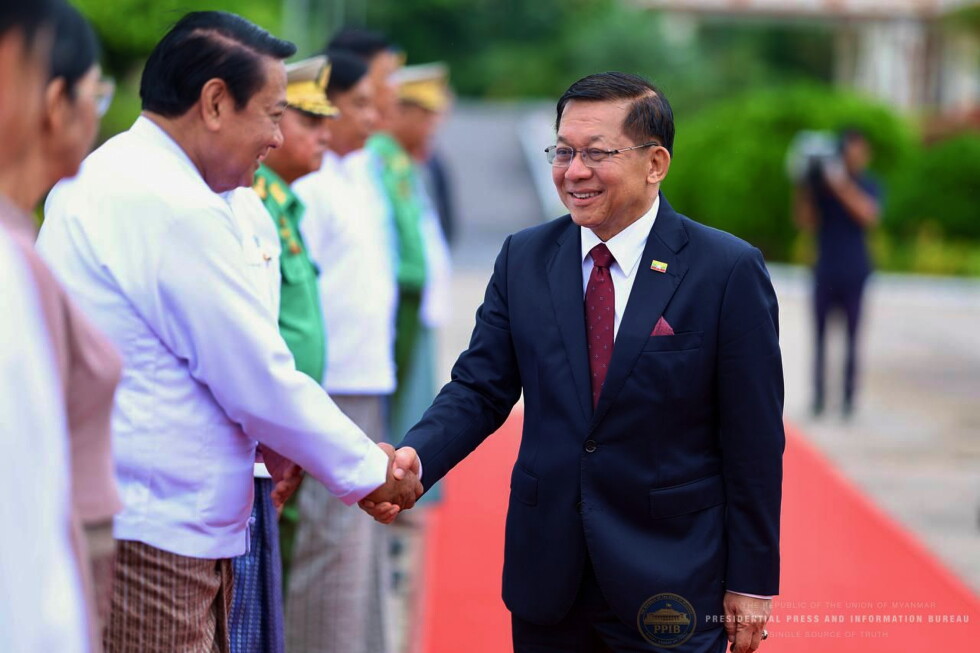
    BANGKOK – The leader of Myanmar’s military-installed government has launched an official visit to the Russian Federation, with a scheduled meeting with President Vladimir Putin focused on expanding bilateral connections and strategic collaboration between the two nations, Myanmar state media has confirmed.

    Min Aung Hlaing, who was inaugurated as Myanmar’s president in April, left the country’s capital Naypyitaw on Monday morning alongside a delegation of cabinet members. According to the state-run Myanmar Radio and Television (MRTV), the delegation will hold discussions with Putin and other senior Russian leadership across a wide range of areas, including diplomatic relations, economic cooperation, security collaboration, and social policy coordination.

    Moscow, alongside Beijing, stands as one of the most prominent international backers and primary arms suppliers to Myanmar’s junta. Media and conflict monitors have documented that Russian-manufactured fighter jets have been deployed in strikes against territory controlled by Myanmar’s ethnic minority armed groups, many of which align with pro-democracy resistance movements fighting the military government.

    This trip is not the first meeting between the two leaders: Min Aung Hlaing previously held discussions with Putin on the sidelines of Moscow’s World Atomic Week Forum last September. To date, Putin has not conducted an official visit to Myanmar.

    The Russian trip marks the seventh visit Min Aung Hlaing has made to Russia since the military, which he commanded at the time, seized control of the country from the democratically elected government of Aung San Suu Kyi in February 2021. It is also the latest stop in a string of foreign visits that have already taken him to regional neighbors including China, India, Laos, and Thailand. These trips are part of a broader push by the junta leader to secure greater international recognition and rebuild Myanmar’s diplomatic standing after the 2021 coup.

    Despite this outreach, Min Aung Hlaing’s government remains widely sidelined in the global community. Western nations have imposed sweeping economic and political sanctions on the military leadership in response to the coup and its violent crackdown on opposition, which has killed thousands of civilians and sparked an ongoing nationwide civil conflict.

    In addition to his high-level diplomatic talks, MRTV confirmed that Min Aung Hlaing will also take part in a bilateral Myanmar-Russia Business Forum during his visit, a move intended to boost cross-border commercial ties between the two countries.

    The two nations have already built out a range of collaborative agreements beyond arms sales. They have conducted joint military exercises, signed a deal to develop nuclear energy infrastructure in Myanmar, and established cooperation on human spaceflight initiatives, including plans to select and train Myanmar’s first ever cosmonaut. On the global stage, Russia has repeatedly defended Myanmar’s military government in multilateral international forums, while the junta has consistently aligned itself with Moscow’s foreign policy priorities.

  • Ukrainian strikes kill six in Russia, acting governor says

    Ukrainian strikes kill six in Russia, acting governor says

    A fresh wave of reciprocal deadly strikes between Russia and Ukraine has left at least 13 people dead across both territories, escalating a rapid intensification of cross-border attacks that has marked the latest phase of the full-scale war now in its fourth year.

    Acting governor of Russia’s Belgorod region, a border area that has faced frequent attacks amid the conflict, Alexander Shuvaev, confirmed via a Telegram post Monday that six people were killed and four more injured in overnight Ukrainian missile strikes on the region. Among the wounded was a 14-year-old child, who was transported to a hospital for treatment, while two additional injured people received on-site medical care. The attack damaged a local building and set fire to a vehicle in the village of Koloskovo, located in Valuysky district just kilometers from the Russia-Ukraine border.

    This latest strike came just 24 hours after Russian officials described what they called the largest-scale Ukrainian attack on Russian territory so far this year. That assault, launched Saturday night, saw Ukraine deploy a total of 822 drones across multiple Russian regions, with more than 600 of those unmanned vehicles targeting Moscow alone. Russian regional authorities called the assault on the capital one of the most massive drone strikes it has faced in recent years.

    Saturday’s attack left seven people dead across Russia: five in the southwestern Rostov region, one woman killed when a civilian bus in Belgorod was hit, and an 83-year-old man who died in a drone strike in the Moscow region. A major logistics warehouse belonging to Wildberries, Russia’s largest e-commerce retailer often dubbed the country’s equivalent to Amazon, was also damaged. Ukraine’s defense ministry confirmed Sunday that it has repeatedly targeted Wildberries facilities since July, and that the latest strikes have disabled seven out of the company’s 10 largest logistics hubs.

    Russia responded immediately to the Ukrainian drone offensive with its own intensified wave of missile and bomb strikes across Ukraine over the weekend, which left seven Ukrainians dead and more than 39 others injured. In Zaporizhzhia, one man and one woman were killed when a guided aerial bomb struck a private residence, with five additional fatalities recorded in attacks across other Ukrainian regions. On Monday, Ukrainian national energy company Naftogaz announced that Russian forces had targeted its energy infrastructure facilities 13 times across the country over the preceding seven days.

    One of the Russian strikes on Kyiv Saturday night hit an open-air book market in the city’s Pochayna district, leaving charred books scattered across the ground in images released to media. Russia stated that its strikes on the capital targeted two military-related facilities: a FirePoint production site manufacturing parts for Ukrainian Flamingo missiles, and a factory producing components for Ukrainian unmanned combat drones.

    Speaking this week, Ukrainian President Volodymyr Zelensky noted that Russian attacks have hit 13 of the country’s regions over the past seven days, with Russian forces launching over 1,550 attack drones, nearly 1,560 guided aerial bombs, and 62 missiles against targets inside Ukraine. Both Moscow and Kyiv have repeatedly denied intentionally targeting civilian infrastructure and civilian populations, and each accuses the other of attacking non-military sites as a tactic of war.

    Russia launched its full-scale invasion of Ukraine in February 2022, and currently maintains control of roughly 20 percent of Ukraine’s internationally recognized territory. Over recent weeks, Kyiv has dramatically stepped up the frequency and scale of drone strikes deep inside Russian territory, targeting infrastructure and military sites hundreds of kilometers from the front line.

  • Perth mum Saoirse Wynne, 33, charged over fatal crash that killed four-year-old daughter Layna Leavy

    Perth mum Saoirse Wynne, 33, charged over fatal crash that killed four-year-old daughter Layna Leavy

    A devastating car collision in Perth’s southeastern suburb of Canning Vale has ended in criminal charges for a local mother, after the crash claimed the life of her 4-year-old daughter and left her 8-year-old son seriously injured. The incident, which unfolded just after 3 p.m. on June 3, has sparked an outpouring of public grief from both Australian and Irish communities, after the family recently relocated to Perth to build a new life.

    Major Crash investigators from Western Australia Police confirmed this week that 33-year-old Saoirse Wynne, a resident of Southern River, faces four separate criminal charges in connection with the crash. Official accident reports outline that Wynne was operating a grey Holden Astra traveling east along Boardman Road when her vehicle collided with an orange Ford Mustang heading north on Garden Street, the main intersecting roadway at the site. All three occupants of the Astra — Wynne and her two young children — were extracted from the wreckage and rushed immediately to nearby hospitals for emergency care. Despite rapid medical intervention, 4-year-old Layna Leavy succumbed to her injuries in hospital care.

    The charges brought against Wynne go beyond the core dangerous driving count, revealing multiple regulatory failures on the day of the crash. Investigators confirmed the charges include: careless driving causing death, careless driving causing grievous bodily harm, failure to secure a child passenger aged between 4 and 7 in an approved child safety restraint, and driving without a valid license — as Wynne never obtained a driving authorization in Australia. Wynne is scheduled to make her first court appearance at Armadale Magistrates Court on September 29.

    In the wake of Layna’s death, community members launched a GoFundMe campaign to support the grieving family, covering funeral expenses and lost income while Wynne and her relatives take time off work to mourn. As of the latest update, the campaign has raised more than $100,000 in donations from hundreds of supporters.

    A family member shared a tribute on the fundraising page, noting the family had relocated from Ireland to Perth earlier in 2024, chasing a fresh start in Australia. “In less than four short years, Layna had already woven herself into the hearts of so many, here in Australia, and across the community they had left behind in Ireland,” the statement read. “The flowers, teddy bears, and dolls placed at the crash site by friends and strangers demonstrate the mark this little girl made on the world in just four short years. The outpouring of love from the local Perth community and from Ireland is a testament of the impact this little girl had on so many lives and a reminder that Layna was, and always will be, deeply loved.”

    Local residents have continued to leave small tributes at the intersection where the crash occurred, with many describing the 4-year-old’s death as a heartbreaking tragedy for the newly relocated family.

  • Post-mortems to take place after five boys killed in crash on wrong side of motorway

    Post-mortems to take place after five boys killed in crash on wrong side of motorway

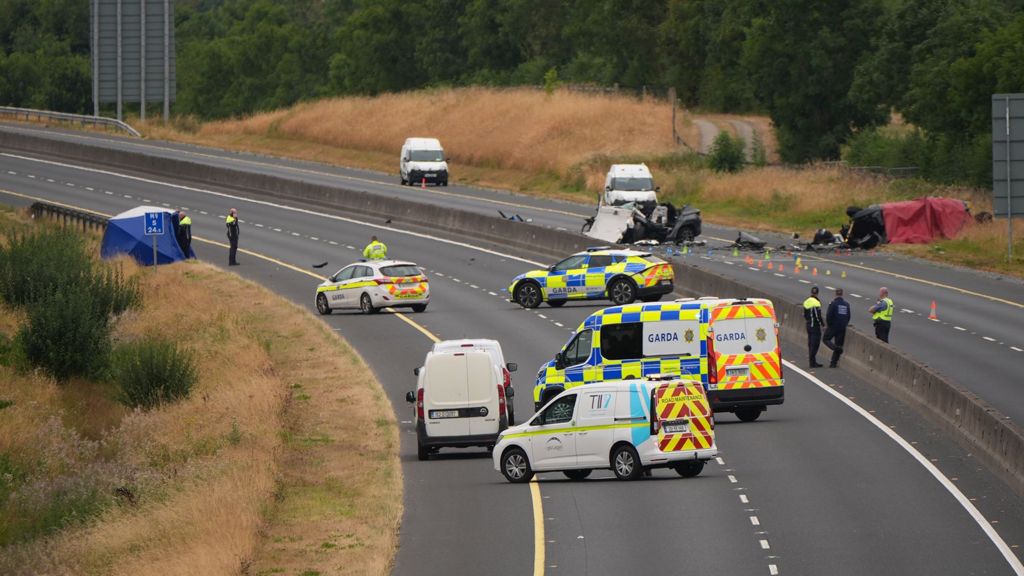
    A devastating early-morning wrong-way collision on a major Irish motorway has left five teenage boys dead and multiple other people, including a child, with critical injuries, sending shockwaves across the local community of County Kildare.

    The crash unfolded at approximately 3 a.m. local time on Sunday, between Junction 3 and Junction 4 of the M9 motorway near Moone, along the northbound carriageway. According to official confirmation from Gardaí, Ireland’s national police service, the vehicle carrying the five teenagers was traveling against the flow of traffic, moving southbound along the northbound lanes, when it struck an oncoming car head-on.

    Garda Commissioner Justin Kelly confirmed in the wake of the incident that no police pursuit of the teenagers’ vehicle was underway before the collision took place. Forensic investigation teams have already wrapped up their on-site evidence collection, and post-mortem examinations are scheduled to be conducted on the bodies of the five deceased boys in the coming days.

    The occupants of the second vehicle hit in the collision included three women — two in their 30s and one in her 20s — and a young child. All four were rushed to nearby hospitals with serious, life-altering injuries. Local councillor Ivan Keatley of Fine Gael told media that preliminary information suggests the family was en route to an airport to begin a planned holiday when the tragedy occurred.

    Commissioner Kelly labeled the crash an unthinkable, horrific incident rooted in reckless, irresponsible, and dangerous driving. In stark comments addressing a growing trend of dangerous road behavior, he noted that some wrong-way driving incidents are carried out intentionally to garner social media engagement, putting countless innocent lives at risk for online likes. “What makes this reckless behaviour even more appalling is that in some cases it is being done for social media likes regardless of the potentially devastating impact it might have on innocent people and themselves,” Kelly said. He added that Gardaí operate under immense pressure when responding to such incidents, balancing the need to stop dangerous vehicles while protecting the safety of all other road users.

    Local officials described the immediate aftermath of the crash as profoundly disturbing. Keatley explained that a passing motorist stumbled on the scene first and raised the alarm, with emergency services arriving at the site almost instantly. The wreckage of the two vehicles was visible from a nearby motorway bridge, and the extent of the damage made the severity of the incident immediately clear. “Horrific is the only way that could describe the condition that the two cars were left in,” Keatley told BBC NI’s *Good Morning Ulster*. He added that the local community has moved from initial shock and disbelief to widespread anger that such a preventable tragedy could occur. “Obviously our thoughts and prayers are with the families of the victims and we are all hoping that the other injured parties can pull through,” he said.

    Shónagh Ní Raghallaigh, a Sinn Féin TD for Kildare South, echoed those sentiments, describing the crash as an absolutely catastrophic event. “This loss of life is colossal and the effect those losses will have on their friends and families is incalculable,” she said.

    In a public appeal, Gardaí have asked any drivers who were traveling on that stretch of the M9 around the time of the collision, or any witnesses who saw the incident or the wrong-way vehicle before the crash, to contact investigators with any information that could aid the inquiry.

  • Carlton appoints interim boss Josh Fraser as permanent head coach

    Carlton appoints interim boss Josh Fraser as permanent head coach

    In a move that ends weeks of swirling speculation, AFL side Carlton has formally confirmed that interim coach Josh Fraser will step into the full-time senior coaching role for 2027 and beyond, capping off a dramatic underdog run that has propelled the club to an unexpected wildcard spot in the finals series.

    Fraser’s rise to the top job comes after a nearly perfect stint as the club’s temporary leader, a performance that turned Carlton’s grim season around entirely. When the Blues parted ways with former senior coach Michael Voss in round 9, the club sat at just one win from nine opening matches, with little hope of securing a place in the finals. Poached from Collingwood earlier in 2026, where he served as head of player development, the former ruckman stepped into the interim role and immediately delivered results.

    Over his first 13 matches at the helm, Fraser claimed an impressive 10 victories. That turnaround peaked on Sunday, when a hard-fought draw against the Western Bulldogs at Marvel Stadium locked in Carlton’s place for wildcard weekend, a result few pundits predicted at the midpoint of the season. It also cemented Fraser’s status as the overwhelming favorite for the permanent role, beating out a field of high-profile candidates that included Corey Enright of St Kilda, Jaymie Graham from Fremantle, and Geelong’s James Kelly.

    The Carlton board held deliberations on Monday to finalize the appointment, following Sunday’s season-defining draw. Sources close to the club confirm Fraser is set to put pen to paper on a multi-year contract, with an official public announcement scheduled to drop later this week. Now, the club turns its attention to the final round of the home-and-away season, where Carlton will host Fremantle at Marvel Stadium this weekend to wrap up their regular season campaign before the wildcard match.

  • Axe hangs over Australian batters after Darwin ‘disaster’

    Axe hangs over Australian batters after Darwin ‘disaster’

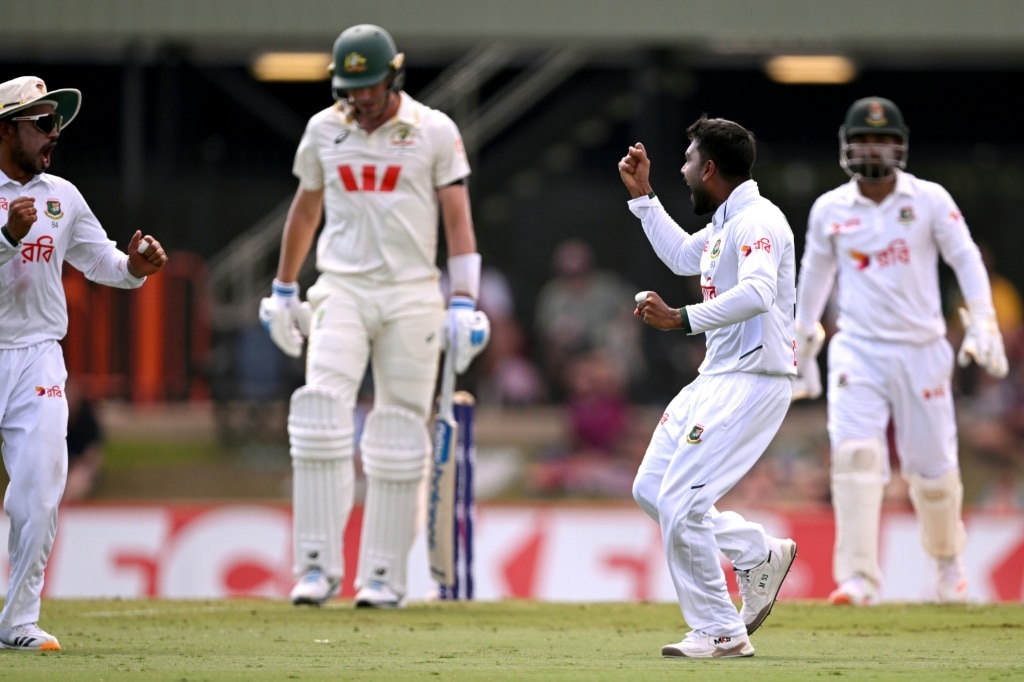
    Cricket’s world number one Test side Australia is reeling from one of the most shocking upsets in modern international cricket, after an understrength Bangladesh side claimed a dominant nine-wicket victory in the series opener in Darwin that has left the hosts facing urgent calls for batting lineup changes. Openers Jake Weatherald and middle-order batter Marnus Labuschagne have emerged as the two players most at risk of being dropped ahead of the second Test, which kicks off this Saturday in Mackay.

    Heading into the first match, the result was widely predicted to be a one-sided Australian win. Bangladesh had collapsed to an innings defeat in their only warm-up fixture, and arrived in Darwin without their injured pace spearhead Nahid Rana. But Bangladesh defied all pre-series expectations to dominate all four days of the Test, securing a historic victory that left the Australian camp shell-shocked and facing widespread internal and external recrimination.

    This is not Australia’s first surprise home Test defeat in recent years — the side fell to an eight-run loss to the West Indies at the Gabba in 2024 — but the comprehensiveness of the Darwin loss has drawn unprecedented criticism. Australian media labeled the result a “national disaster” and the most embarrassing performance in the country’s modern Test cricket history on Monday.

    Leading Australian cricket figures have joined the calls for immediate change, including legendary former captain Ricky Ponting, who argues the time has come for selectors to make tough decisions to kickstart long-overdue team regeneration. “I’m the last one to want to make change,” Ponting told Channel Seven as the Test neared its conclusion. “As a captain or as a player I wanted to keep a group together, so it has to get to a bad point before I start saying you’ve got to leave somebody out. But there’s been enough evidence coming here to suggest they weren’t going to lose anything, or much at all, by starting that regeneration, bringing in another opener, bringing in someone at three. I think that has to happen.”

    Critics have pointed to Australia’s underwhelming batting performance as the core of the problem. With only Steve Smith, who scored 71 in the first innings and 44 in the second, and Cameron Green, who hit a match-saving century in the second innings, posting meaningful scores, the rest of the batting order collapsed through a string of soft, unforced dismissals. Since the start of the 2025 Ashes series against England, both Weatherald and Labuschagne have held batting averages below 27, leaving both running out of opportunities to prove their form.

    Former Australian opener Matthew Hayden echoed Ponting’s concerns, noting that consistent early wickets put unnecessary pressure on Australia’s middle order. “The 1-2-3, as Ricky and I will tell you, are absolutely fundamental to the set-up of a batting team,” Hayden told Channel Seven. “When they are constantly putting that middle order under pressure, Steve Smith arriving way earlier than he ever needs to be, then you’ve got to start to answer those questions.”

    Australian captain Pat Cummins has acknowledged that persistent batting failure has become a worrying trend, confirming selectors are willing to look beyond the existing 13-man squad for replacements. The most widely predicted change is veteran batter Matt Renshaw coming into the side to replace Weatherald at opener, but there is also growing momentum to hand opportunities to young, emerging players who have impressed in domestic cricket. Prospects including Sam Konstas, Campbell Kellaway, Ollie Peake and Cooper Connolly are all waiting in the wings for a first Test call-up.

    Australian great Mark Waugh has argued selectors “have to bite the bullet at some stage,” while former star opener David Warner — whose retirement in 2024 left a gaping hole at the top of Australia’s batting order that has yet to be permanently filled — added: “I think we’ve got to start blooding some youngsters.” With Australia set to face a challenging three-Test tour of South Africa in October, giving young prospects match time in Mackay to gain international experience makes strategic sense for the long term.

    For Labuschagne’s number three spot, media reports suggest Kurtis Patterson and Nathan McSweeney are the current frontrunners to replace him, though neither has been in outstanding recent domestic form.

    While the batting unit is facing the most intense scrutiny, there are also questions over Australia’s veteran bowling attack, which has remained unchanged for several years. All four core bowlers — captain Pat Cummins, Mitchell Starc, Josh Hazlewood and Nathan Lyon — are still favored to retain their spots for now, despite their advanced ages. Hazlewood, returning from injury, silenced critics with a six-wicket haul in Bangladesh’s first innings that cemented his position as Australia’s first-choice fast bowler. The most vulnerable bowler is 38-year-old off-spinner Nathan Lyon, also returning from injury, who was outbowled by Bangladesh’s Mehidy Hasan Miraz. Twenty-five-year-old understudy Todd Murphy is the leading candidate to replace Lyon if selectors opt for change.

  • A temple stampede and a hotel fire in eastern India kill 14 and injure several

    A temple stampede and a hotel fire in eastern India kill 14 and injure several

    Two separate fatal accidents at religious destinations in northern India on Monday have claimed a total of 14 lives, leaving dozens injured and renewing concerns over systemic public safety failures during large-scale religious gatherings in the country.

    The first tragedy unfolded just before dawn in the temple town of Tarapith, located in West Bengal’s Birbhum district. According to local media reports from Press Trust of India, a fire ignited around 4:30 a.m. on the ground floor of a four-story hotel that primarily hosted pilgrims visiting the town’s famous Shiva-focused temple complex. Most guests were asleep when the blaze broke out, leaving little time for organized evacuation.

    Preliminary inquiries from hotel management point to an electrical fault near the hotel’s reception area as the likely origin of the fire. Fire response teams managed to bring the blaze under control quickly, but the casualty toll reached at least seven dead, with multiple others admitted to local hospitals for critical care. Injuries ranged from severe burns to smoke inhalation and asphyxiation, per local reporting. Authorities have launched a full investigation to confirm the exact cause of the fire.

    Only two hours later, a second deadly disaster struck more than 400 kilometers west in Lakhisarai district, Bihar. Thousands of Hindu devotees had gathered near Ashok Dham Temple to mark the third Monday of Shravan, the holiest month in the Hindu religious calendar. Dedicated to the worship of Lord Shiva, the Shravan month — which falls between July and August each year — draws millions of pilgrims to sacred sites across India for prayer, fasting and seasonal religious celebrations.

    Local civil administrator Shailendra Kumar reported that the death toll from the incident stands at seven, with more than a dozen others injured, all of whom have been transferred to a local government-run hospital for treatment. While official investigations into the exact root cause are still ongoing, preliminary findings point to a snapped overhead electric wire outside the temple compound as the trigger for the disaster. The broken wire sparked widespread panic among worshippers, who feared electrocution and began a chaotic rush to escape the area.

    The sudden surge of the crowd overwhelmed temporary crowd-control barricades, causing a section of the barriers to collapse. People stumbled over one another in the chaos, resulting in the fatal crush, Kumar told Press Trust of India.

    Tragic crowd crushes and fire-related deaths at large religious gatherings are not new in India. Every year, millions of worshippers converge on confined temple and religious site locations, with event organizers and local authorities often failing to implement adequate safety protocols, crowd management infrastructure, or emergency evacuation plans.

    Deadly examples of this pattern dot recent history. In January 2023, at least 30 people lost their lives in a crush during the Maha Kumbh festival, the world’s largest religious gathering, when tens of thousands of pilgrims rushed toward the banks of a sacred river for a ritual bathing. A decade earlier, in 2013, a false rumor that a pedestrian bridge was collapsing sparked a panic at a Hindu festival in central India’s Madhya Pradesh state, leaving 115 people dead either from crushing or drowning in the river below the bridge.

  • World shares are mixed and oil prices slip after worries over stagflation pull US stocks lower

    World shares are mixed and oil prices slip after worries over stagflation pull US stocks lower

    BANGKOK – Global equity markets delivered a fragmented performance across Europe and Asia on Monday, one trading session after U.S. stocks retreated from their recent all-time peak, dragged down by a worse-than-anticipated reading on the world’s largest economy. Energy prices also edged lower amid ongoing geopolitical uncertainty affecting global supply chains.

    In early trading hours across European exchanges, benchmark indexes showed minimal movement overall. Germany’s DAX held almost entirely steady, posting near-zero change to close the early session at 26,429.59. France’s CAC 40 dipped by a modest 0.1% to land at 8,630.45, while the United Kingdom’s FTSE 100 notched a small 0.2% gain to reach 10,773.91. Looking to futures contracts tied to major U.S. indexes, the S&P 500 future ticked up 0.1% ahead of the opening bell, while futures for the Dow Jones Industrial Average slipped 0.1%.

    Across Asian markets, the picture was similarly split. Tokyo’s Nikkei 225 climbed 0.7% to hit 69,220.25, buoyed by upwardly revised GDP data from the Japanese government. The report showed the country’s economy expanded slightly faster than projected in the April-June quarter, recording a 1.1% annualized growth rate, even though private consumption and capital investment held flat and export expansion decelerated. On a quarterly basis, Japan’s GDP grew 0.3% over the first three months of the year.

    In Hong Kong, the Hang Seng Index advanced 1.6% to 25,517.88, and mainland China’s Shanghai Composite Index rose 1.4% to close at 3,982.65. South Korean markets remained closed for a national holiday. Australia’s S&P/ASX 200 retreated 0.5% to 9,073.20, while Taiwan’s Taiex gained 0.1% and India’s Sensex slipped 0.3%.

    The uneven global trading follows a pullback on Wall Street this past Friday, when the S&P 500 fell 0.2% and the Dow Jones Industrial Average also dipped 0.2%, after government data showed U.S. retail sales declined last month. While soft consumer spending could pave the way for the U.S. Federal Reserve to hold interest rates at lower levels – a dynamic that generally boosts asset valuations for investors – the weaker reading also signals potential economic slowing at a time when inflation remains elevated above the central bank’s target. The Nasdaq composite shed 0.3% in Friday’s session.

    Market participants are turning their focus to this week’s packed earnings calendar, which will feature quarterly reports from some of the U.S.’s largest retail chains. Home Depot is set to release its results on Tuesday, followed by Target and Lowe’s on Wednesday, and Walmart on Thursday. These reports are expected to offer investors granular insight into how both businesses and consumers are navigating persistently high inflation that has eroded purchasing power across much of the economy. In addition to earnings, the Federal Reserve will publish the meeting minutes from its July policy gathering this Wednesday, giving analysts more context into the central bank’s thinking on future interest rate moves.

    Stagflation, defined as a period of stalled economic growth paired with persistent high inflation, remains a worst-case scenario for markets because the Fed has no policy tools that can effectively address both problems at once. Tightening policy to curb inflation can worsen growth slowdowns, while cutting rates to stimulate growth can push already high inflation even higher.

    In energy markets on Monday, benchmark crude prices fell. Brent crude, the global pricing standard, declined 0.3% to $88.24 per barrel, and U.S. West Texas Intermediate crude slipped 0.9% to $81.65 per barrel. Oil market sentiment remains jittery amid unclear prospects for a diplomatic resolution to tensions around Iran, with the critical Strait of Hormuz – a key shipping chokepoint for Middle Eastern oil and gas exports – facing disruptions that threaten global supply stability.

    In currency markets, the U.S. dollar weakened against the Japanese yen, falling to 158.88 yen from 159.32 yen in previous trading. The euro ticked higher against the dollar, rising to $1.1611 from $1.1588.