博客

  • Indonesia to ban social media and other online platforms for under 16s

    Indonesia to ban social media and other online platforms for under 16s

    Indonesia has announced sweeping restrictions prohibiting children under 16 from accessing major social media platforms, positioning itself as the first non-Western nation to implement age-based digital access controls. Communications Minister Meutya Hafid confirmed the policy will take effect March 28th, targeting platforms deemed “high risk” including YouTube, TikTok, Facebook, Instagram, Threads, X, Bigo Live, and Roblox.

    The groundbreaking decision stems from growing concerns about children’s exposure to online dangers. Minister Hafid cited multiple threats including pornography distribution, cyberbullying incidents, financial scams, and particularly platform addiction. “Our children face increasingly real threats,” Hafid stated, emphasizing that government intervention would help parents combat “algorithm-driven platform giants.”

    Support for the measure comes from worrying statistics. UNICEF’s 2023 research revealed approximately half of surveyed Indonesian children had encountered sexual content on social media. Parental responses have been largely positive, with working mother Amanda Kusumo expressing relief: “With government regulations like this, it really helps ease our worries.”

    However, the policy faces nuanced criticism from both youth and digital rights advocates. Seventeen-year-old Matt Joseph acknowledged screen time management issues but suggested more nuanced approaches than outright bans. Meanwhile, Nurul Izmi of the Institute for Policy Research and Advocacy emphasized that effective child protection requires more than age restrictions, highlighting the need for “safety by design” principles and cautioning about data collection implications through age verification processes.

    Indonesia joins a global movement addressing children’s digital safety, following Australia’s December 2023 implementation of similar restrictions. Other nations including Spain and the United Kingdom are considering comparable measures, though concerns persist about technological implementation challenges and potential impacts on information access rights.


  • Israel unleashes its Gaza-tested AI killing machine on Iran

    Israel unleashes its Gaza-tested AI killing machine on Iran

    A growing chorus of experts is raising urgent concerns about the military application of artificial intelligence following Israel’s unprecedented use of autonomous targeting systems in recent conflicts. The debate has intensified as evidence emerges of AI-driven targeting with minimal human oversight in both Gaza and Iran.

    Trita Parsi, executive vice president at the Quincy Institute for Responsible Statecraft, highlighted disturbing parallels between Israeli operations in Gaza and Tehran. “In both cases, it appears Israel is using AI without any human oversight,” Parsi stated on social media platform X. He cited the bombing of a Tehran park mistakenly identified as a police facility due to its name—’Police Park’—which AI systems apparently targeted based on keyword association rather than actual military function.

    Technology journalist Jacob Ward has characterized Israel’s post-Gaza AI deployment as “lethal beta” testing, describing Gaza as the “prototype” and Iran as the “launch.” This approach represents what Ward calls “a live-fire, live-ordnance lab experiment on people” that has subsequently become “a big industry in Israel” with export potential worldwide.

    The controversy centers on systems like Habsora, an Israeli AI platform capable of automatically selecting airstrike targets at exponentially faster rates than traditional methods. According to intelligence sources, this technology has transformed military operations into what one insider described as a “mass assassination factory” prioritizing “quantity over quality” of targets.

    Recent investigations reveal troubling operational protocols. Following the October 2023 Hamas-led attack, mid-ranking IDF officers received authorization to target any Hamas fighter regardless of rank, with initial civilian casualty limits of 20 per airstrike and 500 daily being quickly abandoned. Senior commanders occasionally approved strikes expected to kill over 100 civilians when targeting high-value objectives.

    One particularly devastating AI-assisted strike on Jabalia refugee camp in October 2023, targeting a single Hamas commander with multiple 2,000-pound bombs, killed at least 126 people including 68 children while wounding 280 others. Hamas reported that seven hostages also perished in the attack.

    The United States has similarly advanced its AI warfare capabilities, with the Washington Post reporting that Palantir’s Maven Smart System—incorporating Anthropic’s Claude AI language model—assisted US commanders in selecting 1,000 Iranian targets within the conflict’s first 24 hours.

    Paul Scharre of the Center for a New American Security emphasized the critical need for human oversight: “AI gets it wrong… We need humans to check the output of generative AI when the stakes are life and death.”

    The rapid militarization of AI has prompted international response. Academics and legal experts recently convened in Geneva for UN-sponsored talks on lethal autonomous weapons systems, examining risks posed by machines that can select and engage targets without meaningful human control. Craig Jones, a military targeting researcher at Newcastle University, warned that “the current failure to regulate AI warfare, or to pause its usage until there is some agreement on lawful usage, seems to suggest potential proliferation of AI warfare is imminent.”

    Contrary to claims that AI reduces civilian harm, Jones stressed that “there is no evidence that AI lowers civilian deaths or wrongful targeting decisions—and it may be that the opposite is true.”

    The technological infrastructure enabling these systems includes Project Nimbus, a $1.2 billion cloud-computing and AI contract between the Israeli government and tech giants Amazon Web Services and Google Cloud. The agreement specifically prohibits the companies from refusing service to Israeli military or intelligence agencies.

    As autonomous weapons systems continue evolving without comprehensive international regulation, the ethical and practical implications of AI-driven warfare remain among the most pressing security concerns of the modern era.

  • EU suspends visa-free travel for Georgian diplomats and officials over democratic backsliding

    EU suspends visa-free travel for Georgian diplomats and officials over democratic backsliding

    BRUSSELS — The European Union has imposed significant diplomatic sanctions against Georgia, suspending visa-free travel privileges for the country’s officials and diplomats for a minimum of one year. This decisive action comes in response to what EU leadership characterizes as systematic democratic regression and human rights violations by the Georgian government.

    EU Foreign Policy Chief Kaja Kallas issued a stern declaration: “When a government initiates attacks against its citizens, suppresses journalistic freedom, and restricts fundamental liberties, there must be consequences.” The statement underscores the EU’s firm stance against the erosion of democratic principles.

    The current political crisis emerged following the ruling Georgian Dream party’s abrupt termination of EU accession negotiations in November 2024—a surprising reversal given that European integration is constitutionally mandated as a national priority. This controversial decision ignited widespread public demonstrations that were met with aggressive police responses and mass detentions.

    The European Commission cited Georgia’s “deliberate and persistent violation” of commitments under its visa-free arrangement with the EU, specifically highlighting the suppression of protestors, opposition figures, and independent media outlets. These actions, according to the Commission, constitute clear breaches of fundamental rights and international legal standards.

    The travel suspension will remain effective until March 6, 2027, with provisions for a potential two-year extension should Georgian authorities fail to address critical governance and rule of law deficiencies. Additionally, the Commission has advised member states to implement enhanced scrutiny for all Georgian nationals entering European territory, warning that officials attempting to bypass restrictions using personal passports could face entry bans.

    Kallas emphasized the nuanced nature of the sanctions: “While the Georgian people continue to have our unwavering support, those representing oppressive regimes will find no welcome within our union.” The measures specifically target government representatives while preserving travel rights for ordinary Georgian citizens.

  • German media group Axel Springer will buy the publisher of UK’s Daily Telegraph for $766 million

    German media group Axel Springer will buy the publisher of UK’s Daily Telegraph for $766 million

    In a transformative development for the international media landscape, German publishing conglomerate Axel Springer has finalized a £575 million (approximately $766 million) acquisition of Telegraph Media Group. The landmark agreement, announced jointly on Friday, concludes extensive negotiations surrounding the ownership of Britain’s prestigious conservative-leaning publications.

    This strategic acquisition represents Axel Springer’s triumphant reentry into British media after two decades of pursuit. Chief Executive Mathias Döpfner characterized the deal as the realization of a long-held ambition, noting the company’s unsuccessful attempt to acquire The Telegraph over twenty years prior.

    The transaction effectively terminates competing bids, including a £500 million offer from Daily Mail’s parent company and a previous proposal from RedBird IMI consortium. The latter, backed by Abu Dhabi royal family member Sheikh Mansour bin Zayed Al Nahyan, faced substantial opposition from UK authorities concerned about foreign state influence on British media.

    Axel Springer, which maintains an extensive portfolio including Bild, Welt, and Politico, has articulated ambitious plans for the historic publication. The German media giant intends to significantly invest in expanding The Telegraph’s digital footprint and conservative editorial voice across English-speaking markets, with particular emphasis on accelerating penetration into the United States media landscape.

    The ownership transition follows financial difficulties within the Barclay family, previous proprietors who placed the media group on the market in 2023 to address outstanding debts. In a related development, right-leaning publication The Spectator, formerly part of the Telegraph group, underwent separate acquisition by British hedge fund investor Paul Marshall in 2024.

  • Iran drone strike on Azerbaijan raises fears of Mideast war spreading to Caucasus

    Iran drone strike on Azerbaijan raises fears of Mideast war spreading to Caucasus

    A recent drone assault originating from Iranian territory has struck Azerbaijan’s Nakhichevan exclave, injuring four individuals and damaging an airport near a school. This aggressive act has dramatically heightened geopolitical tensions, raising alarming prospects of the Middle East conflict expanding into the strategically vital Caucasus region.

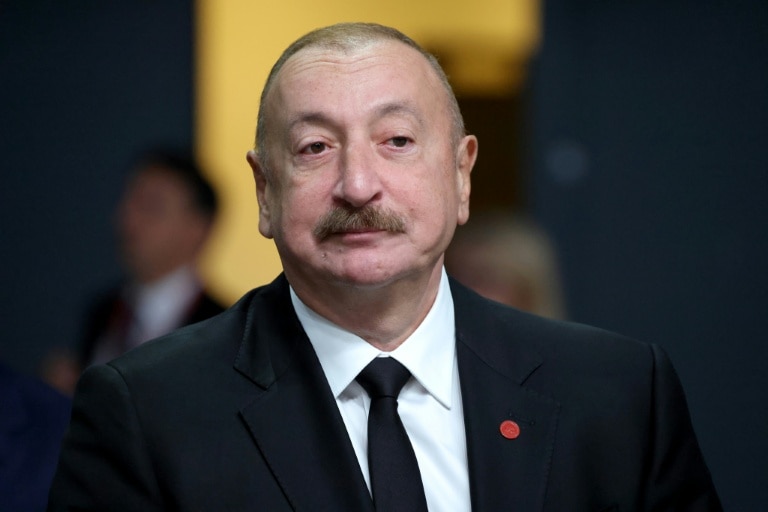
    Azerbaijani President Ilham Aliyev has condemned the incident as a deliberate ‘terrorist act’ and placed the nation’s armed forces on maximum alert, authorizing preparations for retaliatory measures. Simultaneously, Baku has withdrawn its diplomatic personnel from Iran, signaling a severe deterioration in bilateral relations.

    Iran has officially denied responsibility, instead attributing the attack to Israeli provocation aimed at destabilizing Muslim nations. Tehran maintains longstanding suspicions that Israel utilizes Azerbaijani territory for intelligence operations and potential offensive actions against Iran.

    Security analysts highlight concerning ambiguities within Iran’s military command structure as a critical factor. The country’s dual military architecture—featuring both conventional armed forces and the powerful Islamic Revolutionary Guard Corps (IRGC)—creates significant operational unpredictability. According to regional experts, the IRGC particularly views Azerbaijan with hostility, perceiving the nation as an extension of Israeli influence.

    The escalation carries profound implications for global energy security. Azerbaijan’s crucial Baku-Tbilisi-Ceyhan oil pipeline, which transports approximately one-third of Israel’s petroleum imports, now faces potential vulnerability to drone strikes. Energy analysts warn that above-ground infrastructure along this route could become targets in any expanded conflict.

    Despite the aggressive posturing, most observers believe Azerbaijan prefers defensive preparedness over initiating armed conflict with its powerful neighbor. The nation’s response will likely depend on Iran’s subsequent actions, with Baku simultaneously preparing for multiple escalation scenarios while seeking to avoid direct military confrontation.

  • Xbox confirms new console is coming – but can it revive the brand?

    Xbox confirms new console is coming – but can it revive the brand?

    Microsoft’s Xbox division has officially unveiled plans for its next-generation gaming console, internally designated as Project Helix. This announcement marks a significant strategic shift for the tech giant as it seeks to reestablish its prominence in the competitive gaming hardware market.

    The forthcoming device promises to deliver unparalleled performance capabilities while bridging the gap between console and PC gaming ecosystems. In a departure from traditional hardware approaches, Project Helix will support both Xbox and PC game libraries, representing Microsoft’s ambitious vision for a hybrid gaming platform.

    This revelation comes amid ongoing industry speculation regarding Microsoft’s hardware direction, particularly following its controversial decision to release previously exclusive titles on competing platforms from PlayStation and Nintendo. The company’s new gaming chief executive, Asha Sharma, characterized the announcement as demonstrating Microsoft’s “renewed commitment to the Xbox brand’s resurgence.”

    Despite generating considerable excitement within the gaming community, Project Helix details remain notably scarce. Microsoft has withheld critical information regarding technical specifications, design aesthetics, pricing structure, and anticipated release timeline. These omissions raise legitimate concerns given current market challenges, including rising costs for essential components like RAM and storage devices across the electronics industry.

    The component shortage crisis has already impacted other industry players, notably forcing Valve to delay its own hybrid PC-console launch earlier this year. Manufacturing approaches also remain uncertain, with Microsoft potentially following its recent strategy of partnering with external hardware specialists, as demonstrated with last year’s ROG-built Xbox handheld device.

    Microsoft’s hardware announcement occurs against a backdrop of corporate turbulence within its gaming division. The company’s monumental $69 billion acquisition of Activision Blizzard in 2023 capped an aggressive studio acquisition strategy that included prominent developers like Bethesda and Playground Games. However, recent financial performance reveals concerning trends, with gaming revenue declining 9% and hardware sales plummeting 32% according to latest earnings reports.

    The division has simultaneously implemented multiple workforce reductions, canceled several anticipated projects, and shuttered established studios, generating substantial fan criticism. While Microsoft’s Game Pass subscription service continues its expansion across platforms, questions persist regarding its long-term profitability and impact on traditional game sales.

    Industry analysts offer mixed perspectives on Microsoft’s announcements. Games industry expert Mat Piscatella noted on Bluesky that Microsoft has been discussing new hardware initiatives “for months,” suggesting the Project Helix revelation isn’t entirely unexpected. Former Edge magazine editor Nathan Brown predicted a “messy” transitional period for the brand under Sharma’s leadership.

    Sharma, who previously oversaw Microsoft’s AI initiatives, has emphasized placing console hardware at the center of her strategy while simultaneously reaffirming the company’s “play anywhere” philosophy of making games available across multiple devices. This apparent contradiction highlights the challenging balance Microsoft must strike between hardware exclusivity and software accessibility.

    Xbox executive Matt Booty maintains confidence in the company’s “strong pipeline of established franchises and new projects,” pointing to anticipated 2026 releases including the fantasy adventure Fable. The gaming community remains divided between enthusiasts declaring “Xbox is back” and skeptics awaiting concrete details beyond strategic positioning statements.

    Further revelations are expected during next week’s Game Developers Conference in San Francisco, where Microsoft may address critical questions about Project Helix’s implementation amidst ongoing industry challenges.

  • Pakistani Shiites rally to denounce US-Israeli strikes on Iran as US Embassy issues a security alert

    Pakistani Shiites rally to denounce US-Israeli strikes on Iran as US Embassy issues a security alert

    Pakistani authorities deployed extensive security measures across major cities on Friday as hundreds of Shiite protesters demonstrated against the killing of Iranian Supreme Leader Ayatollah Ali Khamenei in U.S.-Israeli operations. The protests remained largely contained following violent clashes earlier this week that resulted in multiple casualties.

    In Islamabad, approximately 300 demonstrators staged a sit-in under heavy police surveillance, displaying portraits of the late Iranian leader while chanting anti-American and anti-Israeli slogans. Security forces preemptively blocked access routes to the U.S. Embassy using shipping containers, with protesters agreeing to maintain a 3-kilometer distance from diplomatic facilities.

    The port city of Karachi witnessed similar demonstrations, though protesters maintained a 4-kilometer buffer from the U.S. Consulate where violent confrontations occurred days earlier. Previous clashes in Karachi involved attempts to storm the consulate, resulting in police using batons, tear gas, and live ammunition that left 10 protesters dead and numerous injured. Additional fatalities were reported in northern regions including Skardu and Gilgit.

    Smaller Sunni Muslim groups also organized separate protests against U.S.-Israeli military actions in Iran, though these gatherings occurred at a distance from American diplomatic installations and concluded without violence.

    The U.S. Embassy issued multiple security advisories warning American citizens to restrict unnecessary movement and avoid travel to Balochistan province, Khyber Pakhtunkhwa, and Kashmir regions due to heightened risks of terrorism and kidnapping. Khamenei’s death has resonated deeply among Pakistan’s Shiite minority, which constitutes approximately 15% of the country’s 250 million population, reflecting the late leader’s significant religious influence across global Shiite communities.

  • Shohei Ohtani hits a grand slam at the World Baseball Classic after putting on a show in BP

    Shohei Ohtani hits a grand slam at the World Baseball Classic after putting on a show in BP

    TOKYO — Baseball superstar Shohei Ohtani delivered a breathtaking performance that transcended the game itself as Japan dominated Taiwan with a decisive 13-0 victory in their Pool C opener at the World Baseball Classic on Friday.

    The two-way phenomenon ignited the Tokyo Dome with a second-inning grand slam that instantly became the tournament’s defining moment. His powerful swing sent the ball soaring beyond the park, creating an electric atmosphere that captivated the sold-out crowd of 40,000 spectators.

    Ohtani’s influence extended far beyond the diamond, attracting global celebrities including actor Timothée Chalamet and pop icon Bad Bunny to witness his mastery. The anticipation built hours before first pitch during batting practice, where Ohtani showcased his extraordinary power by launching approximately 10 balls out of the park during just 25 swings.

    Fans traveled extraordinary distances for the experience, with Lia Chan and her family flying seven hours from Singapore specifically to witness Ohtani’s performance. ‘When Ohtani came along, it’s just gone out of proportions,’ Chan remarked, highlighting baseball’s limited popularity in her home country.

    Following the game, Ohtani addressed the enthusiastic crowd in Japanese, expressing gratitude for their support. ‘It was a good game and we got off to a good start, so I think it was all because of your support,’ he stated amid rising applause. The superstar emphasized the importance of scoring first and maintaining momentum throughout the tournament.

    Starting pitcher Yoshinobu Yamamoto credited Ohtani’s grand slam for establishing crucial early momentum. ‘This was our first game of the tournament and to score the first run is always difficult,’ Yamamoto noted in his post-game comments. ‘But Shohei hit a huge home run to give us the momentum. So I tip my cap to him.’

    Ohtani’s pre-game preparation demonstrated his unique approach to the sport, taking time to greet sponsors, interact with teammates, and even personally thank the batting practice pitcher before gathering loose balls—gestures that further endeared him to fans and observers alike.

  • Winter Paralympics: Milan Cortina Games to open amid war in Middle East, boycott over Russian flag

    Winter Paralympics: Milan Cortina Games to open amid war in Middle East, boycott over Russian flag

    VERONA, Italy — The Milan Cortina Winter Paralympics commenced Friday evening under a cloud of geopolitical discord, even as organizers celebrated the event’s historic 50th anniversary. The opening ceremony at the UNESCO World Heritage-listed Arena di Verona was marked by notable absences as several nations staged a boycott protesting the International Paralympic Committee’s controversial decision to readmit Russian athletes under their national flag and anthem.

    Ukraine spearheaded the diplomatic protest against the IPC’s reversal of its longstanding ban on Russian national symbols, which haven’t appeared at the Paralympics since the 2014 Sochi Games. The ceremonial proceedings unfolded within the ancient Roman amphitheater, which underwent significant accessibility modifications including wheelchair ramps and restroom facilities to accommodate athletes with disabilities.

    Despite the political tensions, the Games represent a landmark moment in Paralympic history, featuring unprecedented participation numbers. Over 600 competitors from across the globe will contest 79 medal events across six winter sports disciplines, with record-breaking female representation according to official IPC statistics.

    The geopolitical backdrop extends beyond the Russian controversy, with Iranian participation reduced to a single athlete—cross-country skier Aboulfazl Khatibi—following recent military actions in the Middle East. In an unusual procedural adjustment, volunteer bearers will carry flags for all nations during the ceremony due to logistical constraints preventing many designated athletes from attending.

    As competition already commenced with curling events on Wednesday, China arrives with ambitions to cement its status as a Paralympic superpower, having dominated both Summer and Winter medal tables in recent editions. Many athletes opted to skip the opening festivities to focus on training and competition preparations across various Italian venues.

  • Manas in Xinjiang steps up improvement of sheep breeding

    Manas in Xinjiang steps up improvement of sheep breeding

    The pastoral regions of China’s Xinjiang Uygur Autonomous Region are currently experiencing their annual lambing season, with Manas County in Changji Hui Autonomous Prefecture reporting remarkable agricultural progress. As of early March 2026, approximately 180,000 breeding ewes have successfully delivered around 130,000 lambs, with the lambing period expected to continue through early April.

    Agricultural authorities in Manas have implemented significant improvements to sheep breeding methodologies, focusing on enhancing overall productivity, increasing survival rates, and improving meat quality standards. These strategic advancements in livestock management have substantially reduced the time required for sheep to reach market readiness while simultaneously increasing the value-added potential of each animal.

    The breeding enhancement initiative has emerged as a crucial economic driver, boosting industrial efficiency throughout the region’s agricultural sector. Local herders have reported substantial income increases as a direct result of these improved breeding techniques and management practices.

    The ongoing lambing season represents a critical period for the region’s agricultural economy, with officials monitoring progress closely to ensure optimal outcomes for both livestock and herders. The success of these breeding improvements demonstrates Xinjiang’s commitment to modernizing its agricultural practices while supporting rural economic development.