博客

  • Driver stops out of control SUV with his own vehicle

    Driver stops out of control SUV with his own vehicle

    A remarkable act of roadside heroism was captured on cellphone video in Texas, where a quick-thinking motorist averted potential catastrophe by using his own vehicle to stop an out-of-control SUV. The incident unfolded when an SUV was seen moving erratically without a driver in apparent control, creating a dangerous situation for other road users.

    The vigilant truck driver, recognizing the imminent threat, positioned his vehicle to safely intercept the runaway automobile. With precise timing and calculated maneuvering, he made contact with the stray SUV, gradually bringing it to a complete stop through controlled resistance. This intervention prevented what law enforcement officials later suggested could have developed into a multi-vehicle collision with potentially severe consequences.

    Eyewitness accounts describe the SUV as having been moving at moderate speed but without directional control, creating a hazardous scenario particularly given Texas’s typically busy roadways. The footage shows bystanders reacting with a mixture of alarm and relief as the situation resolved without injury or significant property damage. Local authorities have commended the driver’s actions as exemplifying exceptional civic responsibility and presence of mind in an emergency situation.

  • China’s first domestically bred meat goat breed becomes key engine of prosperity

    China’s first domestically bred meat goat breed becomes key engine of prosperity

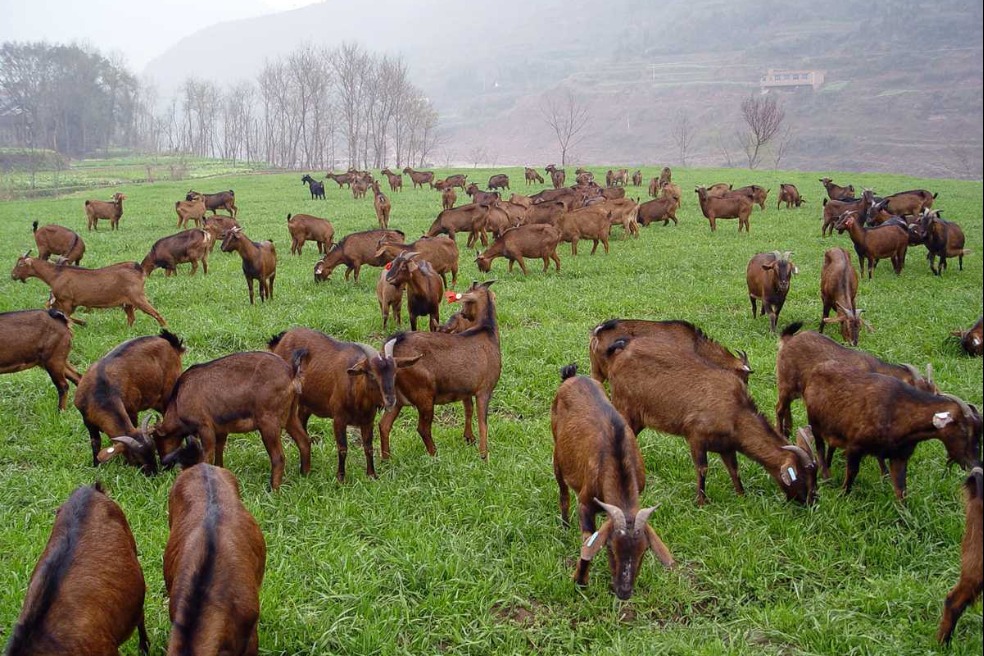
    The Nanjiang yellow goat, China’s inaugural domestically developed meat goat breed, has emerged as a powerful economic catalyst, transforming from a struggling local specialty into a prosperity engine for Bazhong, Sichuan province, over the past twenty years. This remarkable transition stems from the visionary efforts of Wang Qide, a deputy to the 14th National People’s Congress and chairman of the Wulang Yellow Goat Breeding Cooperative. Wang made a pivotal decision in 2006 to abandon his successful catering enterprise in Fujian province upon discovering a significant price discrepancy for Nanjiang yellow goats during Spring Festival celebrations. Despite commanding premium prices in distant markets, the local farmers raising these goats remained trapped in poverty. Upon returning to his hometown, Wang encountered a critical challenge: years of unregulated crossbreeding had severely depleted the purebred goat population, pushing the distinctive genetic lineage to the brink of disappearance. In collaboration with the Nanjiang Yellow Goat Research Institute, Wang established a comprehensive breeding facility and a scientific innovation center. This initiative created a dual conservation framework that has successfully preserved 5,000 core breeding goats alongside 3,000 superior genetic samples, ensuring the breed’s long-term viability and genetic diversity. The project has fundamentally revolutionized local agricultural practices, providing sustainable livelihoods for regional farmers while establishing a model for rural economic development through specialized animal husbandry and genetic preservation.

  • Louis Vuitton, Miu Miu close Paris Fashion Week with competing visions of nature

    Louis Vuitton, Miu Miu close Paris Fashion Week with competing visions of nature

    PARIS — The grand finale of Paris Fashion Week witnessed two contrasting yet equally powerful visions from fashion’s leading houses. Louis Vuitton’s Creative Director Nicolas Ghesquière transformed the historic Cour Carrée at the Louvre into a dramatic, artificial mountainscape, while Miuccia Prada at Miu Miu presented a philosophy of radical minimalism on a runway resembling a forest floor.

    At Louis Vuitton, the spectacle was immense. Models navigated a constructed alpine environment, clad in a collection Ghesquière dubbed ‘Super Nature.’ This exploration of global mountain cultures—from the Alps to the Andes—manifested in shaggy capes, shearling caps, and utilitarian walking sticks doubling as handbag displays. The show merged folklore with high fashion, featuring intricate embroidery by Ukrainian artist Nazar Strelyaev-Nazarko depicting wolves, sheep, and rabbits, alongside reinterpretations of a Man Ray parure. Accessories became focal points, with the reintroduction of the 1932 Noé bag and mini Malles in soft new iterations. Heels carved like antlers and coats lined with hemp-based faux fur exemplified the house’s ‘hyper-craft’ approach—a sublimation, not imitation, of nature.

    The front row glittered with celebrities including Zendaya, Ana de Armas, Jennifer Connelly, Jaden Smith, K-pop stars Felix and Lisa, and director Ava DuVernay, underscoring the event’s cultural significance.

    Hours later, Miu Miu offered a stark counterpoint. Where Vuitton built a world, Prada deconstructed one. The set was a raw, churned earth landscape scattered with twigs and moss. The collection, comprising tiny tank dresses, shrunken leather jackets, and crinkled blazers, felt intentionally sparse—like ‘the last things left in someone’s wardrobe.’ Prada’s statement was clear: ‘You, as a human person, you are enough… That should be enough against whatever happens.’

    This philosophy extended to the casting. A multi-generational lineup featuring Gillian Anderson, Chloë Sevigny, Kristen McMenamy, and Gemma Ward lent profound weight to the minimalist garments. The only embellishments were deliberate contrasts: crystallized belts, bedazzled sneakers, and embellished chapkas against the quiet fabrics. In a season dominated by protective armor and overwhelming texture, Miu Miu’s closing argument championed the inherent sufficiency of the human form, suggesting that clothing should merely complement, not conceal.

  • Zhou Guanyu: I hope to return to full-time seat soon

    Zhou Guanyu: I hope to return to full-time seat soon

    Shanghai welcomed home its racing pioneer Zhou Guanyu on March 10th as China’s first Formula 1 driver made a triumphant appearance at the Checkered Flag Carnival ahead of the 2026 Formula One Chinese Grand Prix. The hometown hero engaged enthusiastically with fans, creating an electric atmosphere at the pre-race festivities.

    During his homecoming event, Zhou reflected candidly on his current career trajectory and future aspirations. The Shanghai-native driver revealed he has established a clear personal objective: to secure a permanent racing position and make his competitive return to the Formula 1 circuit in the near future.

    Zhou’s appearance marks a significant moment for Chinese motorsports, demonstrating the growing global influence of China’s racing talent. His journey from Shanghai to the pinnacle of international motorsport has inspired a new generation of Chinese racing enthusiasts and professionals alike.

    The 2026 Chinese Grand Prix represents more than just another race on the calendar—it symbolizes China’s expanding presence in global motorsport and provides Zhou with an ideal platform to showcase his determination to reclaim his position among Formula 1’s elite drivers.

  • ‘Realities of war’: UK minister refuses to call US massacre at Iranian school a war crime

    ‘Realities of war’: UK minister refuses to call US massacre at Iranian school a war crime

    A British government official has sparked international controversy by declining to characterize the bombing of an Iranian girls’ school that killed 165 people, predominantly children, as a war crime, instead describing it as the “realities of war.

    Courts Minister Sarah Sackman made the contentious remarks during a Sky News interview on Tuesday when confronted with emerging evidence about the February 28th attack on Shajareh Tayyebeh Primary School in Minab. The assault occurred during coordinated US-Israeli military operations against Iranian targets.

    Recent investigative findings and newly released footage strongly indicate that a US Tomahawk missile struck the educational facility. When pressed for her assessment of the evidence, Minister Sackman responded: “You watch footage like that and what you see is the realities of war, and in particular the way that civilians right across the region are caught up in military conflict.”

    The minister explicitly avoided legal classification of the incident, stating: “I’m not going to speculate on whether this is a war crime, but what it is is a war, and in that context devastating things can happen.” She did, however, criticize Iranian military actions while emphasizing the necessity for evidence-based judgments regarding international law violations.

    Sackman’s comments have ignited fierce criticism from political figures and commentators. Liberal Democrat peer Baroness Meral Hussein-Ece asserted that the US and Israel were “in clear violation of international law,” while journalist Mehdi Hasan condemned the minister’s apparent double standard in exclusively criticizing Iran.

    The diplomatic fallout occurs amid revelations that the United States has been utilizing British military installations, including RAF Fairford in Gloucestershire, to launch bomber missions targeting Iranian positions. Prime Minister Keir Starmer has thus far resisted opposition calls for direct RAF involvement in strikes against Iran while refraining from condemning the US-Israeli offensive.

    Tensions in the UK-US security partnership have further intensified due to Britain’s initial refusal to permit American forces to use the joint UK-US base on Diego Garcia for operations against Iran. This diplomatic strain was reportedly discussed during a Sunday phone conversation between Starmer and US President Donald Trump, who has previously criticized the British leader as “unhelpful” and inadequate in comparison to Winston Churchill.

  • New quality productive forces fuel industrial upgrade in Binzhou, Shandong

    New quality productive forces fuel industrial upgrade in Binzhou, Shandong

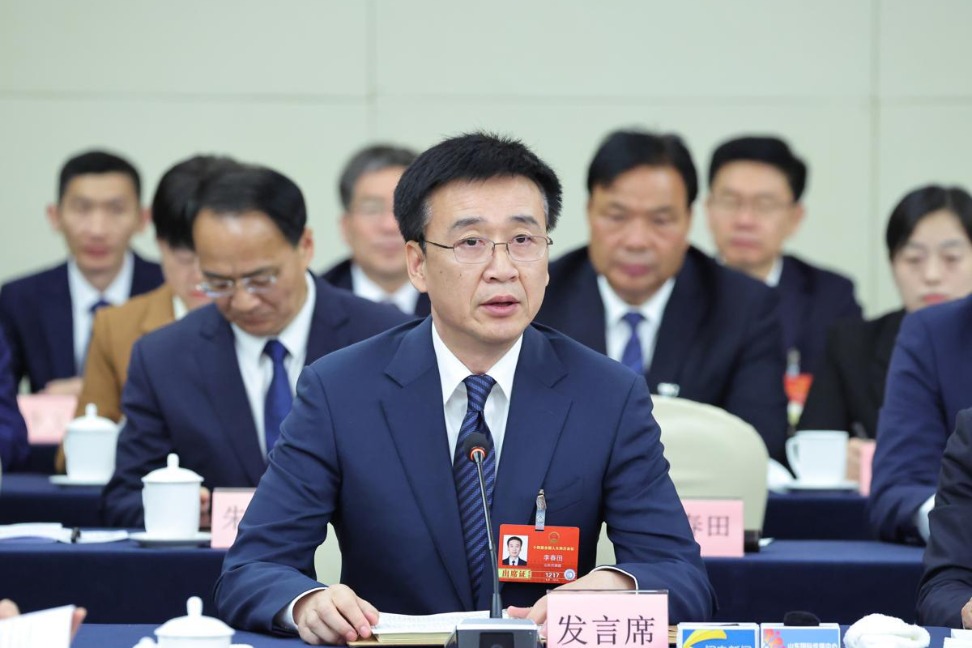
    The industrial city of Binzhou in Shandong Province is undergoing a remarkable transformation, leveraging technological innovation to develop new quality productive forces and accelerate its industrial modernization. This strategic shift was highlighted by Li Chuntian, Mayor of Binzhou and deputy to the 14th National People’s Congress, during the ongoing two sessions.

    Binzhou’s manufacturing sector demonstrates impressive credentials, hosting 91 national and provincial champion enterprises and 82 products that dominate both global and domestic markets. Contrary to conventional wisdom, Mayor Li emphasizes that traditional industries aren’t inherently backward—their potential can be unlocked through strategic technological application.

    A prime example of this transformation is Binzhou’s aluminum advanced manufacturing laboratory, Shandong’s first provincial-level lab established by a private enterprise. This facility has been instrumental in transitioning the aluminum industry from resource-intensive operations toward a circular, recycling-based economic model.

    The city has cultivated a vibrant innovation ecosystem that continues to yield substantial results. Binzhou’s new energy and new materials cluster has surpassed 100 billion yuan in revenue, marking the city’s sixth industry to achieve this significant milestone.

    During the legislative sessions, Mayor Li advocated for enhanced government support for local platforms that facilitate the commercialization of research成果. He stressed the importance of refining pilot testing policies and streamlining the transition from laboratory research to industrial application. As part of its innovation agenda, Binzhou plans to establish more than five additional provincial-level innovation platforms within the year.

  • US energy secretary’s post saying US escorted tanker in Hormuz deleted

    US energy secretary’s post saying US escorted tanker in Hormuz deleted

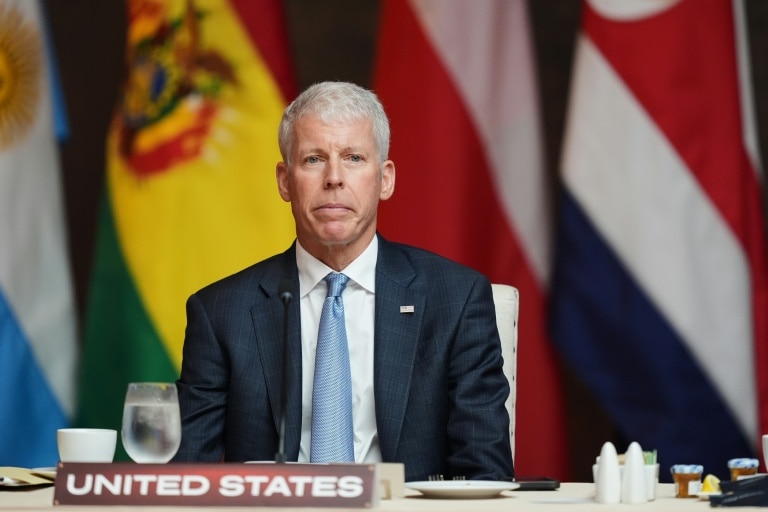
    A brief social media post by US Energy Secretary Chris Wright claiming American naval forces had escorted an oil tanker through the volatile Strait of Hormuz triggered significant market turbulence before being abruptly deleted Tuesday. The unexplained deletion occurred mere minutes after publication, amplifying uncertainty in already jittery energy markets.

    The incident unfolded against the backdrop of ongoing US-Israel military operations against Iran that commenced on February 28. Oil prices initially plummeted following Wright’s assertion, only to partially recover once the post disappeared from his official account. Neither the Energy Department nor the Pentagon provided immediate clarification regarding the controversial post.

    Maritime traffic analysis reveals dramatically altered patterns in the critical waterway since hostilities began. Where approximately 138 vessels previously transited daily, only around 20 commercial ships have been detected crossing the strait since March 2, with many navigating with disabled transponders to conceal their positions. Among those transmitting signals, nine were identified as oil tankers alongside two liquefied natural gas carriers.

    The Trump administration has implemented measures to stabilize global energy markets, including offering reinsurance to shipping companies and promising naval escorts. However, Wright’s deleted message marked the first official suggestion that such escorts had actually occurred, as no US naval escort operations had been previously confirmed.

    Crude oil has experienced extreme volatility, surging to nearly $120 per barrel before retreating amid conflicting signals from the administration. While President Trump hinted at potential de-escalation, Defense Secretary vows of intensified strikes created additional market uncertainty. The conflict has already targeted Iranian oil depots and energy infrastructure in traditionally stable Gulf nations, reshaping regional security perceptions.

  • Windies to leave India after ‘distressing’ wait

    Windies to leave India after ‘distressing’ wait

    The West Indies cricket squad has abandoned hopes of an ICC-organized charter flight and will return home via commercial airlines following their elimination from the men’s T20 World Cup in India. The team has endured what Cricket West Indies (CWI) described as a “distressing” situation, stranded in Kolkata since their tournament exit on March 1st due to travel disruptions stemming from Middle East conflicts.

    According to CWI officials, the International Cricket Council’s repeatedly delayed charter arrangements—initially planned to transport both West Indies and South Africa teams—created “ongoing uncertainty” that became increasingly concerning. The governing body ultimately determined that continuing to wait for the uncertain charter was no longer prudent given the wellbeing and safety considerations for players and support staff.

    “Multiple approaches have been made through CWI, players, and other partners, in coordination with the ICC, to secure commercial travel to facilitate the squad’s safe return,” stated the cricket board. The ICC acknowledged the unforeseen travel disruptions in a Wednesday statement, confirming they were “managing all additional logistics, including accommodation” for affected teams.

    The global cricket governing body reported that nine members of the West Indies contingent had already departed, with the remaining 16 players and staff booked on flights within the next 12 hours. Meanwhile, four South African players and five family members had boarded flights home, with the remaining 29 members of their contingent scheduled to depart within 24 hours.

    The ICC has faced criticism from both West Indies and South African players for their perceived failure to adequately resolve the travel complications. These accusations intensified when England’s team—despite losing their semi-final on Thursday—managed to fly home on Saturday, prompting allegations of preferential treatment that the ICC has “categorically” denied.

  • Russia’s deportation of Ukrainian children amounts to crime against humanity, UN says

    Russia’s deportation of Ukrainian children amounts to crime against humanity, UN says

    A damning United Nations report has conclusively determined that Russia’s systematic deportation and forcible transfer of Ukrainian children constitutes both crimes against humanity and war crimes. The Independent International Commission of Inquiry on Ukraine reveals that Russian authorities, with “direct involvement” from President Vladimir Putin “visible from the outset,” have relocated thousands of minors from occupied Ukrainian territories.

    The investigation documents 1,205 confirmed cases of children taken to Russia in 2022, with approximately 80% remaining separated from their families. Most originated from the Donetsk and Luhansk regions, areas illegally claimed by Moscow. Prior to its full-scale invasion, Russia evacuated these children under the pretext of protecting them from imminent Ukrainian attacks, subsequently placing them with Russian families or institutions while granting them Russian citizenship.

    According to the UN findings, this forced removal has created a “coercive environment” causing “deep distress” among the children. Those who manage to return to Ukraine frequently exhibit severe psychological trauma, anxiety, and fear of abandonment—often resulting from harsh treatment in Russian institutions. The report cites one instance where staff at a Russian orphanage told a child that Ukraine “does not exist anymore, everything has burnt down, and your parents have probably died.

    Moscow continues to deny all allegations of forced transfers, with Putin previously dismissing reports as “exaggerated” and insisting children were merely “rescued” from conflict zones. However, the UN confirms that repatriation efforts face “huge difficulties,” with many parents remaining unaware of their children’s whereabouts.

    The International Criminal Court has already issued arrest warrants for both Putin and his Commissioner for Children’s Rights, Maria Lvova-Belova, for their alleged roles in the unlawful deportations. Lvova-Belova previously described in an interview how she personally “took in” a reluctant 15-year-old from Mariupol for “re-education.”

    While Ukraine estimates nearly 20,000 children have been illegally transferred to Russia and Belarus, only about 2,000 have been successfully recovered. The report notes that even US First Lady Melania Trump has attempted to facilitate reunifications through an “open channel of communication” with Putin.

    This humanitarian crisis continues amid a conflict that has entered its fifth year, claiming over 15,000 civilian lives, injuring 41,300, and displacing 3.7 million people despite multiple diplomatic interventions.

  • China steps up public interest litigation to boost green development

    China steps up public interest litigation to boost green development

    China’s judicial authorities have significantly amplified their deployment of public interest litigation as a strategic mechanism to advance the nation’s green and low-carbon development objectives. This policy direction was formally outlined in a comprehensive white paper released by the Supreme People’s Procuratorate (SPP) on Tuesday, detailing a systematic nationwide campaign that has yielded substantial environmental remediation outcomes.

    The initiative, launched in March 2025 as a year-long specialized supervisory program, directed prosecutorial departments across China to concentrate on public interest violations intersecting with industrial restructuring, urban-rural development patterns, transportation systems, and energy consumption practices. By February 2026, judicial authorities had processed approximately 44,000 environmental cases, with over 13,000 specifically addressing pollution control and carbon emission management challenges.

    Geographically, the campaign demonstrated particular effectiveness in Shanghai, Hebei, Jiangsu, and Hunan provinces, alongside the Inner Mongolia and Xizang autonomous regions, where environmental litigation volumes showed consistent growth. The operational results have been quantitatively significant: authorities supervised the remediation of more than 4,000 enterprises engaged in illegal pollutant discharge, restored over 2,000 kilometers of compromised river channels, and rehabilitated approximately 1,933 hectares of degraded water areas.

    Financially, the litigation drive enabled the recovery of 1.05 billion yuan (approximately $153 million) in ecological restoration compensation, directly addressing numerous persistent environmental problems. According to Xu Xiangchun, head of the SPP’s public interest litigation procuratorial department, the campaign has substantially improved the regulatory architecture governing environmental litigation. The SPP has consequently issued specialized guidelines covering soil pollution mitigation, solid-waste management protocols, air-pollution prevention measures, and standardized procedures for case filing and judicial review.

    Statistical analysis reveals that prosecutors filed 47,228 cases related to ecological protection and natural resource conservation, representing 34.8 percent of all public interest litigation cases handled during the period. Concurrently, China has actively expanded international exchanges in environmental jurisprudence, with its innovative practices gaining increasing global recognition. The SPP introduced its litigation framework during judicial exchanges with Vietnam, shared watershed governance expertise at a United Nations climate conference side event in Brazil, and presented marine protection methodologies at a UN ocean conference in France.

    Further international engagement included knowledge-sharing at an International seminar on migratory bird protection convened by BirdLife International, reaching 123 member countries, and hosting delegations from Egypt, Singapore, and Vietnam. These diplomatic efforts have collectively enhanced the global influence of China’s distinctive public interest litigation system within environmental governance circles.