博客

  • Powerful storm hits Baltic countries, killing 2 and leaving hundreds of thousands without power

    Powerful storm hits Baltic countries, killing 2 and leaving hundreds of thousands without power

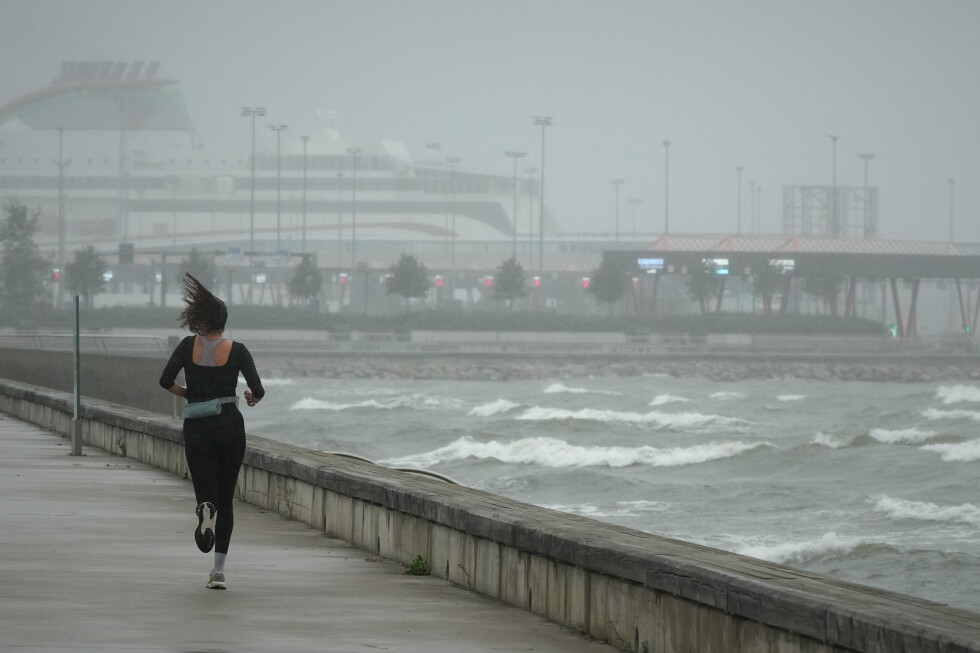
    A destructive cyclone that swept through the Baltic region of Northern Europe between Saturday and early Sunday has left three people dead, hundreds injured, and more than 800,000 residents without access to electricity, emergency officials and meteorological agencies confirmed this weekend.

    The storm system brought hurricane-force wind gusts and record-breaking rainfall to Latvia, Lithuania, Estonia, and northeastern Poland, crippling critical infrastructure, disrupting travel, and triggering widespread service outages across the area. Latvian meteorologists called the event the most impactful storm to hit the country in nearly 20 years.

    “This seems to be the most severe storm in Latvia since 2005 in terms of its overall impact,” explained Andris Viksna, a senior representative of the Latvian Environment, Geology and Meteorology Center, in an interview with the Associated Press. In central Latvia’s city of Jelgava, one person was killed when a portion of a crumbling building collapsed under the strain of the storm on Saturday, with multiple additional injuries reported across other parts of the country. In the Latvian capital of Riga, wind gusts surpassed 67 miles per hour, and weather monitoring stations across the nation recorded half of an average month’s total rainfall in just 24 hours on Saturday.

    More than 250,000 Latvian households and businesses lost power during the height of the storm, and mobile network coverage was disrupted in many hard-hit rural and suburban areas. Fallen trees and debris blocked rail lines and roadways, bringing most local public transit services to a halt. Riga International Airport announced Sunday morning that many incoming and outgoing flights would face delays or be rerouted to alternate airports due to the overnight damage and unsafe weather conditions.

    In neighboring Lithuania, a second fatality was reported when a falling tree struck and killed a resident amid the high winds. More than 200,000 Lithuanians lost power, and multiple people were treated for storm-related injuries. To the north, Estonia also faced severe impacts: western and northern coastal regions, as well as the country’s offshore island communities, bore the brunt of the storm, disrupting critical ferry connections that connect the islands to the mainland and delaying international rail services arriving from Latvia and Lithuania.

    Northeastern Poland also felt the cyclone’s force, with more than 100,000 residents losing power across the region as downed lines and damaged distribution networks knocked out service.

    While the full link between this extreme weather event and human-caused climate change cannot be formally confirmed yet, Viksna noted that current climate trends support a plausible connection. “It is plausible that human-caused climate change may have intensified the rainfall associated with the cyclone,” he said.

    Emergency management officials across the region reported that conditions began to stabilize throughout Sunday, with restoration crews working around the clock to repair power grids, clear blocked transit routes, and restore critical services. Forecasters expect full recovery of normal operations and weather conditions by Monday.

  • Dozens of co-ordinated arson attacks hit southern Thailand

    Dozens of co-ordinated arson attacks hit southern Thailand

    A wave of synchronized arson and incendiary attacks designed to sow widespread chaos has swept through Thailand’s violence-prone southern border region, leaving two people injured and triggering emergency security measures, according to statements from Thailand’s top military command.

    The coordinated strikes unfolded between 8:00 PM local time (1:00 PM GMT) and midnight on Saturday, spanning three southern provinces that have long been the center of a decades-long separatist insurgency. Military officials from Thailand’s Internal Security Operations Command confirmed that more than 50 separate attacks were carried out across the region, with the vast majority concentrated in Narathiwat province. Smaller numbers of attacks were also recorded in the neighboring provinces of Yala and Pattani.

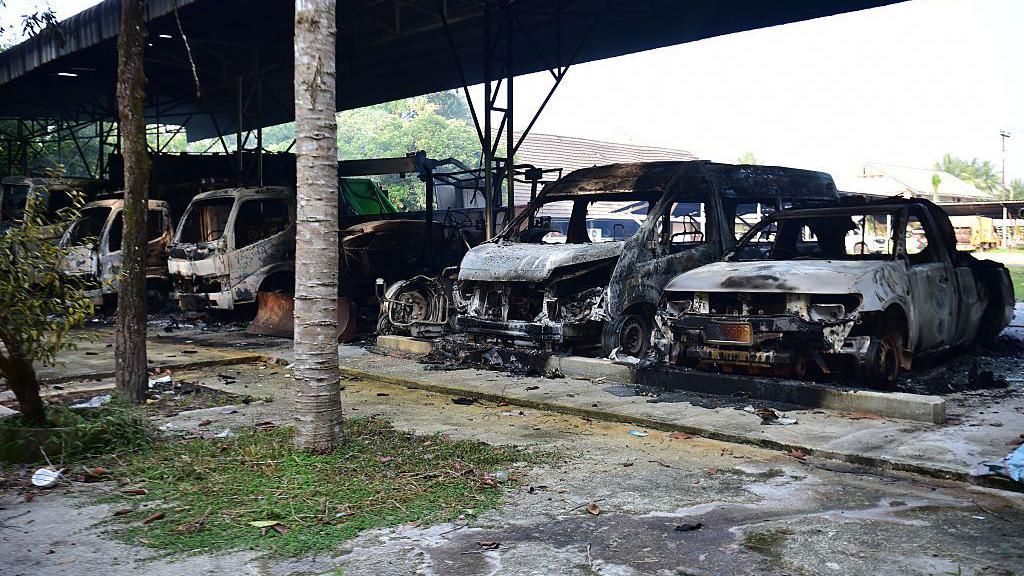
    Targets of the arson strikes stretched across public and private infrastructure: a local subdistrict administrative office in Narathiwat’s Ra-ngae district was left scorched, with multiple vehicles burned to charred shells on its grounds. Other hit sites included a convenience store, a stolen vehicle that attackers used in one of the incidents, and multiple telecommunications towers spread across the three provinces. A bomb explosion in Narathiwat’s Muang district left two women injured, local Thai newspaper the Bangkok Post reported. Security officials immediately issued a public advisory urging area residents to avoid any unattended or suspicious objects and report them to law enforcement immediately.

    In response to the unrest, authorities implemented a full overnight curfew across Narathiwat province to contain further violence. The curfew was lifted on Sunday morning, and military officials confirmed no additional attacks had been reported throughout the day. As of Sunday evening, no armed or insurgent group has stepped forward to claim responsibility for the coordinated assault.

    Saturday’s attacks are the latest escalation in a low-intensity separatist conflict that has simmered in Thailand’s southernmost region since 2004. The three provinces affected by the attacks are majority-Muslim, a stark contrast to the Buddhist-majority demographic of Thailand as a whole, and insurgent groups have waged a long-running campaign to win greater political autonomy for the region. More than 7,000 people have been killed in insurgency-related violence since the conflict reignited two decades ago. The Barisan Revolusi Nasional is the largest and most prominent group leading the insurgency.

    Efforts to negotiate a peaceful resolution to the conflict have faced repeated setbacks over the past 13 years. Malaysia-facilitated peace talks between the Thai government and insurgent groups began in 2013, but the process has stalled multiple times, derailed by changes in ruling governments in Bangkok and deep internal divisions on both sides of the conflict. The most recent disruption came in July, when a combined gun and bomb assault on a Narathiwat checkpoint killed five Thai soldiers, prompting authorities to postpone a scheduled round of dialogue.

    Thai security analysts and media outlets have noted that insurgent groups often target government and security infrastructure ahead of high-profile official visits to the region. The current wave of attacks comes just one week before Thai Prime Minister Anutin Charnvirakul is set to lead a cabinet delegation on a two-day visit to Hat Yai, a major city in southern Songkhla province. The delegation is scheduled to discuss regional priorities including new investment projects, flood prevention infrastructure, and ongoing security challenges during the trip.

  • Robots compete in boxing, football and sprinting at World Humanoid Games

    Robots compete in boxing, football and sprinting at World Humanoid Games

    The global stage of humanoid robotic innovation has arrived in Beijing, as the second iteration of the World Humanoid Games officially kicked off on Saturday. The five-day landmark competition brings together cutting-edge robotic designs from engineering teams across the globe, all gathering to test their creations’ agility, coordination and real-world performance through a series of human-style athletic events.

    Unlike traditional robotics trade shows that focus on technical specifications behind closed booths, the World Humanoid Games adopts a competitive, sports-inspired format that pushes humanoid robots to demonstrate their capabilities in dynamic, real-time challenges. This year’s event features three core competitive categories: boxing, 11-a-side football, and sprinting, each designed to evaluate different critical functions of bipedal humanoid robots, from balance control and rapid movement to responsive decision-making and physical interaction.

    Organizers note that the competition serves a far greater purpose than entertainment: it provides a shared, standardized testing ground for robotic developers to refine balance algorithms, improve motor control, and advance the sensory technology that allows humanoid robots to adapt to changing, unpredictable environments. The event, hosted in Beijing, also highlights the growing global collaboration in humanoid robotics research, bringing together academic institutions, private tech firms, and engineering start-ups to showcase the latest progress in the field. As the competition gets underway, attendees and online viewers around the world are watching to see which teams have pushed the boundaries of what humanoid robots can achieve.

  • Zelensky rejects wartime elections, says would ‘split’ Ukraine

    Zelensky rejects wartime elections, says would ‘split’ Ukraine

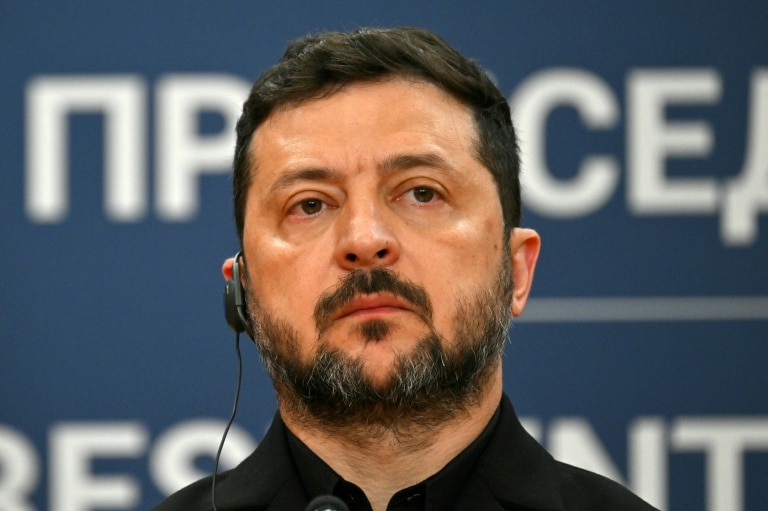
    In a candid briefing with journalists held Saturday, comments on which were made public Sunday, Ukrainian President Volodymyr Zelensky firmly rejected calls to hold national elections during the ongoing full-scale Russian invasion, warning that a vote at this stage of the conflict would tear the country apart amid existential danger.

    The announcement comes in the wake of a surprise call for elections from ousted former Defense Minister Mykhailo Fedorov, whose recent push for a wartime vote even split some of his own political backers, who have stepped back from the proposal. This latest political upheaval follows widespread public protests after Zelensky dismissed the popular defense minister last month, triggering a period of domestic unrest that has put the Ukrainian leadership’s unity under a spotlight.

    Since Russia launched its full-scale invasion in February 2022, Ukraine has operated under martial law, which legally suspends all national electoral activity. This measure continues to hold broad popular support as the nation prioritizes fending off Russian territorial advances, according to public sentiment data. Recent polling from the Kyiv Institute of Sociology underscores this: only 15 percent of Ukrainian respondents back holding elections before hostilities come to an end.

    Zelensky, who was first elected to office in 2019, framed the debate over wartime elections in stark terms during the briefing—the first he has held with international reporters including Agence France-Presse in months. “I believe that in a war like this, elections as such are a huge risk. Elections right now are a tsunami for the country that will split Ukraine,” he said. “If we want to destroy the country, then we can move in the direction of elections during these times of war.”

    Beyond the risk of political division, independent policy experts have outlined a long list of practical barriers that make holding a free, fair election all but impossible during the current conflict. These include major questions around how to facilitate voting for frontline soldiers, more than 5 million Ukrainian refugees living abroad, and residents of Russian-occupied territories, along with the severe threat of Russian disinformation campaigns designed to manipulate the election outcome. Practically, the ongoing Russian missile and drone assault across Ukrainian cities also puts election workers and voters at grave risk of attack.

    During the briefing, held ahead of Ukraine’s Independence Day celebrations Monday that will draw dozens of international leaders and new talks on bolstering Ukrainian air defenses, Zelensky did not hold back in criticizing his former defense minister’s call. “I believe he is going himself — or is being pushed — toward wrong things,” Zelensky said of Fedorov, who was a leading advocate for expanded drone warfare and military reform but repeatedly clashed with Ukraine’s top military command over its traditional, rigid approach to operations.

    After Fedorov’s dismissal, much of the Ukrainian public initially rallied around the former minister, calling for the dismissal of Commander-in-Chief Oleksandr Syrsky. Zelensky acknowledged that Ukrainians retain the full right to peaceful protest, but pushed back against what he described as attempts to prioritize political positioning over the sacrifices of frontline troops. “Since when has marketing started to outweigh the people who are giving their lives?” he asked, adding that he sees ongoing efforts to pull the country into internal division as a dangerous development that threatens Ukraine’s war effort.

    Positioning himself as a bulwark against domestic fragmentation, Zelensky emphasized that preserving unity between civilian society and the armed forces is a non-negotiable priority during the invasion. “I believe that society and soldiers must not be divided,” he said. “We must acknowledge that there is this risk — that there may be movement in that direction, toward dangerous developments.”

  • Zelenskyy details rift with Ukraine’s dismissed Defense Minister Fedorov

    Zelenskyy details rift with Ukraine’s dismissed Defense Minister Fedorov

    In a landmark first public address detailing his rift with ousted Defense Minister Mykhailo Fedorov, Ukrainian President Volodymyr Zelenskyy has laid bare a cascade of domestic political tensions, critical defense gaps, and incremental battlefield advances in a rare off-the-record meeting with reporters, whose full transcript was released publicly Sunday.

    The two-hour briefing covered topics ranging from the fallout of Fedorov’s dismissal to shifting frontline dynamics, strained Western defense supplies, and ongoing budget and corruption challenges facing Kyiv amid its third year of full-scale war with Russia. Zelenskyy opened with measured remarks about his former minister, noting a long history of collaboration but confirming he viewed Fedorov’s actions—including his support for mass anti-government protests and public call for a wartime election—as fundamentally misplaced.

    “I really had and still have a very positive attitude toward Mykhailo. We have been through a lot together. But I believe that he himself goes, or is pushed, into the wrong things,” Zelenskyy told reporters. He added that he had offered Fedorov four separate roles to remain in government, all of which were rejected.

    Fedorov, a widely popular figure credited with revolutionizing Ukraine’s military through widespread adoption of drone technology and digital warfare modernization, was removed from his post last month following reported clashes with top Ukrainian military command. His dismissal sparked weeks of widespread public demonstrations across the country, though protests failed to reverse the decision. After his ouster, Fedorov publicly called for snap national elections—a demand Zelenskyy pushed back against forcefully in Sunday’s briefing, arguing that holding a vote amid active full-scale war poses an existential threat to Ukrainian unity.

    “I believe elections during a war like this would generally pose enormous risks. Holding elections right now would be a tsunami for the state that would split Ukraine apart,” he said. Zelenskyy added that while international partners have previously pushed for wartime elections, no stakeholder has put forward a viable plan to conduct a poll that is safe, legitimate, and fully democratic amid ongoing active conflict.

    Zelenskyy also alluded to problematic spending decisions by the Defense Ministry under Fedorov’s leadership, and linked inaccurate departmental intelligence to an awkward high-stakes encounter with former U.S. President Donald Trump over Starlink access for Ukrainian deep strikes into Russian territory. According to Zelenskyy, the Defense Ministry informed him earlier this year that SpaceX CEO Elon Musk had already approved Ukrainian use of Starlink over Russian-held territory for offensive operations, pending only U.S. political approval. Acting on that information, Zelenskyy raised the request directly with Trump, telling the U.S. president that Musk had confirmed the arrangement.

    But when the White House sought direct confirmation from Musk, the SpaceX CEO rejected the proposal out of hand, warning the move constituted a dangerous escalation of the conflict. Zelenskyy said Trump subsequently accused him of misleading the U.S. government, a humiliating misstep that traces back to faulty information from Kyiv’s own Defense Ministry. While he stopped short of explicitly accusing Fedorov of deliberate deception, he confirmed the incident was a key factor behind the leadership changes at the defense department.

    Zelenskyy also defended senior military leaders targeted by Fedorov-aligned protesters, including former army chief Gen. Oleksandr Syrskyi and current Defense Minister Maj. Gen. Yevgeny Khmara, saying demonstrators had crossed a line in their vilification of top commanders. “Maybe someone doesn’t like Syrskyi for one reason or another. But the slogans ‘Syrskyi is the devil, Khmara is the devil,’ […] this is too much. Do you understand? In principle, you can’t treat the military like this and tolerate it, especially when it was the military that made it possible for any peaceful protests to take place in the Ukrainian capital at all,” he said.

    Beyond political turmoil, Zelenskyy outlined severe systemic pressures facing Ukraine’s defense apparatus, starting with a crippling $27 billion budget shortfall that emerged after early-year spending exhausted allocations earmarked for the second half of 2025. He also addressed a recent high-profile corruption inquiry that led to the firing of a senior presidential aide, noting that anti-corruption investigators have cleared him of any personal involvement in the alleged money laundering scheme. “The heads of anti-corruption agencies have zero questions for me. They understand perfectly well that I am not involved in anything like that. And this is important to me,” he said.

    On the battlefield, Zelenskyy struck a markedly optimistic tone, confirming that Ukrainian forces have almost fully expelled Russian occupying troops from the Dnipropetrovsk region, with just 10 square kilometers (roughly 4 square miles) of territory remaining under Russian control. A second major offensive operation is currently underway elsewhere in the country, with preliminary results expected by the end of August, he added. The president projected that by the end of 2025, Ukraine will have retaken as much territory as Russia has seized since the start of the year: as of the briefing, Russia holds 990 square kilometers of territory captured in 2025, while Ukraine has already retaken 820 square kilometers.

    Zelenskyy also warned of a growing and potentially catastrophic shortfall of Patriot air defense missiles, a critical capability for countering intensifying Russian ballistic missile strikes across Ukrainian population and infrastructure centers. He revealed that deliveries of Patriot interceptors from Western allies have dropped steadily over the past three years, falling from 675 missiles in 2023 to just 364 in 2024, with only 264 missiles expected to arrive this year. Ukraine is seeking 300 additional missiles to prepare for expected intensified Russian strikes this coming winter, while the Ukrainian air force has formally requested 360 interceptors to cover defense needs. The shortage is compounded by slow production expansion among U.S. and European manufacturers, Zelenskyy noted, adding that Ukraine is willing and able to purchase even a small share of U.S. reserve stockpiles to close the gap. He warned that Russia is ramping up its own ballistic missile production, with current capacity at 600 missiles per year and a projected peak output of up to 1,300 missiles annually.

    In a nod to the Starlink controversy, Zelenskyy confirmed Ukraine is developing alternative satellite communications capabilities, including a European-led project, as Russia and China advance their own competing domestic satellite networks.

    The briefing came amid ongoing cross-border drone strikes that have shifted the war into Russian territory. On Sunday, Russian local officials in Orenburg region reported that debris from a Ukrainian drone struck two industrial sites, including a warehouse owned by major Russian online retailer Ozon. Ukrainian long-range strikes have increasingly targeted Russian oil infrastructure, triggering widespread fuel shortages across the country, and have also hit retail warehouses operated by Russia’s largest e-commerce firm Wildberries and its competitors, unsettling Russian civilian populations. Separate Russian reports Sunday confirmed one person was killed and six wounded in Ukrainian drone attacks on the border region of Belgorod, while a woman died in a drone strike on Tula region. For its part, Ukraine reported Sunday that a Russian drone strike on an electric train in Kharkiv region killed two women and wounded five other people, according to the Ukrainian national police.

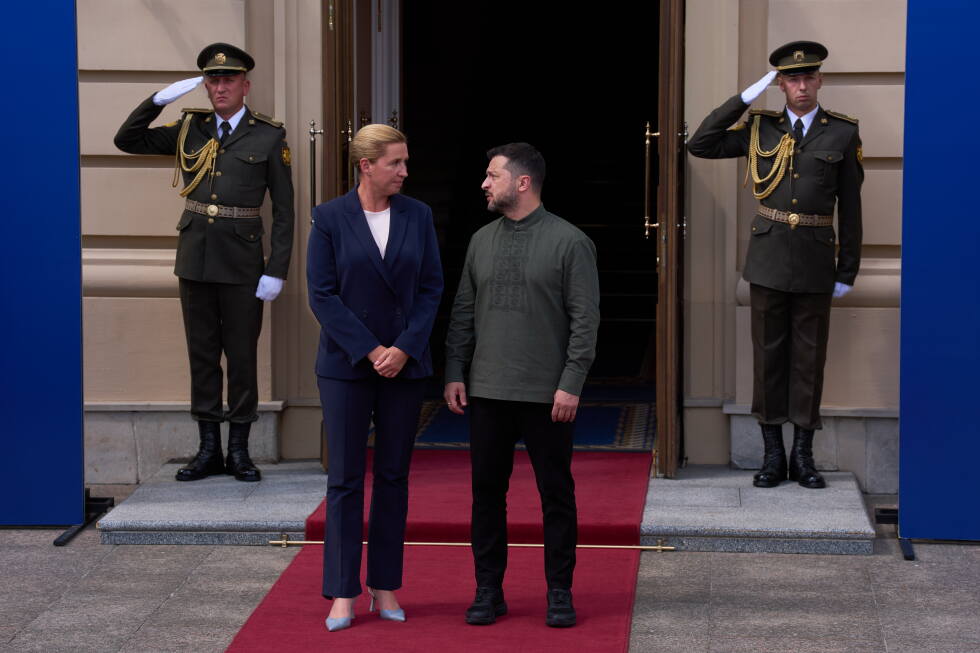
    The developments coincided with a show of solidarity from key Ukrainian allies ahead of Ukraine’s Independence Day, with leaders from all Nordic and Baltic nations arriving in Kyiv Sunday for a series of bilateral and multilateral talks. The leaders of Denmark, Estonia, Finland, Latvia, Lithuania, and Norway took part in a flag-raising ceremony for Ukraine’s National Flag Day, ahead of a planned major “coalition of the willing” meeting focused on continued Western support for Kyiv. Ukrainian Foreign Minister Andrii Sybiha emphasized the importance of the visit in a post on X, writing “We feel we are not alone. Our allies are with us.”
  • Zelensky has ‘questions to answer’ about corruption in his government, sacked minister says

    Zelensky has ‘questions to answer’ about corruption in his government, sacked minister says

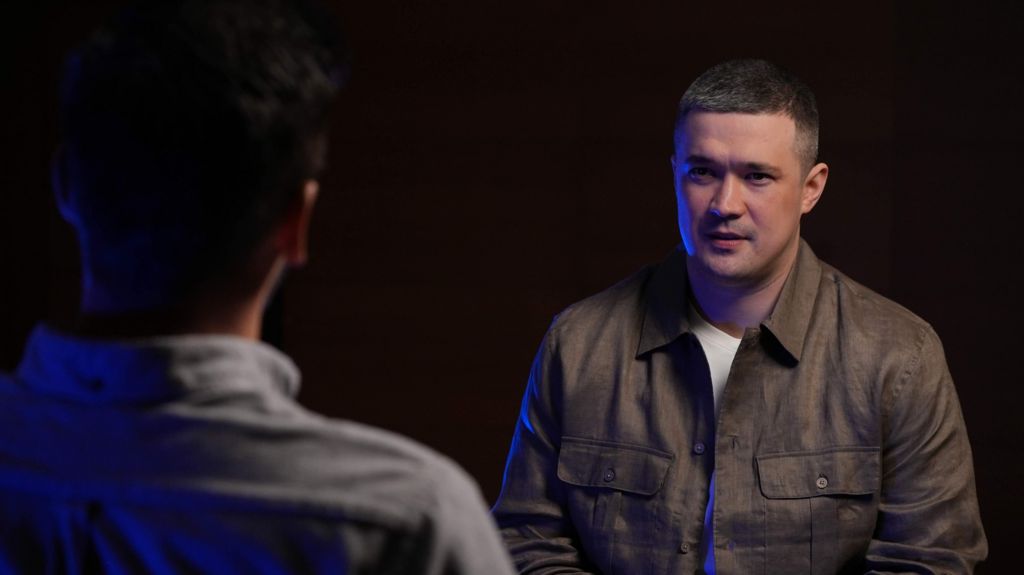
    In a revealing new interview with the BBC, Ukraine’s recently dismissed Defence Minister Mykhailo Fedorov has thrown into sharp focus long-simmering questions of corruption in Volodymyr Zelensky’s government, while pushing for an urgent national conversation about restarting suspended elections amid ongoing martial law. The 35-year-old minister, widely credited with revolutionizing Ukraine’s military capabilities through his pioneering drone warfare program and successful modernization of the armed forces, was removed from his post last month amid unconfirmed reports of friction with the leadership of Ukraine’s armed forces.

    Fedorov’s questioning of Zelensky comes on the heels of a high-profile money laundering investigation announced by Ukraine’s anti-corruption bureau last week. The probe uncovered a scheme to divert more than $3 million in public funds to post bail for a former Ukrainian energy minister facing money laundering charges, and led to the dismissal of a senior official embedded in Zelensky’s own office. In his interview, Fedorov argued that this case demands clear answers from the president about whether he was aware of corrupt activity among his closest aides.

    “Let him answer this question… I believe that he’s ready for such questions. It’s his responsibility to tell us all whether he was aware of all that or not… I don’t want to make any assumptions,” Fedorov told the BBC. He was careful to clarify that he has no evidence of personal corruption by Zelensky, noting that in their years working together, the president never gave him an order that violated laws or ethical standards. He added, however, that corruption still remains a systemic barrier that undermines Ukraine’s frontline combat capacity, even after he rooted out corrupt networks in defence procurement during his tenure.

    The former minister has sparked political controversy in recent weeks after posting a public video calling for an end to the suspension of elections, which have been put on hold since Russia launched its full-scale invasion of Ukraine in 2022 under nationwide martial law. Fedorov defended his call for a public debate on elections, framing it as a core democratic principle rather than a power grab.

    “We should not be afraid of discussing it. That’s what democracy is all about. If I cannot share my ideas and be open about them with my own society, then what are we fighting for? If elections were never held, then we are no longer a democracy,” he said. While he stopped short of confirming immediate presidential ambitions, he also declined to rule out a future run for office, noting that any decision would depend on the resumption of electoral processes, public trust, and his own ability to take on the role. He also sidestepped questions about whether he would support Zelensky’s re-election if votes are held.

    Following Fedorov’s dismissal, weekly public protests have been held in Kyiv by his supporters demanding Zelensky reinstate him to his post. The demonstrations wrapped up this week after the confirmation of Fedorov’s replacement, just hours after he released a second video calling for broad political reform. When asked if he missed his former role, Fedorov said no, citing the unrelenting pressure of managing defence operations during an active full-scale war while simultaneously overhauling the ministry.

    A spokesperson for Zelensky pushed back against Fedorov’s claims in a statement to the BBC, noting that Fedorov was a core member of every presidential administration since 2019, and questioned why he had not raised similar public concerns during his time in government.

    Beyond domestic political and corruption issues, Fedorov also criticized bureaucratic delays in weapons deliveries from Western backers including the United Kingdom, which has committed £16 billion in military support to Ukraine since the start of the war. While he expressed gratitude for the UK’s longstanding support, he blamed unnecessary red tape for holding up shipments of promised equipment, a problem he said is common across many partner nations that announce assistance but take months to deliver it.

    “Governments are lagging behind the realities on the ground. It’s not only the issue for UK, but for other countries as well that announce some assistance and we are not getting it until the end of the year,” he explained. Fedorov argued that Western partners should shift their support to directly funding Ukraine’s cutting-edge domestic drone production, rather than sending outdated legacy equipment that is no longer suited to modern battlefield needs: “We don’t need repairs of tanks when we no longer use tanks.”

    Looking ahead, Fedorov confirmed he will travel to the United States in the coming weeks to meet with Tesla and SpaceX CEO Elon Musk, whose Starlink satellite internet system has been a critical enabler of Ukraine’s military operations. The former minister aims to convince Musk to expand Starlink access into Russian-occupied and Russian airspace to support Ukrainian strike operations, while implementing safeguards to prevent the Kremlin from misusing the technology. He emphasized that maintaining relationships with leading global tech companies remains critical to securing Ukraine’s victory, regardless of his formal government position.

    Fedorov stressed that Ukraine’s wartime military experience, gained at the cost of thousands of soldier’s lives, delivers unique benefits to Western nations, and that timely weapons support would not only save Ukrainian lives but also help Western powers prepare for future conflicts.

    Reiterating his core democratic principles, Fedorov said that “democracy should not be the hostage of Putin”, framing his calls for transparency and elections as consistent with the values Ukraine is defending against Russian aggression.

  • Starc takes 10 wickets as Australia thrash Bangladesh

    Starc takes 10 wickets as Australia thrash Bangladesh

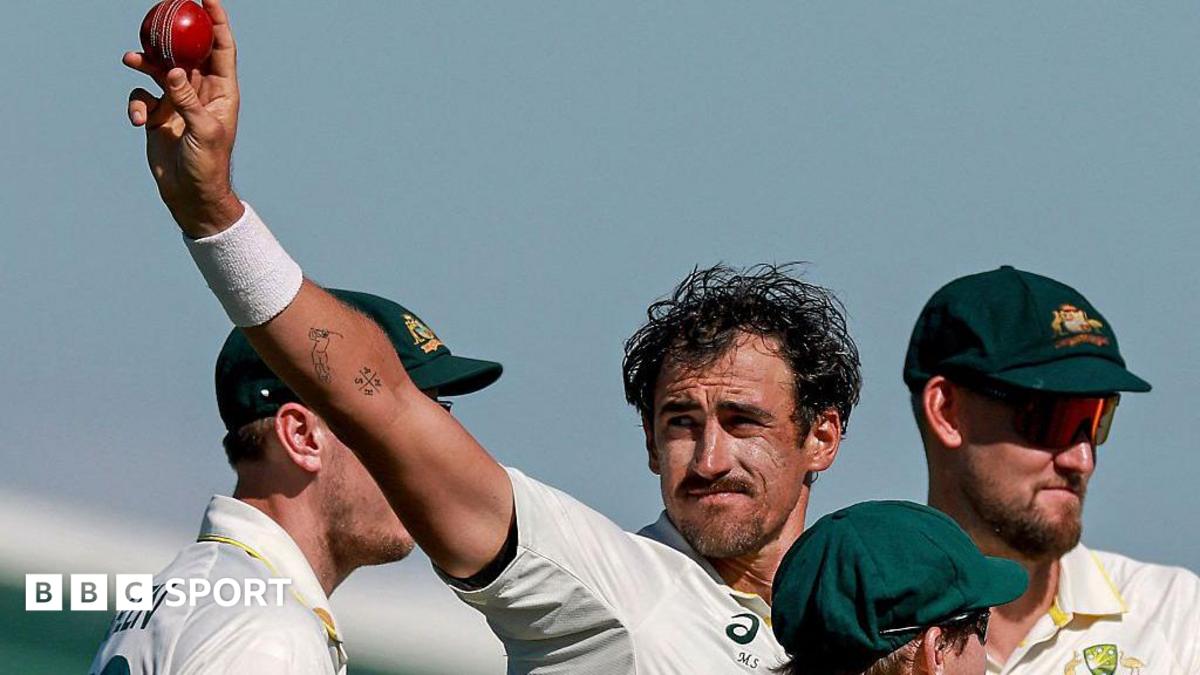
    In a dominant display of fast bowling that secured a resounding series-leveling victory, Australia bounced back from one of the biggest upsets in modern Test cricket to defeat Bangladesh by an innings and 51 runs in the second Test in Mackay, finishing the two-match series tied at 1-1. Led by left-arm pace spearhead Mitchell Starc, who claimed a match-winning 10 wickets for just 51 runs, Australia wrapped up victory just after the tea break on day two at the Great Barrier Reef Arena, capping off one of the shortest completed Test matches in cricket history with only 125 total overs bowled across the contest. The result reversed Australia’s shocking nine-wicket defeat to Bangladesh just a week prior in Darwin, a loss that shocked the cricket world as the world’s top-ranked Test side fell to the underdog visitors.

    Starc’s performance was nothing short of historic. The 36-year-old fast bowler tore through Bangladesh’s first innings on day one, claiming 6 wickets for only 12 runs to restrict Bangladesh to a dismal total of 64 all out. He followed that devastating spell with four more wickets in the second innings to cap his 10-wicket match haul, cementing his status as one of the greatest fast bowlers to ever play the game. With this performance, Starc climbed to 10th place on the all-time list of leading Test wicket-takers, reaching 445 career wickets – the most wickets ever taken by any left-arm fast bowler in Test history.

    After being bowled out for 210 in their first innings (with Cameron Green notching a team-top 62 runs and Nathan Lyon adding an unbeaten 32), Australia secured a critical 146-run first innings lead. Bangladesh’s left-arm paceman Shoriful Islam turned in an incredible individual bowling performance for the visitors, claiming 7 wickets for just 48 runs to keep Australia’s total lower than many expected. But Shoriful’s standout effort was not enough to lift his side to victory.

    Bangladesh’s second innings got off to a disastrous start, losing both opening batsmen inside the first eight overs to slump to 24 for 3. A mid-session collapse left them 95 for 8 by the tea break, and Lyon finished the contest by taking the final two Bangladesh wickets on three consecutive deliveries. Captain Pat Cummins chipped in with 3 wickets for 10 runs in the second innings, while Lyon also finished with three second-innings wickets to support Starc’s dominant performance.

    Following the match, Starc was named both Player of the Match and Player of the Series, after finishing the two-match contest with 12 total wickets at an extraordinary average of just 12.08. Reflecting on the team’s turnaround after the Darwin defeat, Starc noted that the side had fallen short of their own high standards in the first Test, but delivered the performance they expected of themselves in Mackay, aided by a pitch that favored fast bowling.
    “Much better week. We knew we weren’t at our best, or what we expect of ourselves, in Darwin,” Starc said. “What we expect of ourselves this week is what we got, particularly with the ball and the wicket that aided us with the ball.”
    Cummins echoed that sentiment, praising his side for a sharp, consistent performance that never let Bangladesh gain a foothold in the match after Australia’s strong start. “A lot of things went right these couple days and a lot of things went wrong last week,” the 33-year-old captain said. “We needed to bounce back, and it was a great couple of days from the lads. I thought everyone was sharp. It was a great start and we didn’t really let up after that.”
    For Bangladesh, Shoriful’s 7-wicket haul and a 31-run knock from opener Shanto were the only bright spots in a match that ended in an innings defeat inside two full playing days. The result levels the two-match series 1-1, after Bangladesh claimed the upset win in the opening Test. Australia will next turn their attention to a three-match Test tour of world Test champions South Africa, set to kick off in October.

  • Kazakhstan votes in parliamentary election expected to strengthen president’s grip on power

    Kazakhstan votes in parliamentary election expected to strengthen president’s grip on power

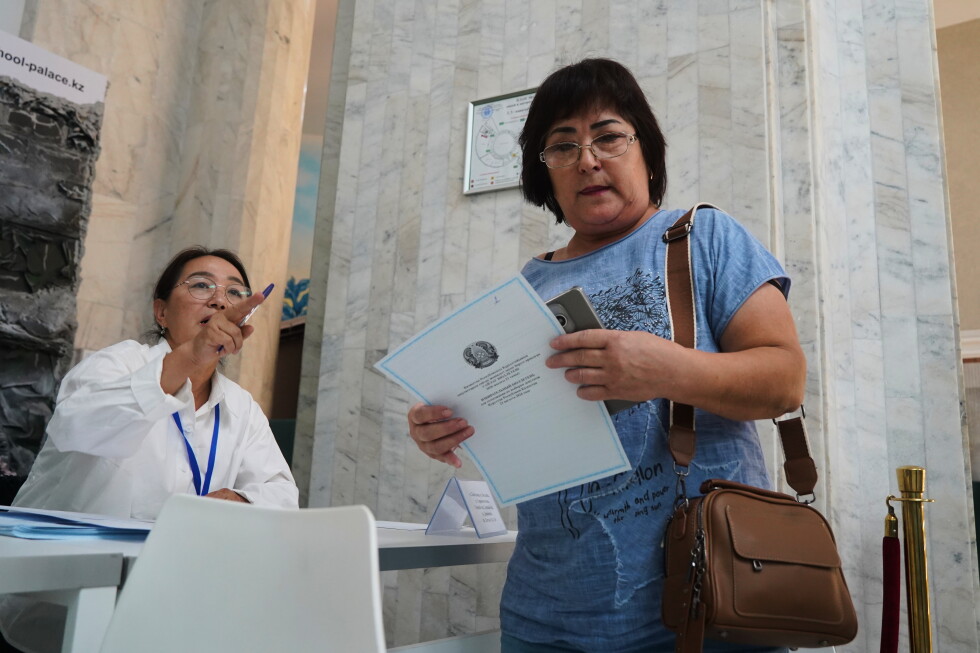
    Polling stations opened across Kazakhstan on Sunday for the Central Asian nation’s first parliamentary election to a newly restructured single-chamber legislature, the Kurultai. The vote, widely expected to solidify the grip of 73-year-old President Kassym-Jomart Tokayev on power, comes as the culmination of a sweeping constitutional overhaul initiated by the incumbent leader earlier this year. Political analysts broadly predict that the ruling pro-presidential Adilet party will secure an overwhelming majority in the new legislative body, with a handful of smaller parties aligned with Tokayev also projected to win seats.

  • Man completes 2,800 mile scoot across Australia

    Man completes 2,800 mile scoot across Australia

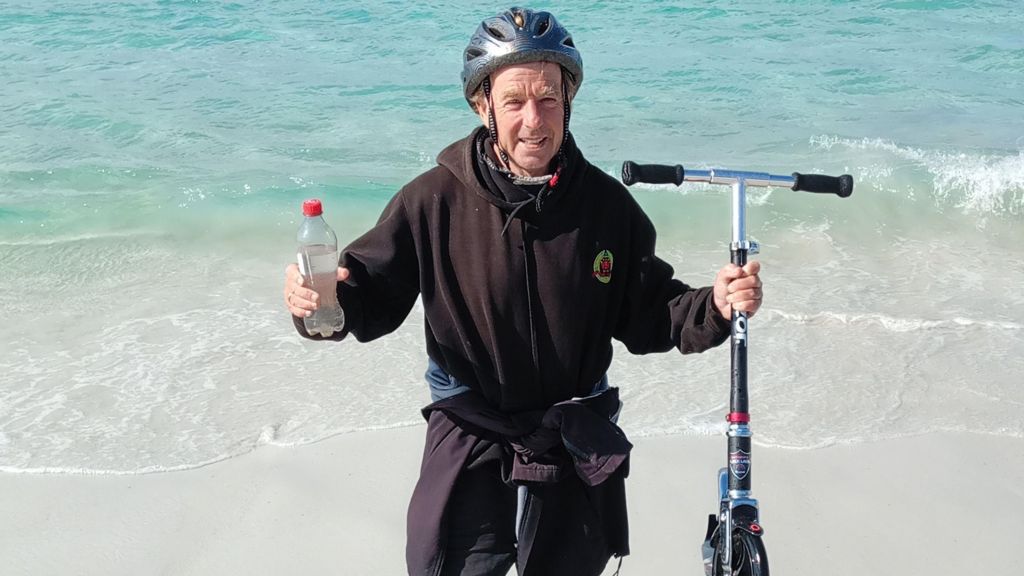
    At 57 years old, a seasoned British adventurer has checked one more epic expedition off his bucket list, wrapping up a grueling coast-to-coast crossing of Australia on a manual kick scooter that spanned more than 2,800 miles. Bob Brown, a long-time explorer hailing from Saltash, Cornwall, kicked off his ambitious journey back in July, trekking from the western Australian coastal city of Perth all the way to Sydney on the country’s eastern shoreline, crossing the finish line on Monday this week.

    This is not Brown’s first time tackling the iconic Australian transcontinental route — the explorer has already etched his name in adventure history twice on this very path. Back in 2001, he became the first Briton to run across Australia, covering 3,000 miles in just 60 days. Two years later, in 2003, he returned to complete the same route by bicycle, making him the first person ever to complete the crossing both by running and cycling. This third attempt on a kick scooter was designed to cap off this unique three-part challenge, and if his records are approved, he will walk away with two Guinness World Records: the title of fastest person to cross Australia on a kick scooter, and the first person to complete the route via three entirely different human-powered methods: running, cycling, and scootering.

    For Brown, the expedition was about far more than just breaking records. After a lifetime spent chasing adventures across the globe, the 57-year-old said he wanted to pull off one more monumental challenge before age made such feats unfeasible. More importantly, the journey was a fundraising effort for three worthy UK-based charities: MacMillan Cancer Support, St Luke’s Hospice, and Children’s Hospice South West. Brown set an initial fundraising target of £5,000, and also hoped his journey would inspire a new generation to step away from digital screens and seek out their own real-world outdoor adventures.

    The cross-continental trip was not without its dangerous setbacks, as Brown encountered multiple incidents that threatened to cut his journey short. Just five days into the expedition, a passing vehicle clipped the wing mirror on his scooter, sending him skidding onto a highway hard shoulder. Though he escaped that incident with only minor harm, a second accident on the very last day of his trip proved far more serious. With just 20 kilometers remaining between him and the finish line in Sydney, Brown’s handlebars snapped while he was descending a steep hill, sending him crashing to the ground. Even with these unexpected complications, Brown pushed through to the end, crossing the finish line with a total official time of 31 days, four hours and 10 minutes.

    Brown has now submitted all of his required documentation and evidence to Guinness World Records, and is waiting for the organization to formally verify his achievements. For updates on more regional stories from the UK’s South West, audiences can follow BBC Cornwall on social media platforms X, Facebook, and Instagram, or submit story ideas directly to spotlight@bbc.co.uk.

  • Crew honoured after 14 fishermen rescued from stricken boat

    Crew honoured after 14 fishermen rescued from stricken boat

    After nearly three decades of plucking stranded people from dangerous waters along Ireland’s rugged coastline via helicopter rescue, Jim O’Neill believed he had encountered nearly every possible crisis a rescuer could face. That perspective shifted dramatically, however, when a desperate emergency call came in just days before Christmas.

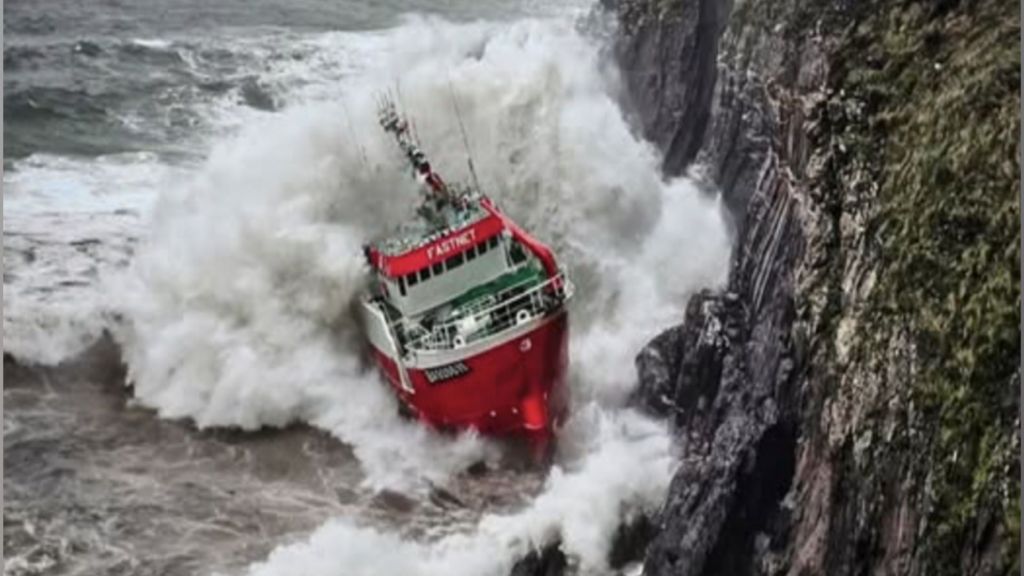
    The call brought word of a French fishing vessel, the *Fastnet*, carrying a 14-member crew that had run aground on jagged rocks off County Kerry after suffering sudden engine failure while departing Dingle Harbour. Near gale-force Atlantic winds and towering, powerful waves had driven the vessel onto the rocks, leaving the boat at constant risk of capsizing or breaking apart completely, and the crew trapped at the mercy of the churning, unforgiving ocean.

    The emergency mobilized a large multi-agency response, with O’Neill and the rest of the crew from Irish Coastguard Rescue Helicopter 115 at the center of the operation to pull the 14 fishermen to safety. For O’Neill, a native of Strabane, County Tyrone, the mission stood out as the most challenging rescue of his entire 30-year career – an incident that could easily have ended in one of Ireland’s worst modern maritime tragedies.

    “Going into it, we had no way of knowing how it would turn out. By the nature of the situation, we knew it was extremely high risk,” O’Neill explained in a post-rescue interview. “Success was never guaranteed or certain from the start.”

    When Rescue 115 arrived at the incident site, O’Neill quickly confirmed the full scope of the danger facing the stranded fishermen. The *Fastnet* was being pounded by massive waves on one side and bashed repeatedly against the sharp rocks on the other, with visible damage already starting to split the vessel’s hull. Compounding the hazard, leaking diesel from the boat’s damaged engine was already spreading toxic pollution across the surrounding water, adding another layer of risk for rescuers.

    Multiple emergency partners joined the response: RNLI lifeboat crews, Irish Coastguard land teams, the Irish Navy, and local commercial fishing vessels all contributed to the operation. Because the *Fastnet* was stuck on rocks in shallow waters, the larger lifeboats and supporting vessels had to hold position in deeper, safer water offsite, leaving the helicopter crew to lead the extraction via winching.

    With the helicopter hovering steadily above the battered fishing vessel, O’Neill was lowered down to the deck by his crew. Over the course of 50 grueling minutes, he navigated the slippery, unstable deck to locate all 14 crew members and prepare them for winch extraction, one by one. He deliberately stayed on the damaged vessel until every fisherman had been pulled to safety, leaving himself as the final person to be rescued.

    “The biggest challenge for me on deck was making sure I didn’t slip and fall hard, or get swept overboard by the waves,” O’Neill recalled. “I knew if I ended up in that rough sea, I didn’t stand much chance of surviving. Once I got all 14 men up to the helicopter, it hit me that I was the only one left. It was a great feeling to have gotten them all out, but it was also incredibly scary – I knew I still had to get myself recovered.”

    Months after the successful rescue, O’Neill was formally recognized for his extraordinary courage at a ceremony held at the UK House of Commons, where he received the prestigious Billy Deacon Memorial Award. The award honors winch operators and winch paramedics who demonstrate exceptional bravery and meritorious service during search and rescue operations, and it carries deep meaning as a tribute to a fallen rescuer.

    The award’s namesake, Billy Deacon, was a HM Coastguard winchman who lost his life in November 1997 during a rescue off the Shetland Islands. Deacon had safely extracted all crew members from the stricken cargo vessel *Green Lily*, and was the final person waiting for extraction when he was swept overboard by a large wave. He was posthumously awarded the George Medal for his “outstanding courage and bravery”, and the annual award bearing his name preserves his legacy.

    In its citation, the award committee praised O’Neill for completing the extraordinarily demanding rescue “with calm professionalism, despite considerable personal risk.” The committee also extended praise to O’Neill’s fellow Rescue 115 crew members: Captain Robert Goodbody, co-pilot Paraic Slattery, and winch operator Eamon O’Broin, noting their outstanding teamwork, communication, and steady leadership under extreme pressure.

    The committee added that O’Neill displayed “magnificent leadership skills” in organizing the 14 fishermen for evacuation, prioritizing their safety above his own even as the risk of the vessel breaking apart grew. “His courage in the face of adversity had a direct bearing on the successful outcome,” the citation read.

    Along with the trophy, O’Neill received an inscribed watch from RNLI chief executive Peter Sparkes, with all members of the Rescue 115 crew in attendance at the London ceremony to celebrate the honor. Speaking after the event, O’Neill said he felt deeply honored to receive an award that commemorates Deacon’s sacrifice, and he used the moment to share an important safety message for anyone working or recreating along Ireland’s coastlines.

    “It’s important that people are vigilant and prioritize safety,” he said. “They can still go out and enjoy the coastal environment, but they just need to be careful about their choices, think through their actions, and remember what the outcome could be if they take unnecessary, foolish risks.”