博客

  • Starmer arrives in Shanghai as he looks to boost UK business opportunities

    Starmer arrives in Shanghai as he looks to boost UK business opportunities

    British Prime Minister Keir Starmer commenced a significant diplomatic mission in China on Friday, marking the first visit by a UK leader to Shanghai in eight years. The trade-oriented journey, accompanied by over 50 British business executives, aims to forge stronger economic partnerships with the world’s second-largest economy.

    Starmer’s initial meetings in Beijing culminated in a mutual commitment with Chinese President Xi Jinping to establish a long-term strategic partnership. This development signals a notable thaw in Sino-British relations following years of diplomatic strain.

    The UK delegation’s efforts to expand commercial opportunities encountered immediate international headwinds. U.S. President Donald Trump voiced strong reservations about Western nations engaging economically with China, specifically referencing both Starmer’s mission and Canadian Prime Minister Mark Carney’s recent visit to Beijing.

    “Well, it’s very dangerous for them to do that,” President Trump remarked when questioned about potential UK-China trade agreements. He extended his criticism to Canada’s outreach efforts, stating, “It’s even more dangerous, I think, for Canada to get into business with China. Canada is not doing well. They’re doing very poorly.”

    This diplomatic activity occurs against a backdrop of numerous Western nations reassessing their economic relationships with China. Many countries have experienced commercial disruptions due to recent U.S. tariff policies and are consequently exploring alternative export markets and diversified trade partnerships.

    The convergence of multiple foreign leaders in Beijing reflects a broader trend of nations seeking to rebalance their international trade strategies while navigating complex geopolitical considerations.

  • US Senate Democrats reach deal with White House on spending bills: NYT

    US Senate Democrats reach deal with White House on spending bills: NYT

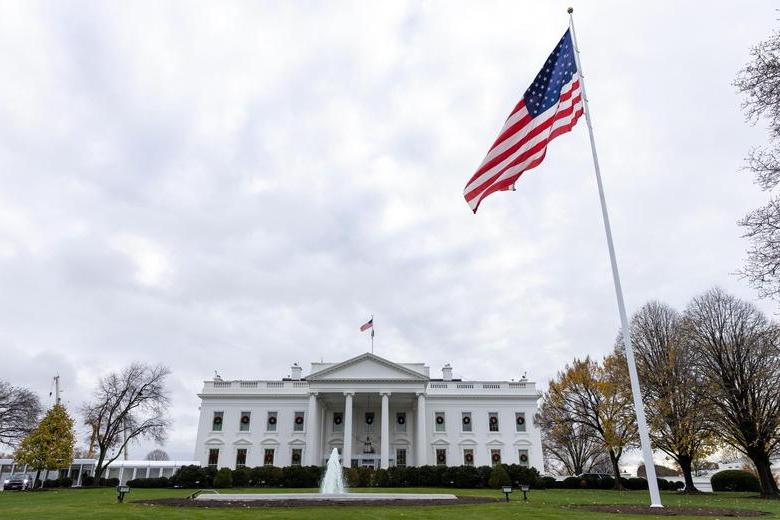
    WASHINGTON – In a dramatic eleventh-hour breakthrough, Senate Democrats have successfully negotiated a comprehensive spending agreement with Republican counterparts and the Biden administration, effectively preventing an imminent partial government shutdown. The resolution, confirmed by The New York Times on Thursday, emerged merely 24 hours before federal funding was scheduled to expire across multiple agencies.

    The bipartisan consensus encompasses five critical appropriations bills that will sustain operations for substantial segments of the federal government through the remainder of the current fiscal year. This legislative accomplishment represents a significant departure from the political stalemate that has characterized recent budget negotiations, demonstrating rare cross-aisle cooperation amid heightened partisan tensions.

    While specific allocation details remain under review, insiders indicate the package addresses funding priorities for departments previously facing operational suspension. The agreement follows weeks of intensive behind-the-scenes negotiations between congressional leadership and White House officials, who worked tirelessly to reconcile divergent policy priorities and spending targets.

    This development marks a crucial stabilization of government functions, ensuring continuity of services and preventing workforce disruptions that would have affected numerous federal agencies. The successful negotiation also signals potential for further bipartisan collaboration on upcoming fiscal legislation, setting a constructive precedent for future budgetary deliberations.

  • Sweeping penalties target soccer corruption

    Sweeping penalties target soccer corruption

    Chinese football authorities have unleashed the most severe disciplinary measures in the sport’s history, penalizing 13 clubs and 73 individuals in a sweeping anti-corruption campaign. The landmark sanctions come following an extensive joint investigation conducted by the Ministry of Public Security and the General Administration of Sport of China.

    The Chinese Football Association announced on January 29, 2026, that multiple clubs would face significant point deductions for the upcoming season, with fines reaching 1 million yuan ($143,900) for the most serious offenders. Reigning Chinese Super League champion Shanghai Port will begin their title defense with a five-point deficit, while Shanghai Shenhua and Tianjin Jinmen Tiger received the harshest penalties of ten-point deductions alongside maximum financial penalties.

    In a parallel move, the CFA issued lifetime bans against 73 individuals involved in match-fixing, gambling, and bribery schemes. The banned figures include former CFA chairman Chen Xuyuan and ex-national team coach Li Tie, both currently serving lengthy prison sentences following their 2024 convictions for accepting millions in bribes. In a particularly striking case, former international player Wang Dong received a lifetime ban merely eleven days after his appointment as head coach of third-tier club Changchun Xidu.

    CFA president Song Kai emphasized the organization’s “zero tolerance” stance against corruption, stating that cleaning up the sport remains paramount to China’s football revitalization project. The General Administration of Sport of China endorsed the penalties as demonstrating serious commitment to reforming league governance and promoting integrity.

    Affected clubs, including Beijing Guoan and both Shanghai teams, have publicly accepted the punishments, acknowledging management failures and pledging to implement stricter oversight and moral education programs. Legal experts have concurrently called for updating China’s 1995 sports law to include more specific provisions addressing sports corruption, suggesting that stronger legal frameworks are necessary to prevent future violations.

  • ‘Silent cafes’ a strong voice for disabled workers

    ‘Silent cafes’ a strong voice for disabled workers

    In an innovative approach to social inclusion, government service halls in Huai’an, Jiangsu province have become home to pioneering ‘silent cafés’ that employ hearing-impaired baristas. These unique establishments represent a collaborative effort between local authorities and the Cotti Coffee brand to create meaningful employment opportunities for the deaf community.

    The cafés operate with a distinctive communication model where customers place orders via QR codes or online platforms, minimizing verbal interaction. For special requests, the venues are equipped with voice-recognition tablets and writing boards. This innovative system has proven remarkably successful, with the flagship location in Huai’an’s government service center becoming a bustling hub that serves up to 200 beverages daily.

    Beyond coffee service, these spaces function as comprehensive disability assistance centers featuring artwork by disabled artists and wheelchair rental services. The initiative has already transformed lives, with over 20 individuals with disabilities receiving training and eight becoming certified baristas since the program’s inception in December 2023.

    The project’s architect, Wang Xian, left her corporate career to launch the venture after being inspired by her hearing-impaired relatives’ employment struggles. Despite initial doubts about training hearing-impaired staff to master complex coffee recipes, she witnessed extraordinary dedication and skill development among her team members.

    Government support has been crucial to the program’s success, with the service center providing rent-free space and covering utility costs. Delivery riders enjoy unrestricted access, ensuring smooth business operations. The model has proven so effective that a second location opened in Huaiyin district in July, demonstrating the program’s scalability and social impact.

    For employees like Wang Jiali, a 39-year-old barista with severe hearing loss, the café has been transformative. She describes how constant customer interaction has built her confidence and communication skills, representing a journey from isolation to meaningful social engagement. While occasional misunderstandings occur in this novel concept, these moments become opportunities for public education and mutual understanding.

  • Indonesian couple caned 140 times for sex and alcohol offences

    Indonesian couple caned 140 times for sex and alcohol offences

    In a stark demonstration of Islamic law enforcement, a couple in Indonesia’s Aceh province endured 140 strokes of the cane Thursday for violating Sharia provisions prohibiting extramarital sex and alcohol consumption. The brutal public punishment unfolded before spectators as religious authorities carried out sentences against six individuals convicted of moral offenses.

    The 21-year-old woman, whose identity remains protected, collapsed unconscious after three female executioners administered successive strikes with a rattan cane. Distressing footage captured her weeping throughout the ordeal before medical personnel transported her via ambulance following the punishment. Her male counterpart received identical corporal punishment for their shared transgressions.

    Notably among those punished was a serving officer from Aceh’s Islamic police force, who received 23 lashes alongside his female companion for being alone together in a private residence. Muhammad Rizal, commander of the Islamic police, confirmed the officer’s immediate dismissal following the judicial caning.

    Aceh remains Indonesia’s sole province implementing full Sharia jurisprudence, maintaining public caning as standard penalty for moral violations. The regional Islamic criminal code mandates 100 strokes for unmarried intimacy and 40 strokes for alcohol consumption.

    Human rights advocate Azharul Husna of Kontras Indonesia highlighted concerns regarding post-punishment protocols, noting that ‘caning procedures lack proper regulation and require improvement to address aftermath care for punished individuals.’ The practice continues drawing international condemnation from rights organizations decrying its cruel and inhuman nature.

  • Ten photos from across China: Jan 23 – 29

    Ten photos from across China: Jan 23 – 29

    China Daily Information Co (CDIC) has reinforced its copyright position through a comprehensive disclaimer published on its digital platform. The company asserts exclusive ownership of all content published on its site, encompassing textual materials, photographs, and multimedia information. According to the published terms, any republication or utilization of this protected content in any form requires prior written authorization from CDIC. The notice serves as a formal declaration of the company’s intellectual property rights and its commitment to defending them against unauthorized use. Additionally, the platform provides technical recommendations, suggesting that visitors utilize browsers with a screen resolution of 1024*768 or higher for an optimal viewing experience. The footer of the publication includes essential corporate information such as its license number (0108263) and registration details (Number: 130349), alongside links to sections including ‘About China Daily,’ advertising opportunities, contact information, and career offers for both general and expatriate employment. The notice concludes by encouraging users to follow the organization’s updates through its social channels.

  • Takeaways from AP report on toxic spills from gold mining in Liberia

    Takeaways from AP report on toxic spills from gold mining in Liberia

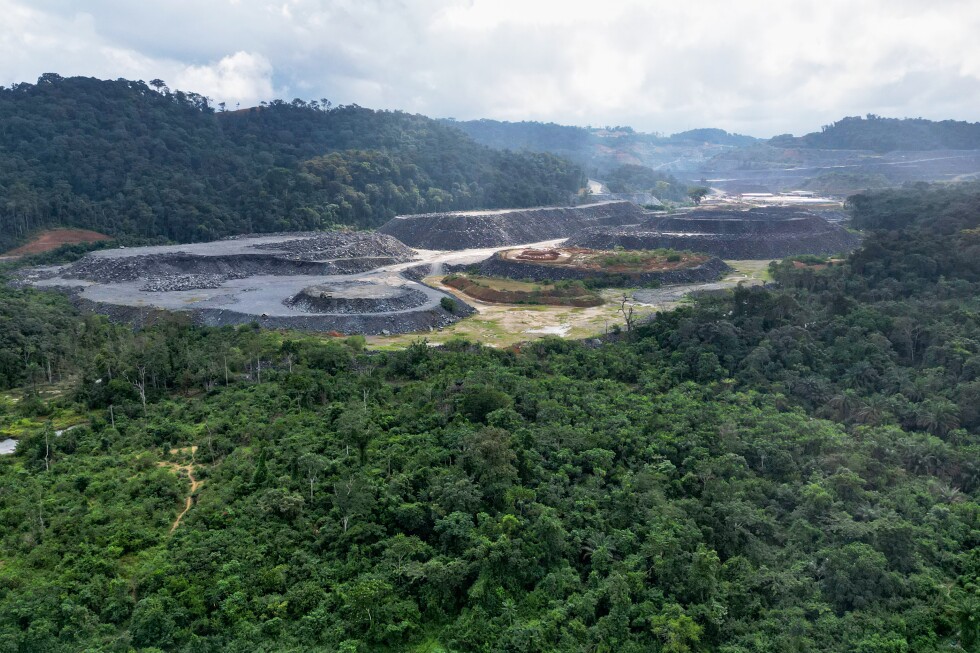
    A comprehensive investigation by The Associated Press and The Gecko Project has uncovered systemic environmental violations by Liberia’s largest gold mining operation. Bea Mountain Mining Corporation, the nation’s premier gold producer, has repeatedly discharged hazardous chemicals including cyanide at concentrations exceeding Liberia’s legal limits, according to environmental authorities.

    The investigation reveals a pattern of ecological damage and community distress spanning several years. Residents of adjacent villages reported consistent findings of dead fish in local waterways and expressed profound frustration over unaddressed grievances. Beyond chemical contamination, communities attributed structural damage to homes from mining explosions and increased human-wildlife conflicts as elephants, displaced by operational blasts, raided agricultural lands.

    Tensions culminated in violent protests across Gogoima and Kinjor villages in 2024, where residents alleged law enforcement responded with excessive force including beatings, tear gas deployment, and three fatalities. Liberia National Police spokesperson Cecelia Clarke dismissed these allegations as “false and misleading.”

    Financial analysis indicates substantial export revenues exceeding $576 million between July 2021 and December 2022, with government receipts totaling $37.8 million during this period. Despite this economic activity, community investment remained minimal at just $2 million for environmental and social programs—representing merely 0.35% of export earnings. The Liberian government maintains a 5% stake in these operations.

    Regulatory documents retrieved from Liberia’s Environmental Protection Agency (EPA) indicate four documented chemical spills between 2016 and 2023, with the company failing to promptly report incidents as required. EPA inspectors repeatedly recommended financial penalties, yet only one $99,999 fine was issued in 2018, later reduced to $25,000 without explanation.

    Canadian toxicologist Mandy Olsgard, upon reviewing EPA reports, characterized the corporate conduct as “sustained negligence.” In response to mounting violations, Bea Mountain withdrew from the Cyanide Management Code, an international standard requiring independent audits.

    The supply chain investigation traced Bea Mountain’s gold to Swiss refiner MKS PAMP, which supplies technology giants including Nvidia and Apple. While MKS PAMP commissioned an independent assessment that identified health and safety improvements without recommending relationship termination, the findings remain confidential.

    Bea Mountain is ultimately controlled by Murathan Günal through Avesoro Resources, part of the Turkish billionaire Günal family’s Mapa Group conglomerate. Neither entity responded to requests for comment regarding the investigation’s findings.

  • Mum of girl killed in blast asks government for direct talks

    Mum of girl killed in blast asks government for direct talks

    Donna Harper, whose 14-year-old daughter Leona perished in the catastrophic Creeslough service station explosion, has issued a heartfelt plea to the Irish government for immediate commencement of substantive discussions regarding a statutory judicial public inquiry. The October 2022 disaster in County Donegal claimed ten lives, yet despite the passage of over three years, no definitive explanation has been provided regarding the explosion’s cause.

    Harper will address a significant gathering in Londonderry this Saturday, coinciding with the 54th anniversary of Bloody Sunday. The event will unite families from multiple historical tragedies—including Stardust, Hillsborough, the Post Office scandal, Ballymurphy, and Bloody Sunday—creating a collective platform for sharing experiences in pursuing truth and institutional accountability.

    In an emotional interview with BBC Radio Foyle, Harper expressed her unexpected transition from observer to activist: “I grew up in Letterkenny witnessing these major events through media coverage. Never did I imagine I would stand alongside these families, now fighting for justice for my daughter and the nine other victims.”

    The ongoing investigation involves collaboration between Donegal-based Gardaí, the Commission for the Regulation of Utilities, and the Health and Safety Authority. Harper has been informed that the final segment of the case file will be submitted to the Director of Public Prosecutions (DPP) in March 2026, following an initial submission last September.

    Despite Donegal County Council’s 2024 motion endorsing a public inquiry and subsequent planning permission reversals for redevelopment at the site, the Department of Justice maintains that the criminal investigation remains the “most appropriate avenue” for addressing concerns. Minister Jim O’Callaghan has emphasized allowing the Garda investigation to conclude before considering further actions.

    Harper remains steadfast in her pursuit of transparency: “We are approaching a critical juncture in the criminal investigation, which I fully support. However, the questions we hold require answers beyond what this process alone can provide. The government must engage with us directly.”

    The Harper family continues to await Leona’s death certificate, as full inquests cannot proceed until criminal investigations conclude. Donna Harper draws strength from her daughter’s memory, asserting: “Leona’s life mattered, those nine people mattered, and consequently their deaths must matter equally. No parent should endure this perpetual state of waiting and uncertainty.”

    Referencing the 1987 Raglan House gas explosion precedent where parallel investigations occurred, Harper emphasizes: “That occurred nearly four decades ago. We cannot burden families with determining the appropriate path forward in 2026.”

    The Department of Justice confirmed the Minister’s December 2025 meeting with the Harpers in Donegal, where he expressed profound sympathy while maintaining the DPP’s operational independence. Gardaí continue to solicit information from individuals present at the site prior to the explosion.

  • Liberia’s largest gold miner repeatedly spilled dangerous chemicals, records show

    Liberia’s largest gold miner repeatedly spilled dangerous chemicals, records show

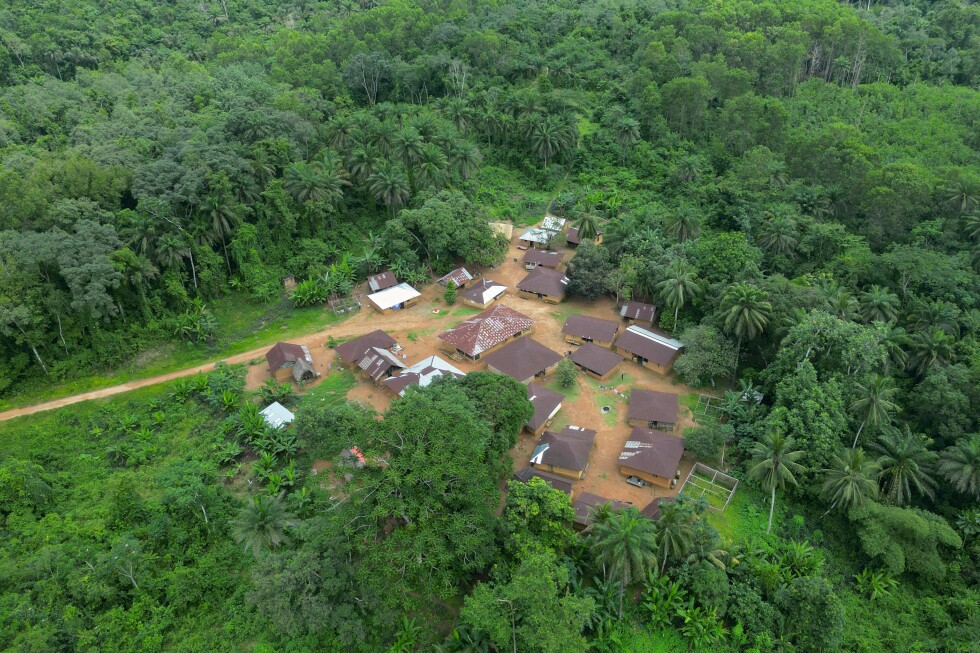
    The remote village of Jikandor in Liberia’s dense rainforest faces an environmental catastrophe as generations of fishing and river-based livelihood have been destroyed by repeated toxic spills from the country’s largest gold mining operation. An extensive investigation by The Associated Press and The Gecko Project reveals systemic failures by Bea Mountain Mining Corporation that have compelled residents to abandon their ancestral homes.

    According to retrieved Environmental Protection Agency documents and interviews with government officials, experts, and former employees, Bea Mountain’s substandard facilities have repeatedly leaked dangerous levels of cyanide, arsenic, and copper over several years. These spills consistently exceeded Liberia’s legal pollution limits, creating an environmental emergency that the government has largely failed to address.

    Canadian toxicologist Mandy Olsgard, who reviewed the EPA reports, characterized the company’s conduct as “sustained negligence.” The investigation uncovered that Bea Mountain failed to promptly report a major 2022 spill and actively blocked government inspectors from accessing their laboratory and testing data.

    The gold extracted from these operations enters global supply chains through Swiss refiner MKS PAMP, which supplies major technology companies including Nvidia and Apple. While MKS PAMP commissioned an independent assessment that identified areas for improvement, the company declined to share specific findings and maintains its relationship with Bea Mountain.

    Between July 2021 and December 2022, Bea Mountain exported over $576 million worth of gold from Liberia while contributing just $37.8 million to government coffers. The mining operation is controlled by Murathan Günal through Avesoro Resources, part of his father Mehmet Nazif Günal’s Turkish business empire.

    The environmental crisis follows years of warnings from multiple consultancies that had identified contamination risks as early as 2012. Despite these warnings and the company’s pledge to adhere to the Cyanide Management Code, Bea Mountain withdrew from the program without undergoing any audits.

    The first documented spill occurred in March 2016, just before the Günal family acquired the mine, with four confirmed cases of exceeding government pollution limits following. In the most severe incident in May 2022, dead fish floated downstream for over 10 miles, with villagers reporting severe illness after consuming contaminated fish.

    Despite repeated recommendations from EPA inspectors for penalties, only one fine was issued—reduced from $99,999 to $25,000. The EPA’s current leadership, which took office in 2024, has ordered remediation measures and facilitated a legally binding agreement for village relocation and compensation.

  • Olympic organizers invoke an ancient pledge to call for the suspension of all wars

    Olympic organizers invoke an ancient pledge to call for the suspension of all wars

    As the Milan Cortina Winter Olympics approach, the United Nations and Olympic organizers have renewed their call for a worldwide cessation of hostilities—a modern interpretation of the ancient Greek tradition known as the Olympic Truce. This seven-week pause, scheduled to begin one week prior to the February 6 opening ceremonies and extend through the Paralympics’ conclusion, represents a symbolic appeal for peace during a period of unprecedented global conflict.

    The concept originates from ancient Greece, where warring city-states would halt combat to ensure safe passage for athletes and spectators traveling to Olympia. Revived in modern form during the 1994 Lillehammer Winter Games amid the Yugoslav Wars, the truce has since become a ceremonial tradition backed by UN resolutions—though it has failed to stop any conflicts in its 17 attempts.

    Despite its imperfect record, the truce has occasionally produced meaningful moments: a one-day humanitarian pause during the Sarajevo siege allowed aid delivery in 1994, and the 2000 Sydney Games witnessed a unified march by North and South Korean athletes. Constantinos Filis, director of the International Olympic Truce Center, acknowledges the practical challenges but emphasizes the importance of the symbolic message reaching global audiences.

    This appeal for peace comes against a troubling backdrop documented by Uppsala University’s conflict researchers, who reported 61 active armed conflicts in 2024—the highest number recorded in modern history. Their upcoming report indicates even greater conflict numbers for 2025, with particular concern about Western Africa where extremist groups continue expanding operations.

    The Bulletin of the Atomic Scientists reinforced this grim assessment by moving their symbolic Doomsday Clock closer to midnight, reflecting increased existential threats to humanity. Meanwhile, the gap between Olympic ideals and reality remains starkly evident—Russia’s full-scale invasion of Ukraine began during a truce period in 2022.

    UN Secretary-General António Guterres and International Olympic Committee President Kirsty Coventry maintain that the Games represent a unique opportunity to transcend geopolitical divisions. Coventry, reflecting on her childhood in Zimbabwe, emphasized how witnessing peaceful competition can inspire hope and celebrate shared humanity even during times of profound division.