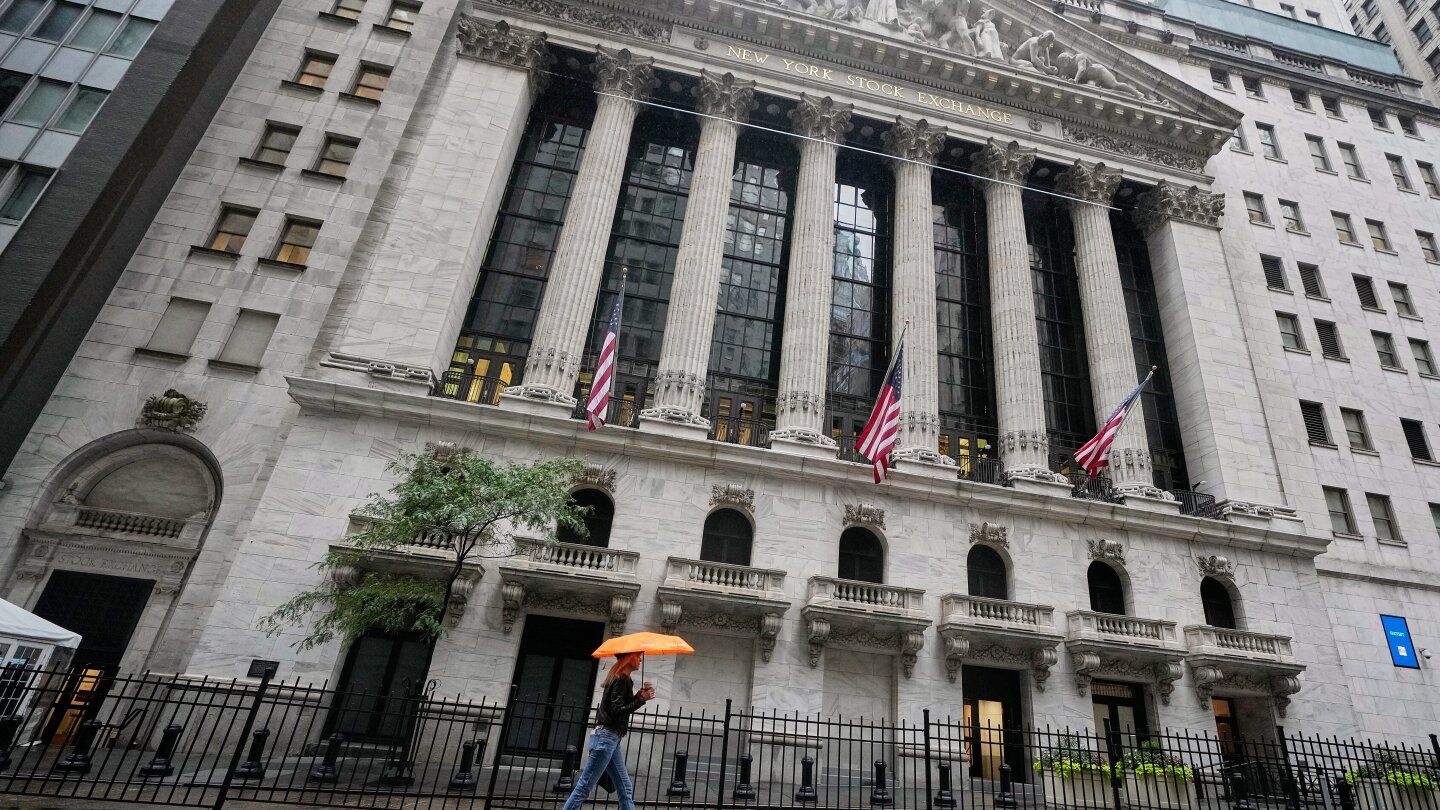
The U.S. stock market showed signs of stabilization on Friday, with bank stocks recovering from significant losses earlier in the week. Despite this, Wall Street remains volatile, experiencing frequent fluctuations. The S&P 500 saw a slight decline of 0.1% in early trading, while the Dow Jones Industrial Average rose by 91 points (0.2%), and the Nasdaq composite dropped by 0.3%. Big Tech stocks, including Nvidia, faced downward pressure, dropping 0.6% amid concerns over inflated valuations driven by the artificial intelligence boom, despite strong profit growth. Meanwhile, bank stocks rebounded after several institutions, such as Fifth Third Bancorp, Huntington Bancshares, and Truist Financial, reported better-than-expected quarterly earnings. This recovery followed a sharp decline in the sector triggered by fears of bad loans affecting smaller and midsized banks. Zions Bancorp and Western Alliance Bancorp, both central to Thursday’s concerns, also saw gains, rising 3.4% and 2.9%, respectively. The market remains cautious as scrutiny intensifies over loan quality following the bankruptcy of First Brands Group, an auto parts supplier. Jefferies Financial Group, potentially impacted by the bankruptcy, rose 4.8% after a significant drop since mid-September. JPMorgan CEO Jamie Dimon warned of potential risks in the banking sector, likening them to ‘cockroaches,’ but analysts suggest the situation is not yet critical. Trading volatility persists amid geopolitical tensions, including President Trump’s tariff threats on China, though he later indicated a possible meeting with Chinese President Xi Jinping. Overseas, European and Asian markets saw declines, with Germany’s DAX dropping 1.8% and Hong Kong’s Hang Seng falling 2.5%. Treasury yields remained steady after Thursday’s sharp declines.
博客
-
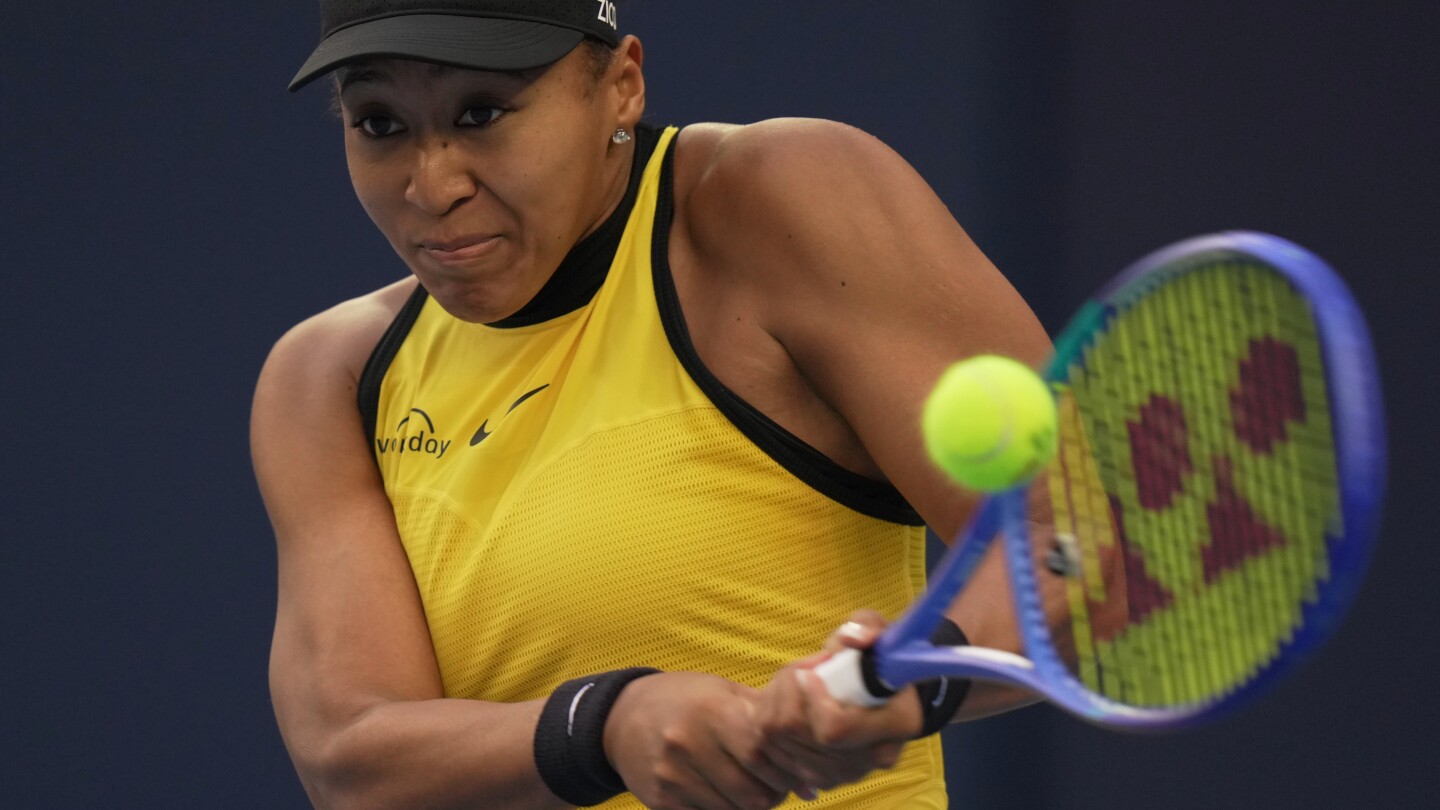
Naomi Osaka is out of the Japan Open quarterfinals with a left leg injury
OSAKA, Japan — Tennis star Naomi Osaka was forced to withdraw from her quarterfinal match at the Japan Open on Friday due to a left leg injury, paving the way for Jaqueline Cristian to advance to the semifinals via walkover. The Women’s Tennis Association (WTA) confirmed the development, marking Cristian’s third semifinal appearance this year and her first on a non-clay surface. Osaka, the tournament’s top seed, had been struggling with the injury sustained during her second-round match against Suzan Lamens. Despite the setback, Osaka managed to secure victories over Wakana Sonobe and Lamens earlier in the tournament. During her match against Lamens, Osaka took a commanding 5-0 lead in the third set but abruptly halted play after experiencing discomfort in her left leg. She returned to the court with her thigh wrapped but ultimately closed out the match on her third match point. This withdrawal adds to a challenging season for Osaka, who recently exited in the second rounds of both the China Open and the Wuhan Open. Meanwhile, in another quarterfinal match, 2021 U.S. Open finalist Leylah Fernandez triumphed over Rebecca Šramková with a 7-6 (2), 6-3 victory, continuing her strong performance in the tournament.
-
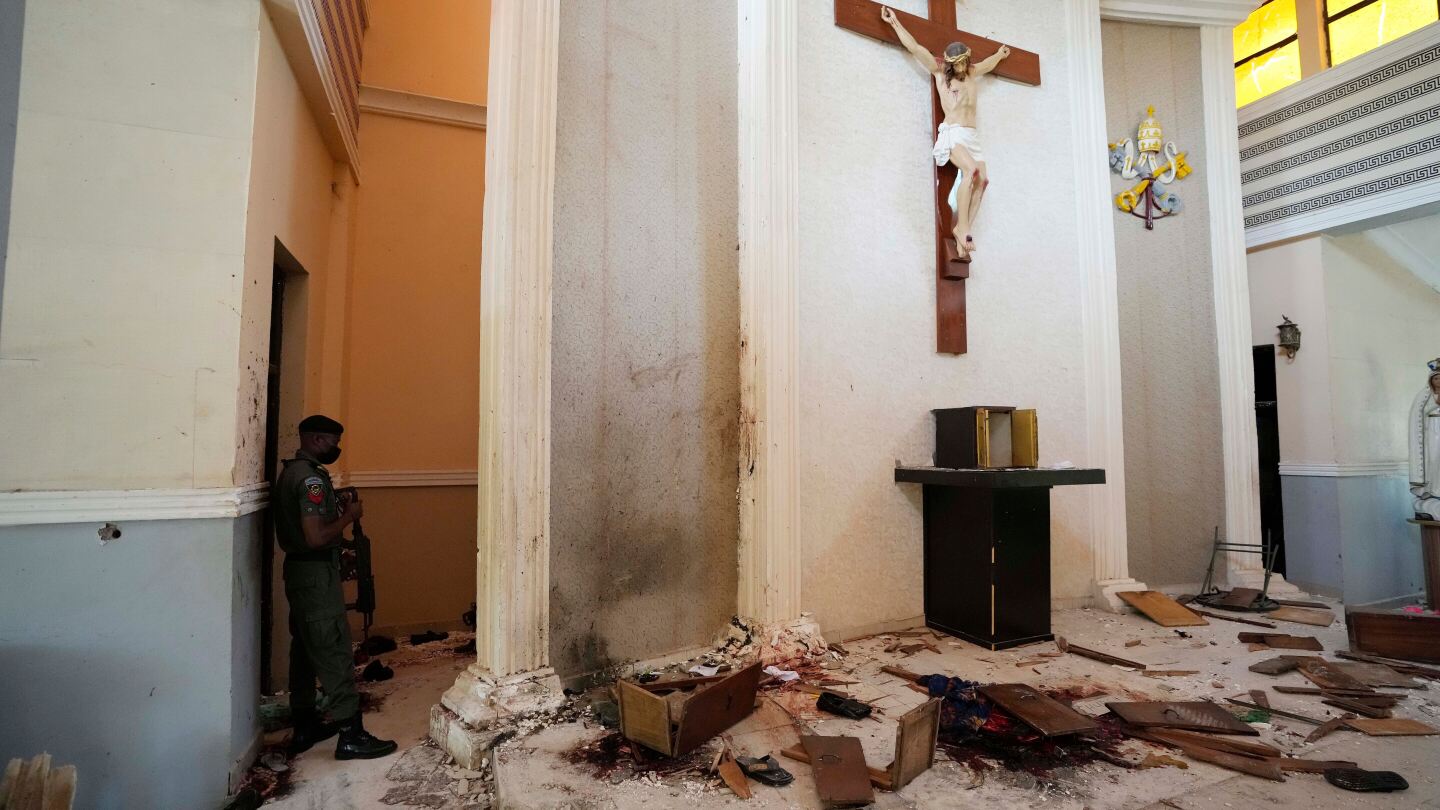
A US senator claims ‘Christian mass murder’ is occurring in Nigeria. The data disagrees
U.S. Senator Ted Cruz has ignited a contentious debate by urging Congress to designate Nigeria as a violator of religious freedom, alleging ‘Christian mass murder’ without substantiated evidence. The Nigerian government has firmly dismissed these claims as baseless. Cruz, a Republican member of the Senate Foreign Relations Committee, introduced a bill last month seeking to label Nigeria a ‘Country of Particular Concern’ due to alleged ‘severe violations’ of religious freedom. Such a designation could lead to U.S. sanctions. However, the bill’s passage remains uncertain as it awaits Senate action. Cruz’s assertions have been echoed by some U.S. celebrities and commentators, with some even alleging a ‘Christian genocide,’ though no evidence has been provided. Cruz’s office has not responded to inquiries about the motivation behind these allegations. Nigeria, with a population of 220 million, is nearly evenly divided between Christians and Muslims. The country has long grappled with insecurity from various groups, including Boko Haram, which targets both Muslims and Christians. Analysts emphasize that the majority of victims in Nigeria’s Muslim-majority north are Muslims, not Christians. While religiously motivated attacks occur, they are part of a broader spectrum of violence, including farmer-herder conflicts and ethnic clashes. Joseph Hayab, a former chairman of the Christian Association of Nigeria, refuted claims of ‘Christian genocide,’ noting that while thousands of Christians have been killed, the situation has improved compared to previous years. Nigeria’s Information Minister, Idris Muhammed, stated that there is no systematic or intentional targeting of any religious group. Nigeria was previously designated a ‘Country of Particular Concern’ by the U.S. in 2020, but this was lifted in 2023 to improve bilateral relations. The Christian Association of Nigeria has acknowledged the persecution of Christians but emphasized that violence affects both religious groups. Data from the Armed Conflict Location and Event Data program shows that between January 2020 and September 2023, 20,409 deaths resulted from 11,862 attacks on civilians in Nigeria, with 317 Christian deaths and 417 Muslim deaths recorded in religion-targeted attacks. Analysts argue that Nigeria’s complex security dynamics do not meet the legal definition of genocide, which requires intent to destroy a specific group. Instead, they describe the violence as mass killings not targeted at any particular group. Experts warn that framing the crisis as genocide could exacerbate tensions and hinder efforts to address the root causes of violence.
-

Taylor Swift fans flock to German museum to see Ophelia painting
A German museum has experienced an unexpected surge in visitors, thanks to Taylor Swift’s latest album, *The Life of a Showgirl*. The Hessische Landesmuseum in Wiesbaden, Germany, has seen a significant increase in foot traffic as fans flock to view Friedrich Heyser’s 1900 painting of Ophelia, which inspired the opening scene of Swift’s music video for *The Fate of Ophelia*. The video, which has garnered over 65 million views on YouTube, features the painting coming to life with Swift at its center. Museum spokesperson Susanne Hirschmann expressed delight at the newfound attention, noting that visitors have traveled from as far as Hamburg and nearby U.S. military bases. The museum’s online announcement about the painting’s connection to Swift went viral, with social media posts receiving thousands of likes. The painting, which depicts Ophelia lying drowned in water surrounded by flowers, aligns with the album’s themes and cover art. Museum director Andreas Henning praised Swift’s use of the painting as inspiration, calling it a unique opportunity to attract new audiences. *The Life of a Showgirl* has already broken records, becoming the UK’s biggest album debut of 2025 and surpassing Adele’s *25* in U.S. sales. This marks Swift’s third UK chart-topping album this year, following *Lover (Live From Paris)* and *The Tortured Poets Department*. The album also follows Swift’s recent personal milestones, including her engagement to NFL star Travis Kelce and regaining control of her music catalog.
-
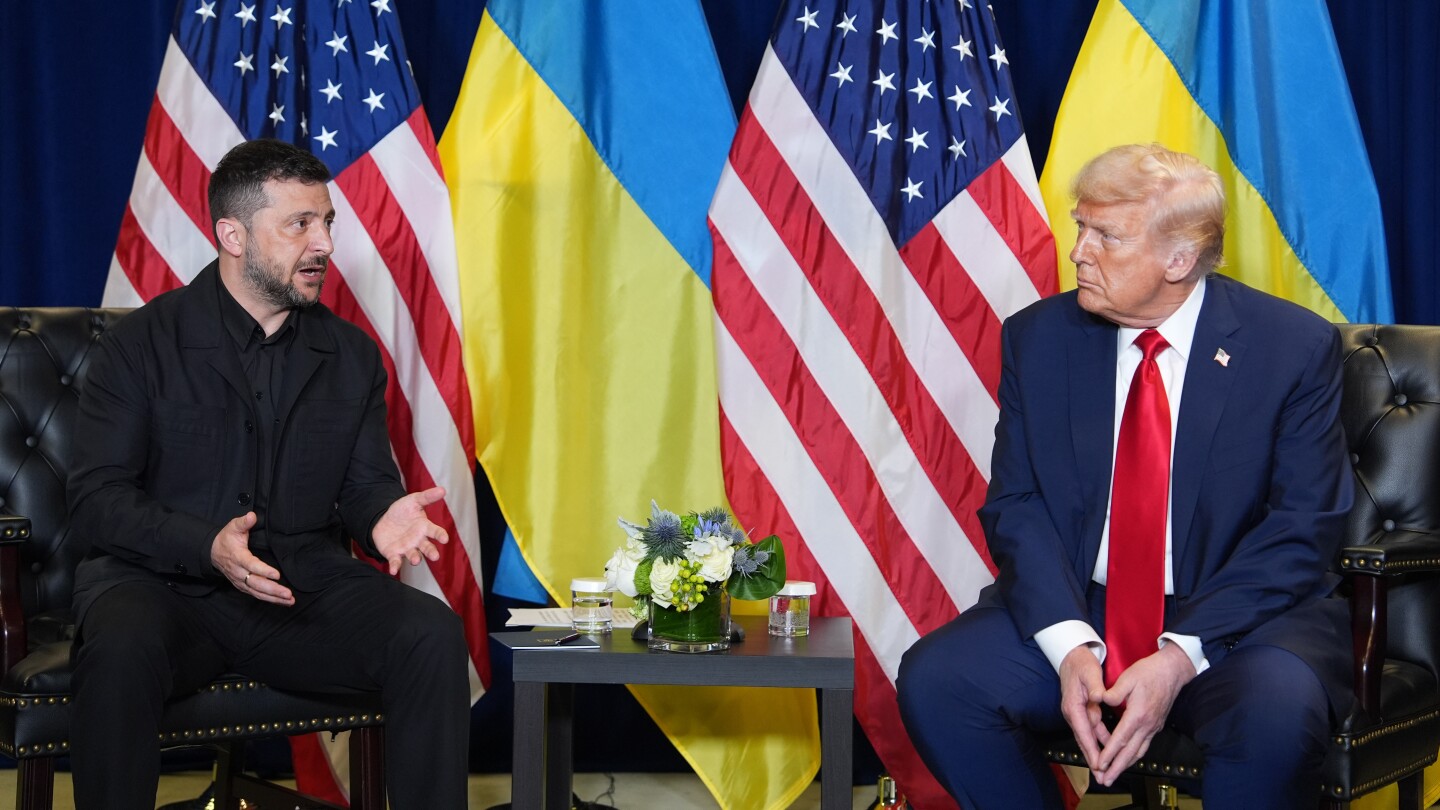
Ahead of Zelenskyy meeting, Trump shows signs he might not be ready to send Kyiv Tomahawk missiles
President Donald Trump is scheduled to meet with Ukrainian President Volodymyr Zelenskyy at the White House on Friday, following a lengthy phone call between Trump and Russian President Vladimir Putin. The discussions come amid Ukraine’s urgent request for long-range Tomahawk cruise missiles, which Trump has indicated he is hesitant to provide, citing the need to preserve U.S. military resources. Zelenskyy has argued that these missiles are essential for striking deep into Russian territory and compelling Putin to engage in serious negotiations to end the ongoing conflict. However, Putin has warned that supplying such weapons to Ukraine would severely damage U.S.-Russian relations. This will be the fourth face-to-face meeting between Trump and Zelenskyy since Trump returned to office in January. Trump has also announced plans to meet with Putin in Budapest to discuss potential resolutions to the war, with senior aides from both sides set to convene next week. Despite Trump’s earlier optimism about brokering peace, recent developments suggest that direct talks between Zelenskyy and Putin remain unlikely, as Russia continues its aggressive military actions in Ukraine.
-
A war on drugs or a war on terror? Trump’s military pressure on Venezuela blurs the lines
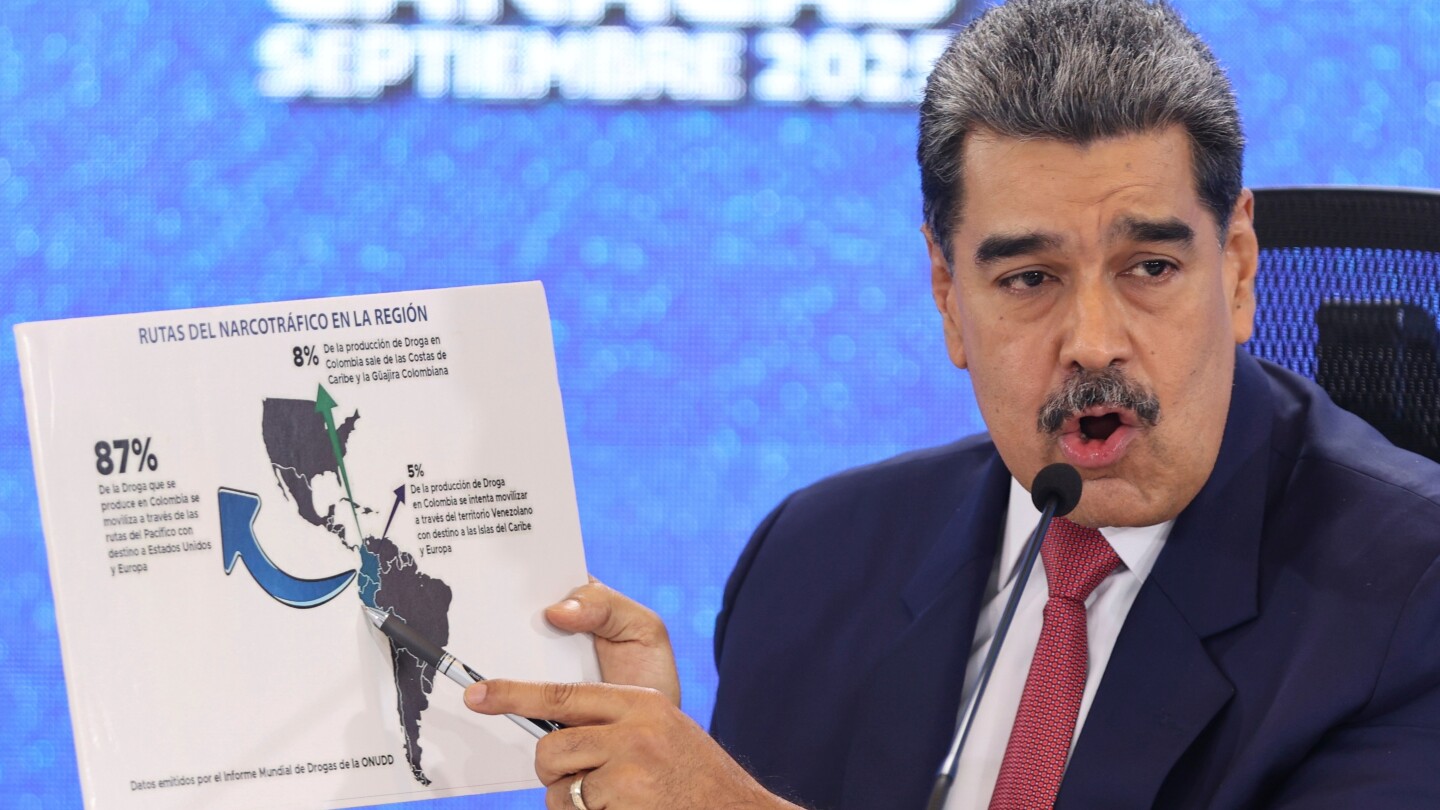
The Trump administration’s approach to combating drug cartels in Latin America is drawing parallels to the post-9/11 war on terror, with legal scholars questioning the expansion of military power and its implications for international law. President Donald Trump has authorized military strikes against Venezuelan drug traffickers, relying on the same legal framework that justified lethal force against al-Qaida after the 2001 attacks. However, critics argue that this strategy stretches the boundaries of international law, particularly as the U.S. military targets groups primarily engaged in drug trafficking rather than terrorism. The administration has conducted at least five strikes, killing 27 people, without congressional approval or traditional legal investigations, raising concerns about the justification for these actions and their impact on U.S.-Latin American relations. Trump has also hinted at potential covert operations to oust Venezuelan President Nicolás Maduro, further escalating tensions. Legal experts, including Claire Finkelstein of the University of Pennsylvania, argue that labeling drug cartels as combatants in an ‘armed conflict’ undermines international law. Meanwhile, the U.S. intelligence community disputes claims that Maduro’s administration is orchestrating drug trafficking and illegal immigration. The administration’s focus on Venezuela overlooks the fact that most fentanyl, responsible for the majority of U.S. overdose deaths, is smuggled from Mexico. Despite calls for transparency, the Trump administration has yet to provide evidence to Congress proving the targeted boats were carrying narcotics. The International Criminal Court could investigate the strikes, but its efforts are hampered by internal issues and U.S. sanctions.
-
Trump gets Gaza ceasefire trophy at beginning of game
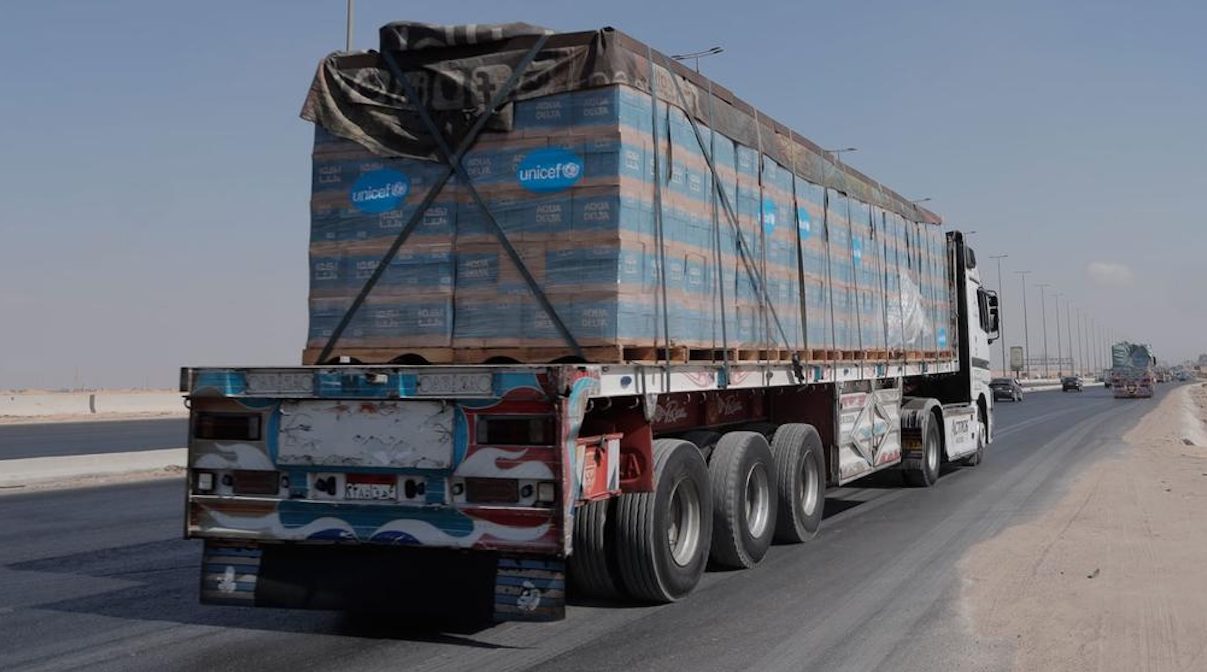
The fragile ceasefire in the Gaza Strip, brokered by former US President Donald Trump, is under strain as Israel and Hamas accuse each other of violating the agreement. The dispute threatens both the flow of humanitarian aid and the relative calm in the region. Trump’s 20-point peace plan, hailed as “historic,” aimed to end the conflict in Gaza and the broader region. Key goals included a ceasefire, the exchange of prisoners, and the resumption of aid deliveries to Gaza’s 2.3 million residents. While the first two objectives were partially achieved, aid delivery remains inconsistent, with Israel blocking supplies citing Hamas’s failure to return the bodies of 20 deceased citizens. Critics argue that Trump’s plan lacks concrete measures to disarm Hamas, ensure Israeli withdrawal, or establish a sustainable Palestinian government. Skepticism persists, with The Guardian cautiously praising the initiative while emphasizing the need for sustained pressure on both Israel and Hamas. Trump’s unorthodox diplomacy, including his handling of Israel’s missile attack on Qatar, has further complicated the situation. Despite these challenges, Trump remains committed to his vision of lasting peace, though his focus may shift as global priorities evolve.
-

China’s biggest shopping event starts five weeks early to revive spending
China’s annual online shopping extravaganza, Singles’ Day, traditionally held on November 11, has seen an early launch this year as retailers strive to stimulate spending in a sluggish market. The event, originally created by Alibaba, has grown into a global shopping phenomenon, comparable to Amazon’s Prime Day or Black Friday. However, this year’s extended sales period, beginning in mid-October, reflects the broader economic challenges facing Chinese consumers. Issues such as rising youth unemployment, a prolonged property crisis, escalating government debt, and ongoing trade tensions with the US have led to a more cautious approach to spending. Despite government efforts to boost consumption through subsidies, wage increases, and discounts, retail sales growth continues to fall short of expectations. E-commerce giants like Taobao, JD.com, and Douyin are aggressively promoting the event, offering deep discounts and vouchers to entice shoppers. Alibaba has also integrated artificial intelligence into its platforms to enhance the shopping experience, making it easier for consumers to find relevant products. The cautious spending trend, which began during the Covid-19 pandemic, has persisted as China grapples with deflation. High-end retailers, including luxury brands like Louis Vuitton and Burberry, have been particularly affected, with sales declining in recent months. However, there are signs of optimism in the market, as shares of luxury brands such as LVMH and Moncler have risen, buoyed by indications of improved demand in the region.
-
Former boxing world champion Ricky Hatton found hanged at home
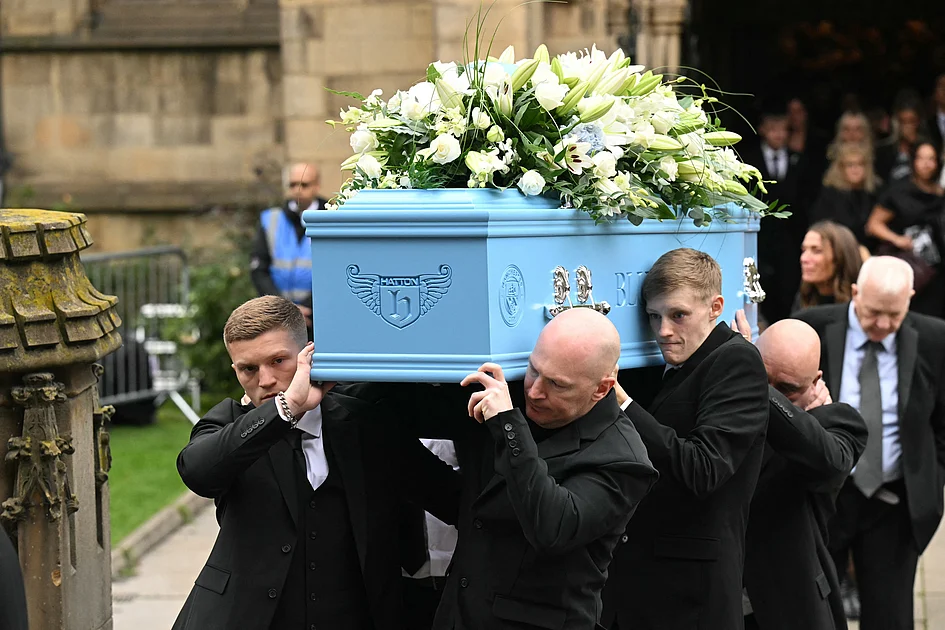
The boxing world is in mourning following the tragic death of former world champion Ricky Hatton, who was found hanged at his home in Greater Manchester. The 46-year-old, affectionately known as the ‘Hitman,’ was discovered unresponsive on September 14 by his manager, Paul Speak. An inquest into his death was opened at Manchester South Coroner’s Court, where the provisional cause of death was confirmed as hanging. Hatton, a two-time world champion in the light-welterweight and welterweight divisions, was last seen by his family on September 12, appearing to be in good spirits. However, he failed to attend a scheduled event the following day, prompting his manager to check on him. Hatton was set to travel to Dubai for a professional bout in December, marking his return to the ring. The inquest has been adjourned until March 20, 2026. Hatton’s funeral last week drew thousands of mourners, including prominent figures from sports and entertainment such as Liam Gallagher, Wayne Rooney, and Tyson Fury. Hatton had been open about his struggles with mental health, substance abuse, and suicidal thoughts following his retirement in 2012. His untimely death has left the boxing community and fans worldwide in shock.
-
Trump authorises CIA covert operations in Venezuela, as he weighs direct attack
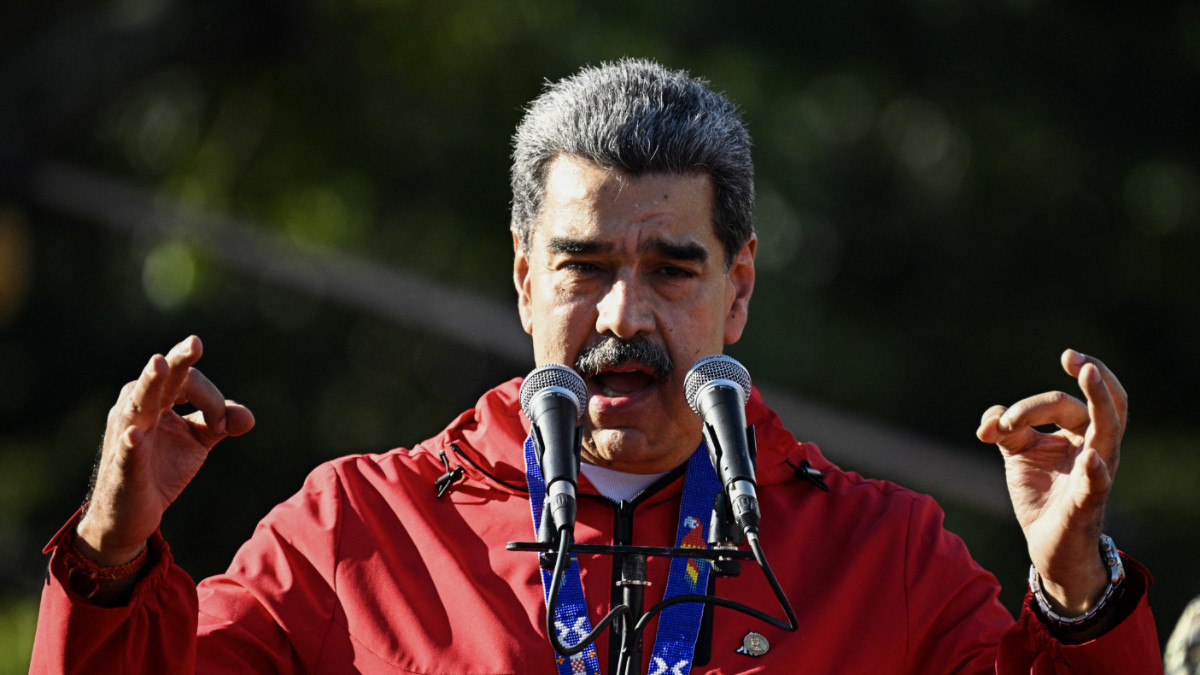
In a significant escalation of U.S. involvement in Venezuela, President Donald Trump has authorized the CIA to conduct covert operations aimed at destabilizing the government of leftist President Nicolas Maduro. This move, reminiscent of Cold War-era shadow wars, includes paramilitary actions, economic warfare, and media manipulation. Trump justified the decision by accusing Maduro of facilitating drug trafficking and directing Venezuelan prisoners into the U.S. Meanwhile, the U.S. has amassed a substantial military presence in the Caribbean, deploying guided-missile destroyers, F-35 jet fighters, MQ-9 Reaper drones, and special operations vessels. This buildup, the largest since the 1989 invasion of Panama, includes at least 10,000 troops and vessels capable of launching Tomahawk Cruise missiles. The U.S. has also conducted air strikes off Venezuela’s coast, targeting alleged drug-smuggling ships, which Maduro’s government denies, calling it a pretext for regime change. Trump hinted at potential land-based military action, stating, ‘We’ve almost totally stopped it by sea. Now we’ll stop it by land.’ When questioned about authorizing the CIA to ‘take out’ Maduro, Trump dismissed the query as ‘ridiculous.’ Despite running as a non-interventionist candidate, Trump has shown a willingness to deploy military force, with limited congressional opposition. The administration has invoked wartime powers, labeling Venezuelan drug cartels as ‘terrorist organizations’ and justifying strikes as self-defense. This latest intervention echoes U.S. Cold War tactics in Latin America, including coups in Guatemala and Chile and support for Contra fighters in Nicaragua. Maduro, who has governed since 2013, has ordered military exercises among civilians in anticipation of a potential invasion, vowing to resist U.S.-backed regime change.