博客

  • Thieves steal paintings by Renoir, Cézanne and Matisse from Italian private museum

    Thieves steal paintings by Renoir, Cézanne and Matisse from Italian private museum

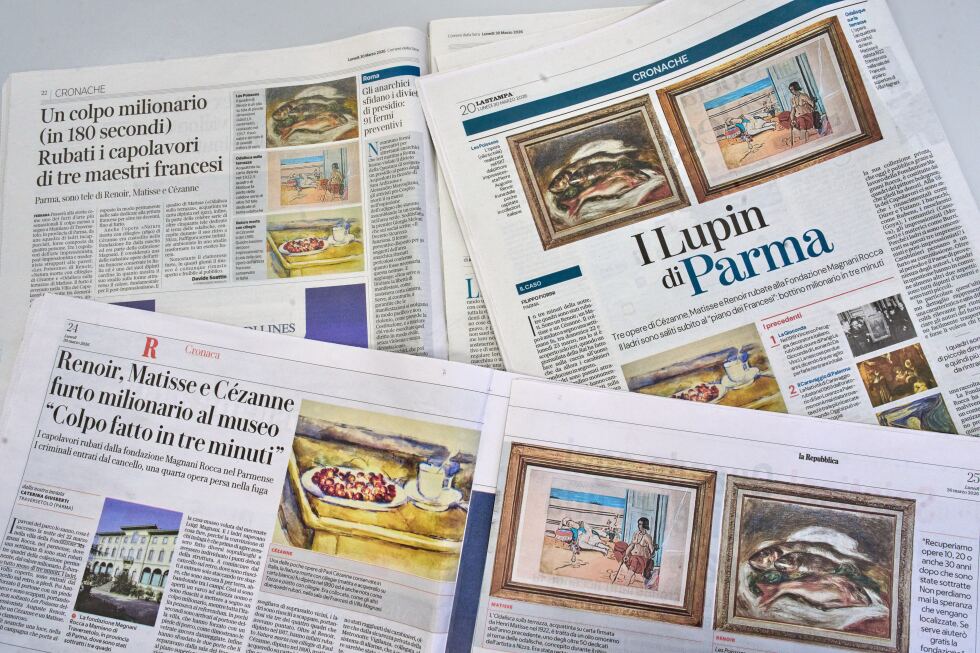
    In a sophisticated overnight operation, art thieves successfully executed a meticulously planned robbery at the prestigious Magnani Rocca Foundation near Parma, Italy, making off with three invaluable paintings by world-renowned artists. The targeted works include Auguste Renoir’s ‘Fish,’ Paul Cézanne’s ‘Still Life with Cherries,’ and Henri Matisse’s ‘Odalisque on the Terrace’—collectively valued at millions of euros.

    The burglary occurred during the night of March 22-23, with perpetrators forcing entry through the museum’s main entrance. According to local media reports, the entire operation was completed in under three minutes, demonstrating remarkable efficiency and precision. The thieves subsequently fled across the museum’s gardens, evading detection in the rural setting located approximately 20 kilometers from Parma.

    Museum authorities suspect the involvement of a highly organized criminal network specializing in art theft, noting that the robbery was abruptly cut short by the activation of the security alarm system. The Magnani Rocca Foundation, which houses the extensive private collection of art historian Luigi Magnani, remained closed on Monday with no official statement posted on its website.

    This incident marks the latest in a concerning pattern of high-profile art thefts across European cultural institutions. The heist follows October’s spectacular robbery at the Louvre in Paris, where thieves made off with jewels and artifacts valued at approximately €88 million ($101 million). Established in 1977, the Magnani Rocca Foundation boasts an impressive collection that includes works by Dürer, Rubens, Van Dyck, Goya, and Monet alongside the now-stolen masterpieces.


  • Kyrgyzstani entrepreneur: ‘Shopping in China’ means more than business

    Kyrgyzstani entrepreneur: ‘Shopping in China’ means more than business

    After more than a decade in China’s commercial hub of Yiwu, Meerzat Omuralieva has transformed from a disoriented international student into an established entrepreneur and community guide for newcomers. The Kyrgyzstani businesswoman recently shared her remarkable journey at a media forum in Zhengzhou, revealing how her experience of ‘shopping in China’ evolved into something far deeper than mere commerce.

    Omuralieva’s story represents a growing trend of international entrepreneurs finding both professional success and personal fulfillment in China’s dynamic market environment. Her decade-long immersion in Yiwu—a city renowned as the world’s largest small commodity market—allowed her to master Mandarin, develop a globally recognized brand, and ultimately establish what she describes as a true home away from home.

    The entrepreneur’s narrative underscores how China’s business ecosystem serves as a catalyst for cross-cultural exchange and personal transformation. Rather than merely serving as a procurement destination, China provided Omuralieva with the platform to build meaningful connections, acquire language skills, and develop business acumen that transcended traditional buyer-seller relationships.

    Her experience highlights the symbiotic relationship between China’s commercial centers and international entrepreneurs who contribute to local economies while finding unexpected personal growth. Omuralieva now actively assists newcomers navigating Yiwu’s complex market landscape, creating a supportive community for international business professionals seeking to establish themselves in China.

    This case study exemplifies how China’s open economic policies and commercial infrastructure continue to attract global talent, fostering mutual understanding and creating lasting bonds that extend well beyond transactional business relationships.

  • Ecological civilization paving way to prosperity

    Ecological civilization paving way to prosperity

    In a groundbreaking dialogue between international education and environmental policy, Linda de Boer, a student at prestigious US boarding school Philips Academy Andover, recently engaged with Chinese ecological researcher Zhang Yongsheng to explore China’s transformative approach to sustainable development. The discussion revealed how China’s ecological civilization concept is fundamentally reshaping global understanding of progress and prosperity.

    Director-General Zhang Yongsheng of China’s Research Institute for Eco-civilization, affiliated with the Chinese Academy of Social Sciences, articulated the paradigm shift from traditional industrial development to ecological civilization. Where conventional models since the Industrial Revolution treated environmental protection and economic growth as conflicting priorities, China’s new framework recognizes them as mutually reinforcing elements.

    The transformation gained momentum in 2012 under President Xi Jinping’s leadership, introducing the revolutionary ‘green is gold’ principle that has redefined China’s developmental philosophy. This shift addresses three critical shortcomings of traditional development: environmental unsustainability, social inequality, and the well-being paradox where economic growth doesn’t necessarily translate to increased happiness.

    Ecological civilization represents an evolutionary advancement beyond industrial civilization, characterized by two fundamental distinctions. First, it replaces anthropocentrism with harmonious coexistence within nature’s boundaries. Second, it reimagines the concept of ‘good life’ beyond material consumption, creating development models that simultaneously achieve economic prosperity and environmental sustainability.

    China’s electric vehicle industry exemplifies this transformation. While trailing in traditional automotive manufacturing, China leveraged climate action requirements to establish leadership in the emerging EV sector. This demonstrates how environmental standards can create competitive advantages rather than constraints.

    The green development framework encompasses four strategic pillars: stringent environmental protection, green development through systemic reforms, global openness through free trade agreements, and South-South cooperation sharing green technology with developing nations. China now offers zero tariffs to African countries and reduced tariffs to ASEAN nations, facilitating global green transition.

    China’s environmental journey began parallel to industrialized nations in 1972, though initially constrained by misconceptions that environmental problems were exclusive to capitalist systems. The country’s rapid economic expansion following WTO accession in 2000 exacerbated environmental challenges, revealing the inherent conflicts in traditional industrialization models.

    The turning point emerged in 2005 with then-Zhejiang Party Secretary Xi Jinping’s seminal concept: ‘Lucid waters and lush mountains are invaluable assets.’ This philosophical breakthrough recognized environmental protection as an economic driver rather than burden, initiating China’s transition from environmental management to ecological civilization.

    China’s ambitious climate targets stem from both the unsustainability of previous development patterns and the emergence of new opportunities. The global shift toward carbon neutrality commitments reflects this transformed understanding, accelerated by renewable energy costs dropping approximately 90% and electric vehicles becoming cost-competitive with traditional automobiles.

    China’s experience offers valuable insights for all nations confronting environmental crises. The ecological civilization model demonstrates that developing countries need not follow the ‘develop first, clean up later’ path but can achieve simultaneous economic growth and environmental protection from development’s earliest stages.

  • War in the Middle East: latest developments

    War in the Middle East: latest developments

    The ongoing conflict in the Middle East has intensified with significant developments across multiple fronts, resulting in heightened military engagements and diplomatic strains. Iran officially confirmed the death of Revolutionary Guards commander Alireza Tangsiri, who succumbed to injuries sustained in an Israeli airstrike. This announcement came through the Guards’ Sepah News website, marking a substantial blow to Iranian military leadership.

    Israeli forces reported conducting precise strikes on numerous weapons production facilities within Iran, including a critical manufacturing line for long-range surface-to-air missiles located in Tehran. Despite these attacks, Iranian authorities managed to restore electricity in parts of the capital and adjacent regions after strikes previously damaged power infrastructure.

    Beirut’s southern suburbs, a known stronghold of Hezbollah, experienced renewed strikes as shown in AFPTV footage. Israel had issued prior warnings for residents to evacuate the area. The Israeli military confirmed these actions targeted Hezbollah operational sites.

    International repercussions continued as Indonesia confirmed the death of one peacekeeper in Lebanon from indirect artillery fire near Adchit al Qusayr, with three others wounded. Meanwhile, U.S. President Donald Trump remarked in a Financial Times interview that American forces could ‘very easily’ capture Iran’s Kharg Island, which houses a vital oil terminal, questioning Iranian defensive capabilities there.

    Saudi Arabia’s defense ministry announced the interception of five ballistic missiles aimed at Eastern Province, though without specifying their origin. Trump additionally stated that the conflict had effectively achieved ‘regime change’ in Iran, dealing with entirely new leadership.

    Kuwait reported casualties from an Iranian strike on a power station, resulting in one Indian worker’s death and damage to facility infrastructure. Separately, Kuwait’s defense ministry noted ten service members injured in a military camp attack.

    Israel’s parliament approved its 2026 budget, incorporating approximately $10 billion in new military spending, elevating total defense allocations to about $45 billion. The International Atomic Energy Agency confirmed severe damage to Iran’s heavy water production plant in Khondab, rendering it non-operational after Israeli strikes targeted what was described as a key plutonium production site.

    Diplomatic efforts emerged as Pakistan offered to broker and host meaningful talks between the United States and Iran, receiving support from the United Nations and China. Foreign ministers from Pakistan, Saudi Arabia, Egypt, and Turkey convened in Islamabad to discuss peace initiatives.

    Tensions extended to diplomatic relations as Iran’s ambassador refused to leave Lebanon despite being declared persona non grata over accusations of political interference. Academic institutions also suffered, with a university in Isfahan hit by U.S.-Israeli airstrikes for the second time.

    Lebanon’s health ministry reported 1,238 fatalities from Israeli strikes since the conflict’s escalation with Hezbollah began on March 2. Israeli Prime Minister Benjamin Netanyahu ordered further expansion of security zones within Lebanon. Iran entered its 30th day of nationwide internet blackout, severely limiting information access and communication for millions.

  • Air China resumes direct flights between Beijing and Pyongyang

    Air China resumes direct flights between Beijing and Pyongyang

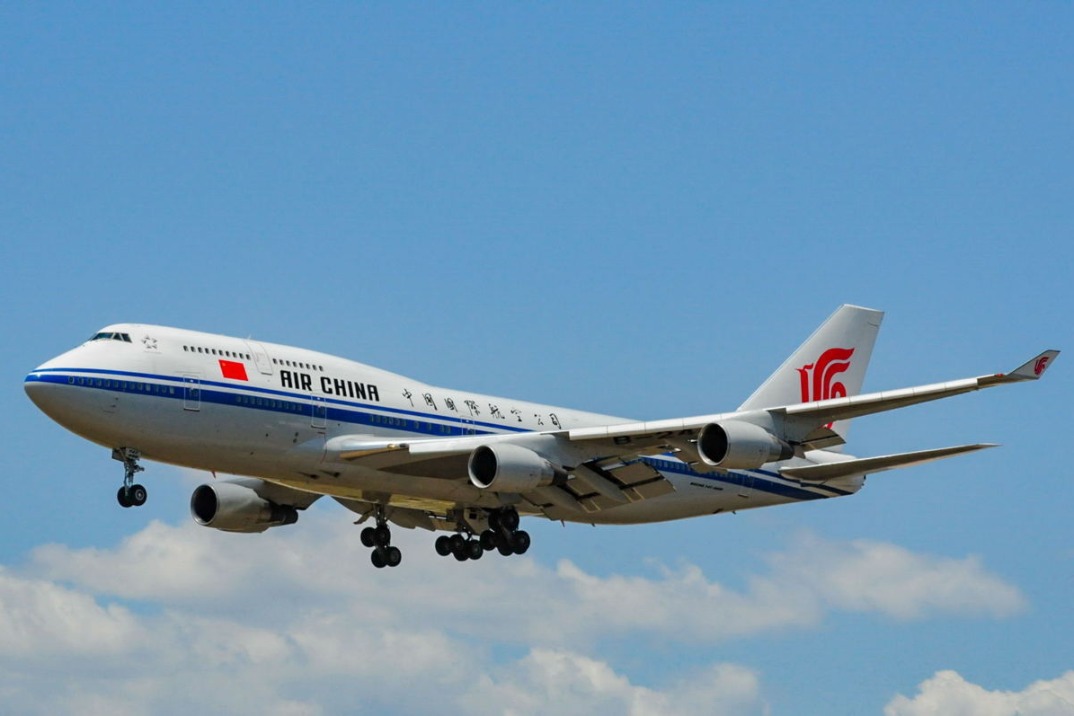
    In a significant development for Northeast Asian connectivity, Air China has officially reinstated its direct flight service connecting Beijing with Pyongyang, effective Monday. This restoration marks the reestablishment of a crucial transportation corridor between the Chinese and North Korean capitals after an extended period of suspension.

    The resumed route, operated by Air China as flight CA121, will maintain a regular weekly schedule every Monday utilizing Boeing 737 aircraft. This reconnection facilitates the only currently operational air link between China and North Korea, serving as a vital conduit for diplomatic personnel, business representatives, and limited international travel between the two nations.

    Aviation analysts note that the flight resumption occurs amid evolving regional dynamics and represents a tangible step toward normalized transportation networks. The direct connection provides a critical infrastructure component for bilateral engagement, potentially signaling warming relations and increased mobility following pandemic-era restrictions that severely limited international travel.

    The flight service restoration carries substantial symbolic importance, representing one of the few functioning international air links to North Korea. Observers will monitor passenger volume and frequency adjustments as indicators of bilateral relationship trajectories and economic engagement levels between Beijing and Pyongyang.

  • Three killed as unfinished building collapses on church service in Ghana

    Three killed as unfinished building collapses on church service in Ghana

    A catastrophic structural failure at an unfinished church building in Accra has resulted in three fatalities and multiple injuries, casting renewed scrutiny on construction standards across Ghana. The three-story structure collapsed during Sunday worship services amid heavy rainfall, trapping numerous congregants beneath the rubble.

    Interior Minister Muntaka Mohammed-Mubarak confirmed the tragic outcome, indicating that emergency teams had successfully extracted 20 survivors who are currently receiving medical treatment at various hospitals. Most victims were identified as women and children who had gathered for religious services in the potentially compromised building.

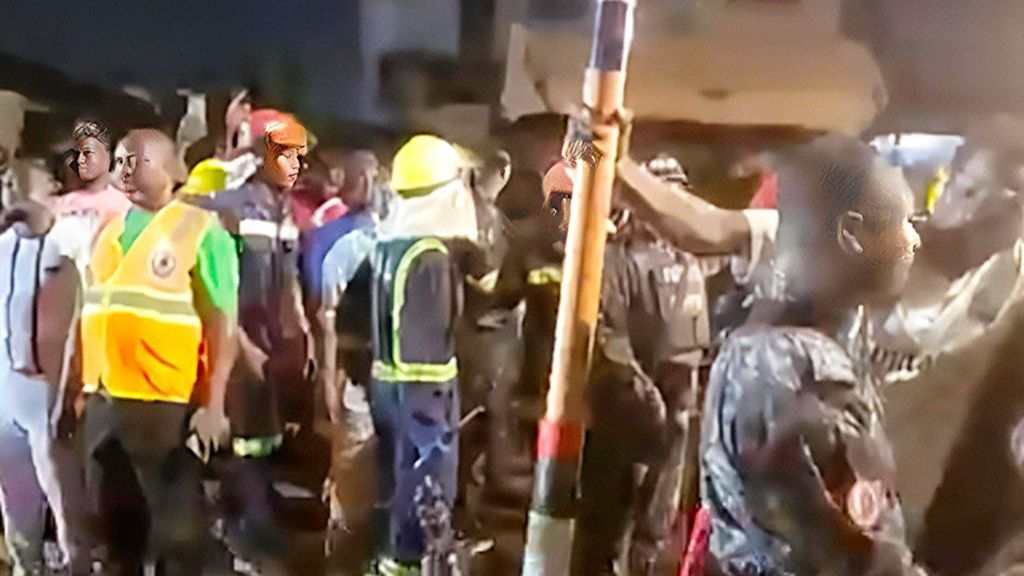
    Rescue operations persisted throughout the night under artificial floodlights as emergency personnel worked meticulously to locate and extract potential survivors. Minister Mohammed-Mubarak expressed “90-95% certainty” that no additional individuals remained trapped within the wreckage, though clearance and verification efforts continue.

    The collapsed structure, originally intended as part of an educational institution in Accra’s New Town district, had remained unfinished for several years yet continued to host regular activities despite apparent structural concerns. Local residents reported the building had exhibited significant weaknesses and received minimal maintenance since construction commenced.

    Eyewitness accounts described harrowing scenes of trapped victims calling for assistance from beneath the debris. One community member revealed that “everybody in the community knows the building is very weak, yet they allowed services and activities inside,” suggesting awareness of potential hazards prior to the incident.

    The tragedy has reignited critical discussions regarding building safety protocols and structural integrity standards throughout Ghana. Many have drawn parallels to the 2012 collapse of a multi-story shopping center in Accra, which was similarly attributed to substandard construction practices.

    Minister Mohammed-Mubarak praised emergency responders for their rapid deployment and sustained rescue efforts while acknowledging challenges in determining the exact number of occupants at the time of collapse. Official investigations into the precise cause of the structural failure are currently underway, with authorities examining whether inadequate construction, poor maintenance, or weather conditions contributed to the disaster.

  • Nation’s soil passes 30-year geological ‘health check-up’

    Nation’s soil passes 30-year geological ‘health check-up’

    A comprehensive national soil analysis spanning nearly three decades reveals significant improvements in China’s land quality and ecological resilience. The National Land Geochemical Monitoring Report 2025, released by the China Geological Survey under the Ministry of Natural Resources, examined over 500,000 data points collected between 1995 and 2023, providing an unprecedented longitudinal perspective on the nation’s geological health.

    The study demonstrates that 92.6% of China’s land now qualifies as medium grade or higher in quality—a 0.4 percentage point increase since baseline measurements began. Research lead Peng Min attributes this enhancement to sustained implementation of major ecological initiatives including the Three-North Shelterbelt Forest Program, farmland-to-forest conversion projects, and widespread adoption of water conservation technologies.

    Critical findings highlight the stability of foundational ‘skeleton’ elements—silicon, aluminum, iron, and magnesium—which maintain soil structural integrity and prevent desertification and salinization. Simultaneously, essential plant nutrients including nitrogen, phosphorus, potassium, and vital micronutrients like manganese, selenium, and iodine have shown moderate increases, suggesting positive implications for agricultural productivity and food security.

    The most notable improvement emerged in soil organic carbon content, which rose from 6.7 to 7.8 grams per kilogram over the monitoring period. This component functions as both hydrological regulator and nutrient retainer, enhancing drought resistance while preventing fertilizer runoff. Particularly remarkable was the 141% surge in organic carbon on the Qinghai-Tibet Plateau, where climate warming and improved grazing practices have transformed the region into an increasingly effective carbon sink.

    Researchers confirm the plateau’s growing significance in global carbon sequestration, with its enhanced capacity to absorb atmospheric carbon dioxide contributing to greenhouse effect mitigation. As China progresses into its 15th Five-Year Plan period (2026-2030), monitoring will intensify with 6,000 additional sites planned for key agricultural regions, alongside regular decadal national surveys and quinquennial regional assessments.

  • Elderly influencers have youth on their side

    Elderly influencers have youth on their side

    A remarkable demographic shift is transforming social media landscapes as octogenarian content creators emerge as unexpected digital influencers, captivating younger audiences with their distinctive perspectives and life experiences. Yuan Suyu, an 83-year-old Shanghai resident, exemplifies this trend through her wildly popular vlog series ‘A day in the life of an 82-year-old girl spending her pension’ on RedNote (Xiaohongshu). With over 25,000 dedicated followers and nearly 200,000 likes, Grandma Liuliu—as she’s known online—documents her extraordinary adventures that defy conventional expectations of aging. Her content showcases everything from exploring trendy cafes and attending prestigious events like the China International Import Expo to taking urban walking tours in Hong Kong. What began as a platform for health information discovery in 2024 evolved into a vibrant digital career when family members recognized her unique fashion sense and enthusiastic approach to beauty. Assisted by her granddaughter, Yuan now produces content that resonates across generations, receiving heartwarming feedback from users who celebrate her trendy style and wish her continued happiness. Parallel to Yuan’s success, Wang Yuzhen has transitioned from social media popularity to published authorship. Her RedNote account ‘Wo lian he gu’ (I love crops) has gained such significant traction that she recently released a book under the same title, further cementing the cultural impact of elderly content creators. These silver-haired influencers demonstrate how digital platforms can bridge generational divides while challenging stereotypes about aging. Their content offers more than entertainment—it provides valuable life wisdom, intergenerational connection, and inspirational examples of lifelong learning and adaptation. The phenomenon reflects broader social changes regarding aging populations and digital inclusion, showing how technology can enhance quality of life during retirement years while creating meaningful cross-generational dialogues.

  • Xuankong Temple: A popular place to hang out

    Xuankong Temple: A popular place to hang out

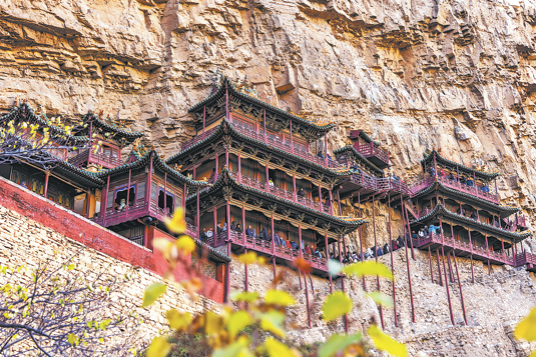
    Perched dramatically on the vertiginous cliffs of Cuiping Mountain in Datong, Shanxi province, the 1,500-year-old Xuankong Temple (Hanging Temple) is experiencing an unprecedented tourism renaissance. This architectural marvel, which defies gravity through ingenious ancient engineering, has become a global pilgrimage site following its prominent featuring in the blockbuster video game ‘Black Myth: Wukong’.

    The temple’s sudden popularity surge has created extraordinary visitor demand, with waiting times extending for hours during peak seasons. In response to the overwhelming foot traffic, local authorities have implemented protective measures, reducing daily admission quotas from 3,275 to 2,475 visitors effective immediately. This conservation strategy aims to safeguard the fragile wooden structure that has clung to the mountainside since the Northern Wei Dynasty (386-534).

    What makes the temple’s endurance particularly remarkable is its revolutionary construction technique. Heritage expert Hao Weihe explains that the structure’s stability derives not from its visible supporting pillars, but from horizontal beams crafted from durable hemlock wood. These beams, shaped like scissors at one end, penetrate deep into the cliff face—functioning similarly to modern expansion bolts—with two-thirds embedded in rock and one-third exposed to support the temple’s weight. Each beam can reportedly support several metric tons.

    Beyond its architectural wonders, the temple serves as a symbol of religious harmony. The Hall of Three Religions simultaneously honors Buddhism, Confucianism, and Taoism through statues of Buddha, Confucius, and Lao Tzu. Visitors can additionally admire exquisite carvings adorning the upturned eaves, roof tiles, and plank path corners throughout the complex.

    International tourists like Yana from Ukraine have expressed awe at the temple’s preservation, describing it as ‘staggering’ in social media posts that encourage others to witness the ancient wonder firsthand. As gaming culture continues to influence travel patterns, this 1,500-year-old temple demonstrates how digital media can breathe new life into historical treasures while presenting contemporary conservation challenges.

  • In South Sudan, a prophet’s sacred stick helps fuel a violent struggle for political power

    In South Sudan, a prophet’s sacred stick helps fuel a violent struggle for political power

    In South Sudan, the world’s youngest nation, an ancient spiritual artifact has become a focal point in the ongoing political turmoil between President Salva Kiir and opposition leader Riek Machar. The Ngundeng Bong’s dang—a sacred stick believed to have summoned deadly thunderbolts in 1878 tribal battles—now symbolizes the deep ethnic and spiritual divisions driving the country’s cycle of violence.

    Machar, who acquired the dang in 2009, is viewed by his Nuer followers as the prophesied leader foretold by Ngundeng—a gap-toothed, left-handed man destined to lead South Sudan. This perception has sustained his political struggle while simultaneously making him a target for Kiir’s Dinka-dominated government. The ethnic tensions between these groups erupted into civil war in 2013 after Kiir accused Machar of plotting a coup, resulting in approximately 400,000 deaths despite a fragile 2018 peace agreement.

    Recent escalation has prompted authorities to order civilian evacuations from rebel-held towns, while Machar remains under house arrest facing treason charges. Militias like the White Army continue fighting in belief they’re fulfilling Ngundeng’s prophecy to install Machar as president.

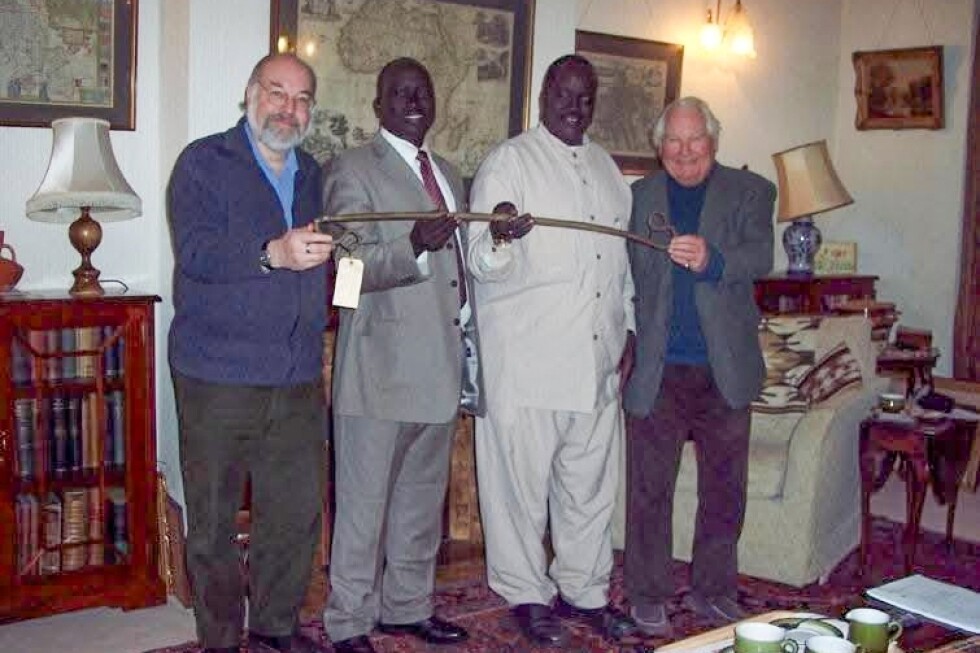
    Historians note the dang’s significance transcends its physical form. Douglas H. Johnson, the British-American historian who repatriated the artifact, compares its authority to a parliamentary mace. The 110-centimeter stick, fashioned from tamarind root and decorated with copper wire, was collected as a colonial trophy before Johnson discovered it in Bournemouth and returned it to South Sudan.

    Currently, the dang’s whereabouts remain uncertain, though it’s believed to be in Machar’s possession. Archivists describe it as national heritage “embedded” with political authority, while analysts suggest its perceived power contributes to the ongoing conflict. With elections scheduled for December, the absence of Machar on the ballot could further disenfranchise the Nuer population and exacerbate tensions in this spiritually-charged political struggle.