博客

  • War takes toll on Africa, fuels pain at the pump

    War takes toll on Africa, fuels pain at the pump

    The escalating military conflict in the Middle East has sent shockwaves through global energy markets, and its most acute economic impacts are now being felt across Africa, a region where most nations depend heavily on imported energy and remain deeply vulnerable to external supply disruptions. As tensions disrupt critical oil shipping lanes through the Strait of Hormuz, communities and economies across the continent are already grappling with empty fuel station storage tanks, hours-long queues at pumps, soaring price expectations, and growing fears that an already heavy cost of living will become even more unmanageable.

    Industry analysts warn that prolonged instability in the Middle East will exacerbate pre-existing economic challenges across African economies, deepening already entrenched inflationary pressure, expanding ballooning trade deficits, and draining already strained foreign exchange reserves at a time when many nations are still fighting to build a stable post-pandemic recovery amid sky-high import costs.

    In Kenya, a nation that imports nearly all of its petroleum needs, most via government-brokered agreements with Middle Eastern exporters, fuel retailers have already reported significant supply tightening. Some retail outlets have completely run out of product as global prices climb and market participants prepare for further pump price increases. Vivo Energy Kenya, one of the country’s largest fuel distribution firms, confirmed that it has faced temporary stockouts at a number of its service stations, driven by a combination of elevated consumer demand and global supply chain constraints, adding that it is working urgently to restock its inventory across the network.

    In response to growing public anxiety and reports of unauthorized hoarding by suppliers, Kenya’s Energy Cabinet Secretary Opiyo Wandayi has issued a formal directive ordering all oil marketing companies to release any withheld fuel stock to the market, warning that hoarding is a violation of national law and will result in formal sanctions for non-compliant firms.

    X. N. Iraki, an economist based at the University of Nairobi, explained that the spike in global energy prices will inevitably be passed through to local consumers at the pump, driving up transportation, manufacturing, and household costs that will push the overall cost of living even higher. Iraki added that the ongoing fuel crisis could carry significant political as well as economic ramifications ahead of Kenya’s scheduled 2027 general election, creating new voter anxiety that will shape political discourse in the coming months. He noted that while Kenya made its first major oil discovery back in 2012, persistent logistical hurdles and financing challenges have delayed large-scale commercial production, leaving the country completely exposed to sudden external energy supply shocks.

    Further north in Ethiopia, national authorities have already called for urgent fuel conservation measures as global supply disruptions put growing pressure on domestic energy markets. The Ethiopian Petroleum and Energy Authority has issued an official directive urging both private citizens and commercial businesses to cut non-essential fuel consumption and prioritize supply for critical public services, as lengthy queues have become a common sight at fuel stations in the capital Addis Ababa, and dozens of retail outlets have been forced to temporarily close their doors due to stockouts.

    In West Africa, economic analysts warn that prolonged Middle Eastern tensions will add new layers of complexity to macroeconomic management in Nigeria, a country that already struggles with persistently high double-digit inflation. Jide Pratt, country manager for commodity data firm TradeGrid in Nigeria, explained that rising global crude prices will push up production costs across nearly every sector of the country’s economy. Notably, even though Nigeria is one of Africa’s largest crude oil exporters, it lacks sufficient domestic refining capacity, meaning it relies almost entirely on imports of refined petroleum products to meet domestic demand — leaving Nigerian consumers directly exposed to every shift in global energy prices.

    In East Africa’s South Sudan, the spreading fuel crisis has already begun to disrupt domestic power supplies, forcing authorities to implement strict energy consumption restrictions. The national government has launched formal electricity rationing programs in the capital Juba to conserve fuel used for thermal power generation.

    Regional energy analysts say the unfolding crisis lays bare deep structural weaknesses across African national energy systems, including an overreliance on imported finished fuel products, chronically limited domestic refining capacity, and widespread exposure to sudden foreign exchange volatility that makes energy imports even more costly when global prices rise. Raymond Parsons, an economist at the North-West University Business School in South Africa, noted that the current supply shock poses simultaneous risks to both price stability and economic growth across nearly all African economies.

    “It is therefore not good news for either the inflation outlook or growth prospects,” Parsons said. “As the economy experiences a supply-side shock, the economic pain is inevitable.”


  • South Africa gets ready for battery production

    South Africa gets ready for battery production

    Against a backdrop of surging global demand for renewable energy storage solutions, South Africa is moving forward with plans to launch its first domestic lithium-iron phosphate (LFP) battery cell production sector, building on collaborative partnerships with experienced Chinese industry players, multiple industry and government stakeholders have confirmed.

    Regional resource endowments position southern Africa uniquely well to support the emerging battery industry, according to Irshaad Kathrada, chief executive officer of South Africa’s Localisation Support Fund, a non-governmental organization focused on local industrial development. Kathrada noted that South Africa and its regional neighbors, including mineral-rich Zimbabwe and Mozambique, hold abundant raw material reserves required for battery production. When it comes to building a competitive domestic battery sector from scratch, he added, China’s decades of scaled manufacturing experience and technological advancement make it an indispensable strategic partner.

    While South Africa boasts a large general labor force, the country currently faces a gap in specialized skilled battery manufacturing professionals, as many local technical experts have relocated abroad in recent years for better career opportunities. This means attracting overseas talent and building local skills through international collaboration will be a core priority for the sector’s development, Kathrada explained.

    Beyond meeting local renewable energy needs, the African Continental Free Trade Area (AfCFTA) agreement creates massive untapped potential to scale South African battery production for regional, European and global export markets, Kathrada emphasized. LFP battery cells, the type South Africa aims to produce, have become a dominant technology across fast-growing renewable energy segments, including electric vehicles and grid-connected renewable energy storage systems.

    A recent feasibility analysis from EY-Parthenon Africa confirms that launching a large-scale gigafactory in South Africa is a sound operational and commercial investment. Heather Orton, head of strategy and innovation at EY-Parthenon Africa, told reporters that a 5 to 10 gigawatt-hour annual capacity LFP gigafactory checks out on both technical and commercial grounds under all tested scenarios. “There is sufficient existing and projected demand across the region to support multiple local manufacturers and anchor a complete, competitive new battery value chain here over the next 10 years,” Orton said.

    Global market projections underscore the scale of the opportunity. Orton noted that the total global battery cell market is forecast to jump from 1.6 terawatt-hours in 2024 to 4.9 terawatt-hours by 2034, with total demand for battery storage in southern Africa alone expected to hit 55 gigawatt-hours over that period. She added that developing a full battery storage project typically takes up to three years from planning to operation, with roughly 12 months of that timeline allocated to securing required legislative and regulatory approvals. Beyond revenue growth, Orton stressed that building a domestic battery manufacturing sector will deliver major public benefits, including creating thousands of new local jobs and strengthening South Africa’s overall national energy security.

    South Africa’s official development finance body, the Industrial Development Corporation, stands ready to support the sector’s launch by acting as a funding catalyst, according to Kgashane Mohale, a senior industrial specialist at the agency. Mohale confirmed that South Africa remains actively open to forging partnerships with Chinese battery manufacturers that bring proven industry experience and technical capacity to the table.

    Deshan Naidoo, founder and managing director of South African renewable energy firm Afrivolt, said South Africa has a once-in-a-generation opportunity to build a competitive, export-focused battery manufacturing industry, and can draw key lessons from China’s successful sector development. China’s targeted policy support, research and development investment and industry incentives have allowed it to become the global leader in renewable energy and battery manufacturing, a position that cannot be ignored, Naidoo explained. “We need to work alongside Chinese partners to close our local skills gap, and our industry is fully ready to collaborate on this development journey,” he said. Joint projects with Chinese firms will not only bring capital and technology to South Africa, but also facilitate critical skills transfer that will build long-term local industry expertise, he added.

    Local academic institutions are also preparing to support the emerging sector. Sean Jobson, a professional engineering technologist at the University of Johannesburg, said the university is eager to collaborate with public and private stakeholders working to establish domestic battery manufacturing. The institution already has an active research program focused on battery technology and renewable energy innovation, ready to contribute to the sector’s development.

  • Fire water tanks were dry during HK blaze

    Fire water tanks were dry during HK blaze

    An ongoing judge-led independent investigation into Hong Kong’s deadliest November residential blaze has uncovered a critical failure: all eight fire water tanks serving Tai Po district’s Wang Fuk Court were completely drained when the fire broke out, a consequence of unorthodox maintenance tiling works that dragged on for months. The tragedy, which claimed 168 lives, prompted Hong Kong Chief Executive John Lee Ka-chiu to convene the independent inquiry committee, which has held six weeks of public evidential hearings starting March 19, with testimony already heard from 20 residents of the affected public housing estate.

    One resident’s firsthand account, delivered to the committee Monday, laid bare the immediate danger created by the empty tanks. When he attempted to deploy a building fire hose to contain the spreading flames on November 26, he turned the valve to find no water emerged at all, leaving him unable to slow the blaze before emergency services arrived.

    Testimony from the industry professionals responsible for the estate’s fire safety inspections continued during Tuesday’s sixth hearing. Chung Kit-man, director of Victory Fire Engineering Ltd, the registered contractor that completed a mandatory fire safety inspection of Wang Fuk Court in March 2025, told the committee he was aware the tanks had been drained one month ahead of the blaze to accommodate the maintenance works.

    Chung explained that his team received reports from on-site workers that no water tank leaks were detected during the March 2025 inspection. However, official inspection forms bearing Chung’s signature explicitly flagged issues with the water tanks. Chung admitted that his employees likely made an error when completing the documentation, and that he had failed to catch the mistake before signing off.

    Li Chunyin, a frontline worker with Victory Fire who carried out the inspection, backed up that account, telling the committee he had directly inspected the interior of the concrete water tanks and confirmed no tiles were installed on their inner surfaces at the time of the check. He added that none of the eight blocks’ tanks showed any signs of leakage, so no repairs were recommended by his team.

    Committee counsel Lee Shu-wun presented a pricing document from the estate’s maintenance consultant, Will Power Architects Co, that confirmed the scope of works included applying white ceramic tiling to the interior of the fire water tanks — a practice Chung described as highly unusual for non-potable water storage used exclusively for firefighting.

    “To my knowledge, fire water tanks only exist to store water for emergency firefighting, so there is no requirement for the water to meet drinking water standards,” Chung told the inquiry. “I cannot understand why this tiling maintenance took three full months to complete.”

    To execute the tiling works, main contractor Prestige Construction and Engineering Co subcontracted the coordination of system shutdowns to another fire service installation firm, China Status Development and Engineering Co. This subcontractor was responsible for submitting applications to the Hong Kong Fire Services Department to approve temporary shutdowns of the building’s fire hydrant and hose network.

    Earlier hearings revealed a staggering procedural failure: China Status never sent any of its own personnel to inspect the system or verify whether a prolonged full-system shutdown was actually necessary for the works. Despite this, the firm submitted 16 separate shutdown applications, resulting in the entire firefighting water system being disabled for more than six months starting in April 2025.

    During that extended shutdown, Victory Fire workers conducting routine checks discovered the rooftop water tanks of three blocks were empty on October 16, 2025, and soon confirmed all eight blocks’ tanks had been drained for the ongoing tiling repairs. A week before the blaze, on November 19, inspection teams also found that the main power switch controlling the fire booster pump for all eight blocks had been switched off.

    When questioned about his firm’s response, Chung said he and his workers requested an official shutdown notice from the Wang Fuk Court building management team but never received one. He admitted that his team never issued a formal warning or formal safety advice to management about the risks of a prolonged shutdown, citing a long-unspoken norm across Hong Kong’s fire safety industry: “the mindset of not telling other industry players how to do their jobs.”

  • Stanford University wins battle to keep diaries of Mao Zedong’s secretary

    Stanford University wins battle to keep diaries of Mao Zedong’s secretary

    A long-running legal dispute over a vast collection of historical documents from late former Chinese Communist Party cadre Li Rui has concluded with a California court ruling that Stanford University’s Hoover Institution is the rightful owner of the materials. The collection, which includes decades of personal diaries, official correspondence, meeting minutes, work notes, creative writing, and personal photographs spanning from 1938 to Li Rui’s death in 2019, is widely regarded as an irreplaceable firsthand historical record of modern Chinese history and the CCP’s period of governance.

    Li Rui, a once-prominent party figure who held reformist political views and became known for vocal criticism of CCP leadership in his later years, had long intended to preserve his materials outside of China to avoid censorship, according to court findings. When Li was still alive, his daughter Li Nanyang began transferring the documents to Stanford’s Hoover Institution in 2014, a step she says was taken in direct alignment with her father’s explicit wishes. Following Li Rui’s death in 2019, however, his widow Zhang Yuzhen launched a parallel legal claim in Beijing, arguing that Li had granted her authority to decide which documents would be made public, and that the transfer to Stanford was unlawful. A Beijing court ruled in Zhang’s favor, ordering the materials be returned to China.

    Stanford subsequently initiated its own legal proceedings in the U.S. to confirm its ownership of the collection, arguing that the transfer aligned with Li’s wishes and that the documents would face censorship, redaction, or even destruction if returned to China, framing the case as a defense of academic freedom and open access to historical records. In its ruling, the California court noted key irregularities in the Chinese legal proceedings: it found that the Beijing lawsuit was likely not initiated by Zhang of her own free will, but was instead backed and financed by the CCP, with Zhang herself having previously stated she had no personal desire to sue her stepdaughter. Zhang passed away during the course of the U.S. trial proceedings.

    The court’s final judgment confirmed that the original donation to the Hoover Institution was lawful and fully consistent with Li Rui’s documented intentions. It further ruled that the Beijing court’s order had no enforceable standing in the United States. The court specifically highlighted Li Rui’s own stated belief that his papers would be suppressed or destroyed if kept within China, and that his explicit goal in transferring the materials was to make them openly accessible to researchers and the public globally.

    Condoleezza Rice, current director of the Hoover Institution and former U.S. Secretary of State, praised the ruling in a public statement, noting that the decision guarantees that one of the most valuable firsthand accounts of modern Chinese history will remain freely available for academic study. Stanford’s legal team echoed this sentiment, saying the university was pleased that Li Rui’s final wishes would be honored, and that the materials would remain open to any interested researchers. The BBC has reached out to Zhang’s former U.S. legal representation for comment on the ruling, with no response reported as of yet.

  • Future ‘air taxis’ showcased in Wuhan

    Future ‘air taxis’ showcased in Wuhan

    Shortly after the 2026 Spring Festival holiday, Wuhan’s annual government economic conference took an unexpected futuristic turn: the quiet convention space at Hongshan Auditorium was underscored by the low hum of spinning rotor blades, where four cutting-edge electric vertical takeoff and landing (eVTOL) aircraft stood on public display. More than just a technological exhibition, the event served as a clear public declaration of Hubei province’s ambition to become a leading hub for China’s fast-growing low-altitude economy, a sector recently elevated to national strategic priority by Beijing.

    As the industry moves beyond early concept testing and into the final stretch toward full commercial rollout, 2026 is widely viewed as a make-or-break year for crossing the gap between experimental development and mass consumer adoption. Huang Xiaofei, vice president of strategy for Shanghai-based eVTOL developer Volant Aerotech, framed the moment as a pivotal inflection point: “As the core technological driver of a projected trillion-yuan market, eVTOL has officially exited the concept verification phase and entered the commercial sprint.”

    The four aircraft on display in Wuhan each showcased distinct innovations tailored to address current gaps in the emerging eVTOL sector, from consumer accessibility to operational range and specialized use cases. E-hawk Technology’s 1.2-metric-ton model, for example, integrated fully enclosed rotors to drastically improve ground safety, a key concern for urban deployment. Company chairman Cai Xiaodong outlined a two-pronged approach to bring the aircraft to market: consumers will be able to purchase their own craft for a projected price below 2 million yuan ($289,500), or access air taxi services via a ride-sharing model that mirrors popular on-demand ground ride-hailing apps. “In the future, it will be as simple as pulling out your phone from a residential compound or city park to call a real flying taxi,” Cai explained, noting the firm plans to launch a two-seat version this year focused on low-altitude logistics and scenic tourism operations.

    Wuhan-based Xunqi Technology addressed one of the most common limitations of pure-electric eVTOLs: range anxiety. Its hybrid tilt-rotor V1000 model uses a hybrid range-extender system to deliver a total range exceeding 1,000 kilometers — enough to fly nonstop from Wuhan to Beijing, Guangzhou, or Shanghai without mid-journey recharging. “Pure electric eVTOLs’ biggest shortfall is range, which we solve with our hybrid system,” said Li Jia, the company’s deputy chief designer. The 400-kilogram capacity craft has already had its type certification application accepted by the Civil Aviation Administration of China, a critical regulatory milestone, with its first full test flight scheduled for 2026.

    One of the most socially impactful prototypes on display came from Wuhan Fusheng General Aviation, which unveiled a pure-electric eVTOL designed to function as a flying micro intensive care unit for emergency medical response. Traditional medical evacuation helicopters cost roughly 10,000 yuan per hour of operation, but the new design cuts that cost to just 2,200 yuan per hour, according to company executive president Chen Zhaoyan. What makes the craft unique, Chen added, is its ability to complete patient triage, real-time vitals monitoring, and medical data synchronization directly within the cabin, with an interior purpose-built to accommodate a full stretcher and portable CT scanner. Later this year, the firm will partner with Wuhan University’s Zhongnan Hospital to test the aircraft’s capability for transporting medicine and blood plasma, with a goal of making the affordable technology accessible to ordinary communities by 2027.

    Rounding out the exhibition was the SW01, a compact recreational eVTOL that stood out for its consumer-friendly design. Replacing complex traditional aircraft controls with a familiar steering wheel and throttle setup, and featuring a transparent open canopy, the craft targets recreational users with a target price below 500,000 yuan, letting casual users safely fly over scenic parks and lakes.

    The Wuhan showcase is far more than a local technology event: it reflects a coordinated national push to unlock the low-altitude economy. A newly revised civil aviation law, set to take effect in July 2026, will formalize clear management rules for airspace below 300 meters, clearing away long-standing regulatory barriers for eVTOL deployment. Earlier this month, five central government departments including the Ministry of Industry and Information Technology released joint guidelines mandating that at least 90 percent of low-altitude public airways be covered by ground mobile communication networks by 2027, laying the critical infrastructure needed for widespread safe operation of urban air taxis.

  • South Korea and Indonesia expand cooperation on defense and energy as Mideast war disrupts markets

    South Korea and Indonesia expand cooperation on defense and energy as Mideast war disrupts markets

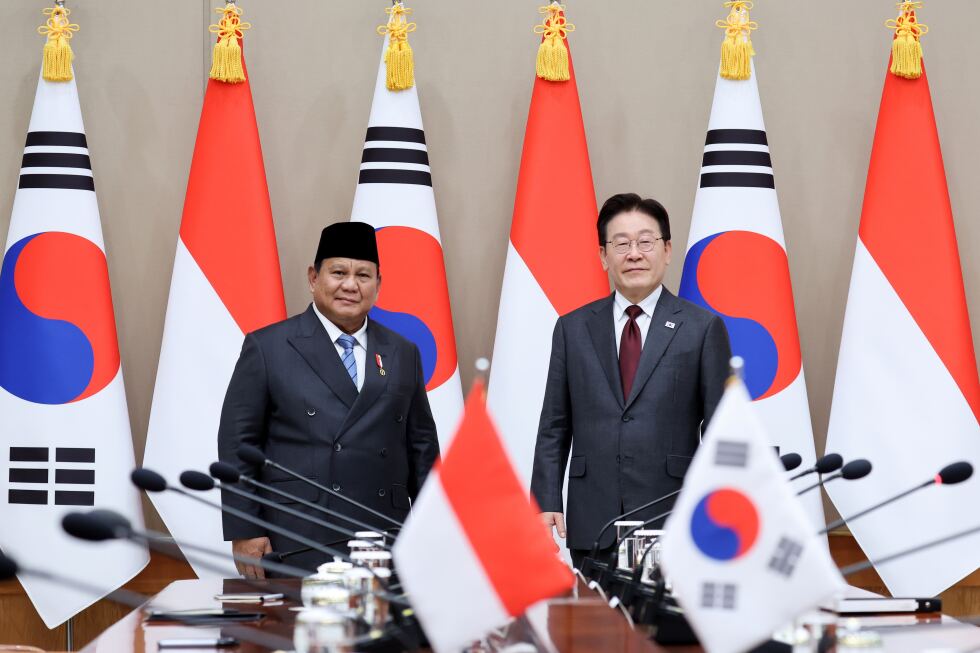
    Against a backdrop of growing global instability triggered by the ongoing conflict in the Middle East, South Korea and Indonesia have committed to elevating their bilateral strategic partnership, announcing a sweeping set of agreements to deepen collaboration across defense manufacturing, advanced technology, and critical supply chains during a Wednesday summit in Seoul, South Korea’s presidential administration confirmed.

    The high-level meeting brought together South Korean President Lee Jae Myung and Indonesian President Prabowo Subianto in the South Korean capital, where the two leaders put their signature to a joint communiqué outlining plans for expanded economic integration and continued joint work on major defense development initiatives. These collaborative projects span multiple high-priority defense sectors, including the co-development of fighter jets, training aircraft platforms, and advanced anti-tank missile systems.

    Beyond defense cooperation, the two nations have also moved to strengthen coordination around energy, critical minerals, and key resource supply chains. President Lee emphasized that Indonesia has emerged as an irreplaceable partner for South Korea in securing stable energy supplies at a time when global energy markets face widespread disruption from the Middle East conflict. Indonesia serves as a critical source of natural gas and coal for South Korea’s energy network, and under the new agreement, South Korean importers will take delivery of approximately 820,000 tons of liquefied natural gas (LNG) from Indonesia this year alone. This volume of LNG is sufficient to operate all of South Korea’s gas-fired power generation facilities at full capacity for roughly 12 days, providing a substantial buffer against potential market volatility.

    Both leaders also voiced their satisfaction with the progress of the KF-21 supersonic fighter jet program, South Korea’s flagship indigenous defense development project. Launched in 2015, the initiative has counted Indonesia as a core international partner from its earliest stages. Last week marked a major milestone for the program, with the first completed KF-21 aircraft officially rolled off the production line. Multiple industry reports indicate that South Korea has plans to export 16 of the completed fighter jets to Indonesia once full production scales up, cementing the long-term collaborative framework for the project.

  • Fun taken to new heights at ice-climbing center

    Fun taken to new heights at ice-climbing center

    Against the backdrop of a booming winter sports culture ignited by the 2022 Beijing Winter Olympics, a landmark new recreational facility has opened its doors in southwest China, bringing the high-adrenaline experience of ice climbing from remote mountain icefalls directly to urban enthusiasts.

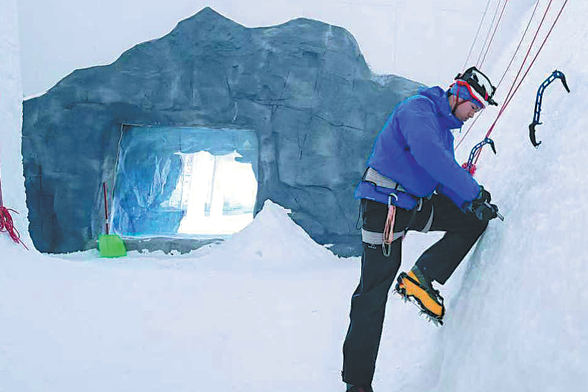
    China’s first city-based indoor ice climbing venue, dubbed Ice Panda, welcomed its first official visitors in January 2026 after a three-month trial operation period, located within the Futian Transit-Oriented Development (TOD) commercial complex in Chengdu Future Science and Technology City, Sichuan province. Spanning 1,600 square meters, the purpose-built center centers around a 12.5-meter professionally engineered main ice wall, designed to accommodate climbers of every skill level with three distinct gradient options: a 60-degree gentle incline for new learners, a 79-degree steep slope for intermediate practitioners, and a challenging 90-degree vertical wall for seasoned athletes.

    For first-time participants, the center offers a 498 yuan ($72) one-hour beginner package that includes full professional gear rental, while experienced climbers can access the venue for 198 yuan per hour without equipment. Since its soft launch, the facility has drawn a steady stream of visitors ranging from young urban professionals seeking a novel stress-relief activity to dedicated climbing enthusiasts traveling from neighboring cities.

    Zhang Wei, a 28-year-old software engineer based in Chengdu and one of the center’s early visitors, described his experience as a transformative break from daily work pressure. “It’s so cool to go ice climbing right in the city,” he said. “The intense focus it demands, the cold air hitting your face, the sound of your tools biting deep into the ice… it completely clears your mind of all the daily stress that builds up at work.”

    A veteran climber who only gave his surname as Li traveled all the way from Chongqing, about 300 kilometers from Chengdu, to test the new venue. He noted that the facility solves a long-standing inconvenience for domestic ice climbing lovers. “The texture of the real ice immediately got me into the zone,” Li said. “In the past, I had to wait for winter and drive hours to reach the natural icefalls in western Sichuan. Now, with this indoor facility, I can come practice anytime, all year round.”

    For first-time climbers like Ye, a local resident who tried ice climbing for the first time at Ice Panda, the venue’s convenience is its biggest draw. Located within a major urban TOD complex, the center is easily accessible via public subway, and offers on-site full equipment rental, eliminating the barrier of entry for beginners who do not own their own expensive gear.

    To ensure the venue meets the needs of both new learners and professional practitioners, Ice Panda’s management team spent months collecting feedback from visitors and elite climbers during the trial operation phase to refine the facility’s design. A key priority was replicating the texture and challenge of natural outdoor glacial ice, while maintaining high safety standards.

    “For example, we embedded a fiber mesh into the ice to simulate the texture of glacial ice formed when snowmelt mixes with grass and twigs,” explained Li Changbin, general manager of Ice Panda. He added that the special construction method not only creates a more authentic climbing experience, but also boosts the ice wall’s structural integrity and its ability to hold climbing tools securely.

    Beyond offering a recreational activity for visitors, Ice Panda positions itself as a comprehensive hub for growing ice climbing culture across China. During its trial run, the facility already partnered with leading outdoor sport brands to host enthusiast exchange events, and collaborated with top professional climbers to offer public introductory training classes. A full lineup of brand collaborations and community activities is already scheduled for the coming months, as the team works toward its long-term goal.

    “Our goal is to transform ice climbing from a niche extreme sport into a fashionable, accessible and healthy lifestyle for the general public,” Li Changbin said.

    Chengdu, the capital of Sichuan province, serves as the main gateway to the abundant natural icefall resources in the mountainous regions of western Sichuan. In the years following the 2022 Beijing Winter Olympics, public interest in winter sports including ice climbing has surged across the city. Local climbing coach Huang Siyuan noted that the new indoor center fills a critical gap in the local ecosystem, giving beginners a low-risk space to build foundational skills before they advance to outdoor natural icefalls.

    Local authorities noted that the launch of Ice Panda aligns with Chengdu Future Science and Technology City’s broader development strategy for the Futian TOD, which aims to integrate culture, commerce, sports, tourism and other business formats to create a new regional consumption landmark that meets the diverse lifestyle needs of both local residents and out-of-town visitors.

  • Push to preserve language landscape

    Push to preserve language landscape

    For Wang Lining, a linguistics professor at Beijing Language and Culture University and a Guangxi native working far from home, a recent interaction with Doubao, a popular Chinese artificial intelligence chatbot, delivered far more than a technical demonstration. When she spoke to the platform in her native Cantonese dialect and received a seamless, natural response, the moment was less about cutting-edge processing power and more about a long-awaited emotional reconnection to her roots.

    “Living in Beijing, few people can talk with me using the hometown language,” she explained, describing the quiet joy of speaking a tongue that carries the memories and cultural identity of her childhood.

    This small, personal milestone is part of a much larger national initiative to safeguard China’s extraordinary linguistic diversity and revitalize fading local languages and dialects for the 21st century. Late last year, China’s Ministry of Education joined forces with six other national ministries to release a landmark policy notice focused on deepening the inheritance and innovative development of Chinese language culture, a framework that views regional dialects and ethnic minority languages not as outdated relics, but as living repositories of history, community identity and intangible cultural heritage that stretch from folk oral traditions to local social customs.

    Home to 56 ethnic groups, China boasts one of the world’s most linguistically diverse landscapes, encompassing between seven and 10 major dialect groups and more than 130 distinct languages. For decades, however, rapid urbanization and the widespread, necessary adoption of Mandarin as a national lingua franca left many local mother tongues at risk of fading into disuse, as younger generations grew up speaking primarily Mandarin and fewer opportunities remained to pass regional dialects down through families and communities.

    Officials from the Ministry of Education’s Department of Language and Writing Information Management note that the new policy aims to drive creative transformation and modern development of Chinese language culture, boost public linguistic and cultural literacy especially among young people, and support national goals of building global leadership in education, culture and talent development. For Wang, the multi-ministerial notice marks the end of more than a decade of exploratory work, turning a long-held vision for language preservation into an actionable, coordinated national strategy.

    Since 2012, China has released a series of policy documents guiding the inheritance and protection of Chinese language culture, with the latest framework building on early pilot programs to lay out clear, detailed roadmaps for future action. Wang emphasized that the initiative goes far beyond education alone, tying language preservation to broader economic and social development. “It plays a role not only in school education, but also in urban and rural production and livelihood, cultural tourism and cultural relics conservation. It can unleash great potential in socioeconomic development,” she said.

    A key strength of the new policy is its emphasis on cross-sector collaboration, Wang added. In the past, efforts by private enterprises, universities and independent language experts often operated in isolation, lacking coordination to scale successful projects. The participation of multiple national ministries will allow organizers to systematize the scattered successful initiatives from across the country, “stringing them together like beads, thereby ushering in a new era of systematic advancement,” she explained.

    The policy outlines seven core priorities for advancing the cause: strengthening scientific research and interpretation of linguistic heritage, expanding inclusive language education, protecting and developing existing language resources, leveraging digital empowerment, cultivating specialized talent, broadening public outreach, and deepening cultural exchange through language. For researchers like Rao Gaoqi, a linguistics researcher at Beijing Language and Culture University, the focus on digital innovation stands out as a game-changing shift.

    “Digital technology is extremely helpful for the development of language and culture. Conversely, the growth of language culture also serves as a driving force behind the advancement of digital technology,” Rao explained. Beyond academic research, this digital empowerment delivers tangible benefits for public safety and economic development, most notably in the creation of barrier-free emergency language services. During large-scale natural disasters such as earthquakes and floods, the National Language Service Corps partners with the Ministry of Emergency Management to ensure first responders can communicate effectively with elderly residents who may only speak their local dialect. This capability has even been extended internationally: when a devastating earthquake struck Turkiye in 2023, Chinese-developed large language models were deployed to provide real-time translation between Chinese, English and local Turkish languages to support rescue efforts.

    “Language and script are fundamental. We learn to write and speak not for their own sake, but to work, to love and to live our lives well. Language itself is a basic resource. The digitization of language is likewise a foundational endeavor that serves to empower everything else,” Rao said.

    For more than a decade, Wang has been a core participant in the national Project for the Protection of Language Resources of China, an initiative that originally focused on documenting and archiving fading dialects before shifting to a new, more dynamic goal: moving beyond “saving and recording” to “bringing them back to life and utilizing them” in daily life. Over the course of the project, teams of linguists traveled to nearly 1,800 locations across the country to systematically document local dialects through fieldwork and multimedia recording, building a comprehensive national digital archive of China’s vocal cultural heritage. Today, those collected materials are being transformed into accessible cultural products that are integrated into everyday life.

    Under the new policy, qualified local governments and institutions are encouraged to repurpose historic buildings and public spaces to create venues dedicated to preserving and promoting linguistic cultural heritage. Last year, for example, a dialect museum opened in Wuyi County, Zhejiang Province, housed in a restored historic traditional residence. Visitors can view traditional farming tools and vintage household items, and when they touch an exhibit, audio recordings of the local dialect terms for the object play, drawing on language materials collected by the project’s Zhejiang team to help local residents reconnect with their traditional way of life.

    Today, local dialects are increasingly appearing in pop culture, from original songs and television dramas to a growing range of creative consumer products. Wang says the goal of the movement is not limited to academic archives or static museum displays. “We want to create offerings that are part of everyday life — practical, engaging and fun — so that people willingly take part in keeping language culture alive and helping it grow,” she explained.

    Xing Biqian, a researcher at the China National Academy of Educational Sciences, echoed this focus on lived, daily practice as the key to long-term revitalization. “Language is the carrier of civilization and the root of culture, and practice is precisely the key to activating this root and enabling civilization to take hold,” Xing said. “When we lift the language culture from the pages of textbooks and make it part of everyday life, it begins to take root in hearts and minds. Through lived experience, it shapes not only how we learn and communicate, but also who we become: how we think, what we value, and what we find beautiful. That is where its true power lies.”

  • Chile’s new President José Antonio Kast brings openly religious views to a changing country

    Chile’s new President José Antonio Kast brings openly religious views to a changing country

    When Chile’s newly inaugurated President José Antonio Kast took office on March 11, he cemented the latest chapter of a growing rightward political shift across Latin America — and brought open, devout religious conservatism to the forefront of the region’s most secular major nation.

    The 60-year-old former lawmaker, a father of nine and practicing Catholic deeply embedded in the international Schoenstatt apostolic movement, has built his political brand around unapologetic conservative values that have put progressive advocacy groups on high alert. Kast, who first ran for president in 2021 and lost to Gabriel Boric, secured a 58% majority in his 2025 campaign by centering pledges to crack down on rising crime and deport undocumented immigrants. But his long-held positions on social issues — opposition to abortion, same-sex marriage, and even the sale of emergency contraception dating back to 2009 — have defined concerns about what his presidency will mean for marginalized groups and social progress in Chile.

    Kast’s ascent dovetails with a broader regional trend that has brought conservative leaders including El Salvador’s Nayib Bukele and Argentina’s Javier Milei to power in recent years, each riding popular discontent with established left-leaning governance to advance agendas focused on security and economic restructuring. Kast’s policy alignment also overlaps in key areas with that of former U.S. President Donald Trump, whose administration openly welcomed his electoral victory.

    To understand how Kast’s faith intersects with his politics, it is necessary to first contextualize Chile’s shifting religious landscape. Across Latin America, Catholic affiliation has plummeted over the past three decades: a 2024 Latinobarómetro report found the regional share of Catholics fell from 80% in 1995 to just 54% in 2024. In Chile, the shift is even starker: only 45% of the population identifies as Catholic today, while 37% claim no religious affiliation and 12% identify as Protestant.

    Luis Bahamondes, a religion scholar at the University of Chile, explained that the Catholic Church, once one of Chile’s most trusted institutions in the 1990s, saw public confidence collapse amid widespread social transformation and a string of high-profile sexual abuse scandals. “It became one of the most questioned institutions and one of the least trusted,” Bahamondes noted. Still, he added, conservative social values rooted in religious tradition remain deeply embedded in Chilean culture. Chile was the last Latin American nation to legalize divorce, doing so only in 2004, and resistance to comprehensive school sex education persists today. “There are still concepts that resonate strongly in Chilean society — such as family and marriage — which carry a strong religious weight,” Bahamondes said. “There is often talk of a crisis of Catholicism, but what is in crisis is the institution, not the belief itself.”

    That disconnect between institutional Catholicism and persistent personal belief is exactly where Kast’s connection to the Schoenstatt movement resonates. Founded in Germany in 1914 at the outbreak of World War I, Schoenstatt is a Catholic apostolic movement centered on devotion to the Virgin Mary, which first arrived in Chile’s coastal city of Valparaíso in 1947. The movement has since expanded across the country, building more than 20 shrines and counting roughly 10,000 followers, including Kast and his wife.

    Rev. Gonzalo Illanes, director of the Schoenstatt movement in Chile, emphasized that the group is not a political organization, but rather a faith formation community built on three core pillars: personal spiritual development, the integration of faith into daily life, and devotion to the Virgin Mary. While the movement shares Kast’s position that life must be protected from conception to natural death, it remains committed to open dialogue with those who hold different views, Illanes said. “Schoenstatt, like the Catholic Church, is not a political movement but a space for formation, faith and transcendence,” he explained. “The challenge is how to move forward. Not to stop talking.”

    For Kast’s supporters, his open faith is a key source of confidence, not a cause for concern. Jorge Herrera, a Schoenstatt member and Catholic who voted for Kast, called the new president a capable leader with a clear plan for Chile that the country desperately needed. “He’s a president who gives me a lot of confidence,” Herrera said. “I share his values.” He echoed Schoenstatt’s core belief that every person has a unique divine mission, and noted that while he aligns with Kast’s anti-abortion stance, it was the president’s broader economic and security vision that won his support.

    Kast’s appeal even extends to conservative circles beyond Chile’s borders. In Mexico, where a left-leaning national government has overseen abortion decriminalization in more than half of the country’s states, conservative activists see Kast as a welcome model. “It gives me confidence that he publicly acknowledges being inspired by a Christian faith,” said Rodrigo Iván Cortés, president of a Mexican conservative advocacy group. “That does not mean that he wants to impose his faith on others, but simply that he professes it.”

    But for progressive and rights advocacy groups, Kast’s inauguration brings well-founded fears of gradual erosion of hard-won social rights. Unlike Argentina’s Milei, who immediately implemented sweeping rollbacks such as a ban on gender-affirming care for minors, Kast is not expected to reverse existing policies overnight. But researchers warn that a slowdown in progress, weakening of supportive public policies, and growing legitimacy for anti-rights rhetoric could still cause lasting harm.

    “There are valid reasons for concern, though not necessarily for an immediate rollback as seen with Milei,” said Cristian González Cabrera, an LGBTQ-rights researcher at Human Rights Watch. “The risk with Kast could be more gradual: slowing progress, weakening public policies and legitimizing anti-LGBTQ+ rhetoric.”

    For reproductive rights advocates, early signals from Kast’s administration are already worrying. One of his first actions in office was a 3% across-the-board budget cut, and his new cabinet includes openly religious leaders heading the women’s and health ministries. Catalina Calderón, chief advocacy officer at the Women’s Equality Center, pointed to recent cuts to social and reproductive rights programs under Milei in Argentina as a warning sign for Chile. “Across the region, we have seen that when leaders from the political wing to which Kast belongs take office, one of the first things that happens is a rollback of individual rights and women’s rights,” Calderón said. “How that [religious] vision could shape the administration is something that should be watched closely.”

  • Work-life balance tips scales in Xiong’an’s favor

    Work-life balance tips scales in Xiong’an’s favor

    Nine years after China announced the establishment of Xiong’an New Area, this purpose-built city in Hebei province has emerged as a magnet for young professionals, luring talent away from overcrowded megacities with its enviable work-life balance, affordable housing and well-developed public services.

    On a mild March morning, 25-year-old Liu Suying wakes to sunlight spilling through the window of her 70-square-meter rented apartment in Xiongdong District, her pet cat curling against her hand to rouse her. After whipping up a quick breakfast of fried eggs and fresh coffee in her compact kitchen, she climbs into her car for the short commute to her role as a production planning engineer at a local commercial satellite firm. Just seven minutes after leaving home, she arrives at her desk, ready to start the workday.

    A 2024 graduate of Beijing Jiaotong University, Liu is far from alone in choosing to build her career and life in Xiong’an. Her current living arrangement would be out of reach for many young people working in nearby Beijing: she pays just 10,000 yuan ($1,450) annually for a spacious two-bedroom apartment, and receives an additional 1,000 yuan monthly living subsidy from the Xiong’an local government. When Liu told a friend working at a leading tech firm in Beijing about her housing, the friend – who pays 3,000 yuan a month just to share an apartment with others for a single small room – immediately expressed jealousy.

    That such a comfortable, convenient lifestyle is available in Xiong’an marks a dramatic transformation from the area’s origins. When China first unveiled plans for the new area in April 2017, the 100-square-kilometer planned development zone was little more than sprawling farmland and scattered rural villages. Built with a core mission to ease overcrowding in Beijing by relocating non-capital functions outside the city, Xiong’an was designed from the ground up to prioritize quality of life for residents, not just economic growth.

    That deliberate planning has paid substantial dividends. According to local government data, Xiong’an’s permanent resident population hit approximately 1.4 million by the end of 2025, growing by 200,000 over the previous five years as more workers and families moved in. To date, more than 400 branches of China’s central state-owned enterprises have set up operations in the new area, bringing thousands of skilled employees with them and cementing Xiong’an’s reputation as an up-and-coming hub for innovation and career opportunity that doesn’t force residents to sacrifice personal well-being.