博客

  • Brazil judge blocks Sugarloaf Mountain zipline

    Brazil judge blocks Sugarloaf Mountain zipline

    One of Rio de Janeiro’s most iconic natural landmarks, Sugarloaf Mountain, has been the center of a years-long environmental and legal battle that took a dramatic new turn this week, when a Brazilian judge ruled to block a controversial zipline construction project on the UNESCO World Heritage Site.

    The proposed adventure attraction planned four parallel ziplines stretching 755 meters between the 396-meter peak of Sugarloaf Mountain and nearby Morro da Urca, running alongside the historic cable car route that has connected the two landforms since 1912. Developers marketed the project as a high-thrill tourist addition, promising visitors speeds of up to 100 kilometers per hour on the downhill descent.

    First launched four years ago, the initiative sparked immediate and sustained pushback from local communities and environmental activists across Brazil. Opponents argued that the construction of zipline access platforms required extensive rock excavation at the mountain’s peak, causing permanent, irreversible damage to the sensitive protected ecosystem and geological landscape of the heritage site. In response, the site management company and project developers claimed excavation would be limited to existing developed areas to minimize disruption, and had already secured formal approval from both the Rio de Janeiro City Council and Brazil’s National Historical and Artistic Heritage Institute (IPHAN).

    The project faced repeated construction halts through years of legal challenges, and was 95% complete when Brazil’s high court ruled in January 2026 to allow work to restart, arguing that halting construction at that late stage would cause more environmental harm than finishing the project. That ruling has now been fully overturned by this week’s court decision.

    In his ruling, the judge emphasized that Sugarloaf Mountain holds inestimable cultural and natural value not only for Brazilians, but for people across the globe. As part of the ruling, both IPHAN and the project developer were ordered to pay 30 million Brazilian reals (approximately $5.77 million USD) in environmental damages for harm already caused during construction.

    Activist leaders who spearheaded the campaign against the zipline called the ruling a landmark victory for environmental protection of Brazil’s natural heritage. Gricel Osorio Hor-Meyll, one of the lead organizers of the opposition campaign, confirmed the outcome to AFP, describing the decision as a huge win for conservation.

    Despite the court’s ruling, the legal fight over the project is far from over. Developers have announced they plan to appeal the decision, leaving the future of the nearly completed attraction uncertain while the case moves through Brazil’s appellate courts.

  • China braces for cross-border travel surge during Qingming holiday

    China braces for cross-border travel surge during Qingming holiday

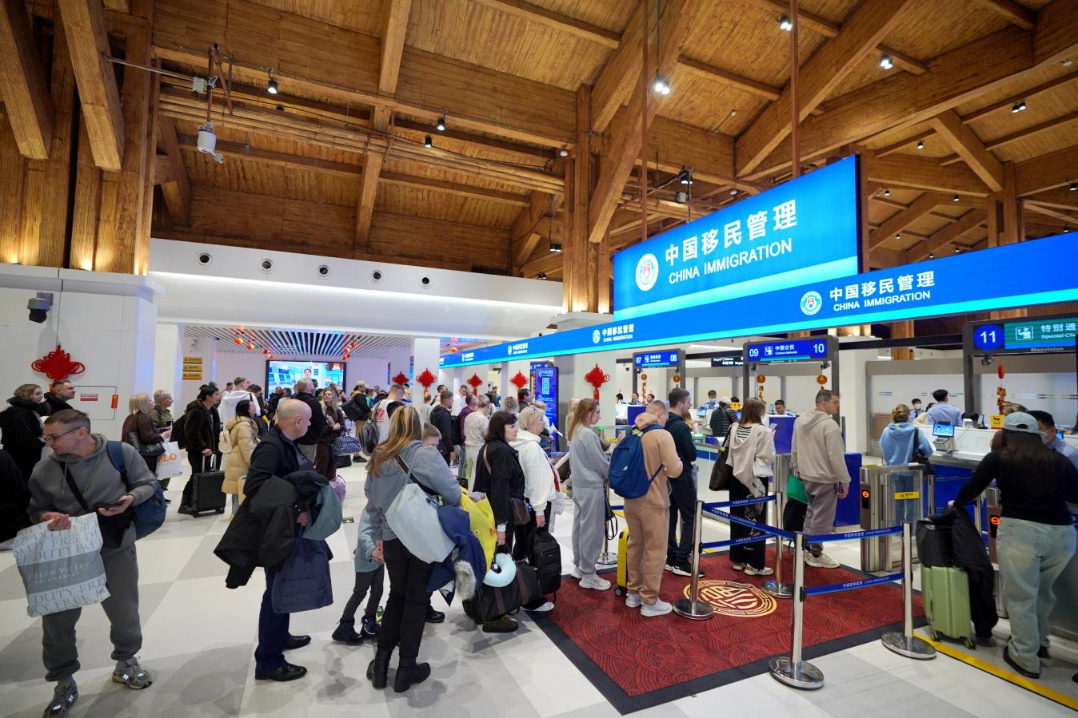
    As China prepares for the annual three-day Qingming Festival holiday starting April 4, national immigration officials are projecting a notable uptick in cross-border passenger movement across the country’s ports of entry and exit. New data released by the National Immigration Administration this Wednesday forecasts that daily cross-border traveler volumes will climb above 2.3 million on average throughout the holiday, marking an 11.1% year-on-year increase compared to the 2025 Qingming break. The Qingming Festival, a traditional Chinese holiday centered on ancestor veneration, tomb sweeping, and spring outings, has increasingly become a popular window for international and cross-border leisure and family travel in recent years. This projected growth reflects a steady rebound in global mobility and sustained demand for cross-border trips among Chinese residents and international visitors alike. The busiest cross-border hubs are concentrated among major international airports across China’s largest economic centers, including Beijing, Shanghai, Guangzhou, Chengdu, and Shenzhen. All of these facilities are anticipating a steady rise in passenger throughput compared to ordinary non-holiday periods. Leading the pack is Shanghai Pudong International Airport, China’s busiest aviation gateway for international travel, which is expected to process an average of roughly 95,000 inbound and outbound passenger trips each day over the holiday period. Immigration authorities have announced pre-emptive adjustments to operational arrangements to accommodate the surge, including adding extra inspection lanes, optimizing passenger clearance processes, and deploying additional staff to reduce wait times and avoid congestion at major ports. The projected growth in cross-border travel aligns with broader trends of rising domestic and international mobility in China, as more travelers take advantage of long holiday weekends to plan overseas trips, reunite with family members living abroad, or welcome international visitors to China.

  • Iran war economic shocks will last ‘months’, says Australia’s PM

    Iran war economic shocks will last ‘months’, says Australia’s PM

    In an uncommon televised national address delivered Wednesday, Australian Prime Minister Anthony Albanese has delivered a stark warning to citizens: the economic fallout from the ongoing Middle East conflict involving Iran will ripple through Australian households for months to come. The rare national address, a format reserved for defining moments of national and international crisis — most recently deployed during the COVID-19 pandemic, and prior to that during the 2008 global financial crisis — comes amid unprecedented volatility in global fuel markets triggered by the conflict and the near-total closure of the Strait of Hormuz.

    Albanese emphasized that while Australia is not a direct participant in the hostilities, all Australians are already bearing the cost of the conflict through skyrocketing fuel prices. The conflict has caused the single largest spike in petrol and diesel prices on record, with cost-of-living pressures already hitting household budgets across the country. Around 20% of the world’s total oil and natural gas supplies pass through the Strait of Hormuz, making its effective blockade a critical disruption to global energy markets. Countries across the globe, Australia included, have recorded sharp jumps in fuel prices in recent weeks, prompting governments to roll out emergency measures to stabilize supplies.

    The Prime Minister acknowledged that the weeks and months ahead will bring financial hardship for many Australian families, and made clear that no federal government can fully insulate the country from these sweeping global economic pressures. The warning comes after reports of panic buying at petrol stations across the country, which left multiple retailers dry of fuel, and follows earlier efforts from Albanese to calm public anxiety.

    In response to the crisis, the Australian government has unveiled a package of temporary emergency measures designed to ease immediate cost burdens for consumers and businesses. The plan includes a 50% cut to the national fuel excise tax and a three-month suspension of road user charges for heavy commercial vehicles. To strengthen domestic supply chains, officials are also working to boost domestic fuel stockpiles and increase imports through regional alliances under a newly finalized National Fuel Security Plan.

    Alongside government action, Albanese called on all Australians to do their part to conserve fuel supplies, particularly for essential industries that rely on steady energy access to function. He urged residents to avoid unnecessary fuel use, and encouraged people to switch to public transport for daily commutes where possible. While calling for voluntary conservation, the Prime Minister also reassured the public that there is no need to disrupt daily life, urging Australians to go forward with planned Easter holiday travel as scheduled. “You should go about your business and your life, as normal,” he said, adding: “Enjoy your Easter. If you’re hitting the road, don’t take more fuel than you need — just fill up like you normally would. Think of others in your community, in the bush and in critical industries. And over coming weeks, if you can switch to catching the train or bus or tram to work, do so.”

    Closing the address, Albanese struck a unifying tone, framing the challenge as one that Australia can overcome through collective action and mutual support, echoing the national resilience that has seen the country through past crises. “We will deal with these global challenges, the Australian way,” he said. “Working together — and looking after each other. As we always have.”

  • Inclusive run brings together SEN students from Shanghai, HK, Macao

    Inclusive run brings together SEN students from Shanghai, HK, Macao

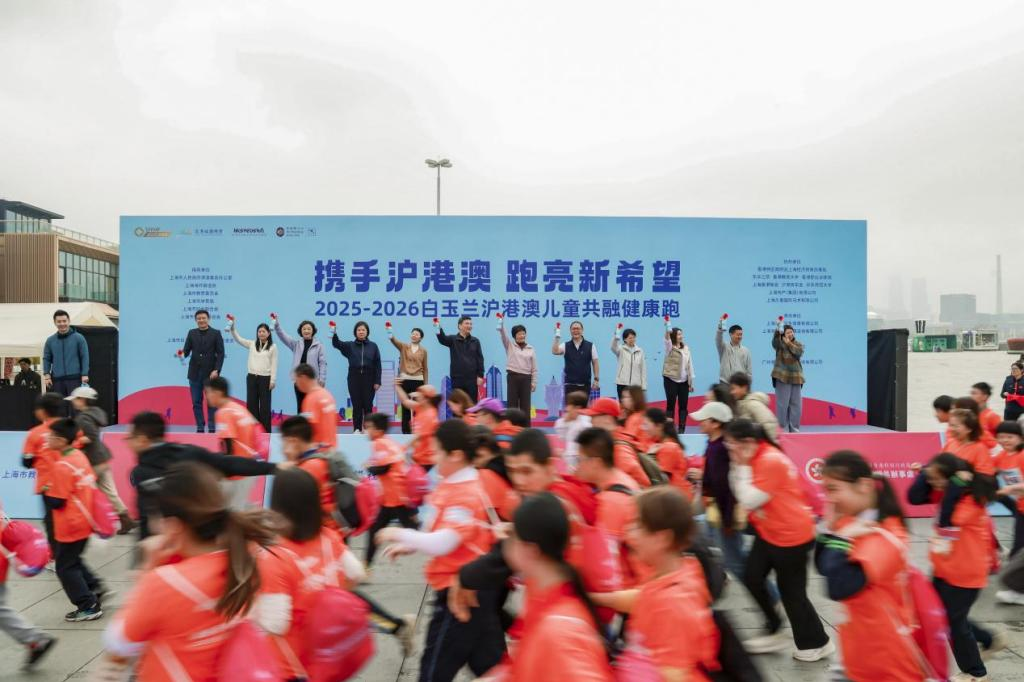
    On March 30, a landmark inclusive sporting event brought together 150 students with special educational needs (SEN) from Shanghai, Hong Kong, and Macao, marking the first time Macao has joined this cross-regional initiative. Accompanied by 300 supporting teachers and volunteers, the participants completed a 3.5-kilometer route through the scenic green spaces of Shanghai Expo Culture Park, crossing the finish line to cheers from crowds of attendees.

    The event was co-organized by three regional institutions: the Hong Kong and Macao Affairs Office of the Shanghai Municipal People’s Government, the Federation of Hong Kong-Shanghai Association, and the Hong Kong Special Education School Heads Association, with financial support from the Hong Kong Jockey Club. Built on the foundation of Shanghai Marathon charity programs held in 2023 and 2024, the gathering was designed to advance three core goals: deepen cross-regional cooperation in special education, support the social integration of SEN students, and strengthen youth exchanges across the three regions through the shared language of sport.

    Leung Wing-hung, founding chairman of the Hong Kong Special Education School Heads Association, emphasized that events like this run play a transformative role in shifting public perceptions of special needs young people. “They help people in Shanghai, Hong Kong, and Macao really see the potential of our special needs children and give them opportunities for growth and development in various fields,” Leung said. Looking ahead to future collaboration, he noted that Shanghai and Hong Kong share strong complementary strengths in special education, with significant untapped potential for closer cooperation in adaptive sports development to create more engagement opportunities for SEN students. Beyond sport, he added, regions can work together to improve teaching practices and career support, connecting Hong Kong SEN students with professional opportunities at Shanghai-based businesses and organizations.

    After the run concluded, participants gathered for an inclusive awards ceremony followed by a cross-regional carnival that offered a range of accessible activities. Attendees could join Special Olympics-themed games, interact with trained equine animals in a guided equestrian experience, and enjoy live performances by fellow SEN participants. A highlight of the post-race event was the world premiere of *You Make The World Shine*, an animated short film entirely created by SEN students using artificial intelligence tools. The project represents an innovative new approach to empowering special needs young people to express their own voices and build meaningful connections with the broader public through technology.

    Derek Anderson, a learning support teacher at Wellington College International Shanghai who accompanied students to the event, praised the gathering’s powerful core message of inclusion. “It is very important for students coming to Shanghai today who have taken part in the run to see that everybody is all the same and we can all do things,” Anderson explained. He added that accessible, community-focused events like this run are critical to raising public awareness of the needs of disabled people, helping the general public recognize that many people require additional support, accessible infrastructure, and tailored accommodations to fully participate in community life.

    For many participating students, the event offered a rare chance to build new cross-regional friendships and experience the joy of sport in a supportive environment. Kirsty Gu, an SEN student from Wellington College International Shanghai, shared that she greatly enjoyed the day, particularly the opportunity to meet new people and run alongside a new partner she connected with just before the event.

    Organizers noted that the first-time inclusion of Macao participants marks an important step forward in building a connected, inclusive support network for SEN students across all three regions, with plans to expand cross-regional collaboration in the coming years.

  • Drone attacks trigger fire at Kuwait airport fuel facility, no injuries reported

    Drone attacks trigger fire at Kuwait airport fuel facility, no injuries reported

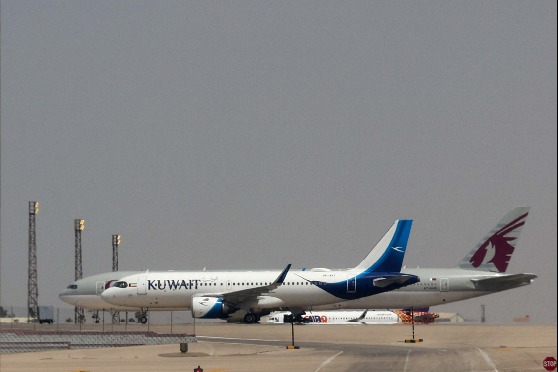
    In a disruptive incident that underscores growing regional security tensions linked to Middle East geopolitical shifts, a drone attack targeted fuel infrastructure at Kuwait International Airport early Wednesday, igniting a large blaze at the site’s fuel storage facility. The Kuwait Civil Aviation Authority confirmed the attack in an official public statement, noting the assault has been tied to Iran-connected actors. Local emergency response units were dispatched to the scene immediately after the attack was reported, mobilizing rapidly to bring the fire under control and secure the damaged facility. As of the latest official update, preliminary investigations have confirmed that no injuries or fatalities have resulted from the incident. The attack comes amid a broader period of elevated unrest across the Middle East, with recent escalations between the U.S. and Iran already driving volatility in global energy markets and pushing Eurozone inflation above the European Central Bank’s targeted threshold, according to concurrent economic reporting. Kuwaiti authorities have not yet announced further details on ongoing investigations into the attack or potential impacts to airport operations in the coming days.

  • Qinhuangdao panda-themed healing base offers therapy for autistic kids

    Qinhuangdao panda-themed healing base offers therapy for autistic kids

    In the coastal city of Qinhuangdao, located in China’s northern Hebei Province, a groundbreaking new initiative is offering a fresh path to healing and development for autistic children. A one-of-a-kind panda-themed therapeutic base has opened its doors at Qinhuangdao Wildlife Park, centered on the idea that gentle, close interactions with giant pandas can create a calming, supportive environment that eases anxiety and nurtures emotional growth.

    The base was officially inaugurated on March 27 during a public event titled “Giant Panda Healing • Guarding the Stars”, held just days ahead of the 19th World Autism Awareness Day, marked on April 2. To mark the opening, 133 autistic children joined the event alongside their parents and trained volunteers, getting the chance to explore the park and meet its resident giant pandas firsthand.

    Witnesses reported that many children arrived at the venue feeling restless and overstimulated, but gradually softened and relaxed as they moved through the park’s open, green animal zones. At the dedicated panda pavilion, the quiet, playful presence of 6-year-old giant pandas Tao Su and Ya Nan — who were celebrating 100 days of residence in Qinhuangdao — drew quiet, unforced smiles from many of the young participants.

    Li Nan, deputy director of the rehabilitation center at Qinhuangdao’s Disabled Persons’ Federation, explained the core logic behind the innovative program. “Interaction with animals can effectively ease anxiety in children with autism and help them build inner security,” she said. “That is the heart of this nature-based healing initiative.”

    Unlike traditional indoor rehabilitation training, the new base combines regular open-air visits with structured themed activities, designed to leverage giant pandas’ naturally calm, non-threatening demeanor to create a low-pressure therapeutic space. Ma Zhiguo, president of the Disabled Persons’ Federation of Haigang District, noted that pandas’ steady, nonaggressive behavior perfectly matches the need autistic children have for predictable, safe social interactions. “They can reduce social anxiety and become icebreakers for emotional connection,” Ma added.

    For families raising autistic children, the new base fills a critical gap in accessible, supportive care. Song Liping, the mother of 31-year-old autistic adult Li Ruxian, has spent decades navigating the challenges of caring for her son, who did not speak until he turned 4. “Raising a child with autism requires far more patience and energy than most people can imagine,” Song explained, referencing the dual strain of financial pressure and emotional exhaustion that many families face. Since beginning intensive professional rehabilitation for her son in 2014, Song has dedicated herself to autism support work, becoming a volunteer and developing community music therapy programs. Today, her son has progressed from requiring constant full-time care to working as her teaching assistant — a transformation that speaks to the impact of consistent, targeted support.

    Liu Demin, Party branch secretary of the Qinhuangdao Psychological Health Association, which provides training and counseling for professionals working with special needs children, outlined the unique benefits of animal and nature-based therapy compared to conventional indoor interventions. “Animals are open and nonjudgmental. Being with them creates a low-pressure social environment and encourages children to initiate interaction,” Liu said. She added that outdoor, multisensory experiences in natural spaces promote healthy sensory development, while open environments inherently help reduce feelings of overwhelm and anxiety. “Observing panda behavior can also extend attention spans, providing strong support for daily rehabilitation,” she noted.

    To make the healing program accessible to as many families as possible, Qinhuangdao Wildlife Park has introduced a new preferential access policy: any visitor with a severe disability certificate can bring one family member as a companion for free, eliminating unnecessary financial barriers for participating families. Looking ahead, the base plans to roll out specialized tailored therapy sessions for autistic visitors and expand training for all personnel working with program participants to ensure safe, effective support.

    As the opening event drew to a close with a festive animal parade, children wandered freely under the warm spring sun. For these young participants, often referred to as “children of the stars” in China, the quiet encounter with the gentle giant pandas offered moments of uncomplicated, genuine joy — a powerful reminder that every life carries immeasurable value, and that inclusive, innovative support can open new doors for growth and connection.

  • Indonesia delays deportation of Scottish crime boss to Spain for murder and drug trafficking charges

    Indonesia delays deportation of Scottish crime boss to Spain for murder and drug trafficking charges

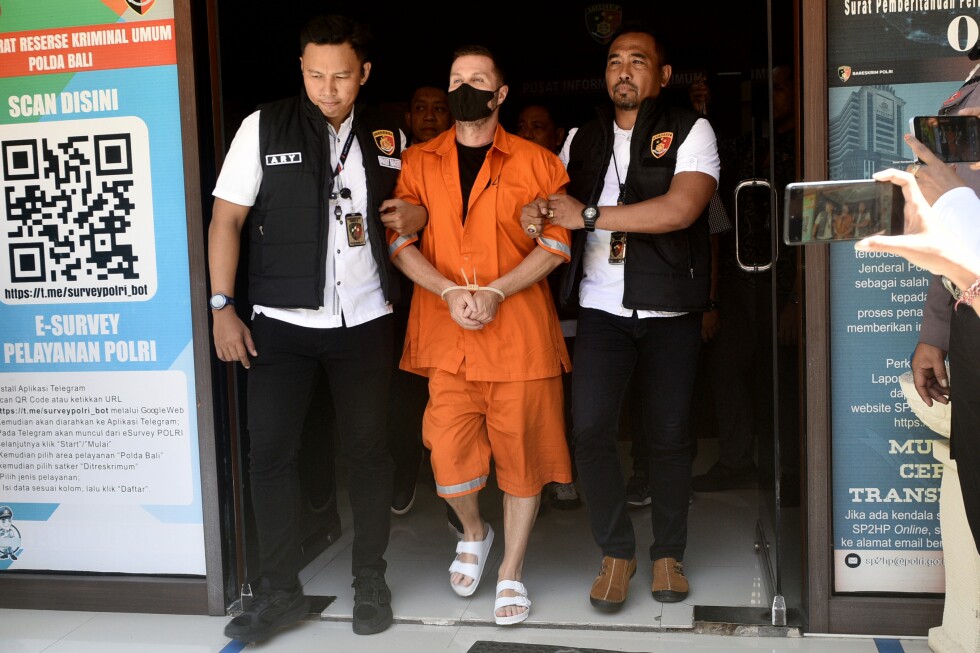
    In a last-minute adjustment to law enforcement proceedings, Indonesian authorities have postponed the deportation of 45-year-old Steven Lyons, a high-profile alleged Scottish transnational crime leader taken into custody last week on the popular Indonesian resort island of Bali. Lyons, who is accused of overseeing an international criminal syndicate linked to large-scale drug trafficking, cross-border money laundering, and gang-related violence, was initially scheduled to be extradited via a Qatar Airways flight from Bali to Spain, with a layover in Doha, on Wednesday evening.

    Husnan Handano, a spokesperson for Bali’s regional immigration office, confirmed the delay in a statement Wednesday, announcing that the deportation will now proceed on Thursday. Handano did not offer any explanation for the last-minute schedule change.

    The fugitive suspect was apprehended this past Saturday shortly after he landed at Bali’s Ngurah Rai International Airport, arriving from Singapore. Automated immigration screening flagged Lyons based on an Interpol Red Notice, an international police alert that requests the global law enforcement community to locate and provisionally arrest a suspect pending extradition. The alert was filed at the formal request of Spanish authorities, who have sought Lyons for approximately two years.

    As the alleged head of the so-called Lyons Crime Family, a transnational criminal network originally based in Scotland, the suspect is accused of controlling major drug trafficking routes that move narcotics from Spain into the United Kingdom. His syndicate is also suspected of operating an elaborate money laundering scheme that uses registered shell companies across multiple jurisdictions, including Spain, Scotland, England, Dubai, Qatar, Bahrain, and Turkey to obscure the origins of criminal proceeds.

    Prior to Lyons’ arrest in Bali, coordinated law enforcement raids led by Scottish and Spanish investigators had already resulted in multiple arrests connected to the syndicate’s activities. Additional suspects linked to the network have been taken into custody in Turkey, the Netherlands, and the United Arab Emirates.

    Public records and local Scottish media reporting have documented Lyons’ long ties to organized crime: he survived a 2006 shooting in Glasgow that left his cousin dead. Following the attack, he relocated first to Spain, and later settled in Dubai, the United Arab Emirates. Last May, Lyons’ brother and a known criminal associate were shot and killed in a suspected gangland targeted killing at a beachfront bar in Fuengirola, a coastal town in southern Spain. Lyons has also been linked to a 2024 murder in Spain, according to Spanish law enforcement records.

    Bali Police Chief Daniel Adityajaya confirmed that Lyons’ arrest was the product of a long-running joint transnational investigation involving law enforcement agencies from Spain, Scotland, and Indonesia. Interpol’s global alert system was critical in flagging the suspect as he attempted to enter Indonesia, allowing local officers to take him into custody immediately upon arrival.

  • Nation’s open-source chip ecosystem to push global collaboration

    Nation’s open-source chip ecosystem to push global collaboration

    For decades, accessing the architecture required to design cutting-edge high-end computer chips has come at a prohibitive cost: millions of dollars in mandatory licensing fees locked most early-stage startups out of the industry, creating an uneven playing field dominated by a small handful of proprietary technology holders. Today, a game-changing open standard called RISC-V instruction set architecture is rapidly growing in global traction, offering a free, collaborative alternative to the closed, costly proprietary models that have long defined the sector.

    During the 2026 Zhongguancun Forum, China’s premier annual event for showcasing top national scientific and technological advances held in Beijing last week, industry and research leaders announced that China has successfully built out a complete, end-to-end RISC-V ecosystem. This integrated network spans from foundational technological innovation to full-scale industrial implementation, establishing China as a key global contributor to the worldwide push for more accessible, autonomous computing infrastructure.

    To simplify how RISC-V works, an instruction set architecture can be thought of as the core “dictionary” that allows chips to function. Just as humans rely on dictionaries to understand and use words, a chip depends on this set of standard instructions to interpret and run software commands. While legacy architectures such as Intel and AMD-controlled x86 charge steep licensing fees and ban users from modifying the core design, RISC-V operates on an open-source model that grants anyone the right to freely use, alter, and build on the existing framework.

    At a side event held alongside the main forum, the Chinese Academy of Sciences (CAS) unveiled two landmark new developments that complete the domestic ecosystem. The first is Xiangshan, an open-source processor platform that acts as the high-performance hardware core of the ecosystem. The second is open-Ruyi, a domestically developed operating system built from the ground up exclusively to run on the Xiangshan hardware.

    As modern computing continues to evolve, simply increasing a chip’s raw clock speed is no longer enough to meet growing demand. The central challenge today is scalable computing: the ability to manage massive volumes of concurrent tasks and distribute processing power efficiently across complex networks. This makes high-performance processor cores the “command centers” that determine a computing system’s overall speed and functionality.

    According to Bao Yungang, deputy director of the CAS Institute of Computing Technology, the Xiangshan core currently ranks as the most powerful open-source RISC-V processor available globally. In the SPEC CPU2006 industry benchmark test, the standard for measuring processor performance, the Xiangshan core hits 16.5 points per gigahertz — a score that reflects exceptional efficiency when handling complex computational tasks. Bao added that the Xiangshan-openRuyi pairing creates a reinforcing feedback loop, where technological development responds directly to industry needs, and real-world application in turn drives further innovation. He also noted that the Xiangshan core is already deployed in key sectors including artificial intelligence, cloud computing, and industrial controls.

    Unlike traditional chip development workflows, where software is retrofitted to match existing hardware — a process that often creates unnecessary inefficiencies, open-Ruyi was designed from its inception to align perfectly with the Xiangshan core’s unique technical specifications, explained Wu Yanjun, deputy director of the CAS Institute of Software. This native alignment unlocks full performance potential, as the synergy between hardware and software is critical to maximizing processing power, Wu noted.

    To lower the barrier for third-party developers and enterprises to join the ecosystem, CAS also launched the RuyiSDK, a comprehensive software development kit that acts as a one-stop resource for engineers. The toolkit provides all the pre-built tools, documentation, and frameworks developers need to build custom software for the platform, eliminating the need to start development from scratch.

    Beyond accessibility and innovation, the shift to open-source chip architecture also addresses growing global concerns over supply chain security, offering a path for countries and companies to avoid being cut off from critical computing technology due to trade disputes, export restrictions, or exploitative pricing. Liu Yanan, chip technology director at China Mobile (Suzhou) Software Technology Co., explained that the long-term goal of the ecosystem is to deliver an autonomous, cost-effective computing infrastructure that can meet the wide range of processing demands created by the fast-growing global digital economy.

    To date, CAS has assembled one of the world’s largest RISC-V research and development cohorts, with more than 600 hardware-focused researchers and 400 software engineers working on the project. Its global open talent and development programs have already drawn more than 27,000 participants from over 1,100 universities across the world, marking a clear shift toward a more inclusive, collaborative global model for the future of semiconductor development.

  • Isotope production unit boosts cancer care

    Isotope production unit boosts cancer care

    China has marked a transformative milestone in advancing domestic cancer care, with researchers at the China Spallation Neutron Source (CSNS) in Dongguan, Guangdong province announcing they have achieved full capability to produce life-saving alpha-emitting medical isotopes. For years, China has relied on costly, supply-volatile imports of these critical materials, creating a major bottleneck in access to cutting-edge cancer treatment. The new domestic production capacity is set to resolve this gap, bringing next-generation targeted cancer therapy within reach for far more patients.

    Called the “nuclear warheads” of modern oncology, alpha isotopes are the core component of next-generation radiopharmaceuticals that deliver lethal radiation directly to tumor cells while minimizing damage to surrounding healthy tissue. The CSNS team has confirmed it can produce three of the most clinically essential alpha isotopes: radium-223, actinium-225, and lead-212, all of which have well-documented effectiveness in treating hard-to-manage late-stage prostate cancer and neuroendocrine tumors.

    Wang Sheng, director of the Spallation Neutron Source Science Center and a professor at the Chinese Academy of Sciences’ Institute of High Energy Physics, emphasized the urgent public health need for this advancement, noting that China records nearly 5 million new cancer diagnoses annually — accounting for 25% of the global total — with an overall mortality rate above 50%.

    Unlike conventional radiation therapy, which uses long-range radiation that can pass through healthy tissue and cause unintended damage, alpha particles function like precision short-range heavy artillery. Once inside a cancer cell, alpha radiation releases enough energy to break both strands of the cell’s DNA, creating irreversible damage that the cell cannot repair. Wang added that the treatment also delivers a valuable “bystander effect”: dying cancer cells release signals that trigger the death of adjacent malignant cells, even if those cells were not directly targeted by radiation.

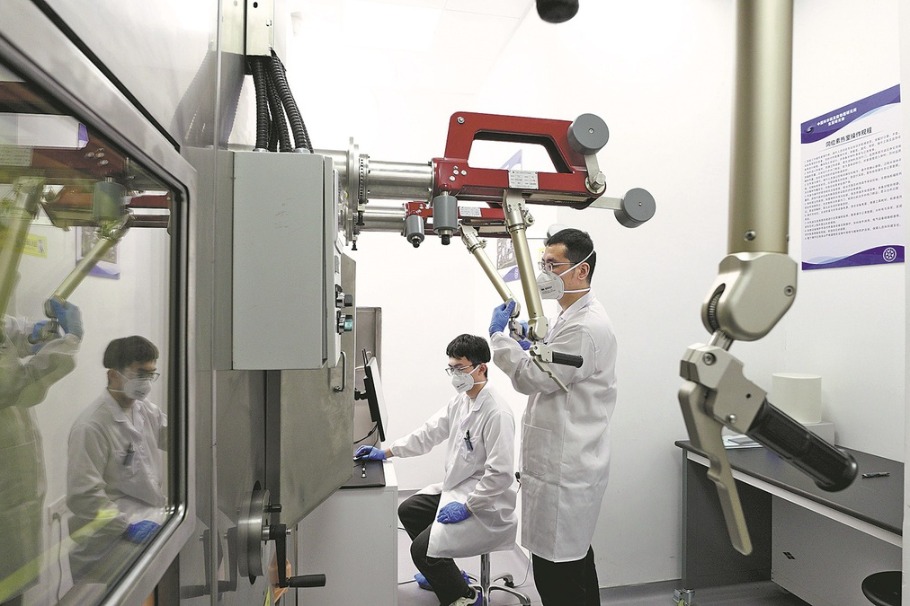
    Historically, medical alpha isotopes have been produced almost exclusively in nuclear reactors. But the CSNS research team developed an innovative alternative approach using a high-energy linear accelerator. By directing a high-powered proton beam at a target constructed from thorium, a naturally occurring abundant metal, researchers are able to extract the exact isotopes required for clinical use.

    Dai Xiongxin, who leads the project’s industrialization initiative, explained that this new production method offers multiple advantages over traditional reactor-based production. It eliminates the need for highly enriched uranium, a material that carries inherent nuclear proliferation risks, making the process both safer and more cost-effective. “It offers flexible production capacity, broader access to raw materials, and significantly lower costs,” Dai noted.

    Rigorous quality testing has confirmed that the domestically produced isotopes achieve a purity level of over 99%, matching the high quality standard of imported international supplies. The project does face one key logistical challenge, however: alpha isotopes have extremely short half-lives, decaying within days or even hours of production, making long-term storage and long-distance transportation impossible. To overcome this barrier, the CSNS center signed a strategic cooperation agreement with the China Isotope & Radiation Corporation over the weekend to build a complete localized industrial chain for production and distribution in Guangdong province.

    A purpose-built dedicated production line is currently under construction at the site. Once the facility reaches full operational capacity by 2031, it is projected to produce enough isotopes to supply nearly 1 million patient treatments per year, marking a major leap forward in China’s quest for self-sufficiency in advanced medical resources and expanding access to life-saving cancer care across the country.

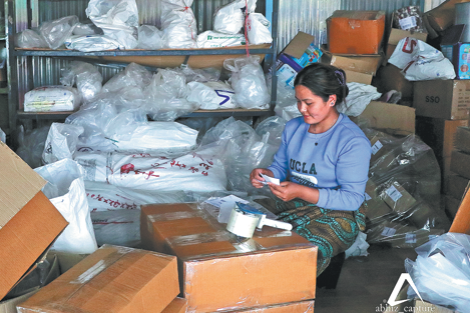
  • 132,000 jobs at risk as Nepal graduates from ‘least developed status’

    132,000 jobs at risk as Nepal graduates from ‘least developed status’

    In November 2026, Nepal will complete its long-awaited transition out of the United Nations’ Least Developed Country (LDC) classification and move up to developing country status — a milestone widely seen as confirmation of a nation’s developmental progress. But a new analysis from the International Labour Organization (ILO) released on March 16 warns that this landmark shift comes with substantial near-term economic and employment risks: up to 132,000 existing jobs could be lost over five years, with total economic losses reaching nearly $1 billion. The report breaks down projected losses evenly by gender, with 67,000 jobs for men and 65,000 for women expected to disappear, almost entirely driven by shrinking export volumes that will follow the expiration of trade preferences exclusively reserved for LDCs.

    The manufacturing sector, Nepal’s largest export-driven employer, will bear the brunt of the impact: the *Employment Impact Assessment on Nepal’s LDC Graduation* estimates that roughly 142,000 manufacturing positions will face disruption, placing urgent pressure on the Nepali government to both offset existing losses and create new, stable roles to replace them. What makes the outlook particularly concerning for gender equity is that women, who already face far lower labor force participation rates across Nepal, will see a proportional share of losses. Urban areas will see steeper job declines than rural regions, with urban women facing twice the rate of job loss as their male counterparts. This imbalance, the report warns, could trigger reverse migration of displaced female workers from cities back to rural communities, where work is overwhelmingly informal, low-productivity, and frequently unpaid, deepening the economic precarity of already vulnerable groups.

    Key export-reliant sub-sectors including apparel, textiles, and handwoven carpets are most exposed to losses, as these industries already contend with steep domestic transport costs and cutthroat global competition. Overall, the report projects total export losses will equal between 2.5% and 4.3% of Nepal’s total annual export value, varying by target market and product category.

    Numan Ozcan, ILO’s country director for Nepal, framed the upcoming 2026 graduation as a critical turning point for the South Asian nation, but emphasized that the milestone is just the start of a challenging new phase. “It is a transition into a more competitive environment with fewer international support measures and higher expectations,” Ozcan said. “That can sound very technical, but it can also become very real and very personal. Maybe not for the people sitting in this meeting room, but for business owners, factory workers, and workers in small shops, hotels, transport or the informal economy. It can become very real and personal.”

    The ILO’s analysis does not only outline risks, however: through simulated policy testing, the report found that targeted strategic investments can fully offset projected GDP losses and create new employment to replace the roles lost. The most promising areas for intervention, the report notes, include upgraded trade facilitation infrastructure, expanded investment in the tourism sector, and deliberate growth of the information and communications technology (ICT) industry. The organization stressed that the success of these mitigation efforts will hinge entirely on proactive policy design and timely implementation ahead of the November graduation date, urging the Nepali government to begin preparations immediately to secure a smooth transition. Ultimately, Ozcan said, the true test of Nepal’s graduation will not be the milestone itself, but whether the country can convert its new developing country status into sustained, inclusive growth: “The real test is how Nepal can translate graduation into better jobs, stronger enterprises and greater economic security for everyone.”