
As England’s senior men’s national team wraps up its final pre-tournament friendly camp ahead of this summer’s World Cup, head coach Thomas Tuchel has cast uncertainty over the future of standout Manchester City attacker Phil Foden, confirming the playmaker has not locked in a place on his final squad list. Foden featured in both of England’s exhibition matches during the final selection camp, which ended with mixed results for the Three Lions: a 1-1 draw with Uruguay last Friday, followed by a surprising 1-0 home defeat to Japan at Wembley Stadium on Tuesday. The 25-year-old City talent shifted between attacking roles across the two games, lining up as a conventional number 10 against Uruguay before moving into the unconventional “false nine” position against Japan. While Tuchel praised Foden’s work ethic and performance behind the scenes during the training camp, telling reporters the player had been “excellent in camp”, he acknowledged that Foden has struggled to translate that strong form into on-pitch results during the friendlies. The German manager made clear that Foden’s place on the plane to the World Cup is far from a sure thing, saying bluntly, “Well, it’s not a guarantee that he will come.” Foden is not the only attacking talent facing an anxious waiting game. Young Chelsea attacker Cole Palmer also failed to put in a performance that would cement his selection during Tuesday’s match against Japan. With other in-form options including Jude Bellingham and Morgan Rogers competing for spots in the attacking midfield group, both Palmer and Foden will have to wait to learn whether they will get the call-up to the 2026 World Cup squad. This pre-tournament selection drama comes amid heightened scrutiny of Tuchel’s roster choices, as England looks to mount a strong run in the upcoming global tournament after inconsistent results in recent international outings.
博客
-

Israeli soldiers given Temple-themed board game ahead of Passover
Against a backdrop of escalating regional conflict and growing religious nationalist rhetoric within Israeli society, a group of Israeli army reservists has independently developed and distributed a Temple-themed board game to fellow service members ahead of the 2026 Passover holiday, the Israeli military has confirmed. First reported by Israeli journalist Or Kashti in a social media post on March 31, the game, titled *From Egypt to Jerusalem*, centers on a core objective: guiding players from a starting point representing Egypt across a game board dotted with religious, national, and military imagery to reach the site of the ancient Jewish Temple in Jerusalem. The game’s instructions open by inviting players to “choose a route from Egypt” and advance along the path toward Jerusalem, closing with the traditional Passover refrain “Next year in Jerusalem” that anchors the holiday’s liturgy. Passover, one of the most sacred observances in the Jewish calendar, commemorates the biblical narrative of the Israelites’ escape from enslavement in ancient Egypt to seek freedom in the land of Israel, which this year began on the evening of Wednesday last week, coinciding with the game’s distribution. As players move across the board, they land on “revival” spaces adorned with Jewish and Israeli national symbols alongside military graphics, and can draw special cards marked “miracles and heroism.” Additional gameplay challenges included whimsical but politically charged tasks such as standing on one foot to share a positive recent event for the Israeli people, and performing a skit of a phone call between the biblical Pharaoh and Iran’s president, according to details shared in Kashti’s post. The game board also bears the logo of the Har Tzion battalion in the IDF’s Jerusalem brigade, indicating formal organizational connections between the creators and the unit. But not all spaces on the board carry positive framing: other squares depict figures labeled as historical and modern enemies of Israel, ranging from ancient adversaries like the Babylonians and Crusaders to contemporary political leaders. Those named include Turkish President Recep Tayyip Erdogan, assassinated Hezbollah secretary-general Hassan Nasrallah, a Hamas fighter, and recently killed Iranian supreme leader Ali Khamenei. The game’s text echoes another core Passover liturgical phrase: “In every generation they rise up to destroy us,” a line that has been recontextualized for modern political messaging in recent years. When contacted for comment by Middle East Eye, an Israel Defense Forces spokesperson clarified that the game was not an official military initiative. “It was created by reservists on their personal initiative,” the spokesperson said, distancing the institution from the project. The emergence of this privately made military-themed religious game comes amid a well-documented rise in religious nationalist rhetoric and symbolism across Israeli society and within the military, against the backdrop of the ongoing 2025 U.S.-Israeli military campaign against Iran. Just one month prior, during the Jewish holiday of Purim, many Israelis framed the ongoing conflict through a religious lens, drawing parallels between the war against Iran and the biblical Purim narrative of overcoming a Persian threat to Jewish communities. Israeli Prime Minister Benjamin Netanyahu has explicitly integrated Passover religious imagery into public remarks about the war against Iran. In comments last month ahead of the holiday, Netanyahu declared: “On the eve of this Festival of Freedom, Israel is stronger than ever.” He went on to rework the iconic Passover line cited in the board game: “In every generation they rise up to destroy us, and in this generation, the regime of the ayatollahs made a massive effort to annihilate us, to take over the Middle East, and to threaten the entire world,” he said, adding that the joint U.S.-Israeli assault was “crushing Iran.” He even invoked the biblical story of the ten plagues of Egypt, stating “We have dealt ten plagues upon the Axis of Evil.” At the time of reporting, the scale of the game’s distribution remains unconfirmed. The development also arrives alongside ongoing shifts in the long-standing status quo at the Al-Aqsa Mosque compound in occupied East Jerusalem, a site sacred to both Muslims (as one of Islam’s holiest sites) and Jews (who refer to it as the Temple Mount, the location of the ancient Jewish First and Second Temples). Last month, Israel extended the closure of the compound, and since far-right Israeli National Security Minister Itamar Ben Gvir took office in 2022, the site has seen a sharp increase in the number of Jewish nationalist visitors and worshippers entering the complex, a practice that violates the decades-old status quo agreement, which restricts Jewish prayer at the site to preserve Muslim administrative control. The increased prominence of religious symbolism within the Israeli military also tracks back to the start of the 2023 Gaza war, with growing reports of religious nationalist messaging among active-duty soldiers. Just last month, a CNN reporting team was detained by Israeli soldiers while covering the establishment of a new unauthorized settler outpost in the Palestinian village of Tayasir in the occupied West Bank. Footage from the encounter captured one soldier openly boasting about plans to take revenge against Palestinians, while a second soldier was seen wearing a patch referencing the Jewish Messiah on his uniform – a practice the Israeli army officially banned for all service members last year. Middle East Eye, which first published this report, provides independent on-the-ground coverage of the Middle East and North Africa region.
-
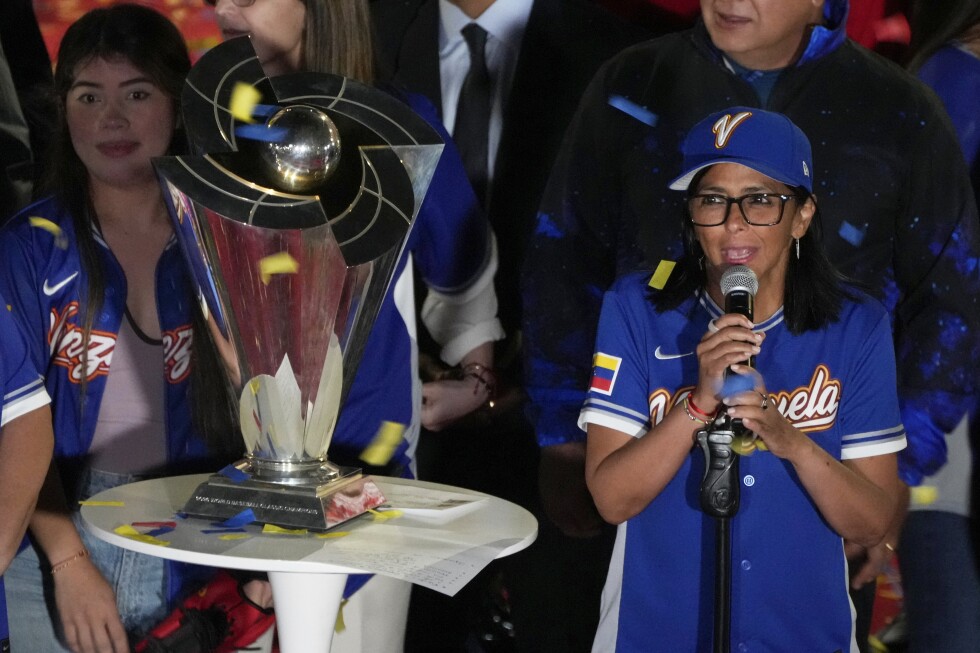
US lifts sanctions on Venezuela’s acting President Delcy Rodríguez
On Wednesday, the United States formally removed sanctions against Venezuela’s interim acting president Delcy Rodríguez, according to a public notice published on the Treasury Department’s Office of Foreign Assets Control (OFAC) official website. This latest sanctions rollback marks the most recent step in Washington’s formal recognition of Rodríguez as a legitimate governing authority in Venezuela, coming two and a half months after U.S. military forces captured former Venezuelan president Nicolás Maduro and his wife in Caracas, the country’s capital, on January 3.
Following their capture, the couple was extradited to New York City to face federal drug trafficking charges, and both have entered not guilty pleas in court. The lifting of sanctions clears regulatory barriers that previously barred Delcy Rodríguez from engaging in formal commercial and diplomatic dealings with U.S. firms and investors, opening new pathways for bilateral collaboration between the interim Venezuelan government and Washington.
Though Rodríguez did not explicitly reference the now-rescinded sanctions targeting her personally in her public comment, she framed the U.S. decision as a promising milestone for bilateral ties between the two nations. In a statement posted to her official Telegram channel shortly after OFAC’s announcement, Rodríguez said, “We value President Donald Trump’s decision as a step toward normalizing and strengthening relations between our countries. We trust that this progress will allow for the lifting of current sanctions against our country, enabling us to build and guarantee an effective bilateral cooperation agenda for the benefit of our people.”
This policy reversal represents a notable shift from the Trump administration’s first term, when both Delcy Rodríguez and her brother, National Assembly president Jorge Rodríguez, were placed under U.S. sanctions for their alleged roles in eroding democratic governance in Venezuela. The siblings, along with other close allies of Maduro, were added to OFAC’s sanctions blacklist in September 2018, just months after Maduro won a controversial re-election that was widely dismissed as illegitimate by the international community. The vote was boycotted by major opposition parties, and dozens of opposition candidates were barred from running for office. At the time of the 2018 designation, the Treasury Department said in an official statement that “Maduro has given Delcy Eloina Rodríguez Gomez and Jorge Jesus Rodríguez Gomez senior positions within the Venezuelan government to help him maintain power and solidify his authoritarian rule.”
Following Maduro’s removal from office in January’s U.S.-led military operation, the current Trump administration has opted to pursue collaboration with Delcy Rodríguez rather than align with traditional Venezuelan opposition factions. Since taking over as interim head of state, Rodríguez has overseen implementation of a Washington-backed phased economic recovery plan for the oil-rich nation. She has actively courted international investment, rolled out reforms to open Venezuela’s markets to private capital, and committed to binding international arbitration and greater regulatory transparency for foreign businesses.
Last month, the Trump administration formalized its recognition of Rodríguez’s authority by backing her claim as the “sole Head of State” of Venezuela during ongoing civil proceedings in U.S. federal court. The lifting of sanctions on Delcy Rodríguez is part of a broader rollback of punitive measures targeting Venezuela’s key economic sectors. In March, OFAC issued a sweeping general license that allows state-owned oil giant Petróleos de Venezuela S.A. (PDVSA) to sell crude oil directly to U.S. buyers and on global commodity markets, a dramatic policy shift after years of near-total U.S. restrictions on dealings with the Venezuelan government and its critical oil sector.
Despite Maduro’s ouster and detention, his legal status as Venezuela’s sitting president remains unaltered under Venezuelan domestic law. Within hours of the January 3 operation, Venezuela’s ruling party-aligned Supreme Court declared Maduro’s absence from office “temporary,” a ruling that eliminates the legal requirement to hold a snap presidential election and preserves the official immunity Maduro holds under international law as a sitting head of state. The court’s order installed Delcy Rodríguez as interim president for an initial 90-day term, with a provision allowing the National Assembly — which is controlled by the ruling party and led by her brother Jorge — to extend the appointment to a maximum of six months. That initial 90-day term is set to expire this Friday.
-

Gu Ailing: Women are able to empathize, listen, and unify in a uniquely feminine way
Hong Kong’s fourth annual Women Power Forum convened this Wednesday in the city’s Sheung Wan district, bringing together a cohort of trailblazing women leaders from diverse fields to discuss gender equity, collective progress and the evolving role of women in global communities. In a post-speech interview with China Daily, Olympic freestyle skiing champion and youth advocate Gu Ailing shared her reflections on the gathering, expressing deep gratitude for the rare chance to exchange insights and draw wisdom from the esteemed female leaders in attendance.
As one of the youngest prominent voices in global sports and public advocacy, Gu emphasized that she brings a fresh, youthful perspective to conversations about women’s empowerment, and remains committed to continuous learning from peers and veteran leaders alike. She went on to spotlight a set of distinctive strengths rooted in feminine experience: the innate ability to empathize deeply with others, listen actively across differing perspectives, build meaningful connections across divides, and unify diverse groups around shared, positive goals.
The forum, focused on elevating women’s influence in public and private spheres, provided a platform for attendees to explore how these unique feminine qualities can help address pressing social and political divides, foster more inclusive decision-making, and drive more compassionate, collaborative progress across communities.
-
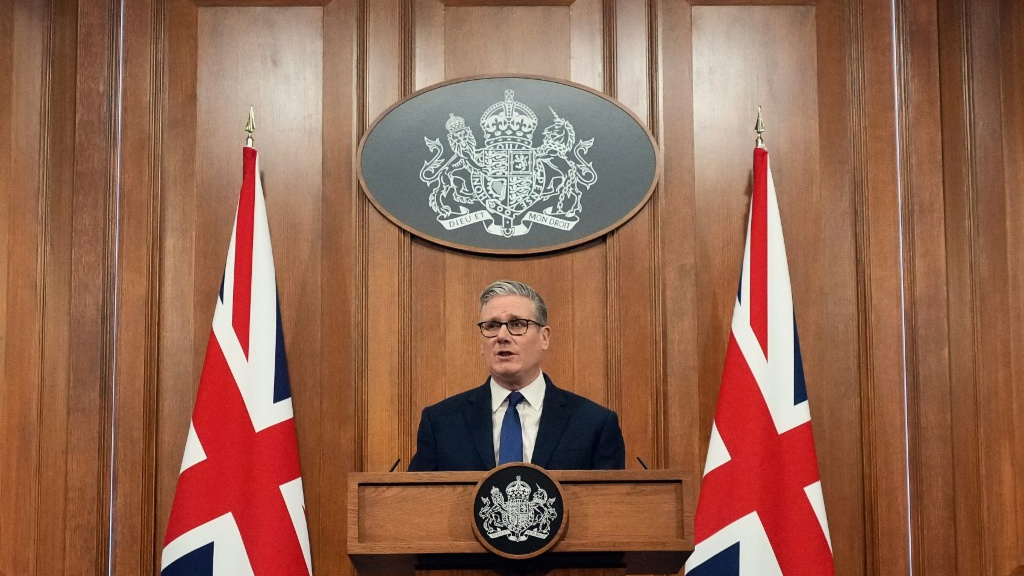
Starmer insists ‘this is not our war’ as Iran weighs up attacking UK bases
As the conflict between the US-led coalition and Iran enters another week, British Prime Minister Keir Starmer has delivered a televised address to the nation seeking to ease widespread public anxiety over the UK’s potential entanglement in the war. Standing behind a Downing Street podium on Wednesday morning, flanked by two Union Jacks and clad in a somber blue tie, the prime minister appeared visibly fatigued and grave as he addressed the unfolding crisis in the Gulf region.
Starmer’s speech shifted between moments of calm reassurance, expressions of sympathy for those affected by escalating tensions, and weighty, often abstract warnings about the historic stakes of the current conflict. Opening with a message of resolve, he told the British public: “No matter how fierce this storm, we are well placed to weather it.”
The core policy announcement of the address was the formation of a 35-nation unified coalition dedicated to protecting maritime security in the Gulf waters. Starmer confirmed that UK Foreign Secretary will host the first in-person gathering of coalition members later this week, with the explicit goal of securing unimpeded, safe access to the Strait of Hormuz — the strategically critical chokepoint currently held under de facto Iranian control. Acknowledging the challenge ahead, Starmer admitted: “This will not be easy.”
Throughout the 20-minute address, the prime minister repeatedly pushed back against growing public fears that the UK would be pulled into active combat. “People worry that the UK will be dragged into this,” he said. “We won’t. This is not our war. We will not be drawn into the conflict.”
The address comes amid significant pressure on Starmer from former US President Donald Trump, who has spent weeks publicly mocking and criticizing the British leader for his initial hesitation to back the US-Israeli operation against Iran. Wednesday’s speech was widely seen as an attempt to balance defiance against US pressure with reassurance for a war-weary British public.
But Starmer’s insistence on UK neutrality has left many Britons confused, given the critical role British territory plays in US military operations against Iran. RAF Fairford, a Royal Air Force base located in southwest England’s Gloucestershire, has become a key launching pad for US strikes targeting Iranian military infrastructure. As of the start of this week, 23 long-range US bombers are stationed at the base, which the US has been permitted to use for strikes against Iranian missile sites and offensive operations intended to open the Strait of Hormuz, a deployment that entered its second week this week.
Just hours before Starmer’s address, Iran’s ambassador to the UK, Seyed Ali Mousavi, told Times Radio that Tehran was actively considering retaliatory strikes against British bases hosting US forces. A week and a half earlier, Iranian Foreign Minister Seyyed Abbas Araghchi had already warned the UK’s foreign secretary that allowing the US to use British soil for military action amounted to “participation in aggression.” Speaking Wednesday, Mousavi called the UK’s position “very unfortunate.”
Beyond the question of military involvement, Starmer sought to manage public expectations around the economic fallout of the crisis, pushing back against optimistic claims from Donald Trump that the war is nearly over. Trump, who on Tuesday publicly told the UK to “go get your own oil” and insisted the US would not assist European allies in re-opening the Strait of Hormuz, has framed the conflict as nearing a successful conclusion. Starmer pushed back against that optimism, telling the public: “I don’t think it can necessarily be assumed that a de-escalation of the conflict at the same time brings a reopening of the Strait of Hormuz.”
On the topic of domestic energy costs, which have been rocked by Gulf conflict volatility, Starmer confirmed that existing government support measures remain in place: a four-month cap on household energy bills and a freeze on fuel duty lasting until September. He claimed the government was “ahead of the game” in responding to price swings, and deflected repeated questions from reporters about whether he would follow Australian Prime Minister Anthony Albanese’s lead, who earlier the same day urged his citizens to reduce fuel consumption by switching to public transport where possible. “I’m sick and tired of your energy bills fluctuating up and down,” Starmer said. “We’re taking back control of our energy security by investing in clean British energy.”
The prime minister also used the crisis to announce a vague long-term strategy, promising that the UK would not return to “business as usual” after the conflict ends. “This time will be different,” he pledged, revealing that the government has drafted a “long term plan to emerge from this war a stronger and more secure nation” — though he offered no specific details on what the plan entails. “How we emerge from this crisis will define us for a generation,” he said. For Starmer, the immediate political priority remains upcoming local elections scheduled for May, as the prime minister balances national crisis management with domestic political pressures.
-
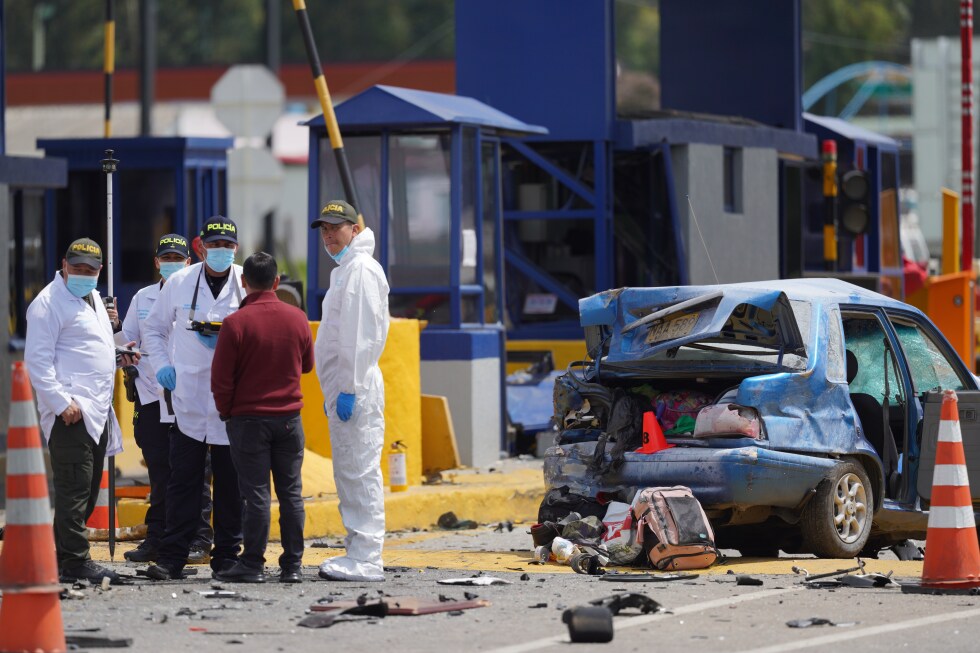
A road accident in Colombia involving several vehicles kills at least 2 people and injures 19
A devastating early-morning collision at a highway toll station in central Colombia has left at least two people dead and 19 others injured, local regional authorities confirmed Wednesday. The multi-vehicle crash unfolded approximately 31 miles north of Colombia’s capital city Bogotá, on a heavily traveled artery in the Cundinamarca department, according to regional governor Emilio Rey, who shared details of the incident on social platform X.
Rey explained that the chain reaction crash was triggered when a milk delivery truck suffered total brake failure, barreling into the line of stopped vehicles waiting to pay tolls. The out-of-control truck slammed into six passenger vehicles and one motorcycle already positioned at the booth, sparking a series of powerful explosions that engulfed multiple vehicles in intense fire. Eyewitness accounts and footage from the crash site confirm multiple blasts that left most of the involved vehicles completely destroyed by flames.
Local media footage captured chaotic, harrowing scenes at the site: bystanders tearfully worked to extract trapped survivors from mangled wreckage, while thick black smoke billowed from burning vehicles. Hollman Osma, one witness who was at the toll booth when the crash occurred, described the sudden, shocking event to local news outlet Noticias Caracol. “I saw when the truck went through the toll booth, then there was an explosion, it overturned, and there were strong explosions and vehicles burning,” Osma said. “There was absolutely nothing that could be done.”
In response to the disaster, emergency services mobilized a large contingent to the crash area: at least 11 ambulances, alongside teams of firefighters and law enforcement officers, were dispatched to conduct search and rescue operations and transport the injured to medical facilities. All injured victims are currently receiving care at hospitals in surrounding communities, though Governor Rey has not yet released further information on the severity of their injuries or their current prognosis. As of Wednesday afternoon, the highway remained fully closed to through traffic while investigators work to document the crash site and clear wreckage from the road.
-
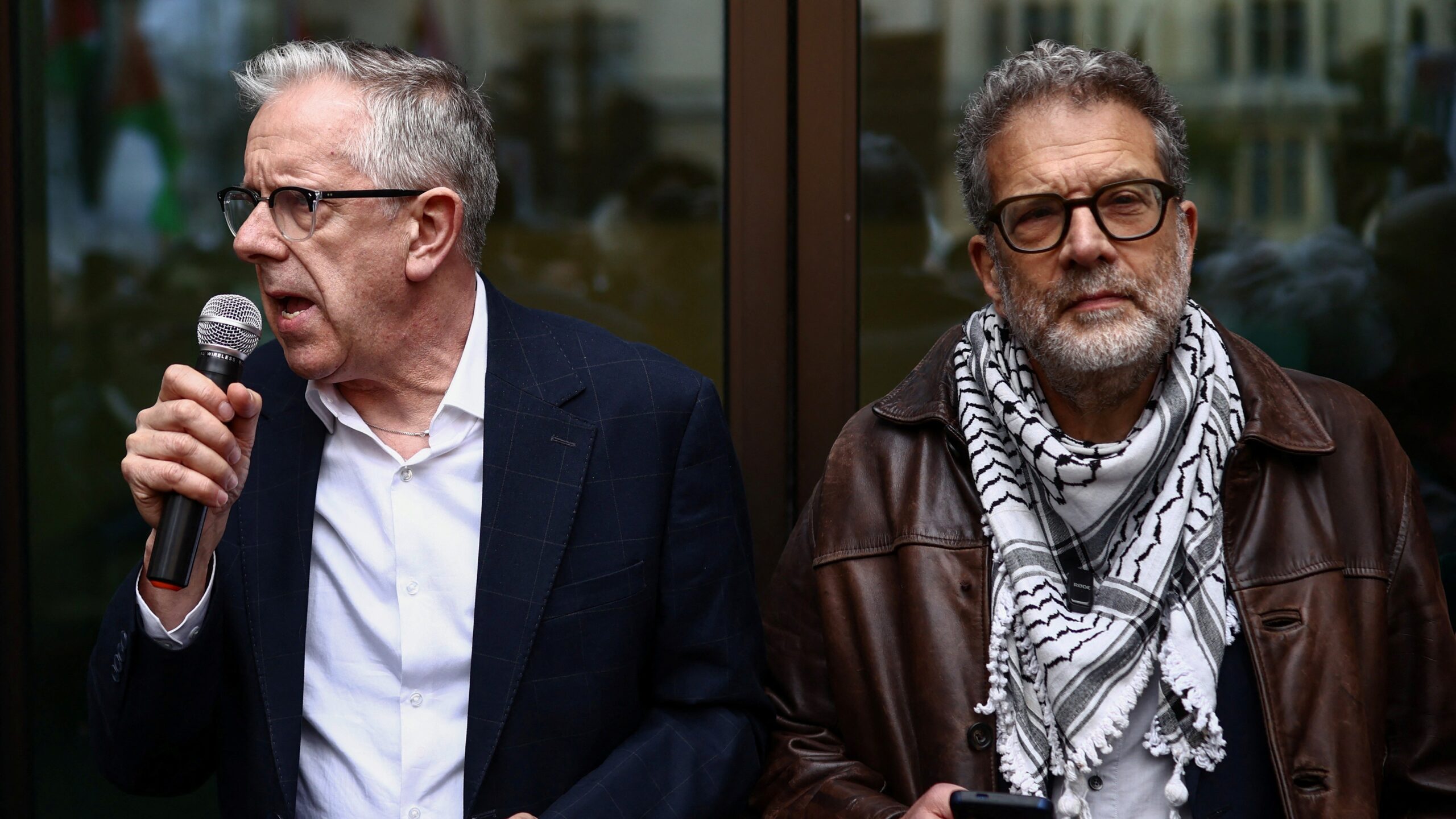
Palestine protest organisers found guilty of breaching police restrictions
In a high-profile verdict that has reignited debates over protest rights and the criminalization of pro-Palestine activism in the United Kingdom, two veteran movement leaders have been convicted of violating police-imposed restrictions stemming from a major January Gaza war protest in central London. Chris Nineham, 62, vice-chair of the Stop the War Coalition, and Ben Jamal, 61, chair of the Palestinian Solidarity Campaign (PSC), were found guilty on two counts of breaching the UK Public Order Act following a three-day trial at Westminster Magistrates’ Court on Wednesday.
The case traces back to a mass national demonstration organized by a coalition of pro-Palestine advocacy groups, which had planned a march from a starting point outside the BBC’s headquarters to protest what organisers decry as the outlet’s pro-Israel media bias in its coverage of the Gaza conflict. The route was first publicly announced in late November 2024, and received initial approval from the Metropolitan Police. However, following objections from pro-Israel groups, Chief Rabbi Ephraim Mirvis, and multiple sitting Members of Parliament, police revised the permit, relocating the starting point over concerns about its proximity to a nearby synagogue. On the day of the protest, police imposed a last-minute additional restriction that converted the planned march into a static demonstration confined to Whitehall.
The two activists were arrested after a small contingent of demonstrators left the static rally to travel to Trafalgar Square to lay flowers in honor of children killed in Gaza. Prosecutors argued that protesters deliberately forced their way through a police cordon after the rally ended, and that Jamal delivered a speech that incited the crowd to defy the legally imposed restrictions.
Delivering the ruling, District Judge Daniel Sternberg upheld the prosecution’s position, ruling that the police’s restrictions were lawful, issued under valid statutory powers, and based on a reasonable assessment of risks including large crowd size (estimated by PSC itself at 100,000 attendees) and potential disruption to local businesses and worshippers at nearby synagogues. Sternberg stated that Jamal’s speech amounted to incitement, framing it as deliberate persuasion and inducement to encourage attendees to breach the imposed conditions. He also rejected a defense application to dismiss the case entirely.
During the trial, the defense mounted a vigorous challenge to the prosecution’s narrative. Mark Summers KC, representing Nineham and Jamal, argued the entire case was unlawful, citing a previous Court of Appeal ruling that found legislation granting police unlimited power to restrict protests was enacted outside legal bounds. Body-worn police footage played in court revealed significant operational chaos among officers on the ground: one officer was captured referring to the police response as a “massive clusterfuck,” while another can be heard shouting orders to withdraw as the cordon was overwhelmed by crowd density. Summers emphasized the footage undermines claims of a premeditated breach, instead showing inconsistent communication, poor planning, and reactive policing that failed to manage the large demonstration. He also noted that multiple video recordings from the day show police themselves ushered organisers through police lines, contradicting the prosecution’s version of events.
Outside the courthouse following the verdict, both Nineham and Jamal announced they would immediately appeal the conviction, framing the ruling as a major blow to civil liberties in the UK. Nineham described the verdict as part of a systemic campaign to criminalize the pro-Palestine movement, saying: “This is clearly part of an ongoing criminalisation of the Palestine movement in which people protesting against a genocide are being targeted by a British establishment that is colluding with it. It is an attempt to send a chilling message across society that people shouldn’t risk protesting – it is an attempt that will not stop us.”
Jamal echoed the criticism, noting the judge’s acknowledgment that the pair had previously possessed good character, which the conviction now revokes. He responded by referencing a core moral question from Palestinian activists: “What did you do when Gaza was going through a genocide? History will judge which of us stood on the right side of history. Chris and I will not be silenced. You will not be silenced. This movement will not be silenced.”
The verdict drew widespread condemnation from across UK left-wing politics. Labour MP John McDonnell, who was arrested alongside the two organisers on the day of the protest, called the ruling a “grotesque” attack on civil liberties. Former Labour leader Jeremy Corbyn, now leader of the left-wing Your Party and a longstanding critic of UK foreign policy in the Middle East, described the decision as “disgusting,” and reiterated calls for the UK to end its military and political support for Israel and U.S. operations in the region.
The January protest was one of more than 20 national pro-Palestine demonstrations held across the UK since the outbreak of the Gaza war in October 2023, all calling for an immediate ceasefire and an end to British state backing for Israel’s military campaign.
-
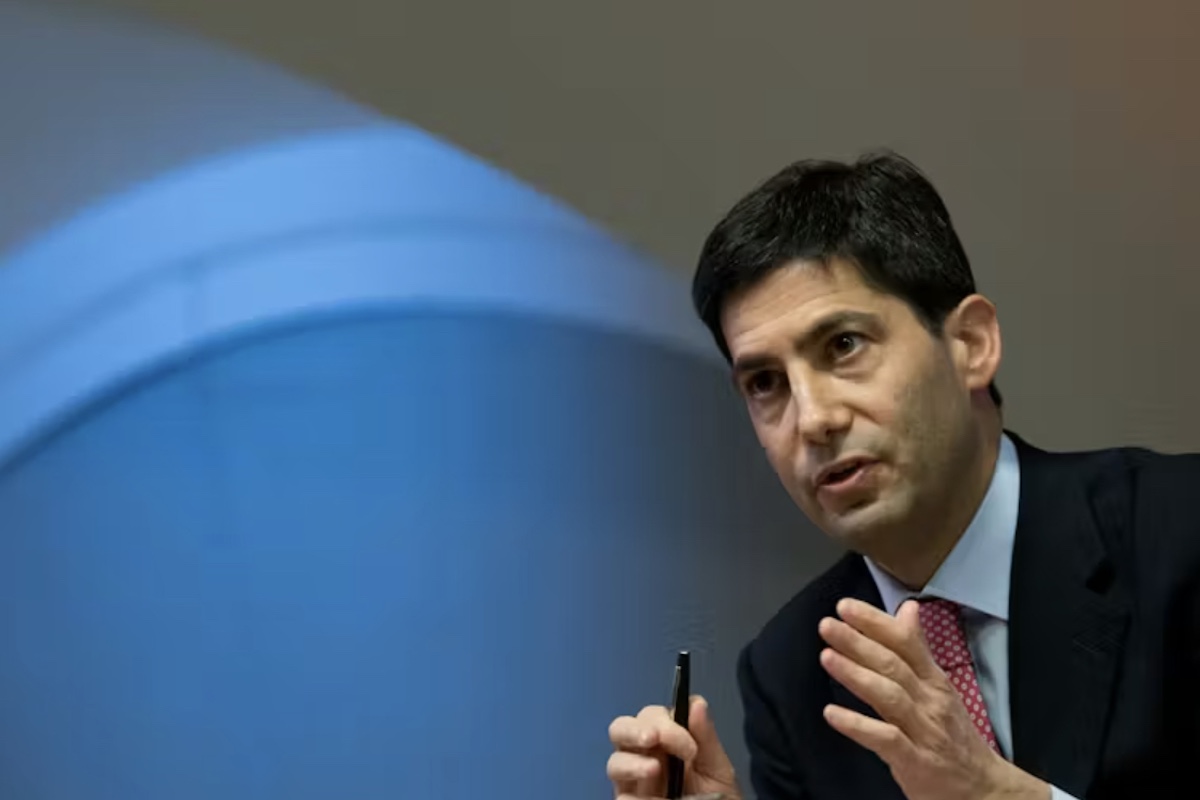
Trump Fed pick Warsh eyes a ‘family fight’ shakeup
When former U.S. President Donald Trump named Kevin Warsh as his pick for Federal Reserve Chair on January 30, 2026, global financial markets immediately zeroed in on one prevailing question: Would the long-time inflation hawk retain his tough stance on price growth, or would he bend to the president’s long-standing demand for lower benchmark interest rates?
But two New York University economists argue that this widespread focus misses the bigger, underdiscussed story. Drawing on decades of peer-reviewed research on central banking practice and an extensive 2023 interview with Warsh conducted for an upcoming book on the Federal Reserve, the pair argue that the most transformative change under Warsh’s leadership would not be shifts in interest rate levels, but an overhaul of how the Fed conducts internal deliberations and communicates its policy decisions to the public.
The 2023 interview revealed two core throughlines in Warsh’s thinking on central banking. The first, a long-stated commitment to anchoring price stability, aligned with market expectations. The second, however, offered surprising insight into his policy priorities: a deep desire to reimagine the Fed’s current framework for internal policy debate and public communication.
During the conversation, Warsh shared a formative anecdote from 2006, when he was first nominated to the Fed’s Board of Governors and sought guidance from legendary former Fed Chair Paul Volcker. Volcker’s first instruction was to set interest rates “about right” — a phrase Warsh says acknowledges the unavoidable reality that policymakers can never calculate the exact optimal policy rate with perfect precision, given the complexity of the U.S. economy.
But Volcker shared a second, far more important lesson that has stayed with Warsh: Always project confidence and intentionality in the Fed’s actions. For Warsh, this framing underscores a core truth of modern central banking: setting policy is only half the job; the other half is framing outcomes as the product of rigorous, thoughtful deliberation to maintain public and market confidence.
Warsh has long advocated for what he calls the “family fight” model of monetary policymaking: robust, unfiltered disagreement among committee members behind closed doors, followed by a unified public message once a final decision is reached. He pointed to the 2007-2009 financial crisis under then-Chair Ben Bernanke as a successful example of this approach: heated debates unfolded in the chair’s office until the Federal Open Market Committee (FOMC) reached a consensus, after which all members spoke with one cohesive voice to markets. For large, systemically important institutions — particularly during periods of economic crisis — projecting a unified public stance is non-negotiable, Warsh argues.
This framework shaped Warsh’s 2014 policy review for the Bank of England, where he recommended that policy meetings open with unrecorded, off-the-record discussion to enable this type of open debate. His core concern is that the current norm of releasing full meeting transcripts years after the fact changes how policymakers speak: when officials know their words will eventually face public scrutiny, they tend to hedge their positions and avoid blunt, honest takes rather than sharing unvarnished perspectives. This dynamic, he argues, weakens the quality of decision-making by discouraging genuine debate.
Warsh’s stance represents a sharp break from the Fed’s 30-year trajectory toward greater transparency, a shift that policymakers have framed as critical to reducing market uncertainty, anchoring economic expectations, and improving policy effectiveness. The shift began in 1994 under then-Chair Alan Greenspan, when the Fed first started publicly announcing its interest rate decisions — a major break from decades prior, when markets were forced to infer policy shifts from the Fed’s open market operations. Bernanke expanded this transparency push after the 2008 crisis, introducing quarterly press conferences, forward guidance on future interest rate moves, and the publication of FOMC members’ interest rate projections, widely known as the “dot plot.” Subsequent chairs Janet Yellen and Jerome Powell retained this framework, with Powell holding a press conference after every FOMC meeting and working to replace cryptic “Fed speak” with clear, accessible language. Today, the Fed is far more transparent than at any point in its history, regularly explaining both its decisions and its interpretation of broader economic trends.
Warsh, however, remains deeply skeptical of this push for ever-greater transparency. In the 2023 interview, he argued that publishing individual policymakers’ projections encourages a “troubling convergence of views” that stifles genuine, productive disagreement within the FOMC. In his view, short-term economic forecasts offer limited practical benefit while subtly biasing how officials think about future policy, locking in consensus before new data can shift perspectives.
His critique extends to all forms of expansive central bank communication. He argues that oversharing policy intentions makes it harder for policymakers to adjust course when economic conditions change, noting that extensive pre-commitment to a policy path erodes a central banker’s “ability to change his mind.” For Warsh, a central bank that cannot adapt its position when new information emerges cannot be considered credible — and credibility, he argues, comes from adaptability, not rigid consistency, a stance that would put widely used tools like the dot plot into question.
The debate over Fed communication carries far more weight than many observers recognize, because modern financial markets respond just as much to central bank signals as they do to actual policy actions. Investors do not wait for rate changes to adjust their portfolios; they rebalance holdings based on expectations of future Fed moves. Proponents of current transparency practices argue forward guidance and published projections reduce volatility by helping markets anticipate policy shifts.
A shift toward Warsh’s model would not inherently push interest rates higher or lower, but it would almost certainly make policy less predictable — even though the unified public stance he favors would offset some of that uncertainty. Markets would likely become more sensitive to incoming economic data, as fewer explicit signals about the Fed’s long-term intentions would be available to price in.
These impacts stretch far beyond Wall Street trading floors. Mortgage rates, corporate investment plans, and business hiring decisions all rely on expectations of future borrowing costs. The current framework of clear communication stabilizes these expectations, while a shift toward greater policymaker discretion would give the Fed more flexibility to respond to unexpected economic shocks.
Based on his 2023 comments, Warsh’s priority would be to trade some of that current predictability for greater policy adaptability. Under his leadership, the public would likely receive less explicit guidance about where policy is heading, but policy could adjust faster when economic conditions shift.
The authors note that they cannot predict whether Warsh would push for lower rates or stick to Volcker’s mantra of getting policy “about right.” But Warsh’s own public and private comments make clear that his first priority would be reshaping how the Fed debates, signals, and defends its policy decisions — and in modern central banking, changing how the Fed communicates can ultimately change the very nature of policy itself.
-
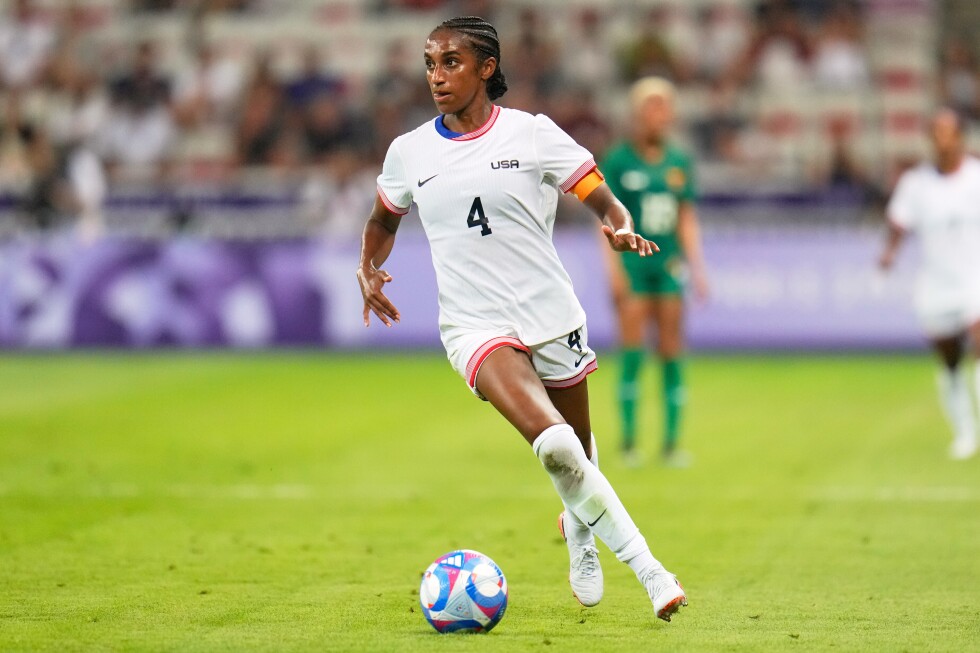
Naomi Girma set to return home to San Jose for USWNT match against Japan
For the first time since the 2023 FIFA Women’s World Cup send-off series, Northern California native Naomi Girma will pull on the United States women’s national soccer team jersey in front of her hometown crowd this April, a homecoming USWNT head coach Emma Hayes made official with her roster announcement Wednesday.
Girma, who was born in San Jose and rose to collegiate stardom at nearby Stanford University, is named to the 26-player squad for the U.S. team’s three-game friendly series against reigning Asian Cup champions Japan. The series kicks off April 11 at San Jose’s PayPal Park, a ground just minutes from where Girma grew up playing youth club soccer.
The 25-year-old defender’s last appearance on a national team roster in her home region came in a 2-0 pre-World Cup win over Wales in 2023, and she called the upcoming match a surreal, deeply meaningful opportunity. “Playing for the national team in the Bay always just feels like kind of surreal,” Girma said. “Seeing a lot of people who come to support me, who were there when I was playing club soccer, just playing for fun, and being like, ‘Wow, I can’t believe that we’re all here and we’ve made it this far.’ So it always is really special for me.”
Girma’s career has reached new heights since her last hometown appearance. She made her USWNT debut in 2022, has earned 52 caps to date, and claimed a gold medal as part of the 2024 Paris Olympic roster. Earlier this year, she made a high-profile move to Women’s Super League side Chelsea in a $1.1 million transfer from NWSL’s San Diego Wave, and just last weekend she notched her first WSL goal in a dramatic 4-3 win over Aston Villa that pushed Chelsea into second place in the league table, just behind leader Manchester City.
Girma is not the only familiar Stanford product returning to the national team fold for this series. Her former collegiate teammate Sophia Sophia Wilson has earned her first USWNT call-up in 15 months, after stepping away from the game last year to welcome her first child. Experienced defender Tierna Davidson, who suffered an ACL tear last NWSL season, will also make her return to the squad after more than a year out of international play. The left-back last represented the U.S. in February 2025 before her injury, and Hayes confirmed Wednesday that Davidson will be on limited minutes for the series.
Wilson, who plays her club soccer with the Portland Thorns, was omitted from the recent SheBelieves Cup roster as she worked her way back to full match fitness following maternity leave. She has earned 58 caps for the USWNT, netting 24 goals including three during the Paris Olympic run. With 67 international caps to her name, Davidson’s return adds further depth to the U.S. defensive line, while Wilson’s comeback brings a proven attacking threat back to the pool.
Girma emphasized that the upcoming series against Japan will serve as a valuable measuring stick for the USWNT 15 months ahead of the 2027 Women’s World Cup hosted by Brazil. “They’re a great side, just won the Asian Cup,” Girma said. “I think they’re very organized in their defense, but then also in their attack and they bring something different to a lot of other opponents that we play. So I think it’s always a good test for us to measure ourselves against them.”
Looking ahead to the 2027 tournament, Girma said the combination of returning veteran players and the program’s ongoing integration of emerging under-23 talent has the team in a strong position. “Seeing a lot of younger players be able to come into a full team camp and not really miss a beat, and not seem like they don’t know what’s going on, or feel like it’s a little bit too much, I think that transition has become really smooth,” she explained. “And I think with having some players come back in that weren’t in last year, it’s a really exciting time for our team. We have a big pool who now has experience, whether it’s in the last year, in the last couple years, ready to fill any role that we need.”
After the opening match in San Jose, the series will travel to Seattle’s Lumen Field for the second fixture on April 14, before wrapping up on April 17 at Dick’s Sporting Goods Park in Commerce City, Colorado. The full roster, with position breakdowns and club affiliations, is as follows:
– Goalkeepers: Jane Campbell (Houston Dash), Claudia Dickey (Seattle Reign), Phallon Tullis-Joyce (Manchester United)
– Defenders: Tierna Davidson (Gotham FC), Emily Fox (Arsenal), Naomi Girma (Chelsea), Avery Patterson (Houston Dash), Lilly Reale (Gotham FC), Emily Sams (Angel City), Emily Sonnett (Gotham FC), Gisele Thompson (Angel City), Kennedy Wesley (San Diego Wave)
– Midfielders: Sam Coffey (Manchester City), Lindsey Heaps (OL Lyonnes), Claire Hutton (Bay FC), Rose Lavelle (Gotham FC), Olivia Moultrie (Portland Thorns), Jaedyn Shaw (Gotham FC), Lily Yohannes (OL Lyonnes)
– Forwards: Michelle Cooper (Kansas City Current), Jameese Joseph (Chicago Stars), Trinity Rodman (Washington Spirit), Emma Sears (Racing Louisville), Ally Sentnor (Kansas City Current), Alyssa Thompson (Chelsea), Sophia Wilson (Portland Thorns) -
Japanese scholar demands government apology over embassy intrusion
A senior Japanese academic and Sino-Japanese friendship leader is pressing the Japanese government to issue a formal public apology to Beijing over a deeply alarming breach of diplomatic protocol that took place in late March. Hisashi Inoue, honorary professor at Surugadai University and chairman of the Japan-China Friendship Association, has labeled the March 24 incident — where an active officer of the Japan Self-Defense Forces forced entry into the Chinese Embassy in Japan while armed with a knife — an extraordinarily severe violation of long-established international diplomatic norms. Inoue emphasized that the incident, which shocked diplomatic circles on both sides, constitutes a clear and grave breach of the 1961 Vienna Convention on Diplomatic Relations, a foundational international treaty that guarantees the inviolability of diplomatic mission premises and the safety of diplomatic staff. As of the report’s update on April 1, 2026, the Japanese government has not extended a formal apology to China over the intrusion, only issuing a vague expression of regret over the event. Inoue argues that this mild, indirect response is wholly insufficient to address the severity of the incident and the risks it poses to bilateral ties. The long-time advocate for friendly Japan-China relations is calling on Japan’s top elected leader, the prime minister, and the country’s defense minister to deliver a formal, public apology to the Chinese government over the unacceptable incursion.