博客

  • Baby killer Keli Lane’s schoolteacher partner to be reinstated after court action

    Baby killer Keli Lane’s schoolteacher partner to be reinstated after court action

    After 27 years of loyal service at one of Sydney’s most prestigious private high schools, a secondary teacher has secured a landmark legal victory after an independent workplace tribunal ruled his termination was harsh, unjust, and unreasonable.

    Patrick Cogan, the long-time partner of convicted baby killer Keli Lane, was sacked by St Pius X College Chatswood in 2025. The school issued three formal show-cause letters between May and October that year, outlining three core allegations against the 50-year-old educator: that he misused his official work email to conduct personal business related to Lane’s parole advocacy, that he failed to notify the institution ahead of a scheduled 60 Minutes program segment covering his partner’s case, and that he did not submit a medical certificate the school deemed acceptable when he took unpaid personal leave. The college argued that Cogan’s actions amounted to a deliberate disregard of school policies and a breach of his employment contract, adding that his relationship with Lane and public advocacy on her behalf posed an unacceptable reputational risk to the elite campus.

    Following the dismissal, Cogan took his case to Australia’s Fair Work Commission, arguing his termination was unwarranted. In a final judgment delivered on April 1, FWC Deputy President Tony Slevin rejected every one of the school’s claims. Slevin found that neither Cogan’s failure to pre-notify the college of the upcoming media segment nor the disputed medical certificate met the standard for a contractual breach. He further noted that Cogan never denied using his work email to coordinate legal and advocacy efforts for Lane—contacts that included correspondence with lawyers, psychologists, political representatives, journalists, and New South Wales Corrective Services. Slevin ruled that Cogan’s use of the work account was justified by his extraordinary personal circumstances, and that the educator had long been careful to balance his public support for his partner with the school’s reputational concerns.

    The judgment also criticized the school’s hasty handling of the case. With Cogan already on unpaid personal leave at the time of the proceedings, Slevin said there was no urgent reason for the college to move forward with a termination as quickly as it did. The institution failed to give Cogan adequate opportunity to respond to all accumulated concerns before issuing the dismissal, a procedural failure that amounted to a lack of proper notification of the reason for his firing, the ruling found. Even when Cogan proposed a voluntary retrenchment deal that would have eliminated the school’s claimed reputational risk, administrators rejected the offer.

    In rejecting the school’s argument that Cogan could not be trusted to manage reputational risks if reinstated, Slevin emphasized that Cogan’s demonstrated devotion to his partner was matched by his longstanding commitment to his career and the college. “From 2010, with the conviction of Ms Lane, and no doubt earlier, Mr Cogan was conscious of the need to balance the support he gave to his partner with the potential reputational impact that support may have on the College,” Slevin wrote in his ruling. He also confirmed that the school had not suffered any provable reputational harm from Cogan’s advocacy for Lane.

    Lane, a former champion water polo player, was found guilty in 2010 of the 1996 murder of her newborn daughter, and sentenced to 18 years in prison in 2011, with a non-parole period of 12 years and five months. While the ruling made her eligible for parole in 2024, her release was denied under New South Wales’ controversial “No Body, No Parole” laws, which block parole for convicted murderers who do not reveal the location of their victim’s remains. Lane has consistently maintained her innocence throughout her imprisonment. Earlier this year, she was granted a rare supervised day release from Sydney’s Silverwater Maximum Security Prison to attend the FWC hearings and support Cogan during his case.

    Slevin’s final order requires St Pius X College to immediately reinstate Cogan to his teaching position and reimburse him for all unpaid wages lost during his wrongful dismissal, with the two parties to negotiate the final amount of back pay.


  • UAE condemns pro-Palestine protests targeting its embassy in Syria

    UAE condemns pro-Palestine protests targeting its embassy in Syria

    As public fury over Israel’s military campaign in Gaza continues to sweep across the Middle East, pro-Palestinian protests in the Syrian capital Damascus have escalated into direct anger against the United Arab Emirates, with demonstrators targeting the Gulf state’s diplomatic mission over its open support for Israel amid the ongoing conflict.

    On Friday, dozens of protesters assembled outside the UAE embassy in Damascus, with some chanting provocative slogans labeling the compound a “Zionist embassy,” according to a reporter on the ground from Reuters. This demonstration was one of many coordinated protests held across Syria, all sparked by widespread international condemnation of Israel’s policies toward Palestinians that has stoked deep resentment across the entire region. The unrest also comes on the heels of a controversial move by Israel’s legislative system, which approved a new law earlier that week that permits the execution of Palestinian prisoners; critically, the law does not extend this penalty to Jewish citizens of the state.

    A senior Syrian security official confirmed to Reuters that a group of demonstrators split off from a much larger rally held in central Damascus’ Umayyad Square and attempted to force entry into the embassy compound. “Internal security forces prevented them from doing so and dealt with the situation,” the official stated, adding that order was restored without major casualties.

    The UAE has faced growing backlash across the Arab and Muslim world ever since it normalized diplomatic and economic relations with Israel in 2020 as part of the U.S.-brokered Abraham Accords, building a deepening strategic and economic alliance with Tel Aviv that many regional actors view as a betrayal of Palestinian national aspirations. Back in January, a prominent Saudi academic publicly denounced the UAE, accusing the country of throwing itself “into the arms of Zionism” and acting as “Israel’s Trojan horse in the Arab world” to undermine Saudi regional influence and claim regional dominance for itself.

    In an official statement released the day after the Damascus protest, the UAE condemned what it described as “riots, acts of vandalism, and assaults” outside its embassy and the private residence of its top diplomatic envoy in Syria. The country’s foreign ministry called on Syrian government authorities to uphold their international obligations to protect diplomatic missions operating on its territory, launch a full investigation into the incident, and prosecute all individuals found responsible for the unrest.

    Syria’s foreign ministry has not issued a direct comment on the specifics of the protest, but it did reaffirm the country’s long-held “firm and unwavering stance” against any intentional targeting of foreign diplomatic compounds on Syrian soil.

    The Friday demonstration was not the first time the UAE embassy in Damascus has faced protests in recent weeks. Earlier demonstrations were organized over the unresolved detention of senior Syrian official Issam Bouidani by UAE authorities. A former leader of the militant group Jaish al-Islam, Bouidani was taken into custody during a stop at Dubai International Airport this past April, and he currently holds a senior leadership role in Syria’s national defense institutions. UAE officials have never publicly disclosed the reasoning behind his arrest, leaving the case shrouded in ambiguity.

    As public anger over Israel’s military campaign in Gaza continues to resonate across the Middle East, mass protests are increasingly being directed at regional governments that have chosen to normalize relations with or align themselves closely with Tel Aviv, reflecting a major shift in public opinion across the region that is reshaping geopolitical dynamics.

  • ICE wanted to build a detention centre –  this small farming town said no

    ICE wanted to build a detention centre – this small farming town said no

    Nestled in rural Georgia, the tiny town of Social Circle — population roughly 5,000, founded in 1832 and once famous for its iconic Blue Willow Inn buffet — has found itself at the center of an unlikely fight against federal immigration policy. What began as a quiet community shock last December, when a *Washington Post* report revealed the town’s vacant 1 million-square-foot industrial warehouse was marked as one of 23 new sites for U.S. Immigration and Customs Enforcement (ICE) detention centers, has evolved into a rare bipartisan movement that has forced the U.S. Department of Homeland Security (DHS) to hit pause on the project.

    For months, the unlikeliest of allies have led the charge: Gareth Fenley, a local Democrat, and John Miller, a conservative horse farmer and Trump supporter whose property sits directly across the road from the proposed facility. Every morning, the pair drives the tree-lined, farm-dotted roads to the warehouse to check for any sign of construction work, breathing a quiet sigh of relief each time the sprawling gray structure remains untouched.

    The proposal to convert the warehouse into a 10,000-person detention center was part of a broader $38.3 billion Trump administration plan to expand the national immigration detention network by opening dozens of new facilities across the country. What has made Social Circle’s resistance notable is that it crosses deep political lines: the town voted overwhelmingly for Trump in the most recent election, and most residents support his pledge to deport millions of undocumented immigrants. But shared concerns over strained infrastructure, community identity and public safety have united conservatives and progressives under a single slogan: *Detention center, not welcome here.*

    “People have different reasons for aligning with the exact same message,” Fenley explained. For Fenley and other local progressives, the opposition stems from deep concern over human rights abuses widely reported in ICE facilities. Between January and early March 2026 alone, 13 immigrants have died in ICE custody, and civil rights groups have documented systemic issues including overcrowding, insufficient food and medical neglect. Proponents also argue the massive, empty industrial structure was never designed for long-term human habitation. For local conservatives like Miller, the core issue is basic infrastructure that simply cannot support a population that would triple the town’s size overnight.

    Social Circle’s aging public utilities have emerged as the flashpoint of the fight. City Manager Eric Taylor explains the town is only permitted to draw 1 million gallons of water per day from the nearby Alcovy River, and summer demand already hits 800,000 gallons daily. The proposed detention center alone would require a full 1 million gallons per day — more than the entire town’s current peak usage. The town’s sewage system, first built in 1962 and in need of full replacement for 20 years, also lacks the capacity to handle the additional outflow from the facility.

    In March, Taylor took the extraordinary step of locking the warehouse’s water meter, cutting off access to the city’s water supply and turning the one-stoplight town into the national face of resistance to the administration’s expansion plans. “If you open up that water meter, it gives them full access to the entire supply of the whole city,” Taylor told the BBC. “I can’t let that happen without knowing what the ultimate impact is going to be.”

    Federal officials have floated workarounds: drilling private wells on the warehouse property or trucking in 1 million gallons of water daily. But local residents say both solutions create new problems. Drilling new wells would deplete the groundwater that sustains local farms, while hourly water truck traffic on Social Circle’s narrow two-lane roads would create constant congestion and safety hazards.

    Despite early outreach from residents that raised these concerns, DHS purchased the vacant warehouse in February for nearly $130 million — more than four times the property’s initial estimated value. Since then, local residents have organized protests, meetings and advocacy campaigns, drawing support from Georgia’s Democratic Senator Raphael Warnock, whose office confirms it still has many unanswered questions about the project. Even Social Circle’s Republican U.S. Representative Mike Collins has publicly come out against the facility, writing, “Although I am aligned with the mission of ICE to detain and deport the criminal illegal aliens who have flooded across our border due to Joe Biden’s reckless policies, I agree with the community that Social Circle does not have the sufficient resources that this facility would require.”

    Social Circle is not alone in its pushback. Just last week, Michigan filed a lawsuit to block a similar ICE facility conversion in Romulus, citing risks to nearby residential neighborhoods and flood hazards. New Jersey and Maryland have also filed lawsuits to halt planned detention projects, while residents in Merrimack, New Hampshire, successfully lobbied local officials to block a facility in their town.

    Recent changes at the top of DHS have thrown the Social Circle project into limbo. Early in March, President Trump fired Homeland Security Secretary Kristi Noem following backlash over a controversial immigration raid in Minneapolis that left two U.S. citizens dead. He nominated Senator Markwayne Mullin to replace her, and DHS has since announced it is conducting a full review of all ongoing detention expansion policies under the new leadership. The department canceled a scheduled public meeting on the Social Circle project, and has signaled it is pausing plans to purchase additional warehouse sites across the country — though it has not clarified the future of sites like Social Circle’s that have already been purchased.

    Local residents remain cautiously optimistic about the pause. The facility was originally scheduled to open in April, but no construction contracts have been awarded, and no conversion work has begun on the empty warehouse. “We’re anxious to see what happens out of this review. They have already pulled the trigger on it. They have already bought the building, so there’s going to be some effects no matter what’s done or not done,” Miller said. “We’re still whispering up the chain as much as we can to make sure that if they are indeed reviewing it, we can give input.”

    For many long-time residents, the fight is as much about community identity as it is infrastructure or policy. Miller, who supports ICE’s core mission of immigration enforcement, acknowledged the contradiction of his opposition: “You can’t say that it’s something that’s needed and then not be somewhat willing to allow a facility to be there. But realistically, no community wants such a facility tarnishing the reputation of their town. I miss the days we were known for the Blue Willow Inn. Now we’re going to be known as Georgia’s greatest little detention center.”

    For the time being, however, residents can breathe a little easier. The pause gives the small town extra time to continue its advocacy, and lets residents hold onto their quiet small-town life just a little longer. “The decision gives locals ‘a little time to breathe, since we wake up nearly every day wondering if today will be the day the trucks start rolling in,’” said local resident Valerie Walthart. “We can enjoy our small town life, for at least a little while longer, we hope.”

  • ‘Absolutely spectacular’: Artemis II crew see first glimpse of far side of Moon

    ‘Absolutely spectacular’: Artemis II crew see first glimpse of far side of Moon

    In a landmark moment for human space exploration, the four-member crew of NASA’s Artemis II mission has become the first group of astronauts in more than 50 years to lay eyes on the Moon’s little-seen far side, marking a major milestone on their four-day lunar flyby journey.

    Wednesday marked the third day of the mission, which launched earlier this week from NASA’s Kennedy Space Center in Florida. As the Orion capsule completed its critical maneuver to swing around the far side of the Moon — the portion of the lunar surface that never faces Earth — the crew pulled back the capsule’s observation window covers and got their first unobstructed look at the rugged, crater-pocked landscape that is rarely viewed directly by human eyes.

    Mission control confirmed that the crew described the view as “absolutely spectacular”, sharing the first crew-captured images of the far side back to Earth for both scientific analysis and public release. Unlike the familiar near side of the Moon, which features large, dark maria (ancient volcanic plains), the far side is dominated by heavily cratered highland terrain, a geological difference that has puzzled planetary scientists for decades.

    This mission is the first crewed lunar voyage since NASA’s Apollo program ended in 1972, and it serves as a critical test flight to validate all systems for future crewed landings, including the first Artemis III landing that will put the first woman and person of color on the lunar surface as early as 2026. Data and observations from Artemis II will help engineers refine safety protocols and navigation systems ahead of the landing mission, while also giving the crew a chance to test human observation capabilities in deep space that cannot be replicated by robotic probes.

  • Albanese government mum on capital gains reform as budget looms

    Albanese government mum on capital gains reform as budget looms

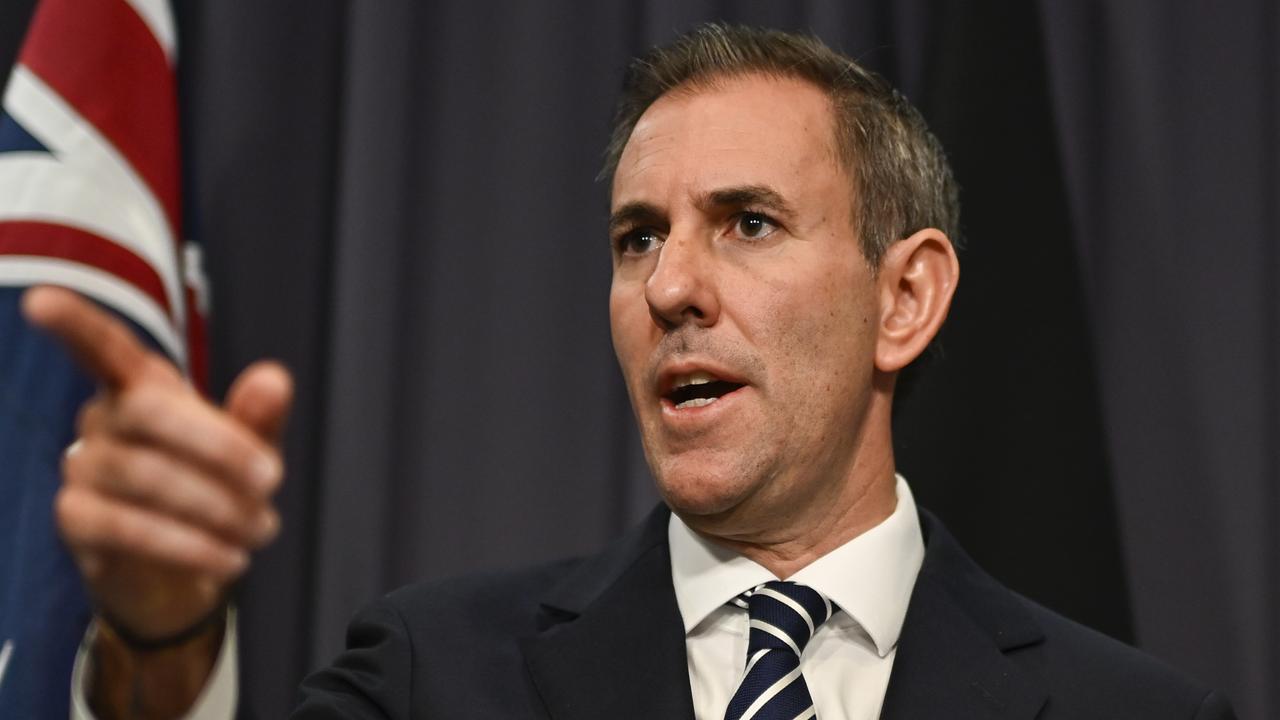
    As Australia’s federal government prepares to hand down its May budget, speculation over broad-based tax reform has intensified, with Treasurer Jim Chalmers openly embracing the idea of the budget being remembered for delivering long-awaited changes to the nation’s tax system.

    In comments to Nine Entertainment’s newspapers on Sunday, Chalmers said he would be “pretty happy” if the 2026-27 budget made headlines as a landmark tax reform package. The statement has fueled widespread speculation that the Albanese administration is considering rolling back one of Australia’s most generous tax concessions: the 50% discount on capital gains tax (CGT) applied to assets held for longer than 12 months. For context, CGT is levied on profits earned from selling assets including residential property, shares and other investments, and is counted toward an individual’s annual taxable income.

    Beyond CGT, multiple reports indicate the government is also evaluating changes to negative gearing, a tax arrangement that allows property investors to deduct rental losses from their overall taxable income. Any changes to negative gearing would reportedly be grandfathered, meaning the new rules would only apply to future property purchases rather than existing investment arrangements.

    The prospect of CGT reform has already sparked partisan debate, with a Liberal Party-chaired Senate inquiry currently investigating potential changes to the tax. Speaking to Sky News on Sunday, Assistant Immigration Minister Matt Thistlethwaite pushed back against questions over whether the government broke an election promise by considering changes it did not take to voters. Thistlethwaite noted that the government has not yet finalized any changes to CGT policy, and is currently focused on delivering the tax reforms it already campaigned on during the last election cycle – including stage three income tax cuts and adjustments to tax concessions for high-balance superannuation accounts.

    “Our priority right now is stabilizing inflation and lifting national productivity,” Thistlethwaite said, adding that the government regularly reviews all existing policies to ensure they align with core electoral goals. “Inflation remains our top economic priority, especially amid ongoing global volatility in fuel markets. We are constantly assessing whether our policies are helping us meet that target.” On the government’s housing agenda, Thistlethwaite acknowledged growing public concern over intergenerational inequity in access to home ownership, saying the government’s core focus remains on expanding overall housing supply, including adjustments to migration policy to support construction targets.

    Coalition Senator Dave Sharma, a member of the Senate inquiry into CGT, told Sky News that independent testimony to the committee has repeatedly shown that changing the CGT discount would do nothing to improve housing affordability for first-time buyers. He argued that scaling back the discount would actually reduce new housing supply at the margins, by disincentivizing property investment and pushing investors to move their capital into other asset classes.

    “Fundamentally, changing CGT is just tinkering around the edges of Australia’s housing crisis,” Sharma said. “The core problem remains the government’s failure to deliver the rapid construction needed to hit its own housing supply targets.”

    For weeks, senior government figures have remained deliberately vague on the specifics of potential tax changes, declining to confirm or deny whether CGT or negative gearing adjustments will be included in the final May budget. Chalmers’ recent comments, however, have made clear that the government is open to delivering major tax changes before the next federal election, as it grapples with long-term challenges of inflation, housing inequality and productivity growth.

  • Man charged over fatal shooting of baby in pram in New York

    Man charged over fatal shooting of baby in pram in New York

    A senseless act of gang violence in Brooklyn has left an innocent infant dead, sending shockwaves through the New York City community and reigniting longstanding conversations about the persistent crisis of gun violence across the United States. Seven-month-old Kaori Patterson-Moore was fatally shot on April 1 while sitting in her pushchair in the Williamsburg neighborhood, in what investigators have confirmed was a mistaken, unintended attack tied to gang activity.

    Two suspects are now in police custody following the incident. Twenty-one-year-old Amuri Greene, who law enforcement officials identify as the gunman, faces three counts of murder and one count of attempted murder. He has also been hit with additional charges including five counts of criminal weapon possession, two counts of attempted criminal weapon possession, and two counts of assault. During his court appearance on Friday, Greene entered a plea of not guilty to all charges. Per reporting from CBS News, the BBC’s U.S. affiliate partnership, Greene was thrown from the suspect vehicle moments after the shooting, requiring hospital treatment before he was taken into official police custody.

    The second suspect, 18-year-old Matthew Rodriguez, is accused of driving the scooter that carried Greene during the attack. Police confirmed he was arrested days later in Pennsylvania, with formal charges still pending against him as investigators continue to piece together details of the incident. Surveillance footage of the attack, reviewed by law enforcement, captures the two men riding against the direction of traffic through Williamsburg on a scooter. After the shooting, the driver lost control, crashed into oncoming vehicles, and fled the scene before he was eventually apprehended out of state.

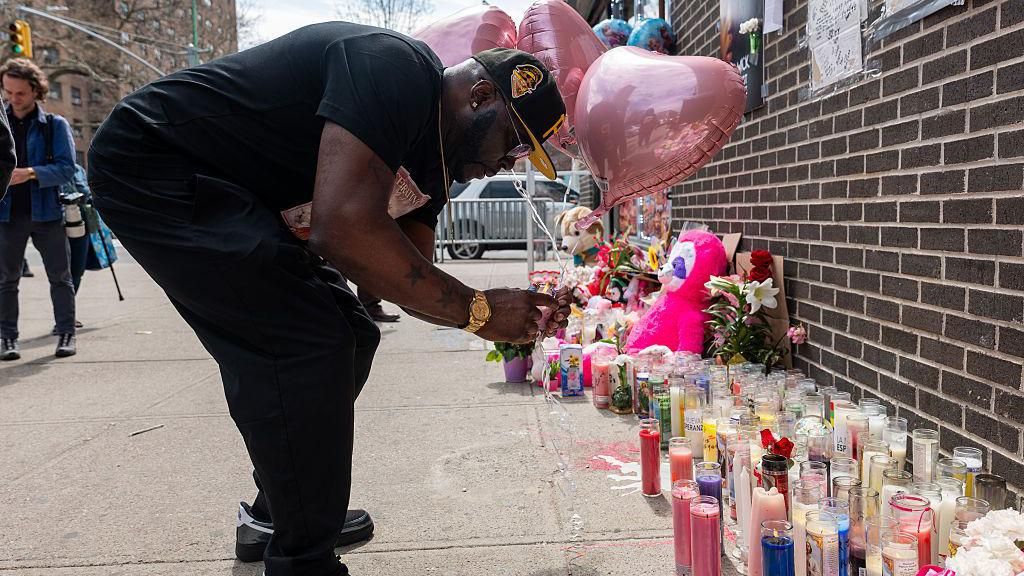
    In the wake of the tragic killing, community members, family, and friends of the infant gathered for a moving candlelight vigil at the intersection where the shooting unfolded on Friday evening. A makeshift memorial of flowers, candles, and handwritten tributes has continued to grow at the site as locals mourn the unnecessary loss of a young life, one of the latest victims of the rampant gun violence crisis that plagues communities across the United States.

  • AI videos fuel rhetoric as Orbán bids for four more years in Hungary

    AI videos fuel rhetoric as Orbán bids for four more years in Hungary

    Ahead of Hungary’s crucial national parliamentary election on April 12, generative artificial intelligence has emerged as a dominant and deeply controversial tool of political manipulation, with Prime Minister Viktor Orbán’s long-ruling Fidesz party and its allied groups deploying deepfakes to smear opposition leader Péter Magyar, who is currently leading in most pre-election opinion polls.

    The most disturbing example of this AI-fueled disinformation campaign emerged in February, when Fidesz shared a fake AI-generated video across its official social media channels. The clip opens with a sentimental scene of a young girl waiting by a window for her father, a Hungarian soldier deployed to war, to come home. It quickly cuts to a graphic execution sequence: the bound, blindfolded father is shot dead by enemy captors. Though Fidesz openly labels the video as AI-generated, the party frames the fake footage as a warning of what will come if Magyar’s center-right opposition party Tisza wins the election.

    In the video’s caption, Fidesz claims Magyar seeks to hide the true horrors of war and accuses the opposition leader of pushing policies that would drag Hungary into the ongoing conflict in Ukraine. Fidesz has amplified a series of unsubstantiated claims against Tisza, alleging that a Magyar government would use Hungarian pension funds to send military aid to Kyiv and reintroduce forced military conscription to deploy Hungarian troops to the front lines. Magyar and Tisza have repeatedly rejected these claims, noting that the party’s official election manifesto explicitly pledges not to send Hungarian troops to Ukraine and has no plans to bring back conscription.

    When contacted for comment on the fabricated execution video, Fidesz did not respond to media inquiries. Támas Menczer, communications director for the ruling Fidesz-KNDP alliance, addressed the video in a public Facebook interview, reiterating that the greatest threat to Hungarian security is a Tisza victory because of the party’s stated support for Ukraine. Menczer declined to comment on the party’s choice to use AI-generated violent footage for political gain. For his part, Magyar has condemned the clip as a crossing of all ethical lines, calling it a heartless act of political manipulation designed to spread fear among Hungarian voters.

    Fidesz is not the only pro-government group leveraging AI disinformation. Last month, the National Resistance Movement (NEM), a pro-Fidesz activist organization, shared a deepfake video depicting a fake phone call between European Commission President Ursula von der Leyen and Magyar, in which the pair allegedly discuss plans to funnel Hungarian public funds to Ukraine. The clip amassed more than 3.7 million views, and NEM did not disclose that it was generated by AI. The fake video was quickly shared across pro-government media outlets and by Fidesz politicians, including Orbán himself. While Orbán acknowledged the footage was AI-generated, he warned it could represent a real future if Magyar wins office. NEM also declined to comment on the video when contacted by reporters.

    Independent observers warn that the widespread use of AI disinformation marks a new escalation of misinformation tactics in Hungarian politics, even as aggressive anti-opposition and anti-Ukraine narratives have long been a staple of Fidesz election campaigning. Zsófia Fülöp, a journalist at Lakmusz, Hungary’s only independent dedicated fact-checking outlet, notes that while ruling party fear-mongering is not new, the mass deployment of generative AI to create convincing fake content is unprecedented. Generative AI disinformation is omnipresent across this election cycle, particularly in the communication of the ruling party, its state-aligned media empire, and affiliated political groups, Fülöp explained. While small scale uses of AI in campaigning occurred in past cycles, this election has seen a massive surge in its use.

    The AI disinformation push has unfolded alongside another controversial incident that has stoked tensions between Hungary and Ukraine. Several weeks before the election, Hungary’s counter-terrorism police detained seven Ukrainian bank workers who were transiting through Hungarian territory en route from Austria to Ukraine, carrying $80 million in cash and 9 kilograms of gold in licensed cash-transport vehicles. The Ukrainian Foreign Ministry accused the Orbán government of taking the workers hostage and stealing the funds, while Ukraine’s state-owned Oschadbank confirmed the shipment had all necessary legal permits and was a routine transfer. Hungarian authorities claimed the shipment was tied to potential money laundering and suggested the funds could be used to finance pro-Ukraine political activity inside Hungary. Though the seven workers were eventually released without any criminal charges filed, Hungarian authorities have still not returned the seized cash and gold.

    Pro-government Hungarian media outlets again turned to AI to cover the arrest, publishing hyper-realistic AI-generated images of the raid that were presented as authentic on-the-ground footage. When compared to official photos and videos of the arrest published by the Hungarian government itself, the AI images contain multiple obvious inaccuracies, from incorrect police uniform details to wrong descriptions of the clothing worn by the detained Ukrainian citizens. Meta’s third-party fact-checking partnership has already labeled the post containing the fake AI images as “partly false.”

    Hungary’s relationship with Ukraine has shifted dramatically over the past two years. Until late 2023, Budapest supported Kyiv’s bid for European Union membership and maintained relatively cordial bilateral ties, but relations have deteriorated sharply as Orbán has doubled down on his long-standing close political and economic alliance with Russian President Vladimir Putin. Polling from Hungarian research institute Policy Solutions finds that anti-Ukraine sentiment has reached near parity with anti-Russian feeling among Hungarian voters: 64% of respondents hold a negative view of Ukrainian President Volodymyr Zelensky, compared to 67% who hold a negative view of Putin.

    Éva Bognár, a researcher at Central European University’s Democracy Institute, describes the entire 2026 election campaign as a disinformation hall of mirrors, built around a completely false narrative that Hungary is on the brink of being dragged into war. Bognár notes that Fidesz holds an unprecedented structural advantage in the campaign, controlling unlimited resources ranging from public state funds to government agencies and a massive state-aligned media conglomerate that operates as a full-time propaganda machine, including all public service media.

    Against this lopsided media landscape, Magyar has managed to cut through Fidesz’s propaganda by building a strong direct connection with voters through social media platforms. Data from 20k, an independent Hungarian election integrity watchdog tracking political social media activity during the campaign, shows that Magyar’s posts across Facebook, TikTok, and Instagram generate twice the level of public engagement as posts from Orbán and Fidesz. Magyar’s social media strategy mixes formal policy content with casual, relatable personal content that portrays him as a younger, more approachable alternative to the 16-year incumbency of Orbán: his feed includes clips of him playing volleyball, flipping burgers at casual restaurants, partying with young supporters, and enjoying water sports.

    However, independent fact-checkers have also found that Magyar has occasionally leaned into misleading rhetoric of his own, echoing some of Fidesz’s populist playbook. He has spread inaccurate claims about the number of Hungarian babies born to citizens living outside the country to stoke nationalist anxiety over eroding national pride, and has even flipped Fidesz’s own conscription claim against the ruling party, falsely alleging that Fidesz, not Tisza, plans to reintroduce compulsory military service. Reporters found no evidence to support this claim beyond a single brief discussion by two Fidesz politicians back in 2016.

    Political analysts note that Magyar’s lead in the polls is driven largely by widespread public anger at Orbán’s 16-year incumbency, particularly among younger voters. Péter Krekó, director of independent Hungarian political research institute Political Capital, explains that Magyar has successfully tapped into deep-seated public resentment toward the Orbán government, a sentiment that is strongest among Hungarians between the ages of 18 and 40. Pre-election polling from Median agency confirms this divide: Tisza holds its strongest support among voters under 40, while nearly half of voters over 65 back Fidesz.

    Despite trailing in most polls, Fidesz has continued to hammer its anti-Ukraine narrative across every available platform, with public campaign posters even showing Zelensky and Magyar side-by-side under the bold warning: “They are dangerous!” Krekó predicts that if Fidesz secures another term in office, the party will continue to use these AI-fueled disinformation tactics long after the election concludes. If Fidesz is defeated, however, Krekó says Hungary can expect a far more tumultuous rebalancing of the relationship between political power and the media. Regardless of the outcome, the 2026 Hungarian election has already set a troubling precedent for the use of generative AI as a tool of systemic political disinformation in European democratic contests.

  • Relatives of Qassem Soleimani arrested in US

    Relatives of Qassem Soleimani arrested in US

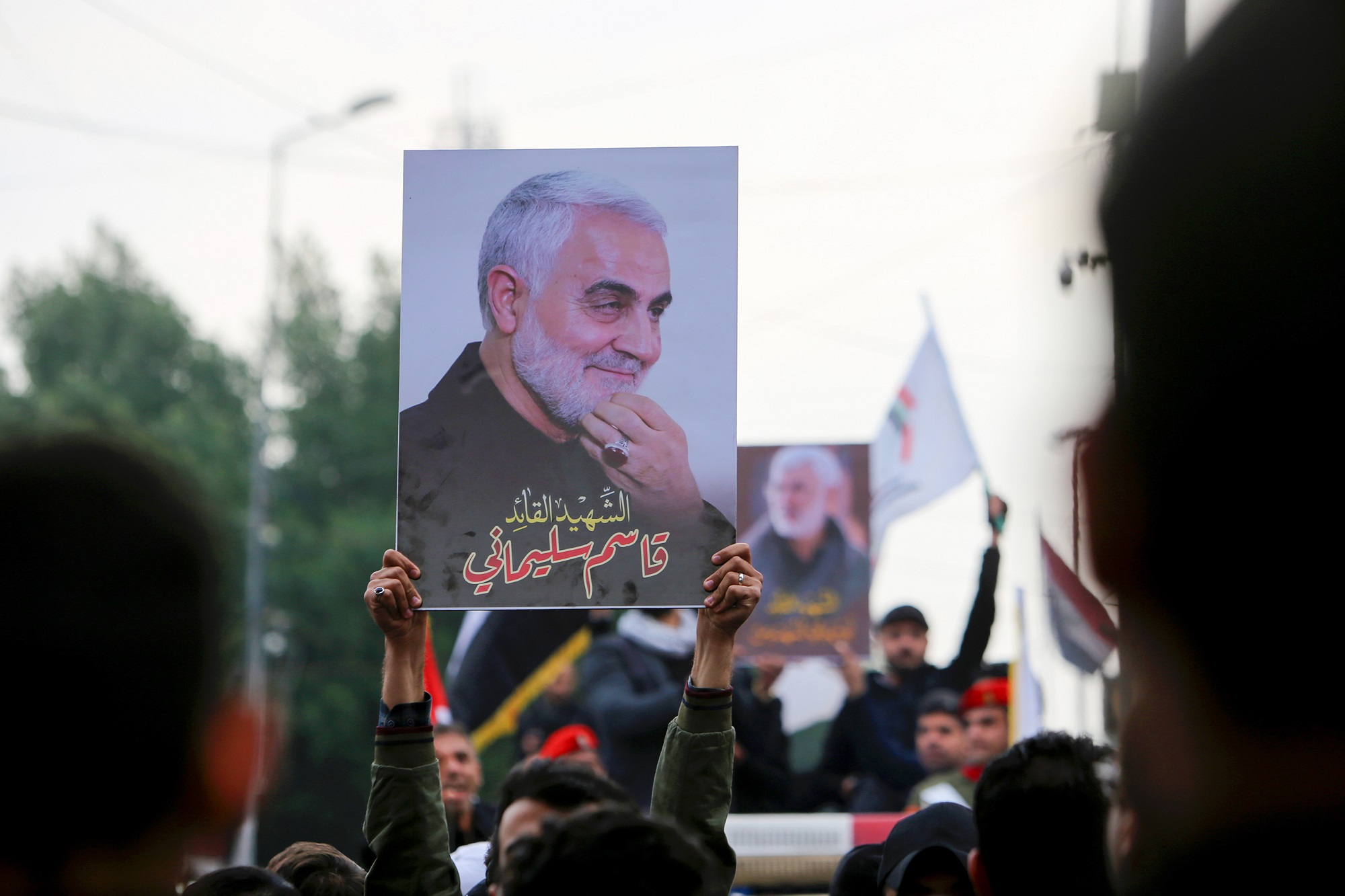
    In a recent development that escalates long-running tensions between the United States and Iran, two family members of the late Iranian military commander Qassem Soleimani have been taken into federal custody in the U.S. following the cancellation of their permanent residency status. A U.S. State Department spokesperson confirmed on Saturday that Hamideh Soleimani Afshar, Soleimani’s niece, and her daughter (the general’s grandniece) were arrested by federal agents after Secretary of State Marco Rubio revoked their Lawful Permanent Resident (LPR) status. The pair are currently being held by U.S. Immigration and Customs Enforcement, pending further immigration processing.

    To contextualize the event, Qassem Soleimani was one of Iran’s most high-profile military figures. He took command of the Quds Force, an elite overseas operations branch of the Islamic Revolutionary Guard Corps (IRGC), in 1997, after being appointed by then-IRGC commander-in-chief Yahya Rahim Safavi. Founded in the early 1980s, the Quds Force is tasked with carrying out Iran’s military and intelligence operations across the Middle East and beyond. In January 2020, Soleimani was killed in a targeted U.S. drone strike on his convoy in Baghdad, the capital of Iraq. The attack also claimed the life of Abu Mahdi al-Muhandis, deputy leader of Iraq’s Popular Mobilisation Forces (PMF), alongside several other senior PMF officials.

    In its official statement justifying the arrests and revocation, the State Department framed Hamideh Soleimani Afshar as a vocal public backer of what it terms Iran’s “totalitarian, terrorist regime.” According to the department, her own social media posts and independent press reporting confirm she has publicly praised Mojtaba Khamenei, a leading figure within Iran’s leadership, and repeatedly referred to the U.S. as the “Great Satan.” The statement added that Afshar’s husband has already been barred from entering the United States entirely.

    This action is part of a broader crackdown on relatives of deceased senior Iranian officials that the U.S. has ties to adversarial actions against. The department also revealed that the daughter and son-in-law of Ali Larijani, a slain Iranian security chief, have similarly had their U.S. legal status revoked. Unlike the Soleimani relatives, the pair have already left the country and are permanently banned from re-entering the U.S. in the future. Larijani, who served as secretary of Iran’s Supreme National Security Council, was killed in an Israeli airstrike targeting Iranian officials in Syria back in March 2025.

    This reporting was originally published by Middle East Eye, an independent media outlet specializing in original coverage and analysis of the Middle East, North Africa, and global affairs connected to the region.

  • Labor hopeful Iran war ‘drawing to a close’ after Trump threat

    Labor hopeful Iran war ‘drawing to a close’ after Trump threat

    As former U.S. President Donald Trump issues a stark 48-hour ultimatum to Iran over the closure of the Strait of Hormuz, Australia’s ruling Albanese government has voiced cautious optimism that the ongoing Middle East conflict is nearing its end, while moving swiftly to mitigate widespread domestic fuel shortages and price volatility.

    Local time Saturday saw Trump, the Republican incumbent leading U.S. military operations against Iran, deliver the ultimatum: Tehran must reopen the critical global oil chokepoint, or the U.S. will unleash “all hell” on the Islamic Republic. Earlier, in a national address, Trump laid out a public timeline for the conflict, stating that joint U.S.-Israeli military operations against Iran would conclude within two to three weeks.

    Australian Assistant Immigration Minister Matt Thistlethwaite confirmed that Canberra is aligning its expectations with the U.S. timeline, telling Sky News the federal government remains hopeful the conflict will wrap up soon. “The original goal of military action against Iran was to degrade and eliminate the country’s nuclear capabilities,” Thistlethwaite explained. “Per President Trump and U.S. intelligence assessments, that objective has already been accomplished. On that basis, we want to see rapid de-escalation, and a swift return to normal operations through the Strait of Hormuz.”

    Thistlethwaite added that Trump, who has full access to intelligence briefings and military input, shares the assessment that the conflict is drawing to a close. Even so, the Australian government has prepped contingency plans under its national fuel security framework to guarantee continued access to fuel for Australian households and businesses, and to cap upward price pressure as much as possible if hostilities drag on.

    Already this week, the Albanese government has enacted two temporary cuts to the national fuel excise tax. The second cut was finalized only after state and territory governments reached an agreement on how to allocate GST windfall gains to offset the revenue loss from the tax reduction. Thistlethwaite acknowledged that despite expected de-escalation, the conflict will leave a “long tail” of economic impacts that will be felt in Australia for months to come.

    To shore up supply, the federal government has already secured direct assurances from key Southeast Asian and East Asian fuel suppliers, which account for the majority of Australia’s imported fuel. “I met last week with Japan’s energy minister, and requested that existing supply volumes continue,” Thistlethwaite said. “Tokyo has given me a formal assurance that normal supply will hold. I’ve secured the same commitment from South Korea and Singapore, our three main suppliers. At the same time, we are actively diversifying our supply chains, and we have already started receiving additional fuel shipments from the United States to cover any gaps. We are covering all bases to expand supply diversification and secure as much fuel as possible for the domestic market.”

    The severity of the current supply crunch came into clear focus Saturday, when Federal Energy Minister Chris Bowen confirmed that more than 600 fuel stations across Australia have already run out of at least one grade of fuel, with 410 stations entirely out of diesel. The most acute shortages are in New South Wales, where 182 stations have no diesel and 48 are out of all petrol grades. Bowen urged the public to avoid panic buying, advising: “I encourage people to act sensibly. Only fill up when you need to, only take as much fuel as you normally would, and don’t stockpile.”

    Amid the domestic upheaval, opposition foreign policy figure and Liberal Senator Dave Sharma has backed the assessment that the conflict will end soon, predicting hostilities will wrap up within two to four additional weeks. Sharma told Sky News that Trump is eager to wrap up military operations, having concluded that Iran’s nuclear program and ballistic missile infrastructure have already been severely set back. While Trump has publicly held out hope for further political change in Iran, and has called for the Strait of Hormuz to be reopened, Sharma noted the U.S. leader is not making an end to operations conditional on the strait reopening immediately.

    Sharma added that the marine expeditionary forces the U.S. has deployed to the Middle East give Trump flexible options to seize strategic territory if needed, though he does not expect a full-scale ground invasion of Iran. “The most likely move would be seizing key islands within the Strait of Hormuz to allow unimpeded control of commercial shipping through the waterway,” he explained.

    Sharma’s position puts him at odds with fellow Liberal frontbencher Andrew Hastie, a prominent critic of both the conflict and Trump’s handling of it. Sharma argued that even if hostilities end immediately, Iran’s ability to foment regional instability and export terrorism has already been permanently reduced.

    The developments come on the heels of an emergency diplomatic meeting attended by Australia, the United Kingdom, and more than 40 allied nations focused on coordinating efforts to reopen the Strait of Hormuz, one of the world’s most critical chokepoints for global oil supplies.

  • The man who became one of India’s greatest stage queens

    The man who became one of India’s greatest stage queens

    In the mid-20th century, rural eastern India’s Bengal region was home to a thriving, beloved traveling folk theatre tradition called jatra. What made this art form particularly distinctive for decades was that nearly all leading female roles were played by male performers, known locally as *purush ranis*, or “male queens”. Among this rare group of artists, one name stood above the rest: Chapal Bhaduri, affectionately known to generations of fans as Chapal Rani, the undisputed reigning “queen” of jatra.

    Cross-gender performance is a longstanding trope across global theatrical traditions, from Elizabethan English theatre to classical Japanese kabuki and Chinese Peking opera. But in Bengal’s jatra, this practice grew into a central cultural institution. Jatra was a raucous, immersive open-air spectacle blending devotional storytelling, epic myths, soaring music, and high melodrama, drawing massive, passionate crowds that often rivaled the audience size of mainstream cinemas — even if the performers themselves rarely earned comparable financial rewards.

    Today, Bhaduri’s life, legacy, and the vanishing world he inhabited are being revisited for a new generation in *Chapal Rani: The Last Queen of Bengal*, a new biography by author Sandip Roy that traces the performer’s extraordinary journey from beloved stage icon to obscurity, while preserving the history of a fading cultural practice where gender performance was central to the art.

    Born in north Kolkata in 1939 to a professional stage actress, Bhaduri grew up immersed in the world of performance, and made his stage debut at just 16 years old. Long after he stepped away from the spotlight, he reflected on his identity: “Femininity was always a part of me.” He noted that even as a young person, he naturally carried feminine mannerisms and had a soft, feminine voice that made him uniquely suited to the roles he would become famous for.

    On stage, Bhaduri transformed completely, bringing nuanced, deeply felt performances to every role he took on, from powerful queens and divine goddesses to witty courtesans and formidable brothel madams, all performed with a deliberate, refined grace. He was meticulous about his craft, carefully crafting each character’s silhouette and appearance: early in his career, he used folded rags to create the shape of a bosom, later switching to sponge, and followed strict, consistent beauty routines to perfect the illusion he took so seriously.

    Unlike many cross-gender performances of the era, which relied on caricature and comedy for laughs, especially for queer-coded characters, Bhaduri approached his work with radical honesty and sincerity. As Roy writes in the new biography: “In Indian performing art where playing gay or queer was in the form of characters who are ridiculed, Chapal morphed into a woman and played his roles with honesty and an act of bravery.”

    Off stage, Bhaduri’s life was far more complex, shaped by the social norms of mid-century middle-class Bengali culture that made open queer identity impossible. While he never publicly labeled himself as gay, he did not lack for admiration: he received countless affectionate letters, relationship offers, and proposals from fans and partners over the years. Proud and unapologetic, he once stated plainly: “I refuse to apologise for love.” He maintained one long-term romantic relationship that lasted more than 30 years, even as his partner married and raised a family to conform to social expectations.

    By the time Bhaduri rose to stardom in the 1950s, the world of jatra was already shifting. Women had begun to enter the professional stage, taking on the female roles that had long been the domain of *purush ranis*, and the space for male female impersonators shrank rapidly. The decline was gradual but inexorable: by the late 1960s and early 1970s, the “moustachioed queens of jatra” were almost entirely pushed out of the industry, as Roy documents.

    Bhaduri experienced this rejection firsthand. During one performance of an older female role, he was booed off the stage after an audience member threw a clay cup at him; audiences now accustomed to cisgender female performers found his presence jarring and unacceptable. Many of Bhaduri’s fellow *purush rani* performers faded into desperate poverty after their careers ended: one became a street seamstress, another ran a small tea stall selling peanuts, others turned to manual labor, one died by suicide, and their stories were almost entirely lost to history.

    Bhaduri survived by taking odd jobs, working as a cleaner in local libraries, and even performing as the Hindu folk goddess Sitala, the protector against infectious disease, on city streets, where he offered blessings to passersby in exchange for small change or leftover food. For decades, he lived on the margins of the Bengali cultural world he had helped shape, working as a housekeeper and largely forgotten by audiences and institutions.

    In recent decades, Bhaduri has experienced a small revival of public attention. Kolkata-based theatre producer and publisher Naveen Kishore created a documentary film and exhibition about Bhaduri’s life in 1999, and later acclaimed Bengali filmmaker Kaushik Ganguly cast him in two feature films. A new generation of audiences, discovering Bhaduri through these projects, has reclaimed him as a pioneering queer elder, a trailblazer who lived outside rigid gender and social categories at a time when that was nearly impossible.

    As India’s modern LGBTQ+ rights movement emerged and grew, activists and community members hungry for a documented queer Indian history embraced Bhaduri as an early icon. Roy writes: “The LGBTQ+ movement was young in India. Hungry for a queer history, it seemed to have seized on Chapal Bhaduri to be its fairy godmother.” Yet Bhaduri always resisted rigid modern identity labels, refusing to identify with terms like third gender. Off stage, he dressed like any other middle-class Bengali man, in a simple kurta and pyjama, a nuance that complicates contemporary readings of his life, even as Roy notes that he remains, unquestionably, “a queer survivor.”

    Now 87 years old, Bhaduri lives in a Kolkata retirement home, a short distance from the maternal home where he grew up that no longer welcomes him. He lives with chronic age-related health conditions, surrounded by decades of memories of a life and an art form that have all but vanished.

    Beyond preserving Bhaduri’s legacy, Roy’s biography raises urgent questions about cultural memory: why are some performers celebrated and remembered, while others are erased? What art forms are preserved in official archives, and which are allowed to disappear along with the last performers who carried them? As conversations around gender fluidity and performance gain global traction, Bhaduri’s life offers a vital new perspective: a reminder that long before modern identity language existed, gender was already fluid in practice, in the performance traditions that shaped regional culture across the world.