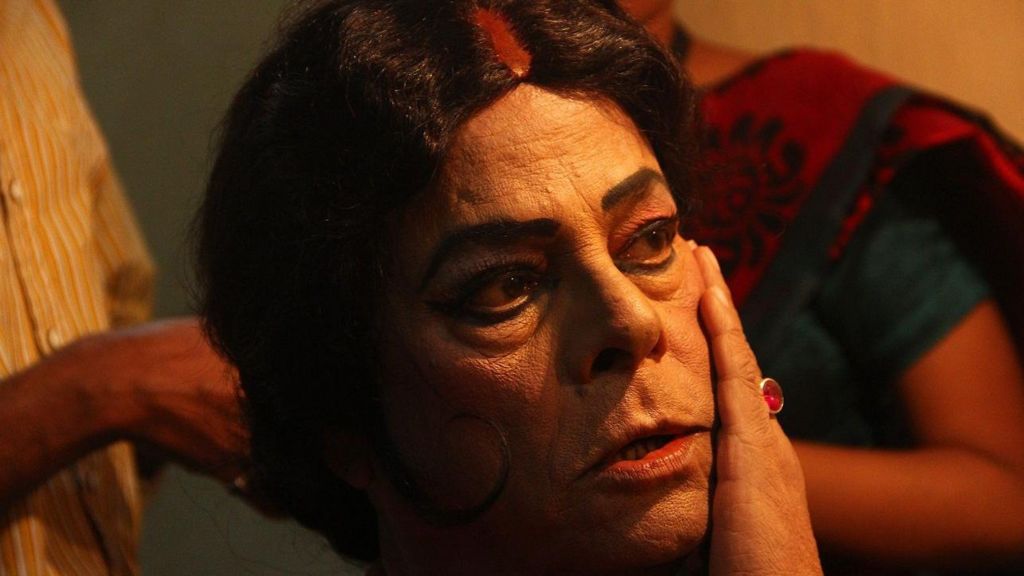
In the mid-20th century, rural eastern India’s Bengal region was home to a thriving, beloved traveling folk theatre tradition called jatra. What made this art form particularly distinctive for decades was that nearly all leading female roles were played by male performers, known locally as *purush ranis*, or “male queens”. Among this rare group of artists, one name stood above the rest: Chapal Bhaduri, affectionately known to generations of fans as Chapal Rani, the undisputed reigning “queen” of jatra.
Cross-gender performance is a longstanding trope across global theatrical traditions, from Elizabethan English theatre to classical Japanese kabuki and Chinese Peking opera. But in Bengal’s jatra, this practice grew into a central cultural institution. Jatra was a raucous, immersive open-air spectacle blending devotional storytelling, epic myths, soaring music, and high melodrama, drawing massive, passionate crowds that often rivaled the audience size of mainstream cinemas — even if the performers themselves rarely earned comparable financial rewards.
Today, Bhaduri’s life, legacy, and the vanishing world he inhabited are being revisited for a new generation in *Chapal Rani: The Last Queen of Bengal*, a new biography by author Sandip Roy that traces the performer’s extraordinary journey from beloved stage icon to obscurity, while preserving the history of a fading cultural practice where gender performance was central to the art.
Born in north Kolkata in 1939 to a professional stage actress, Bhaduri grew up immersed in the world of performance, and made his stage debut at just 16 years old. Long after he stepped away from the spotlight, he reflected on his identity: “Femininity was always a part of me.” He noted that even as a young person, he naturally carried feminine mannerisms and had a soft, feminine voice that made him uniquely suited to the roles he would become famous for.
On stage, Bhaduri transformed completely, bringing nuanced, deeply felt performances to every role he took on, from powerful queens and divine goddesses to witty courtesans and formidable brothel madams, all performed with a deliberate, refined grace. He was meticulous about his craft, carefully crafting each character’s silhouette and appearance: early in his career, he used folded rags to create the shape of a bosom, later switching to sponge, and followed strict, consistent beauty routines to perfect the illusion he took so seriously.
Unlike many cross-gender performances of the era, which relied on caricature and comedy for laughs, especially for queer-coded characters, Bhaduri approached his work with radical honesty and sincerity. As Roy writes in the new biography: “In Indian performing art where playing gay or queer was in the form of characters who are ridiculed, Chapal morphed into a woman and played his roles with honesty and an act of bravery.”
Off stage, Bhaduri’s life was far more complex, shaped by the social norms of mid-century middle-class Bengali culture that made open queer identity impossible. While he never publicly labeled himself as gay, he did not lack for admiration: he received countless affectionate letters, relationship offers, and proposals from fans and partners over the years. Proud and unapologetic, he once stated plainly: “I refuse to apologise for love.” He maintained one long-term romantic relationship that lasted more than 30 years, even as his partner married and raised a family to conform to social expectations.
By the time Bhaduri rose to stardom in the 1950s, the world of jatra was already shifting. Women had begun to enter the professional stage, taking on the female roles that had long been the domain of *purush ranis*, and the space for male female impersonators shrank rapidly. The decline was gradual but inexorable: by the late 1960s and early 1970s, the “moustachioed queens of jatra” were almost entirely pushed out of the industry, as Roy documents.
Bhaduri experienced this rejection firsthand. During one performance of an older female role, he was booed off the stage after an audience member threw a clay cup at him; audiences now accustomed to cisgender female performers found his presence jarring and unacceptable. Many of Bhaduri’s fellow *purush rani* performers faded into desperate poverty after their careers ended: one became a street seamstress, another ran a small tea stall selling peanuts, others turned to manual labor, one died by suicide, and their stories were almost entirely lost to history.
Bhaduri survived by taking odd jobs, working as a cleaner in local libraries, and even performing as the Hindu folk goddess Sitala, the protector against infectious disease, on city streets, where he offered blessings to passersby in exchange for small change or leftover food. For decades, he lived on the margins of the Bengali cultural world he had helped shape, working as a housekeeper and largely forgotten by audiences and institutions.
In recent decades, Bhaduri has experienced a small revival of public attention. Kolkata-based theatre producer and publisher Naveen Kishore created a documentary film and exhibition about Bhaduri’s life in 1999, and later acclaimed Bengali filmmaker Kaushik Ganguly cast him in two feature films. A new generation of audiences, discovering Bhaduri through these projects, has reclaimed him as a pioneering queer elder, a trailblazer who lived outside rigid gender and social categories at a time when that was nearly impossible.
As India’s modern LGBTQ+ rights movement emerged and grew, activists and community members hungry for a documented queer Indian history embraced Bhaduri as an early icon. Roy writes: “The LGBTQ+ movement was young in India. Hungry for a queer history, it seemed to have seized on Chapal Bhaduri to be its fairy godmother.” Yet Bhaduri always resisted rigid modern identity labels, refusing to identify with terms like third gender. Off stage, he dressed like any other middle-class Bengali man, in a simple kurta and pyjama, a nuance that complicates contemporary readings of his life, even as Roy notes that he remains, unquestionably, “a queer survivor.”
Now 87 years old, Bhaduri lives in a Kolkata retirement home, a short distance from the maternal home where he grew up that no longer welcomes him. He lives with chronic age-related health conditions, surrounded by decades of memories of a life and an art form that have all but vanished.
Beyond preserving Bhaduri’s legacy, Roy’s biography raises urgent questions about cultural memory: why are some performers celebrated and remembered, while others are erased? What art forms are preserved in official archives, and which are allowed to disappear along with the last performers who carried them? As conversations around gender fluidity and performance gain global traction, Bhaduri’s life offers a vital new perspective: a reminder that long before modern identity language existed, gender was already fluid in practice, in the performance traditions that shaped regional culture across the world.