博客

  • US Supreme Court paves way for dismissal of Steve Bannon conviction

    US Supreme Court paves way for dismissal of Steve Bannon conviction

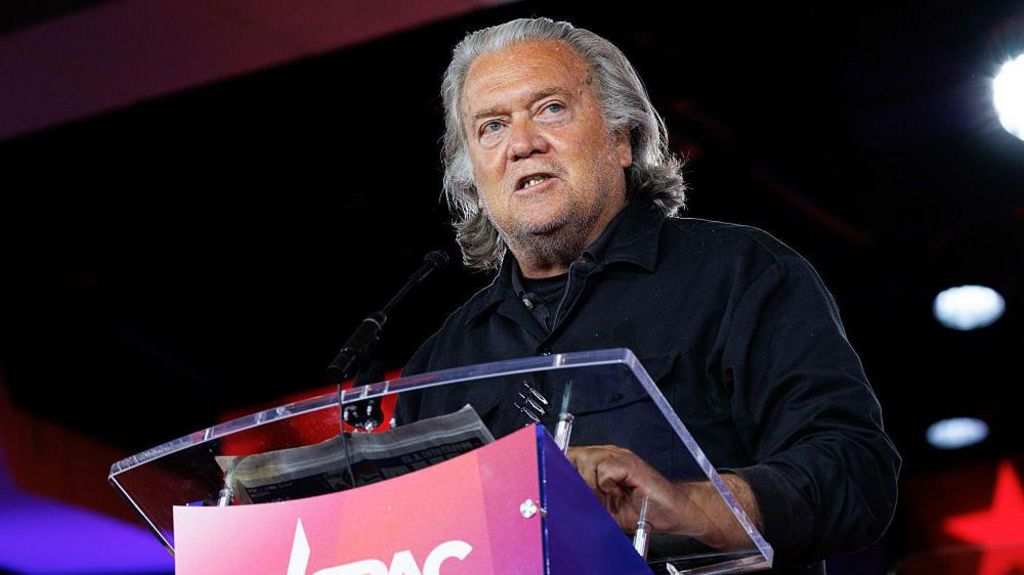
    In a significant legal development with deep ties to American partisan politics, the U.S. Supreme Court has opened the door to vacating a 2022 criminal contempt of Congress conviction against Steve Bannon, a long-time close ally of former President Donald Trump. The high court’s unsigned ruling issued Monday overturns a prior appellate court decision that upheld the original guilty verdict, and remanded the case back to a lower Washington D.C. federal court for final action, where legal analysts broadly expect the conviction to be dismissed outright.

    Bannon’s conviction stemmed from his outright refusal to comply with a congressional subpoena issued by investigators probing the January 6, 2021 riot at the U.S. Capitol. The subpoena sought documents and testimony related to Bannon’s role in events leading up to the violent insurrection, where supporters of Trump stormed the Capitol building in an attempt to overturn the results of the 2020 presidential election.

    A polarizing figure in modern conservative politics, Bannon has been a core figure in Trump’s political orbit for more than a decade. Widely regarded as a key strategist behind Trump’s unexpected 2016 presidential election victory, he served a turbulent tenure as a White House senior advisor during Trump’s first year in office. After leaving the administration, he remained one of Trump’s most vocal and high-profile supporters on the American right, even going so far as to promote the idea of Trump seeking a third presidential term— a proposal that directly contradicts U.S. constitutional term limits set for the office of president.

    Following Bannon’s 2022 conviction, he was sentenced to four months in prison, a sentence he has already fully served at a low-security federal correctional facility in Connecticut. That means any eventual dismissal of the conviction will largely carry symbolic weight rather than altering Bannon’s current circumstances, as he has already completed his court-ordered incarceration.

    The case took an unusual turn after the Supreme Court initially declined to intervene in Bannon’s jail sentence when it was first appealed. Prosecution of the contempt case was brought during Democratic President Joe Biden’s administration. Last year, after lower courts rejected his challenges to the conviction, Bannon once again petitioned the Supreme Court to review his case.

    In a striking move that underscores the current political alignment of the federal government following Trump’s 2024 re-election, the U.S. Solicitor General D. John Sauer confirmed in his filing that the current administration agrees with Bannon’s position. The government holds that dismissing the entire criminal case is “in the interests of justice”, Sauer wrote, and the Department of Justice has already filed a formal motion to dismiss the indictment in the lower court. The lower court will now proceed to take up the motion in line with the Supreme Court’s remand order.

  • Ladysmith Black Mambazo’s ‘wise elder’ dies aged 77

    Ladysmith Black Mambazo’s ‘wise elder’ dies aged 77

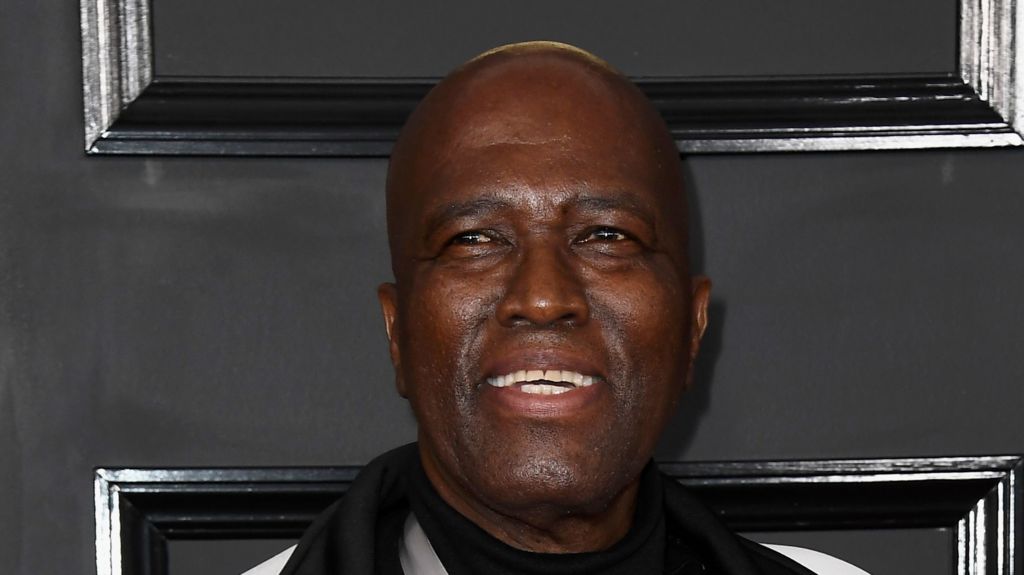
    The global music community is mourning the loss of Albert Mazibuko, a core member of the iconic South African choral ensemble Ladysmith Black Mambazo, who passed away at the age of 77. The group confirmed via an official Facebook post that Mazibuko died on Sunday following a brief, unexpected illness, closing out a more than 50-year career with the legendary vocal group.

    Born and raised in uMnambithi — the eastern South African town formerly known as Ladysmith — Mazibuko’s path to music began under unusual circumstances. He left formal schooling at a young age to take up full-time work on a local farm, long before his cousin and the group’s founder, Joseph Shabalala, invited him to join Ladysmith Black Mambazo in 1969. From that point on, he became an integral part of the ensemble’s artistic identity and global rise.

    Ladysmith Black Mambazo carved its unique niche by blending indigenous Zulu musical and dance traditions with isicathamiya, a distinctly South African a cappella style defined by soft harmonies and gentle, shuffling dance movements. Just one year after Mazibuko joined, a breakout 1970 radio performance landed the group their first major recording contract. By 1973, they released *Amabutho*, the first album in African music history to reach gold sales status.

    The ensemble’s global breakthrough came in 1986, when American singer-songwriter Paul Simon tapped Ladysmith Black Mambazo to feature on his critically acclaimed, multi-platinum album *Graceland*. The collaboration catapulted the group to international fame, though it also sparked controversy: Simon faced widespread criticism for violating the global cultural boycott of apartheid-era South Africa. Throughout the brutal decades of state-enforced racial segregation, Mazibuko and his bandmates used their platform to spread messages of hope and unity, pushing back against the oppression of the apartheid regime.

    In a 2015 interview with the BBC’s *Soul Music*, Mazibuko opened up about the daily fear and hardship of life under apartheid. Recalling his time working at a local cotton factory, he described constant police harassment centered on the pass laws — the apartheid system’s tool for restricting Black South Africans’ movement. “If you don’t carry it, you’re arrested. In my life I was so afraid of being arrested… even now I’m afraid,” he shared.

    Over his decades-long tenure, the group earned five Grammy Awards and cemented its status as one of South Africa’s most celebrated cultural exports. In tributes shared publicly this week, current and former band members remembered Mazibuko as a generous, warm-hearted mentor to the group’s younger generation. “He loved traveling the world, spreading the mission and music of Ladysmith Black Mambazo,” the group’s official statement read. “He never tired of talking about the group’s history and its desire to spread ‘peace, love and harmony’ everywhere people had ears to listen.”

    At the time of Mazibuko’s death, the current Ladysmith Black Mambazo lineup — a mix of veteran and emerging young musicians — was in the middle of a cross-country U.S. tour that launched in February. Their final scheduled U.S. performance of this run is set to take place this coming Friday.

  • Bad blood: everything that sparked the US-Iran war

    Bad blood: everything that sparked the US-Iran war

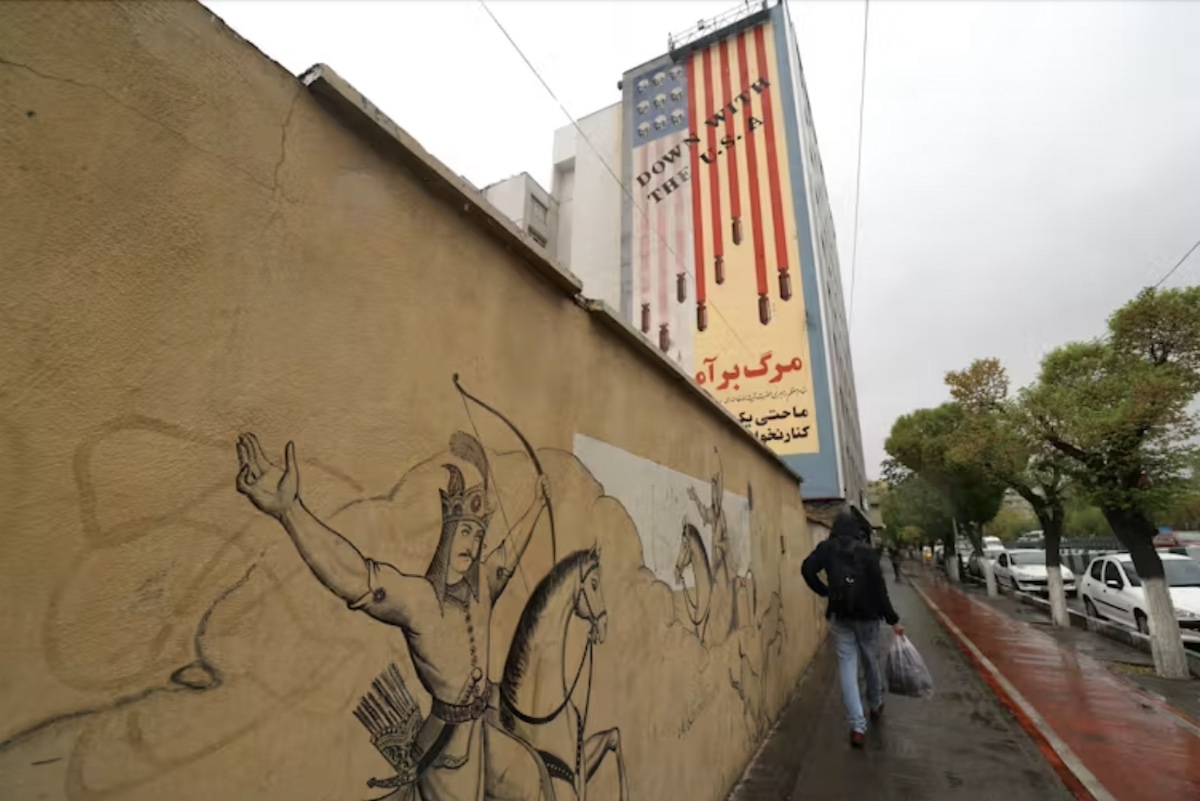
    Tensions between the United States and Iran have reached a boiling point in 2026, with open military conflict erupting after decades of escalating hostility, covert interference, and broken diplomatic opportunities. What began as a 1953 CIA-backed coup to oust a democratically elected leader has evolved into one of the world’s most volatile geopolitical standoffs, with global energy supplies and regional security hanging in the balance.

    The foundational rift between the two nations dates back to the early 1950s, when Iranian prime minister Mohammed Mossadegh moved to nationalize the Anglo-Iranian Oil Company, redirecting fossil fuel profits away from foreign corporate control and toward domestic public investment. Fearing Soviet influence would spread across the Middle East and disrupt global oil flows, the U.S. joined the United Kingdom in launching Operation Ajax, a covert operation that toppled Mossadegh and installed a pro-Western government under the autocratic Shah Mohammad Reza Pahlavi. For the next 25 years, the U.S. backed the Shah’s repressive rule, with his secret police force SAVAK violently crushing domestic dissent while many Iranians struggled in poverty amid the Shah’s corruption and lavish spending.

    The 1979 Iranian Revolution shattered this fragile status quo. After the Shah fled Iran for cancer treatment, exiled Shiite leader Ayatollah Ruhollah Khomeini returned to overthrow the monarchy and establish the current Islamic Republic. When U.S. President Jimmy Carter allowed the Shah to enter the U.S. for specialized medical care that same year, enraged Iranian students stormed the U.S. Embassy in Tehran, holding 52 American hostages for 444 days. The crisis led to the permanent severing of formal diplomatic ties between the two nations and set the stage for decades of open hostility.

    Over the following decades, repeated clashes and mutual accusations deepened the divide. In 1980, Iraqi leader Saddam Hussein invaded Iran, launching an eight-year war that killed more than 600,000 people; the U.S. tacitly backed Hussein, turning a blind eye to Iraq’s use of illegal chemical weapons against Iranian forces to counter the newly formed anti-American Islamic regime. By 1984, Washington officially designated Iran a state sponsor of terrorism, imposing a strict arms embargo that led to a secret scandal just years later: the Reagan administration was found to have illegally sold weapons to Iran to fund anti-socialist Contra rebels in Nicaragua, a controversy that rocked the Reagan presidency. In 1988, a U.S. Navy warplane shot down an Iranian civilian passenger jet, Iran Air Flight 655, killing all 290 people on board. While the U.S. called it an accidental error, Iran viewed the incident as deliberate aggression, and tensions remained high.

    Over the next three decades, tentative overtures for reconciliation repeatedly fell apart. A brief opening emerged in 1997, when moderate Iranian president Mohammad Khatami expressed respect for the American people and called for people-to-people exchanges, but hardline opposition from Iran’s supreme leadership blocked formal progress. Just five years later, President George W. Bush labeled Iran part of an “Axis of Evil” alongside Iraq and North Korea, ending any immediate hopes of detente. In 2002, an exiled opposition group revealed Iran had been operating secret nuclear facilities in violation of the Nuclear Non-Proliferation Treaty, sparking global alarm; over the following years, the U.S. and Israel launched the Stuxnet cyberattack to disrupt Iran’s uranium enrichment program, slowing its nuclear progress. A 2003 Iranian offer for comprehensive talks on nuclear issues, terrorism, and regional stability was rejected by hardliners in the Bush administration, and the opportunity for reconciliation faded when hardliner Mahmoud Ahmadinejad was elected Iranian president two years later.

    The most significant breakthrough came in 2015, when the Obama administration negotiated the Joint Comprehensive Plan of Action (JCPOA), widely known as the Iran nuclear deal, alongside China, France, Germany, Russia, and the United Kingdom. Under the agreement, Iran drastically limited its uranium enrichment program and allowed unfettered international inspections in exchange for relief from crippling economic sanctions. For three years, international inspectors repeatedly confirmed Iran was complying with the deal’s terms, but President Donald Trump withdrew the U.S. from the agreement in 2018, reimposing harsh sanctions and escalating tensions once again.

    Tensions boiled over in 2020, when a U.S. drone strike killed top Iranian general Qassem Soleimani, the second most powerful figure in Iran’s government, leading Iran to launch ballistic missile strikes on U.S. bases in Iraq. After the 2023 Hamas attacks on Israel worsened regional tensions, Trump’s second presidential term in 2025 opened with new nuclear negotiations, but Israeli airstrikes on Iran derailed talks, leading the U.S. to launch its own strikes on Iranian nuclear sites in June 2025. By early 2026, what had been decades of covert and low-intensity conflict erupted into open war: U.S. and Israeli airstrikes in Operation Epic Fury killed Iran’s supreme leader Ali Khamenei and other senior leaders, prompting Iran to strike targets across the Persian Gulf and disrupt shipping through the critical Strait of Hormuz, turning a decades-long bilateral rivalry into a full-scale regional conflict.

  • Churches and politicians in South Sudan call for ‘lasting peace’ in Easter messages

    Churches and politicians in South Sudan call for ‘lasting peace’ in Easter messages

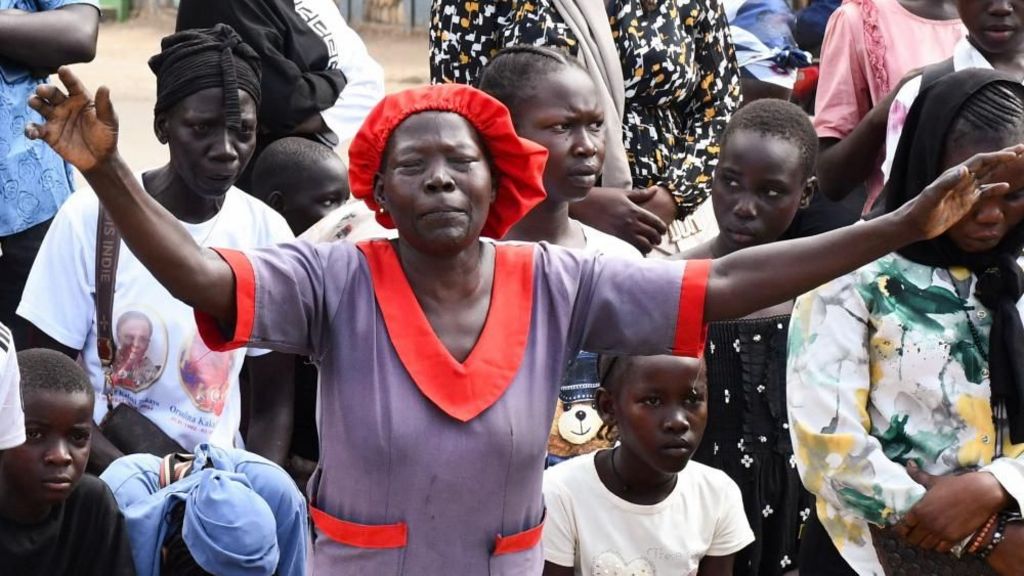
    Thousands of Christian worshippers across South Sudan gathered for traditional Easter processions over the holiday weekend, but the tone of this year’s celebrations was defined by urgent appeals for an end to persistent bloodshed and the establishment of lasting peace. The joint calls from both senior church leaders and top government officials come as escalating sporadic violence across the young nation has sparked repeated international warnings that South Sudan could be on the brink of sliding back into full-scale civil war, less than 10 years after a five-year civil conflict formally ended.

    The most recent high-profile act of violence occurred just one week before Easter, when unidentified gunmen attacked a mining site in Jebel-Iraq, a region located southwest of the capital Juba, leaving 74 mine workers dead. In the wake of the massacre, government representatives and opposition figures have traded blame, with neither side taking responsibility for the attack, deepening public distrust amid already rising tensions.

    At the principal Easter mass held at Juba’s St Theresa’s Cathedral, lead celebrant Santo Loku Pio delivered a blunt rebuke of the violence that has become entrenched in South Sudan’s public life. “Christians don’t practice hatred, they don’t practice violence that leads to the death of someone or somebody, and many other things that destroy life,” Pio told the assembled congregation. He issued a direct call to ordinary citizens to reject orders to carry out violence: “If you are told to go and kill, refuse, even if it means losing your job,” he said, urging attendees to “be a man or woman of peace.”

    Turning his address to the country’s ruling leadership, Pio called for a fundamental shift in governance. “Be good leaders – good governors, good commissioners, good ministers and good servants of the society. It is time for us to rise above violence, let us do the right thing and I think peace will reign,” he added, framing the call for peace as central to the spiritual meaning of Easter.

    South Sudan’s President Salva Kiir echoed the call for national unity and reconciliation in an Easter message read on his behalf by his press secretary at St Theresa’s Cathedral. Kiir emphasized that the Easter holiday serves as a reminder that hope persists even in the darkest of times. “Let us forgive one another, and support one another, and work hand in hand, and build a country that reflects the strength and dignity of its people,” the statement read.

    Other senior religious leaders across the country joined the appeal for urgent action. Justin Badi Arama, Archbishop of the Episcopal Church of South Sudan and Anglican Primate, told worshippers at Juba’s All Saints Cathedral that the nation must “persevere and work for lasting peace.” “We need urgent action to end violence in South Sudan and restore human dignity across our nation,” he said. In the southwestern city of Yambio, Eduardo Hiiboro Kussala, Bishop of the Catholic Diocese of Tombura-Yambio, centered his message on the sanctity of life. “We want to pray for protection of life and we want to tell everybody that God is the source of life,” he said.

    The collective calls for peace come against a backdrop of growing political unrest. Former First Vice-President Riek Machar, the leader of the main opposition faction Sudan People’s Liberation Movement/Army In Opposition (SPLM/A-IO), is currently under house arrest and facing trial on charges of treason, war crimes, and crimes against humanity, all of which he denies. Machar’s party has denounced the proceedings as a “political witch-hunt” designed to dismantle the 2018 peace accord that brought the 2013–2018 civil war to an end. Last week, the United States Embassy in South Sudan issued a statement demanding Machar’s release, along with other detained opposition politicians, calling the move a critical prerequisite for holding free, fair, and successful national elections and a key step toward advancing long-term peace and accountability.

    South Sudan, the world’s youngest sovereign nation, gained independence from Sudan in 2011, but has struggled with persistent political instability and intercommunal violence in the years following sovereignty. International observers and United Nations officials have repeatedly warned that escalating tensions between the ruling government and opposition, paired with rising intercommunal killings, could push the country back into a widespread civil conflict that would have devastating consequences for the nation’s 11 million people.

  • Death toll from extreme weather in Afghanistan increases to 110

    Death toll from extreme weather in Afghanistan increases to 110

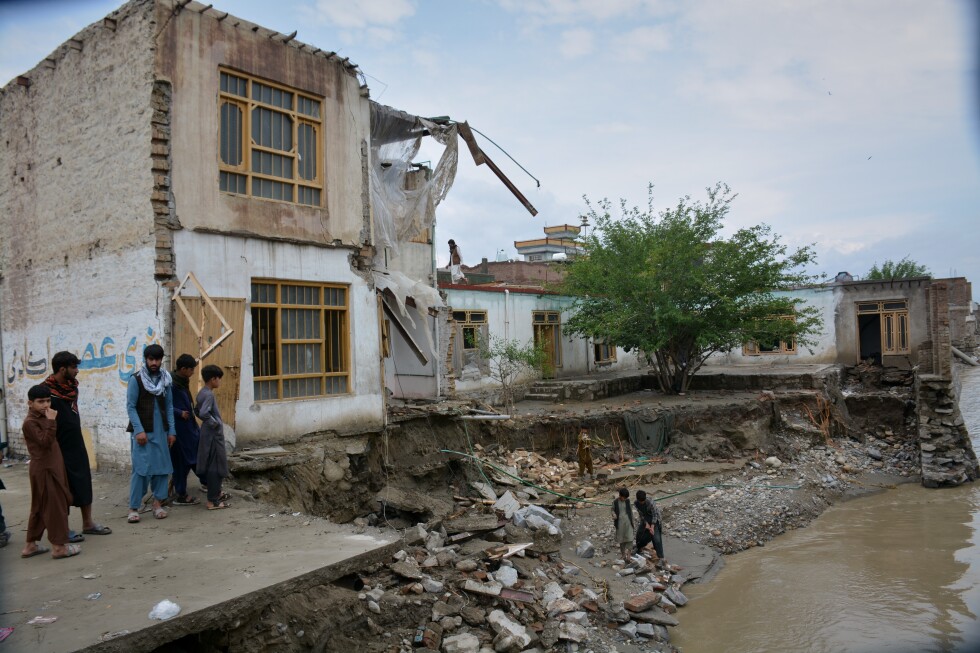
    Twelve days of relentless extreme weather across Afghanistan has left a devastating trail of destruction, with the national disaster authority confirming Monday that the death toll from widespread flooding and landslides has climbed to at least 110. Authorities have also warned that more heavy precipitation is on the way, leaving the country bracing for further hardship.

    The prolonged storm system has impacted almost all of Afghanistan’s 34 provinces, with new casualties continuing to mount in the most recent 24-hour window: the Disaster Management Authority reported 11 additional deaths, six new injuries, and seven people unaccounted for, all swept away by surging floodwaters in separate incidents.

    When accounting for all fatalities from flooding, landslides and associated lightning strikes over the 12-day crisis period, the total casualty count stands at 110 dead and 160 injured. The damage to infrastructure and private property is equally staggering: 958 homes have been completely leveled, and a further 4,155 residences have sustained partial damage that leaves many uninhabitable. More than 325 kilometers (200 miles) of critical public roads have been destroyed, while widespread damage to commercial property, agricultural plots, irrigation canals and drinking water wells has disrupted the lives of 6,122 registered families to date. Disaster management officials stress these numbers remain preliminary, as assessments are still ongoing in hard-to-reach affected areas.

    Emergency response operations are already underway across hard-hit regions. In the western province of Herat, Afghanistan’s Defense Ministry confirmed Monday that military helicopter crews successfully airlifted two stranded residents to safety after floodwaters cut off their escape route.

    Two of the country’s major arterial highways have been closed for days due to landslide and flood damage, forcing thousands of travelers to take lengthy, unplanned detours. The critical Kabul-Jalalabad highway, which connects the national capital to the Pakistani border and Afghanistan’s eastern provinces, has been shut since last Thursday. A second key route, running from Jalalabad city northeast to Kunar and Nuristan provinces, was closed Sunday by falling rock debris from unstable hillsides damaged by heavy rain.

    In anticipation of continued severe weather, national authorities have issued widespread flood warnings for Tuesday across nearly the entire country, urging residents to avoid low-lying river valleys and areas historically prone to flash flooding.

    This latest extreme weather event comes on the heels of multiple deadly climate disasters in Afghanistan already this year. Earlier in 2025, heavy snowfall followed by sudden flash floods killed dozens of people across the country. Afghanistan is annually at high risk of seasonal flood events, as spring melting and heavy rainfall often trigger sudden deadly flash floods on steep, deforested terrain that can kill scores or even hundreds of people in a single event. In 2024 alone, spring flash floods claimed more than 300 lives across the nation.

  • Thirteen monks earn top Tibetan Buddhist degree in Lhasa

    Thirteen monks earn top Tibetan Buddhist degree in Lhasa

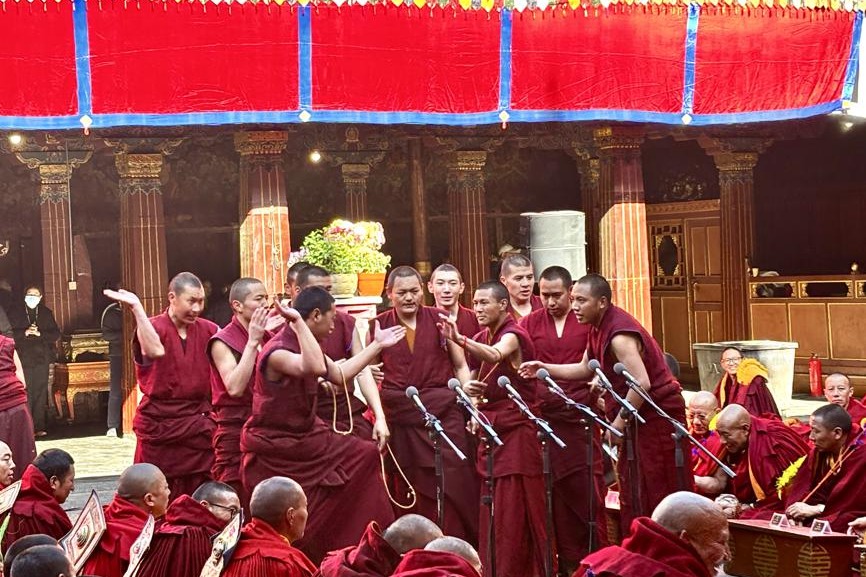
    On a Sunday in early April 2026, 13 Buddhist monks successfully completed the rigorous annual sutra debate ceremony held at Lhasa’s iconic Jokhang Temple, walking away with the Geshe Lharampa degree—the highest academic honor conferred by the Geluk School of Tibetan Buddhism. Widely recognized as equivalent to a doctoral degree in modern academic systems, the Geshe Lharampa title represents the pinnacle of scholarly achievement for Tibetan Buddhist monastics, requiring decades of rigorous study, deep doctrinal understanding, and advanced skill in the traditional practice of dialectical debate. Each year, candidates gather at Jokhang Temple to defend their interpretations of core Buddhist scriptures through structured, dynamic debates, demonstrating their mastery of centuries-old religious teachings to a panel of senior examiners. The 13 newly accredited degree holders hail from Geluk School monasteries across five regions of the Xizang Autonomous Region: Shigatse, Lhokha, Chamdo, Nagchu, and Lhasa itself. This centuries-old tradition of recognizing advanced religious scholarship has been sustained in modern times, with the total number of monks awarded the prestigious Geshe Lharampa degree now reaching 215. The annual ceremony not only upholds the longstanding academic and religious traditions of Tibetan Buddhism but also reflects the ongoing preservation of regional cultural and religious heritage in the Xizang Autonomous Region.

  • Living history in the heart of Beijing

    Living history in the heart of Beijing

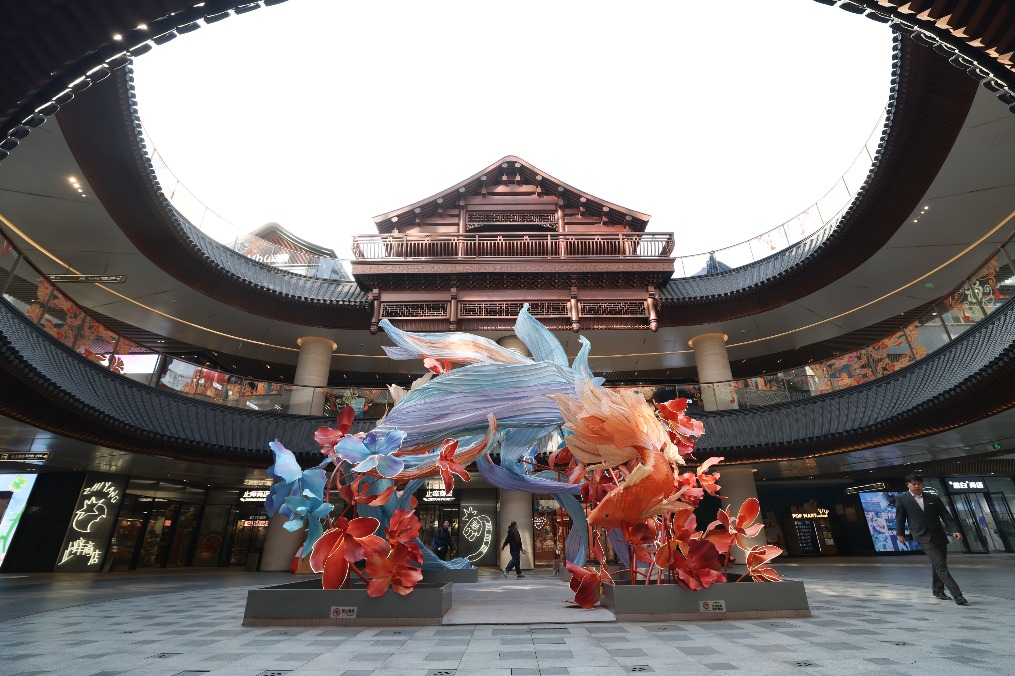
    Beneath the soft glow of Beijing’s morning sun, the weathered gray walls of Dajixiang’s traditional courtyards glow with quiet warmth. Tucked into the core of the city’s historic Xuannan district — a neighborhood that has carried the traces of Beijing’s cultural evolution for more than 800 years — this newly revitalized multifunctional complex stands as a living bridge between China’s distant past and its dynamic present.

    Wandering through the neighborhood’s winding narrow lanes, visitors encounter snapshots of everyday life that feel both timeless and utterly contemporary. In one shaded quiet corner, an elderly resident hunches over a hand-carved wooden chessboard, his brow furrowed as he plots his next move, while his opponent lets out a low, amused chuckle after a particularly clever gambit. A few steps away, doting grandparents walk slowly beside a wobbly toddler, guiding her as she takes her first unsteady steps into the world. Further along the lane, a local resident strolls at a relaxed pace, his golden retriever pulling eagerly at the leash, nose working overtime to sniff out every interesting scent along the path. Each small, unscripted moment weaves together to form a vibrant, living tapestry, proving that history here is not locked away in glass museum cases — it is part of daily life, where the past and present coexist without friction.

    At the heart of the complex, one carefully restored courtyard holds the former residence of Kang Youwei, the prominent reformer from China’s late Qing Dynasty (1644–1912). Kang was one of the masterminds behind the Hundred Days’ Reform of 1898, a landmark movement that sought to modernize China through political and institutional change. Standing surrounded by sleek, contemporary office buildings, the traditional Qing-era residence is a striking visual contrast, and a permanent reminder of Xuannan’s extraordinary layered history. Long before modern development reached central Beijing, Xuannan earned a reputation as a thriving cultural gathering hub, home to leading scholars, radical intellectuals, and revolutionary thinkers who shaped the course of modern Chinese history. Today, that centuries-old legacy endures, giving locals and tourists alike a tangible connection to the profound transformations that built the China we know.

  • Vinícius Júnior hails Lamine Yamal for condemning anti-Muslim chants

    Vinícius Júnior hails Lamine Yamal for condemning anti-Muslim chants

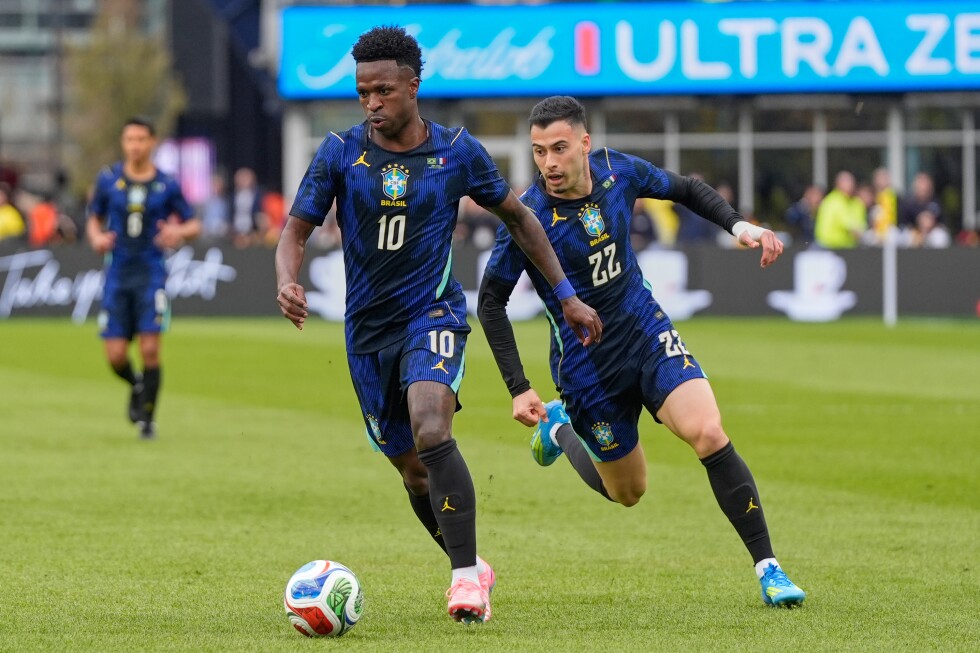
    MADRID — As Real Madrid prepared to host Bayern Munich in the highly anticipated first leg of the UEFA Champions League quarterfinals, Los Blancos star forward Vinícius Júnior used his pre-match press conference on Monday to highlight the importance of solidarity among elite footballers in the global fight against all forms of discrimination, publicly praising Barcelona rising star Lamine Yamal for his recent brave public rebuke of anti-Muslim chants.

    Less than a week before Vinícius’ comments, 16-year-old Barcelona winger Lamine Yamal — who identifies as Muslim — made headlines after calling out abusive chants directed at Egypt by a section of Spanish fans during a recent international friendly match between the two nations. Yamal publicly stated the discriminatory chants were deeply disrespectful and completely unacceptable, a stance that earned him widespread support from across the global football community, including from Vinícius, one of the most visible activists against racism in European football.

    The Brazilian international, who has repeatedly been targeted with racist abuse from crowds during his time playing in La Liga and European competitions, opened up about the ongoing challenges of addressing bigotry in the sport. He acknowledged that speaking out on the issue is often fraught with difficulty, noting that discriminatory incidents remain far too common in football at all levels.

    “It’s always complicated to talk about the subject, but these things happen a lot,” Vinícius told reporters. “Hopefully we can continue with this fight. It’s important that Lamine speaks about it. It could help others. We are famous, we have money, we can balance these things better, but poor people and Black communities everywhere surely struggle far more than we do. So we have to stick together — those of us with stronger platforms, all players….”

    Vinícius’ own high-profile fight against racism came to the forefront again just last month, during a Champions League group stage match against Benfica in Lisbon. After scoring a goal and celebrating in front of the home crowd, the Real Madrid forward publicly accused Benfica winger Gianluca Prestianni of directing a racist monkey slur at him, while he also faced sustained abusive taunts from Benfica supporters in the stands.

    In his comments Monday, Vinícius was careful to clarify that his criticism is not directed at specific nations, but at the presence of bigotry across global society. “I’m not saying that Spain or Germany or Portugal are racist countries, but there are racists in these countries, and in Brazil and other countries as well,” he explained. “But if we keep fighting together, I think future players and people in general won’t have to go through this again.”

    The comments came on the eve of one of the biggest matches of the European club season, with Real Madrid set to welcome Bayern Munich to the Santiago Bernabéu for the first leg of their Champions League quarterfinal tie.

  • China overtakes US in R&D, but genesis spark still lags

    China overtakes US in R&D, but genesis spark still lags

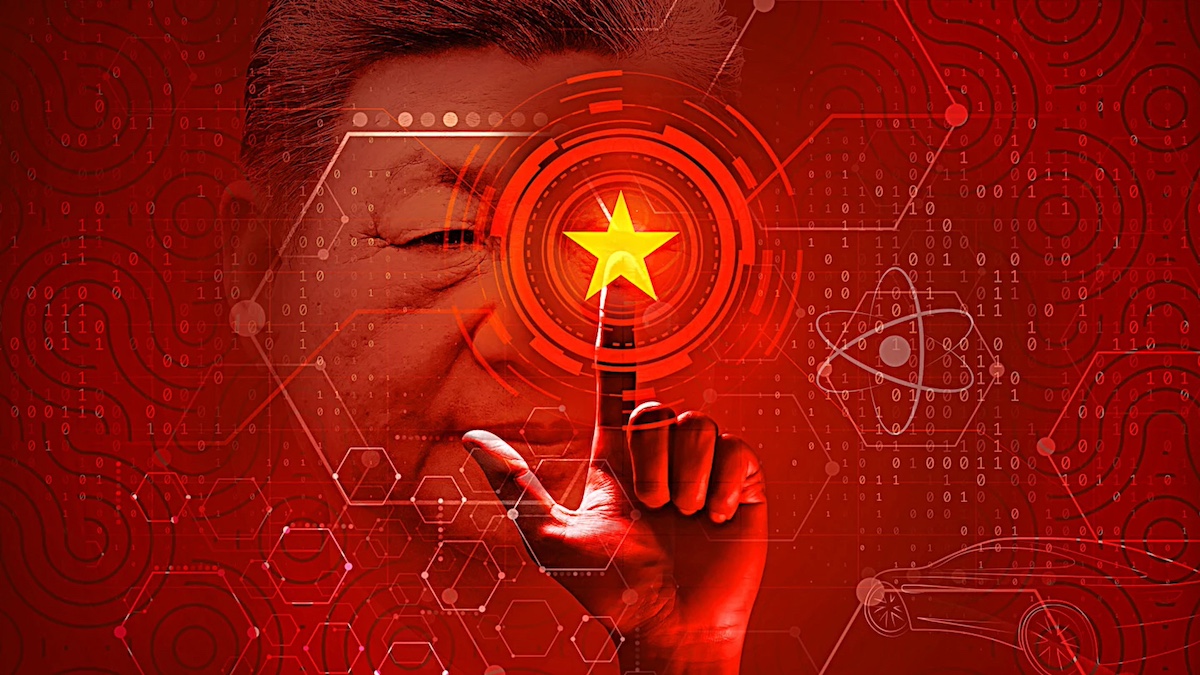
    For decades, experts have predicted the moment would come, and 2024 has delivered a historic shift in global research and development. Fresh data from the Organization for Economic Co-operation and Development (OECD) confirms China’s total annual R&D investment reached $1.03 trillion this year, edging past the United States’ $1.01 trillion to claim the top spot globally for the first time in recorded history.

    This milestone was far from an unexpected surprise. After 20 consecutive years of double-digit annual growth in R&D outlays, the question facing analysts was never if China would surpass the U.S. in total spending, but when. Now that the symbolic threshold has been crossed, however, the critical conversation shifts to what this shift actually means for global science and innovation — and the answer is far more nuanced than many sensational headlines suggest.

    The headline figures are indeed striking on their own. Since 2004, China’s R&D spending has expanded at an average annual rate of more than 14%, pushing its R&D intensity (the share of GDP dedicated to research) to 2.7%, a figure that now approaches the average for advanced OECD member economies. Looking ahead, Beijing has locked in plans to grow national science budgets by 7% annually over the next five years, with a planned 16.3% jump in central government funding for basic research set for 2026 alone.

    Beyond funding, China has built up its human capital pipeline at an unprecedented pace. Its universities now graduate twice as many students with science, technology, engineering, and mathematics (STEM) degrees as U.S. institutions. In 2022 alone, Chinese universities awarded more than 53,000 doctoral degrees in STEM fields, compared to fewer than 45,000 awarded across the United States. This growing talent base has translated directly to measurable research output: on the 2025 Nature Index, which tracks high-impact publications in the world’s leading peer-reviewed science journals, nine of the top 10 global research institutions are now Chinese, up from just one a decade earlier in 2016.

    Industry analysts have also noted China’s growing edge in strategically critical technology research. A 2025 report from the Australian Strategic Policy Institute found that China now leads the world in high-quality research across 66 of 74 prioritized strategic technologies. Even global pharmaceutical leaders have acknowledged China’s unique efficiency in advancing research: Pfizer CEO Albert Bourla recently noted that R&D work in China typically moves at “three times the speed, half the cost” of comparable projects in Western markets.

    Still, experts warn against jumping to conclusions about a shift in global scientific hegemony just yet. Historical context offers important perspective: at the height of the Cold War, the Soviet Union claimed the world’s largest scientific workforce, yet it ultimately could not match the pace of innovation driven by the United States’ more open, decentralized research ecosystem.

    Total spending and publication counts are key inputs, not final measures of success. The true test of scientific leadership lies in whether research delivers groundbreaking theoretical insights, transformative commercial technologies, and tangible benefits to global society — and on these metrics, the global landscape remains far more complex.

    China has already established clear leadership in several applied research domains, including electric vehicles, advanced energy storage, solar photovoltaic technology, 5G and next-generation wireless telecommunications, and humanoid robotics. Its domestic pharmaceutical sector is also rapidly narrowing the innovation gap with Western industry leaders. But when it comes to foundational, paradigm-shifting discovery, gaps remain. For context, just one Chinese scientist has won a Nobel Prize in a scientific field for research conducted entirely within mainland China. While China’s share of the world’s most highly cited, influential research is growing rapidly, the U.S. still retains a leading edge in the proportion of research that falls into the highest tier of global impact.

    These differences are not contradictions, but rather natural markers of a research ecosystem that is maturing at extraordinary speed but has not yet fully reached its full potential. What receives too little attention in most coverage of this milestone is the systemic difference between the two nations’ approaches to supporting science. Research does not thrive in a vacuum; it grows strongest in ecosystems built on openness, talent mobility, intellectual freedom, and long-term patient capital.

    The U.S. built its post-war scientific dominance not only through heavy public and private investment, but by creating an ecosystem that attracted global talent: merit-based funding allocation, world-class research universities, and an immigration system that for decades drew the brightest scientific minds from every corner of the globe. Over the past 25 years, 40% of U.S.-based Nobel laureates in the sciences have been immigrants, and immigrants have founded more than half of all billion-dollar technology startups in the country.

    China’s innovation model follows a different structure: it is centrally coordinated, strategically targeted at priority sectors, and disciplined in execution. This approach has proven extraordinarily effective at scaling proven technologies and closing historical development gaps. What remains unproven is whether this model can equally support the serendipitous, often inefficient process of fundamental discovery that produces true paradigm-shifting breakthroughs. Centuries of scientific progress have shown that the relationship between state direction and scientific creativity is not linear; excessive centralized control can limit innovation just as severely as insufficient funding.

    Instead of framing this shift as a binary race where one nation wins and another loses, a more productive framing is to recognize that global R&D is not a zero-sum enterprise. When Chinese chemists advance next-generation battery technology or Chinese engineers pioneer low-cost solar manufacturing, the entire world benefits from lower carbon emissions and more affordable clean energy — just as the entire globe gained from the U.S.-led development of mRNA vaccine technology that saved millions of lives during the COVID-19 pandemic.

    The real global risk is not that one nation invests more in research than another, but that growing geopolitical rivalry will push both sides to erect new barriers to knowledge sharing, restrict cross-border talent flows, and prioritize political goals over scientific merit. This milestone should push policymakers on both sides to engage in honest self-assessment, not reach for alarmist rhetoric.

    No matter what a single annual spending ranking shows, the nations that will prosper in the long run are those that invest consistently in basic research, cultivate STEM and research talent, protect academic freedom, and remain open to international collaboration. Nations that treat science primarily as a tool for geopolitical competition may end up leading the spending metric, while losing sight of what makes scientific progress possible.

    China’s surpassing of the U.S. in total R&D spending is a critical data point, not a final verdict on global scientific leadership. The full story of this shift is still being written, in laboratories, lecture halls, and policy offices across every continent. As scientific capacity becomes more broadly distributed across the globe, middle powers and regional innovation hubs across Asia and beyond have new room to shape the next era of global progress through targeted specialization, collaborative research, and strategic investment.

    A more multipolar global research ecosystem could ultimately prove more resilient and more inventive than the unipolar system that dominated the late 20th century — provided it remains open enough for ideas and talent to cross borders even as nations compete. The wisest response to this milestone is neither panic nor complacency, but a recommitment to the core conditions that enable great science. Those conditions have never been the exclusive property of any single nation, and they never will be.

    This analysis is by Y. Tony Yang, an Endowed Professor at the George Washington University in Washington, D.C.
  • XMU at 105: Honoring the past, inspiring the future

    XMU at 105: Honoring the past, inspiring the future

    In 1921, a visionary patriotic overseas Chinese leader, Tan Kah Kee, made history by establishing Xiamen University (XMU) – the first institution of modern higher education in China founded by an overseas Chinese philanthropist. One hundred and five years later, in 2026, the prestigious institution is marking its historic milestone, reflecting on a century of progress while pushing forward with its ambitious goal of rising as a leading world-class university.

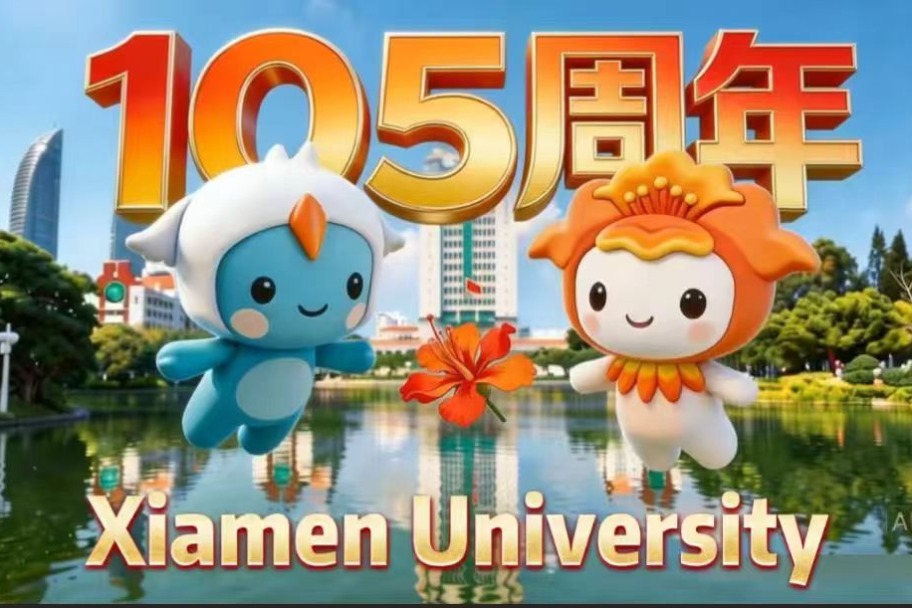
    To honor this landmark occasion, the university has launched a series of celebratory activities centered on connecting its past, present, and global community. XMU’s beloved official mascots, Xiao Bai and Xiao Xia, embarked on a nostalgic and celebratory tour that spanned the university’s three domestic campuses in Xiamen and extended all the way to its overseas campus in Malaysia. Along the journey, the mascots revisited iconic locations that hold decades of institutional memory, bringing together generations of students, faculty, and alumni around shared experiences and institutional pride.

    A companion video released for the anniversary captures heartfelt moments from the global XMU community, where graduates gathered beneath the sprawling branches of blooming royal poinciana trees – a botanical symbol long tied to XMU’s identity, representing youthful vitality and the joy of reunion after years apart. In these moments, alumni from across the globe shared their warm well-wishes for the university’s next chapter, reflecting on the foundational impact their time at XMU had on their personal and professional lives.

    Throughout its 105-year history, Xiamen University has stayed rooted in the patriotic spirit of its founder, expanding its academic influence, global outreach, and research capacity to become one of China’s most respected comprehensive higher education institutions. As it enters its 106th year of operation, the anniversary celebration serves as both a tribute to the legacy that built the institution and a source of inspiration for the next generation of scholars and leaders who will carry its mission forward.