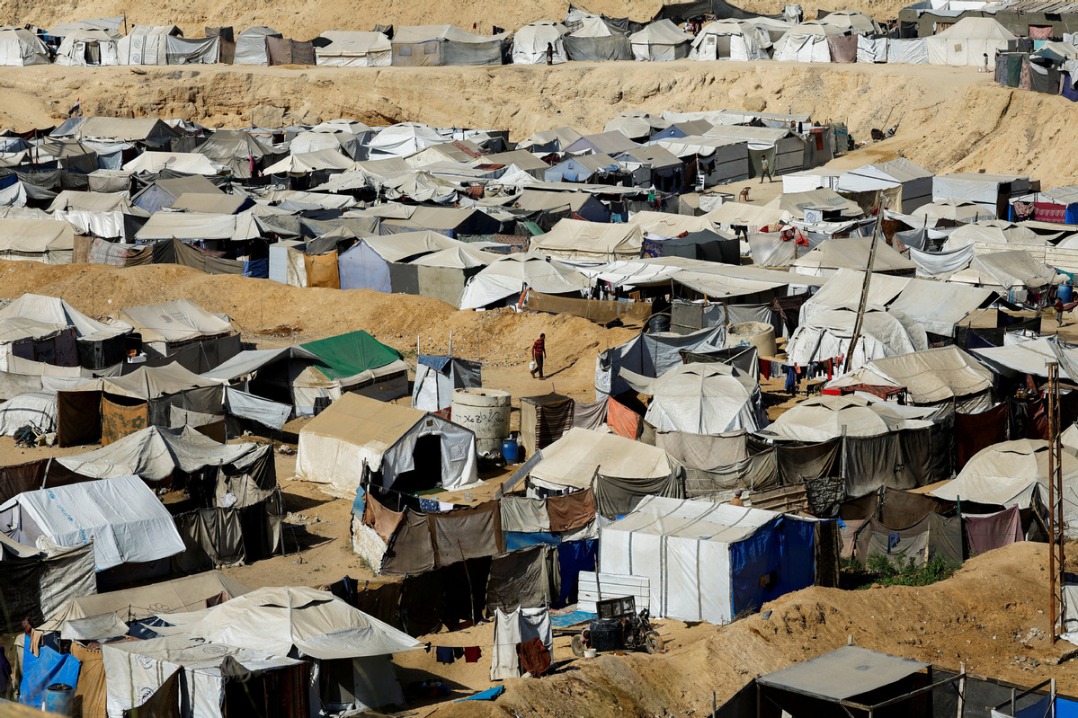
In a significant development, delegations from Hamas and Fatah convened in Cairo to deliberate on post-war arrangements for the Gaza Strip. The meeting, reported by Egyptian TV channel Al-Qahera News, marks a pivotal step towards Palestinian unity and reconstruction efforts. The Hamas delegation, led by senior leader and chief negotiator Khalil al-Hayya, met with Fatah’s representatives, including Palestinian Vice President Hussein al-Sheikh and intelligence chief Majed Faraj. The discussions also encompassed the second phase of former US President Donald Trump’s peace plan for Gaza, with Egypt preparing to host a reconstruction conference in November. Concurrently, Egypt’s intelligence chief Hassan Mahmoud Rashad engaged with Fahd Suleiman, Secretary-General of the Democratic Front for the Liberation of Palestine, to foster national consensus on Trump’s plan. Rashad also reiterated opposition to the Israeli Knesset’s recent bill on annexing the occupied West Bank. The talks follow a ceasefire brokered by the US, Egypt, Qatar, and Turkiye, which took effect on October 10, 2025, after two years of conflict. Despite the truce, Gaza’s health authorities reported ongoing casualties, with 89 deaths and 317 injuries since October 11, and a staggering toll of 68,280 deaths and 170,375 injuries since October 7, 2023.
博客
-
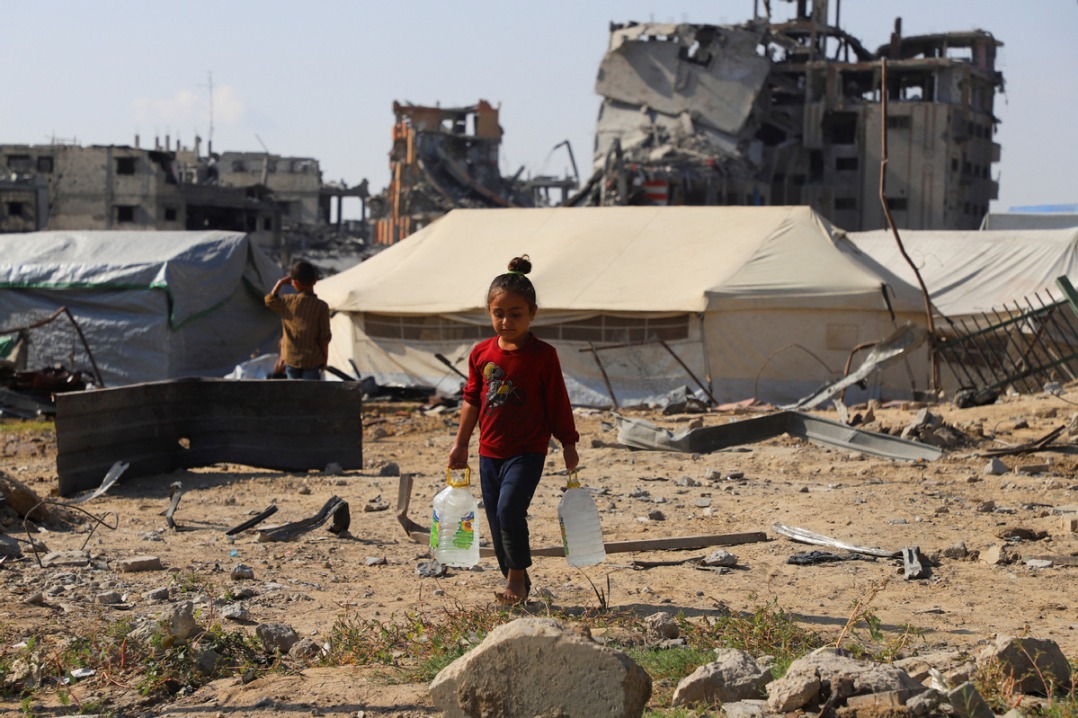
UN aid team finds poor hygiene, widespread skin diseases among displaced people in Gaza
A recent assessment by a United Nations aid team in Gaza City has unveiled alarming hygiene and health conditions among displaced populations. The UN Office for the Coordination of Humanitarian Affairs (OCHA) reported on Thursday that severe challenges, including a lack of clean water, widespread skin diseases, and damaged sanitation systems, are prevalent in the region. The team conducted evaluations at two collective centers in Gaza City’s Az Zaitoun neighborhood, which currently shelters over 200 families. Residents at these sites face dire circumstances, with reports of individuals walking up to two kilometers to access water due to a shortage of containers. The urgent need for repairs to latrines and sewage networks was emphasized to prevent further contamination. Displaced families also expressed immediate needs for food, clean water, hygiene items, and materials to repair water and sanitation infrastructure. Additionally, cash assistance is required for winter clothing, shoes, tarpaulins, and kitchen sets. The World Health Organization (WHO) facilitated the medical evacuation of 41 critical patients and 145 companions from Gaza, marking the first such operation since the October 10 ceasefire. However, approximately 15,000 patients remain on a waiting list for external medical care. Humanitarian partners have provided protection support to around 21,000 people in displaced and returnee communities, including psychosocial first aid for 3,000 children and caregivers. Hygiene kits were distributed to over 30 temporary learning spaces, benefiting 6,800 school-age children. The World Food Programme has also begun distributing high-energy biscuits and fortified date bars to children in 18 temporary learning spaces. On Tuesday, 147 UN and partner trucks delivered essential supplies, with two-thirds of the cargo comprising food aid. Other items included diapers, hygiene kits, and tarps for emergency shelter assistance. The UN Office for Project Services collected and distributed significant quantities of diesel and gasoline to support critical humanitarian operations.
-
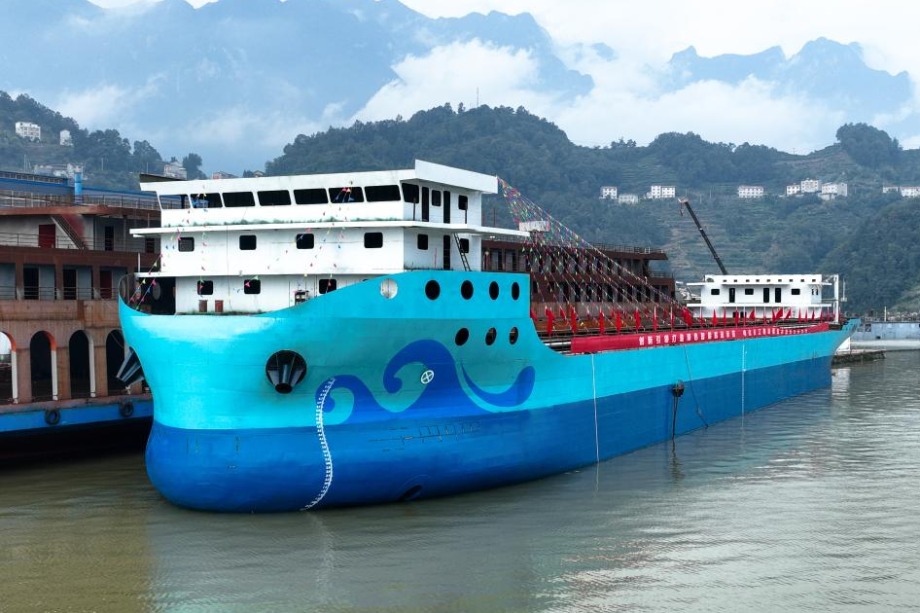
China’s largest all-electric bulk carrier launched in Central China
In a groundbreaking development for the maritime industry, China has launched its largest all-electric bulk carrier, named Gezhouba, in Yichang, Hubei province. This event, which took place on October 23, 2025, signifies a major leap forward in the nation’s pursuit of green and intelligent shipping solutions. The Gezhouba, measuring nearly 130 meters in length and capable of carrying over 13,000 tonnes, is powered by 12 lithium battery units with a combined energy capacity of 24,000 kWh. Notably, the vessel features rapid battery-swapping technology and can travel up to 500 kilometers on a single charge. This innovation underscores China’s commitment to reducing carbon emissions and advancing sustainable transportation technologies. The launch of the Gezhouba is expected to set a new benchmark for eco-friendly shipping globally, as industries worldwide seek to adopt cleaner energy alternatives.
-
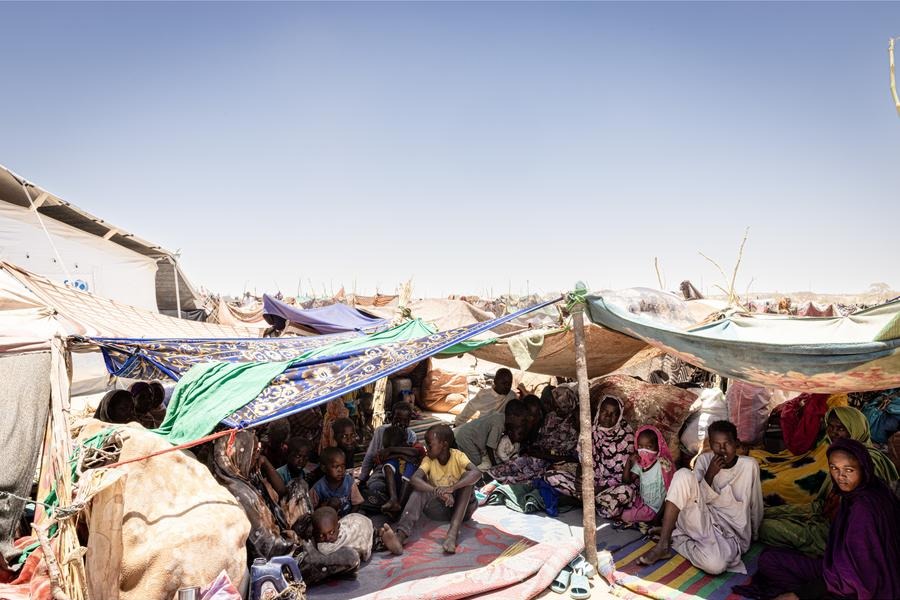
Over 30 mln people in Sudan in need of humanitarian assistance: UN agencies
Sudan is grappling with one of the most severe humanitarian crises globally, with over 30 million people requiring urgent assistance, including 9.6 million internally displaced individuals and nearly 15 million children, according to a joint statement by four United Nations agencies. The International Organization for Migration (IOM), the UN Refugee Agency (UNHCR), the United Nations Children’s Fund (UNICEF), and the World Food Programme (WFP) issued the alarming report on Thursday, calling for immediate international intervention. The crisis, now in its third year, has been exacerbated by relentless conflict, widespread human rights violations, famine, and the collapse of essential services such as healthcare and education. Famine was confirmed in parts of Sudan last year, and the hunger situation remains dire, with malnutrition rates skyrocketing, particularly among children. Senior UN officials who recently visited Sudan witnessed the devastating impact of the crisis in regions like Darfur and Khartoum. Despite some families returning to Sudan, driven by a determination to rebuild their lives, the country remains in deep crisis. Humanitarian access to affected populations is severely restricted due to insecurity, bureaucratic hurdles, and logistical challenges. Funding shortages further aggravate the situation, with the 2025 Humanitarian Response Plan for Sudan only 25% funded. The UN agencies have called for an immediate cessation of hostilities, unhindered humanitarian access, simplified aid delivery procedures, urgent funding, and support for durable solutions for displaced populations.
-
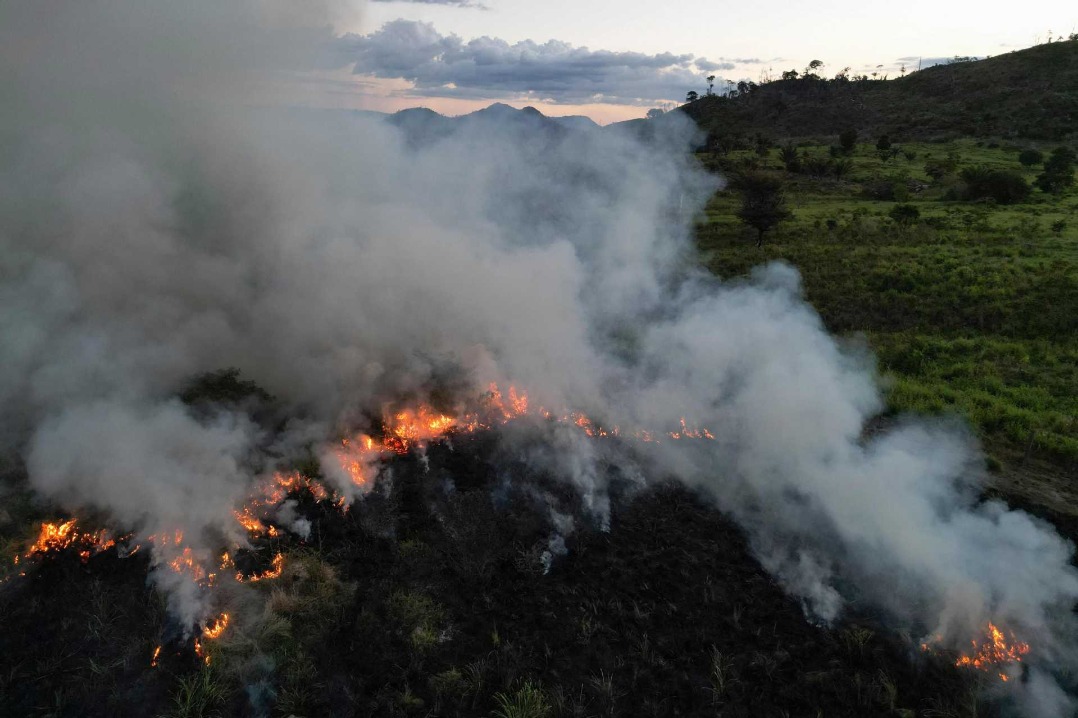
Action urged ahead of UN climate meeting
As the United Nations Climate Change Conference (COP30) approaches, South African officials are urging developed nations to deliver actionable commitments, particularly in the realm of climate finance. The conference, scheduled to commence next month in Brazil, is seen as a critical juncture for translating climate pledges into tangible outcomes. Dion George, South Africa’s Minister of Forestry, Fisheries, and the Environment, emphasized the need for the operationalization of the loss and damage fund, which must be adequately capitalized and accessible to vulnerable nations, especially in Africa. George highlighted the necessity of technical and capacity-building support to enable developing countries to effectively mitigate and address climate-induced losses. South Africa, in collaboration with the African group of negotiators, will advocate for the continent’s unique needs, including its limited historical responsibility for greenhouse gas emissions and the principle of common but differentiated responsibilities. The call for action comes against the backdrop of the $100 billion annual climate finance pledge made by developed countries in 2009, which has yet to be fully realized. The New Collective Quantified Goal, adopted at COP29 in Azerbaijan, aims to raise $300 billion annually by 2035 to support developing countries’ climate efforts. The Baku to Belem Roadmap, established at COP29, further underscores the need for enhanced international cooperation in climate finance. Dorah Modise, Executive Director of South Africa’s Presidential Climate Commission, stressed the importance of clarity on funding availability and disbursement mechanisms. She emphasized that COP30 must demonstrate the efficacy of multilateralism in addressing global challenges like climate change, without burdening the Global South with additional debt. Modise called for grants and concessional loans to support infrastructure damage caused by climate change, ensuring accessibility and localization. South Africa’s decarbonization efforts will align with its developmental goals, including economic growth and job creation, while fostering intra-African collaboration and South-South partnerships. Boitumelo Molete, a policy coordinator at the Congress of South African Trade Unions, underscored the need for COP30 to deliver concrete outcomes that operationalize the Just Transition Work Programme and support vulnerable communities. Makoma Lekalakala, Director of Earthlife Africa, echoed the call for a clear roadmap from COP29 to COP30, emphasizing the urgency of addressing loss and damage financing.
-

Canada’s lumber sector reels from Washington’s tariffs
Canada’s lumber sector is grappling with significant challenges following the imposition of new tariffs by the United States on timber and furniture imports. On October 14, Washington introduced a 10% tariff on imported timber and lumber, alongside a 25% duty on kitchen cabinets, in addition to the existing 35% levy on Canadian lumber. Experts warn that these measures could exacerbate price disparities and strain the already fragile trade relationship between the two nations. Harry Nelson, an associate professor of forestry at the University of British Columbia, described the combined 45% tariff on Canadian softwood as ‘unprecedented,’ predicting it could persist for at least six months. The tariffs are expected to widen the gap between domestic and export prices, with Canadian lumber prices likely to fall relative to the US market. Beyond the immediate impact on lumber, the broader North American economy could also suffer, with potential declines in housing starts and increased economic uncertainty. Industry groups, including the British Columbia Lumber Trade Council (BCLTC), have expressed deep disappointment, arguing that the tariffs will drive up costs, threaten jobs, and exacerbate the US housing supply crisis. The Canadian government has pledged C$1.2 billion in aid to softwood producers, but experts warn this may be insufficient to address the widespread effects across the interconnected sector. With the US threatening to raise tariffs further in January, pressure is mounting on Canada to negotiate a resolution. Canadian Prime Minister Mark Carney hinted at the possibility of a trade deal ahead of the upcoming APEC Economic Leaders’ Meeting, but uncertainties remain.
-
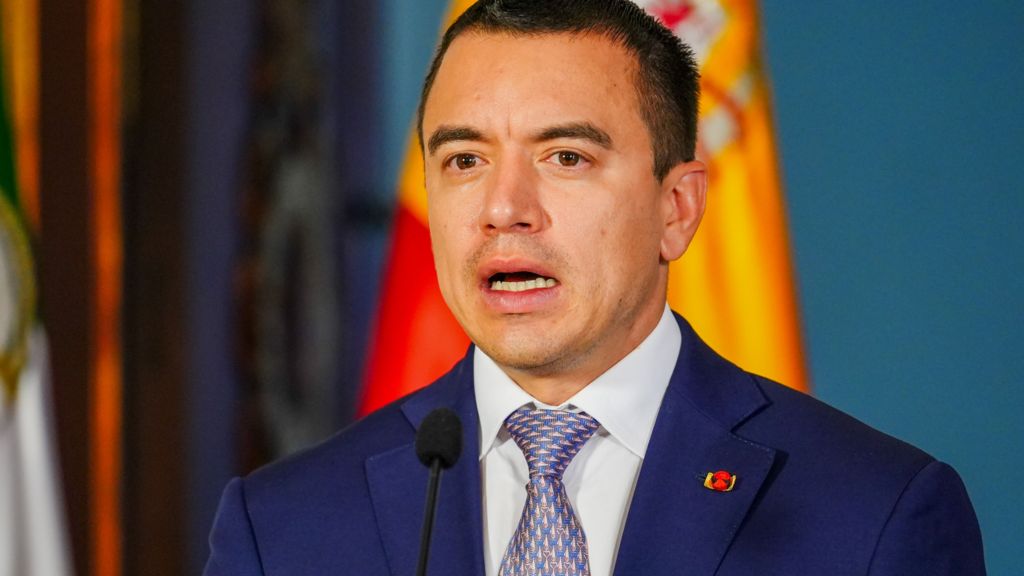
Ecuador’s president says he was target of foiled chocolate and jam poisoning
Ecuadorian President Daniel Noboa has alleged that an attempt was made to poison him through contaminated gifts of chocolate and jam, containing three highly concentrated toxic substances. Speaking to CNN on Thursday, Noboa asserted that the presence of these chemicals in such high concentrations was “practically impossible” by chance. While he claimed his team possesses evidence supporting the allegation, no concrete proof has been publicly disclosed. This incident marks the third alleged attempt on Noboa’s life in just two months, following violent clashes and protests against his administration’s policies, including a sharp rise in fuel prices and the removal of diesel subsidies. Noboa, a center-right leader, has implemented military crackdowns on drug gangs but faces accusations of targeting protesters. He dismissed suggestions that these alleged attempts were staged to portray his detractors as violent, stating, “No one throws a Molotov cocktail at themselves… or poisons themselves with chocolate.” Earlier in October, Ecuador’s government detained five individuals over an alleged assassination attempt, during which about 500 people reportedly threw rocks at the president’s car, leaving “signs of bullet damage.” However, the BBC could not independently confirm a bullet was fired. In late September, a humanitarian convoy carrying Noboa and including UN and EU diplomats was ambushed by approximately 350 people, who attacked with Molotov cocktails and took 17 soldiers hostage. Noboa shared images of the damaged vehicles on social media. Meanwhile, a national strike led by the Confederation of Indigenous Nationalities of Ecuador (Conaie) against the government’s decision to end diesel subsidies concluded on Thursday after weeks of protests. Conaie, which has historically played a pivotal role in Ecuadorian politics, led demonstrations that ousted three presidents between 1997 and 2005.
-
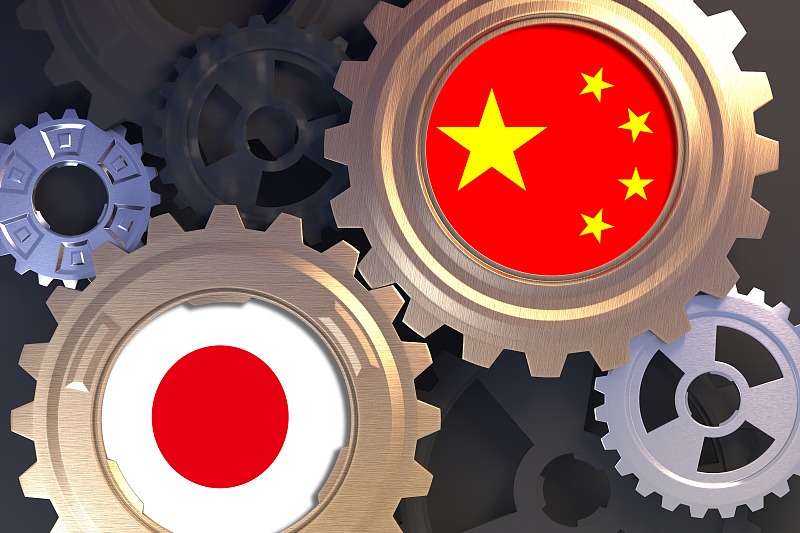
Trade cooperation continues to anchor Sino-Japanese ties
Despite the global rise in protectionism, supply chain realignments, and Japan’s political shift to the right, economic collaboration between China and Japan continues to be a cornerstone of their bilateral relationship. This was highlighted during the Beijing launch of the 2025 Blue Book of Japanese Economy, a report co-authored by the Institute of Japanese Studies at the Chinese Academy of Social Sciences and the Chinese Association for Japanese Economic Studies. The report emphasizes the enduring significance of the Chinese market for Japanese businesses, even as Japan’s foreign direct investment in China has seen a decline due to global supply chain shifts, the yen’s depreciation, and rising labor costs. According to Japan’s Finance Ministry, China ranked ninth among destinations for Japanese investment last year, with direct investment totaling 493.1 billion yen ($3.23 billion). Yang Bojiang, director of the Institute of Japanese Studies, noted that Japan’s net investment in China last year was nearly 60 percent below its 2017 peak, largely due to the relocation of manufacturing lines for U.S.-bound exports out of China to avoid tariff barriers and geopolitical risks. However, experts caution against interpreting this decline as the full picture. A survey by the Japanese Chamber of Commerce and Industry in China revealed that 56 percent of respondent companies plan to ‘increase or maintain’ investment in China this year, with 54 percent considering the Chinese market as ‘the most important’ or ‘one of the top three important markets.’ Chang Sichun, an associate researcher at the Institute of Japanese Studies, pointed out that China remains Japan’s fourth-largest destination for direct investment, following the U.S., the U.K., and the Netherlands. Japanese companies in China have consistently maintained high returns on investment, particularly in the services sector, where recent performance has been strong. The Japanese Chamber of Commerce and Industry in China reported that the return on direct investment for Japanese companies in China rose from 12.1 percent in 2015 to 18.4 percent in 2022, outperforming returns in the U.S. (8.8 percent) and the U.K. (14.7 percent). This strong performance has led to a rebound, with China’s Commerce Ministry reporting a 58.9 percent year-on-year increase in actual investment from Japan in the first eight months of this year. Yang also highlighted China’s modernization achievements as a key attraction for Japanese businesses, noting growing appreciation in Japan for China’s path to modernization, particularly in areas like poverty reduction and the digital economy. However, experts warned of potential uncertainties arising from Japan’s increasingly rightward political shift, which could suppress Japanese investment in China, particularly in high-tech sectors. Despite these challenges, the significant presence of Japanese companies in China and their substantial accumulated investment form an important channel for stabilizing bilateral relations. Strengthening bilateral exchanges and ensuring the healthy development of China-Japan relations not only serves the fundamental interests of both countries but also contributes to regional prosperity and global economic recovery.
-

Nation to update cyber law to strengthen AI oversight
China is set to amend its Cybersecurity Law to bolster oversight of artificial intelligence (AI) security risks, ensuring the technology evolves in a safe, fair, and beneficial manner. Wang Xiang, spokesperson for the Legislative Affairs Commission of the National People’s Congress (NPC) Standing Committee, announced the move on Thursday, emphasizing the need to balance AI development with robust cybersecurity measures. The Cybersecurity Law, enacted in June 2017, has been instrumental in advancing China’s cyber capabilities and fostering the integration of digital and real economies. Wang highlighted AI’s transformative role in driving technological innovation and industrial progress, while also acknowledging the challenges it poses, such as increased cybercrime. To address these issues, the draft amendment includes provisions to support foundational AI research, improve ethical standards, and enhance risk monitoring and regulation. Additionally, the amendment aligns with existing laws like the Civil Code and the Personal Information Protection Law. The NPC Standing Committee will review the draft during its upcoming session, alongside revisions to the Organic Laws of Villagers’ and Urban Residents’ Committees, which aim to strengthen community governance and care for vulnerable groups. The session will also discuss amendments to the Environmental Protection Tax Law and a draft law on procuratorial public-interest litigation.
-
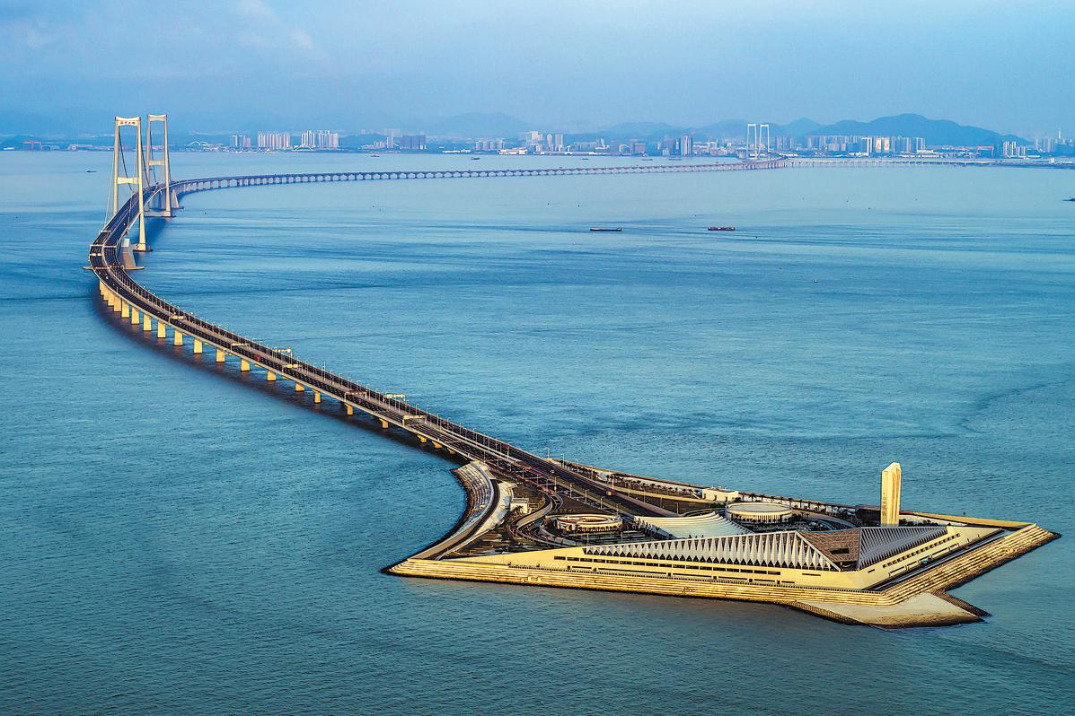
Artificial island to begin tourism trial operation
The western artificial island of the Shenzhen-Zhongshan Link, a monumental cross-sea project in the Guangdong-Hong Kong-Macao Greater Bay Area, is poised to commence a month-long trial operation as a cultural and tourism destination starting this Saturday. Managed by the Guangdong Transportation Group, this initiative marks a significant step in transforming the island into a multifaceted hub for education, leisure, and innovation. The formal opening is slated for December 2025. Spanning 24 kilometers, the Shenzhen-Zhongshan Link integrates bridges, islands, tunnels, and underwater interchanges, representing one of the most complex engineering feats in modern infrastructure. Completed in June 2024 after 14 years of planning and construction involving over 15,000 workers, the project has already facilitated increased traffic flow, with vehicles seamlessly transitioning between the bridge and tunnel via the western island. Covering 137,000 square meters, the island serves as a critical hub for traffic management, emergency rescue, and science education. The cultural and tourism development will unfold in phases, with the initial focus on study tours and sightseeing centered around a science and education base. During the trial period, reservations will be available for enterprises and study groups on weekdays, with public access on weekends. Visitors will provide feedback on tour routes, VR/AR interactive equipment, and supporting services. Once fully operational, ticket prices will range from 128 to 188 yuan, inclusive of transportation and a three-hour tour. Dining and other facilities are expected to launch by December. The island’s observation deck offers views of iconic landmarks like Shenzhen Bao’an International Airport and the Shenzhen-Zhongshan Bridge, while the science education base showcases the project’s development history and cutting-edge technologies like holographic projections. Outdoor exhibits include full-scale tunnel sections and engineering components, offering insights into the construction process. Long-term plans envision activities such as sea-based bridge viewing and low-altitude sightseeing flights, positioning the island as a premier technology, engineering, and cultural tourism destination in the Greater Bay Area.