博客

  • Argentina passes bill loosening protection of its glaciers

    Argentina passes bill loosening protection of its glaciers

    BUENOS AIRES, Argentina — Argentina’s lower congressional chamber has given final approval to a hotly contested amendment to the country’s landmark 2010 Glacier Law, opening the door to expanded mining activity in sensitive glacial regions and sparking fierce pushback from environmental activists and water protection advocates. The original 2010 legislation, widely hailed as a pioneering global conservation measure, imposed a total ban on mining and mineral exploration across all glacial zones, designating these frozen landscapes as critical national water reserves.

    The approved reform shifts regulatory authority: the power to map and define which glacial areas will receive protected status is transferred from the national Argentine Institute for Snow, Ice and Environmental Sciences (Ianigla) to individual provincial governments. President Javier Milei, a prominent supporter of the overhaul, framed the change as a step toward decentralized resource governance, saying it empowers provincial leaders to leverage their own natural assets and permits mining activity only in areas that do not require environmental protection.

    The bill cleared the Argentine Senate in February 2026, leaving lower house approval as the final procedural barrier. Its passage has deepened political and social divides across the country, with opponents organizing mass public demonstrations outside congressional buildings. Protesters carried signs reading “La Ley de Glaciares no se toca” — “Hands off the Glacier Law” — to demand the legislation be withdrawn.

    Opponents warn the amendment puts Argentina’s most essential freshwater supply at existential risk. “Without water, we cannot even begin to plan for growth or development,” opposition Congresswoman Natalia de la Sota argued. Supporters of the reform, however, reject claims that the change weakens glacial protections. Backbench Congresswoman Nancy Picón Martínez, a proponent of the bill, said the mining industry has been unfairly demonized in public debate, insisting “this law protects glaciers, no matter how much some people want us to believe otherwise.”

    Under the terms of the new framework, existing glaciers and periglacial environments — frozen landscapes that may not be permanently covered in ice but remain frozen for a large part of the year — will retain protected status under Ianigla’s national inventory until provincial governments formally prove these areas do not function as strategic water reserves.

    Argentina is home to more than 16,900 glaciers, which feed 36 river basins spanning 12 provinces that supply freshwater to nearly seven million people. Meltwater from these glacial systems plays a critical role in buffering the impact of droughts, a growing threat across Argentina’s semi-arid northern and central regions driven by accelerating climate change. In provinces like Mendoza, glacial meltwater is often the only reliable water source for communities and agricultural production during extended dry periods.

    Governors of five mineral-rich provinces — Catamarca, Jujuy, Salta, Mendoza and San Juan — united in support of the amendment, arguing the 2010 law blocked efforts to drive inclusive, sustainable economic growth for both provincial and national economies without compromising resources for future generations.

    Leading environmental organizations have sharply condemned the reform, pushing back on the core argument that only a subset of glacial and periglacial areas qualify as strategic water reserves. “The primary function of all glaciers and the entire periglacial environment is to act as a freshwater reservoir,” explained Agostina Rossi Serra, a biologist with Greenpeace Argentina. “Periglacial environments hold water within their structure, and their gradual melt feeds the rivers and streams that sustain our country. A large portion of the regions pushing hardest for this amendment are arid and semi-arid areas where water is already an extremely scarce resource.”


  • US-China collaboration seen as path to meet AI’s power demands

    US-China collaboration seen as path to meet AI’s power demands

    The global artificial intelligence boom is reshaping energy needs across every continent, and it has carved out an unexpected new space for cooperation between the world’s two largest economies: the United States and China. Industry leaders and clean energy experts argue that a partnership between the two nations on clean energy development and grid management could not only ease the growing energy crunch holding back AI expansion but also deliver widespread benefits for both countries and the entire global economy.

    As AI adoption accelerates, data center footprints are expanding rapidly and computing power requirements are skyrocketing, pushing energy infrastructure to its breaking point. This crisis has emerged as one of the most urgent bottlenecks for sustained AI development worldwide. Against this backdrop, industry observers note that the complementary strengths of the US and China make cross-border collaboration not just a feasible path forward, but a logically necessary one to address the shared challenge.

    Ramkumar Krishnan, a cleantech entrepreneur and technologist with over two decades of experience in clean energy and advanced technology, shared his perspective with China Daily during an interview in San Francisco. “Technologies and products that are used, whether it’s in the US or in China or in other parts of Asia, they’re all very similar,” Krishnan explained. “There are lots of ways that I think technology is a connecting piece that brings all the nations together, because we all need technologies to solve the problem.”

    China has secured its position as a global leader in large-scale clean energy production. Official data from China’s National Energy Administration shows the country’s annual clean power output has already surpassed 10 trillion kilowatt-hours — more than double the comparable figure for the United States, and exceeding the combined total power consumption of the European Union, Russia, India and Japan. This massive scale has allowed China to build unmatched operational experience and deploy extensive infrastructure that other nations can draw from, especially when it comes to developing intelligent grid management systems capable of handling the high, consistent energy demands of AI data centers, Krishnan said.

    Krishnan pointed out that renewable energy technologies hold a major advantage over traditional large-scale power projects in their speed of deployment. A utility-scale solar farm, for example, can be completed and connected to the grid in 18 months or less, while conventional nuclear or hydropower projects often require 10 to 15 years to reach operation. “Bringing the right portfolio of solutions that can help to accelerate the adoption of energy, and bringing new energy, that could be another area that we can solve the demand that we have from AI,” he added.

    For the United States, the key challenge lies in unlocking greater efficiency from existing energy infrastructure, Krishnan noted. The country holds a large amount of untapped excess grid capacity, but much of this capacity remains underutilized due to inconsistent availability and geographically fragmented distribution. “How do we actually intelligently manage that? That’s an area of pretty strong interest — how do we model how energy is used, so that we can utilize that excess capacity in lots of different places, whether it’s industries, EV charging stations,” he said. Notably, Krishnan suggested that AI itself could be part of the solution to the energy crisis it has created: advanced AI systems can enable far more dynamic, intelligent energy management that matches variable renewable energy supply with constantly shifting demand across grids.

    One major Chinese clean energy enterprise is already moving to turn this collaborative vision into concrete action. GCL Group, a leading Chinese clean energy service provider that has already developed utility-scale power projects across California, Colorado and New York, is actively pursuing partnerships with United States AI companies to deliver integrated energy solutions for global AI infrastructure expansion.

    During a recent visit to Silicon Valley, GCL Group chairman Zhu Gongshan outlined the scope of the growing energy challenge. “Computing demands of generative AI are driving explosive growth in the global AI data center market, while putting mounting pressure on power supplies worldwide,” Zhu said. “As demand for computing capacity surges, energy is emerging as one of the biggest bottlenecks to AI development.”

    Zhu highlighted Southeast Asia as a particularly high-potential emerging market for this cross-border collaboration model. The region is seeing a rapid surge in demand for AI computing capacity, and it could be best served by integrated platforms that combine US AI technological expertise with China’s scalable clean energy solutions, he added.

  • 4 dead, 38 rescued during attempted channel crossing from France to UK

    4 dead, 38 rescued during attempted channel crossing from France to UK

    At Equihen Beach on France’s northern coast, a devastating tragedy unfolded Thursday that claimed the lives of four migrants — two men and two women — as they attempted to reach the United Kingdom via the perilous English Channel crossing. The fatal incident occurred when the group, part of a larger cohort of people hoping to reach Britain, tried to board a small trafficker-operated inflatable vessel before being pulled out to sea by powerful, dangerous coastal currents.

    According to François-Xavier Lauch, the regional prefect of Pas-de-Calais, 38 other migrants were pulled from the water by rescue teams, with one individual in critical medical condition as operations continued through Thursday morning. This deadly incident marks the latest spike in fatalities as attempted cross-Channel crossings have surged in recent days.
    Unlike the small inflatable craft that migrants carry to the water themselves, the vessel involved in Thursday’s tragedy was what French authorities term a “taxi-boat” — a small motorized inflatable craft launched empty from hidden coastal locations by people smugglers, which then meets migrants at pre-arranged beach pickup spots. Equihen Beach, a long stretch of open sand backed by forest and sand dunes, is a common hiding area for migrants, who often wait for days in the cover of the dunes and trees for favorable weather and sea conditions, as well as for their prearranged pickup by smugglers.
    French police patrol the extensive coastline on all-terrain vehicles and maintain observation posts in repurposed World War II bunker ruins, but the length of the shoreline makes it impossible to intercept every attempted departure.
    The pattern of deadly crossings has accelerated sharply in recent days. Just one day before the Equihen Beach tragedy, on Wednesday, French maritime rescue services pulled 102 migrants from the Channel in two separate separate rescue operations. The previous week saw two more migrants die in a nearly identical incident off the coast north of Calais.
    An Associated Press reporter who witnessed an attempted pickup near Dunkirk at Malo-les-Bains on Wednesday described the dangerous conditions migrants face. Migrants wade out from the beach, often carrying small children in their arms or on their shoulders, to reach the waiting taxi-boats anchored offshore. Depending on tide levels, police presence, and weather, migrants often have to walk hundreds of yards out into the sea, with water reaching their chests, before reaching the vessel. This deep wading dramatically increases the risk of losing footing, being swept away by currents, or drowning before even boarding the craft.
    Migrant rights advocacy groups have long sounded the alarm about the growing risks of the current enforcement approach. French police have increasingly responded to the surge in crossings by destroying small inflatable boats carried by migrants themselves, puncturing the craft with knives to prevent departures. Campaigners warn this crackdown has directly pushed smuggling networks to rely more heavily on the taxi-boat model, which forces migrants to wade through deep, dangerous waters to reach pickup points — ultimately increasing the likelihood of drowning, serious injury, and life-threatening emergencies that require large-scale rescue operations.

  • UK and Norway led a military operation to deter Russian submarines in the North Atlantic

    UK and Norway led a military operation to deter Russian submarines in the North Atlantic

    In an official announcement released Thursday, the United Kingdom’s military confirmed that British and Norwegian armed forces have wrapped up a more than month-long security operation in the North Atlantic, aimed at countering suspected malign Russian submarine activity near critical undersea infrastructure. The coordinated deployment, led by the two NATO allies, involved a British frigate, multiple surveillance aircraft, and hundreds of military personnel tasked with monitoring three Russian vessels: one attack submarine and two intelligence-gathering spy submarines operating in waters north of the UK. According to UK Defense Secretary John Healey, the show of allied force successfully achieved its core goal, with the Russian submarines ultimately departing the area after the sustained surveillance operation.

    In a blunt public message directed at Moscow during the announcement, Healey emphasized that the UK and its allies maintain unwavering vigilance over key undersea cables and energy pipelines that underpin European energy security and digital connectivity. “We see your activity over our cables and our pipelines, and you should know that any attempt to damage them will not be tolerated and will have serious consequences,” Healey stated, underscoring the alliance’s commitment to protecting critical shared infrastructure in the North Atlantic.

    Notably, the announcement comes as global attention remains overwhelmingly focused on ongoing armed conflict in the Middle East, a shift that UK officials have warned Russia seeks to exploit to advance its hostile activities in the Euro-Atlantic region. Healey explicitly rejected the idea of diverting focus from Russian aggression amid the Middle East crisis, telling reporters that “Putin would want us to be distracted by the Middle East, but Russia is the main threat to the U.K. and its allies. We will not take our distracted by the Middle East, but Russia is the main threat to the U.K. and its allies. We will not take our eyes off Putin.” UK officials have also repeatedly drawn connections between Russian activities in Europe and the Middle East, noting that Moscow has supplied Iran with drone components and other military support that bolsters Iran’s regional activities.

    As of Thursday, representatives from Norway’s defense ministry, foreign ministry, and armed forces had not yet responded to requests for comment on the joint operation.

    The latest North Atlantic operation aligns with the UK’s increasingly aggressive posture toward Russian activities violating international sanctions and European security amid Moscow’s full-scale invasion of Ukraine. Just two months prior, in late March, Healey announced that the UK military would expand its enforcement of Russian oil sanctions, moving beyond the previous role of supporting French and U.S. monitoring operations to actively intercept and seize vessels belonging to Russia’s shadow fleet of sanction-breaking oil tankers. “We are ready to take action” against these violating vessels, Healey confirmed at that time, signaling the UK’s commitment to ramping up pressure on Moscow across multiple domains.

  • Chinese icebreaker Xuelong returns after fruitful Antarctic expedition

    Chinese icebreaker Xuelong returns after fruitful Antarctic expedition

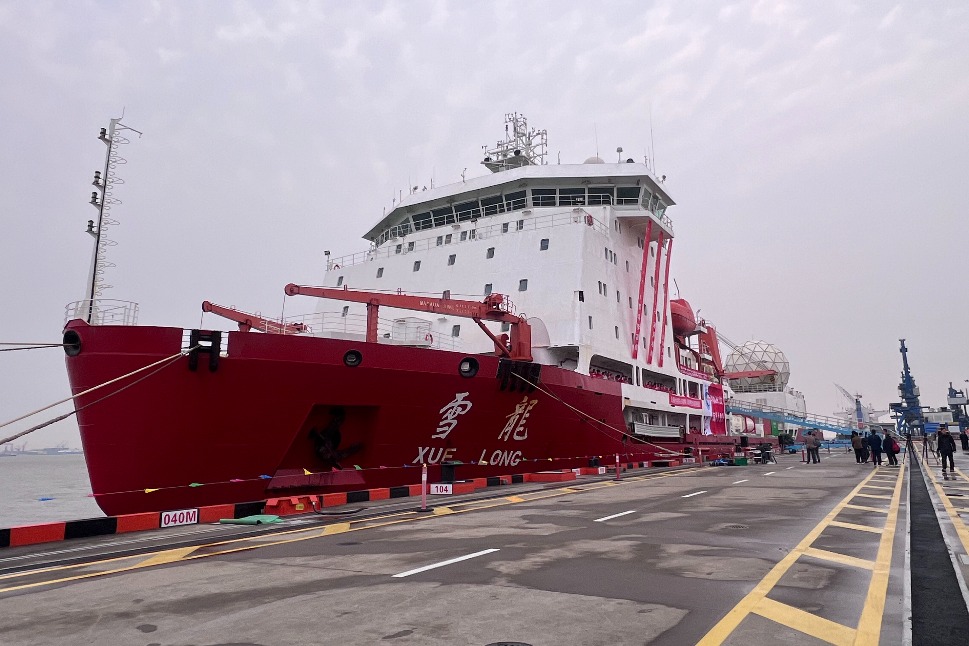
    After more than five months of groundbreaking scientific exploration in one of the planet’s most remote and unforgiving environments, China’s iconic research icebreaker Xuelong — meaning “Snow Dragon” in Chinese — sailed back to its home port of Shanghai on Thursday, capping a highly productive voyage as part of the country’s 42nd Antarctic expedition. The expedition’s total runtime stretched to 160 days, during which the vessel and its on-board team of researchers, engineers, and support staff navigated treacherous sea ice, extreme sub-zero temperatures, and harsh wind conditions to carry out a wide range of critical scientific work across the Southern Ocean and Antarctic continent.

    As a core component of China’s longstanding polar research program, this expedition focused on advancing global understanding of Antarctic climate systems, ice sheet dynamics, marine ecosystem biodiversity, and geological features of the southern polar region. Teams conducted on-ice field surveys, collected water and ice core samples, deployed and maintained autonomous scientific monitoring equipment, and carried out logistical support for China’s permanent Antarctic research stations, laying critical groundwork for future polar scientific collaboration and discovery. The successful return of Xuelong marks the conclusion of another major milestone for China’s polar exploration efforts, contributing valuable new data to the global scientific community’s ongoing study of the Antarctic and its critical role in regulating the Earth’s climate.

    This voyage adds to a decades-long legacy of polar research carried out by the Xuelong vessel, which has served as China’s primary platform for Antarctic expeditions since it entered service. The 42nd expedition’s outcome reflects continued progress in China’s investment in scientific polar exploration, alongside growing international collaboration to address shared global challenges such as climate change, which is disproportionately impacting polar regions. Local port officials and the expedition’s leadership welcomed the vessel and its crew back to Shanghai, noting that the data and samples collected during the voyage will now undergo detailed analysis by research institutions across China and in partnership with international scientific bodies.

  • UN voices hope in Mideast ceasefire as civilian needs remain acute

    UN voices hope in Mideast ceasefire as civilian needs remain acute

    More than five weeks of violent hostilities across the Middle East have left civilian populations in catastrophic conditions, and United Nations humanitarian officials are holding out cautious hope that a newly declared ceasefire will open a window to deliver life-saving aid and stem spiraling human suffering across the region.

    The UN Office for the Coordination of Humanitarian Affairs (OCHA) released an update Wednesday outlining both the fragile optimism brought by the pause in fighting and the stark unmet needs facing communities across Iran, Lebanon, and Gaza. Sustained cross-border and internal attacks have leveled critical civilian infrastructure, including electricity grids, water systems, energy networks, and transportation links, leaving millions without access to basic services. The ceasefire, OCHA says, could finally reduce pressure on shattered communities that have endured daily violence and displacement.

    In Iran, UN humanitarian teams and their partner organizations are working hand-in-hand with national government officials to rapidly expand support for displaced people and vulnerable local communities. Current operational priorities focus on restoring broken basic services, protecting at-risk groups including children, the elderly, and displaced families, rehabilitating damaged emergency shelters and school facilities, and moving critical supply stockpiles to areas cut off by hostilities.

    The situation grows increasingly dire in Lebanon, where mass displacement has pushed humanitarian needs to record highs. OCHA confirmed that new government displacement orders now encompass the entire region south of the Zahrani River as well as the southern suburbs of Beirut, forcing tens of thousands more people to flee their homes in search of safety. The UN Refugee Agency and its partners, coordinating closely with Lebanese state authorities, have been working to support newly displaced populations by providing emergency shelter and essential household items. But officials issued a stark warning that conditions in collective shelters are rapidly deteriorating.

    Severe overcrowding and a lack of functional sanitation facilities have already led to confirmed outbreaks of scabies and lice infestations, creating elevated public health and safety risks that disproportionately harm children and elderly residents. Lebanese health authorities have deployed mobile medical teams to address the outbreaks, and humanitarian partners are trucking in clean water, medical supplies, and additional shelter materials to contain the spread of disease and uphold basic living standards for displaced people. Even with these efforts, OCHA cautioned that the entire life-saving aid response is at growing risk due to crippling funding shortfalls. To date, less than one-third of the $308 million requested in the Lebanon Flash Appeal has been secured by aid groups, putting emergency operations in jeopardy just as needs surge across the country.

    In Gaza, despite persistent logistical and access constraints, UN and local partners have made incremental progress in restoring routine public health services. A five-day vaccination campaign is currently underway to reach children under the age of 3 who missed all routine immunizations over the past 30 months of ongoing conflict and instability. The campaign is led by Gaza’s local health authorities, with backing from the World Health Organization, the UN Children’s Fund, the UN Relief and Works Agency for Palestine Refugees, international donors, and local humanitarian partners. Nearly 150 vaccination teams are deployed across the enclave, including operating in hard-to-reach areas that have seen limited aid access in recent months.

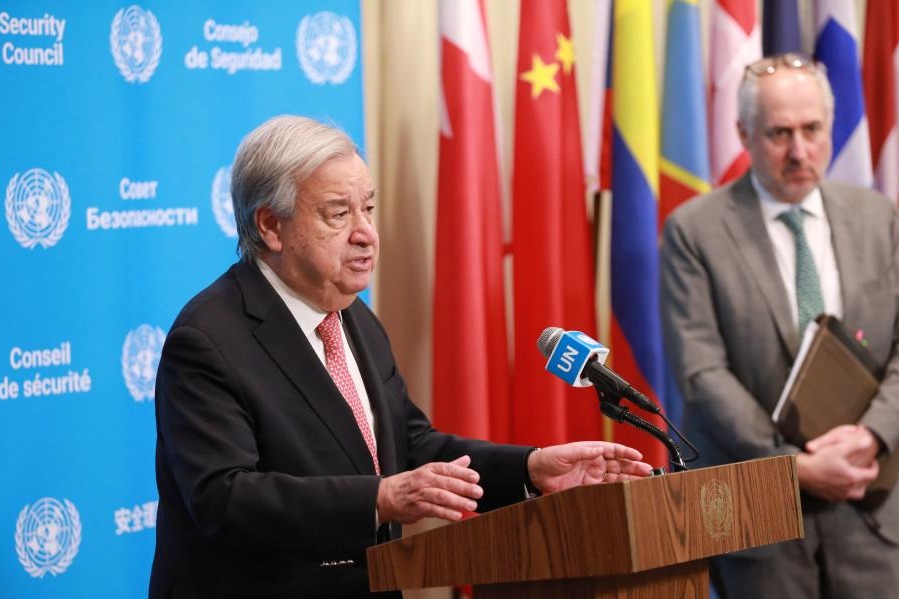
    On the diplomatic front, UN spokesperson Stephane Dujarric confirmed that Secretary-General António Guterres welcomed the ceasefire announcement made late Tuesday. “The secretary-general underscores that an end to hostilities is urgently needed to protect civilian lives and alleviate human suffering,” Dujarric said in a statement. On Wednesday, Farhan Haq, deputy spokesperson for the UN chief, confirmed that Jean Arnault, Guterres’ personal envoy for the Middle East conflict and its fallout, has arrived in Iran to support diplomatic and humanitarian efforts aimed at securing a permanent end to hostilities across the region.

  • Aston Villa visits Bologna in the first leg of the Europa League quarterfinals

    Aston Villa visits Bologna in the first leg of the Europa League quarterfinals

    The first legs of UEFA Europa League and Conference League quarterfinal ties are poised to get underway this week, with a collection of surprising underdog runs and historic milestone moments shaping the upcoming slate of matches across the continent.

    The action opens in Bologna, Italy, where Serie A side Bologna will host English Premier League outfit Aston Villa in a highly anticipated Europa League opening leg on Thursday. Aston Villa has already carved out an impressive piece of consistency this season, advancing to the final eight of a European competition for the third consecutive campaign. Domestically, Unai Emery’s side currently sits in fourth place in the Premier League table, well on track to secure a coveted spot in next season’s UEFA Champions League, marking a remarkable rise for the club in recent years.

    For Bologna, Thursday’s match marks a historic first: the club has never advanced this far in a major European competition in its history. Their quarterfinal berth was earned with a thrilling extra-time upset over Roma, one of the tournament’s pre-draw favorites and a fellow Serie A side, cementing their status as one of the competition’s most exciting surprise packages.

    The two clubs have history on the European stage already this season and last. They faced off in the opening match of the Europa League league phase, where Aston Villa claimed a tight 1-0 win. Last season, the pair also met in Champions League qualifying, with the Premier League side taking a 2-0 victory at their home ground Villa Park. Aston Villa captain John McGinn made his mark in both of those previous encounters, finding the back of the net in each fixture.

    A second all-cross-continental Europa League tie will see another English club, Nottingham Forest, travel to take on Portuguese powerhouse Porto. Both sides boast past European glory, adding extra narrative weight to their matchup. For Porto, this run marks their first appearance in a European quarterfinal since 2014, ending a decade-long drought at this stage of continental competition. For Nottingham Forest, the 2024-25 campaign marks their first return to European competition in 30 years, a stunning comeback for the historic club that won the European Cup back in 1979 and 1980. The two sides previously met in the league phase of this season’s Europa League, where Forest claimed a 2-0 home win at the City Ground.

    The third Europa League quarterfinal opening leg will see Bundesliga side Freiburg host La Liga outfit Celta Vigo. Like Bologna, Freiburg is making its first ever appearance in a European quarterfinal, continuing a breakout season for the German side. Celta Vigo, by contrast, has experience at this stage: the Spanish side is chasing just its second ever European semifinal appearance, having last reached the final four back in 2017, when they were eliminated by Manchester United.

    Across UEFA’s third-tier continental competition, the Europa Conference League, another English side will kick off their quarterfinal campaign at home: Crystal Palace will host Italian side Fiorentina in London on Thursday, with both sides entering the tie as pre-tournament favorites to lift the Conference League trophy at the end of the season.

    This collection of matches brings together a mix of established European contenders and clubs making long-awaited or first-time appearances at the quarterfinal stage, setting the stage for two weeks of dramatic continental soccer action.

  • Macao airport reports Q1 passenger growth, steady holiday traffic

    Macao airport reports Q1 passenger growth, steady holiday traffic

    Macau International Airport (MIA) has announced solid performance gains for the first quarter of 2026, with double-digit growth in both passenger volumes and aircraft operations, driven largely by strong travel demand across Greater China. In an official press statement released Wednesday, the airport authority reported that total passenger throughput reached 2,117,427 between January and March, marking a roughly 15% increase compared to the same period last year. Aircraft takeoffs and landings, a key metric of airport operational activity, also climbed 10% year-on-year to hit 15,952 movements for the quarter. Breaking down passenger demographics, travelers from mainland China made up the largest single segment, accounting for 41% of all Q1 passengers, while visitors from Taiwan region represented 19% of total traffic. International travel continues its steady recovery as well: the airport recorded 224,000 international passenger arrivals and departures in the first two months of 2026, representing an 11% year-on-year uptick. The robust growth trend held steady during the recent back-to-back Easter and Qingming Festival holiday travel window, which ran from last Friday through Tuesday. Over the five-day holiday period, MIA handled 115,000 total passengers and 856 aircraft movements, representing year-on-year increases of 2.6% and 9.1% respectively. Looking ahead to the peak summer travel season, MIA says it is actively accelerating efforts to broaden its regional and international route network. Airport officials confirmed they are working closely with partner airline carriers to launch new scheduled services connecting Macau to additional destinations across mainland China and Northeast Asia, positioning the hub to capture further growth in travel demand in the coming months.

  • Trapped miner rescued from flooded Mexican tunnel after 14 days

    Trapped miner rescued from flooded Mexican tunnel after 14 days

    A remarkable 14-day rescue mission ended in success this week, when Mexican army divers pulled a 42-year-old miner to safety after nearly two weeks trapped in a flooded, collapsed gold mine in the northern state of Sinaloa. The incident unfolded on March 25, when a tailings dam — the containment structure built to hold toxic mining waste — burst at the site, sending mud and water rushing through the underground tunnels. At the time of the collapse, 25 workers were operating deep below the surface. Twenty-one of those workers were able to evacuate to the surface immediately, but four were cut off and trapped 300 meters underground by the disaster.

    In the days that followed, rescue teams launched a frantic search through the waterlogged tunnels. Five days after the collapse, one trapped miner, José Alejandro Cástulo, was pulled to safety, while a second was found deceased. It took rescuers a full 13 days of continuous, painstaking searching to locate the third trapped miner, Francisco Zapata Nájera. After more than 300 hours of navigating murky, debris-filled water, divers finally spotted the faint, repeated blinking of Zapata Nájera’s headlamp, which he had been switching on and off intentionally to signal his location to search teams.

    Footage captured from the rescue mission shows Zapata Nájera standing in waist-deep water, visibly exhausted but unbroken in spirit. When divers reached his position and told him that his torchlight had been critical to finding him, he repeated again and again that he never lost faith that he would be saved. Even after locating him, however, the rescue team faced a new obstacle: the water level in the connecting tunnel was still too high for an immediate extraction. Divers left Zapata Nájera with emergency supplies including clean drinking water, canned tuna, and energy bars, and promised to return once they could lower the water enough to bring him out.

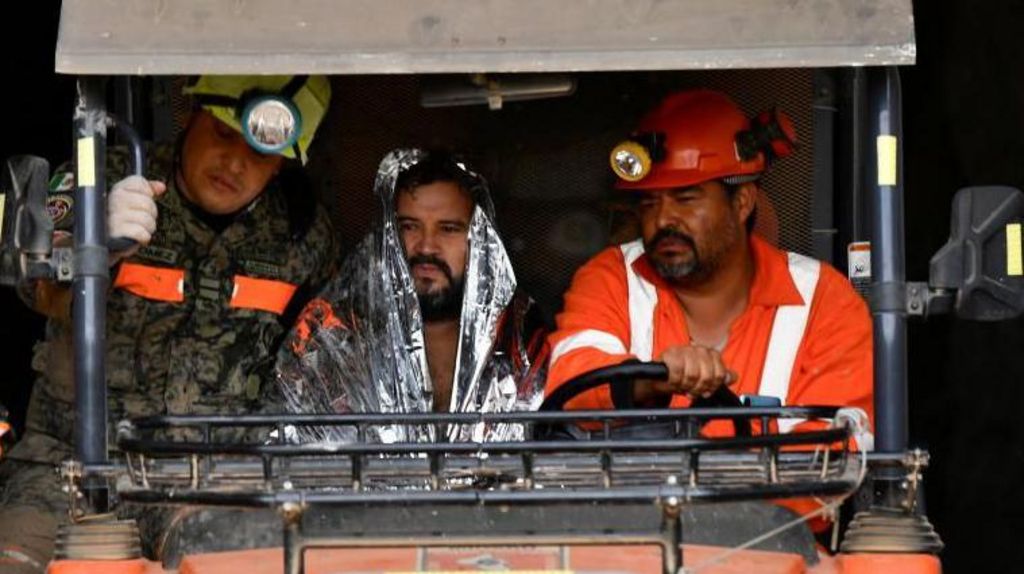
    Over the next 20 hours, rescue teams operated heavy pumps to drain excess floodwater from the tunnel system. Early Wednesday, the water level dropped enough to allow extraction, and Zapata Nájera was finally brought to the surface. Wrapped in a thermal blanket to stabilize his body temperature and seated on an electric utility cart, he exited the mine entrance, and was immediately airlifted by helicopter to a local hospital for evaluation, where he was reunited with his waiting family. Doctors reported that while he is frail after his 14-day ordeal, his vital signs are stable and he is expected to make a full recovery with appropriate medical care.

    The search is still ongoing for the fourth miner, who remains missing in the collapsed mine. Mexican President Claudia Sheinbaum issued a public statement praising both the relentless effort of the Mexican army rescue team and Zapata Nájera’s extraordinary resilience and unwavering hope, which she credited for making the “astounding rescue” possible.

  • Vietnam’s top leader To Lam to visit China from April 14 to 17

    Vietnam’s top leader To Lam to visit China from April 14 to 17

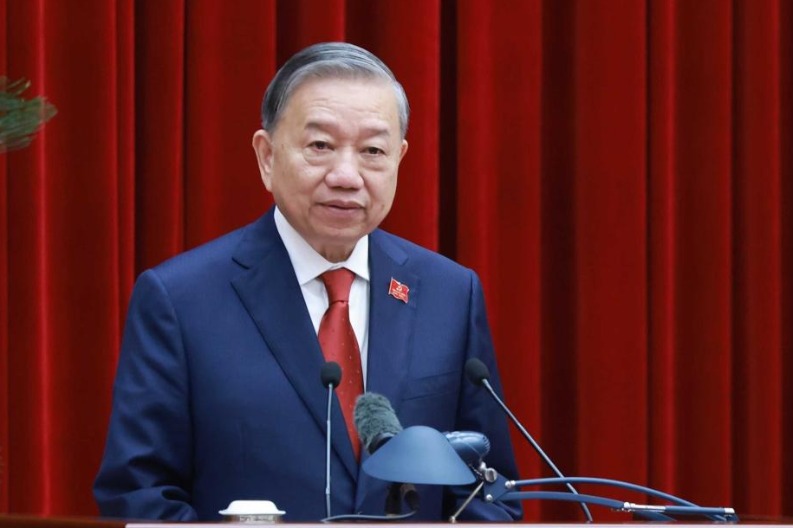
    BEIJING – A high-profile diplomatic visit between two neighboring socialist nations is scheduled for mid-April, with Vietnam’s top leader General Secretary of the Communist Party of Vietnam Central Committee and Vietnamese President To Lam set to travel to China for an official state visit spanning April 14 to 17. The visit comes at the formal invitation of General Secretary of the Communist Party of China Central Committee and Chinese President Xi Jinping, according to an official announcement released Thursday by Hu Zhaoming, spokesperson for the International Department of the Communist Party of China Central Committee.

    This upcoming visit marks a key milestone in the continuous development of bilateral relations between China and Vietnam, two major regional powers that share a long land border, deep historical and cultural ties, and expanding cooperation across trade, infrastructure, security, and people-to-people exchange. Diplomatic analysts note that high-level exchanges between the ruling parties and top leadership of both countries play a central role in guiding the direction of bilateral cooperation, addressing shared regional challenges, and managing any outstanding differences through constructive dialogue. As neighbors with integrated regional economies, the meeting between the two countries’ top leadership is widely expected to reinforce strategic communication, boost mutually beneficial collaboration, and contribute to greater stability and prosperity across the broader Southeast Asian region.