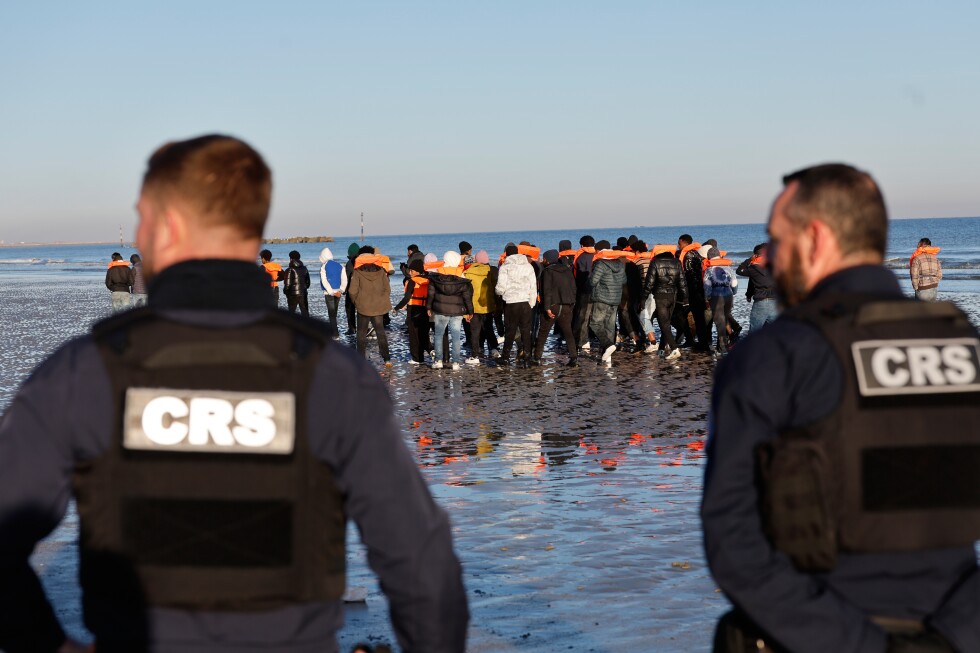
At Equihen Beach on France’s northern coast, a devastating tragedy unfolded Thursday that claimed the lives of four migrants — two men and two women — as they attempted to reach the United Kingdom via the perilous English Channel crossing. The fatal incident occurred when the group, part of a larger cohort of people hoping to reach Britain, tried to board a small trafficker-operated inflatable vessel before being pulled out to sea by powerful, dangerous coastal currents.
According to François-Xavier Lauch, the regional prefect of Pas-de-Calais, 38 other migrants were pulled from the water by rescue teams, with one individual in critical medical condition as operations continued through Thursday morning. This deadly incident marks the latest spike in fatalities as attempted cross-Channel crossings have surged in recent days.
Unlike the small inflatable craft that migrants carry to the water themselves, the vessel involved in Thursday’s tragedy was what French authorities term a “taxi-boat” — a small motorized inflatable craft launched empty from hidden coastal locations by people smugglers, which then meets migrants at pre-arranged beach pickup spots. Equihen Beach, a long stretch of open sand backed by forest and sand dunes, is a common hiding area for migrants, who often wait for days in the cover of the dunes and trees for favorable weather and sea conditions, as well as for their prearranged pickup by smugglers.
French police patrol the extensive coastline on all-terrain vehicles and maintain observation posts in repurposed World War II bunker ruins, but the length of the shoreline makes it impossible to intercept every attempted departure.
The pattern of deadly crossings has accelerated sharply in recent days. Just one day before the Equihen Beach tragedy, on Wednesday, French maritime rescue services pulled 102 migrants from the Channel in two separate separate rescue operations. The previous week saw two more migrants die in a nearly identical incident off the coast north of Calais.
An Associated Press reporter who witnessed an attempted pickup near Dunkirk at Malo-les-Bains on Wednesday described the dangerous conditions migrants face. Migrants wade out from the beach, often carrying small children in their arms or on their shoulders, to reach the waiting taxi-boats anchored offshore. Depending on tide levels, police presence, and weather, migrants often have to walk hundreds of yards out into the sea, with water reaching their chests, before reaching the vessel. This deep wading dramatically increases the risk of losing footing, being swept away by currents, or drowning before even boarding the craft.
Migrant rights advocacy groups have long sounded the alarm about the growing risks of the current enforcement approach. French police have increasingly responded to the surge in crossings by destroying small inflatable boats carried by migrants themselves, puncturing the craft with knives to prevent departures. Campaigners warn this crackdown has directly pushed smuggling networks to rely more heavily on the taxi-boat model, which forces migrants to wade through deep, dangerous waters to reach pickup points — ultimately increasing the likelihood of drowning, serious injury, and life-threatening emergencies that require large-scale rescue operations.