博客

  • Aussie customers caught up in Booking.com data breach as personal information compromised

    Aussie customers caught up in Booking.com data breach as personal information compromised

    Global online travel behemoth Booking.com, one of the world’s largest travel platforms with operations spanning 160 countries and over 28 million property listings, has issued an urgent warning to its Australian customers after confirming a large-scale data breach that allowed unauthorised third parties to access sensitive personal user data.

    In notifications sent to affected users overnight, the Dutch-headquartered company confirmed that it had detected suspicious activity linked to a subset of customer reservations. After identifying the anomaly, security teams moved quickly to seal off the breach and prevent further unauthorised access, launching a full internal investigation to map the scope of the incident.

    The probe confirmed that bad actors gained access to a range of personal user information, including customers’ full names, registered email addresses, contact phone numbers, and additional details that users had shared with accommodation providers via the platform. To mitigate ongoing risk, the company has issued new reservation confirmation numbers and PIN codes to impacted users, urging them to remain vigilant for unsolicited communications from scammers impersonating Booking.com staff or accommodation representatives.

    “Your personal data security is our highest priority,” the company stated in its customer notification. “We will continue to upgrade and expand the comprehensive security protocols we have in place to protect all user bookings made through our platform.”

    As of the latest update, Booking.com has not confirmed how many total users have been impacted by the breach, nor has it verified whether sensitive financial information such as credit card details or bank account credentials were accessed by the unauthorised parties. Outlets have reached out to company representatives for additional comment on the incident.

    This breach is not an isolated event for the travel giant: industry outlet Techzine has documented multiple prior cyberattacks and data breaches targeting Booking.com, including a 2024 phishing scam that stole employee login credentials from hotel workers in the United Arab Emirates. The report also notes that phishing attacks targeting global travelers have spiked 900% since the start of 2024, a trend that has put millions of booking platform users at increased risk.

    Australian fraud monitoring agency ScamWatch adds broader context to this risk: last year alone, more than 65,600 Australian residents lost a combined total of AU$31 million to phishing scams, making this one of the fastest growing cyber threat categories for domestic consumers.

  • Tributes pour in for legendary Indian singer Asha Bhosle

    Tributes pour in for legendary Indian singer Asha Bhosle

    One of India’s most celebrated and influential musical figures, legendary playback singer Asha Bhosle, has passed away at the age of 92 in Mumbai. She died on Sunday, days after being admitted to a local hospital for treatment following a sudden heart attack. Bhosle’s extraordinary 77-year career included thousands of recordings, two Grammy Award nominations, and a permanent place at the heart of Indian popular culture. Her final funeral rites will be held on Monday evening at Mumbai’s Shivaji Park, and the Indian government has granted full state honours to mark her legacy.

    Since news of her death broke on Sunday, an outpouring of grief and tribute has spread across India and the global music community, with public figures, fans, and fellow artists from every sector hailing Bhosle as one of the defining artistic voices of 20th and 21st century Indian cinema. By Sunday evening, crowds of respectful fans had begun gathering outside Bhosle’s Mumbai home to lay tributes and pay their final respects to the singer.

    India’s highest political leaders have been among the first to honour Bhosle’s memory. Prime Minister Narendra Modi called her “one of the most iconic and versatile voices India has ever known,” while President Draupadi Murmu described her passing as “an irreparable loss to music lovers” across the world. The widespread reach of her cross-generational influence is reflected in tributes from leading figures beyond the music industry, including global Bollywood star Shah Rukh Khan and legendary Indian cricketer Sachin Tendulkar.

    Khan wrote in his tribute that Bhosle was “a talent that will outlive many,” adding that her “voice has been one of the pillars of Indian cinema and will continue to resonate world over for centuries to come.” Tendulkar, who counted Bhosle as a close personal friend and noted that she was a passionate lifelong cricket fan, said, “Asha Tai [Marathi for elder sister] was family, and through her eternal songs, she will remain timeless.” Bhosle’s connection to cricket was honoured publicly during an Indian Premier League match on Sunday, where the home team Mumbai Indians wore black armbands and held a minute’s silence in her memory before kickoff.

    Fellow artists from across the global music industry have also shared their condolences. Oscar-winning composer AR Rahman noted that “she lives forever through her voice and aura — what an artist.” Leading contemporary Indian singer Shreya Ghosal recalled growing up “listening to her, learning from her, and being in awe of her effortless versatility,” adding that Bhosle made “every note feel alive, every emotion feel personal.” Singer, actor and director Farhan Akhtar emphasized how foundational Bhosle’s work was to modern playback singing, saying it was “impossible to talk about playback singing without mentioning Asha Bhosle” and calling her voice, joy and energy “irreplaceable.”

    Bhosle’s cross-cultural appeal stretched far beyond South Asia. In 1997, her iconic status in global music inspired the British band Cornershop’s hit single Brimful of Asha. On Sunday, Tjinder Singh, the band’s frontperson, said that “few have reached the ability to be loved in so many languages and dialects, and even fewer have reached so many with the astonishment of heart that her songs gave us.” Most recently, in early 2026, Bhosle collaborated with British virtual band Gorillaz on their latest album *The Mountain*, a project exploring themes of grief and mortality. The track she featured on, *The Shadowy Light*, paired her distinct vocals with international musicians to reflect on death and the afterlife.

    Born in 1933 into a family of working musicians, Bhosle began performing as a child alongside her elder sister, the equally legendary Lata Mangeshkar, after the death of their father when she was still young. Her early life was marked by significant personal challenges: she entered her first marriage at just 16, a union that ultimately ended in separation. For much of her career, she was frequently compared to her older sister, who was revered as the “nightingale of Bollywood” and passed away in 2022. But Bhosle carved out a uniquely distinct artistic identity for herself: while Mangeshkar became best known for poignant, melodic devotional and romantic tracks, Bhosle rose to fame for her bold, dynamic interpretations of jazzy, cabaret-style and upbeat pop numbers through the early and middle stages of her career.

    Bhosle’s professional breakthrough came in the 1950s, during her prolific collaboration with iconic composer OP Nayyar, a partnership that marked a permanent turning point in her career and cemented her status as a leading playback singer. Later in her career, she worked closely with composer RD Burman, who she would go on to marry; the pair collaborated for 14 years until Burman’s death in 1994, and their creative partnership allowed Bhosle to expand her vocal range and experiment with new genres and styles. Even into her 90s, she continued to record and push creative boundaries, collaborating on cross-cultural projects long after most artists retired.

    Beyond her decades-long musical career, Bhosle was known for her love of cooking, and turned that passion into a successful business venture. She was the founder of the popular restaurant chain “Asha’s”, which operates locations across Dubai and the United Kingdom. Veteran Indian lyricist Javed Akhtar recalled on Sunday that Bhosle often cooked homemade kebabs for him when he visited, and took great joy in receiving praise for her culinary work.

    As the Indian nation and the global music community mourn her passing, tributes continue to flow in highlighting the lasting impact of Bhosle’s trailblazing career. Her ability to adapt across decades, move seamlessly between every musical genre from romantic ballads to high-energy dance tracks, and connect with audiences across generations and geographies has left an irreplaceable mark on global popular culture.

  • Gold miners and tech stocks drag Aussie sharemarket down, but oil soars amid further Middle East tensions

    Gold miners and tech stocks drag Aussie sharemarket down, but oil soars amid further Middle East tensions

    Geopolitical tensions in the Middle East sent ripples through Australia’s domestic share market on Monday, as a surprise order from former U.S. President Donald Trump to block the Strait of Hormuz upended commodity prices and dragged the benchmark ASX 200 into negative territory. The move came on the heels of collapsed peace negotiations between the United States and Iran, triggering immediate volatility in global energy markets.

    Brent crude prices skyrocketed 7.05% in the wake of the announcement, settling at $US101.91 per barrel by market close. The energy price surge translated directly to gains for Australia’s domestic energy sector, the largest winner on a otherwise downbeat trading day. Woodside Energy climbed 2.61%, while fellow major Santos notched a 1.65% increase. Coal producers also benefited from the broader energy market upswing, with Whitehaven Coal rising 2.59% by closing bell.

    Despite the energy sector’s gains, the ASX 200 ultimately closed lower, dragged down by steep losses in gold mining and technology stocks. The benchmark index fell 34.6 points, or 0.40%, to end the session at 8926, while the broader All Ordinaries index dropped 0.5% (42.3 points) to 9113.5. Eight of the 11 tracked market sectors finished in negative territory, with only energy, communication services and utilities posting marginal gains. Among Australia’s big four retail banks, results were mixed: Commonwealth Bank of Australia (CBA) dipped 0.1%, Westpac fell 0.42%, National Australia Bank dropped 0.9%, and Australia and New Zealand Banking Group held steady to close flat.

    Technology stocks were among the hardest hit, led by a sharp 8.06% plunge in Life360 shares. The decline marked a continued sell-off following the company’s announcement last Friday that it would cut headcount to streamline operations around artificial intelligence integration. Other major tech names also posted losses: WiseTech Global fell 1.25%, while cloud accounting firm Xero dipped 1.46%.

    Gold mining stocks also underperformed, as spot gold prices fell 0.46% to $US4729.95 per ounce, pressured by mounting inflation concerns tied to rising energy costs. Top Australian gold producers recorded significant losses: Northern Star Resources slipped 1.96%, Evolution Mining fell 2.44%, and Pantoro Gold dropped 3.88%.

    Alongside market volatility, new wage data from CBA released Monday offered a steady picture of Australian wage growth amid rising inflation pressures. The bank’s quarterly Wage Insights series, drawn from de-identified data of 400,000 customer accounts, recorded a 0.8% rise in wages over the three months to March. Annual wage growth held steady at 3.1%, defying expectations of upward pressure from a persistently tight labour market.

    Belinda Allen, CBA’s head of Australian economics, noted that wage growth has stabilized at a new baseline even as conflict-driven inflation risks rise in the wake of Middle East tensions. “The labour market remains on the tight side with the unemployment rate at 4.3 per cent according to ABS data,” Allen said. “However, according to CBA data, wages growth is finding a new base at around 3.1 per cent per year, having hovered between 3.1 per cent and 3.2 per cent since mid-2025. Our data is not yet showing any response to the tightening in labour market conditions through late 2025 and into early 2026. We are expecting some loosening in the labour market as economic growth slows in 2026.”

    In corporate news, a handful of major individual stocks posted extreme moves on the back of company announcements. The a2 Milk Company plummeted 12.99% after downgrading its 2025-26 profit outlook, citing ongoing supply chain disruptions in its key Chinese market. The company cut its expected EBITDA margins and warned that net profit would be flat to lower compared to the previous financial year. Payments firm EML Payments saw an even steeper drop, falling 35.65% after downgrading its 2026 fiscal year underlying EBITDA guidance to a range of $47 million to $50 million, blaming weaker-than-forecast trading and delayed program launches. On the positive side, fertility service provider Monash IVF jumped 15.79% after confirming it had received a $351 million takeover offer at 90 cents per share from a private consortium. Supply chain firm Brambles declined 1.93% after the Federal Court partly upheld shareholder claims alleging the company made misleading public guidance disclosures.

    The Australian dollar closed trading at 0.70 U.S. cents, following the day’s market shifts.

  • Iran war’s global energy crisis sharpens China’s advantage in clean tech

    Iran war’s global energy crisis sharpens China’s advantage in clean tech

    The ongoing conflict in Iran has upended global energy markets, with widespread disruptions to shipping through the Strait of Hormuz — the chokepoint through which most of the world’s traded oil and natural gas flows. With the strait mostly shut and most of its pre-conflict cargo bound for Asian markets, regional governments are racing to conserve existing supplies and rebuild depleted energy reserves, even as a fragile temporary ceasefire struggles to hold. Soaring gasoline prices have already hit consumers across the United States and Europe, and the crisis has laid bare the deep geopolitical and economic risks of global dependence on fossil fuels. For most energy-importing Asian nations, the shock has delivered severe economic pain. But against this backdrop, analysts and industry experts predict China, the world’s largest buyer of Iranian crude oil, is uniquely positioned to turn the global energy disruption into a major strategic and economic gain.

    Decades of targeted investment have left China as the unrivaled global leader in the clean energy technologies the world is now scrambling to adopt. China controls more than 70% of global electric vehicle (EV) manufacturing capacity and roughly 85% of global lithium-ion battery cell production, according to data from the International Energy Agency. Its domestic industry giants, including EV manufacturer BYD and battery producer CATL, already dominate global export markets for these products, and years of policy prioritization have cemented this lead: China’s current five-year development plan running through 2030 reaffirms clean technology as a core national strategic priority.

    This position is the result of a deliberate policy shift dating back more than a decade, when Chinese President Xi Jinping integrated long-term energy security into the country’s broader national security framework. While fossil fuels still make up the majority of China’s domestic energy mix, consistent government support has allowed its clean energy sector to outpace development in most other major economies, particularly the United States.

    Under the second Donald Trump administration, U.S. energy policy has doubled down on fossil fuel development, leaning on the country’s vast domestic oil and gas reserves to pursue what Trump has called “energy dominance,” centered on the slogan “drill, baby, drill.” Washington has prioritized expanding exports of liquefied natural gas while scaling back federal support for renewable energy development. Even before the Iran conflict broke out in late February, this created what analysts call a “bifurcation” in global energy markets, with the world’s two superpowers pushing competing visions for the future of energy and leaving other nations to navigate complicated choices about which path to pursue.

    Now, the energy shock from the Iran war is tilting that balance sharply in China’s favor. Global demand for affordable clean energy technology has spiked as governments, businesses and households wake up to the fragility of global fossil fuel supply chains. Data from London-based energy think tank Ember shows Chinese exports of solar panels, batteries and electric vehicles hit a record high of nearly $22.3 billion in December 2025, a 47% year-over-year increase, with most shipments bound for Southeast Asia and Europe. Credit rating firm Fitch Ratings projects investment in renewable power and battery storage will surge across energy import-dependent nations, particularly in Western Europe, as countries look to insulate themselves from future fossil fuel price shocks.

    Financial markets have already priced in this expected growth: in March 2026, shares of CATL and BYD traded on the Hong Kong Stock Exchange rose roughly 24% and 11% respectively, as investors bet on rising global demand for Chinese clean energy products.

    China’s EV sector was already outpacing U.S. and European rivals before the conflict, with aggressive expansion of production capacity and affordable pricing helping Chinese brands gain significant market share across emerging markets in Southeast Asia and beyond. Analysts say that growth will only accelerate in the wake of the energy crisis. “The energy shock is going to help the Chinese industry globally and hurt the American car industry globally,” said Amy Myers Jaffe, senior fellow at New York University’s Center for Global Affairs. While high U.S. tariffs have largely blocked Chinese EVs from the American market, surging domestic fuel prices are expected to further boost BYD’s sales growth within China’s own large EV market, according to Chris Liu, an analyst at research and advisory firm Omdia.

    Early data from around the world already shows a sharp shift in consumer and government behavior in response to rising fuel costs. In Pakistan, which previously relied on the Strait of Hormuz for 80% of its oil imports, decades of gradual renewable expansion has already softened the blow of the current crisis. By December 2025, Pakistan had imported more than 50 gigawatts of Chinese solar panels as part of its national renewable rollout. Analysts from Renewables First and the Centre for Research on Energy and Clean Air estimate that if current fuel prices remain high, existing solar capacity will save Pakistan $6.3 billion in fossil fuel import costs over the next year. “The shock isn’t as big as it would have been without solar,” said Nabiya Imran of Renewables First.

    In the United Kingdom, British renewable energy group Octopus Energy reported that EV leasing demand jumped more than a third in the first three weeks of March 2026 compared to the pre-conflict period in February, alongside sharp increases in sales of rooftop solar systems and customer inquiries about solar energy. Even in Southeast Asia, where regional EV maker VinFast has moved to offer discounts to offset rising fuel prices, the crisis has reinforced interest in transitioning away from gasoline-powered vehicles. While analysts note it will take time for long-term purchasing trends to shift, as consumers wait to see how the Iran conflict evolves, the prolonged price shock is expected to act as a lasting catalyst for EV adoption.

    Even Indonesia, the world’s largest coal exporter, is accelerating its transition to electric transportation, a shift that stands to benefit Chinese clean energy firms. In March 2026, Indonesian President Prabowo Subianto announced a major national push into EV production and charging infrastructure development. Chinese firms already hold a dominant position in Indonesia’s clean energy supply chain: they signed more than $54 billion in deals with Indonesia’s state utility in 2023, and added a further $10 billion pledge during Prabowo’s 2024 visit to Beijing. “There will be direct financial benefits to Chinese companies,” said Sam Reynolds, energy analyst at the U.S.-based Institute for Energy Economics and Financial Analysis (IEEFA).

    Experts say the conflict has fundamentally vindicated China’s long-term approach to energy policy and geopolitics. “China’s approach to energy sector development and geopolitics has been completely validated by the Iran conflict,” Reynolds noted. Li Shuo, director of the Asia Society Policy Institute’s China Climate Hub, added: “They are at the very forefront of this, more so than any other countries in the world, certainly more so than the United States.”

    This reporting was contributed by Ghosal in Hanoi, Vietnam, Delgado in Bangkok, and AP Business Writer Paul Wiseman. The Associated Press’ climate and environmental coverage receives financial support from multiple private foundations, with the AP retaining full editorial control over all content.

  • Major track closures spark hours-long delays, massive queues across Brisbane

    Major track closures spark hours-long delays, massive queues across Brisbane

    Brisbane’s northern commuter corridors descended into transport chaos on Monday, when scheduled rail track upgrades combined with an extended shutdown from industrial action over the Easter holiday created widespread disruption that left thousands of passengers waiting for up to 45 minutes in snaking queues hundreds of meters long for overcrowded replacement buses.

    Photographs captured at Brisbane’s Northgate Station on Monday morning show commuter lines stretching roughly 300 meters along the station’s exterior, as travelers waited for shuttle buses to carry them into Brisbane’s central business district. Multiple passengers reported wait times close to 45 minutes before a replacement bus even arrived, with many describing a total breakdown in trip timing that upended regular work and personal travel schedules.

    Joanne McCarthy, one local commuter caught up in the chaos, told the Australian Broadcasting Corporation that her typical one-hour daily commute swelled to more than two hours on Monday. She added that there was little to no on-site information for passengers about service adjustments, and even alternative ride-hailing options were impossible to access due to the massive backlog of people at the station. “There were no buses there waiting for us,” McCarthy said. “We had no communication whatsoever about what was happening. I was thinking about jumping in an Uber, but you couldn’t even get to the front of the line to get down the stairs to get an Uber.”

    The disruptions are the result of a month-long program of infrastructure upgrades to southeast Queensland’s aging rail network, which TransLink, Queensland’s public transport authority, announced would require major track closures across Brisbane throughout April. The agency initially scheduled bus replacement services for four key stations – Northgate, Bowen Hills, Varsity Lakes and Boggo Road – through Wednesday, but industrial action over the Easter weekend forced Queensland Rail to extend full network track closures through April 30.

    To meet the surge in demand for replacement services, Queensland’s transport department contracted private operator Thomson Coachlines to add extra capacity. The firm pulled in additional buses and drivers from as far as Melbourne, as well as regional Queensland centers including Goondiwindi, Gympie and the nearby Sunshine Coast to reinforce existing shuttle routes.

    In a public statement addressing the extended shutdown, Queensland Rail Chief Executive Kat Stapleton confirmed that rail replacement buses would continue operating at the highest possible frequency alongside regular local bus services to keep passengers moving through the end of the month. “Due to the extension of the closure, rail replacement buses will need to be allocated across multiple closure areas, so some services may run at a reduced frequency,” Stapleton explained. A TransLink spokesperson had earlier advised passengers to reevaluate their travel plans, book trips in advance where possible, and budget for significantly longer travel times throughout the upgrade period.

    The extended disruptions have underscored the strain that critical infrastructure upgrades place on urban commuters in Queensland’s capital, with officials continuing to urge flexibility as work progresses to modernize the region’s rail network for long-term improved service.

  • ‘You should be a coach’: Jake Trbojevic set to play for Manly after gruesome eye injury, with his future role starting to take shape

    ‘You should be a coach’: Jake Trbojevic set to play for Manly after gruesome eye injury, with his future role starting to take shape

    The Manly Sea Eagles are heading into Thursday’s away clash against the North Queensland Cowboys in Townsville with renewed momentum, as the club’s stunning recent form has drawn comparisons to their memorable 2021 comeback season. At the center of pre-match speculation is veteran forward Jake Trbojevic, who is on track to be named in the matchday squad despite sustaining a grueling eye injury during last weekend’s victory over the St. George Illawarra Dragons.

    Trbojevic was forced to exit the Dragons win early after a hard tackle left him with a deep cut below his right eye, which swelled so severely that the eye closed completely completely. While initial medical checks ruled out any concussion — a key concern given Trbojevic’s history of head impacts — he was unable to rejoin the game due to impaired vision. Posts from rugby league medical observers on social media shortly after the incident raised questions about a possible eye socket fracture, leaving Sea Eagles fans waiting anxiously for updates on his condition.

    The star forward skipped all contact drills at Monday’s training session at the NSWRL Centre of Excellence in Sydney’s Olympic Park, but his presence on the training ground remained critical. Trbojevic stayed on the field to lead warm-ups, walk through tactical drills, and direct younger teammates, signaling his preparation to suit up for the Townsville match. When asked about his availability, Trbojevic confirmed to teammates he intends to play, a commitment his front row partner Taniela Paseka says he fully trusts.

    “He’s told me he’s in, so I’m going to go off that because whatever he says usually happens,” Paseka told NewsWire. “It’s going to be very important to have him in our team this week against a big, physical forward pack like the Cowboys.”

    Beyond his on-field contributions, Paseka says Trbojevic’s natural leadership and tactical eye suggest a successful second career as a coach once he retires from playing. “I reckon he’ll definitely be a coach, and I keep telling him that. I think he’s very good at explaining the game, so I told him ‘Mate, you should be a coach.’ Maybe not a head coach straight away because it’s too big of a job, but he would be an excellent forwards coach focusing on one area of the game. He’s actually thinking about it, and he’s admitted the idea appeals to him.”

    Trbojevic’s expected return is just the latest bright spot for a Sea Eagles side that has undergone a dramatic transformation since a disastrous 0-3 start to the 2026 season. That poor opening stretch cost head coach Anthony Seibold his job, with former Manly playmaker Kieran Foran stepping into the interim head coach role. The shift has already delivered staggering results: Manly has put up 80 points across Foran’s first two games in charge, a far cry from the lackluster performance that saw them booed off their home ground by angry fans in round four.

    Paseka attributes the sudden turnaround to growing on-field cohesion after the squad’s major mid-season shakeup. “It took a while for us to get it right with the chemistry and the combinations,” he explained. “Now that we’ve played a few games together, we’ve figured out what’s working for us and what isn’t. We doubled down on the strategies that fit this group, and that’s paid off over the last two weeks. We’re just building on that week after week.”

    Even with two straight wins under their belt, Paseka says the squad is remaining grounded, taking each match as it comes rather than getting ahead of themselves. “I think the sky’s the limit for this group. As more key players come back from injury, we’ll only get stronger. We’re just trying every week to be present, take it week by week and not look too far ahead. We’re winning at the moment, but we’re still very grounded, if that makes sense, because you don’t want to get ahead of yourself.”

    For long-time Sea Eagles supporters, the current run of form is already bringing back echoes of 2021, a season that saw Manly start with four straight losses before storming through the back half of the year to reach the NRL preliminary final. That turnaround was fueled by superstar fullback Tom Trbojevic – Jake’s brother – who missed the opening of that season before producing one of the most dominant attacking individual campaigns in modern NRL history. Today, Tom “Turbo” Trbojevic is back in top form heading into Thursday’s trip to north Queensland, a parallel Paseka doesn’t deny.

    “I do see similarities to 2021. But like I said, I don’t want to look too far ahead because you’ve got to be present,” Paseka said. “But for sure, that was a great year for us and for Turbo as well. Right now, Turbo’s playing great footy, and that’s a huge boost for all of us.”

  • ‘Most beautiful secret’: Tennis star Bernard Tomic and girlfriend Keely Hannah reveal birth of first child

    ‘Most beautiful secret’: Tennis star Bernard Tomic and girlfriend Keely Hannah reveal birth of first child

    Australian professional tennis player Bernard Tomic, long known for his turbulent on and off-court reputation, has sent shockwaves through his fanbase with a sudden, unexpected announcement: he and long-term partner Keely Hannah have welcomed their first child together, a baby girl named Astara Aurelia Tomic.

    The newborn arrived on Easter Sunday, April 5, 2026, but the couple managed to keep the entire pregnancy and birth completely hidden from the public eye, maintaining a complete radio silence across their social media channels in the months leading up to the reveal. Hannah, Tomic’s partner since 2022, broke the quiet on Sunday, sharing a carousel of tender photos of baby Astara to her Instagram account alongside the caption: “The most beautiful secret we’ve ever kept.”

    A closer look at Hannah’s social media history confirms how successfully the couple concealed their exciting news: she has not shared any public posts to her account since July of the previous year, letting followers remain completely unaware of her pregnancy.

    The surprise arrival marks a new chapter for Tomic, a player who has long been no stranger to off-court controversy alongside his on-court pursuits. The former world No. 17 has weathered public scrutiny of his relationship with Hannah before: during a 2024 ATP Challenger tournament, Tomic made headlines when he retired mid-match after a heated public argument with Hannah that was caught on live tournament broadcast.

    Today, Tomic continues his comeback push on the ATP Challenger Tour, currently holding the world No. 191 ranking as he fights to climb back into the men’s top 100 and earn a return to the upper echelons of professional tennis.

  • Pope making first papal visit to Algeria to launch Africa trip and honor locally born St. Augustine

    Pope making first papal visit to Algeria to launch Africa trip and honor locally born St. Augustine

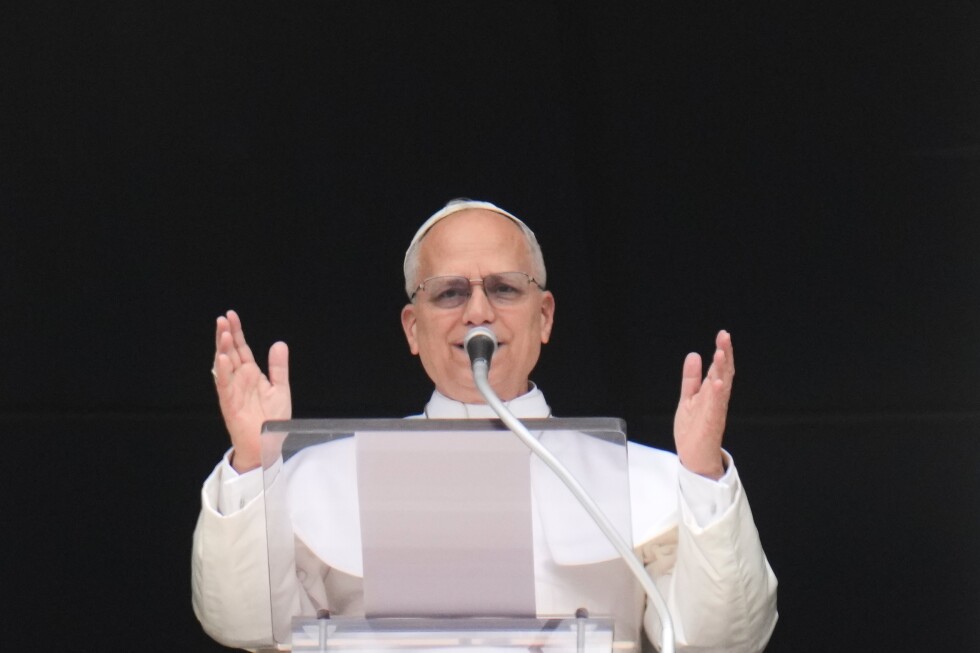
    VATICAN CITY (Rewritten Report) — History is being made this week as Pope Leo XIV, the first American-born pontiff in Catholic history, touches down in Algeria on Monday for the first-ever papal visit to the North African nation. The two-day stop kicks off an ambitious 11-day, four-country tour across Africa — a region increasingly recognized as the dynamic growing heart of the global Catholic Church — that will also take him to Cameroon, Angola, and Equatorial Guinea.

    Upon arrival at Algiers’ international airport, Pope Leo was scheduled to be welcomed by Algerian President Abdelmadjid Tebboune, followed by an official meeting at the El Mouradia presidential palace. The first day of the itinerary includes an address to national authorities, a visit to Algiers’ iconic Great Mosque, an interfaith gathering at the landmark Our Lady of Africa basilica, and a solemn prayer vigil at a nearby monument honoring migrants who lost their lives in shipwrecks while attempting to cross the Mediterranean to Europe.

    The 19th-century Roman-Byzantine basilica, constructed during France’s colonial rule of Algeria, will host a unique interfaith gathering bringing together a Catholic nun, a Pentecostal worshiper, and a Muslim representative to share testimonies ahead of the pope’s remarks. The trip’s official motto, drawn from Pope Leo’s standard opening greeting for all his public engagements, is “Peace be with you,” and Vatican officials have confirmed that advancing interfaith harmony between Christians and Muslims and a global message of peace will serve as the visit’s core themes, particularly amid rising religious and geopolitical conflict around the world.

    Vatican statistics show Algeria is home to a tiny Catholic community of roughly 9,000 people, most of whom are foreign residents, living alongside a majority Sunni Muslim population of nearly 47 million. Remarkably, Algiers Archbishop Jean-Paul Vesco, a French cardinal, noted that nine out of 10 daily visitors to the Our Lady of Africa basilica are Muslim, a quiet demonstration of everyday coexistence in the country. “It’s wonderful to be able to show that we can be brothers and sisters together, building a society despite our different religions,” Vesco told the Associated Press on the eve of the pope’s arrival. “And that is what our church has been doing since this country gained independence.”

    Despite this grassroots harmony, the visit takes place against a backdrop of ongoing international scrutiny of religious freedom in Algeria. The U.S. government has included Algeria on its special watch list for severe religious freedom violations, noting that while the country’s constitution recognizes faiths other than Islam and permits private worship that adheres to public order regulations, proselytizing to Muslims by non-Muslims is a criminal offense, and multiple independent Christian denominations have faced government pressure including forced church closures. Some Algerian citizens have raised questions about the long-term impact of the papal visit on religious minorities: “I imagine it’s a good thing that a pope is visiting Algeria,” said Selma Dénane, a student in the coastal city of Annaba. “But what will it change afterward? Will Christians be able to say, ‘I am a Christian’ without fear or stigmatization?’”

    The trip also includes a powerful tribute to religious martyrs of Algeria’s brutal modern history. Three decades after winning independence from France, the country descended into a 1990s civil war known locally as the “black decade,” which killed an estimated 250,000 people as government forces battled an Islamist insurgency. Nineteen Catholics were among those killed, including seven Trappist monks from the Tibhirine monastery south of Algiers, who were kidnapped and murdered in 1996, as well as two nuns from Pope Leo’s own Augustinian religious order. On Monday, the pope will pay homage to the 19 martyrs, all of whom were beatified in 2018 in the first such ceremony ever held in the Muslim world. He will also meet with remaining Augustinian nuns who operate an interfaith social services program out of the Algiers basilica that supports people of all religious backgrounds.

    Archbishop Vesco pointed out a striking coincidence: Pope Leo was elected to the papacy on May 8, which is the Catholic feast day of these 19 Algerian martyrs. Vesco extended an invitation to visit immediately after Leo’s election, and the pope has long drawn inspiration from the community: he has adopted a phrase from Christian de Chergé, the martyred prior of the Tibhirine monastery, as a personal mantra — speaking of “unarmed and disarming peace” — and has cited the line repeatedly since the night of his election. “Obviously he will speak a lot about peace, it’s urgent and current,” Vesco said.

    Beyond its interfaith and pastoral goals, the Algeria visit is a deeply personal pilgrimage for Pope Leo, a lifelong member of the Augustinian order. The order draws its founding inspiration from St. Augustine of Hippo, the 5th-century theological and philosophical giant of the early Christian church, who was born in what is now Algeria and spent nearly all his life in the region. On Tuesday, the pope will travel to Annaba, the modern city built on the site of ancient Hippo where St. Augustine served as bishop for 30 years, to walk in the saint’s footsteps.

    From his first public address after his election, Pope Leo has introduced himself as a “son of St. Augustine,” and has referenced the early church father repeatedly in speeches, homilies, and official documents over his first year in office. Paul Camacho, associate director of the Augustinian Institute at Villanova University — Pope Leo’s Augustinian-run alma mater near Philadelphia — noted that references to St. Augustine are a consistent throughline in the pope’s teaching. “I don’t know if I have seen a statement, a homily, an apostolic letter or exhortation that doesn’t reference Augustine,” Camacho said. “The shadow that he casts on Western thought, not just the Roman Catholic Church but on Western thought more broadly, is very, very long indeed.”

    This reporting was compiled from original on-the-ground contributions by Ouali and Santalucia in Algiers, Algeria.

  • Already under financial pressure, Midwest soybean farmers are squeezed further by tariffs, Iran war

    Already under financial pressure, Midwest soybean farmers are squeezed further by tariffs, Iran war

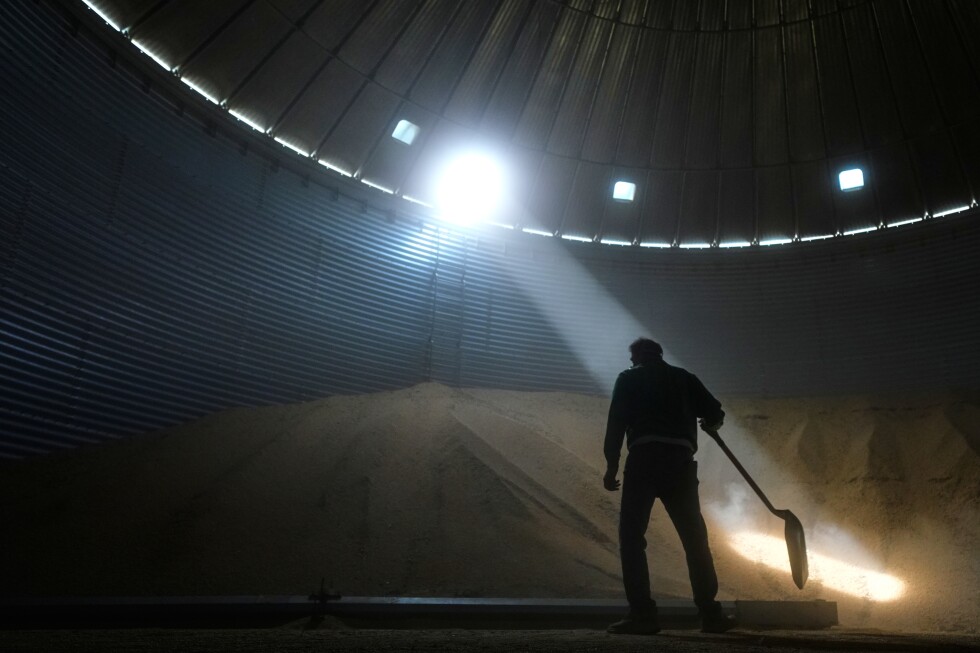
    As 60-year-old fifth-generation farmer Doug Bartek stepped into a Nebraska grain bin this spring, shoveling soybeans toward a conveyor amid gusty plains winds, the weight of mounting industry stress was far heavier than any load of grain. For Bartek, who chairs the Nebraska Soybean Association and runs a 2,000-acre operation near Wahoo where three-quarters of the land is rented, this planting season has brought a tangled web of crises that have left many American soybean producers trapped between skyrocketing input costs and stagnant, depressed crop prices.

    Bartek’s anxiety is far from unique. Across the U.S. Midwest, which produces the bulk of the nation’s soybean crop, thousands of commercial grain farmers are grappling with overlapping economic pressures that have pushed many toward negative margins, cash flow crunches, and even the risk of bankruptcy. What began as a gradual trend of rising costs and oversupplied global markets has been compounded in recent months by trade policy fallout and geopolitical conflict in the Middle East, creating a perfect storm for an industry that forms the backbone of American agriculture.

    Soybeans have grown from a minor crop to one of the United States’ most valuable agricultural exports over the past 60 years. Driven by rising international demand, particularly from China, production exploded in the 1990s, and today soybeans and corn are the two dominant row crops across U.S. farm country. But even before recent geopolitical and trade disruptions, farmers faced systemic financial headwinds. Global soybean production has consistently hit new record highs in recent years, largely fueled by expanded output from Brazil, which overtook the U.S. as the world’s top soybean producer years ago. The resulting global supply glut has kept soybean prices stubbornly low for nearly a decade.

    At the same time, every major cost associated with farming has climbed steadily, and in many cases sharply. U.S. Department of Agriculture data shows overall farm production expenses, including seed, pesticides, equipment, and land, have trended upward for decades, with soybean operating costs remaining elevated since 2020 and projected to rise again by 2026. For many Midwest farmers who rent at least part of their land — a common arrangement across the region — rising rental rates have added an extra layer of strain. Bartek notes that many absentee landowners, unfamiliar with the struggles of on-the-ground farming, are hiking rents to cover their own rising property taxes, passing that cost directly onto producers.

    Paul Mitchell, a professor of agricultural and applied economics at the University of Wisconsin-Madison, says the combination of low commodity prices and bloated input costs has left many farmers in a critical liquidity crunch. Long-term industry consolidation has amplified this pressure: the number of U.S. farms has shrunk for decades, as larger, more capital-intensive operations have absorbed smaller struggling farms. Today’s modern commercial farm requires far more financial reserves than it did a generation ago, leaving producers far more vulnerable to sudden market and cost shifts.

    Market forces are not the only drag on farmer profits. In 2025, sweeping tariffs imposed by the Trump administration on Chinese goods triggered a full-scale trade war, with Beijing responding by placing retaliatory tariffs on U.S. soybeans — China was the top global buyer of American soybeans at the time, representing a critical export market for Midwest producers. The result was an immediate collapse in soybean prices that left farmers who needed to sell to cover operating costs and mortgage payments facing devastating losses.

    While the two nations reached a trade deal later that year, with China committing to large annual soybean purchases and the Trump administration rolling out a $12 billion emergency aid package for affected farmers, industry experts and producers agree the damage was lasting. Even with federal aid, the American Soybean Association estimates farmers still lost nearly $75 per harvested acre of soybeans from the 2025 crop. More importantly, the trade war pushed China to permanently shift its purchasing toward competing suppliers, primarily Brazil, accelerating the long-term decline of U.S. soybean market share in China. Today, U.S. soybean exports remain 15% to 20% below pre-trade war levels, a gap that has never been filled by other global markets, according to Iowa State University agricultural economist Chad Hart.
    “We’re not nearly as dominant in the world export market as we used to be,” explained Joseph Glauber, former chief economist at the U.S. Department of Agriculture. Global competitors have reaped permanent benefits from the trade shift caused by the dispute, he added.

    The most recent shock to hit soybean farmers came from the February 2026 Iran conflict, after joint U.S.-Israeli attacks on Iran triggered a near-total shutdown of shipping through the Strait of Hormuz, a critical global chokepoint for energy and commodity trade. The shutdown sent global oil prices soaring, pushing up the cost of gasoline and diesel that farmers rely on for planting, harvesting, and transporting crops. More critically, the disruption cut off access to key fertilizer exports from the Persian Gulf: roughly half of the world’s traded urea, a widely used nitrogen fertilizer, comes from the Middle East, which is a top supplier of U.S. fertilizer imports.
    While soybeans do not require nitrogen fertilizer, nearly all U.S. soybean farmers also grow corn, which depends heavily on nitrogen inputs. The result was an immediate, dramatic spike in fertilizer prices that has not fully abated.
    A two-week ceasefire was reached in early April that called for reopening the Strait of Hormuz, but ongoing tensions over related conflicts have kept shipping slow, and fertilizer prices remain far higher than pre-conflict levels. While many farmers locked in fertilizer prices last fall by purchasing ahead of planting season, producers short on cash last year are now facing unmanageable input costs, according to Dave Walton, an Iowa farmer and vice president of the American Soybean Association. The conflict also damaged critical energy and chemical export facilities in the Middle East, and supply chain disruptions for crop chemical inputs will persist long after the ceasefire, according to Seth Goldstein, senior equity analyst at investment research firm Morningstar.
    For many corn and soybean farmers like Chris Gould of Maple Park, Illinois, the cumulative effect of higher fuel and fertilizer costs makes a negative return nearly inevitable this growing season. “It’s hard to say if I’m gonna come out ahead or behind on this whole deal,” Gould said. “But I suspect I’m going to come out behind.”

    The cumulative strain of these overlapping crises is already showing up in national farm health metrics. While still relatively low by historical standards, farm bankruptcies continued to climb in 2025, according to the American Farm Bureau Federation. A late March survey of 400 U.S. farmers conducted by Purdue University’s Center for Commercial Agriculture found that nearly half of respondents reported their operations were in worse financial shape than one year prior. Goldstein warns that if input costs continue to outpace crop price growth, the U.S. will see more bankruptcies in coming months.

    For Bartek, who has farmed Nebraska soil for 43 years, the thrill of spring planting remains — but the uncertainty about the future has never been heavier. He has watched neighbors lose their farms to bankruptcy or forced retirement auctions, and even heard of farmers dying by suicide amid unmanageable financial stress. Today, he questions whether he made the right choice in helping his son purchase his own farm just a few years ago. Like many of his peers across the Midwest, Bartek compares modern commercial farming to a high-stakes gamble, where producers bet millions of dollars on an unpredictable growing season, with increasingly little guarantee of a return that will cover their costs.


  • In their words: How leaders reacted to Viktor Orbán’s defeat in Hungary’s election

    In their words: How leaders reacted to Viktor Orbán’s defeat in Hungary’s election

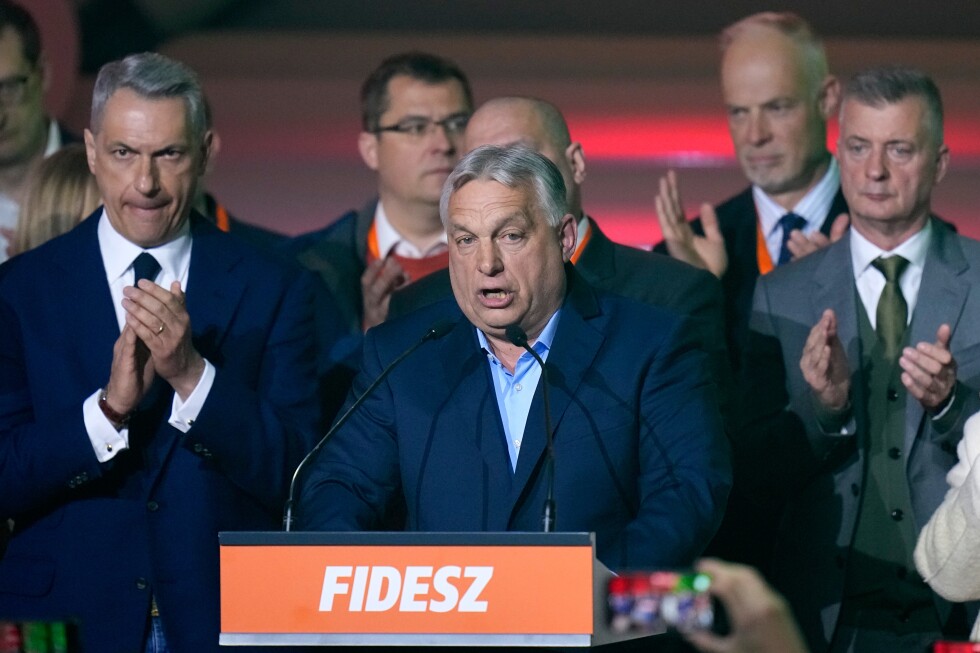
    BUDAPEST, Hungary — After 16 years of dominating Hungarian politics and carving out an outsize role in global conservative movements, Viktor Orbán’s tenure as prime minister has come to an abrupt end following a crushing landslide defeat in Sunday’s national election. The political shakeup, which saw opposition challenger Péter Magyar secure an overwhelming mandate from Hungarian voters, is sending ripples across Europe and beyond, as leaders from Kyiv to Brussels react to the end of an era defined by Orbán’s controversial illiberal agenda.

    During his four consecutive terms in office, Orbán built a global following among right-wing populists, who replicated his political playbook: systematically restructuring state institutions to consolidate ruling party power, rolling back protections for minority groups, narrowing the space for independent media, and positioning himself as a fiery champion of national sovereignty against what he framed as the overreach of globalization and uncontrolled migration. To his critics across the European continent, however, Orbán represented a direct threat to European democracy, eroding the bloc’s core shared commitments to human rights, the rule of law, and institutional accountability.

    Ultimately, Hungarian voters delivered a clear verdict that it was time for political change, handing Magyar a decisive victory that has reshaped the European political landscape. The outcome carries particularly profound stakes for Ukraine, as Orbán maintained the closest ties to the Kremlin of any European Union leader, repeatedly blocking bloc-wide aid packages to Kyiv amid Russia’s full-scale invasion.

    Within hours of the election results being confirmed, Ukrainian President Volodymyr Zelenskyy extended an olive branch to the new Hungarian administration, emphasizing Kyiv’s longstanding goal of building constructive, good-neighborly relations across the continent. “It is important when constructive approach prevails. Ukraine has always sought good-neighbourly relations with everyone in Europe and we are ready to advance our cooperation with Hungary,” Zelenskyy wrote on social media. “We are ready for meetings and joint constructive work for the benefit of both nations, as well as peace, security, and stability in Europe.”

    For the European Union, Orbán’s defeat has been met with widespread relief, ending years of diplomatic gridlock and public friction between Budapest and Brussels. Despite Hungary receiving billions of euros in structural development funding from the bloc, Orbán consistently attacked EU institutions and its policy agenda, often deriding top EU leaders in public remarks.

    Minutes after Orbán delivered his concession speech, European Commission President Ursula von der Leyen — a frequent target of Orbán’s criticism — issued a celebratory message on X: “Europe’s heart is beating stronger in Hungary tonight.”

    Top leaders from Europe’s largest major powers quickly echoed the sentiment. British Prime Minister Keir Starmer called the election outcome “an historic moment, not only for Hungary, but for European democracy. I look forward to working with you for the security and prosperity of both our countries.” German Chancellor Friedrich Merz extended warm congratulations to Magyar, writing “Let’s join forces for a strong, secure and, above all, united Europe. Gratulálok, kedves Magyar Péter!” French President Emmanuel Macron added that “France welcomes the victory of democratic participation, the Hungarian people’s commitment to the values of the European Union, and Hungary’s commitment to Europe.”

    Meanwhile, populist leaders and far-right parties that counted Orbán as a close ideological ally have reacted with measured, careful rhetoric following his defeat. Italian Prime Minister Giorgia Meloni, who aligned closely with Orbán on a range of EU policy issues, thanked her “friend Viktor Orbán” for their past collaboration, noting “I know that even from the opposition he will continue to serve his Nation.”

    In France, the far-right National Rally — which is gearing up for a 2025 presidential run to unseat Macron and long supported Orbán’s agenda — struck a cautious tone. Party leader Jordan Bardella wrote that “This result, respectfully welcomed by Viktor Orbán, shows that the incessant accusations by European institutions in recent years against Hungarian democracy were unfounded.”

    The election result marks one of the most significant political shifts in Europe in recent years, with implications for EU policy, Ukraine’s war effort, and the future of global populist politics. As Magyar prepares to take office, leaders across the continent are waiting to see how his new administration will reshape Hungary’s place in Europe.