
The seizure of el-Fasher in Darfur by Sudan’s Rapid Support Forces (RSF) has triggered a significant shift in Egypt’s strategic outlook, as Cairo perceives the conflict as a direct threat to its national security. The RSF’s brutal tactics in el-Fasher have forced Egypt to reconsider its southern borders as a critical line of defense. This development marks a pivotal moment in Sudan’s ongoing civil war, which has seen the Sudanese Armed Forces (SAF) supported by Egypt since April 2023. The RSF’s capture of key border regions in June, coupled with the atrocities in el-Fasher, has heightened Egypt’s concerns about regional instability and potential spillover effects. In response, President Abdel Fattah el-Sisi’s government is adopting a dual approach of military reinforcement and diplomatic engagement to mitigate the crisis. Egypt has bolstered its border defenses, established joint command forces with Sudan, and intensified cooperation with regional allies like Saudi Arabia and Turkey. The SAF, outmatched by RSF’s advanced weaponry allegedly supplied by the United Arab Emirates (UAE), is seeking additional support from Egypt and Turkey. Analysts suggest that Egypt’s involvement is driven by the need to secure its southern flank and prevent Sudan from fracturing into separate entities. The RSF’s control over trade and smuggling routes further complicates the situation, as Egypt seeks to maintain influence over these strategic corridors. Meanwhile, the UAE’s alleged support for the RSF has drawn international scrutiny, with evidence pointing to extensive arms shipments through various regional hubs. Egypt’s collaboration with Turkey, despite their historical rivalry, underscores the urgency of the situation. As the conflict intensifies, Egypt’s role is evolving from a mediator to an active participant, with the potential for deeper military engagement in Sudan.
博客
-

Sudan’s RSF agrees to US proposal for ceasefire
In a significant development, Sudan’s paramilitary Rapid Support Forces (RSF) has agreed to a ceasefire proposal put forward by the United States, as announced in a statement on Thursday. This move comes amidst the ongoing conflict that has plagued the nation since April 2023, when tensions between the Sudanese army and the RSF escalated over plans to integrate their forces. The RSF, which was previously a partner in power with the army, has now taken a step towards de-escalation by accepting the US-mediated ceasefire, which aims to facilitate humanitarian efforts in the war-torn region. The conflict has caused widespread devastation, and this ceasefire could potentially pave the way for peace talks and aid delivery to affected populations.
-

Bird-watching festival in Yunnan unveils new avian discoveries
The second Yunnan Lancang Bird-Watching Festival, held in the Lancang Lahu Autonomous County of Yunnan Province, concluded with remarkable findings. Over a span of 60 hours, participants documented an impressive 273 bird species, setting a new record for the region. Among these, seven species were newly recorded in the area, including the spot-winged starling, which also marked a new record for Pu’er City, the administrative jurisdiction of Lancang. The event, which drew bird enthusiasts and researchers alike, highlighted the rich biodiversity of Yunnan Province, known for its unique ecosystems and avian diversity. The discovery of these new species underscores the importance of conservation efforts in the region, as well as the potential for further scientific exploration. The festival not only celebrated the beauty of bird-watching but also contributed valuable data to the field of ornithology, reinforcing Yunnan’s status as a global hotspot for bird species.
-

Nancy Pelosi, first female speaker of US House, announces retirement
Nancy Pelosi, the trailblazing first female Speaker of the U.S. House of Representatives, announced on Thursday, November 6, 2025, that she will not seek re-election in 2026, marking the end of a storied four-decade career in Congress. Pelosi, 85, who has been a progressive Democratic icon and a frequent target of Republican criticism, made the announcement in a heartfelt video posted on X. Her decision comes shortly after California voters approved ‘Proposition 50,’ a redistricting initiative aimed at securing five additional House seats for Democrats in the upcoming midterm elections. Pelosi’s career has been defined by her fierce battles for control of the House and her high-profile clashes with former President Donald Trump during his first term from 2017 to 2020. Her retirement underscores a broader generational shift within the Democratic Party, as younger leaders push for change. Pelosi’s legacy includes her pivotal role in passing the Affordable Care Act under President Barack Obama and her relentless advocacy for human rights and LGBTQ+ equality. Her departure will leave a significant void in the Democratic leadership, though Representative Hakeem Jeffries is poised to step into her shoes. Pelosi’s tenure has been marked by both historic achievements and intense partisan strife, including two impeachment efforts against Trump and a harrowing attack on her husband in 2022. As she prepares to leave Congress, Pelosi’s impact on American politics remains indelible.
-

Peruvian Congress votes to declare Mexico’s president persona non grata after asylum offer
In a dramatic escalation of diplomatic tensions, Peru’s Congress declared Mexican President Claudia Sheinbaum persona non grata on Thursday. This decision followed Mexico’s move to grant asylum to former Peruvian Prime Minister Betssy Chávez, which Peruvian officials condemned as interference in their internal affairs. The legislative vote, which passed with 63 in favor, 34 against, and two abstentions, highlighted deep divisions over Sheinbaum’s perceived support for former Peruvian President Pedro Castillo. Castillo, who was ousted in December 2022 after attempting to dissolve Congress, remains detained on charges of rebellion and conspiracy. Peru’s interim President José Jerí severed diplomatic ties with Mexico earlier this week, citing Sheinbaum’s asylum decision as a provocation. Chávez, who faces up to 25 years in prison for her alleged role in Castillo’s actions, remains in the Mexican diplomatic residence in Lima, as Peru has yet to grant her safe passage. Mexico defended its decision, stating it complied with international law and rejecting Peru’s response as excessive. Meanwhile, Peru’s Congress is considering measures to bar Chávez from holding public office, further intensifying the rift between the two nations.
-
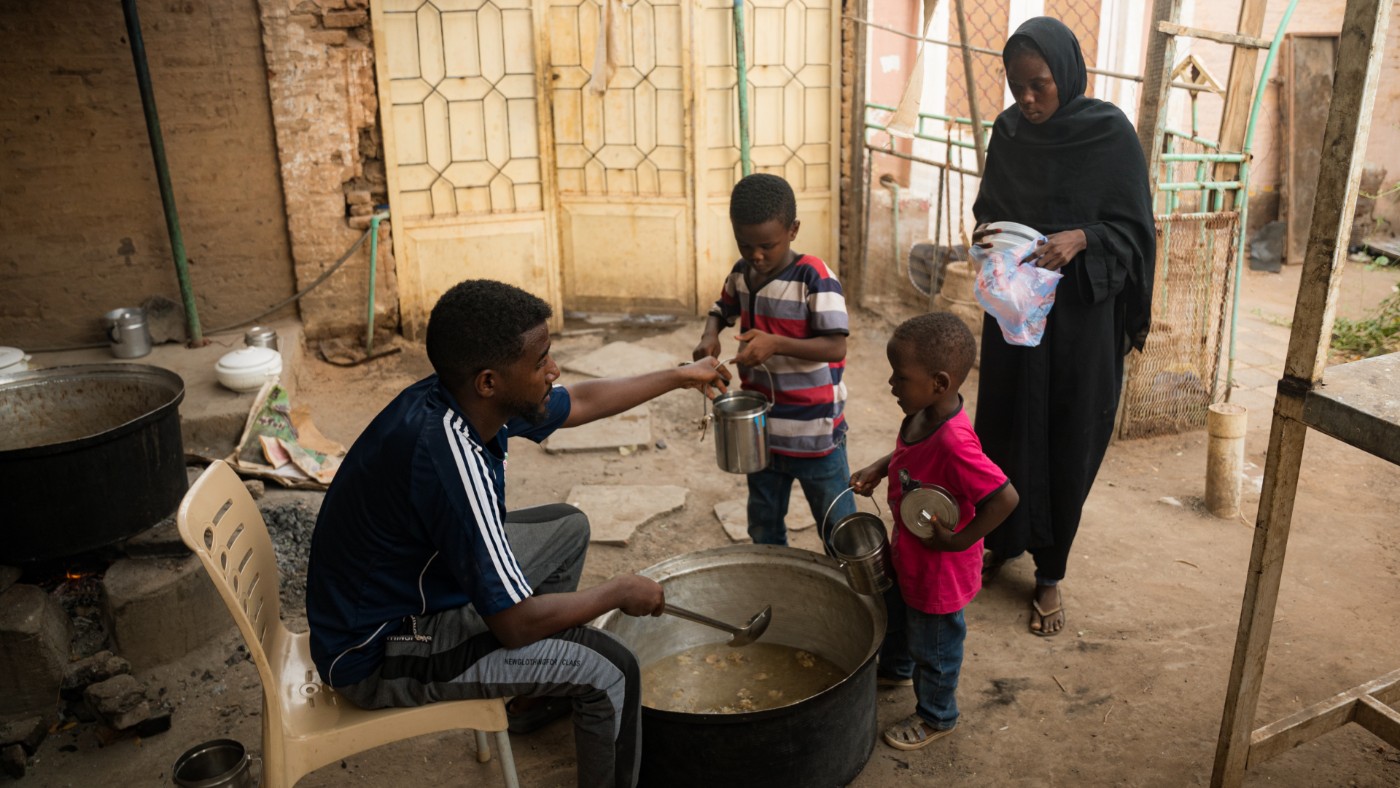
Sudan’s takaaya community kitchens collapsing as population starves
Sudan’s community kitchens, known as takaaya, have been a cornerstone of survival for millions amid the ongoing conflict that began in April 2023. However, a recent report by Islamic Relief warns that these vital institutions are on the brink of collapse due to international neglect, supply shortages, and volunteer exhaustion. The charity’s extensive research reveals that 83% of Sudanese families lack sufficient food, with 52% of surveyed households having food supplies lasting less than a week. These kitchens, which operate alongside Emergency Response Rooms (ERRs), have been a beacon of hope and solidarity, providing not just meals but also shelter, health facilities, and support for victims of sexual violence. The ERRs, once supported by US funding under President Biden, have seen their resources drastically reduced since President Trump cut USAID support, leaving them struggling to maintain operations. Volunteers like Mazen Osman ibn Ibrahim and Manal Ahmed Ibrahim emphasize the cultural and religious significance of takaaya, rooted in Sudanese traditions of mutual aid and Islamic principles of charity. Despite their resilience, many kitchens have downsized from serving multiple meals a day to just one, with some shutting down entirely. Islamic Relief has called for urgent international aid to support these local initiatives, warning that their collapse would have catastrophic consequences for a population already facing famine and starvation.
-

At least 1 dead, 6 trapped after structure collapses at decommissioned South Korean power plant
A tragic incident unfolded in Ulsan, South Korea, when a 60-meter (196-foot) tower at a decommissioned thermal power plant collapsed during demolition work, resulting in at least one fatality and leaving six individuals trapped under the debris. The collapse occurred on Thursday afternoon, prompting an immediate and extensive rescue operation.
Rescuers managed to locate one of the trapped individuals, though fears of their demise loom large as extraction efforts have been hindered by unstable rubble. Two other workers were rescued shortly after the collapse and are reported to have escaped life-threatening injuries. However, another worker, rescued later, succumbed to injuries and was pronounced dead at a hospital early Friday, according to Kim Jeong-shik, an official with Ulsan’s fire department.
The search for the remaining trapped individuals was temporarily suspended on Friday morning due to safety concerns regarding the unstable debris. Rescue operations are set to resume once stabilization measures are completed. Kim highlighted the deployment of advanced detection equipment, including thermal cameras and endoscopes, alongside rescue dogs to aid in the search efforts.
South Korean President Lee Jae Myung has directed officials to mobilize all available resources, including over 340 rescue workers and approximately 90 vehicles and equipment, to expedite the rescue mission while ensuring the safety of the rescue personnel.
The thermal power plant, which had been operational for 40 years, was decommissioned in 2021. Officials noted that the boiler tower, one of three at the site, had been weakened during preparations for its demolition, contributing to the catastrophic collapse.
-

How UAE became a global haven for crypto migration
The United Arab Emirates (UAE) has solidified its position as a global leader in the cryptocurrency sector, emerging as one of the top five crypto-friendly jurisdictions worldwide. With a perfect score of 10 for tax-friendliness, the UAE imposes zero taxes on crypto trading, staking, and mining, making it an attractive destination for digital asset investors. This transformation has been driven by a combination of progressive regulatory frameworks and a zero-tax environment, positioning the UAE as a premier hub for crypto wealth migration. According to the 2025 Crypto Wealth Report by Henley & Partners, the global crypto market has surged by 45% in value, reaching $3.3 trillion, with 241,700 crypto millionaires and 36 billionaires now commanding fortunes exceeding $1 billion. The UAE has been at the epicenter of this digital wealth migration, with transaction volumes in the MENA region peaking at over $60 billion in December 2024. Between July 2023 and June 2024 alone, the UAE received an estimated $34 billion in cryptocurrency inflows, marking a 42% year-on-year growth. The country’s regulatory revolution, guided by its vision for economic diversification, has established sophisticated frameworks across its financial centers. The Abu Dhabi Global Market and Dubai’s Virtual Assets Regulatory Authority have provided clarity and security in an industry often characterized by uncertainty. This multi-jurisdictional approach has created an ecosystem where both institutional asset managers and fintech startups can thrive. The UAE’s crypto economy is further bolstered by widespread adoption, with over 500,000 daily active crypto traders and more than 30% of residents—approximately three million people—having invested in cryptocurrencies. Youth-led adoption is particularly significant, with 74% of young adults aged 25–34 expressing active interest in crypto. The UAE’s strategic location, bridging East and West, and its perfect score for tax-friendliness have made it a natural destination for globally mobile digital wealth. Emerging trends such as the tokenization of real-world assets and the rise of mobile-first, gamified platforms are expected to further strengthen the UAE’s crypto dominance. As the global crypto landscape matures, the UAE has positioned itself at the forefront of the digital wealth revolution, creating a sanctuary where digital wealth can flourish.
-

The Hindu India Education Expo 2025 set to empower students in the UAE
The Hindu India Education Expo 2025, a highly anticipated event, is poised to empower students in the UAE by providing a comprehensive platform for academic and career guidance. Scheduled for November 2025, the expo will feature over 40 prestigious Indian universities, acclaimed career mentors, and financial experts, offering students and parents invaluable insights into higher education opportunities. The event will commence in Abu Dhabi on November 12 at the India Social & Cultural Centre, followed by sessions in Ras Al Khaimah on November 14 at the Indian Association. Dubai will host the expo across two venues: The New Indian Model School on November 15 for school-level participants, and Hotel Crowne Plaza, Deira on November 16 for a broader audience. A standout feature of the expo is the complimentary access to The Hindu STEP (Standardized Test of English Proficiency) Assessment for registered students, a globally recognized tool to enhance English communication skills. Additionally, schools registering in bulk will benefit from exclusive perks, including free STEP Teacher Training for 15 teachers per institution, aimed at improving classroom communication and global teaching standards. The Hindu STEP Program, known for its interactive learning modules and internationally accredited certifications, seeks to cultivate confident and globally competent learners. The expo also promises direct interactions with top Indian universities, expert guidance, and access to cutting-edge learning tools, making it a pivotal event for students aspiring to pursue quality education in India. The event is proudly sponsored by Rajalakshmi Institute of Technology, with participation from other esteemed institutions such as Khaja Bandanawaz University, Chettinad Sarvalokaa Education International School, and Amrita Vishwa Vidyapeetham, among others. Students and schools can register online via https://newsth.live/IIEF2025PA.
-
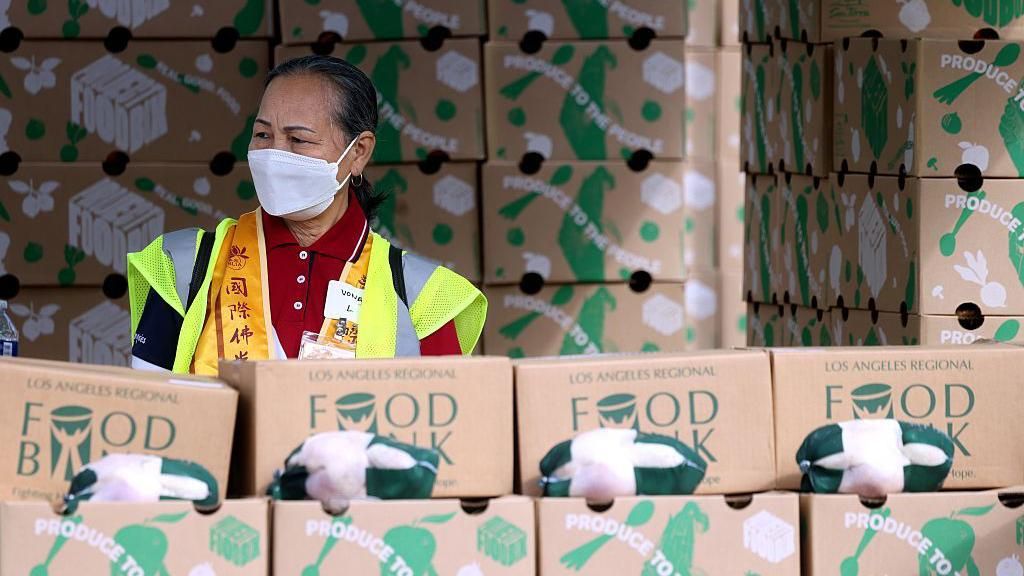
Judge orders Trump administration to fully fund Snap food benefits
A federal judge has mandated the Trump administration to fully finance the Supplemental Nutrition Assistance Program (SNAP), commonly referred to as food stamps, condemning the administration for allegedly withholding food aid for political motives. Judge John McConnell, in his ruling on Thursday, emphasized the dire consequences of withholding aid, stating that “16 million children are immediately at risk of going hungry.” SNAP, utilized by approximately 42 million Americans—about one in eight—assists low-income individuals in purchasing groceries. Initially, the administration intended to cease all funding this month due to the ongoing government shutdown, the longest in U.S. history. However, they were later instructed to disburse at least partial payments. Judge McConnell, based in Rhode Island, also rebuked President Donald Trump for suggesting that benefits would only be distributed post-shutdown. He approved a petition from various local governments and non-profit organizations, demanding full food benefits instead of the 65% previously ordered for this month. Appointed by President Barack Obama, Judge McConnell set a deadline for benefit payments by Friday, deeming any further delay “simply unacceptable.” He asserted, “This should never happen in America.” Over 42 million Americans depend on SNAP benefits, yet the program has been in jeopardy during the prolonged shutdown. Although individual states manage the benefits, the program relies on federal funding, which has been suspended since October 1. Last month, the U.S. Department of Agriculture (USDA), overseeing SNAP, announced it would cease distributing food-assistance funds starting November 1, citing a lack of funds. Half the states and the District of Columbia have sued the administration over the food-aid freeze, arguing their legal obligation to maintain the program. Federal judges in Massachusetts and Rhode Island ruled that the administration must utilize $5.25 billion in emergency funds for at least partial payments. SNAP, costing about $8 billion monthly, enables low-income Americans to purchase groceries through reloadable debit cards. On average, a family of four receives $715 monthly, equating to less than $6 per person daily. Amid funding uncertainties, local governments have directed recipients to charity food pantries, which have initiated emergency drives. Additionally, cost-saving recipes have gained popularity online as Americans seek ways to manage their budgets.