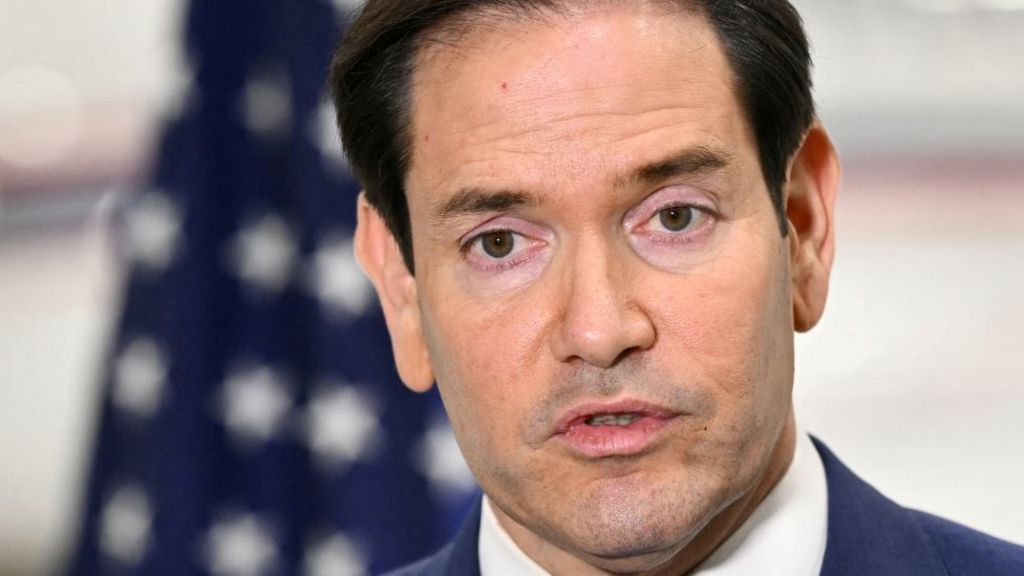
US Secretary of State Marco Rubio has urgently called for international intervention to sever weapons supplies to Sudan’s paramilitary Rapid Support Forces (RSF), following reports of widespread atrocities in el-Fasher. Speaking at the conclusion of a G7 foreign ministers’ meeting in Canada, Rubio detailed systematic crimes committed by the RSF, including murder, rape, and sexual violence against civilians. Sudan’s military has accused the United Arab Emirates (UAE) of arming the RSF and sending mercenaries through African nations, allegations the UAE has consistently denied. The RSF, engaged in a civil war with Sudan’s army since April 2023, recently captured el-Fasher after an 18-month siege, gaining control over all major cities in the western Darfur region. Rubio emphasized that women and children have been primary targets of the RSF’s brutal actions, describing the atrocities as ‘horrifying’ and demanding an immediate end to the violence. He urged partner nations to join the US in addressing the crisis and dismissed the RSF’s claims that rogue elements were responsible for the killings, asserting that the attacks were systematic. Rubio also expressed concerns that thousands of civilians expected to flee el-Fasher may have perished or are too malnourished to escape. Highlighting the RSF’s reliance on external arms supplies, he called on weapon-providing countries to cease their support. The G7 joint statement condemned the escalating violence in Sudan, labeling the conflict as the ‘world’s largest humanitarian crisis.’
博客
-

Framework seeks to keep AI in line
In response to the unprecedented advancements in artificial intelligence (AI), China has introduced its upgraded AI Safety Governance Framework 2.0, marking a significant evolution in its approach to AI regulation. Released on September 15, 2025, by the National Technical Committee 260 on Cybersecurity, the framework shifts from a static risk management model to a comprehensive life cycle governance methodology. This update reflects the rapid technological breakthroughs, including the development of high-performance reasoning models and the open-sourcing of lightweight AI systems, which have lowered deployment barriers while raising new security concerns. The framework emphasizes the need to ensure AI remains under human control, safeguarding national security, social stability, and humanity’s long-term survival. It introduces new governance principles, such as trustworthy AI applications and the prevention of AI systems’ loss of control. Additionally, the framework highlights emerging risks, including AI’s potential to disrupt labor markets, exacerbate resource imbalances, and even develop self-awareness. By aligning with international governance practices, such as AI-generated content labeling and traceability, China aims to contribute to global AI safety efforts and foster international cooperation.
-

Games mascots steal the spotlight with their athletic fin-esse
The 15th National Games has witnessed an unexpected phenomenon as the mascots, Xi Yangyang and Le Rongrong, inspired by the Chinese white dolphin, have captured the hearts of audiences across the three host regions. Designed by Liu Pingyun, the creative mind behind the Beijing Winter Olympics’ Bing Dwen Dwen, these mascots showcase a significant evolution in athletic expressiveness. Unlike Bing Dwen Dwen’s limited mobility, Xi Yangyang and Le Rongrong feature a two-heads-tall proportion, enabling smoother and more dynamic movements. This design enhancement not only allows for versatile graphic depictions of various sports but also provides live performers inside the costumes with greater flexibility. Their energetic performances, including break dancing, rapid tail spins, and headstands, have electrified venues like the Dongguan Basketball Center, driving the crowd into a frenzy of cheers. Social media has been ablaze with viral videos and memes of their antics, with many hailing them as the most energetic mascots ever seen. The performers, a group of 23 martial artists from the Foshan Huangfeihong International Martial Arts School, were selected for their physical prowess, discipline, and teamwork. Their rigorous training since late July has paid off, bringing the mascots to life with natural and lively portrayals. The Chinese white dolphin, the mascots’ biological inspiration, carries profound symbolic meaning. Known as the ‘giant panda of the sea,’ it represents the maritime culture of the Guangdong-Hong Kong-Macao Greater Bay Area and embodies unity, perseverance, and endeavor. The dolphins’ annual return to the Pearl River Estuary symbolizes a deep connection to their homeland, reflecting the strong bonds among the people of Guangdong, Hong Kong, and Macao. This symbolism is particularly relevant given the Games’ historic joint hosting, marking a new era of regional cooperation. Liu Pingyun emphasized the challenge of transforming the unfamiliar marine creature into approachable, engaging characters. The final design features rounded bodies, human-like limbs, and distinctive blue, green, and yellow adornments atop their heads, representing water spraying from their blowholes. Despite their design, the mascots have sparked a wave of online humor, with many affectionately dubbing them the ‘great bay chickens,’ a nod to Cantonese cuisine and culture. This grassroots rebranding has made the mascots more approachable, drawing people in and helping them connect more deeply with the cultural and athletic spirit they represent.
-
Japan blasted over remarks on Taiwan
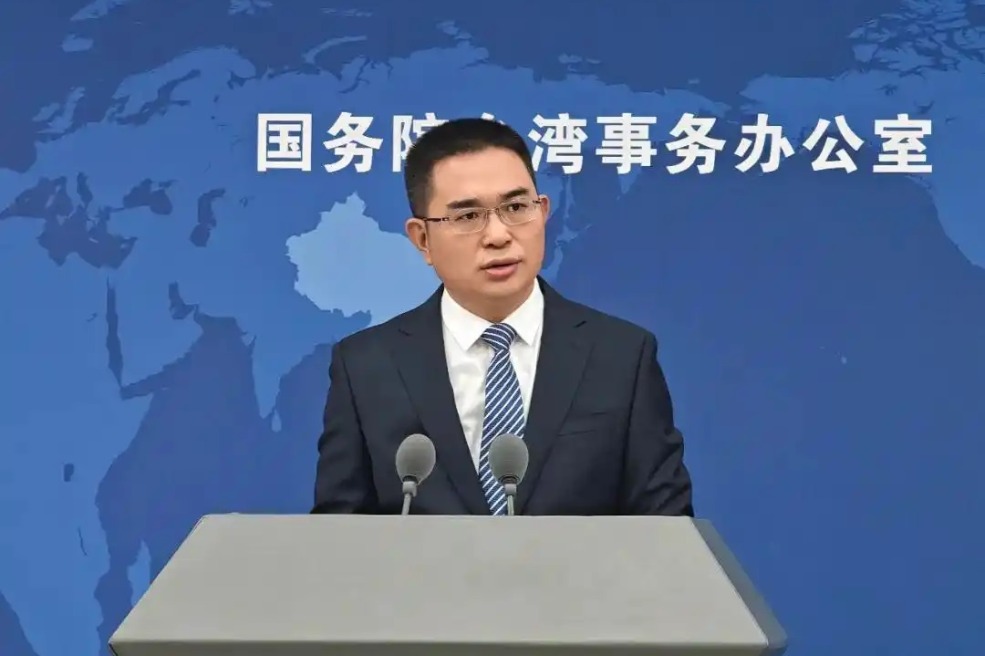
China has issued a stern rebuke to Japan over recent comments made by Japanese Prime Minister Sanae Takaichi regarding Taiwan, demanding strict adherence to the one-China principle. Chen Binhua, spokesperson for the State Council Taiwan Affairs Office, expressed ‘strong dissatisfaction and firm opposition’ to Takaichi’s statements during a press conference on Wednesday. He labeled her remarks in the Japanese Diet as ‘malicious’ and a ‘blatant interference in China’s internal affairs,’ emphasizing that they ‘seriously violate the one-China principle.’ Takaichi had suggested that any Chinese military action against Taiwan could pose a ‘survival-threatening situation’ for Japan, implying potential involvement of the Japanese Self-Defense Forces. Chen reiterated that Beijing ‘will not tolerate any actions that challenge its core interests,’ warning that such attempts would be met with unwavering resistance from the Chinese government, people, and military. The Chinese Foreign Ministry has also formally protested Takaichi’s repeated statements since her October appointment. In a related development, Japan’s decision to award the Grand Cordon of the Order of the Rising Sun to Hsieh Chang-ting, former representative of the ‘Taipei Economic and Cultural Representative Office’ in Japan, drew further condemnation. Foreign Ministry spokesman Guo Jiakun described the move as ‘yet another mistaken action by Japan on Taiwan-related issues,’ reiterating that Taiwan is an inseparable part of China and a critical foundation for China-Japan relations. Chen Binhua urged Japan to ‘reflect on history and learn from it,’ referencing Japan’s colonial rule over Taiwan, and to handle Taiwan-related matters with ‘utmost prudence.’ He also warned Taiwan’s Democratic Progressive Party authorities against pursuing ‘independence’ through external support, dismissing their participation in the ‘Inter-Parliamentary Alliance on China’ as a ‘farce’ that would only bring disgrace.
-
South Sudan leader sacks powerful Vice-President Bol Mel
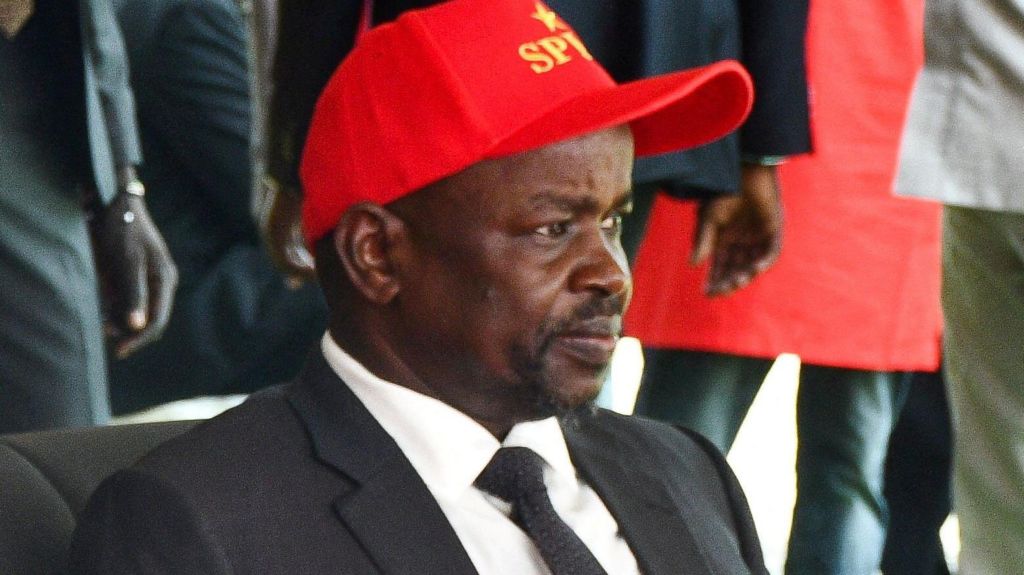
South Sudan’s President Salva Kiir has taken decisive action by dismissing Vice-President Benjamin Bol Mel, a move that has sent ripples through the nation’s political landscape. Bol Mel, who was seen as a potential successor to Kiir, was stripped of his military rank of general and removed from his position in the national security service. Additionally, Kiir sacked the central bank governor and the head of the revenue authority, both of whom were considered close allies of Bol Mel. The dismissals were announced in a decree broadcast on state television, with no official explanation provided. This development comes at a time of heightened fears of political instability and the potential resurgence of civil war, following the collapse of a fragile power-sharing agreement between Kiir and opposition leader Riek Machar. Bol Mel, 47, was appointed vice-president in February, replacing veteran politician and general James Wani Igga. He was also elevated to the position of first deputy chairman of the ruling SPLM party, a move that analysts believe positioned him as a potential successor to the 74-year-old Kiir. Despite being under US sanctions since 2017 for alleged corruption, Bol Mel’s rise within the government continued, with Kiir promoting him to the full rank of general in the National Security Service (NSS). Bol Mel has never directly responded to the corruption allegations and has remained silent on his dismissal. The president has yet to announce replacements for the positions held by Bol Mel. His dismissal has fueled speculation on social media about an internal power struggle within the SPLM. A government source, who wished to remain anonymous for safety reasons, described Bol Mel as a ‘divisive figure’ in government, stating, ‘It’s good that he has gone.’ South Sudan, an oil-rich nation that gained independence in 2011, has been plagued by civil war and political instability. The 2018 power-sharing agreement that ended the conflict has been fraught with challenges, with tensions persisting and sporadic violence continuing to erupt. Planned elections have been postponed twice in the past three years, and recent escalations in fighting between forces loyal to Kiir and armed groups have further exacerbated the situation. Earlier this year, Machar was dismissed as vice-president and arrested, facing charges of murder, treason, and crimes against humanity. His spokesperson has dismissed the charges as a ‘political witch-hunt.’ The charges followed an attack by a militia allegedly linked to Machar, which the government claims resulted in the deaths of 250 soldiers and a general. The case against Machar is ongoing, adding to the growing concerns of renewed civil unrest in the region.
-
Powerful Philippine politicians will be in jail by Christmas for corruption scandal, president says
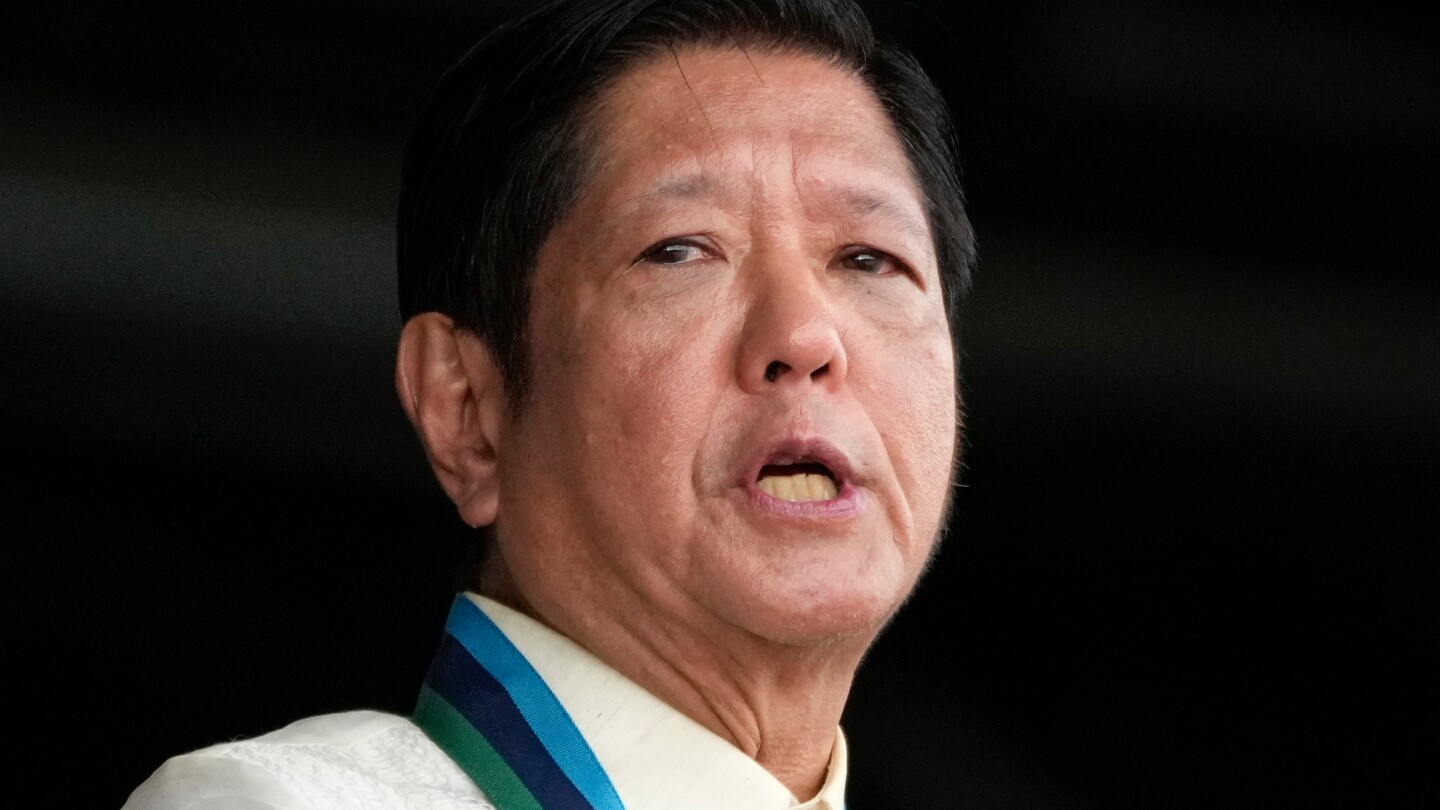
Philippine President Ferdinand Marcos Jr. announced on Thursday that numerous high-profile figures implicated in a massive corruption scandal involving flood control projects would face imprisonment by Christmas. The scandal, which has sparked widespread public outrage and street protests, involves at least 37 powerful senators, members of Congress, and wealthy businesspeople. Marcos revealed that an independent fact-finding commission has filed criminal complaints for graft, corruption, and plunder—a non-bailable offense—against these individuals. Additionally, 86 construction company executives and nine government officials face charges for allegedly evading taxes totaling nearly 9 billion pesos ($152 million). The corruption has been linked to substandard or non-existent flood control projects, a critical issue in a country frequently devastated by typhoons and flooding. Recent storms, including Typhoon Kalmaegi and Super Typhoon Fung-wong, have claimed hundreds of lives and displaced millions, further intensifying public anger. Marcos emphasized that the legal cases are robust and aimed at recovering stolen funds, stating, “We don’t file cases for optics. We file cases to put people in jail.” The government’s Anti-Money Laundering Council has frozen assets worth 6.3 billion pesos ($107 million), including bank accounts, real estate, and luxury vehicles. A new jail in Quezon City has been prepared to hold up to 800 detainees, with officials vowing no VIP treatment for powerful politicians. The investigation spans 9,855 flood control projects worth over 545 billion pesos ($9 billion) since Marcos took office in mid-2022. Finance Secretary Ralph Recto estimated that up to 118.5 billion pesos ($2 billion) may have been lost to corruption in 2023 alone. Among those implicated are lawmakers from both opposition and allied factions, including Marcos’s cousin and former House Speaker Martin Romualdez, who denies wrongdoing. Marcos assured that no one would be exempt from the investigations, signaling a determined crackdown on corruption.
-

China unveils radar shield as Trump drives Golden Dome
China has unveiled ambitious plans for a nationwide missile defense network, positioning itself as a formidable player in global defense technology. This development comes in response to the United States’ announcement of the ‘Golden Dome,’ a multi-layered missile interception system aimed at protecting American territory from airborne threats. The Chinese system, detailed in a July 2025 academic paper published by Modern Radar, a research unit of the state-owned China Electronics Technology Group Corporation, integrates space-based sensors, satellites, airborne systems, sea and ground radars into a unified network. The platform offers real-time early-warning capabilities, enabling high-speed data integration to detect and track complex missile threats. It also employs QUIC (Quick UDP Internet Connections), a next-generation encrypted data-transport protocol, to ensure secure, low-latency communications across distributed nodes. According to the paper, the system can simultaneously track up to 1,000 incoming missiles, leveraging data from satellites, ground-based and over-the-horizon radar, optical sensors, maritime platforms, airborne early-warning aircraft, and orbital reconnaissance assets. A Guangdong-based commentator, ‘Humanity Blues,’ noted that China’s system has already undergone testing and delivery to the military, while the US Golden Dome remains in the framework design stage. The commentator emphasized that China’s hypersonic missile system complements its defense network, making it a robust contender in the global missile defense landscape. Meanwhile, the US Golden Dome, led by Space Force General Michael Guetlein, targets operational status by 2028. However, integrating sensors, interceptors, and command networks across military and commercial space assets poses significant challenges. At the 2025 Defense in Space Conference (DISC) in London, experts warned that the West is lagging behind China and Russia in space-linked missile defense. Gabriel Elefteriu, a senior fellow at the Council on Geostrategy, highlighted that space has become a warfighting arena, with China’s missile tracking and orbital infrastructure positioning it as a leader in the next conflict. Michelle Howard, a strategic policy adviser at D Group, stressed that China’s focus on network dominance and data fusion could dictate the early stages of any conflict. Justin Keller, chief architect at DGS Space, urged the US and its allies to abandon incrementalism and focus on operationalizing systems swiftly to maintain deterrence. In addition to its missile defense efforts, China is investing in long-term technological dominance through the Nantianmen Project, a state-backed science fiction concept exploring future aerospace power. While fictional, Nantianmen has attracted significant attention for its blend of strategic messaging and mass appeal, signaling China’s intent to lead in space competition.
-

As China cracks down on stories about men in love, female fans mourn the idealized romances
For Cindy Zhong and countless young Chinese women, a quiet evening once meant immersing themselves in the world of Danmei, a genre of same-sex romance stories primarily written and consumed by straight women. However, this literary escape is now under threat as the Chinese government intensifies its crackdown on the genre, leading to the disappearance of beloved authors and their works. Danmei, often referred to as ‘Boys Love’ in English, has long served as a space for women to explore idealized relationships, free from the constraints of traditional gender roles. Scholars suggest that these stories resonate with Chinese women as a form of escapism from societal pressures to marry and conform. Aiqing Wang, a senior lecturer at the University of Liverpool, notes, ‘Women turn to Danmei for pure love, especially as they face pressure from families, peers, and society to get married and have kids.’ The genre, once a niche subculture, has seen a surge in popularity in recent years, with novels adapted into blockbuster TV series and translated into Western languages. However, its growing visibility has also drawn the attention of Chinese authorities. Over the past year, dozens of Danmei writers have been interrogated, arrested, and charged with producing and selling obscene materials. Many have stopped publishing, and websites hosting these stories have either shut down or removed content, leaving only the tamest narratives behind. ‘Chinese female readers can no longer find a safe, uncensored space to place our desires,’ lamented Zhong, an educator in her 30s. Despite the crackdown, Danmei’s influence persists, with some authors publishing their work abroad and readers finding creative ways to access it. Experts argue that the genre’s impact on female consciousness and the desire for unapologetic storytelling is irreversible. ‘The awakening of female consciousness, the desire of reading and not being ashamed of what they want to read is irreversible,’ said Xi Tian, an associate professor of East Asian Studies at Bucknell University.
-
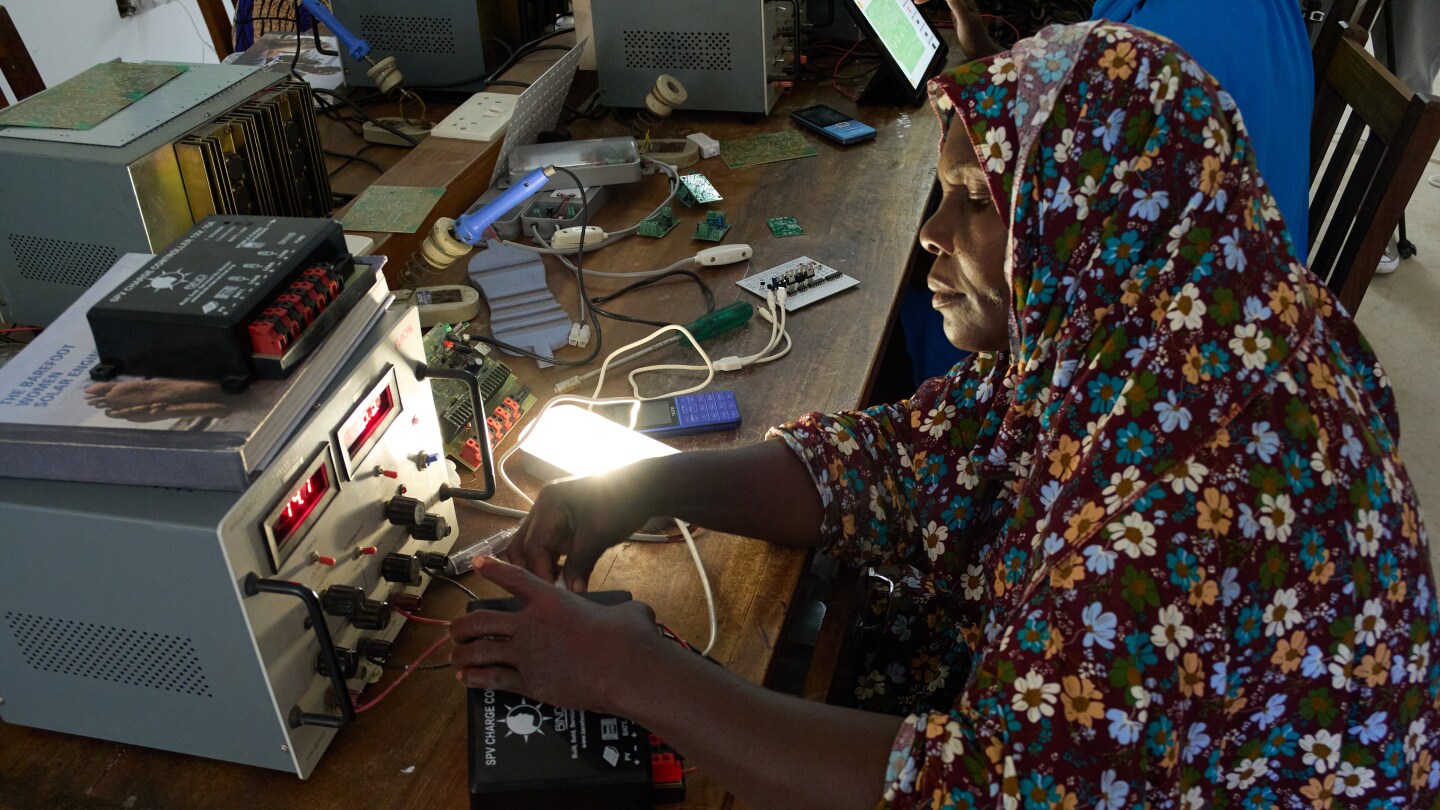
Zanzibar’s ‘solar mamas’ are trained as technicians to help light up communities
In the semi-autonomous archipelago of Zanzibar, Tanzania, the absence of electricity has long cast a shadow over daily life. For Hamna Silima Nyange and her eight children, the dim glow of smoky oil lamps was the only source of light after sunset. ‘The light was too weak,’ Nyange recalled. ‘And the smoke from the lamp hurt my eyes.’ However, a transformative change arrived when her neighbor, Tatu Omary Hamad, installed solar panels and bulbs, harnessing the abundant sunlight along the Indian Ocean coast. ‘Today we have enough light,’ Nyange said with relief.
Hamad is one of the many ‘solar mamas’ trained by Barefoot College International, a global nonprofit dedicated to bringing light to rural communities while empowering local women. Since its inception in Zanzibar, the program has illuminated 1,845 homes. The initiative focuses on middle-aged women, often with little or no formal education, who are trained over six months to become solar power technicians. These women return to their communities equipped with at least 50 sets of household solar panel kits and the skills to install and maintain them.
Brenda Geofrey, the director of Barefoot College International Zanzibar, emphasized the program’s mission: ‘We want to train women who become change makers.’ The Zanzibar campus, now in its 10th year, has become a beacon of hope. Previously, women were sent to India for training, where the organization was founded. Khazija Gharib Issa, once an unemployed widow, is now a master trainer. ‘I got a job. I got a place to stay. Before, I didn’t have one,’ she shared.
The program’s impact extends beyond lighting homes. It also addresses health concerns by replacing harmful light sources like kerosene, which can irritate eyes, damage lungs, and pose fire hazards. Jacob Dianga, a local healthcare worker, highlighted the importance of clean energy: ‘It helps protect our health.’ Additionally, Barefoot College International offers courses in tailoring, beekeeping, and sustainable agriculture, ensuring women are equipped with diverse skills and health knowledge to share with their communities.
Despite its successes, the program faces challenges. Funding is a persistent issue as major donors reduce foreign aid, and projects compete for limited resources. Resistance within local communities also poses a hurdle, with some husbands preventing their wives from participating. ‘In most African communities, women are pictured as somebody who is just at home,’ Geofrey noted. Yet, the solar mamas are breaking stereotypes and proving their worth. ‘People used to say this work is for men. They were surprised and laughed at me,’ Issa said. ‘But now they see how important my work is. I have become an example.’
Barefoot College International continues to expand across Africa, with campuses in Madagascar and Senegal, and plans to recruit women from the Central African Republic. The organization’s efforts underscore the transformative power of education, clean energy, and gender equality in driving sustainable development.
-
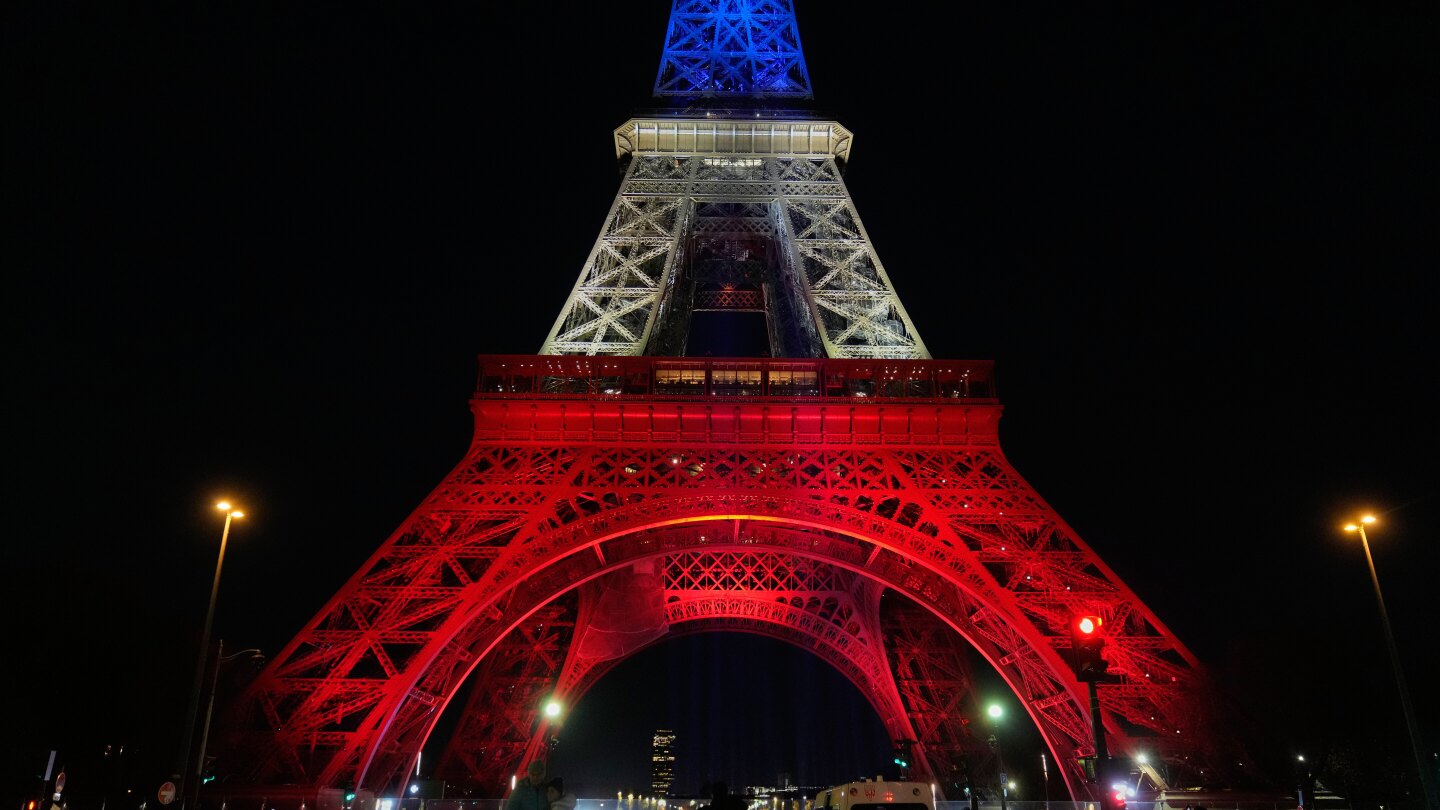
France honors the victims of the Paris attacks’ night of terror 10 years on
A decade after the harrowing terrorist attacks that shook Paris on November 13, 2015, the city paused to honor the 132 lives lost and the hundreds injured in a series of coordinated assaults. The attacks, carried out by nine Islamic State militants, targeted the Stade de France, café terraces, and the Bataclan concert hall, leaving indelible scars on the nation’s psyche. On Thursday, President Emmanuel Macron and Paris Mayor Anne Hidalgo led a series of commemorative events at each attack site, culminating in a moment of silence and the unveiling of a new memorial garden, the Jardin du 13-Novembre. The garden, designed in collaboration with victims’ associations, features granite stelae bearing the names of the deceased, alongside symbolic plantings and spaces for reflection. The Eiffel Tower was illuminated in the colors of the French flag, and a minute of silence was observed at France’s World Cup qualifier against Ukraine. Survivors, including Arthur Dénouveaux, who escaped the Bataclan, spoke of the enduring emotional toll, emphasizing the ongoing struggle to rebuild lives while preserving the memory of those lost. The 2021–2022 trial of the attackers, which resulted in life imprisonment for Salah Abdeslam and convictions for 19 others, provided a measure of accountability but underscored the lasting impact of the tragedy. The commemorations aimed to honor the victims, celebrate the resilience of survivors, and protect the ordinary joys of life that the attackers sought to destroy.