
Japan’s economy experienced a notable downturn in the July-September quarter, contracting at an annualized rate of 1.8%, according to government data released on Monday. This marks the first economic contraction in six quarters, with the nation’s gross domestic product (GDP) declining by 0.4% on a quarterly basis. The downturn was primarily driven by a sharp decline in exports, which fell by 1.2% from the previous quarter and by 4.5% on an annualized basis. The slump in exports is largely attributed to the impact of U.S. tariffs, which have posed significant challenges for Japan’s export-reliant economy, particularly for major automakers like Toyota Motor Corp. Despite the contraction, the decline was less severe than the 0.6% drop anticipated by market analysts. Imports for the quarter saw a marginal decrease of 0.1%, while private consumption edged up by 0.1%. The U.S. currently imposes a 15% tariff on nearly all Japanese imports, a reduction from the earlier 25% rate. Japan’s recent political landscape also saw a shift with Sanae Takaichi assuming the role of prime minister in October, adding another layer of complexity to the nation’s economic outlook.
博客
-
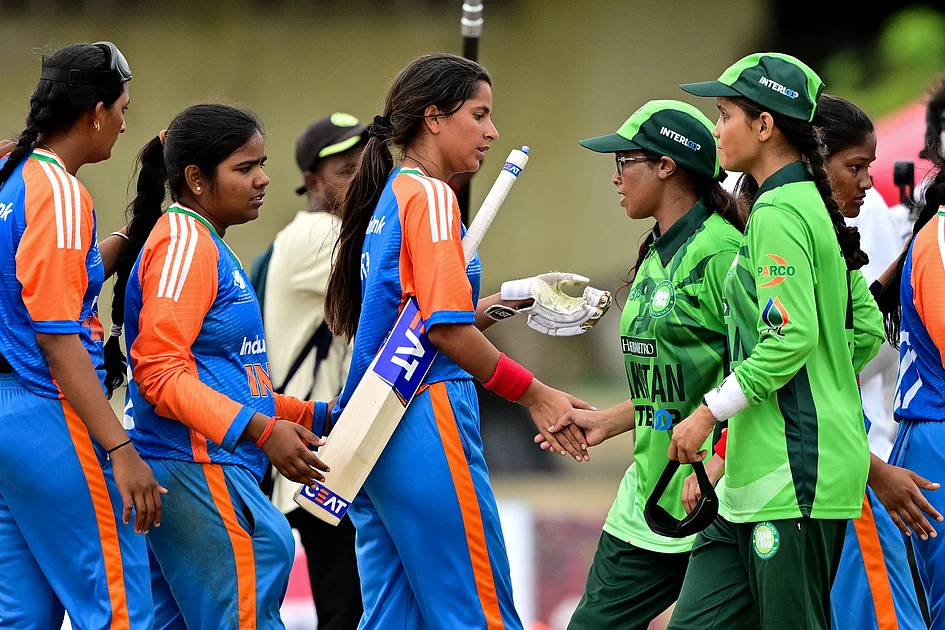
Look: India and Pakistan blind cricket female players shake hands defying recent trend
In a heartwarming display of sportsmanship, blind women cricketers from India and Pakistan defied recent political tensions by shaking hands and exchanging compliments during a historic tournament in Sri Lanka. The event, described as the world’s first blind women’s T20 cricket tournament, took place at the Free Trade Zone grounds in Katunayake, 30 kilometers north of Colombo. The players, who traveled together on the same bus, showcased unity and mutual respect, contrasting sharply with the strained relations between their national teams. India secured a decisive victory, winning by eight wickets after restricting Pakistan to 135 runs in their 20 overs. Pakistan’s captain, Nimra Rafique, congratulated India on their win, while India’s captain, T. C. Deepika, praised Pakistan’s performance. The match, broadcast live on Sri Lanka’s national television, Rupavahini, was also followed by blind officials via YouTube commentary. Indian team manager Shika Shetty highlighted the tournament’s significance, calling it a groundbreaking opportunity for visually impaired women to excel in sports and inspire others. Pakistan’s coach, Tahir Mehmood Butt, emphasized the potential for blind cricket to empower young players. The tournament, which began in India and moved to Sri Lanka for its final stages, includes teams from Australia, Nepal, Sri Lanka, and the US, with the final scheduled for next Sunday in Colombo.
-
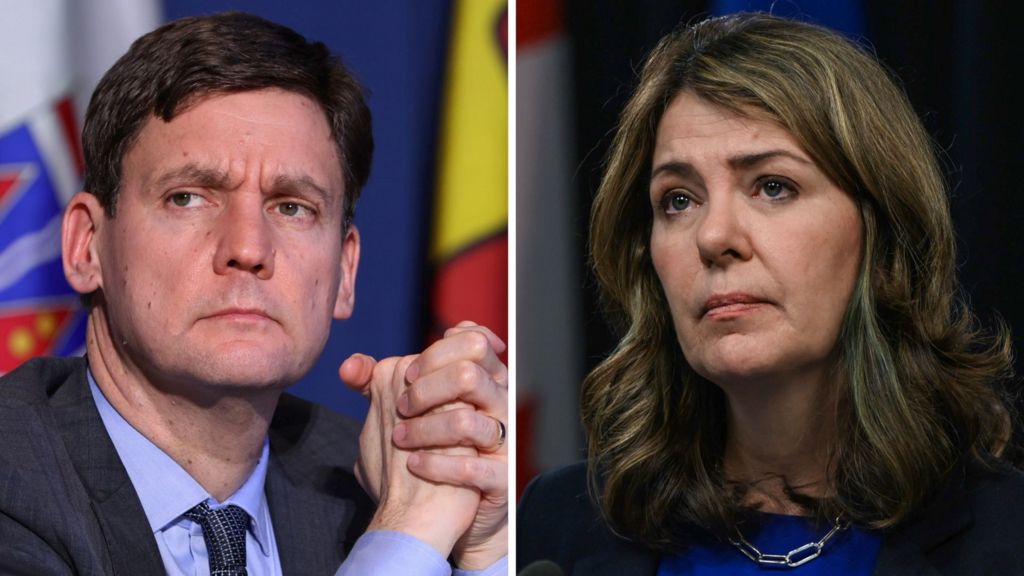
The oil pipeline feud testing Canada’s global ambitions
The longstanding tension between Alberta and British Columbia has escalated as Alberta Premier Danielle Smith pushes for a new oil pipeline to the Pacific coast, while British Columbia Premier David Eby firmly opposes the plan. The proposed pipeline, aimed at accessing Asian markets, has reignited a fierce debate over Canada’s energy future, environmental protections, and interprovincial cooperation. Alberta, home to vast oil reserves, views the pipeline as essential for economic growth and reducing reliance on U.S. markets. However, British Columbia, a hub for environmental activism, has dismissed the proposal as “fictional” and “political,” citing concerns over environmental risks and the lack of private sector interest. The dispute underscores a broader national challenge as Prime Minister Mark Carney seeks to position Canada as a global energy superpower while navigating internal divisions. Carney has avoided taking sides but emphasized the need for dialogue and cooperation between provinces. Meanwhile, Alberta’s Smith has accused Eby of being “un-Canadian” for blocking the project, which she argues would benefit the entire country. The conflict highlights the complexities of balancing economic ambitions with environmental and indigenous rights, as Canada strives to meet its climate goals and diversify its energy exports.
-
Mysterious drones have been spotted at night at airports across Europe. How worried should we be?
The escalating use of drones in modern warfare has prompted Europe to consider a groundbreaking defense mechanism: the ‘drone wall.’ This initiative comes in response to increasing incursions by Russian drones, which have not only targeted Ukraine but also ventured into NATO airspace, including Poland, Belgium, and Denmark. The drone wall, envisioned as a multi-layered defense system, aims to protect critical infrastructure and airspace across Europe from the Baltic states to the Black Sea. The system will integrate radar, sensors, jamming technologies, and weaponry to detect, track, and neutralize incoming drones. However, the project faces significant challenges, including technological limitations, financial constraints, and the rapid evolution of drone threats. Experts argue that while the drone wall is a necessary step, it is not a foolproof solution. The debate also extends to whether Europe should focus on defensive measures or target the sources of drone launches. As tensions between Europe and Russia continue to rise, the drone wall represents a critical but complex response to the growing threat of aerial warfare.
-

Two US marines implicated in killing family in notorious Iraq war shooting, expert tells BBC
Safa Younes, now 33, remains the sole survivor of a harrowing incident that claimed her entire family in the Iraqi town of Haditha. On November 19, 2005, US Marines stormed her family home, opening fire and killing her parents, siblings, and aunt. Safa, then just 13, survived by pretending to be dead among the bodies of her loved ones. Two decades later, a BBC Eye investigation has uncovered new evidence implicating two Marines in the killings, raising serious questions about the accountability of US armed forces. The Haditha massacre, which resulted in the deaths of 24 Iraqi civilians, including women and children, remains one of the most controversial episodes of the Iraq War. Despite extensive investigations, no one has been convicted for the killings. The Marines claimed they were responding to gunfire after a roadside bomb attack, but Safa insists her family was unarmed and innocent. Forensic expert Michael Maloney’s analysis suggests that two Marines entered the room where Safa’s family was shot, contradicting earlier accounts. The case highlights systemic failures in military justice, with survivors like Safa still seeking accountability and closure.
-

How my on-air ‘brain fog’ moment sparked a big debate
Zoe Kleinman, BBC’s technology editor, recently made headlines not for her tech coverage but for her candid revelation about experiencing ‘brain fog’ during a live TV report. In a LinkedIn post that went viral, Kleinman shared her decision to hold notes during a broadcast, a move she initially viewed as a professional failure. However, the overwhelming response from women across the globe highlighted a shared struggle often tied to perimenopause and hormonal changes. ‘Brain fog,’ though not a medical term, describes moments of cognitive disarray—forgetting words, losing train of thought, or feeling mentally clouded. For women in their 40s, this symptom often coincides with perimenopause, a transitional phase marked by fluctuating hormone levels. The impact is profound, especially for those in public-facing roles. Janet Edgecombe, an internal communications expert, echoed Kleinman’s experience, recounting moments of forgetting basic words mid-conversation. Research underscores the severity of the issue: 10% of women leave their jobs due to menopause symptoms, while half consider quitting. Kleinman’s decision to hold notes, initially seen as a compromise, sparked a movement. The hashtag #HoldTheNotes emerged, encouraging women to embrace practical solutions without shame. Medical experts like Dr. Louise Newson emphasize the role of testosterone in brain function, advocating for its inclusion in Hormone Replacement Therapy (HRT). Meanwhile, innovative solutions like Niraxx’s red-light therapy headband offer hope for improving focus. Kleinman’s story has opened a crucial dialogue, urging society to take ‘brain fog’ seriously and support women navigating this challenging phase of life.
-

Bangladesh tense ahead of ousted PM Hasina’s verdict
Bangladesh’s capital, Dhaka, was rocked by several crude bomb explosions on Sunday, escalating tensions ahead of a highly anticipated verdict in the case against ousted former Prime Minister Sheikh Hasina. The explosions, which caused no casualties, have further unsettled a city already grappling with political unrest. Hasina, 78, is being tried in absentia for crimes against humanity, accused of ordering a deadly crackdown on student protests in mid-2024. She denies the allegations and has remained in India since fleeing Bangladesh after her ouster in August last year. In response to the escalating violence, Dhaka Metropolitan Police Commissioner has authorized officers to use lethal force against anyone involved in arson or bomb attacks. Security has been significantly tightened across Dhaka, Gopalganj — Hasina’s ancestral home and a stronghold for her party — and two neighboring districts, with Border Guard Bangladesh personnel deployed to assist local authorities. Police and Rapid Action Battalion teams have been stationed around key government buildings and major intersections, resulting in an unusually quiet city. ‘It’s very tense — hardly anyone is coming out,’ said Ramjan Ali, an autorickshaw driver in Dhaka. ‘I’ve been on the road since morning, but I’ve barely earned anything today.’ In the days leading up to the verdict, authorities recorded over 30 crude bomb explosions and reported dozens of buses torched in Dhaka and several other districts. Additionally, dozens of Awami League activists have been arrested for alleged involvement in explosions and acts of sabotage.
-
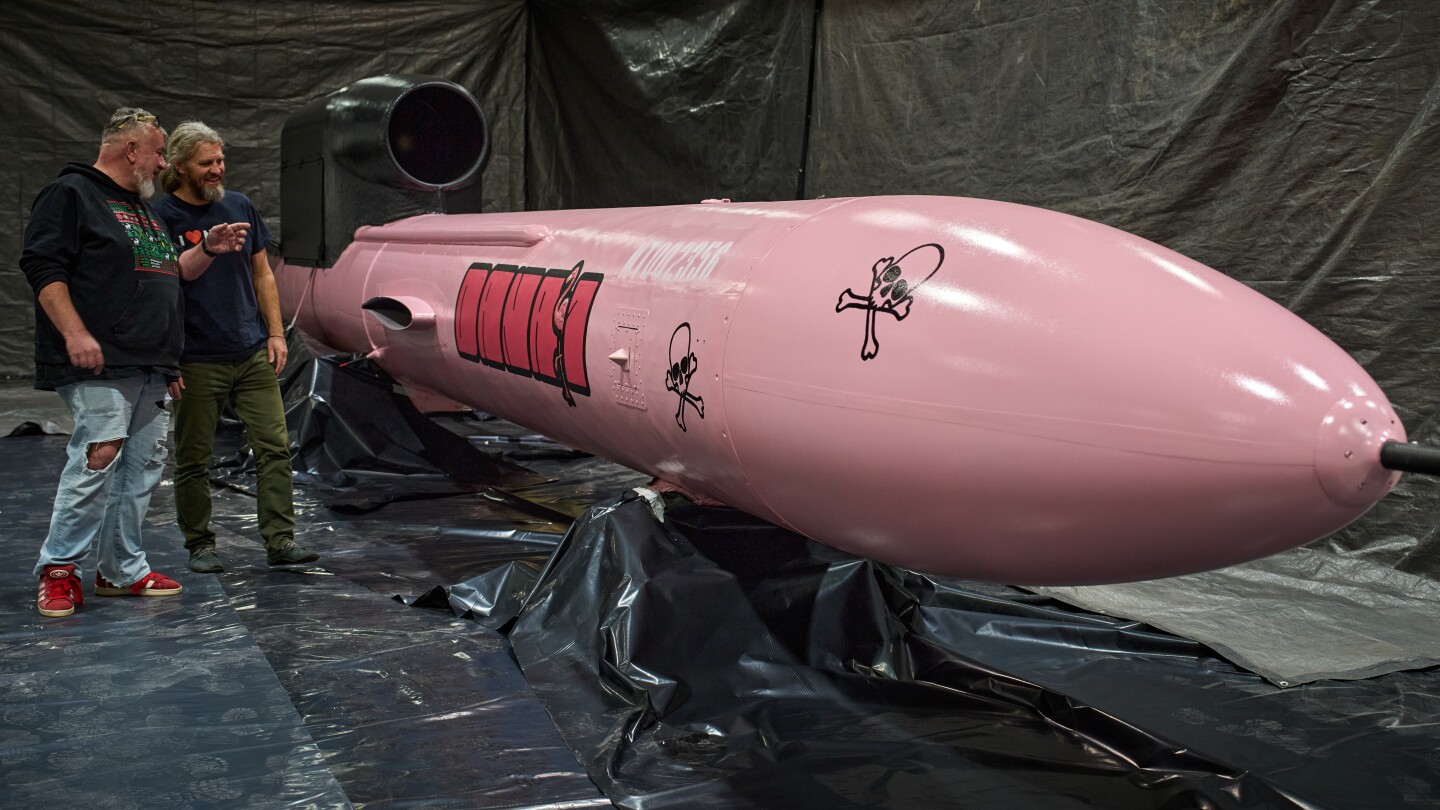
Mike Pompeo becomes adviser to scrutinized Ukraine defense company that’s looking to boost missiles
Former U.S. Secretary of State Mike Pompeo has been appointed to the advisory board of Fire Point, a leading Ukrainian defense company known for its advanced long-range drones capable of targeting deep within Russian territory. This move comes as the company faces an ongoing corruption investigation. Fire Point is actively enhancing its global presence by establishing a new factory in Denmark and expanding its production capabilities to include battle-tested cruise missiles, aiming to more than double its current output. Despite the scrutiny, company executives maintain transparency, having commissioned an independent audit to address concerns. Critics, however, highlight the firm’s opaque origins, its monopoly on Defense Ministry contracts, and alleged ties to Tymur Mindich, a controversial associate of President Volodymyr Zelenskyy implicated in a major corruption scandal. Fire Point’s Chief Technology Officer, Iryna Terekh, expressed support for the investigation, emphasizing the company’s commitment to adhering to high corporate standards. The firm has also gained international recognition, with U.S. Special Envoy to Ukraine Keith Kellogg visiting its facilities. Fire Point’s success is partly attributed to the Danish model, a financing mechanism where foreign governments directly fund Ukrainian defense companies. However, the company’s rapid rise is shadowed by ongoing investigations into potential price inflation and questionable contracts. Despite these challenges, Fire Point continues to innovate, with its Flamingo cruise missile proving effective in recent strikes against Russian targets. The company’s crowdfunding initiatives, such as a campaign by the Czech organization Weapons to Ukraine, further underscore its growing influence. As Fire Point navigates both expansion and scrutiny, its role in Ukraine’s defense industry remains pivotal.
-

Formula 1 tech used to rev-up train wi-fi speeds in new pilot
In a groundbreaking initiative, Great Western Railway (GWR) is set to revolutionize train Wi-Fi by implementing a hybrid system that combines signals from ground-based mobile phone masts and low earth orbit (LEO) satellites. This UK-first pilot scheme, developed by British tech company Motion Applied in collaboration with Peninsula Transport, aims to deliver faster and more reliable internet connectivity for passengers. The technology, originally designed for Formula 1 cars, will be tested for 60 days on GWR’s Intercity Express Train in the South West region, starting mid-November. The project is part of a broader effort to modernize transport infrastructure across Cornwall, Devon, Plymouth, Somerset, and Torbay. According to a recent study by Ookla, the UK ranks 16th out of 18 major European and Asian countries for train Wi-Fi speed, with average download speeds at just 1.09 megabits per second. Nick Fry, chairman of Motion Applied, highlighted the parallels between high-speed internet connectivity in trains and motorsport, emphasizing the potential of LEO satellites to ensure seamless connections. The Department of Transport has allocated £41 million in the 2025 spending review to introduce LEO satellite connectivity on all mainline trains by 2030. Councillor Dan Rogerson from Peninsula Transport described the pilot as a ‘major milestone’ in enhancing digital infrastructure, while Bruce Williamson of Railfuture welcomed the initiative as a positive step towards meeting the growing demand for reliable Wi-Fi among travelers.
-

Hackers steal maternity ward CCTV videos in India cybercrime racket
Indian authorities have uncovered a sprawling cybercrime operation involving the hacking and sale of sensitive CCTV footage from hospitals and other institutions across the country. The breach, which compromised over 50,000 surveillance systems, has raised significant concerns about privacy and cybersecurity in India, where CCTV cameras are ubiquitous. The investigation began after videos from a maternity hospital in Gujarat were discovered on YouTube and Telegram, showing intimate medical procedures involving pregnant women. These videos were linked to Telegram channels where longer clips were sold for 800–2,000 rupees ($9–22). The hospital director claimed the cameras were installed to protect doctors from false allegations, but they have since been removed from sensitive areas. Police have arrested eight individuals connected to the racket, charging them with violations of privacy, voyeurism, and cyber terrorism. Cybersecurity experts warn that poorly secured systems, often using default passwords, are vulnerable to hacking. They recommend robust passwords, regular audits, and manufacturer warnings to improve security. The case highlights the broader issue of inadequate cybersecurity measures in India, where surveillance systems are widely used but often lack proper safeguards.