博客

  • War in the Middle East: latest developments

    War in the Middle East: latest developments

    The ongoing conflict in the Middle East has sent ripples across global energy markets and international diplomacy, with a flurry of new developments emerging over the past 24 hours that have heightened economic uncertainty and shifted geopolitical dynamics.

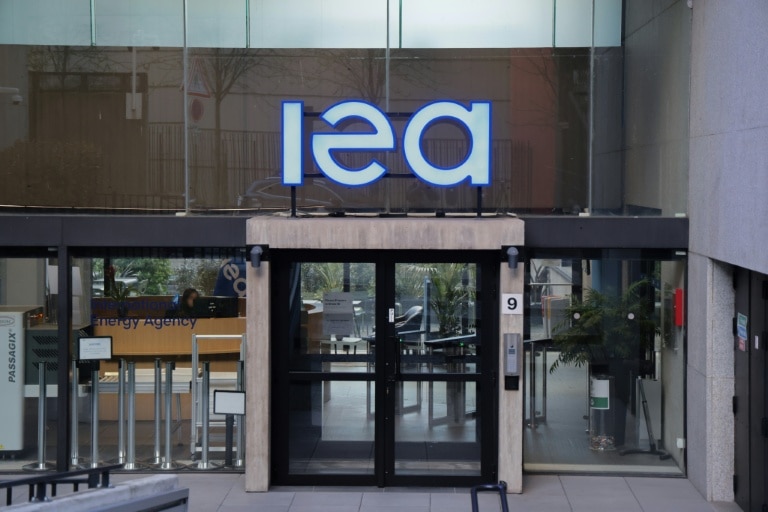
    One of the most significant warnings came from the International Energy Agency (IEA), which projects that strained global liquefied natural gas (LNG) markets—tightened significantly by the ongoing regional conflict—will remain constrained through the end of 2026 and into 2027. The energy volatility has already moved global markets: oil prices have continued their upward climb, while equity markets have faced downward pressure as investors grow increasingly anxious over stalled diplomatic efforts to de-escalate the crisis. Adding to market jitters are ongoing threats to critical energy chokepoints, with Iran maintaining its position of tension around the Strait of Hormuz and the United States upholding its blockade of Iranian ports.

    On the diplomatic front, French President Emmanuel Macron emphasized the urgent need for regional calm during his participation in an EU summit held in Nicosia, where scheduled talks with Middle Eastern leaders were on the agenda. “It is in everyone’s interest for stability to return as soon as possible and for the world’s economies to be reassured,” Macron stated.

    In a counterterrorism move, the U.S. State Department announced a reward of up to $10 million for any information leading to the leader of Kataeb Sayyid al-Shuhada (KSS), an Iraqi armed group backed by Tehran that Washington has formally designated as a terrorist organization.

    A limited win for de-escalation came with the announcement of a three-week extension to the ceasefire between Israel and Lebanon, made public by U.S. President Donald Trump on Thursday. Speaking to reporters, Trump expressed optimism about long-term peace, saying “I think there’s a very good chance of having peace. I think it should be an easy one.” He also confirmed plans to hold high-level talks with leaders from both nations in the coming two weeks. The ceasefire extension was immediately tested, however, after Hezbollah announced it had launched rocket attacks targeting the Shtula settlement in northern Israel. The group claimed the strike was retaliation for Israeli violations of the ceasefire and an Israeli strike on the southern Lebanese town of Yater.

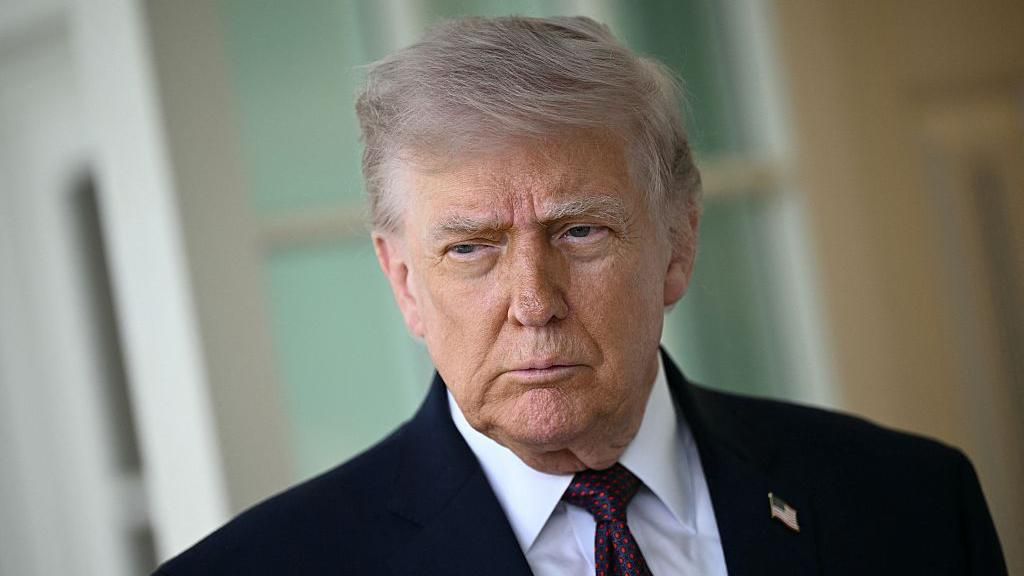
    Trump also addressed rising tensions with Iran, telling reporters at the White House that while the U.S. faces no immediate pressure to end the ongoing standoff with Tehran, “the clock is ticking” for the Iranian government as the conflict’s disruptions continue to harm the global economy. He explicitly ruled out the use of nuclear weapons against Iran, noting “A nuclear weapon should never be allowed to be used by anybody.”

    To bolster its military presence in the region, the U.S. military confirmed that the USS George H.W. Bush aircraft carrier has arrived in Middle Eastern waters, bringing the total number of U.S. Navy carrier battle groups deployed in the theater to three. Trump also issued a new operational order for U.S. naval forces in the region, saying “I have ordered the United States Navy to shoot and kill any boat, small boats though they may be…that is putting mines in the waters of the Strait of Hormuz.” Just days after a similar interdiction, the U.S. Defense Department also announced that U.S. forces had boarded a vessel in the Indian Ocean suspected of carrying material support to Iran, marking the second such operation in three days.

    On the sports front, U.S. Secretary of State Marco Rubio distanced the American government from calls to bar Iran from this year’s World Cup, including a proposal that Italy take the Iranian national team’s place in the tournament. Rubio confirmed that Iranian footballers are welcome to compete, and denied that Washington had requested the team stay home. He did, however, note that members of the Iranian delegation with documented ties to the Islamic Revolutionary Guard Corps (IRGC) may be denied entry.

    Israeli Defense Minister Israel Katz reaffirmed his country’s military preparedness for wider conflict, stating that Israel is “prepared to resume the war” and is only waiting for authorization from Washington to push Iran back “to the Stone Age.”

  • Trump says no rush to end Iran war, US citizens to pay more for gasoline

    Trump says no rush to end Iran war, US citizens to pay more for gasoline

    WASHINGTON – As negotiations over a ceasefire to the weeks-long conflict between the US-Israeli bloc and Iran remain deadlocked, former and current US President Donald Trump made clear Thursday that he feels no urgency to bring the military confrontation to an early end, warning American consumers that they will need to shoulder elevated gasoline costs for the foreseeable future as part of the tradeoff for his administration’s policy goals.

    Speaking to reporters on the White House grounds, Trump emphasized he has no intention of forcing a rushed resolution to the conflict. “I don’t want to rush myself,” he stated, noting that US citizens should prepare to pay more at the pump for the short term, arguing the long-term outcome — an Iran stripped of nuclear weapons capabilities — would make the financial pain worth it.

    Earlier the same day, Trump doubled down on this position in a post to his social media platform Truth Social, framing the conflict as a battle of endurance that favors Washington. “I am possibly the least pressured person ever to be in this position. I have all the time in the World, but Iran doesn’t — The clock is ticking! Time is not on their side!” he wrote.

    Trump went on to insist that any final peace agreement with Iran must be structured exclusively on US terms and aligned with his own preferred timeline. “A deal will only be made when it’s appropriate and good for the United States of America, our Allies and, in fact, the rest of the World,” he added.

    The comments echoed remarks Trump made one day earlier, when he confirmed there is no fixed timeline for ending the conflict and no immediate pressure to act on the ceasefire extension he announced Tuesday, even as talks remain stalled. White House Press Secretary Karoline Leavitt reinforced this stance Wednesday, telling reporters that Tehran has not been given a firm deadline to put forward a formal peace proposal to Washington.

  • South Korea police arrest man for posting AI photo of runaway wolf

    South Korea police arrest man for posting AI photo of runaway wolf

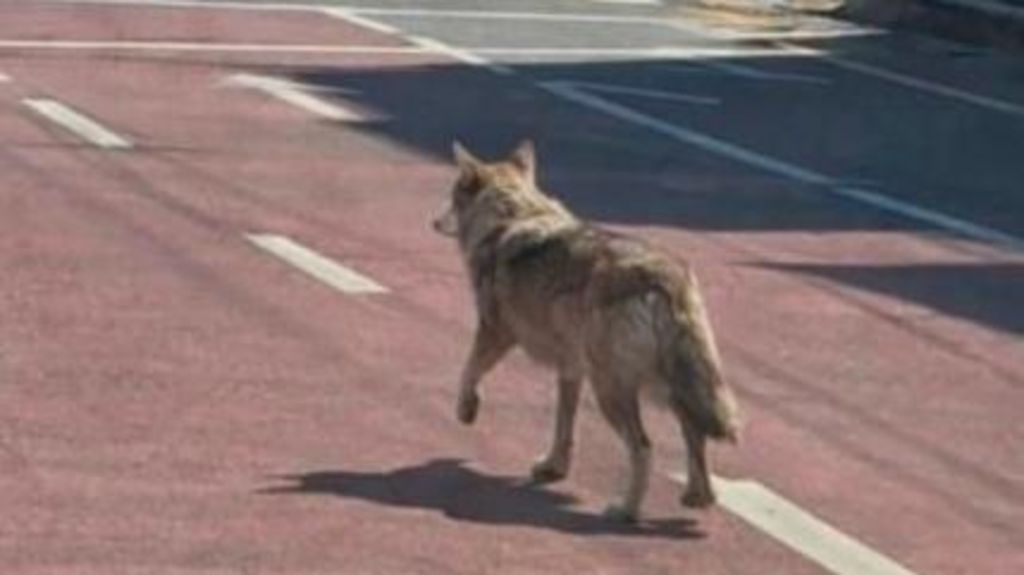
    A high-stakes nine-day nationwide search for an escaped zoo wolf in South Korea took an unexpected turn after an AI-generated fake image sent authorities scrambling to redirect their operation, resulting in the arrest of a 40-year-old man who claims he created the hoax “for fun”.

    The drama began on April 8, when Neukgu, a two-year-old gray wolf part of a critically endangered Korean wolf restoration program at Daejeon’s O-World Zoo, broke out of his enclosure. Korean wolves once roamed freely across the entire Korean Peninsula but are now classified as extinct in the wild, making Neukgu’s escape a matter of urgent public and governmental concern.

    Within hours of Neukgu going missing, a manipulated photo generated via artificial intelligence began circulating online. The image purported to show the young wolf walking through a local road intersection, and it spread so quickly that it was picked up by search authorities. The Daejeon city government immediately issued an emergency mass text alert to all local residents, warning them to avoid the area and stay alert for the wolf. Search teams reallocated dozens of personnel and resources to the intersection location shown in the fake image, pulling them away from areas where Neukgu was actually located and drawing the search out into a fruitless wild goose chase. In a notable turn of events, authorities even displayed the fraudulent AI image during an official public press briefing on the search operation, according to local South Korean media outlets.

    After a nine-day search that gripped the entire nation, Neukgu was finally located and safely recaptured last week near a major national expressway. Even before the wolf was found, the search had captured widespread public attention: South Korean President Lee Jae Myung publicly offered prayers for the animal’s safe capture and return to the zoo.

    Following the recapture, police launched an investigation into the source of the fake photo that had upended their search operation. By cross-referencing local security camera footage and reviewing records of AI program usage linked to the image, investigators identified the 40-year-old unnamed suspect. Authorities have not yet confirmed whether the man shared the image directly with search officials or only posted it to public online platforms, where it was later picked up and mistaken for authentic.

    When interrogated by law enforcement, the suspect told officers he created and shared the fake image purely for entertainment, local media reported. He now faces charges of disrupting public governmental work through deception, a criminal offense under South Korean law that carries a maximum penalty of five years imprisonment and a fine of up to 10 million Korean won, equal to roughly $6,700 USD or £5,000 GBP.

    In the wake of Neukgu’s safe return, a nationwide wave of public enthusiasm for the young wolf has swept South Korea. A local bakery has launched a new pastry decorated with Neukgu’s face, and Daejeon city officials are reportedly discussing naming the wolf as an official local cultural mascot. A video posted by O-World Zoo showing Neukgu eating meat back in his enclosure has already accumulated more than one million views on social media. In a recent statement, however, the zoo announced it would stop posting new content about Neukgu to give the animal a quiet, low-stress environment to recover from his nine-day ordeal.

  • Explosion of invasive ‘janitor fish’ sparks mass removal operation in Indonesia’s capital

    Explosion of invasive ‘janitor fish’ sparks mass removal operation in Indonesia’s capital

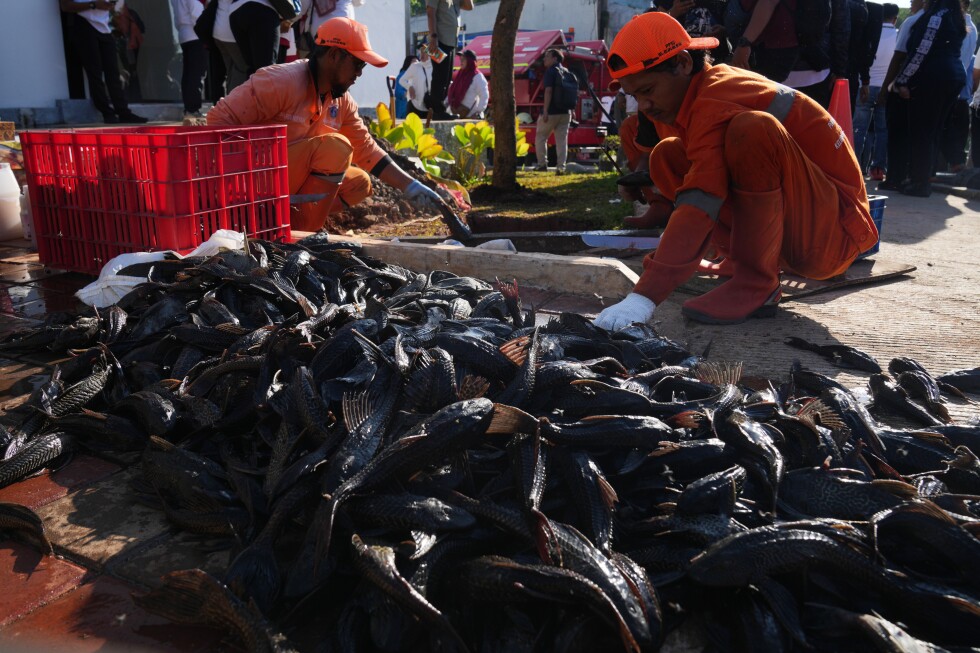
    On a recent Friday in Jakarta’s East Jakarta Ciracas neighborhood, crowds erupted in cheers as hundreds of city workers, local residents and environmental volunteers pulled heavy nets teeming with armored, invasive suckermouth catfish from the depths of a 6-meter reservoir. This public effort marked the peak of a coordinated, city-wide campaign to cull at least 10 metric tons of non-native janitor fish, locally called sapu-sapu, from the capital’s overburdened waterways in a bid to rescue the ecologically fragile Ciliwung River.

    Originally imported to Indonesia decades ago as a popular algae-eating addition to home aquariums, Pterygoplichthys, the scientific name for janitor fish, was accidentally or intentionally released into local rivers after outgrowing tank environments. The species quickly adapted to Jakarta’s heavily polluted water systems, thriving where most native freshwater fish cannot. Growing up to 50 centimeters long and living 10 to 15 years, the armored bottom-feeders have carved out an unchallenged niche in the Ciliwung, a waterway that once carried crystal-clear mountain runoff from West Java to Jakarta’s coast, but now carries a heavy load of untreated residential sewage and industrial pollution.

    Ecologists warn that the unchecked growth of janitor fish populations has pushed the already strained Ciliwung ecosystem to the breaking point. Dian Rosleine, an ecologist at the Bandung Institute of Technology, explained that janitor fish are not just a symptom of poor water quality — they actively outcompete native species for food and habitat, feeding on the eggs and young of local fish to throw the entire freshwater food web off balance. Beyond ecological harm, East Jakarta Mayor Munjirin, who goes by a single name, noted that the fish’s habit of clinging to and burrowing into concrete river embankments has caused costly structural damage that increases flood risk for surrounding dense residential neighborhoods.

    Ordered by Jakarta Governor Pramono Anung, the mass removal campaign launched last week across all five of the capital’s administrative districts, drawing hundreds of participants from firefighting teams, disaster management agencies, volunteer groups and local communities. Within the first seven days of the operation, crews had already netted and disposed of more than seven metric tons of janitor fish. Friday’s targeted reservoir cleanup alone removed 320 kilograms of the invasive fish, leaving piles of wriggling catfish stacked in red barrels along the shore — visible progress for residents who have long dealt with the river’s declining health.

    The campaign has not proceeded without debate, however. Indonesia’s Indonesian Ulema Council (MUI), the country’s leading Islamic clerical body, raised ethical objections to the initial practice of burying caught janitor fish alive, arguing that the practice violates Islamic teachings on animal welfare. In response, Governor Anung announced a revised protocol requiring all fish to be humanely euthanized before burial at designated, sanitary sites, to prevent any accidental return of the fish to local waterways or unregulated commercial trade.

    Officials are also exploring long-term, sustainable disposal methods that could turn the invasive catch into a useful resource. While janitor fish are consumed in other countries, high levels of heavy metal contamination in Jakarta’s polluted rivers rule out immediate approval for human consumption. Current proposals include processing the fish into livestock feed or organic fertilizer; buried fish can also act as natural compost, and Anung has floated the idea of adopting a Brazilian model that processes invasive suckermouth catfish into charcoal for economic benefit.

    Despite the early progress of the removal campaign, ecologists emphasize that culling janitor fish alone will not solve the Ciliwung’s long-term problems. Rosleine and other experts warn that without systemic upgrades to Jakarta’s wastewater management infrastructure and dramatic reductions in pollution entering the river, the favorable warm, slow, nutrient-heavy conditions that allowed janitor fish to dominate will remain, leading to a rapid rebound of the invasive population. “Addressing the symptoms without tackling the root causes will not provide a lasting solution,” Rosleine said, noting that full rehabilitation of the Ciliwung River remains Jakarta’s greatest unaddressed environmental challenge.

  • Woman trapped in poo for three hours after outback toilet collapses

    Woman trapped in poo for three hours after outback toilet collapses

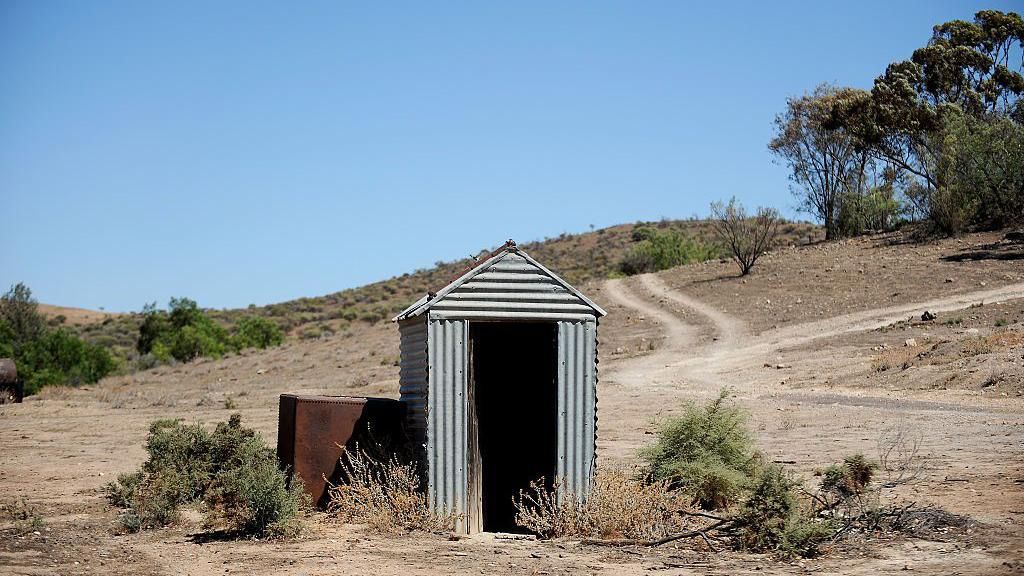
    A routine cross-country road trip through Australia’s remote outback turned into a harrowing three-hour ordeal recently, when a female traveler became trapped waist-deep in raw sewage after the outdated pit latrine she was using collapsed underneath her.

    The incident unfolded at the Henbury Meteorites Conservation Zone, a popular outback tourist spot located roughly 145 kilometers southwest of the isolated Northern Territory town of Alice Springs. According to local authorities and community reports, the woman was traveling back to her home in Canberra with her husband and two children, having just finished a visit to see extended family in Darwin when the group stopped for a rest break at the conservation reserve.

    Pit latrines — also known as long-drop toilets — are basic, non-flush sanitation facilities that store human waste in deep excavated underground pits, and they remain a common fixture in remote, off-grid areas such as outback camping and tourist sites across Australia. In this case, the structure surrounding the pit failed when the woman stepped onto it, leaving her stuck in the contaminated hole.

    Northern Territory authorities confirmed the woman remained trapped for approximately three hours before a lucky break led to her rescue. A local tradesman, who was passing through the remote conservation area by chance, was flagged down by the woman’s husband. An anonymous eyewitness told local publication NT News that the tradesman lowered a rope into the pit for the woman to grip, then used his vehicle to slowly pull her out of the waste-filled hole — a painstaking extraction process that took more than 45 minutes to complete. The eyewitness also added that the pit was filled with discarded diapers and human excrement, adding to the dangerous and unsanitary conditions of the entrapment.

    Following her rescue, the woman was transported to a nearby hospital for evaluation. Early reports confirm she escaped the incident without serious long-term injuries.

    Northern Territory WorkSafe, the government body that oversees public and workplace health and safety across the territory, confirmed that the management agency responsible for maintaining the Henbury Meteorites Conservation Zone filed an official incident report shortly after the event. A full investigation into the collapse, including checks on the facility’s structural integrity and maintenance history, is currently ongoing.

    This incident is far from an isolated case: pit latrine accidents have a documented history across Australia, drawing ongoing attention to the risks of aging sanitation infrastructure in remote tourist areas. In July 2024, a man had to be rescued by firefighters after becoming stranded in a collapsed pit toilet in Victoria’s Indigo Valley. More than a decade earlier, in 2012, a 65-year-old woman in central Queensland suffered a broken leg after falling backwards into a pit latrine, requiring an emergency airlift to a regional hospital for treatment.

  • China’s DeepSeek rolls out a long-anticipated update of its AI model

    China’s DeepSeek rolls out a long-anticipated update of its AI model

    As competition in artificial intelligence between the United States and China reaches new levels of intensity, prominent Chinese AI startup DeepSeek rolled out previews of its highly anticipated next-generation V4 model lineup on Friday, marking another major milestone in China’s push to advance its domestic AI ecosystem independent of U.S. technology.

    The V4 release comes months after DeepSeek’s specialized R1 reasoning model upended global tech markets earlier this year, with the startup claiming it outperformed comparable U.S.-built models at a far lower cost. R1 quickly became a global symbol of China’s rapid progress closing the AI gap with the United States, and expectations for V4 have been building among developers and users eager to compare its capabilities to leading models from U.S. industry leaders OpenAI, Anthropic, and Google. Some analysts initially projected the V4 launch would arrive more than two months ago, to coincide with the Lunar New Year holiday.

    DeepSeek’s new V4 family includes two core open-source variants: the high-performance V4 Pro and the lightweight V4 Flash. The startup says the new models deliver sweeping upgrades across three key areas: general knowledge retention, logical reasoning, and agentic functionality — the ability for AI to complete complex, multi-step workflows and tasks without constant human input. One of the most notable shifts in the new lineup is its underlying hardware: unlike prior DeepSeek models that relied on U.S.-made chips from industry leader Nvidia, V4 is powered by chips developed by Chinese tech giant Huawei.

    In a statement accompanying the launch, DeepSeek shared internal benchmark results comparing V4 to top U.S. models. The company notes its top-tier V4 Pro Max delivers superior performance on standard reasoning tests compared to OpenAI’s recently released GPT-5.2 and Google’s Gemini 3.0-Pro, though it falls slightly short of OpenAI’s GPT-5.4 and Google’s Gemini 3.1-Pro. The V4 Pro, DeepSeek claims, outperforms Anthropic’s mid-tier Claude Sonnet 4.5 in agentic capabilities and comes close to matching Anthropic’s flagship Claude Opus 4.5. For everyday simple agent tasks, the more efficient V4 Flash matches the performance of V4 Pro, with reasoning capabilities that nearly equal its higher-end counterpart, per the company’s testing.

    The V4 launch came just hours after OpenAI introduced its own newest model, GPT-5.5, in a clear sign of the breakneck pace of competition in the global AI race. Both V4 variants also include a game-changing 1 million token context window — the measure of how much text and data an AI can process and retain in a single session. That marks an eightfold increase from the 128,000 token window supported by DeepSeek’s previous V3 model, released in late 2024, and enables the new models to handle far larger datasets, long documents, and complex extended conversations more effectively. The startup also emphasized the V4 lineup is designed to run far more efficiently than prior generations.

    Unlike closed, proprietary models from leading U.S. AI developers, DeepSeek makes its core technology open source, allowing outside developers to modify, adapt, and build new tools on top of its models. The company also offers a free publicly accessible chatbot for web and mobile users, helping it gain a large global user base. A January report from Microsoft found DeepSeek usage has grown rapidly across many developing nations, especially in regions where Huawei smartphones dominate the consumer market.

    Huawei confirmed its compatibility with the new models in a separate statement Friday, noting its Ascend chip platform and supporting ecosystem work seamlessly with DeepSeek V4. Marina Zhang, an associate professor at the University of Technology Sydney, described the V4 rollout as a “pivotal milestone for China’s AI industry”, particularly amid rising global pressure for countries to build self-reliance in critical emerging technologies. She added that the partnership with Huawei demonstrates that a fully functional Chinese AI ecosystem independent of Nvidia’s market dominance is technically achievable, even as U.S.-China technological decoupling continues.

    Lian Jye Su, chief analyst at global technology research firm Omdia, concluded that “Based on the benchmark results, it does appear DeepSeek V4 is going to be very competitive against its U.S. rivals.”

    Not all industry observers are convinced the V4 represents a transformative leap forward, however. Ivan Su, senior equity analyst at investment research firm Morningstar, argued that while V4 is a solid, capable update to DeepSeek’s product lineup, it does not deliver the same level of groundbreaking innovation that R1 introduced earlier this year. He noted that domestic competition within China’s AI sector has intensified dramatically since R1’s launch, and that independent third-party testing is needed to verify DeepSeek’s own performance claims, since the startup’s internal comparisons cannot yet be confirmed by outside experts.

    The V4 launch comes amid ongoing friction between U.S. AI firms and Chinese developers over intellectual property. Earlier this year, Anthropic publicly accused DeepSeek and two other China-based AI labs of running “industrial-scale campaigns” to steal its technology via a process called knowledge distillation, a method that trains a smaller model by feeding it the outputs of a more powerful competitor model to replicate its capabilities. OpenAI made similar accusations in a letter to U.S. lawmakers, and this week Michael Kratsios, chief science and technology adviser to U.S. President Donald Trump, repeated the claims, accusing Chinese tech firms of distilling leading U.S. AI systems to “exploit American expertise and innovation.”

    The Chinese embassy in Washington has pushed back against these allegations, framing them as unjustified efforts by the United States to stifle competition from Chinese tech companies.

  • A massive, unstable ice block stalls Everest climbers at base camp

    A massive, unstable ice block stalls Everest climbers at base camp

    KATHMANDU, NEPAL – A dangerous unstable ice formation has thrown a wrench into the 2024 spring Mount Everest climbing season, forcing hundreds of climbers and their Nepalese support teams to pause their summit bids just as operations are set to ramp up, Nepalese mountaineering officials confirmed Friday.

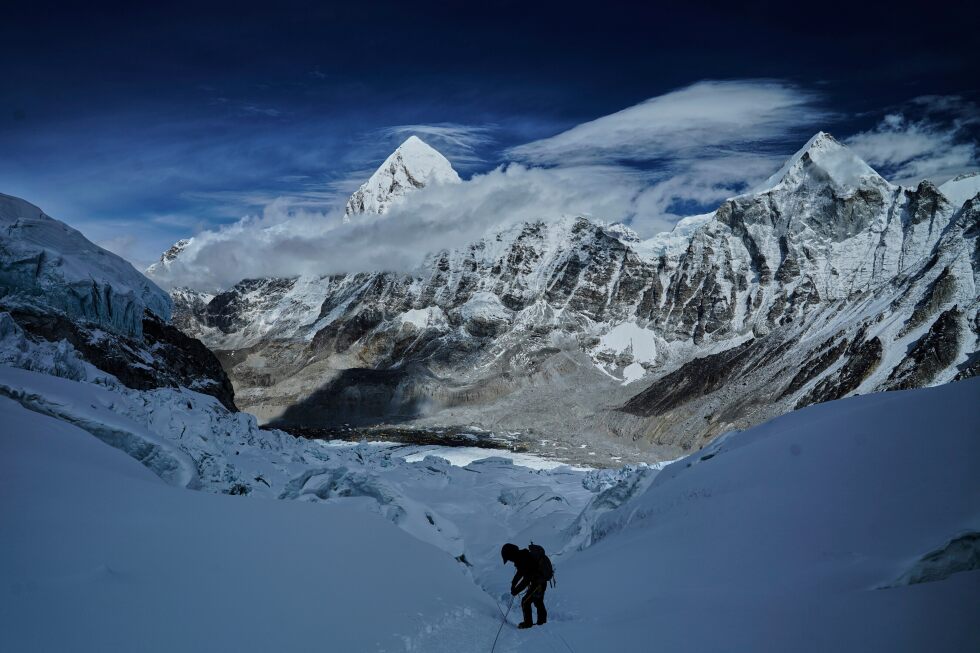
    The hazard is a massive hanging serac located along the standard climbing route between Everest’s base camp and Camp 1, a section of the iconic peak that already ranks among the most dangerous in the world. Himal Gautam, a representative from Nepal’s Department of Mountaineering, confirmed the ice block is shifting and poses an unacceptable level of risk for teams moving up the mountain. As of Friday, more than 800 total people – including permitted foreign climbers and their local guides – are stuck at base camp, waiting for officials to sign off on a safe passage forward, with expedition leaders and government teams working around the clock to re-evaluate conditions daily.

    This year’s spring climbing window, the most popular period for summit attempts on Everest, runs through the end of May. Nepal’s tourism department has already issued 410 summit permits to foreign climbers for the season, a number that will double when counting the required Nepalese Sherpa guides, porters, and support staff that accompany every expedition.

    The problematic serac sits within the Khumbu Icefall, a notoriously unpredictable glacial stretch that is universally regarded as one of the most treacherous sections of any Everest climb. The icefall is constantly shifting, dotted with gaping hidden crevasses and topped with overhanging ice blocks the size of 10-story buildings, any of which can collapse without warning.

    Preparing a safe route through the Khumbu Icefall falls to the Icefall Doctors, an elite team of experienced Sherpa guides who annually fix climbing ropes and install aluminum ladders across deep crevasses to open the passage for expeditions. This work is typically completed by mid-April, but the unstable serac has halted progress. The Sagarmatha Pollution Control Committee, the organization that manages the Icefall Doctor team, is now planning to conduct an aerial survey to fully assess the serac’s stability. Committee chairman Lama Kazi Sherpa said the current avalanche risk is far too high for ground teams to work safely, so officials are adopting a wait-and-see approach, holding off on reopening the route until the ice block naturally melts to a safer size.

    This is not the first time a massive ice collapse in the Khumbu Icefall has caused tragedy on Everest. In 2014, a large chunk of glacial ice broke loose and triggered a devastating avalanche that killed 16 Sherpa guides who were moving client equipment up the mountain. That disaster remains one of the deadliest accidents in the recorded history of Everest climbing.

    Climbing teams typically time their summit bids for early to mid-May, when short, stable weather windows offer the best conditions for a push to the 8,848.86-meter (29,031.7-foot) peak. More than 4,000 climbers have successfully reached the summit since the first recorded ascent by New Zealander Edmund Hillary and Sherpa Tenzing Norgay on May 29, 1953.

  • Hot pants: Tokyo government workers swap suits for shorts

    Hot pants: Tokyo government workers swap suits for shorts

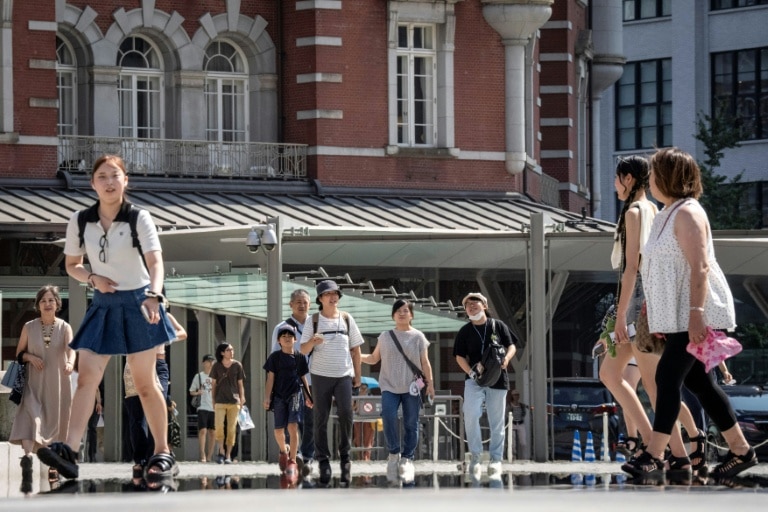
    As Japan braces for another sweltering summer and grapples with mounting energy security risks tied to ongoing conflict in the Middle East, Tokyo’s metropolitan government has rolled out a dramatic update to its long-running energy conservation campaign, now allowing public sector workers to swap formal suit trousers for comfortable shorts at work.

    An anonymous Tokyo government official confirmed the new dress code adjustment to AFP on Friday, noting that amplified concerns over energy supply volatility spurred by the Middle East war was a key driving force behind the policy update. The change expands on Japan’s iconic “Cool Biz” initiative, a national energy-saving program first launched by the country’s Ministry of the Environment back in 2005. The original campaign encouraged public servants to abandon stiff neckties and heavy formal jackets during the hot summer months, eventually allowing more casual options such as Okinawan-style open-collar tee-shirts. This year’s update marks the most significant loosening of workplace attire rules since the program began.

    Local media footage captured earlier this week already shows male government employees embracing the new policy, wearing casual shorts and tee-shirts around Tokyo metropolitan office buildings. The policy has the full backing of Tokyo Governor Yuriko Koike, who actually launched the original Cool Biz campaign two decades ago when she served as Japan’s environment minister.

    Addressing reporters earlier this June, Koike laid out the full scope of the updated initiative, emphasizing the urgent context driving the changes. “This summer, we encourage ‘cool’ attire that prioritizes comfort, including polo shirts, T-shirts and sneakers and — depending on job responsibilities — shorts,” she stated, pointing to “a severe outlook for the supply and demand of electricity” as the core motivation. Beyond the relaxed dress code, the updated 2025 Cool Biz push also includes expanded incentives for teleworking and adjusted work schedules that allow employees to start their shifts earlier to avoid peak midday heat and energy consumption.

    The policy update comes as Japan faces a growing pattern of record-breaking summer heat. According to the Japan Meteorological Agency, 2024 saw the country experience the hottest summer since formal temperature recording began in 1898. Extreme heat events, where daily temperatures climb above 40 degrees Celsius, have become so frequent in recent years that the agency introduced a new official classification for these dangerous heat waves just last week, coining the term “kokusho,” or “cruelly hot,” to describe these high-risk weather days.

  • Viral videos highlight sense of safety in China

    Viral videos highlight sense of safety in China

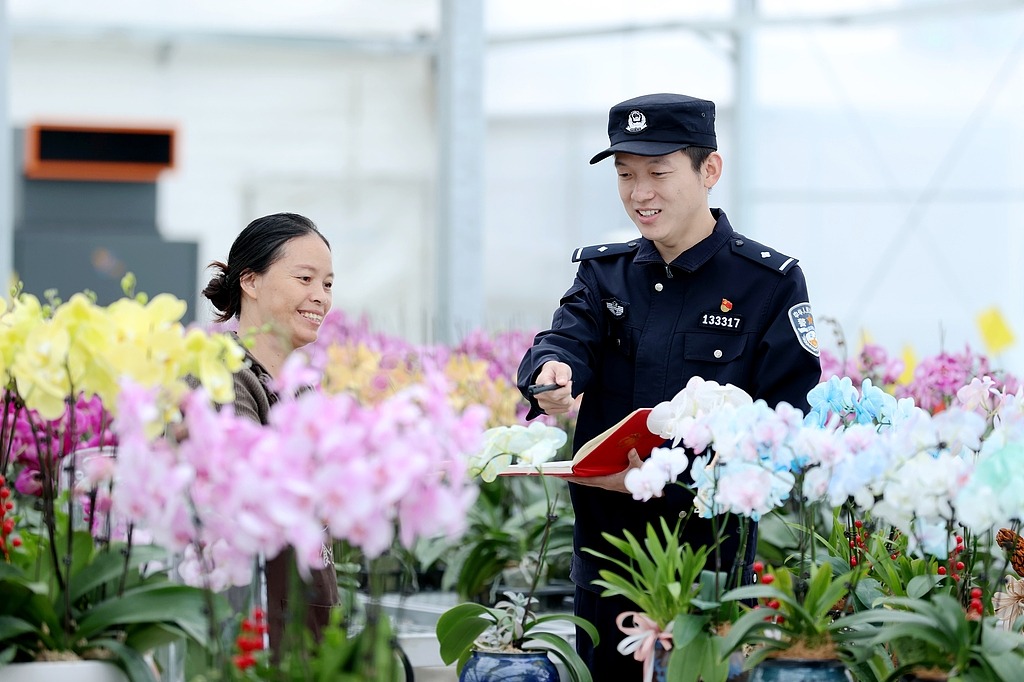
    A growing collection of short social media videos filmed and shared by foreign residents and visitors to China has sparked widespread international online discussion, centering on the exceptional sense of public safety that defines daily life across the country. These clips capture a range of ordinary, revealing moments: Chinese police officers calmly walking curious children through how firearms function, young kids sitting atop marked police vehicles to enjoy open-air folk performances, and international creators wandering city streets alone long after dark with no trace of fear.

    Many of these first-person accounts have gone viral among global netizens, offering unscripted, personal perspectives that differ from much mainstream international coverage of China. One of the most widely shared clips comes from British vlogger “Jason in China”, who filmed himself walking through the streets of Kunming, Yunnan, late at night. Pointing out the crowded, lively sidewalks around him, he noted that he felt not even a flicker of unease — a stark contrast to his experience back in the UK, where anyone out after dark constantly scans their surroundings for potential danger. In China, he said, that constant anxiety simply does not exist.

    A similar account from Spanish vlogger “Zhuli from Spain”, filmed in a public park in Guangdong province, resonated with millions of viewers. Standing in the open space at 11 pm, she said, “For me, this is real freedom — a woman on the street after 11 pm, walking alone without any fear. This is how it should be.” These viral videos are not isolated outlier moments: they reflect a consistent pattern of experience shared by a growing number of foreign nationals living or traveling in China, who are increasingly taking to social media to share their unfiltered daily experiences.

    These personal testimonials are backed by formal data and global research. The 2025 Global Safety Report, published in January 2026 by leading U.S. analytics firm Gallup, ranked China as the third-safest country out of more than 140 countries and territories included in the global survey. The report also recorded extremely high levels of public trust in Chinese local law enforcement, alongside very low rates of personal victimization from crime. Official Chinese statistics echo this finding: data from the Ministry of Public Security shows that overall criminal cases dropped 12.8 percent year-on-year in 2025, hitting the lowest level recorded in decades, while public order offenses also declined. For the sixth consecutive year, public satisfaction with personal safety remained above 98 percent.

    Academic experts who study Chinese governance note that this widespread sense of safety is not an accident, but the outcome of decades of deliberate, structural investment in public security. Kong Fanbin, dean of Nanjing University’s Huazhi Institute for Global Governance, explained that the viral content underscores the tangible results of China’s long-term efforts to build a comprehensive public safety ecosystem. “It shows that China has built a high-level public safety network covering all citizens and social actors,” he said. Unlike models that rely solely on formal law enforcement, Kong noted that China’s public safety framework integrates grassroots community organizations alongside police forces, creating a layered system that reaches into every neighborhood.

    What many foreign observers notice, Kong added, is not just the absence of violent crime, but a broader, more pervasive environment of order shaped by responsive governance and widespread social cooperation. He Yanling, a professor of public policy at Renmin University of China, describes this high-performing grassroots governance as an underrecognized Chinese achievement, one that has received far less international attention than the country’s well-documented economic growth. “Grassroots governance in China is also a ‘miracle’,” she said. “The sense of safety people are talking about is a real social reality.”

    Professor He outlined three core factors that underpin China’s strong public safety outcomes. First, the Chinese government prioritizes public safety as a core public good and a fundamental responsibility of the state, placing it at the center of governance priorities. Second, the country uses a multilayered governance system that extends from national institutions down to neighborhood-level grid management, allowing for early intervention and granular oversight of local public order. Third, high levels of broad public participation support formal governance efforts: “Safety is not achieved by government forces alone,” she said. “It is supported by active involvement of ordinary people.”

    For example, many foreign visitors have marveled at the common practice of leaving packages on doorsteps or in public spaces, where they remain untouched for days. Professor He explained that this norm reflects broader social progress, not coercion: as basic survival and development needs have been met for the vast majority of the population, people have no incentive to violate social norms for small material gain. Communities have also built shared norms of collective responsibility for public order, which lower societal transaction costs and boost civic engagement over time.

    The viral clips of children interacting casually with police also highlight the unique, trust-based relationship between law enforcement and the public in China, Kong noted. This close bond is rooted in a long-standing tradition of community-oriented policing, where trust is built through consistent, accessible service over time. “Trust is built over time,” Kong said. “It comes from consistent service and responsibility.” In China, protecting the lives and property of citizens is framed not as a narrow legal obligation, but as a core, broad responsibility of the state — a difference that helps explain why people feel safe out late at night in both large megacities and small rural towns.

    Global debates around public safety often frame the issue as a trade-off between security and personal privacy, particularly in Western policy discourse. But Kong rejected this framing in the context of China’s governance model. Public surveillance in open spaces, he explained, is designed exclusively to support public safety management, not to invade private life, and access to surveillance data is strictly regulated by detailed legal protocols. In an increasingly digital society, data-driven safety governance and privacy protection are not opposites, he argued: “Only when authorities have sufficient real-time information can they provide more effective protection. The two are complementary.”

    Professor He added that as China continues to develop as a highly urbanized, market-oriented economy, the government has consistently prioritized safety and order as foundational to long-term social progress. Legal frameworks governing new technologies such as public surveillance continue to evolve, with the explicit goal of balancing public security needs with robust personal data protection. “The key measure is people’s sense of gain,” she said, noting that public perception of safety remains the core metric for evaluating policy effectiveness.

  • India condemns remarks shared by Trump calling it a ‘hellhole’

    India condemns remarks shared by Trump calling it a ‘hellhole’

    A diplomatic controversy has erupted between India and the United States after former and returning U.S. President Donald Trump shared inflammatory, anti-Indian comments made by podcaster Michael Savage to his Truth Social platform, drawing sharp condemnation from New Delhi and sparking public outrage across the country.

    In the shared transcript of Savage’s commentary centered on U.S. birthright citizenship policy, the podcaster claimed immigrants from India and China are systematically abusing the 14th Amendment provision that grants automatic citizenship to children born on U.S. soil. Savage went further, making unsubstantiated claims that Indian and Chinese migrants have taken over high-tech hiring processes in California, displacing qualified white American workers, and referred to India and China as “hellholes” in his remarks.

    India’s Ministry of External Affairs issued a formal public response to the incident, stopping short of naming either Trump or Savage directly but leaving no ambiguity about New Delhi’s position. The ministry described the comments as “uninformed, inappropriate and in poor taste,” emphasizing that they do not align with the longstanding foundation of the India-U.S. partnership, which is built on mutual respect and overlapping strategic and economic interests.

    The criticism extended beyond the Indian government to the country’s main opposition bloc, the Indian National Congress, which labeled the remarks “extremely insulting and anti-Indian.” The party called on Prime Minister Narendra Modi’s administration to raise the issue directly with the U.S. president and formally register a strong diplomatic objection in a public post on X.

    The controversy comes at a fragile moment for bilateral relations between New Delhi and Washington, which have faced growing friction since Trump returned to the U.S. presidency. Trump has repeatedly pressured India to cut all purchases of Russian crude oil, arguing that Indian import revenues help fund Russia’s ongoing military operation in Ukraine. In a temporary reversal earlier this year, however, the U.S. eased some sanctions restrictions to allow India to take delivery of millions of barrels of Russian oil that had been stranded at sea, preventing a potential domestic energy supply disruption.

    Trade relations have also been turbulent under the second Trump administration. Last year, Trump imposed steep 50% tariffs on a range of Indian goods, with 25 percentage points of that levy framed as a penalty for India’s continued Russian energy purchases. Earlier this year, the administration rolled those tariffs back to 18% as part of an ongoing broader trade negotiation between the two powers. To advance efforts to repair strained ties, U.S. Secretary of State Marco Rubio is scheduled to conduct an official visit to New Delhi next month, a trip widely viewed as a key step toward resetting the bilateral relationship.

    Consistent with his administration’s hardline stance on immigration, Trump has implemented sweeping new restrictions on unauthorized migration since returning to office, and has repeatedly argued that immigrants displace American workers in the U.S. labor market. A key policy target for the current administration has been the H-1B visa program, which allows U.S. companies to hire skilled foreign workers for specialty roles. Indian nationals account for the majority of H-1B visas issued annually; the program is widely credited with boosting U.S. innovation by attracting global talent, but critics, including Trump, claim it suppresses wages for domestic workers and limits employment opportunities for Americans.

    Savage’s comments, which Trump amplified via his social media platform, align closely with the administration’s existing views on immigration and the H-1B program. All of Savage’s claims about systemic hiring discrimination against white workers in California’s technology sector were made without any supporting evidence to back the allegations.

    The controversy is tied to a pending legal challenge before the U.S. Supreme Court, which is currently hearing arguments against a Trump executive order that seeks to end birthright citizenship for children born in the U.S. to undocumented immigrants and certain temporary visa holders. Savage’s remarks were framed as part of the broader public debate over that policy change.