博客

  • Macao SAR chief executive pledges strengthening cooperation with Spanish-speaking countries

    Macao SAR chief executive pledges strengthening cooperation with Spanish-speaking countries

    During an official reception hosted by the Macao Special Administrative Region (SAR) government in Madrid on Wednesday, Macao SAR Chief Executive Sam Hou-fai announced that deepening and expanding partnerships with Spanish-speaking economies has been elevated to a strategic priority for the region. As part of this new strategic push, Sam outlined plans to extend the scope of Macao’s well-established platform bridging China and Portuguese-speaking countries to include Spanish-speaking nations, unlocking new cross-regional collaborative potential.

    Sam emphasized that Macao has nurtured long-standing, robust ties with Spain and other European nations. Moving forward, the SAR will prioritize deepening mutually beneficial cooperation across key sectors including bilateral trade, cultural exchange, tourism, and the conventions and exhibitions industry, while stepping up people-to-people connections that underpin long-term partnership.

    Against the backdrop of China’s upcoming 15th Five-Year Plan, which will map out the nation’s development blueprint for the next five years, Sam noted the framework opens up extensive new opportunities for China-Spain cooperation. Macao is actively aligning its own development priorities with the national plan and is currently drafting its third five-year development plan, which focuses on refining external cooperation mechanisms and building an inclusive platform that allows all stakeholders to share new development opportunities.

    Concha Andreu, Second Vice-President of the Spanish Senate, welcomed the initiative, noting that both Spain and China share a clear commitment to strengthening bilateral cooperation, and overall bilateral relations are currently on a steady positive growth trajectory.

    Andreu pointed out that China has delivered remarkable progress in technological innovation and other key fields in recent years, while Macao’s economy continues to demonstrate strong resilience and untapped growth potential. She added that as two leading global tourist destinations, Spain and Macao hold particularly promising cooperative prospects in culture, tourism, and the conventions and exhibitions sector.

    The Madrid reception drew more than 300 representatives from Macao’s government and business communities, alongside leaders and stakeholders from Spain’s economic and commercial sectors, marking a broad show of support for the new cooperative initiative.

  • Bill to allow assisted dying in England and Wales is set to fall as parliamentary time runs out

    Bill to allow assisted dying in England and Wales is set to fall as parliamentary time runs out

    LONDON – A landmark piece of social policy legislation that would grant terminally ill adults in England and Wales the legal right to choose an assisted death is on track to fail Friday, derailed by procedural gridlock and a flood of opposition amendments in the UK’s House of Lords that exhausted all remaining parliamentary time.

    First introduced to the House of Commons by Labour backbencher Kim Leadbeater in late 2024, the Terminally Ill Adults (End of Life) Bill cleared the elected lower chamber in June 2024 after fierce debate. The legislation proposed to allow adults with a terminal diagnosis and fewer than six months left to live to apply for an assisted death, with final approval contingent on sign-off from two independent physicians and a specialized expert review panel, designed to prevent abuse of the framework.

    Backers of the bill had framed it as the most transformative change to UK social policy since the partial legalization of abortion in 1967, arguing it would bring compassion and autonomy to people facing unbearable suffering at the end of their lives. But the unelected House of Lords, the UK’s parliamentary revising chamber, has effectively stalled progress through a months-long filibuster-style strategy. Opponents tabled more than 1,200 amendments to the legislation – a record number for any backbench-sponsored bill, rather than one brought forward by the sitting government. Because backbench bills are only allocated debating time on Fridays, the massive volume of amendments left no path to complete consideration before the current parliamentary session draws to a close next week.

    Under UK parliamentary rules, any bill that does not complete all stages of debate and voting within a single parliamentary session automatically expires, even if it has already cleared one chamber. With the clock ticking down, the bill is confirmed to fail.

    The outcome has sparked sharp anger from assisted dying campaigners, who argue that unelected Lords have overridden the clear will of the elected House of Commons. They have already announced plans to reintroduce the legislation in the next parliamentary session, which opens on May 13 when King Charles III delivers the King’s Speech outlining the government’s upcoming legislative agenda. Leadbeater, the bill’s sponsor, has confirmed she will enter the backbench ballot to secure parliamentary time for a new introduction, saying she will “keep pushing for a safer, more compassionate law until Parliament reaches a final decision.”

    Opponents of the legislation, however, defend their procedural tactics as necessary scrutiny of a deeply sensitive policy. Many have argued the bill is unsafe and unworkable, raising concerns that weak safeguards could leave vulnerable people, including disabled individuals, open to coercion into choosing assisted death against their own interests. They argue the massive number of amendments was required to highlight critical flaws in the original text.

    The legislative failure comes just one month after lawmakers in the Scottish Parliament, which holds devolved authority over health policy, rejected a separate assisted dying bill that would have made Scotland the first part of the UK to legalize the practice. Globally, assisted dying – defined as a doctor prescribing a lethal dose that a patient self-administers – is already legal in a growing number of jurisdictions, including Australia, Belgium, Canada, Luxembourg, the Netherlands, New Zealand, Portugal, Spain, Switzerland, and multiple states across the United States, with strict eligibility criteria varying between each region.

  • Ties with US must be based on mutual respect: Venezuela’s acting president

    Ties with US must be based on mutual respect: Venezuela’s acting president

    In a major national rally held in Venezuela’s western Lara State as part of a nationwide campaign calling for an end to punitive U.S. measures and lasting peace, acting Venezuelan President Delcy Rodriguez has publicly reaffirmed that any future diplomatic relations between Caracas and Washington can only proceed on the foundation of full mutual respect. The high-profile statement came on the same day that new U.S. special envoy John Barrett touched down in the Venezuelan capital Caracas, a development that follows the January 2026 U.S. military operation that resulted in the forced removal of sitting Venezuelan President Nicolas Maduro.

    Rodriguez, who was leading the “Great National Pilgrimage for a Venezuela Without Sanctions and in Peace” — a cross-country movement that kicked off formally in Maracaibo on April 19, 2026, to rally public support for ending decades of U.S. economic restrictions — made clear that the Venezuelan side is open to continuing its diplomatic work agenda with the newly arrived U.S. representative, but that non-negotiable respect for Venezuelan sovereignty forms the baseline of any engagement.

    A core demand at the heart of Rodriguez’s address was the full, permanent removal of all the increasingly harsh economic sanctions that the United States has levied against Venezuela over the course of many years. These restrictions have placed crippling pressure on the country’s economy and everyday Venezuelan households for more than a decade. Even in the face of these punitive measures, Rodriguez highlighted that the Venezuelan government and its population have demonstrated remarkable resilience, successfully expanding domestic production and building up the country’s independent economic and institutional capacities against the odds.

    Looking ahead to the country’s future, Rodriguez called on all of Venezuela’s diverse political and social factions to set aside differences, engage in collective reflection, and work in unity to prevent a repeat of the January 3 U.S. military incursion that upended the country’s existing political order and led to Maduro’s forced seizure. “May missiles and bombs never again fall on our territory,” she emphasized, echoing the widespread Venezuelan public desire for lasting peace and sovereign self-determination. The address comes at a pivotal moment for U.S.-Venezuela relations, as Washington pushes its proposed political transition plan for the South American nation amid ongoing domestic and international tension over the intervention.

  • Scientists achieve scalable fabrication breakthrough for optical metamaterials

    Scientists achieve scalable fabrication breakthrough for optical metamaterials

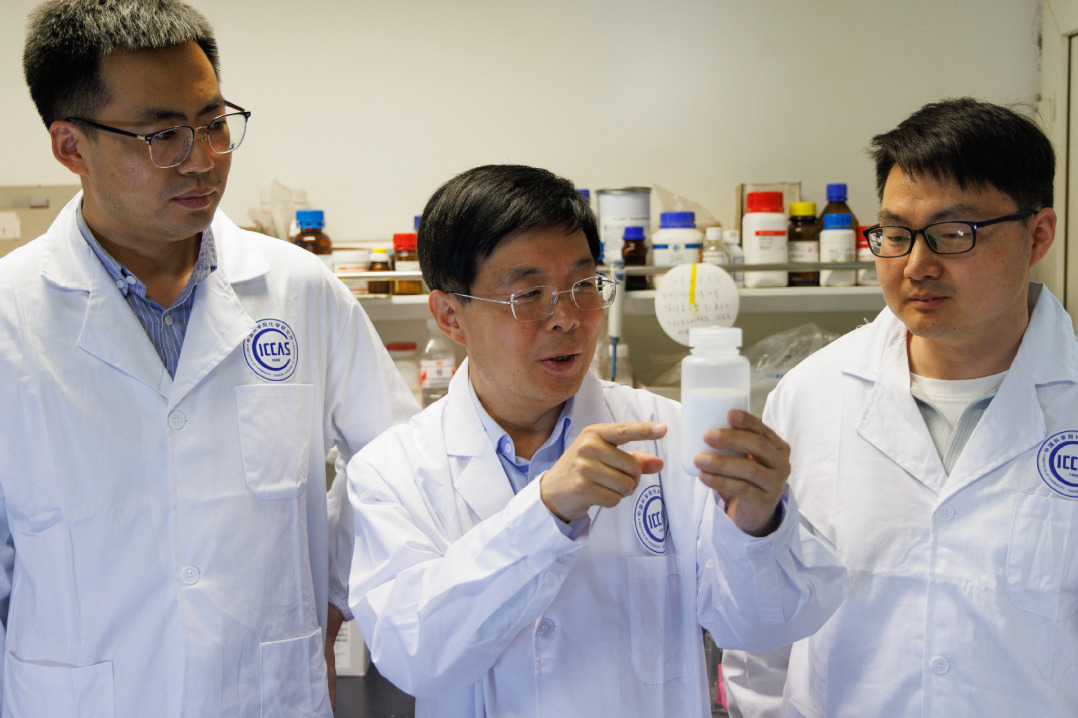
    BEIJING – A collaborative research initiative between the Institute of Chemistry at the Chinese Academy of Sciences (ICCAS) and the National University of Singapore has delivered a landmark breakthrough in the development of optical metamaterials, a cutting-edge class of engineered materials that promise to revolutionize next-generation photonic and optical technologies.

    Announced on April 24, 2026, the team’s work addresses one of the most persistent bottlenecks holding back the widespread commercial adoption of optical metamaterials: the inability to produce large, custom-designed sheets of the material without sacrificing cost efficiency or performance. The researchers’ findings, which outline a completely new framework for scalable manufacturing of these advanced materials, were officially published in the peer-reviewed scientific journal *Nature* on April 23, 2026.

    For decades, optical metamaterials – which are defined by their precisely engineered micro- and nanoscale structural arrangements that manipulate light in ways impossible for natural materials – have faced a persistent manufacturing trade-off. Traditional fabrication methods were either capable of producing small, highly customized batches for research at high cost, or limited to low-cost mass production that could not accommodate tailored design specifications needed for specific applications. This imbalance has restricted the translation of lab-based optical metamaterial breakthroughs into real-world commercial and industrial uses, from advanced optical sensors to flexible display technologies and ultra-compact imaging systems.

    The joint research team resolved this long-standing challenge by developing the world’s first roll-to-roll additive nano-printing platform, a custom-built manufacturing system that brings together the benefits of additive manufacturing with high-throughput continuous production. This new approach achieves simultaneous synergistic optimization of both the material’s core optical properties and the flexible structural design required for diverse applications. By enabling low-cost, large-volume production while retaining the ability to create customized, multi-scale metamaterial structures, the new fabrication paradigm opens entirely new research pathways for the field of multi-scale optical metamaterials and unlocks practical new opportunities for micro-nano photonics applications across multiple industries.

    The breakthrough comes as global research into metamaterials accelerates, driven by growing demand for advanced optical components that enable smaller, faster, and more efficient optical and photonic technologies. The team’s publication of their work in *Nature* underscores the significance of the advance for the international scientific community.

  • Study reveals ‘brake’ gene for Alzheimer’s disease

    Study reveals ‘brake’ gene for Alzheimer’s disease

    A team of Shanghai-based researchers has made a landmark advance in Alzheimer’s disease research, identifying a ‘brake’ gene that can slow the degenerative condition’s progression after developing the world’s first in vivo functional map of regulatory switches in astrocytes, the critical support cells that protect brain neurons. The discovery, which has already been successfully validated in Alzheimer’s mouse models, opens an entirely new pathway for developing life-changing treatments for neurodegenerative disorders.

    The collaborative research project, led by scientists from the Center for Excellence in Brain Science and Intelligence Technology at the Chinese Academy of Sciences, Shanghai Sixth People’s Hospital, and biotechnology company Genemagic, was published on April 24, 2026, in the peer-reviewed journal *Science*. Unlike most existing Alzheimer’s therapies that focus on targeting beta-amyloid plaques, this work centers on the understudied role of astrocytes in disease progression, offering a complementary approach that could boost treatment outcomes for patients.

    Astrocytes are abundant star-shaped cells in the human brain that work to sustain healthy neuronal function. But when Alzheimer’s develops, these critical support cells become dysfunctional, triggering a chain reaction that speeds up the death of neurons and worsens cognitive decline. For years, researchers have understood that stopping this harmful transformation requires identifying the transcription factors — molecular ‘switches’ that control astrocyte activity — but with more than 1,000 distinct transcription factors in the human body, pinpointing the molecules critical to astrocyte health has remained a major, unaddressed challenge.

    To solve this problem, the research team developed an innovative in vivo high-throughput sequencing platform called iGOF-Perturb-seq, which enables large-scale, simultaneous analysis of transcription factor function in living organisms. Using adeno-associated viruses engineered to specifically target astrocytes, the team delivered genetic ‘instruction packages’ holding nearly 1,000 different transcription factors into astrocytes in live mouse brains, with each package tagged with a unique molecular barcode to track its impact. The researchers then used single-cell sequencing technology to analyze close to 400,000 individual astrocytes at once, linking each cell’s functional state to the specific transcription factor it had received. This groundbreaking process allowed the team to assemble the first complete functional map of astrocyte regulatory switches ever created.

    “This map is like a treasure map, helping scientists quickly identify candidate master regulators that can prevent astrocytes from becoming dysfunctional,” explained Zhou Haibo, the lead scientist of the study. After screening the map for promising candidates, the team narrowed the list down to 39 potential molecules, and after rigorous testing, identified the transcription factor Ferd3l as the most potent regulator capable of repairing dysfunctional astrocytes.

    To confirm the gene’s therapeutic potential, the research team tested Ferd3l in mouse models engineered to develop human Alzheimer’s disease. The team activated the Ferd3l gene in the mice’s astrocytes via intravenous injection, and the treated animals saw a dramatic improvement in their cognitive impairments. In standard cognitive tests including object recognition and maze navigation, treated mice performed nearly as well as healthy control mice.

    Further analysis of the results showed that Ferd3l helps dysfunctional astrocytes re-establish healthy, cooperative interactions with both neurons and microglia — the brain’s primary immune cells — restoring functional order to the disrupted cellular environment that characterizes Alzheimer’s, according to Zhang Liansheng, first author of the published study.

    The complete functional map of astrocyte regulators will be shared openly with research institutions and pharmaceutical companies across the globe, allowing scientists to use the resource to identify similar ‘brake’ genes and therapeutic targets for a wide range of other neurological conditions, including Parkinson’s disease, amyotrophic lateral sclerosis (ALS), and major depressive disorder. The team also noted that their work creates a shared library of potential new drug targets for neurological diseases, which can be expanded over time to support the development of personalized precision therapies for patients.

    The research comes as China has already made progress in expanding Alzheimer’s treatment access: an innovative beta-amyloid targeting therapy launched in 2025 is now covered by supplemental public health insurance in major Chinese cities including Beijing, with clinical data showing sustained patient benefits even after treatment is discontinued following successful plaque clearance.

    Zhou noted that moving the discovery from foundational research to real-world clinical applications will be the primary focus of the team’s upcoming work, bringing new hope to millions of people worldwide living with Alzheimer’s and related neurodegenerative conditions.


  • Nato says ‘no provision’ to expel members after report US could seek to suspend Spain

    Nato says ‘no provision’ to expel members after report US could seek to suspend Spain

    Tensions are roiling the North Atlantic Treaty Organization after a leaked internal Pentagon email laid out potential retaliatory measures against alliance members that have declined to back US military efforts in the ongoing Iran conflict, sparking a fierce debate over alliance cohesion and the future of collective defense commitments. The leak, first reported by Reuters via an unnamed senior US official, triggered immediate pushback from NATO leadership, affected member states and key European allies, who have moved quickly to reject any suggestion that membership could be revoked or suspended.

    The controversy stems from growing friction between the US administration under Donald Trump and several NATO allies over responses to the Iran conflict that escalated after joint US-Israeli strikes on Iran in late February. Following the attacks, Iran restricted commercial shipping through the Strait of Hormuz, one of the world’s most critical chokepoints for global energy supplies. Spain has drawn particular US ire for its refusal to grant US forces access to its two military installations — Naval Station Rota and Morón Air Base — to launch offensive operations against Iran.

    In the wake of the report claiming Washington was exploring options to suspend Spanish membership over its stance, a NATO spokesperson told the BBC that the alliance’s founding Washington Treaty contains no mechanism whatsoever to suspend or expel member states. Spanish Prime Minister Pedro Sánchez also dismissed the leaked memo outright, noting that Madrid only recognizes formal official communications from the US government. “We do not work based on emails. We work with official documents and official positions taken, in this case, by the government of the United States,” Sánchez told reporters. He added that Spain remains committed to full cooperation with its allies, but that all actions will adhere strictly to international law.

    Beyond potential action against Spain, the leaked email also outlined a far more provocative proposal: reassessing longstanding US diplomatic support for the United Kingdom’s sovereignty claim over the Falkland Islands, a South Atlantic territory that is also claimed by Argentina as the Malvinas. The 1982 Falklands War between the UK and Argentina ended in British control of the archipelago, which sits roughly 300 miles off Argentina’s coast and 8,000 miles from the UK. UK Prime Minister Keir Starmer has already drawn a line against deeper involvement in the Iran conflict, saying that expanding UK participation in the war or supporting the current US port blockade of Iran runs counter to British national interests. While the UK has allowed the US to use its military bases for strikes on Iranian targets and has deployed Royal Air Force jets to shoot down Iranian drones, Starmer’s government has stopped short of full backing for the US campaign.

    Other retaliatory options outlined in the memo included removing so-called “difficult” allied nations from key leadership positions within the alliance’s bureaucratic structure. The memo did not propose a full US withdrawal from NATO or the permanent closure of American military bases across Europe, the source told Reuters. Instead, it framed access to basing, staging and overflight rights as the non-negotiable baseline for alliance participation, arguing that members that refuse to extend these privileges should face consequences.

    Trump has spent months openly criticizing NATO allies for what he frames as unequal burden-sharing and a lack of reciprocity in security commitments. Just last month, he repeated his longstanding claim that NATO has been a “one-way street” for the US, writing that “We will protect them, but they will do nothing for us.”

    In an official comment following the leak, Pentagon Press Secretary Kingsley Wilson did not deny the existence of the internal memo, and echoed the president’s criticism of alliance members. “Despite ‘everything’ the US has done for its NATO allies, ‘they were not there for us,’” Wilson stated. She added that the Defense Department will work to present the president with actionable options to ensure that allies move beyond being a “paper tiger” and begin contributing their fair share to collective defense efforts, declining to offer further detail on internal deliberations.

    Key European leaders have moved quickly to tamp down divisions and reaffirm their commitment to alliance unity in the wake of the leak. Italian Prime Minister Giorgia Meloni used a recent EU summit in Cyprus to call on all NATO members to close ranks, arguing that the alliance remains an indispensable source of collective strength for the transatlantic community. “We must work to strengthen NATO’s European pillar… which must clearly complement the American one,” Meloni told reporters.

    A German government spokesperson echoed that sentiment in a regular Berlin press briefing, saying that Spain’s NATO membership is not in any doubt: “Spain is a member of NATO. And I see no reason why that should change.” Other European powers, including France, have joined the UK in saying they will only commit to securing the Strait of Hormuz after a lasting ceasefire or end to the conflict. The BBC has reached out to both the Pentagon and 10 Downing Street for additional comment on the leak and the proposals outlined in the memo.

  • Congolese refugees return from Burundi to take advantage of improved security

    Congolese refugees return from Burundi to take advantage of improved security

    Fresh stability has emerged along the Burundi-Democratic Republic of Congo border, as thousands of displaced Congolese civilians are heading back to their homes in eastern Congo after Rwandan-backed M23 rebels withdrew from the strategic town of Uvira.

    On Thursday, another contingent of 470 returnees crossed the reopened border, wrapping up a journey that began four months prior when they fled escalating violence across Uvira and its surrounding areas. These latest arrivals back to Congo first took shelter in Burundi’s Busuma refugee camp, located in Buhumuza province, and are part of a larger wave of repatriation that has seen at least 33,000 Congolese return to their home country since the start of March, per United Nations figures.

    The M23 rebellion, which rapidly seized large swathes of North and South Kivu provinces along the Rwanda-Congo border last year, pulled its forces out of the more southerly Uvira last month following mounting diplomatic pressure from the international community. The border crossing closure that Burundi enacted when rebels advanced on Uvira has now been lifted, clearing the way for organized voluntary repatriation led by the UN High Commissioner for Refugees (UNHCR).

    UNHCR officials confirmed that the repatriation operation will run for multiple consecutive weeks, with at least two scheduled bus convoys facilitating returns every week. The operation is strictly limited to civilians returning to areas confirmed to be safe; no organized returns are being arranged for regions still facing active insecurity. Brigitte Mukanga-Eno, UNHCR’s representative in Burundi, explained that the restoration of local government control in Uvira triggered the first wave of voluntary returns in March, which in turn built confidence for more displaced people to make the journey home.

    For many returnees, the end of displacement brings overwhelming relief after months of hardship in overcrowded refugee camps. “I am happy, very joyful,” shared Hassan Masemo, one of the 470 civilians who crossed Thursday. He added that he was deeply grateful to Burundian authorities for “reopening the border for us.” The Busuma camp, which was rapidly established in December 2025 to house the sudden influx of displaced Congolese, has long struggled with critical shortages of food and basic supplies, making a quick return home a top priority for most residents.

    Currently, Burundi still hosts more than 200,000 registered Congolese refugees, 66,000 of whom reside in the Busuma camp alone. It remains unclear how many more will choose to return in the coming weeks as security conditions continue to stabilize in eastern Congo.

    Eastern Congo’s mineral-rich territories have been plagued by persistent instability for decades, with government forces locked in conflict with more than 100 separate armed groups operating across the region. M23 is widely recognized as the most powerful of these armed factions. While neither Rwanda nor M23 has publicly confirmed that Rwandan military personnel fight alongside the rebellion, UN expert investigations have uncovered substantial evidence of Rwandan military backing. For its part, Rwanda frames its involvement as a defensive measure to protect its national borders from Hutu rebel groups that carried out the 1994 Rwandan genocide.

    On the diplomatic front, former U.S. President Donald Trump has emerged as a key international mediator pushing for lasting peace in the region. Washington’s diplomatic push aims to bring both Congo and Rwanda to commit to a permanent ceasefire, while analysts note the process could also open new opportunities for U.S. companies to access Congo’s extensive mineral reserves, a critical supply chain input for technologies ranging from commercial aircraft to consumer smartphones across the globe.

  • Taiwan compatriots attend PLA Navy’s 77th anniversary open-day event

    Taiwan compatriots attend PLA Navy’s 77th anniversary open-day event

    On April 23, 2026, a group of Taiwan compatriots took part in a special public open-day event held in Qingdao, Shandong Province, to mark the 77th founding anniversary of the People’s Liberation Army (PLA) Navy. As part of the anniversary celebrations, the group was granted access to tour active-duty warships that had been opened exclusively for the occasion, getting an up-close look at the branch’s capabilities.

    During their visit, the Taiwan compatriots walked through the decks and interior spaces of the vessels, receiving detailed introductions to the warships’ advanced weapons systems and onboard equipment from serving naval officers. They also gained first-hand insight into the daily working routines and life of the officers and crew stationed aboard the ships, posing for photos with service members to commemorate the occasion.

    Public open-house events that open active-duty naval vessels to civilian visitors are a long-standing common practice among navies across the globe. For the PLA Navy, these public engagement events have become a regular fixture in recent years. The service has hosted multiple such open days to mark major national and institutional milestones, including its annual founding anniversary and China’s National Day.

  • Czech power company ČEZ signs deal with Rolls-Royce SMR to prepare for first small nuclear reactor

    Czech power company ČEZ signs deal with Rolls-Royce SMR to prepare for first small nuclear reactor

    PRAGUE — In a landmark move that advances the development of next-generation nuclear energy across Central Europe, Czech energy utility ČEZ has finalized a new agreement with British firm Rolls-Royce SMR, tasking the company with carrying out preliminary engineering and administrative work for the Czech Republic’s first small modular nuclear reactor (SMR).

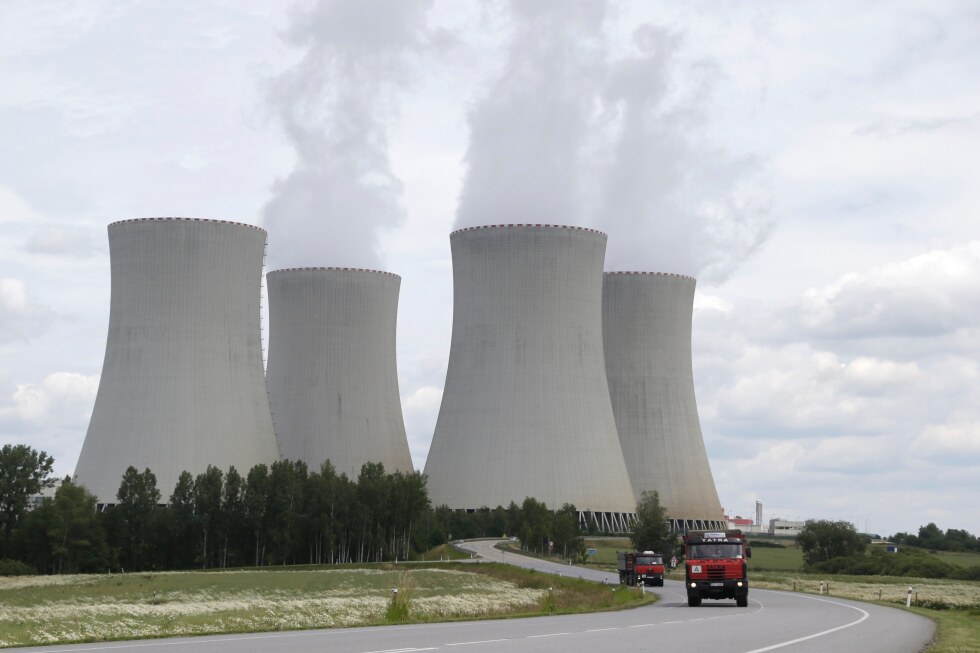
    Daniel Beneš, chief executive officer of ČEZ, confirmed Friday that the scope of the initial work covers core project planning and the compilation of all licensing documentation required to secure official building permits for the facility. Per ČEZ’s current timeline, the firm targets securing all necessary regulatory approvals for the SMR project by the end of the decade, with construction set to take place on an existing plot of land at the Temelín nuclear power complex, the country’s second operational large-scale nuclear site.

    The deal marks the latest international expansion of Rolls-Royce SMR’s SMR portfolio, following a contract signed in mid-April with Great Britain Energy – Nuclear, the UK government’s nuclear development agency, to launch design work for the UK’s first domestic SMR fleet. Beneš noted that the Czech reactor will be the British company’s second completed SMR project, coming after the delivery of the first operational unit in the UK.

    ČEZ already holds a 20% stake in Rolls-Royce SMR, and the two firms established a broader strategic partnership that aims to deploy up to 3 gigawatts of new SMR-generated generation capacity across the Czech Republic over the coming decades. The Czech state currently maintains a nearly 70% controlling stake in ČEZ, and the national government has been moving forward with plans to acquire the remaining outstanding shares to take full ownership of the country’s largest energy provider.

    Unlike conventional large-scale nuclear reactors, which typically produce upwards of 1 gigawatt of power each, small modular reactors are designed to generate smaller, more flexible output. Proponents of the technology argue that SMRs can be constructed far more quickly than traditional reactors, come with lower upfront capital costs, and can be scaled incrementally to match local energy demand requirements.

  • Chinese scientists discover 2 new lunar minerals from Chang’e 5 samples

    Chinese scientists discover 2 new lunar minerals from Chang’e 5 samples

    In a landmark breakthrough for lunar exploration, a team of Chinese scientists has made a significant new contribution to global planetary science: the discovery of two previously unknown lunar minerals, sourced from the precious lunar surface samples retrieved by China’s Chang’e 5 mission. The announcement of the find, first reported by China Daily and updated on April 24, 2026, marks another key milestone for China’s expanding deep space exploration program, adding new concrete data to the international scientific community’s understanding of the Moon’s geological composition and formation history.

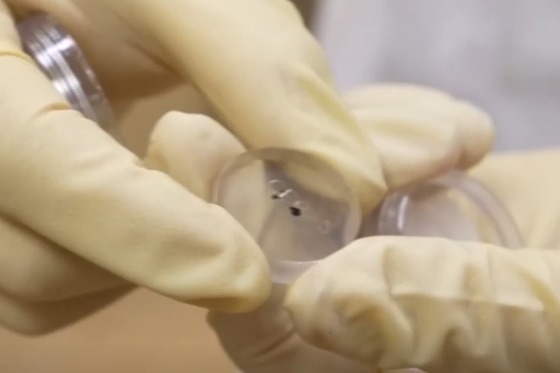
    Chang’e 5, China’s first mission to successfully collect and return lunar samples to Earth, touched down on the northern region of the Moon’s Oceanus Procellarum in late 2020, bringing back roughly 1.7 kilograms of volcanic basalt and regolith from a previously unsampled young region of the lunar surface. These samples have been the subject of ongoing, rigorous analysis by Chinese planetary scientists in the years following their return, with the latest discovery opening new avenues for research into lunar volcanic activity and the evolution of the inner solar system.

    The identification of two new mineral species is a rare and notable achievement in lunar science, as most lunar minerals have already been cataloged from previous Soviet sample-return missions and Apollo program specimens collected in the 1960s and 1970s. This discovery makes China the third country in the world to successfully identify a new lunar mineral from returned samples, underscoring the rapid progress of the nation’s space science capabilities beyond Earth’s orbit. It also aligns with broader planned advancements in China’s deep space exploration roadmap, which includes the upcoming Tianwen 3 mission scheduled to retrieve samples from Mars by approximately 2031, as outlined in recently updated mission plans shared by Chinese space authorities.

    Scientific communities around the world have repeatedly emphasized the value of new lunar sample data, particularly from the young geologic region sampled by Chang’e 5. This new discovery is expected to support ongoing research into the timing of the Moon’s volcanic cooling, the distribution of resources across the lunar surface, and the origins of impact events that have shaped the Earth-Moon system over billions of years. The find also highlights the critical role that sample-return missions play in advancing human knowledge of planetary bodies, complementing data gathered by remote sensing orbiters and rover missions.