博客

  • Australian mother who faked son’s cancer to fund ‘lavish’ lifestyle jailed

    Australian mother who faked son’s cancer to fund ‘lavish’ lifestyle jailed

    In a case that has shocked communities across South Australia, a 45-year-old local mother has been handed a four-year and three-month prison sentence for orchestrating an elaborate scam that saw her fake her six-year-old son’s terminal eye cancer to steal thousands of dollars in charitable donations for her own extravagant spending.

    The court outlined how the deceptive scheme began shortly after the young boy received a routine visit to an ophthalmologist for a minor accident-related eye checkup. Rather than sharing the benign outcome of the appointment, the mother wove a lie that her child had developed aggressive eye cancer, spreading the false narrative to her husband, extended family, friends, and members of the local school community.

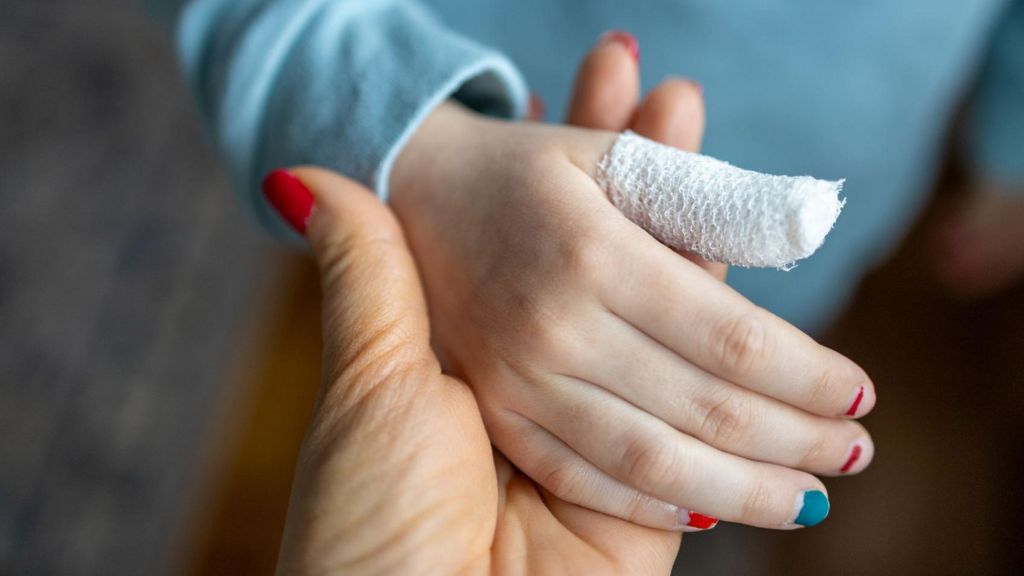
    To sell the hoax, she took deliberate steps to physically fake the symptoms of a child undergoing cancer treatment: she shaved the boy’s head and eyebrows, wrapped his head and hands in unnecessary bandages, and administered regular medication to mislead observers. She even confined her son to a wheelchair and restricted his normal daily activities, convincing everyone around them that he was receiving ongoing radiation therapy. Prosecutors told the court these actions were not reckless mistakes, but a cold, calculated plan that selfishly turned a vulnerable child into a prop to exploit the kindness of others.

    Over the course of the scam, the mother collected tens of thousands of dollars in donations, which she used to fund a luxury lifestyle beyond her income, including purchases of high-end brand-name goods to match what she claimed her family “needed.” Her defense team told the court that the woman developed a severe gambling addiction in the wake of the COVID-19 pandemic, which left her in crippling financial stress. They argued that the crime was a catastrophic lapse in judgment, not a premeditated plan to harm her child, and added that she had been formally diagnosed with borderline personality disorder and had taken responsibility for her actions by entering a guilty plea.

    The woman pleaded guilty to 11 total charges: one count of intentional conduct likely to cause serious harm to her child, and 10 counts of fraud and deception. Her husband was initially charged as an accomplice in the case, but prosecutors later dropped all charges against him after clearing him of any involvement. In his emotional victim impact statement, the husband described how his wife’s betrayal had completely destroyed his family’s life. “I had complete trust in you as my wife and I never doubted you. I was devoted to our family. Now I feel like a pawn in a chess game,” he wrote. Speaking to reporters outside the District Court following the sentencing, he added that no amount of prison time could ever repair the harm done to his two children.

    Judge described the mother’s actions as exceptionally cruel, manipulative, and premeditated during the sentencing hearing on Wednesday. While the woman will serve a total of four years and three months behind bars, she is set to become eligible for parole in April 2025. The case has sparked widespread debate across Australia about the need for tighter regulation of community fundraising, and the long-term harm that fraudulent charity scams can inflict on both donors and the children exploited in these schemes.

  • AFL 2026: Essendon coach Brad Scott goes into bat for under-siege defender Ben McKay

    AFL 2026: Essendon coach Brad Scott goes into bat for under-siege defender Ben McKay

    As AFL’s Essendon Bombers navigate a fresh mid-season injury setback, head coach Brad Scott has launched a passionate defense of his under-pressure key defender Ben McKay, hitting out at what he calls unfair and lazy public criticism of the player’s recent form.

    McKay came under widespread fire after his underwhelming performance in the high-profile Anzac Day clash against Collingwood. The most heavily criticized moment came when McKay celebrated a spoil that stayed in play, ultimately setting up the Magpies for a match-changing goal. In a media address Wednesday, Scott pushed back against the targeted criticism of McKay, arguing that the 26-year-old defender and the Essendon club as a whole have become easy, convenient punching bags for external commentators.

    “I get it’s an easy target. The ability to individualize [externally] is easy, bordering on lazy,” Scott told reporters. “But it’s not him in isolation. We had situations in that game where every player would like moments back.” Scott acknowledged earlier that McKay has not hit his personal best form this season, but added that lapses in confidence are a universal experience for every player competing at the top level of the sport.

    “Every player in the competition has, quote-end-quote, confidence issues in their career,” Scott said. “That’s part of being in a cut-throat environment where you’re playing against the very best every week. When you’re a key defender, you play on very good players every week, so you’re right on the edge. Is he just feeling great about himself? Probably not. But does that matter, should that impact your performance? No, it shouldn’t. That’s what we work really hard on: trying to bounce back from difficult situations.” Scott added that McKay’s issue was simply a failure to execute basic fundamentals, not a systemic collapse in form.

    Off the back of the debate over McKay, the Bombers received a disappointing injury blow Monday: promising young small forward Isaac Kako has been ruled out of action for at least the next month with a back stress fracture, an injury the club has classified as medium-term. Scott said the club is unable to give a more exact return timeline at this stage, to avoid releasing inaccurate information to fans.

    “Medium term is the best we can do at the moment because we don’t want to put something out that’s false,” Scott explained. “The bottom line is that he won’t be playing in the next month or so, at least.” The Essendon coach also highlighted a worrying growing trend of stress fractures in young draftees across the entire AFL league, noting that the injury, traditionally associated with tall, high-impact athletes like 200cm fast bowlers, is now appearing more frequently in smaller players like Kako. Scott added that another Essendon draftee, Sullivan Robey, suffered the same injury before even joining the club’s training program.

    “These back stress fractures are unfortunately – not just at our club but across the board – becoming a little bit too common for young players coming into the system,” Scott said. “They’re almost like you expect them in 200cm fast bowlers but not in 180cm small forwards… I think probably the loads on young players prior to the draft is something we would be keen to have a look at.”

  • The loyal, lonely keepers of Sudan’s pyramids

    The loyal, lonely keepers of Sudan’s pyramids

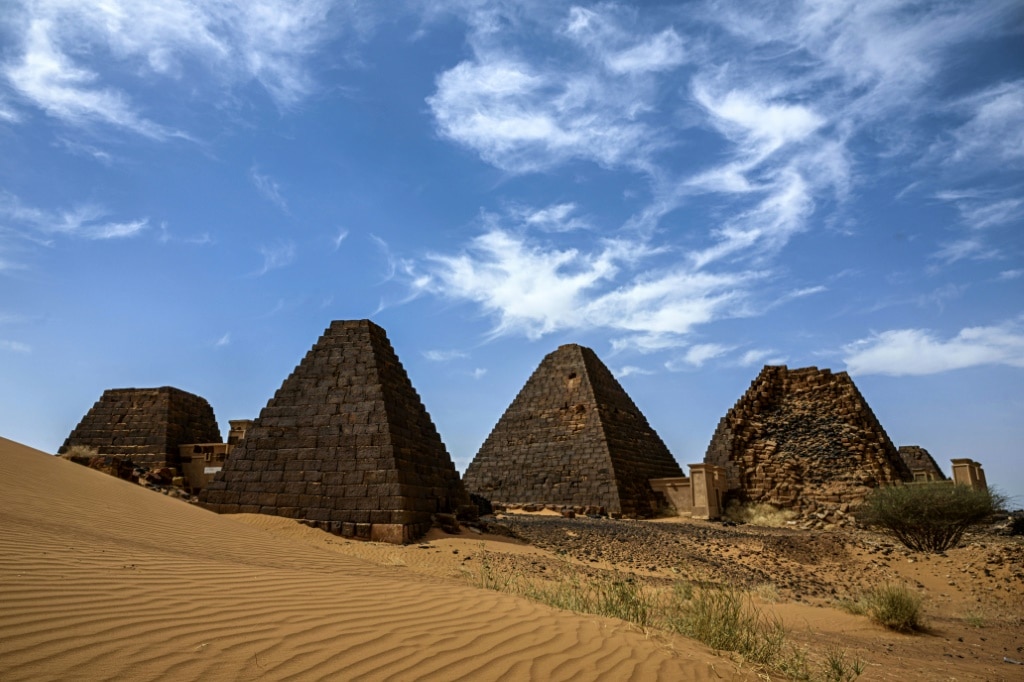
    Three full years into Sudan’s devastating civil conflict between the national army and the Rapid Support Forces (RSF), one of the country’s most precious cultural treasures, the ancient Meroe Pyramids, stands protected only by a tiny band of caretakers bound by generations of legacy and devotion.

    Mostafa Ahmed Mostafa, 65, is the latest descendant in a family line of groundskeepers that has tended to these desert monuments for decades. Clad entirely in white, he walks as a near-solitary sentinel across the 2,400-year-old Bajrawiya necropolis, part of the Island of Meroe UNESCO World Heritage Site that holds 140 pyramids constructed during the peak of the ancient Kingdom of Kush. “These pyramids are ours, it’s our history, it’s who we are,” he says, standing in the shadow of the weathered dark sandstone structures.

    None of the Meroe pyramids remain fully intact. The first wave of destruction came in the 1800s, when European treasure hunters used dynamite to blast apart tombs in search of ancient artifacts. Two more centuries of wind-blown sand and erosive rain have reduced many structures to rubble, leaving broken remnants of the once-majoric Kushite burial monuments.

    A three-hour drive from Sudan’s capital Khartoum, Meroe was once the country’s most-visited heritage attraction. Today, the only sound cutting across the silent desert is the occasional grunt of a lone camel. Mostafa shares site duties with just two other people: Mahmoud Soliman, lead archaeologist and site director, and young archaeologist Mohamed Mubarak, who has worked at Meroe since 2018. The small team cobbles together what limited resources they can find to slow the damage caused by shifting sand and seasonal rainfall.

    Apart from a brief early-war influx of displaced people seeking distraction from the crisis, the site has remained largely abandoned. That reality is a stark contrast to Meroe’s pre-war revival, when Sudanese heritage enjoyed growing national attention following the 2018-2019 popular uprising that ousted longtime autocrat Omar al-Bashir. Soliman recalls peak weekends bringing busloads of 200 tourists at a time from Khartoum, as young Sudanese embraced their ancient history and organized group trips to explore the site. A popular protest chant of the era even wove Kushite heritage into the revolution: “My grandfather Taharqa, my grandmother Kandaka,” referencing a legendary Kushite pharaoh and the title of ancient Kushite queens, who became symbols of the revolution’s women leaders.

    Local communities also relied on Meroe’s tourist trade. Nearby Tarabil village, named for the local word for “pyramids,” was home to dozens of artisans who sold handcrafted souvenirs and rented camels to visitors, with livelihoods entirely tied to the site. On a recent April visit, Khaled Abdelrazek, a 45-year-old local artisan, hurried to the entrance as soon as he heard visitors had arrived, displaying his hand-carved miniature sandstone pyramids and reminiscing about the days when dozens of vendors plied their trade at the site.

    Months before war erupted in the final days of Ramadan 2023, Meroe was gearing up for a busy season: documentary film crews had visited, a music festival had been hosted, and big plans were in place for post-Eid tourism. All of those plans were dashed the moment fighting broke out.

    Today, the team’s primary concern is constant vigilance against decay. Soliman walks the site scanning for new cracks, shifting sand dunes, and unstable scaffolding that needs repair ahead of each rainy season. Unlike the larger, more gradual-sloped pyramids of neighboring Egypt, Meroe’s smaller, steeper structures were originally engineered to shed rainwater and withstand sand movement, but every new crack opens the door to accelerated erosion.

    Queen Amanishakheto’s pyramid, the largest on site, built for the 1st century CE Kushite ruler, offers one of the most stark examples of the site’s history of destruction. In 1834, Italian adventurer Giuseppe Ferlini — who destroyed dozens of Meroe’s pyramids in search of treasure — completely levelled Amanishakheto’s tomb and stole her royal jewelry, which now remains on display in Egyptian museums in Berlin and Munich. Today, the queen’s tomb is little more than an empty sandbox, though the outer wall of her mortuary temple still stands, bearing a larger-than-life carving of the queen holding a spear and smiting enemy captives, a reminder of the power she held 2,000 years ago.

    Wandering past ancient reliefs of the Kushite lion god Apademak, Egyptian-derived deities Amun and Anubis, lotus carvings, and Meroitic hieroglyphs, Soliman shared his quiet hope for the future. For now, large-scale restoration and a return of tourism remains a distant dream, he says, but he cannot help but hold onto hope: “This place has so much potential.”

    For the small team guarding Meroe, even amid a national crisis that has left most Sudanese focused solely on securing food, water, and shelter, protecting this heritage for future generations remains a non-negotiable mission. “Now, everyone’s top priority is of course food and water and shelter. But this is also important,” Mubarak says. “We need to protect this for future generations, we can’t let it be destroyed or wither away.”

  • Europe climate report signals rising extremes

    Europe climate report signals rising extremes

    A landmark new climate report released on Wednesday has delivered a stark warning about the accelerating climate crisis unfolding across Europe, documenting a year of unprecedented extreme weather events in 2025 that spanned from the Mediterranean basin all the way to the Arctic Circle. Co-published by the European Union’s Copernicus Climate Change Service and the World Meteorological Organization (WMO), the 2025 European State of the Climate report confirms that the continent, already the fastest-warming on Earth, continues to face worsening and more frequent climate extremes that touch every corner of the region.

    WMO Secretary-General Celeste Saulo emphasized in a public briefing that Europe’s warming trajectory has outpaced the rest of the globe by a significant margin since 1980. “Since 1980, Europe has been warming twice as fast as the global average, making it the fastest warming continent on Earth,” Saulo stated. “Heatwaves are becoming more frequent and severe. And in 2025, we saw long duration heatwaves from the Mediterranean to the Arctic Circle.”

    The report’s temperature data confirms that over 95 percent of Europe recorded annual temperatures above the long-term average, with the United Kingdom, Norway, and Iceland all setting new all-time records for their warmest years ever measured. One of the most striking findings came from the Fennoscandia region, which encompasses sub-Arctic Finland, Norway, and Sweden. In July 2025, the area endured a three-week heatwave of historic proportions, with temperatures pushing above 30 degrees Celsius inside the Arctic Circle. Large portions of the region experienced nearly two straight weeks of strong heat stress, where apparent temperatures climb above 32 degrees Celsius – a stark contrast to the typical two days of such conditions the region sees in an average year.

    Extreme heat was not limited to northern Europe. In southern Europe, Turkey recorded temperatures above 50°C for the first time in its history last July, while roughly 85 percent of Greece’s population was exposed to extreme temperatures at or above 40°C. Western and southern Europe faced two major back-to-back heatwaves in June, impacting most of Spain, Portugal, France, and southern parts of the United Kingdom, with a third intense heatwave hitting the same three countries in August. Looking ahead, climate officials warn that another extremely hot summer could be on the horizon for Europe and the globe, as the El Niño weather phenomenon – the same pattern that drove global temperatures to record highs in 2024 – is projected to return in the second half of 2026.

    Beyond record heat, the report documents dramatic ice and snow loss across the continent. Every European glacier experienced net mass loss in 2025, with Iceland recording its second-largest annual melt event on record. Samantha Burgess, strategic lead for climate at the European Centre for Medium-Range Weather Forecasts (ECMWF), which runs the Copernicus program, highlighted the scale of ice loss from the Greenland Ice Sheet: the massive ice body lost approximately 139 billion tonnes of ice in 2025 – equal to one 100 Olympic-sized swimming pools of ice lost every single hour. That single year of ice loss raised global average sea levels by 0.4 millimeters. Europe’s seasonal snow cover also hit its third-lowest level on record in 2025. The report notes that regardless of future carbon emission reduction scenarios, glaciers across Europe and the globe are projected to continue losing mass through the end of the 21st century.

    Marine environments also faced unprecedented stress last year. 2025 marked the fourth consecutive year that Europe’s annual average sea surface temperature hit a new record high, with 86 percent of European ocean waters experiencing at least one day of strong marine heatwave conditions. Claire Scannell, report author and principal meteorologist at Ireland’s national weather service, explained that these extreme ocean heat events pose severe risks to critical marine biodiversity, particularly Mediterranean seagrass meadows. These meadows act as natural coastal flood barriers and serve as vital nursery habitats that support thousands of fish species per acre, making their protection critical to both ecosystems and coastal communities.

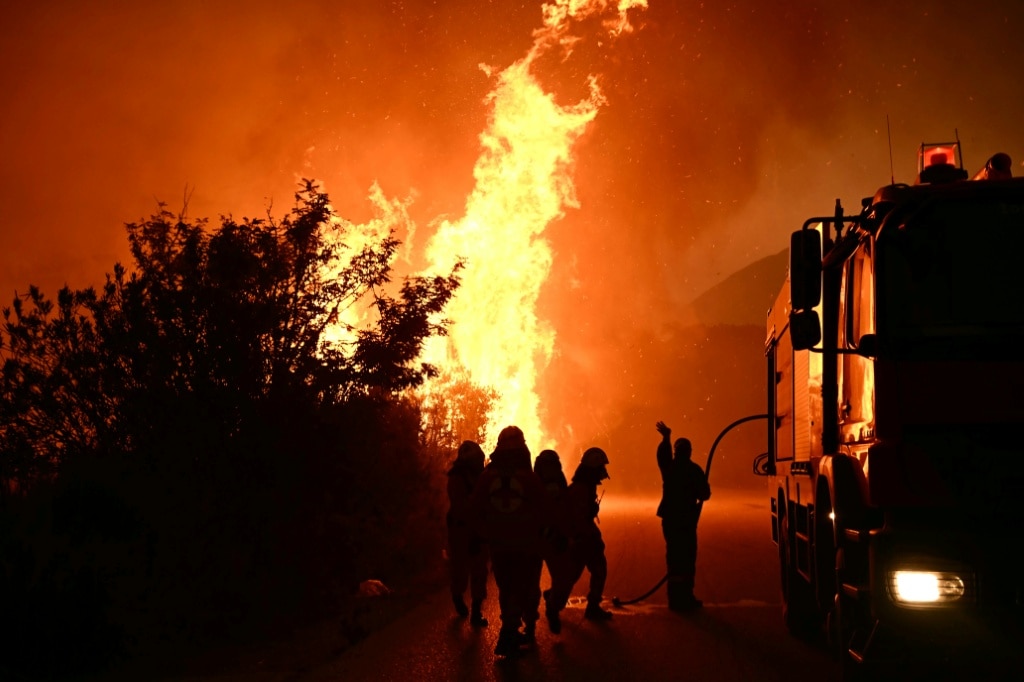
    On land, the total area burned by wildfires across Europe reached a new record high of 1,034,550 hectares in 2025. While extreme rainfall and widespread flooding were less extensive than in recent years, the report still recorded that storms and flood events killed at least 21 people and displaced or affected more than 14,500 residents across the continent.

    Against this grim backdrop, the report did note one positive trend: for the third year in a row, renewable energy sources produced more electricity than fossil fuels across Europe, accounting for 46.4 percent of total continental power generation. Solar power in particular hit a new record, contributing 12.5 percent of Europe’s total electricity. Even so, EU climate officials stressed that this progress is not enough to address the accelerating crisis. Dusan Chrenek, principal advisor at the European Commission’s climate office, emphasized that “that’s not sufficient. We need to speed up. We need to work on transitioning away from fossil fuels.” European Commission official Mauro Facchini echoed that urgency, noting that all the report’s key climate indicators are “quite worrying,” and another EU official added that the findings underscore an urgent need for European nations to both accelerate their clean energy transitions and invest in adaptation measures to cope with unavoidable warming already locked into the climate system.

  • How the King and Queen spent their second day in the US

    How the King and Queen spent their second day in the US

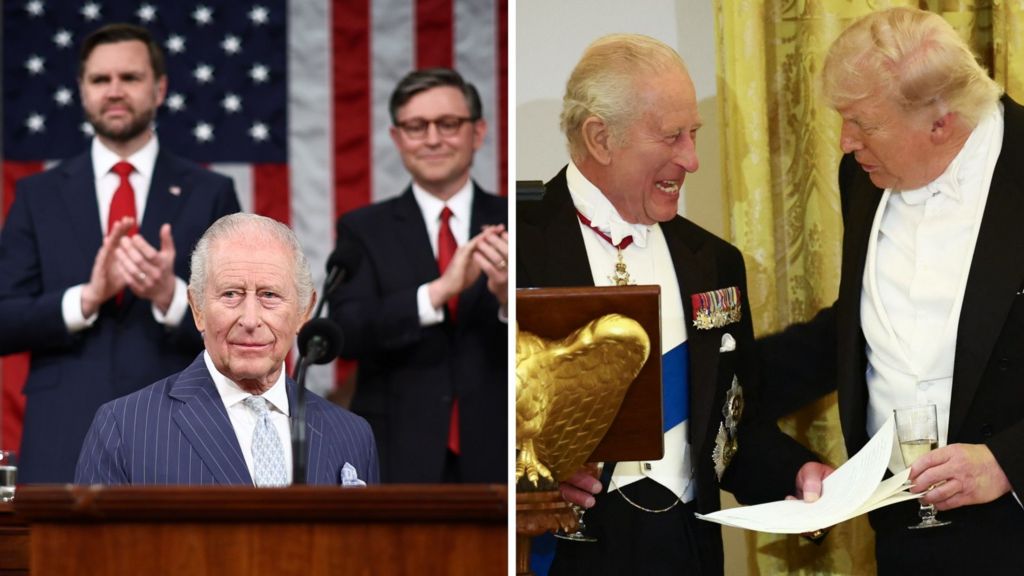
    On the second day of their official visit to the United States, the British King and Queen took center stage at a prestigious state dinner hosted at the White House, where a deeply symbolic gift exchange underscored the longstanding ties between the two nations. In a moment that blended military history with modern diplomatic goodwill, the King presented the U.S. President with a unique, meaningful artifact: a bell originally from HMS Trump, the World War II submarine that shares his name. The gesture carried layers of historical resonance, connecting the present-day royal visit to the shared wartime legacy that binds Britain and the United States, turning a routine diplomatic gift into a memorable reflection of decades of alliance. The second day of the trip, capped by the formal state dinner, continued the royal couple’s program of diplomatic engagement, with the gift exchange emerging as the key highlight of the occasion.

  • Former US officials criticise Pentagon silence on deadly Iran school attack

    Former US officials criticise Pentagon silence on deadly Iran school attack

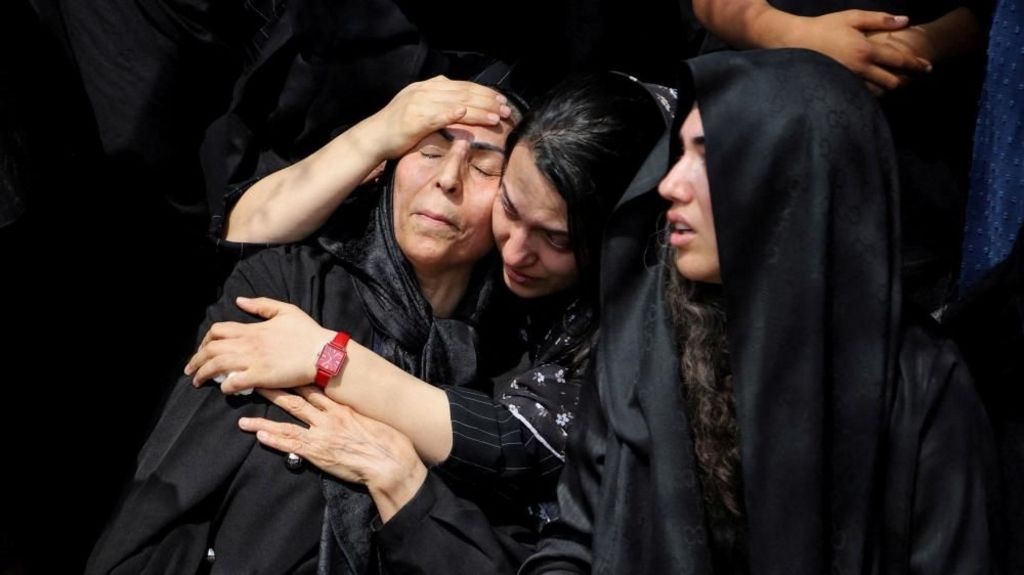
    Two months after a deadly missile strike hit a primary school in Minab, Iran, during the opening phase of the US-Israeli military campaign on February 28, a group of five former senior US officials have publicly condemned the Pentagon for its prolonged refusal to acknowledge potential American responsibility for the incident, which killed 168 people including roughly 110 children per Iranian government figures.

    The Pentagon has issued only one public update since the strike, stating that the incident remains under investigation. When the BBC submitted a series of detailed questions about the strike and allegations of institutional secrecy, a Pentagon spokesperson repeated only that the inquiry is ongoing, noting that additional information would be released once it becomes available. Independent US media reporting in early March, however, has cited unnamed military sources confirming that preliminary investigative work suggests American forces likely struck the school by accident, though no final formal conclusion has been released. Those same reports trace the error to outdated target coordinates provided by a US intelligence agency; the missile was intended for an adjacent Iranian Revolutionary Guard Corps (IRGC) military base, a target the Pentagon has repeatedly refused to confirm was on its list of pre-planned February 28 strikes, despite publicly disclosing details of dozens of other targets hit during the opening of the war.

    The BBC has independently verified authentic video footage showing a US Tomahawk missile striking the IRGC base adjacent to the destroyed school, corroborating the core claims of the earlier anonymous media reports. In contrast to the Pentagon’s current two-month silence, a BBC analysis of three high-profile past cases of civilian fatalities from US military operations found that in every instance, the Pentagon released substantial, detailed information to the public in less than 30 days.

    Retired US Air Force Lieutenant Colonel Rachel E. VanLandingham, a former top legal adviser at US Central Command (CENTCOM) during the Iraq and Afghanistan wars and one of the critics of the current response, called the Trump administration’s approach a “striking departure” from long-standing Pentagon standard operating procedures. VanLandingham noted that past US administrations, regardless of party, at least paid public lip service to upholding the laws of war and commitments to accountability. What is missing from the current administration’s statements, she argued, is any pledge to take responsibility and take steps to prevent similar civilian tragedies in the future.

    Wes Bryant, a former senior advisor for precision warfare and civilian harm mitigation at the Pentagon’s Civilian Protection Center of Excellence who left the department last year after Defense Secretary Pete Hegseth drastically cut staffing for the civilian harm unit, told the BBC that the Pentagon’s current investigative process itself confirms officials already know US forces were responsible. Bryant explained that formal investigations are only launched after a preliminary inquiry confirms two key facts: that civilian harm occurred, and that US forces were operating in the area and could have caused the incident. “From a process standpoint… that just points even more to the fact that they know already that the US caused this or else they wouldn’t be doing this investigation, and they just don’t want to acknowledge it or speak to it,” Bryant said, adding that the complete refusal to comment on any details of the incident is “unacceptable.”

    One anonymous former senior defense official agreed that while complex civilian harm investigations can take extended time, the level of secrecy in this case is entirely unwarranted. “But this is a case where… it’s unusually opaque in that I can tell from the situation it’s actually not that complicated,” the official told the BBC. “Normally the Pentagon would take immediate [or] relatively fast responsibility and then probably require a longer period of time to provide all the details, so to me it’s problematic.”

    Top congressional Democrats have repeatedly pressed Hegseth for answers, starting with a basic confirmation of whether US forces carried out the strike. The BBC has reviewed two formal response letters sent by the Pentagon on Hegseth’s behalf, neither of which answers any of the Democrats’ core questions. A most recent April 2 letter only confirmed that an investigating officer outside the CENTCOM chain of command has been appointed, and that results would be shared after the inquiry concludes. When the BBC reached out to 15 Republican members of Congress, including top leaders of House and Senate national security committees, all declined to comment on the administration’s handling of the strike. Only one Republican senator, John Kennedy of Louisiana, has publicly broken rank, telling the *New York Times* in March that “I think we made a mistake. It was a terrible, terrible mistake.”

    During closed-door congressional briefings on Iran war operations, Pentagon officials have repeatedly declined to answer questions about the Minab strike, citing the ongoing investigation. Adam Smith, the top Democrat on the House Armed Services Committee, called that response “pathetic and completely inadequate,” confirming that officials have refused to admit US responsibility even in private.

    The pattern of silence from current administration officials lines up with public comments from President Donald Trump, who has repeatedly denied any knowledge of evidence linking US forces to the strike and without evidence blamed Iran for the deaths. On March 7, Trump claimed Iran was responsible for the strike. Days later, when asked about verified video of a US Tomahawk hitting the adjacent military base, he claimed he had not seen the footage and falsely asserted that Iran also possesses Tomahawk missiles. When pressed later about reports that a preliminary probe found US forces were responsible, he again said he had no knowledge of the incident. Hegseth similarly told the BBC in March that “All I can say is that we’re investigating that. We of course never target civilian targets.”

    To contextualize the current response, the BBC compared the Minab incident to three prior high-profile cases of civilian deaths from US strikes across different administrations: the 2021 Kabul airport drone strike that killed 10 civilians including seven children, the 2015 MSF hospital bombing in Kunduz that killed 42 people, and the 1991 al-Amiriyah shelter bombing in Baghdad that killed 408 civilians. In all three cases, even when the US initially denied responsibility, senior officials acknowledged the strike and released substantial public details within a month at most, contrasting sharply with the two-month silence in the Minab case.

    Annie Shiel, a former State Department official focused on civilian harm reduction who now serves as US Advocacy Director for the Center for Civilians in Conflict (CIVIC), noted that the appointment of an external investigator is at least a nominal step toward procedural independence, but argued that any US role should be acknowledged publicly even before the full investigation concludes. Shiel added that past US administrations have often been forced to reverse initial denials after independent reporting confirms US responsibility, a pattern the current administration seems intent on avoiding by saying nothing at all.

    Independent corroboration of the strike’s details has been further complicated by the Iranian government’s refusal to grant independent investigators or journalists access to the blast site. The UN Fact Finding Mission on Iran announced March 17 that it had formally requested access to Minab but been denied permission to visit.

    Charles O Blaha, a 32-year veteran of the US foreign service and former director of the State Department’s Office of Security and Human Rights, now a senior advisor to Democracy for the Arab World Now (DAWN), said the administration’s lack of transparency most likely stems from a reluctance to contradict President Trump, who already publicly and falsely blamed Iran for the strike. Blaha called Trump’s claim “really far-fetched and very clearly not true,” adding that the silence also reflects the administration’s broader pattern of dismissing any negative news about the Iran war as unpatriotic.
  • ‘Security blanket’: Daniel Tupou won’t sign with another NRL club if he can’t secure a new deal with the Roosters

    ‘Security blanket’: Daniel Tupou won’t sign with another NRL club if he can’t secure a new deal with the Roosters

    For 14 seasons, Daniel Tupou has been a staple on the left wing of the Sydney Roosters, and as the veteran winger approaches two of the biggest milestones of his legendary National Rugby League (NRL) career, he has made his long-term future clear: he will not play for any other NRL club.

    At 34 years old, with his 35th birthday set for June, Tupou is showing no signs of slowing down, putting together the kind of consistent form that would allow him to extend his tenure with the Roosters through to the 2027 season if a new contract is finalized. When asked about the possibility of a move to a rival NRL side, the towering winger, who has represented New South Wales, Tonga, and Australia at the international level, ruled it out entirely.

    “I’m too mature to go to another team and start all over again. It’ll be hard on the body. We’ll see what happens and we’ll go from there,” Tupou told reporters, adding that contract talks with his agent and the club are ongoing, with a resolution expected in the near future. A switch to rugby union remains a vague alternative option, but Tupou’s priority remains locking in another deal to stay where he has built his entire first-grade career.

    Tupou’s NRL journey began back in 2012, when he announced himself with a stunning hat-trick in just his second senior appearance. When current head coach Trent Robinson took the helm the following year, Tupou faced a make-or-break battle for a starting wing spot opposite rising star Roger Tuivasa-Sheck, fighting off competition from fellow winger Michael Oldfield to hold his place. Looking back on that high-stakes pre-season contest, Tupou says his focused work ethic ultimately won out.

    “I think the pre-season I had was just me putting my head down and focusing on myself to put my best foot forward. I think I showcased that in the pre-season and I was lucky enough to get that starting spot and hold onto that,” he recalled. That opportunity led to a breakout 2013 campaign, where Tupou scored 14 tries, including a gravity-defying match-winning try in the grand final that has become the defining play of his career.

    Robinson has since described Tupou as a “security blanket” on the left wing, a reliable playmaker and lethal finisher who has been one of the most consistent outside backs in the entire competition over his 14-year tenure. Tupou says he remains grateful for the chance he earned back in 2013, which set the trajectory for his Hall of Fame-worthy career.

    “I’m definitely feeling it, but I guess I’ve got a mad poker face on. Fourteen years is a long time, so I’m blessed that I’m still playing and using this gift to play on the big stage with the boys. It’s truly an honour,” he said.

    In the coming weeks, Tupou will hit two historic career milestones, achievements that cement his place among NRL greats. He currently sits on 189 career first-grade tries, just one behind Melbourne Storm legend Billy Slater for third place on the competition’s all-time try-scoring list. After bagging a double in the Roosters’ dominant Anzac Day win over the St. George Illawarra Dragons, Tupou is on the cusp of overtaking Slater, and is on track to become only the third player in NRL history to hit the 200-try mark. He joked that he would have already matched Slater’s tally if not for a dropped ball with a clear try line open earlier this season, a missed opportunity both he and Robinson have lamented.

    Tupou is also closing in on the 300-game milestone, a mark he is expected to hit when the Roosters face the Storm in Round 13. Roosters fans, who have watched Tupou dominate for nearly a decade and a half, have celebrated the veteran’s loyalty and historic run, as he continues to add to his legacy with one of the league’s most iconic clubs.

  • Kim Jong Un praises troops who ‘self-blasted’ to avoid capture by Ukraine

    Kim Jong Un praises troops who ‘self-blasted’ to avoid capture by Ukraine

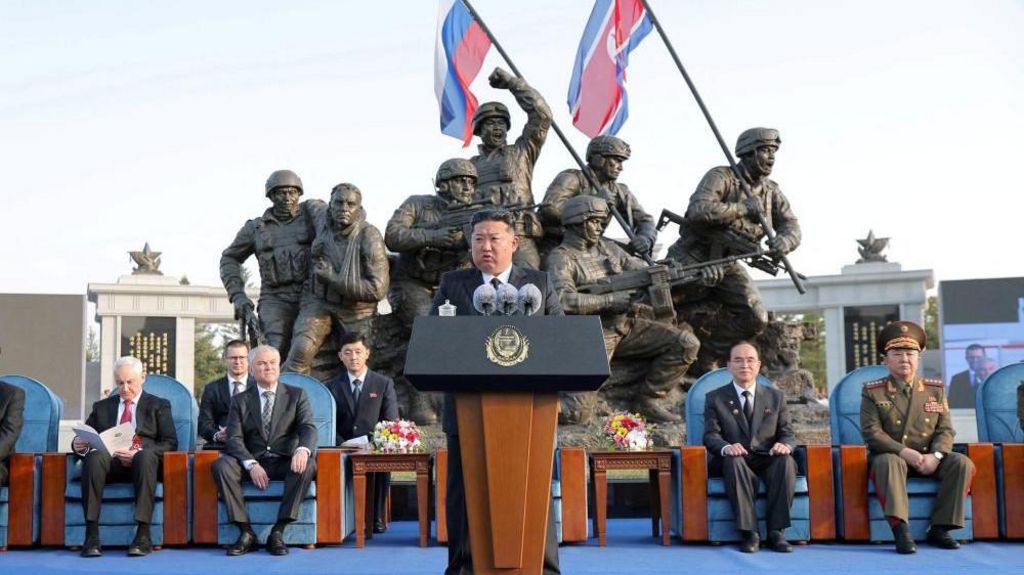
    In a high-profile public event that has drawn international attention, North Korean leader Kim Jong Un has publicly celebrated North Korean troops who carried out suicide attacks using hand grenades while fighting alongside Russian forces in Ukraine, formally confirming an extreme battlefield policy that intelligence communities have suspected for months.

    The comments, delivered during a Monday ceremony unveiling a memorial for fallen North Korean soldiers in Pyongyang, were carried by North Korean state media outlet KCNA. Kim labeled troops who “unhesitatingly opted for self-blasting suicide attacks to defend the great honor” of the country as true heroes, and framed their actions as the pinnacle of military loyalty. “Their self-sacrifice expecting no compensation, and the devotion expecting no reward… This [is] the definition of the height of loyalty of our army,” Kim told attendees, which included top Russian officials: Russian Defence Minister Andrey Belousov and State Duma Speaker Vyacheslav Volodin.

    South Korean intelligence estimates that Pyongyang has deployed at least 15,000 troops to support Russia’s efforts to retake territory in western Kursk Oblast, with more than 6,000 of those service members killed in combat to date. Neither North Korea nor Russia has publicly verified these casualty and deployment figures. Multiple intelligence agencies and North Korean defectors have long corroborated that North Korean troops are under standing orders to take their own lives rather than allow themselves to be captured by Ukrainian forces. Within North Korea’s military doctrine, capture by enemy forces is classified as an act of treason against the state and ruling party.

    Evidence of this policy has emerged through multiple channels in recent months. Last year, South Korea’s National Intelligence Service recovered handwritten orders from deceased North Korean soldiers that explicitly outlined the requirement for self-harm to avoid capture. Earlier this year, South Korean broadcaster MBC released an interview with two North Korean prisoners of war held by Ukraine, where one fighter expressed open regret for failing to take his own life, saying, “Everyone else blew themselves up. I failed.”

    Beyond his praise for suicide attackers, Kim also extended recognition to all troops who have died in combat in Ukraine. He noted that even those who fell while leading frontline charges, or who died frustrated at failing to complete their assigned duties rather than mourning their physical wounds from bullets and shrapnel, deserve recognition as faithful party warriors and patriots.

    The public commemoration comes amid rapidly deepening military and political cooperation between Pyongyang and Moscow. In June 2024, Russian President Vladimir Putin and Kim Jong Un signed a mutual defense pact that committed both nations to provide mutual assistance in the event of armed aggression against either party, with Kim describing the agreement as the “strongest ever” bilateral treaty between the two countries. Beyond deploying combat troops to support Russia’s war effort, North Korea has also pledged to send thousands of civilian workers to assist with reconstruction efforts in war-damaged Kursk Oblast.

  • Jerome Powell: Fed chair who stood up to Trump set to finish tenure on top

    Jerome Powell: Fed chair who stood up to Trump set to finish tenure on top

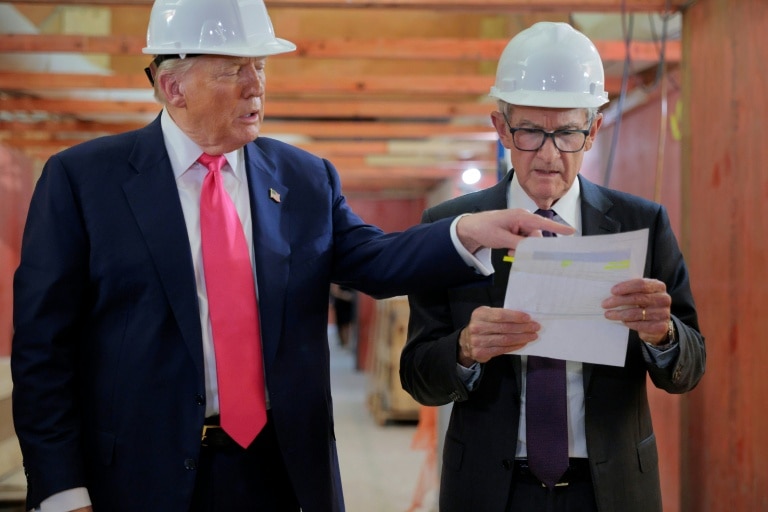
    For a soft-spoken, careful-worded central banker, Jerome Powell has carved out an unexpected place in modern U.S. political history: one of the few public figures to stand firm against relentless pressure from former (and current) President Donald Trump, and emerge on top as he prepares to wrap up his tenure as Federal Reserve Chair. On Wednesday, Powell will take the podium for what is widely expected to be his final press conference as head of the world’s most influential central bank, closing out a turbulent term marked by repeated attacks from the Republican president that many observers now agree Powell ultimately prevailed against.

    The turning point came last week, when the U.S. Department of Justice announced it would drop the unprecedented investigation into Powell and the Federal Reserve over alleged cost overruns on a headquarters renovation project. The probe was first revealed by Powell himself in January, when he warned that the inquiry was part of a broader pattern of threats and pressure from the Trump administration. The investigation gained new traction amid Trump’s attempt to oust sitting Fed Governor Lisa Cook over unproven mortgage fraud allegations, but key Republican Senator Susan Collins (per internal reporting) vowed to block any Trump nominee to replace Powell unless the probe was terminated. Powell also hardened his position in March, announcing he would refuse to step down from the Fed’s Board of Governors — where his term as a member runs through January 2028, regardless of his chair tenure — as long as the investigation remained open.

    Now that the probe has been dismissed, all attention shifts to Powell’s next move: whether he will remain on the Fed Board after stepping down as chair, an unusual but not unprecedented move that would block Trump from filling the board seat with his own nominee. EY-Parthenon chief economist Gregory Daco argues that Powell is more likely than not to stay on, noting that the decision would be driven by a desire for institutional continuity, not partisan gain. “The rationale is institutional continuity, not politics,” Daco explained.

    Powell’s path to this moment has been marked by tumult from start to finish. A 73-year-old former investment banker with deep cross-partisan policy experience, he was first tapped to lead the Fed by Trump in 2018, replacing outgoing chair Janet Yellen. It did not take long for tensions to emerge: Trump attacked Powell repeatedly for raising interest rates to cool a overheating economy, hurling verbal insults that were unprecedented for a sitting president attacking an independent central bank.

    When the COVID-19 pandemic hit in 2020, Powell led the Fed in a dramatic, swift response, cutting benchmark interest rates to near zero and rolling out sweeping emergency support measures that are widely credited with preventing a far deeper global economic collapse. After President Joe Biden nominated Powell for a second term in 2021 — a nod to his commitment to central bank independence even from the opposite party — Powell oversaw another tough policy turn: a series of aggressive rate hikes starting in 2022 to curb post-pandemic inflation, followed by cautious rate cuts beginning in 2024 as inflation cooled and the Fed adjusted to the economic impact of Trump’s new sweeping tariffs.

    After Trump won re-election and returned to the White House, the attacks on Powell resumed, with Trump branding the Fed chair a “numbskull” and a “moron,” and even suggesting he could be dismissed over “fraud” linked to the $2.5 billion renovation project that formed the basis of the now-dismissed Justice Department probe. In recent months, Powell has shown willingness to compromise on certain policy priorities aligned with the Trump administration, most notably rolling back the Fed’s climate-related financial oversight work. But his refusal to back down on defending the Fed’s independence, experts say, has already cemented his legacy.

    “He will be seen as the guy who stood up for the independence of the Fed, and the rule of law,” Brookings Institution senior fellow David Wessel told AFP, adding that Powell’s resistance will leave a lasting mark as “a Fed chair with a spine.”

    Prior to joining the Fed as a governor in 2012, an appointment from then-President Barack Obama, Powell worked as a scholar at the Bipartisan Policy Center, and earlier in his career he served as a Treasury Department official under Republican President George H.W. Bush.

  • AFL 2026: Western Bulldogs wrestle with mixed news out of the medical room ahead of Fremantle clash

    AFL 2026: Western Bulldogs wrestle with mixed news out of the medical room ahead of Fremantle clash

    The Western Bulldogs have delivered a mixed batch of injury updates heading into their upcoming clash against Fremantle, with one star forward avoiding a catastrophic injury to earn his spot in the round’s squad, while another key midfielder remains sidelined by ongoing concussion symptoms.

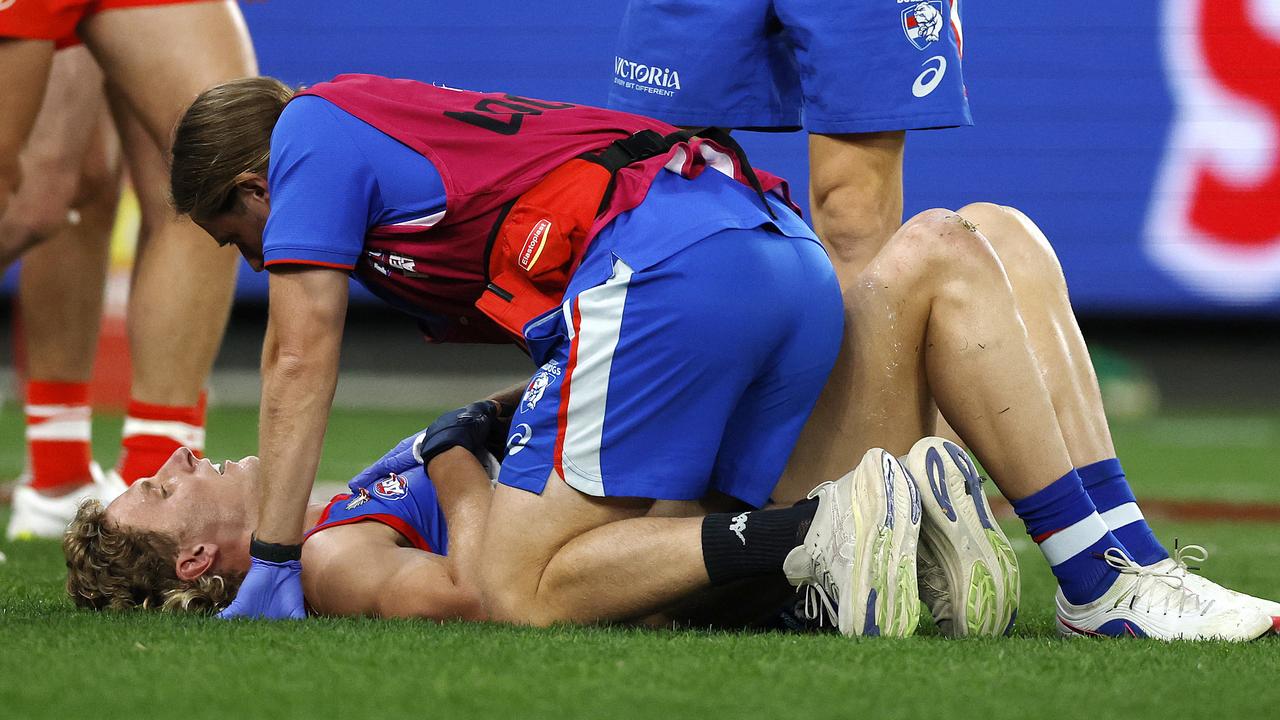
    AFL club head coach Luke Beveridge confirmed that fan-favourite key forward Aaron Naughton has escaped any long-term damage after a scary fall last Thursday, during the Bulldogs’ defeat to Sydney. Naughton was stretchered off the playing field after a dangerous aerial collision while contesting a mark, with immediate fears raised about potential neck and concussion damage. However, after thorough medical assessments, the 27-year-old was cleared of any structural neck injuries and showed no signs of post-traumatic concussion.

    Calling the outcome nothing short of miraculous, Beveridge lauded Naughton’s remarkable resilience, joking that the forward is a “hyper-malleable Indian Rubber Man” who has bounced back from the incident far faster than anyone expected. “It’s amazing that he’s OK,” Beveridge told reporters. “Once the medical team completed their initial checks and confirmed he hadn’t damaged anything in his neck, everything came up clear. He bounced out of that pretty well, and the great thing is he had no concussion concerns whatsoever. He’ll get through training this week, and I fully expect him to line up this weekend.” The coach added that he intentionally avoided watching a replay of the fall, saying “it’s one of those things you don’t really want to see, because you already know how scary it was when it happened. I was genuinely surprised he walked away completely unscathed.”

    Unfortunately, the news is far less positive for hard-nosed midfielder Tom Liberatore, who suffered a concussion in a match against Geelong two weeks ago and remains under the AFL’s strict concussion protocols. The 31-year-old will definitely miss Friday night’s matchup against Fremantle, as he continues to deal with lingering post-concussion effects. Beveridge said the club’s decision to hold Liberatore out combines both his ongoing subtle symptoms and his long-term history of concussions, with player safety the top priority.

    “He’s not ready, he’s not quite himself yet so he’s not up for selection this week,” Beveridge explained. “He’s sleeping fine, and he doesn’t really have headaches anymore, but it’s common for concentration issues to hang around after head knocks. We’re still seeing those difficulties pop up in his day-to-day, so we’re not going to rush him back until he’s totally on top of everything. Once he gets through a full main training session without issues, he’ll probably be right to play. We’re hoping that can happen over the next week or two, but for now he’ll stay on the sidelines.”

    The update also touched on two other key Bulldogs players, with captain Marcus Bontempelli expected to line up despite a persistent niggling knee injury that he has been playing through for weeks. Bontempelli showed no signs of being slowed by the complaint in last week’s match against Sydney, and Beveridge confirmed the skipper “should be right” to front up again this round.

    Star ruckman Tim English, who has been sidelined through injury for several weeks, is also edging closer to a return to the senior side. While he is not guaranteed to play this week, Beveridge said English is much closer to match fitness than he has been, and his selection will depend on how he gets through full training sessions this week. “We won’t rush him back if he’s still underdone,” the coach added, “but if he gets through all of his work, there’s a solid chance he’ll be available for selection.”