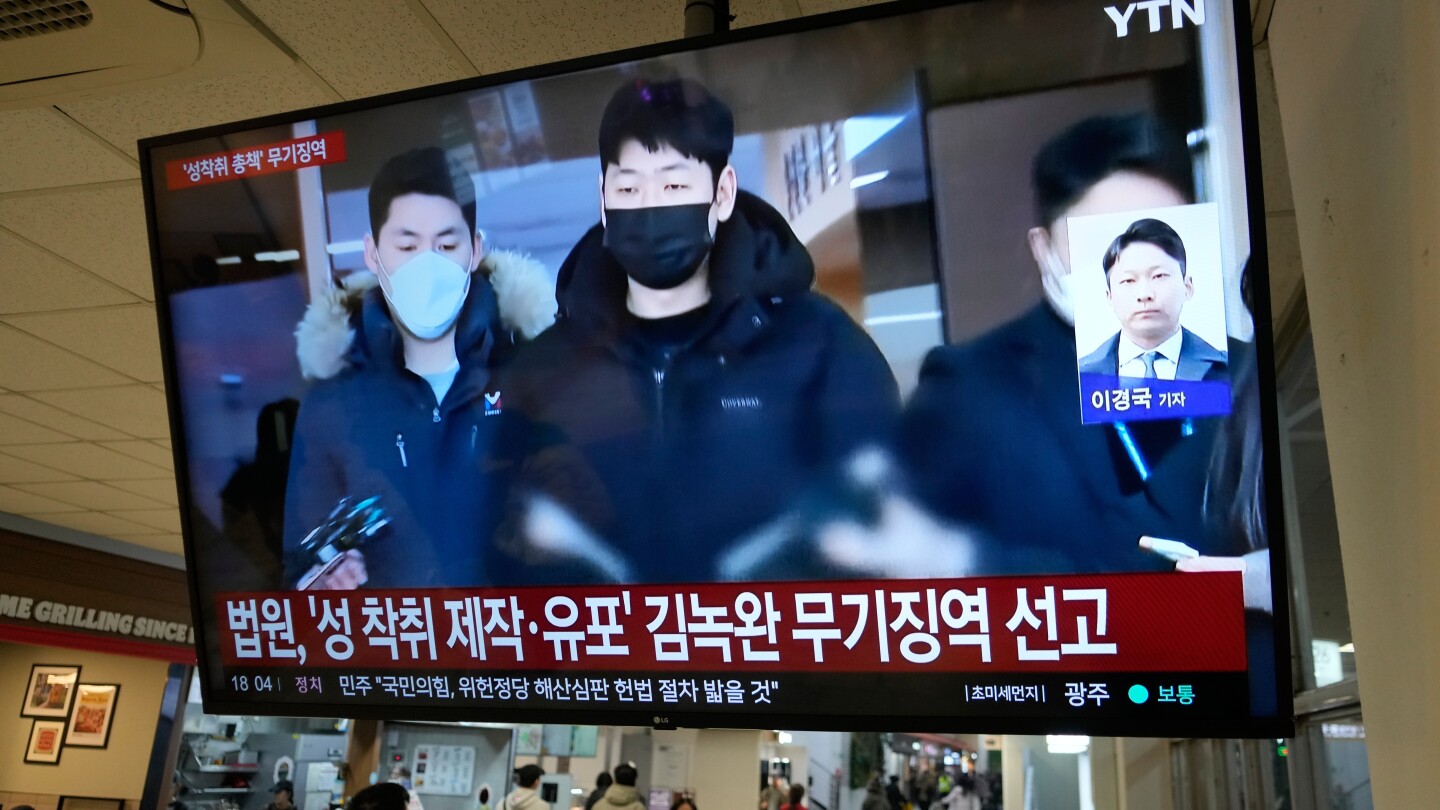
In a landmark ruling, a 33-year-old South Korean man, Kim Nok-wan, has been sentenced to life imprisonment for orchestrating a sprawling online blackmail ring that sexually exploited 261 victims, including 16 minors he raped or assaulted. The Seoul Central District Court emphasized the gravity of his crimes, stating that Kim’s actions necessitate his “permanent isolation from society.” Additionally, 10 accomplices received prison terms ranging from two to four years in what authorities have dubbed the largest cybersex crime case in the country’s history.
博客
-

Emergency services at scene of multi-vehicle crash involving bus
A significant multi-vehicle accident involving a Bus Éireann bus has been declared a major incident by the Irish transport company. The collision occurred on the R132 in Gormanston, County Meath, on Monday morning. Bus Éireann has confirmed that its Route 101 service was involved in the crash, which included multiple other vehicles. Emergency services, including Gardaí, are currently on-site managing the situation, and local traffic diversions have been implemented to facilitate the response. The incident has caused significant disruption in the area, with authorities urging the public to avoid the location while investigations and recovery operations continue. Further details regarding injuries or fatalities have not yet been disclosed, but the severity of the crash has raised concerns about road safety in the region.
-
European officials welcome progress in talks on US proposals to end Russia-Ukraine war
European officials expressed cautious optimism on Monday regarding the recent Geneva talks on a U.S.-proposed peace plan for Ukraine, acknowledging progress while emphasizing that significant challenges remain. The discussions, held in Switzerland, centered on a 28-point proposal presented by the United States, which has sparked concern in Kyiv and European capitals due to its perceived favoritism toward Russia. The plan reportedly urges Ukraine to cede territory to Moscow, reduce its military size, and abandon aspirations for NATO membership—a contentious point given NATO’s previous commitment to Ukraine’s eventual inclusion.
Finnish President Alexander Stubb described the negotiations as a ‘step forward’ but highlighted unresolved issues in a post on social media platform X. Ukrainian President Volodymyr Zelenskyy, facing mounting domestic and military pressures, welcomed the diplomatic efforts, calling them ‘very good.’ However, the path to peace remains fraught with uncertainty. Kremlin spokesperson Dmitry Peskov noted that Russian officials had yet to review the revised plan and confirmed no immediate plans for further U.S.-Russia talks, though Moscow remains open to dialogue.
German Foreign Minister Johannes Wadephul praised U.S. Secretary of State Marco Rubio’s role in the talks, particularly his efforts to address European and Ukrainian concerns. Rubio described the discussions as the most productive in ‘a very long time,’ expressing optimism about reaching a resolution. Meanwhile, Turkey continues to mediate between Russia and Ukraine, with President Recep Tayyip Erdogan set to discuss the 2022 Black Sea grain deal with Russian President Vladimir Putin. The agreement, which allowed Ukraine to export grain safely, collapsed last year after Moscow accused the West of failing to honor related commitments.
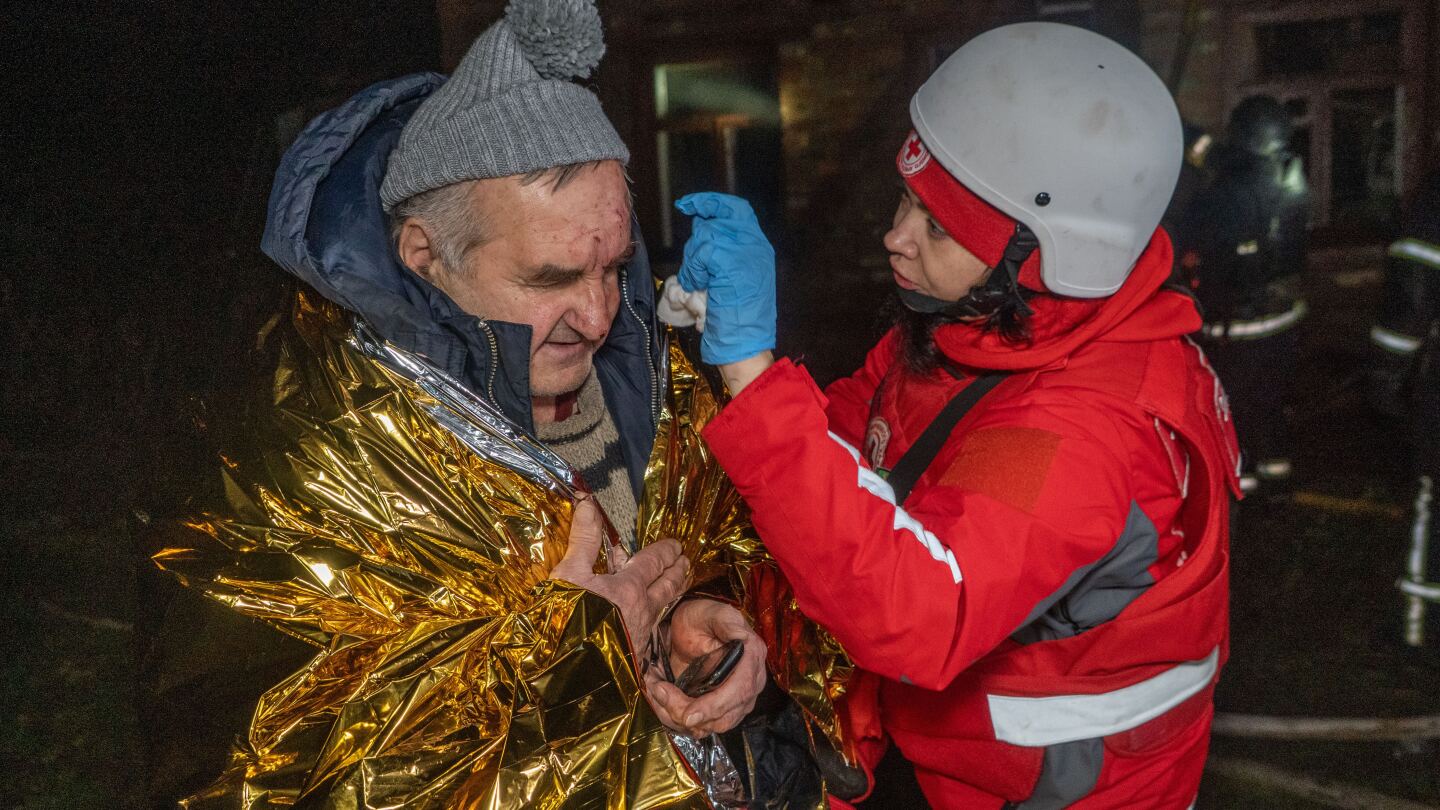
Despite diplomatic efforts, the war’s grim reality persists. Russian drone strikes on Kharkiv, Ukraine’s second-largest city, killed four people and injured 13, including children. The attacks damaged residential buildings, an educational facility, and power lines, underscoring the ongoing humanitarian crisis. Ukraine’s air force reported 162 Russian drones fired overnight, with Romania scrambling fighter jets in response to incursions near its border. The juxtaposition of diplomatic progress and relentless violence highlights the complex and fragile nature of the conflict.
-

Marathon event held for enduring partnership
The Ayutthaya Marathon 2025, held on Sunday in Thailand’s historic city of Ayutthaya, marked a significant milestone in celebrating 50 years of diplomatic relations between China and Thailand. Organized by China Daily, the RVi Group, the Ayutthaya Government, the Ayutthaya Tourist Business Association, and the Ayutthaya Running Club, the event highlighted the cultural richness of this UNESCO World Heritage Site while promoting sports tourism globally. The marathon featured four categories: a full marathon, a 21.1-kilometer half-marathon, a 10-kilometer challenge, and a 5-kilometer fun run. Participants from China, Myanmar, Singapore, the United States, and other countries ran past iconic landmarks such as Wat Phra Si Sanphet, Wat Mahathat, Wat Ratchaburana, and Wihan Phra Mongkhon Bophit, starting and finishing at the Old Ayutthaya Provincial Hall. Chuanin Wongsatitjirakan, Governor of Phra Nakhon Si Ayutthaya Province, emphasized the event’s role in boosting tourism and stimulating the local economy. Zhou Li, Deputy Editor-in-Chief of China Daily, underscored the importance of cultural collaboration in strengthening people-to-people ties, particularly on the 50th anniversary of Sino-Thai diplomatic relations. The marathon’s theme, ‘Celebrating Thailand-China Friendship Through Sports and Culture,’ reflected the enduring partnership between the two nations. Additional activities, including a tourism campaign by China’s Yunnan province, further enriched the event. Eaindray Phuu, a 15-year-old student from Myanmar, shared her excitement about participating in her first marathon and exploring Ayutthaya’s historical sites. The event’s mascots, an elephant and a giant panda, symbolized the cultural bond between Thailand and China, inspiring participants like Phuu to express interest in visiting China.
-
‘No one will support it’: Ukraine’s soldiers react to US peace plan
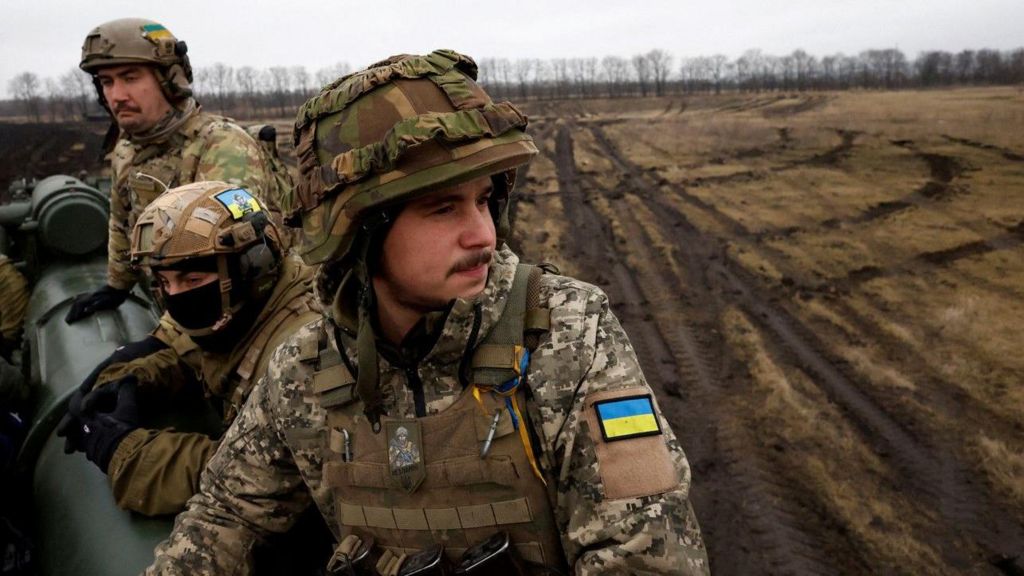
Ukraine’s frontline soldiers have expressed a range of emotions—defiance, anger, and resignation—in response to the draft US peace proposals. The BBC gathered insights from several soldiers via social media and email, revealing a deeply divided reaction to the plan, details of which were leaked last week. American and Ukrainian negotiators have since been revising the proposals, with ongoing discussions about the ‘peace framework.’
Yaroslav, a soldier in eastern Ukraine, criticized the plan as ‘sucks… no one will support it,’ while an army medic with the call sign Shtutser labeled it an ‘absolutely disgraceful draft of a peace plan, unworthy of our attention.’ However, another soldier, Snake, argued that ‘it’s time to agree at least on something.’
The US proposal comes as Russia makes significant battlefield advances, with Ukraine losing 450 sq km in the past month alone. Kyiv still controls about 15% of the Donbas region, a key war goal for Russia. The US plan suggests Ukraine cede the entire region, including areas it has defended for nearly four years. Snake commented, ‘Let them take it… We’re not fighting for the people but for the land, while losing more people.’ Andrii, an officer in Ukraine’s general staff, acknowledged the proposal as ‘painful and difficult’ but suggested Ukraine may have no alternative.
Ukraine has defended the Donbas since 2014, when Russia annexed Crimea and its proxy forces seized parts of the region. Andrii noted, ‘We may not want to give it up, but we won’t be able to hold it by military force and resources.’ Matros, a soldier since 2018, argued that relinquishing the Donbas would ‘nullify everything—all the efforts of the armed forces’ and ‘disregard the lives of fallen soldiers and civilians.’
The US draft also proposes limiting Ukraine’s armed forces to 600,000, down from the current estimate of over 800,000. Snake questioned the need for such a large peacetime army, stating, ‘What’s the point of having so many people in the army if there will be security guarantees?’ Andrii agreed, emphasizing that Ukraine’s economy would struggle to sustain such forces post-war.
However, Shtutser and Matros opposed the reduction, with Shtutser calling the army ‘the only thing separating us from defeat and enslavement.’ The plan rules out Ukraine’s NATO membership but not EU membership, offering US security guarantees if Russia attacks again. Yevhen, a drone operator, supported the UK and France’s ‘Coalition of the Willing’ to provide a ‘reassurance force’ in Ukraine.
Andrii expressed skepticism about Europe’s ability to offer security guarantees, stating, ‘Europe has turned out to be completely spineless and divided.’ Shtutser also doubted US guarantees under the current administration. The draft proposes fresh elections within 100 days post-war, a move supported by soldiers like Snake, Marin, and Andrii, who called for a ‘complete reset of government.’
Despite some support for elections, the overall sentiment among soldiers is one of exhaustion and skepticism. Andrii concluded, ‘If it stops the war, then it works for me.’
-
Japan PM’s nuclear proposal draws flak
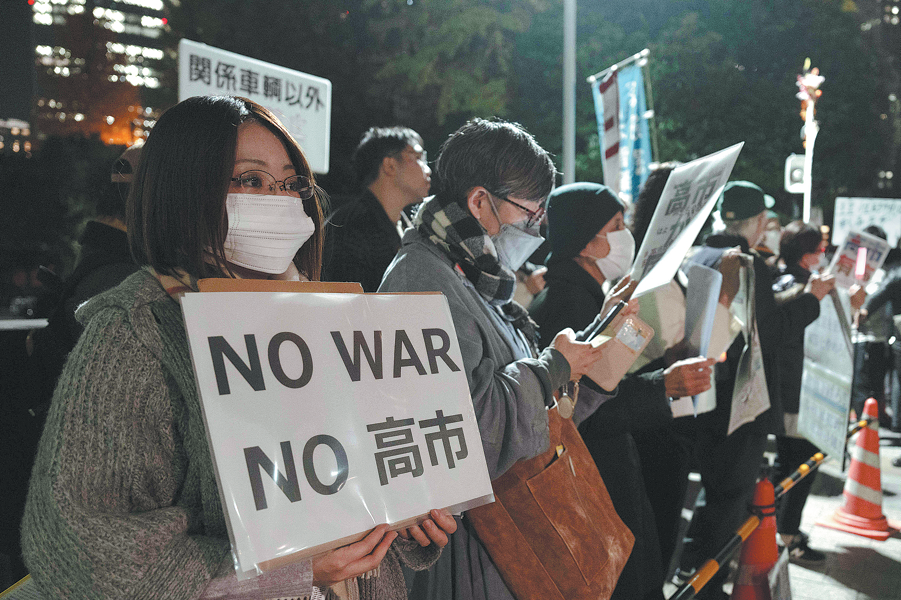
Japanese Prime Minister Sanae Takaichi’s suggestion to reconsider the nation’s Three Non-Nuclear Principles has sparked widespread criticism, with experts and citizens alike expressing concerns over the potential implications for Japan’s security and historical commitment to peace. The principles, established in 1967 by former Prime Minister Eisaku Sato, prohibit Japan from possessing, producing, or allowing the introduction of nuclear weapons on its territory. These principles have long been regarded as a cornerstone of Japan’s pacifist stance, particularly given the country’s unique history as the only nation to have suffered nuclear attacks during World War II in Hiroshima and Nagasaki.
-
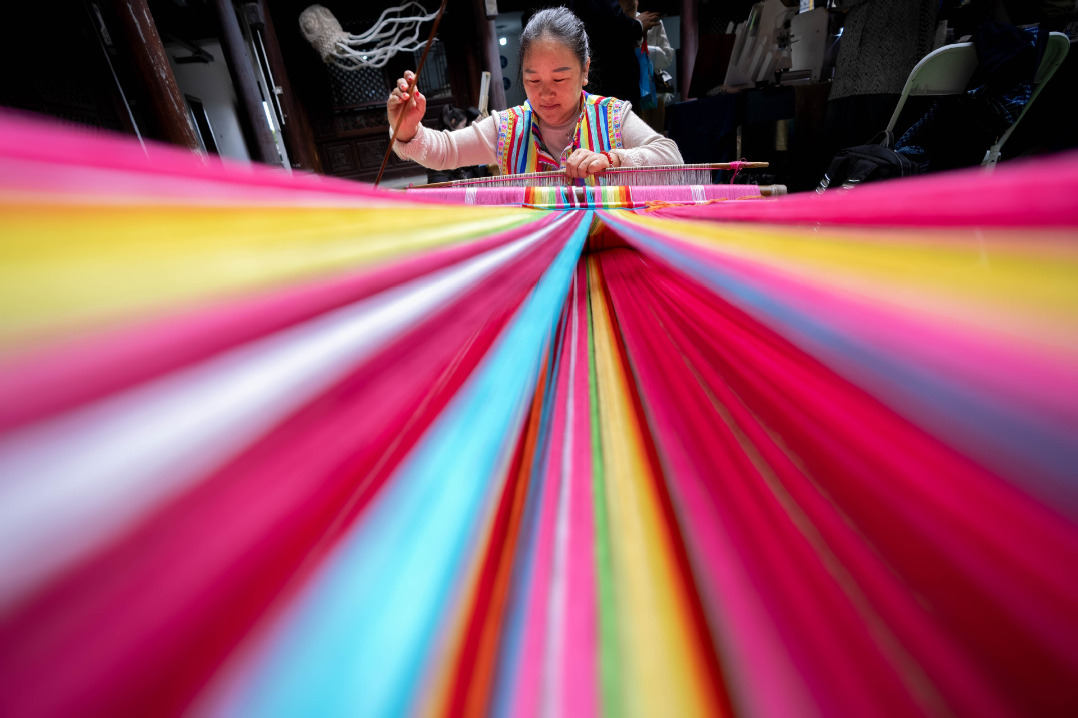
Promotion week for intangible cultural heritage brands opens in Dali, China’s Yunnan
The city of Dali in China’s Yunnan province has become the focal point of cultural preservation and innovation as it launched a week-long promotion event for intangible cultural heritage brands on November 23, 2025. The event, which officially commenced on Sunday, features over 120 heritage brands, showcasing the rich tapestry of traditional craftsmanship and cultural practices unique to the region. Among the highlights was a live demonstration by a skilled artisan crafting a Dulong blanket, a testament to the intricate techniques passed down through generations. This initiative aims to elevate the visibility of these cultural treasures, fostering both local and international appreciation. The promotion week not only celebrates the artistic legacy of Yunnan but also seeks to integrate these heritage brands into modern markets, ensuring their sustainability for future generations. The event has drawn significant attention, with participants and visitors alike marveling at the diversity and depth of the cultural heritage on display.
-
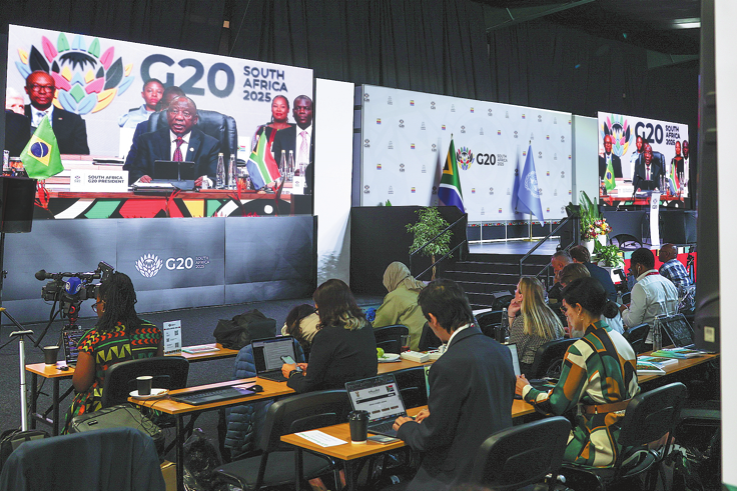
Value of multilateralism stressed
The first-ever G20 summit on African soil concluded in Johannesburg with a resounding affirmation of multilateralism, as leaders adopted a comprehensive 122-point declaration despite the absence of the United States. Hosted by South Africa, the summit underscored the development priorities of the Global South, particularly Africa, and emphasized the importance of solidarity, equality, and sustainability. South African President Cyril Ramaphosa, in his opening remarks, urged world leaders to safeguard the integrity and credibility of the G20, a premier forum for international economic cooperation. The declaration addressed critical global issues, including disaster response, energy access, and sustainable development, while highlighting the need for inclusive growth and technological advancement. The US boycott, attributed to bilateral tensions with South Africa, was criticized as an attempt to undermine the summit’s outcomes. Argentina also abstained from supporting the declaration due to escalating diplomatic tensions. Despite these challenges, the summit reinforced the G20’s role in fostering global cooperation and addressing pressing international concerns.
-
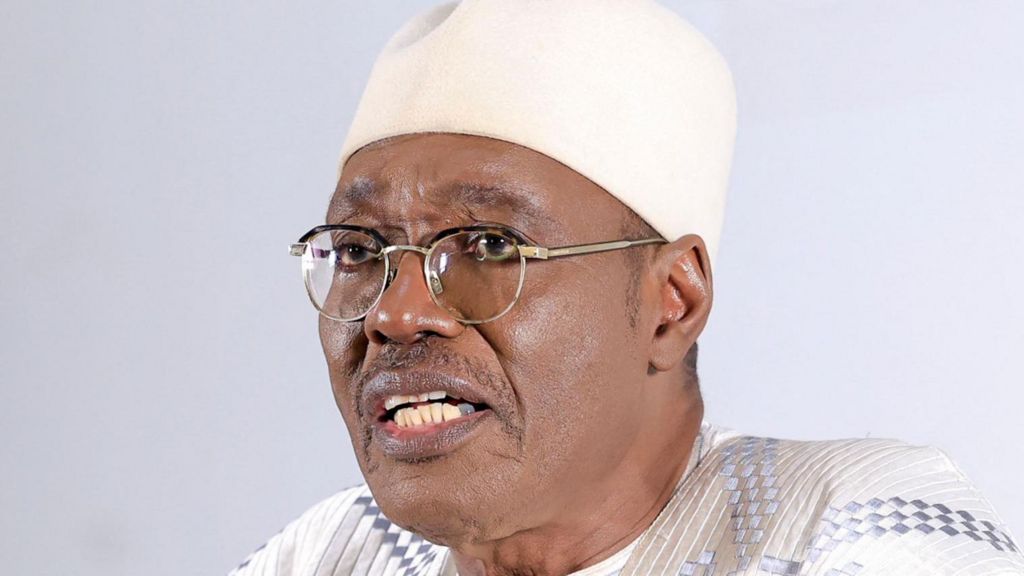
Cameroon’s opposition leader in The Gambia after fleeing for his safety
Cameroonian opposition leader Issa Tchiroma Bakary, who has contested the results of the recent presidential election, has sought asylum in The Gambia, according to an official statement from The Gambian government. Tchiroma Bakary, who claims to be the rightful winner of the October 12 election, alleges that the vote was manipulated to secure an eighth term for 92-year-old President Paul Biya. The Gambian Ministry of Information confirmed on Sunday that Tchiroma Bakary arrived on November 7 and has been granted temporary stay on humanitarian grounds. The Cameroonian government had previously threatened to prosecute him for allegedly inciting violent post-election protests, a charge he denies, instead accusing security forces of harshly suppressing demonstrators. Official reports state that 16 people died in the unrest, though independent organizations suggest a higher toll. Tchiroma Bakary has vowed to continue resisting Biya’s government until his election victory is acknowledged. Biya, who has ruled Cameroon for 43 years, was declared the winner with 53.7% of the vote, while Tchiroma Bakary secured 35.2%. His resistance strategies have included organizing street protests and ‘ghost town’ operations to disrupt daily life in cities. The Gambian government emphasized that Tchiroma Bakary’s stay is temporary and rooted in African solidarity, aimed at ensuring his safety while diplomatic efforts address Cameroon’s post-election tensions. However, The Gambia clarified that it would not permit its territory to be used for subversive activities against any state. The announcement of Tchiroma Bakary’s arrival sparked criticism from The Gambia’s main opposition party, the United Democratic Party (UDP), which questioned the government’s transparency and accountability. Despite this, the UDP expressed pride in offering Tchiroma Bakary a safe haven, acknowledging the challenges faced by dissenters under authoritarian regimes.
-
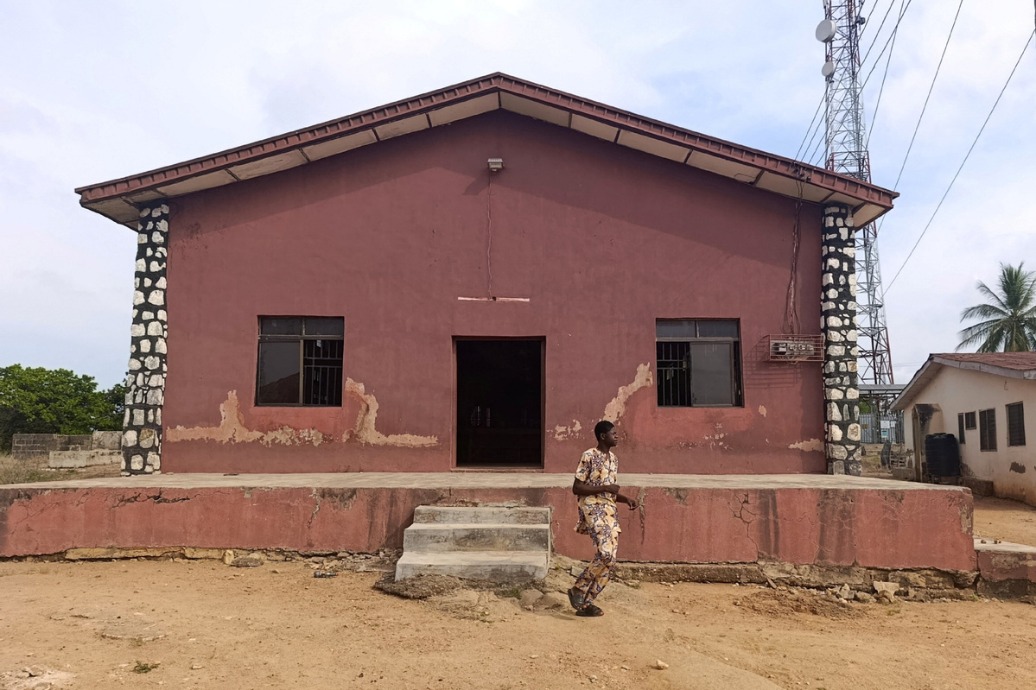
More than 300 students abducted from Nigeria school
In one of the largest mass kidnappings in Nigeria, suspected terrorists abducted more than 300 students and teachers from St. Mary’s School in Niger state. The Christian Association of Nigeria (CAN) reported the incident on Saturday, initially estimating 227 victims but later revising the figure to 315 after a verification exercise. This includes 303 students and 12 teachers, with 88 students captured while attempting to escape. By Sunday, 50 students had managed to escape and reunite with their families. Alhaji Abubakar Usman, secretary to the Niger state government, confirmed the attack, noting that it occurred despite prior intelligence warnings of heightened security threats. The government had ordered the suspension of construction activities and the closure of boarding schools in the affected area. However, St. Mary’s School had reopened without official clearance, putting students and staff at risk. Local security agencies have launched a full-scale investigation and search-and-rescue operation, deploying tactical units and military personnel to comb nearby forests for the abducted individuals.