博客

  • Netanyahu expects Gaza truce to move to second phase ‘shortly’

    Netanyahu expects Gaza truce to move to second phase ‘shortly’

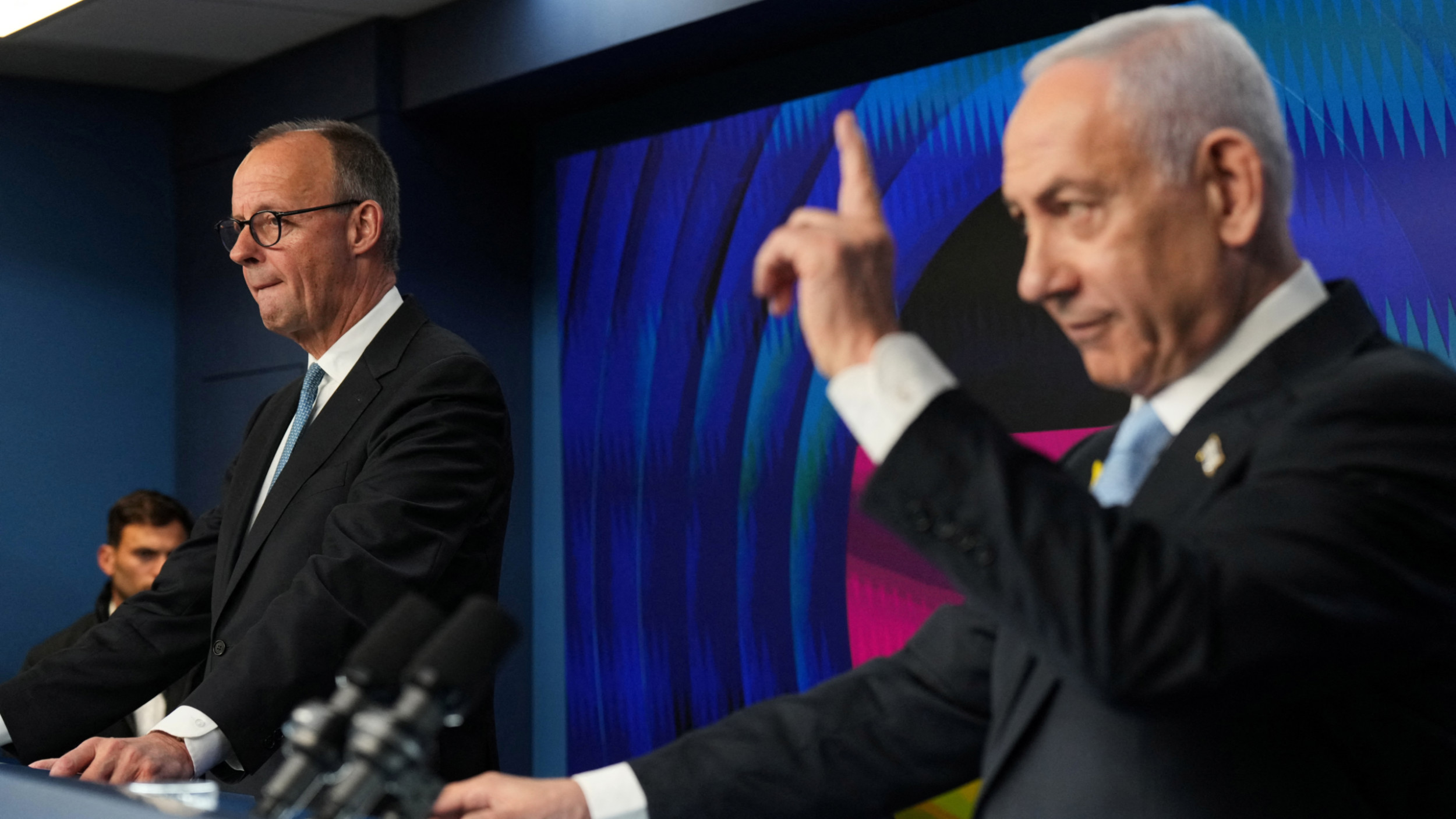
    Israeli Prime Minister Benjamin Netanyahu has indicated that the implementation of the second phase of a US-backed proposal to conclude the Gaza conflict is nearing, though critical obstacles remain unresolved. Speaking at a joint press conference in Jerusalem with German Chancellor Friedrich Merz, Netanyahu emphasized that substantial discussions with US President Donald Trump scheduled for the end of this month would be pivotal for advancing the plan’s next stage.

    The Prime Minister characterized the upcoming phase as inherently more challenging, acknowledging that while a tenuous ceasefire has reduced active combat since October 10th, persistent hostilities continue. Israeli military operations have reportedly resulted in over 373 fatalities and approximately 900 injuries due to hundreds of documented ceasefire violations.

    Central to Netanyahu’s conditions for progression is Hamas’s compliance with both the ceasefire and its stipulated commitments under the agreement, which encompass full disarmament and the demilitarization of the Gaza Strip. The initial phase, which saw Israel maintain control over 53% of Gaza territory, concluded with the exchange of 47 captives—both living and deceased—though one Israeli police officer’s remains have not been recovered.

    The envisioned second phase anticipates further Israeli military withdrawal concurrent with the establishment of a transitional governing authority in Gaza, the deployment of an international security force, and the initiation of reconstruction efforts. While a multinational coordination center has been set up in Israel, the absence of binding deadlines has resulted in stalled implementation, according to officials.

    Netanyahu also revealed that his forthcoming dialogue with President Trump would explore broader regional peace opportunities, specifically referencing US-led initiatives to normalize relations between Israel and Arab and Muslim nations. He articulated a dual-path approach: pursuing comprehensive peace with Arab states while working toward a pragmatic arrangement with Palestinian neighbors, simultaneously reaffirming Israel’s intention to retain security control over the occupied West Bank.

    The Prime Minister addressed the politically sensitive matter of West Bank annexation, confirming it remains under active consideration. This follows the Israeli parliament’s recent preliminary approval of legislation seeking to extend sovereignty to two West Bank settlements.

    When questioned about potential retirement from politics should he receive a pardon in his ongoing corruption trial, Netanyahu offered a definitive denial. Last month, his legal team formally sought presidential clemency, arguing that the judicial proceedings impair his governance capabilities and that a pardon would serve the national interest.
  • UAE-India IndiGo flights returning to normal after weekend disruptions

    UAE-India IndiGo flights returning to normal after weekend disruptions

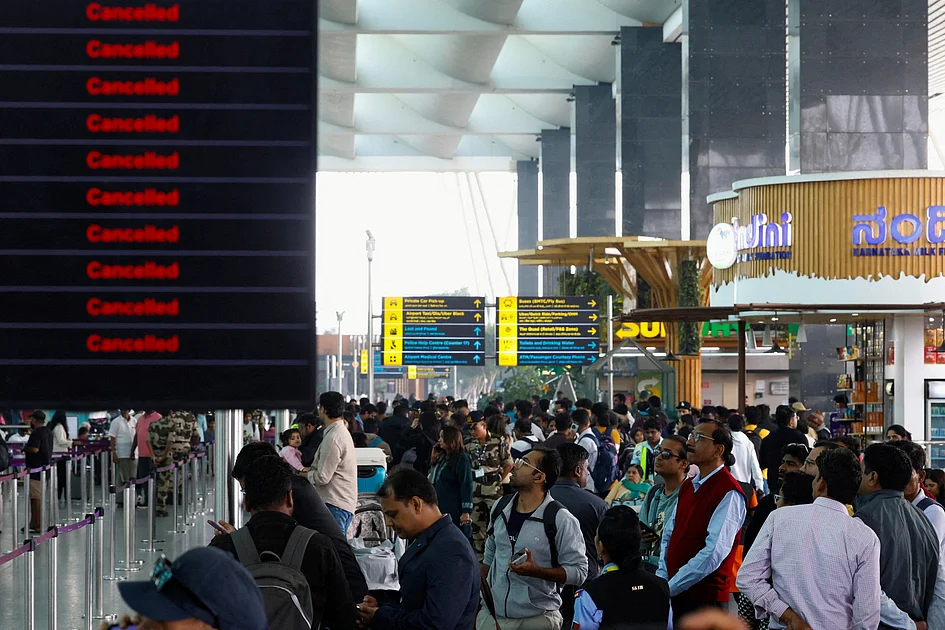
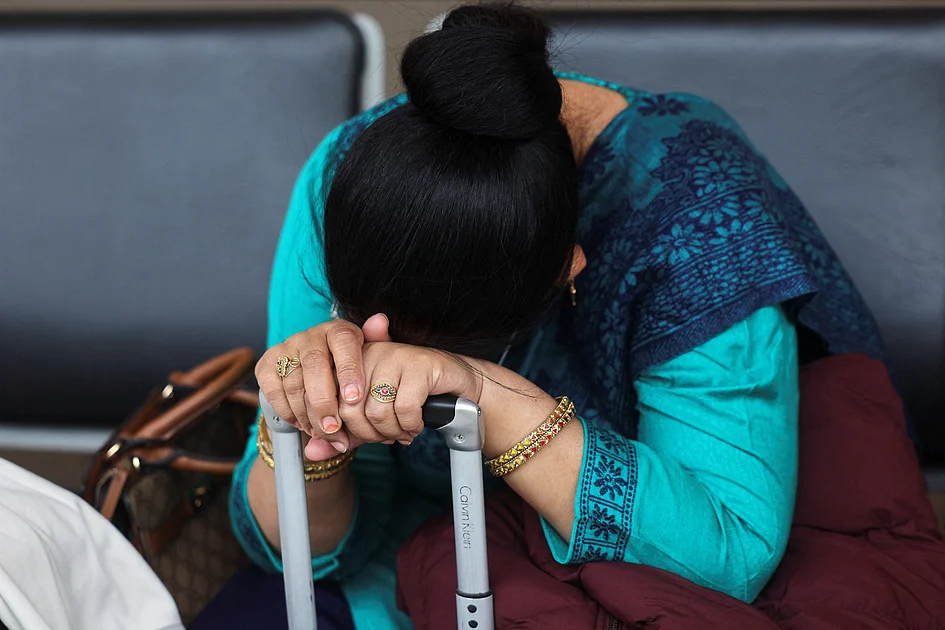
    IndiGo’s flight operations between the UAE and India showed significant signs of recovery on Sunday following a weekend of severe disruptions that had left passengers facing delays exceeding 10 hours. The airline’s performance improved markedly with many flights departing and arriving on schedule, while others experienced manageable delays ranging from 15 to 90 minutes.

    Key routes demonstrated this stabilization: the Ras Al Khaimah to Hyderabad flight departed precisely at its scheduled 2:30 AM time, while the Sharjah-Lucknow service took off as planned at 2:00 AM. The Dubai-Chennai route also operated according to its timetable. Minor delays affected some services, including the Dubai-Mumbai flight (15 minutes late) and the Delhi-Dubai route (17 minutes behind schedule). However, one notable exception was the Dubai-Kozhikode flight, which departed nearly ten hours late at 12:44 PM instead of its original 3:20 AM scheduled time.

    Domestically within India, the situation showed progressive improvement. On the sixth day of operational challenges, IndiGo canceled 500 domestic flights—a substantial reduction from Saturday’s 700 cancellations and Friday’s 1,000 grounded flights. The airline announced it was operating approximately 1,650 flights on Sunday, up from 1,500 the previous day. Most impressively, on-time performance surged from 30% to 75% within a single day.

    The crisis originated when India’s Directorate General of Civil Aviation implemented new Flight Duty Time Limitations (FDTL) on Tuesday, mandating 48 hours of weekly rest for pilots and limiting night landings to two per week instead of the previous six. These regulations, initially introduced in 2024 to address pilot fatigue concerns, created immediate staffing challenges.

    In response to the escalating situation, India’s Ministry of Civil Aviation suspended the new FDTL directives on Friday while emphasizing that safety standards would remain uncompromised. The government additionally imposed airfare caps to protect consumers from price gouging during the disruption period.

    The widespread cancellations had generated significant public outrage throughout the week, with numerous passengers missing critical events including weddings, funerals, and professional opportunities. One entrepreneur publicly shared her distress after relatives couldn’t attend her father’s funeral due to the cancellations.

    Accountability measures are now underway, with a committee formed to investigate the root causes of the disruptions. A parliamentary panel is scheduled to question IndiGo’s senior management about the operational crisis. The airline has committed to full waivers for cancellation and rescheduling requests for bookings through December 15 as it processes approximately Rs6,100 million in passenger refunds.

  • Women protest gender-based violence across Brazil following shocking cases

    Women protest gender-based violence across Brazil following shocking cases

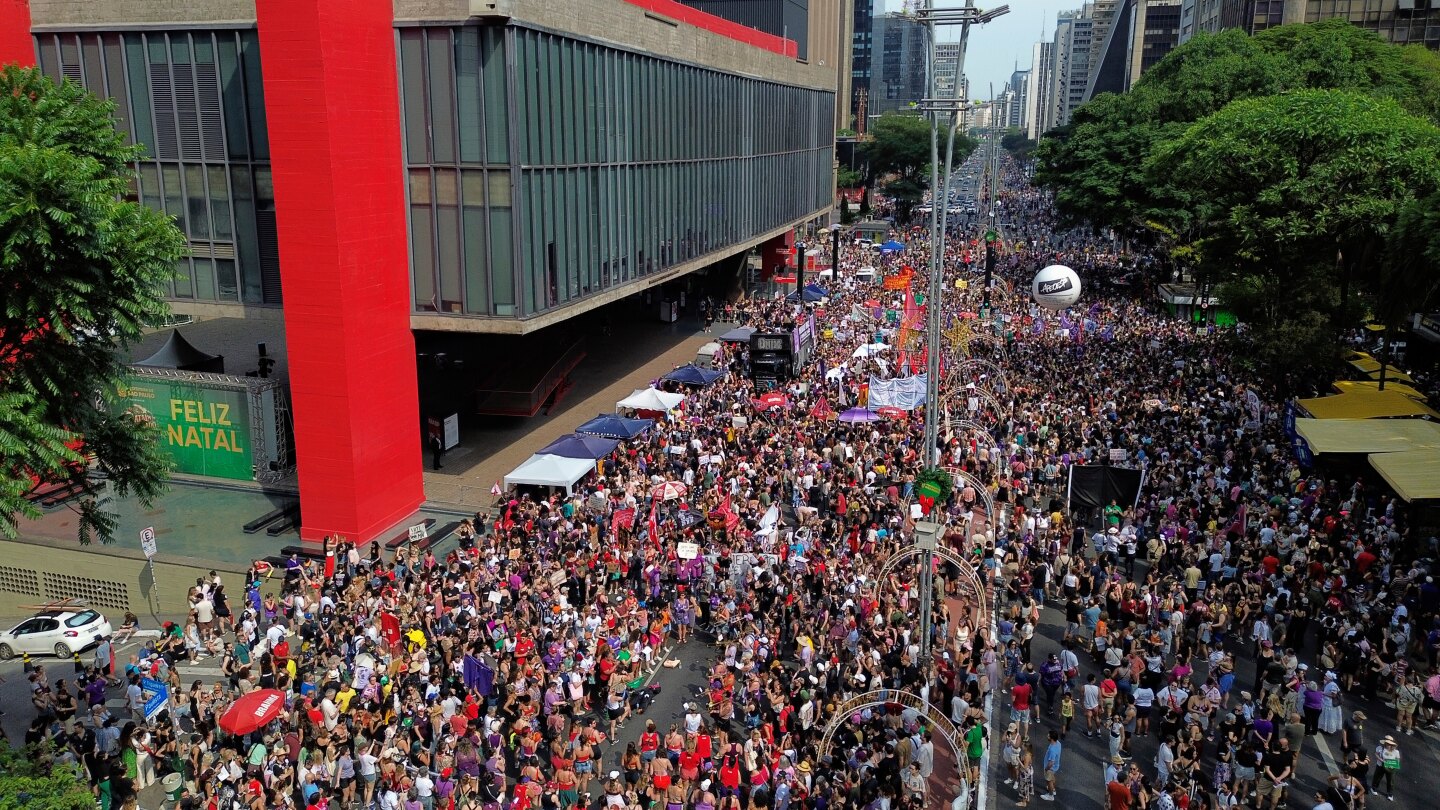
    RIO DE JANEIRO — A massive wave of civil unrest swept across Brazil on Sunday as tens of thousands of demonstrators flooded urban centers to denounce an escalating epidemic of gender-based violence. The nationwide mobilization, marked by unprecedented participation, represents a watershed moment in Brazil’s feminist movement following a series of brutal femicides that have shocked the nation.

    In a powerful display of solidarity, women across generations alongside male allies occupied the iconic boardwalks of Copacabana and São Paulo’s Paulista Avenue, demanding immediate legislative action against femicide, sexual violence, and systemic misogyny. The protests gained momentum from recent high-profile cases that have exposed the alarming normalization of gender-based brutality.

    Among the victims remembered was Alline de Souza Pedrotti’s sister, an educational administrator murdered on November 28th by a male colleague who reportedly resented female authority. “I’m devastated but fighting through the pain,” Pedrotti stated from the Copacabana demonstration. “I demand legal reforms and preventive protocols to stop these tragedies.”

    The movement gained further urgency from two additional atrocities that captured national attention. Taynara Souza Santos, 31, suffered traumatic amputations after being deliberately run over and dragged nearly a kilometer by her former partner in São Paulo. English instructor Catarina Kasten was sexually assaulted and strangled near a Florianopolis beach trail on November 21st while en route to a swimming lesson.

    These cases exemplify a disturbing national trend documented by the Brazilian Forum on Public Safety. Their 2025 report reveals over one-third of Brazilian women endured gender violence within the past year—the highest rate since monitoring began in 2017. Last year recorded 1,492 femicides, the most since the 2015 legislation that recognized femicide as a distinct crime category.

    Juliana Martins, institutional relations manager at the Brazilian Forum, noted the dual crisis of increasing frequency and intensifying brutality: “Social transformations toward gender equality have triggered violent backlash aimed at reaffirming female subordination.”

    Protest symbolism included black crosses representing victims and green scarves symbolizing reproductive rights. Evelyn Lucy da Luz, a 44-year-old educator who survived an attempted femicide decade ago, declared: “I almost died, but I didn’t—and now I fight.”

    Historical context emerged from 79-year-old Lizete de Paula, who connected rising violence to the erosion of protective policies during former President Bolsonaro’s administration. “Women are entering new spaces, and macho men can’t tolerate this,” she observed.

    The demonstrations notably included male participants like João Pedro Cordão, father of three daughters, who emphasized: “Our duty is to challenge misogyny daily—not just at protests—if we hope to reduce this violence.”

  • Death of Venezuelan opposition figure in custody ‘vile’, US says

    Death of Venezuelan opposition figure in custody ‘vile’, US says

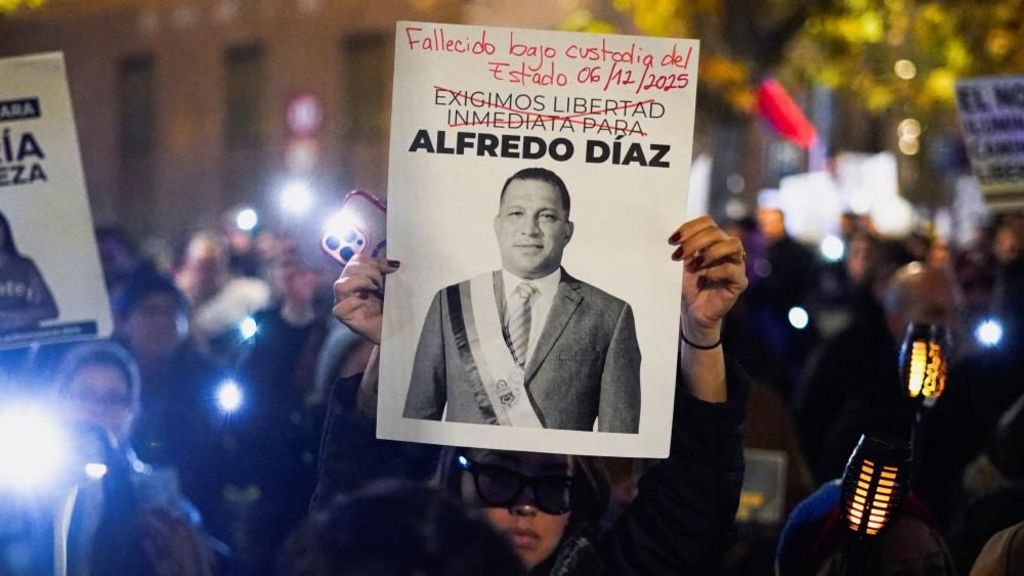
    The United States has issued a sharp condemnation of the Venezuelan government following the death of opposition figure Alfredo Díaz in state custody, characterizing the incident as emblematic of the “vile nature” of President Nicolás Maduro’s regime.

    Díaz, a 56-year-old former governor of Nueva Esparta state, died under contested circumstances while detained at El Helicoide prison in Caracas. While Venezuelan authorities attribute his death to apparent heart attack complications, human rights organizations and opposition groups maintain he perished in his prison cell after enduring more than a year of arbitrary detention under harsh conditions.

    The deceased politician was initially apprehended in 2024 alongside numerous opposition figures who challenged the legitimacy of that year’s presidential election. International observers widely dismissed the electoral process as neither free nor fair, despite Maduro’s government-controlled election council declaring victory. Díaz faced charges of “incitement to hatred” and “terrorism” for questioning the official election results.

    Alfredo Romero, president of Venezuelan human rights organization Foro Penal, revealed Díaz had been held in solitary confinement with severely restricted visitation rights—only one meeting with his daughter throughout his entire incarceration. This case marks the 17th death among political prisoners since 2014 according to human rights documentation.

    Prominent opposition leader and Nobel Peace Prize laureate María Corina Machado, currently in hiding to avoid arrest, characterized Díaz’s death as part of “an alarming and painful chain of deaths of political prisoners” within Venezuela’s post-election repression context. Her planned absence from the Nobel ceremony in Oslo underscores the ongoing political persecution.

    This incident exacerbates already heightened tensions between the Trump administration and Maduro’s government. The United States has intensified its military presence in the region while conducting lethal strikes against vessels allegedly involved in drug trafficking. President Trump has personally accused Maduro of leading regional drug cartels and threatened potential military intervention “by land.”

    Venezuela has responded with military mobilization, swearing in over 5,600 new soldiers simultaneously in what defense officials termed a response to American “threats.” Simultaneously, Maduro’s government continues diplomatic outreach, announcing resumed Turkish Airlines flights following coordination with President Recep Tayyip Erdogan—a development occurring ironically on the same day as Díaz’s death and the mass military induction.

  • Little sleep, no pay: India’s poll workers flag harsh conditions amid uproar over deaths

    Little sleep, no pay: India’s poll workers flag harsh conditions amid uproar over deaths

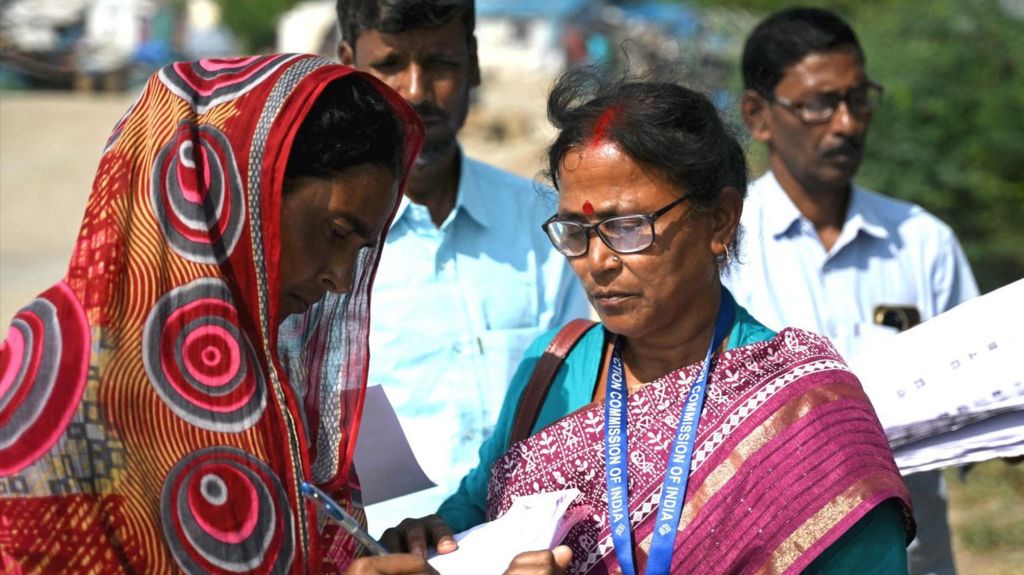
    India’s ambitious electoral roll revision drive has triggered a human crisis among the frontline workers implementing it, with multiple fatalities raising serious concerns about working conditions. The Special Intensive Revision (SIR) program, designed to update records for over 500 million voters across 12 states and union territories, has placed immense pressure on Booth-Level Officers (BLOs) who form the backbone of this massive democratic exercise.

    Typically government teachers, junior staff, and contract workers, these BLOs have reported working 14-15 hour days with minimal rest and inadequate compensation. The human cost has become tragically apparent through several deaths linked to the overwhelming workload. Sarvesh Kumar, a school teacher in Uttar Pradesh, was found dead after recording a video describing his inability to sleep for 20 days due to election work pressures. In Gujarat, primary school teacher Arvindbhai Vadher allegedly died by suicide, with his family attributing the tragedy to the ‘torturous nature of BLO work.’

    The Election Commission has extended the deadline by one week and doubled compensation for BLOs to 12,000 rupees ($66), while the Supreme Court has directed states to deploy additional staff. However, workers report persistent issues including malfunctioning government apps, unpaid wages, and threats of legal action for taking leave. Many are spending personal funds and device data to complete their duties while their regular jobs and students suffer from their extended absence.

    Despite these interventions, the fundamental tension between India’s democratic processes and the welfare of those implementing them remains unresolved, highlighting systemic challenges in managing large-scale government initiatives.

  • Canadian airline to start cancelling flights ahead of planned strike

    Canadian airline to start cancelling flights ahead of planned strike

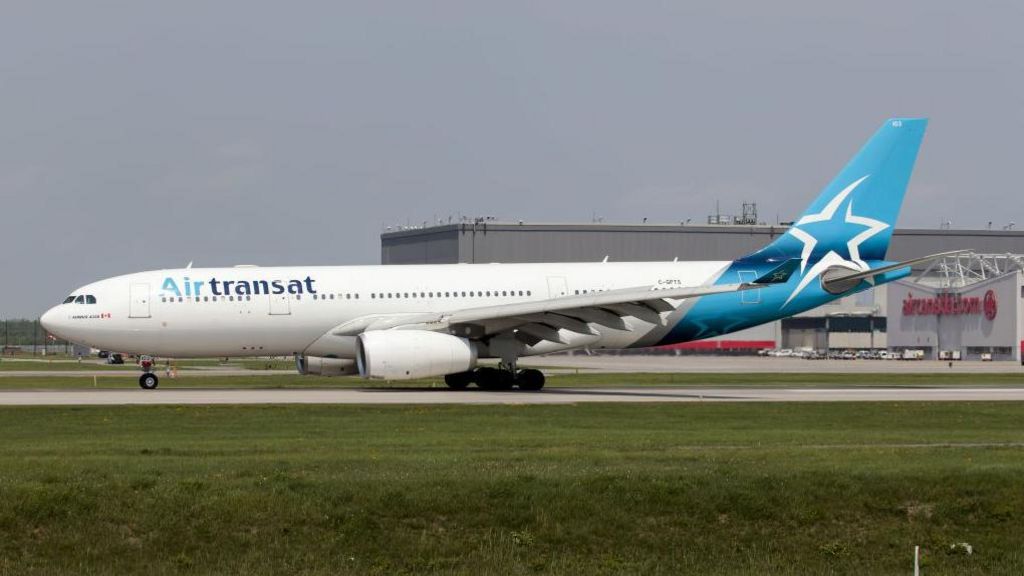
    Canadian carrier Air Transat has initiated a phased suspension of its flight operations in anticipation of an imminent pilot strike scheduled to commence Wednesday. This preventive measure follows a 72-hour strike notice issued Sunday by the Air Line Pilots Association (ALPA), representing approximately 750 pilots employed by the airline.

    The conflict stems from prolonged contract negotiations that have persisted for nearly a year, with pilots seeking substantial improvements to their 2015 agreement. Key demands include industry-standard compensation packages, enhanced benefits, revised work regulations, and strengthened job security provisions. The union reported an overwhelming 99% authorization vote among its members supporting potential strike action.

    Air Transat management has characterized the strike notice as premature, citing recent progress in negotiations and what they describe as generous offers presented to pilots. Julie Lamontagne, the airline’s human resources officer, expressed disappointment with the union’s decision, accusing them of demonstrating indifference toward the company through what she termed a reckless authorization that misrepresents the current state of discussions.

    In contrast, union representative Captain Bradley Small asserted that management had left pilots with no alternative after months of unproductive bargaining. He emphasized that no pilot desires to strike but maintained that airline executives would bear responsibility for any resulting flight cancellations and passenger disruptions should an agreement remain elusive.

    This labor dispute represents the second significant confrontation between Air Transat and its workforce in recent years, following a narrowly averted strike by flight dispatchers in 2024 under similar circumstances. The airline’s proactive cancellation strategy aims to prevent crews, aircraft, and passengers from becoming stranded internationally should the strike proceed as threatened.

  • IndiGo processes Rs6,100 million in refunds amid flight cancellations

    IndiGo processes Rs6,100 million in refunds amid flight cancellations

    India’s aviation sector is implementing aggressive recovery measures following massive flight disruptions from budget carrier IndiGo. The Ministry of Civil Aviation confirmed the airline has processed refunds totaling ₹6,100 million (approximately $73 million) while instituting critical consumer protection policies.

    Regulatory intervention has been substantial, with authorities mandating that passengers rescheduling affected flights cannot be subjected to additional charges. In response to widespread reports of predatory pricing by competing carriers capitalizing on the disruption, the ministry implemented emergency fare caps to prevent price gouging on alternate routes.

    Operational recovery shows significant progress, with IndiGo’s flight operations dramatically improving from approximately 700 flights on December 5 to over 1,500 flights by December 6. The airline has established dedicated support cells to facilitate rebooking and refund processing for affected passengers.

    Logistical reconciliation efforts include the delivery of over 3,000 pieces of luggage to passengers, with authorities committing to return all misplaced baggage within 48 hours from December 7. A centralized control room remains operational to monitor airport conditions and provide passenger assistance.

    ‘The aviation network is moving swiftly toward full normalcy, and all corrective measures will remain in place until operations stabilize entirely,’ the ministry stated, emphasizing ongoing monitoring until operations completely stabilize.

  • McLaren’s Lando Norris wins 2025 Formula 1 title

    McLaren’s Lando Norris wins 2025 Formula 1 title

    In a spectacular season finale at the Yas Marina Circuit, McLaren’s Lando Norris secured his maiden Formula 1 World Championship on December 7, 2025. The British driver delivered a masterful performance under the Abu Dhabi lights, culminating a remarkable season that saw him overcome fierce competition from reigning champions and established rivals.

    The championship-deciding race unfolded with intense strategic battles, with Norris maintaining composure during critical tire changes and safety car periods. His victory marks McLaren’s first drivers’ championship since Lewis Hamilton’s 2008 triumph, signaling a monumental resurgence for the historic racing team.

    Norris’s journey to the championship included nine Grand Prix victories and consistent podium finishes throughout the season. The 25-year-old driver’s success represents a shifting landscape in Formula 1, breaking the dominance of recent seasons and establishing himself as the sport’s newest elite competitor.

    The emotional victory celebration saw Norris dedicating his achievement to the McLaren team and British motorsport community. This championship conclusion sets the stage for an intriguing 2026 season as teams prepare for new technical regulations and increased competitive parity across the grid.

  • Etihad’s fly-past paints sky in UAE colours, marks start of F1 finale at Abu Dhabi Grand Prix

    Etihad’s fly-past paints sky in UAE colours, marks start of F1 finale at Abu Dhabi Grand Prix

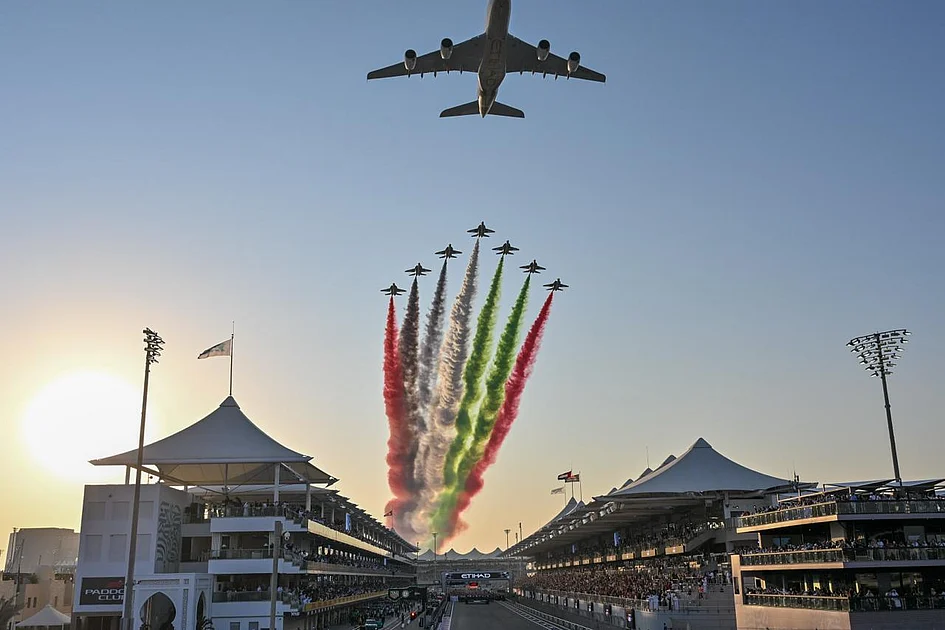
    In a breathtaking aerial spectacle that captivated both live spectators and global television audiences, Etihad Airways marked the commencement of the Formula 1 season finale with an extraordinary fly-past over Yas Marina Circuit. The UAE’s national carrier deployed its iconic A380 Superjumbo alongside the precision-driven Al Fursan Aerobatic Team, transforming the Abu Dhabi skies into a dynamic canvas of national pride.

    The synchronized aerial performance, executed at low altitude, vividly painted the atmosphere with the distinctive red, green, black, and white hues of the UAE flag. This visually stunning display occurred as millions of Formula 1 enthusiasts worldwide tuned in for the championship-deciding Abu Dhabi Grand Prix, creating a memorable fusion of aviation excellence and motorsport prestige.

    Arik De, Chief Revenue and Commercial Officer at Etihad Airways, emphasized the significance of this tradition: ‘The Abu Dhabi Grand Prix represents one of the most exhilarating periods in the capital’s calendar, drawing thousands of international visitors. This fly-past tradition originated with the inaugural Abu Dhabi race in 2009, and we remain profoundly honored to showcase our livery above this spectacular circuit alongside the exceptionally talented Al Fursan demonstration team.’

    The complex aerial maneuver required meticulous preparation and expertise, with Etihad’s most senior pilots—Captain Adel Al Zubaidi, Captain Azizan Bin Othman, Captain Harris Kynigos, and Captain Abdulla Alafeefi—conducting rigorous training to ensure perfect execution of the low-level flight operation.

    The event further solidified Yas Island’s status as a premier global destination for world-class entertainment and leisure, demonstrating Abu Dhabi’s continued capacity to host internationally significant sporting events with unmatched spectacle and precision.

  • Macron’s China visit strengthens ties, boosts cooperation on global issues

    Macron’s China visit strengthens ties, boosts cooperation on global issues

    French President Emmanuel Macron concluded his fourth official visit to China on Friday evening, departing from Chengdu where he engaged in significant diplomatic exchanges with Chinese leadership. The visit culminated in a series of joint declarations addressing critical global challenges and reinforcing the strategic partnership between the two nations.

    In Dujiangyan, President Xi Jinping and Macron held cordial discussions focusing on mutual cooperation frameworks. The French leader’s engagement at Sichuan University highlighted the importance of international collaboration in addressing contemporary global issues. Their Beijing talks earlier produced consensus on enhancing political trust, expanding practical cooperation, and advancing global governance reforms.

    The bilateral meetings yielded five joint statements covering strengthened global governance, collaborative response to climate and environmental challenges, continued nuclear energy cooperation, agricultural exchanges, and positions on Ukraine and Palestine. International experts recognize this diplomatic achievement as a substantial advancement in China-France relations, demonstrating both nations’ dedication to multilateralism and a multipolar world order.

    Analysts worldwide emphasize the visit’s significance in promoting stability amid current geopolitical tensions. Waref Kumayha of Lebanon’s Silk Road Institute for Studies and Research noted the partnership demonstrates a balanced, responsible approach to international relations. French trade credit insurance executive Chris Murphy highlighted how the reinforced dialogue tradition provides crucial certainty during global uncertainties.

    Ivorian journalist Mohamadi Compaore observed that the high-level exchanges illustrate how strategic communication can overcome differences and build mutual trust, characterizing the Sino-French partnership as a stabilizing force in today’s volatile international landscape. Indonesian researcher Veronika Saraswati emphasized that cooperation between these influential nations injects much-needed predictability into global affairs.

    The visit also carries substantial implications for international systems reform. French academic Herve Azoulay noted the convergence reflects a shared vision for more balanced globalization, not opposing other nations but stabilizing the international system through innovation and mutual respect. Paris councillor Daniel Tran highlighted both countries’ unique position to shape global outcomes through their UN Security Council roles.

    Economic dimensions featured prominently, with business leaders noting the visit boosts commercial confidence through signed contracts and promoted industrial projects. Coface regional economist Junyu Tan emphasized how economic complementarity creates meaningful opportunities, with French companies accessing China’s vast market while Chinese firms gain European technological expertise.

    French sinologist Sonia Bressler captured the essential spirit of the partnership: ‘When two countries complement one another, they do not merely add, they amplify.’ This visit demonstrates how major nations can fulfill responsibilities that serve humanity’s broader interests through cooperative engagement.