博客

  • Spike in Israeli assaults against key Palestinian detainees, prisoners’ office says

    Spike in Israeli assaults against key Palestinian detainees, prisoners’ office says

    Israeli authorities are facing allegations of implementing a systematic campaign of physical and psychological abuse against prominent Palestinian detainees, according to reports from prisoner advocacy organizations. The Palestinian Prisoners’ Media Office has characterized these measures as a ‘dangerous escalation’ in treatment of incarcerated Palestinian leaders.

    Multiple sources confirm that several high-profile detainees, including Hamas officials Abdullah Barghouti and Bilal Barghouti along with Popular Front for the Liberation of Palestine (PFLP) leader Ahed Abu Ghalma, were subjected to severe physical assaults. Witness accounts describe detainees being forcibly removed to prison yards where they were beaten with batons until bleeding.

    This coordinated crackdown appears designed to break the will of Palestinian leadership figures and use them as examples to intimidate other prisoners. The strategy coincides with intensified psychological warfare operations against detainee populations.

    Among those targeted is prominent political figure Marwan Barghouti, who has endured at least seven separate brutal beatings in recent months resulting in multiple broken ribs. His family members have reportedly received anonymous threats and security pressures apparently intended to undermine morale.

    Prison conditions have deteriorated to ‘catastrophic and unprecedented’ levels according to documentation from multiple human rights organizations. Detainees face daily beatings, systematic torture practices, deliberate starvation protocols, exposure to extreme cold without adequate clothing or blankets, widespread disease outbreaks, and deliberate medical neglect.

    The Palestinian Commission of Detainees’ Affairs characterizes the situation as a ‘deadly level of systematic repression and abuse.’ Overcrowding has reached critical levels while medical treatments are intentionally obstructed, creating particular danger for elderly and sick detainees whose health conditions are rapidly deteriorating.

    Since October 2023, documented cases of systemic abuse and torture in Israeli detention facilities have reached record levels. At least 100 prisoner deaths have been recorded under these conditions during this period.

    Current estimates indicate over 9,300 Palestinian detainees are held in Israeli prisons, including 51 women and 350 children, though actual numbers are likely higher due to Israel’s withholding of information regarding hundreds seized from Gaza. Nearly half of all Palestinian detainees are held indefinitely without charge or trial under renewable administrative detention orders.


  • Spain to open network of climate shelters

    Spain to open network of climate shelters

    In response to unprecedented summer temperatures, Spanish Prime Minister Pedro Sanchez has unveiled plans for a nationwide network of climate shelters in public buildings to provide citizens refuge from extreme heat before next summer. The announcement came during a climate conference in Madrid where Sanchez emphasized that devastating droughts and heatwaves have become ‘the new normal’ in Spain.

    The initiative will establish cooled public spaces across areas most severely affected by extreme temperatures, with particular focus on vulnerable populations including the elderly, infants, and those with health conditions or limited resources. These shelters will be equipped with air conditioning, seating, and free water, following the successful model already implemented in regions including Catalonia, where approximately 400 such facilities currently operate in libraries, museums, sports centers, and shopping malls.

    This national effort comes after Spain endured its hottest summer on record in 2025, featuring three distinct heatwaves including a 16-day extreme heat event in August with temperatures exceeding 45°C (113°F). Official estimates from the Ministry of Health indicate more than 3,800 heat-related deaths occurred during the summer months—an 88% increase from 2024—alongside a devastating wildfire season that burned over 400,000 hectares.

    Complementing the shelter network, the government has allocated €20 million for flood and fire prevention plans in small municipalities as part of a broader state pact addressing climate change impacts. Sanchez has invited cross-party collaboration on the initiative, characterizing it not as ‘an electoral weapon’ but as ‘a shield for Spain’ against increasingly frequent climate extremes. The proposals will now proceed to Spain’s Congress of Deputies for legislative consideration.

  • Yunnan celebrates its first nature reserve on the IUCN Green List

    Yunnan celebrates its first nature reserve on the IUCN Green List

    In a landmark achievement for China’s conservation efforts, Yunlong Tianchi National Nature Reserve has become Yunnan province’s first protected area to receive inclusion on the IUCN Green List of Protected and Conserved Areas. The prestigious designation was formally announced on December 17, 2025, recognizing the reserve’s exceptional management standards and biodiversity conservation outcomes.

    Located within Dali Bai Autonomous Prefecture, the reserve received personal congratulations from IUCN Director General Grethel Aguilar, who commended the conservation team’s exemplary work. In her official correspondence, Aguilar expressed confidence that Yunlong Tianchi would serve as an inspirational model for other protected areas throughout China and globally.

    The IUCN Green List represents a globally recognized benchmark that evaluates the effectiveness of conservation management in protected zones. This international initiative aims to establish quality standards for biodiversity preservation while promoting successful conservation practices worldwide. With Yunlong Tianchi’s inclusion, China now boasts 25 nature reserves that have achieved this distinguished status.

    The reserve’s management bureau has demonstrated particular effectiveness in protecting endangered species, including the critically endangered Yunnan snub-nosed monkey population and their fragile habitats. Conservation strategies have incorporated advanced comprehensive biodiversity monitoring systems that enable precise tracking of ecological health indicators.

    Looking forward, reserve authorities plan to intensify efforts to develop innovative approaches that harmonize ecological protection with sustainable green industries. This initiative seeks to establish a regional paradigm for synergistic coexistence between human communities and natural ecosystems, potentially offering valuable insights for conservation programs globally.

  • India v SA T20 abandoned because of ‘excessive fog’

    India v SA T20 abandoned because of ‘excessive fog’

    The fourth T20 international cricket match between India and South Africa was officially abandoned on Wednesday, December 17th, 2025, due to what officials cited as “excessive fog” at Ekana Stadium in Lucknow. The decision came after multiple pitch inspections by match officials, who ultimately determined that playing conditions were unsafe for competition.

    The scheduled toss at 13:00 GMT never occurred as umpires continued to monitor conditions throughout the afternoon before calling off the match approximately three hours later. The abandonment raises significant questions about scheduling and environmental factors affecting international sports events in northern India during winter months.

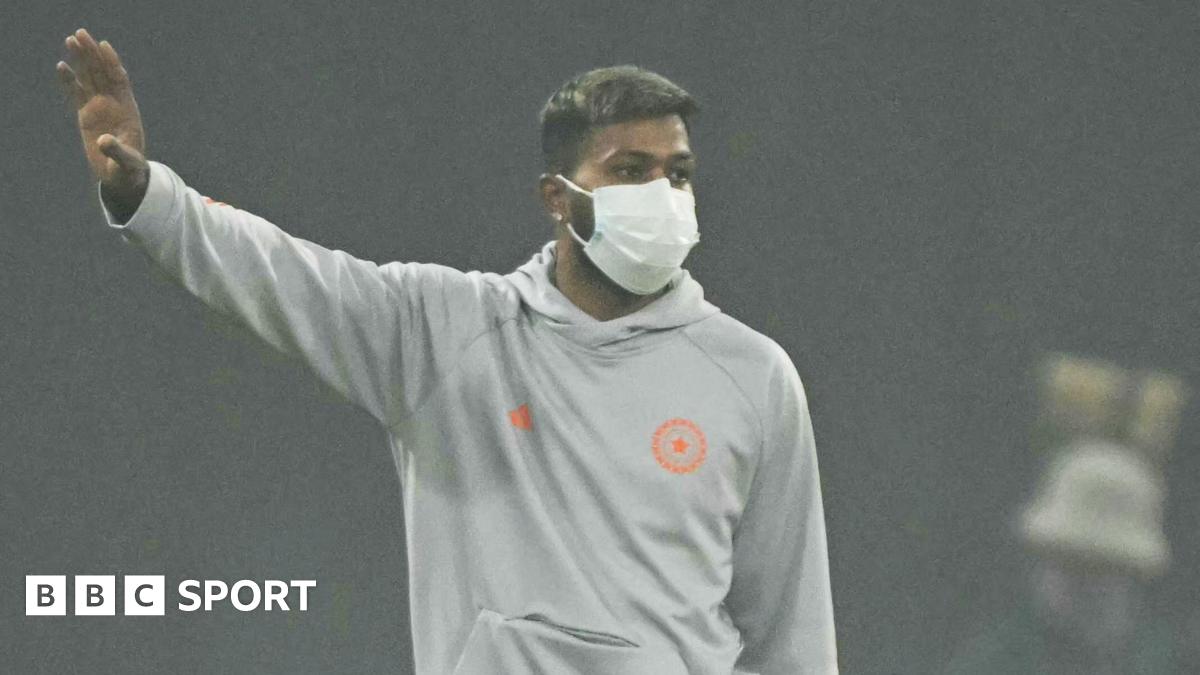
    Adding to concerns about playing conditions, Indian all-rounder Hardik Pandya was observed wearing a protective mask during warm-up exercises on the pitch prior to the abandoned match. This visual evidence coincided with air quality readings showing particularly hazardous conditions in Lucknow, with the Air Quality Index (AQI) reaching approximately 400 around the scheduled start time—a level classified as posing serious health risks to all individuals exposed.

    Despite the visible pollution concerns, the official statement from cricket authorities specifically cited fog as the sole reason for the cancellation, avoiding any direct reference to air quality issues. The series now moves to its decisive final match with India leading 2-1, setting up a crucial encounter scheduled for Friday in Ahmedabad, where environmental conditions are expected to be more favorable for play.

  • Nigeria allege DR Congo ‘fraud’ as they hunt World Cup reprieve

    Nigeria allege DR Congo ‘fraud’ as they hunt World Cup reprieve

    Nigeria’s football governing body has launched a formal protest with FIFA, contesting the eligibility of several Democratic Republic of Congo players featured in last month’s decisive World Cup qualifying match. The Super Eagles’ defeat to DR Congo on penalties in Morocco cost Nigeria a spot in the upcoming intercontinental qualifiers for the 2026 World Cup.

    The Nigeria Football Federation (NFF) alleges that DR Congo violated both FIFA regulations and Congolese nationality laws by fielding players with dual citizenship. Specifically mentioned are Aaron Wan-Bissaka and Axel Tuanzebe, who recently switched international allegiance to represent DR Congo despite Congolese law prohibiting dual nationality.

    NFF General Secretary Mohammed Sanusi stated: ‘Our contention is that FIFA was deceived into clearing these players. The Congolese rule explicitly states you cannot have dual nationality, yet some of their players possess European and French passports. We consider this a breach of FIFA’s regulations and potentially fraudulent.’

    The federation has submitted comprehensive documentation and legal arguments to world football’s governing body. In response, the Congolese Football Federation (Fecofa) has dismissed the petition as an attempt to ‘win via the back door,’ characterizing Nigeria as ‘bad losers’ in social media statements.

    This controversy emerges against a backdrop of similar eligibility cases in African football. FIFA recently deducted points from Equatorial Guinea during qualifiers after captain Emilio Nsue was deemed ineligible due to prior appearances for Spain’s youth teams. Similarly, South Africa had a victory overturned for fielding a suspended player.

    FIFA’s statutes permit players to change national representation once with proper approval, requiring only a valid passport for the new nation regardless of dual citizenship status. However, this conflicts with DR Congo’s domestic laws, creating a complex jurisdictional dilemma for football’s governing body.

    The outcome could range from case dismissal to potential sporting sanctions if FIFA finds material breaches of registration rules, possibly including match forfeiture or point deductions that could alter World Cup qualification.

  • Pakistan: Military chief Asim Munir in spotlight over Trump’s Gaza plan

    Pakistan: Military chief Asim Munir in spotlight over Trump’s Gaza plan

    Pakistan’s powerful military leader Field Marshal Asim Munir confronts a critical foreign policy challenge as the United States pressures Islamabad to contribute troops to a proposed Gaza stabilization force. According to sources familiar with the matter, Munir is anticipated to visit Washington for his third meeting with President Donald Trump within six months, with the Gaza deployment expected to dominate discussions.

    The controversial proposal forms part of Trump’s 20-point plan for Gaza, calling for Muslim-military nations to oversee reconstruction and economic recovery in the Palestinian territory devastated by over two years of Israeli military operations. The mission would involve demilitarizing Hamas, a requirement that has made numerous Muslim countries hesitant due to concerns about being drawn into the conflict and provoking domestic backlash from pro-Palestinian populations.

    Munir has cultivated an unusually close relationship with the mercurial Trump administration, marked by a historic White House lunch in June where he became the first Pakistani army chief to meet alone with a U.S. president without civilian officials present. This diplomatic courtship has reportedly been driven by Pakistan’s desire to secure American investment and security assistance.

    Analysts highlight the precarious balancing act Munir faces. Michael Kugelman of the Atlantic Council noted that refusing Trump could strain relations, while deploying troops risks igniting widespread domestic unrest. Pakistan’s Islamist parties, deeply opposed to both the U.S. and Israel, retain significant street power despite recent government crackdowns on extremist groups.

    Complicating matters further, Munir recently consolidated unprecedented authority through constitutional amendments that granted him lifetime immunity from prosecution, extended his tenure until 2030, and appointed him as the first chief of defence forces overseeing all military branches. This consolidation of power means the ultimate decision rests squarely with Munir, whose rules will determine Pakistan’s course of action.

    With Pakistan’s battle-hardened military being the only nuclear-armed Muslim nation, the pressure on Munir to navigate this geopolitical dilemma has never been greater. The country has extensive combat experience from three wars with India and ongoing counterinsurgency operations, making its potential contribution significant yet politically volatile.

  • UAE school admissions explained: What the new age cut-off means for parents, students

    UAE school admissions explained: What the new age cut-off means for parents, students

    In a transformative educational policy shift, the United Arab Emirates has fundamentally restructured its school admission framework by implementing a calendar-year-based eligibility system. Effective from the 2026-27 academic year, children will now qualify for Pre-Kindergarten enrollment upon reaching three years of age at any point during the admission year, extending the previous August 31 deadline to December 31.

    This groundbreaking reform, formally endorsed by the Education, Human Development and Community Development Council, represents a significant departure from the previous month-specific cutoff approach. The revised policy establishes uniform eligibility standards across all educational stages: Pre-KG at age 3, KG1 at age 4, KG2 at age 5, and Grade 1 at age 6, with all age requirements determined by December 31 of the admission year.

    The policy alteration delivers particular advantages to children born during the September-December period, who previously faced mandatory enrollment deferrals. Extensive research involving analysis of over 39,000 student records demonstrated that early enrollment does not correlate with academic disadvantages, with some younger entrants actually exhibiting enhanced educational outcomes.

    Crucially, the reform maintains parental autonomy, allowing rather than mandating earlier enrollment. The updated regulations apply exclusively to new admissions commencing in 2026-27, preserving existing students’ original placement arrangements. While the policy standardizes admissions across August/September-starting institutions regardless of curriculum—including British (FS1/FS2/Year 1/Year 2) and French (Petite/Moyenne/Grande Section/CP) systems—schools with April academic years continue operating under the established March 31 cutoff.

    The comprehensive policy framework ensures educational continuity for transfer students and international arrivals through standardized grade equivalency protocols, prioritizing consistent academic progression above all other considerations.

  • Breakthrough in brain-machine interface technology empowers paralyzed patients

    Breakthrough in brain-machine interface technology empowers paralyzed patients

    In a landmark demonstration of neurotechnology, a completely paralyzed Chinese patient has achieved unprecedented independence through an advanced brain-machine interface (BMI) system. The patient, a man in his thirties, successfully manipulated a power wheelchair and commanded a robotic assistance dog to retrieve deliveries using only neural signals.

    The revolutionary BMI technology was surgically implanted in June 2025 through a collaboration between the Chinese Academy of Sciences’ Center for Excellence in Brain Science and Intelligence Technology and private sector partners. This sophisticated system translates neural activity into digital commands, enabling direct brain-to-device communication without requiring physical movement.

    Clinical results demonstrate transformative improvements in daily living capabilities. The patient has reached levels of self-sufficiency, vocational engagement, and social interaction that were previously considered unattainable for individuals with high-level paralysis. This represents the most significant advancement in functional restoration for paralyzed patients since the development of neural prosthetics.

    The technology’s successful real-world application signals a new era in assistive technologies and neurological rehabilitation. Medical experts highlight that this breakthrough extends beyond laboratory research, offering tangible solutions that dramatically improve quality of life for those with severe mobility impairments.

    Researchers indicate that this achievement establishes new benchmarks for neural interface technology and paves the way for more sophisticated human-machine integration systems in the future.

  • Watch: Pakistani man ‘fears for his life’ after being wrongly linked as Bondi shooter

    Watch: Pakistani man ‘fears for his life’ after being wrongly linked as Bondi shooter

    A Pakistani businessman residing in Windsor, Australia, is confronting severe personal safety concerns and psychological distress after becoming an unintended victim of rampant online misinformation. Naveed Akram, 30, found himself at the center of a digital firestorm when his photograph was falsely circulated across social media platforms as one of the perpetrators of the Bondi Beach shooting that claimed 15 lives last Sunday.

    The case of mistaken identity originated from the coincidental name similarity between the innocent businessman and the actual alleged attacker. Despite having no connection to the tragic incident, Akram experienced immediate reputational damage and intense personal fear as his image spread virally alongside inaccurate accusations.

    “This has been deeply shocking for me,” expressed Akram in a video statement released to counter the misinformation. “I was extremely worried about my safety. I am traumatized by this false association. My photo being circulated everywhere has left me stressed, scared, and unable to move around freely.”

    The misinformation ecosystem amplified rapidly as several Indian media outlets propagated the narrative that the Bondi attacker was Pakistani, relying solely on the name coincidence without factual verification. This reporting intensified the ordeal for Akram, who relocated to Australia in 2018 seeking better opportunities.

    The Bondi tragedy triggered multiple strands of misinformation beyond Akram’s case. Ahmed Al Ahmed, the Syrian Muslim hero who courageously disarmed one shooter, was subject to false identity claims with some sources misidentifying him as a 47-year-old IT worker with a British name—misinformation that was even repeated by X’s AI chatbot Grok. Other accounts incorrectly labeled him as a Maronite Christian.

    Regarding the actual perpetrator, social media platforms circulated numerous unverified claims before official identification, including false assertions that he was a former Israeli Defense Force member, a Mossad agent, or that he had studied at Islamabad University on behalf of Iranian interests. A Lebanese national of Palestinian descent was also wrongly implicated in the digital speculation.

    This incident highlights the dangerous consequences of digital vigilantism and the critical need for media outlets and social platforms to verify information before dissemination, particularly during developing tragedies where accurate information is essential yet often scarce.

  • 64 sculptors build 19-meter-tall snowman in Harbin

    64 sculptors build 19-meter-tall snowman in Harbin

    In an extraordinary display of winter artistry, Harbin—the capital of China’s Heilongjiang province—has unveiled a monumental snow sculpture measuring 19 meters in height. The massive snowman, now standing proudly on the banks of the Songhua River, was completed on Tuesday after an intensive 11-day construction period.

    The project brought together 64 highly skilled sculptors and over 100 support workers who collaboratively transformed 3,500 cubic meters of snow into this seasonal marvel. The finished sculpture features traditional winter attire including a vibrant red hat and matching scarf, with a cheerful expression designed to welcome both visitors and local residents.

    This year’s construction process incorporated modern technology through a live broadcast that allowed viewers worldwide to witness the sculpture’s progression in real-time. The broadcast generated significant online engagement, with audiences participating virtually as ‘cloud guardians’ throughout the creation process.

    The snowman has quickly become a premier photographic destination, enhancing Harbin’s reputation as a winter tourism destination and demonstrating the city’s commitment to creating large-scale public art that celebrates seasonal traditions while embracing technological innovation in its presentation and community engagement.