博客

  • Chinese researchers reveal how urban heat sources intensify extreme heat events

    Chinese researchers reveal how urban heat sources intensify extreme heat events

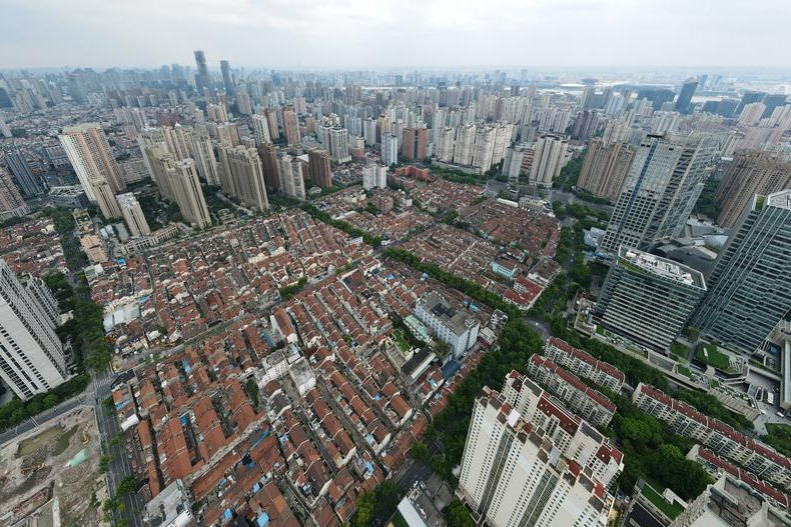
    A groundbreaking study from Chinese scientists has elucidated the critical role of urban surface heat sources in amplifying extreme heat phenomena within major metropolitan clusters. Researchers at the Northwest Institute of Eco-Environment and Resources (NIEER), operating under the Chinese Academy of Sciences, have systematically analyzed how urbanization patterns interact with atmospheric energy dynamics to exacerbate compound high-temperature events.

    The investigation focused on China’s four primary urban agglomerations: the Beijing-Tianjin-Hebei region, Pearl River Delta, Yangtze River Delta, and Chengdu-Chongqing economic zone. Through comprehensive statistical analysis, the research team documented distinct seasonal and spatial patterns in surface heat distribution, revealing a consistent “strong in summer, weak in winter” cyclical pattern across all regions.

    Notably, the study identified significant regional variations in heat distribution. The Beijing-Tianjin-Hebei region demonstrates stronger southern heat sources with northern areas occasionally transforming into thermal sinks during winter months. Conversely, the Yangtze River Delta exhibits concentrated heat sources along river networks, while major cities surprisingly manifest lower surface heat levels than surrounding areas.

    Research lead Gao Xiaoqing emphasized that these thermal patterns result from complex interactions between topography, climatic conditions, and urbanization intensity. The findings demonstrate that while surface heat sources substantially influence the frequency of compound extreme heat events, their effect on event intensity remains comparatively limited.

    Published in the prestigious journal Science China Earth Sciences, this research provides crucial insights for urban planning and climate resilience strategies. The identification of specific heat distribution mechanisms enables more targeted approaches to mitigating urban heat island effects and protecting public health during extreme temperature events.

  • Unstable weather in UAE: Sharjah urges caution at outdoor work sites

    Unstable weather in UAE: Sharjah urges caution at outdoor work sites

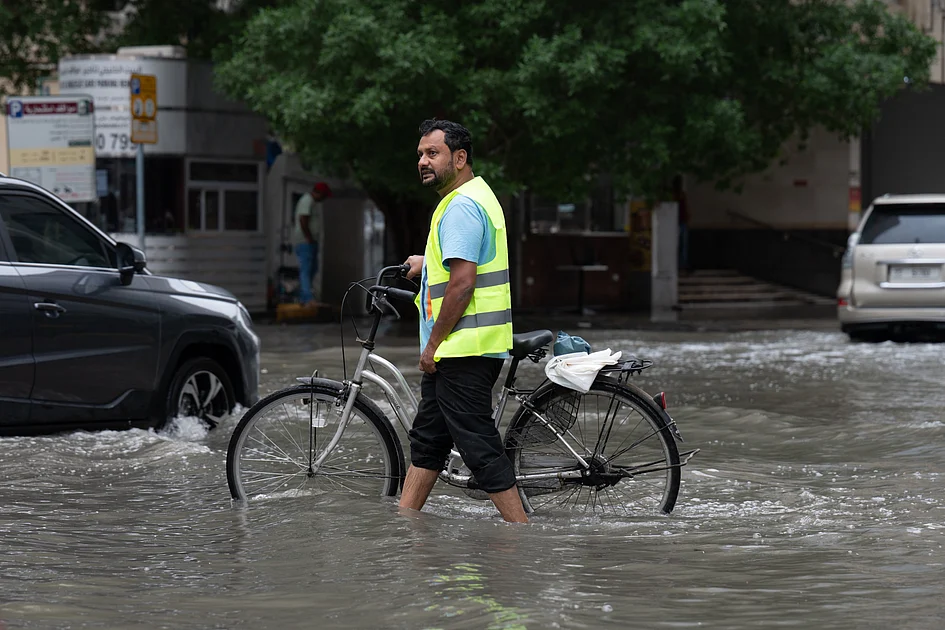
    Sharjah Police have escalated safety protocols for outdoor work environments as unpredictable weather patterns continue across the United Arab Emirates. The law enforcement agency disseminated an official advisory through social media platform X, mandating enhanced protective measures for personnel exposed to hazardous conditions.

    The comprehensive safety directive emphasizes strict compliance with occupational health regulations during both operational hours and worker transportation. Employers face increased scrutiny to implement preventive strategies that mitigate weather-related accidents and safeguard labor welfare. The advisory specifically targets construction sites and external work zones where environmental exposure presents elevated risks.

    Concurrently, Dubai’s Knowledge and Human Development Authority (KHDA) has enacted parallel precautions for educational institutions. Private schools received instructions to prioritize staff safety through flexible work arrangements and suspend all outdoor programming. The education authority specifically addressed institutions conducting holiday sessions, prohibiting off-campus activities until weather conditions stabilize.

    These coordinated responses follow the UAE’s most intense rainfall period, which recorded precipitation peaks of 127mm in Ras Al Khaimah. Emergency services continue remediation efforts across affected regions, particularly addressing transportation disruptions caused by flash flooding. The national weather instability has prompted multi-jurisdictional coordination between police, educational authorities, and civil defense units to maintain public safety standards during meteorological uncertainties.

  • Uganda prison officer sacked for ‘politicking’ on TikTok

    Uganda prison officer sacked for ‘politicking’ on TikTok

    In a significant disciplinary action highlighting Uganda’s ongoing tensions between state authority and digital free speech, prison officer Lawrence Ampe has been formally dismissed from service for utilizing TikTok to expose governmental corruption and power abuses. The Uganda Prisons Service terminated Ampe’s employment citing “gross indiscipline” and violation of standing orders prohibiting public officers from political participation.

    The controversial dismissal follows Ampe’s sustained social media campaign accusing senior officials within the prison system of corruption, human rights violations, and mistreatment of junior staff. Despite previous warnings from prison authorities about inappropriate use of social media for political expression, Ampe continued producing content that garnered over 100,000 followers on the popular video platform.

    Prisons spokesman Frank Baine defended the decision, stating Ampe was engaged in “politicking in the wrong forum” and showed no remorse during disciplinary proceedings. The officer was ordered to surrender all state property following last Tuesday’s dismissal resolution by the Prisons Council.

    The opposition movement, particularly supporters of presidential challenger Bobi Wine (musician-turned-politician Robert Kyagulanyi Ssentamu), has condemned the dismissal as evidence of systemic oppression and selective enforcement of regulations. Ampe had used his platform to promote Wine’s campaign against long-serving President Yoweri Museveni in the upcoming January elections.

    In response to his dismissal, Ampe posted his termination letter on TikTok with the caption: “I’m finally out free to support truth.” In subsequent videos, he assured supporters his activism wasn’t motivated by financial concerns but by patriotic dedication to “liberating our nation.”

    This incident occurs within a broader pattern of documented internet freedom restrictions in Uganda. The U.S. government’s 2023 report noted the country’s use of criminal punishments to limit online expression, while human rights organizations regularly condemn Ugandan authorities for suppressing dissent and violating freedom of expression rights. The case echoes last year’s conviction of a 24-year-old man who received a six-year prison sentence for insulting the president and first family on TikTok.

  • China’s clean power shift hailed as scientific breakthrough, spotlighting global leadership

    China’s clean power shift hailed as scientific breakthrough, spotlighting global leadership

    China’s unprecedented transformation toward renewable energy has received prestigious international recognition, with leading scientific journals Science and Nature both highlighting the nation’s clean power transition as one of 2025’s most significant scientific milestones. According to their recent publications, China’s massive renewable expansion has effectively stalled the growth of greenhouse emissions domestically while accelerating the possibility of a global carbon peak.

    Science magazine specifically designated China’s renewable energy surge as the 2025 Breakthrough of the Year, attributing this achievement to the country’s formidable industrial capacity. The journal reported that China currently manufactures 80% of global solar cells, 70% of wind turbines, and 70% of lithium batteries at unmatched competitive prices.

    Supporting this assessment, Nature magazine featured China’s clean energy accomplishments among its ‘feel-good science stories to restore faith in 2025,’ noting that renewables have overtaken coal as the world’s primary energy source for the first time. This shift was propelled by China’s remarkable achievement of surpassing 1 terawatt of installed solar capacity in May 2025. During the first half of the year alone, China installed new solar systems with twice the capacity of the rest of the world combined.

    The statistics demonstrate extraordinary growth: China’s wind and solar capacity exceeded thermal power for the first time in history by March, reaching 1.67 billion kilowatts by June—13.6% higher than thermal power capacity. Over the past five years, China has developed the world’s largest and fastest-growing renewable energy system, increasing renewables’ share in installed power capacity from approximately 40% to 60%.

    Concurrently, China has implemented the world’s most extensive carbon market, regulating over 60% of national carbon dioxide emissions through effective permit systems. The country has also announced ambitious new Nationally Determined Contributions for 2035, including reducing economy-wide net greenhouse gas emissions by 7-10% from peak levels—marking China’s first absolute emissions reduction target covering all greenhouse gases across the entire economy.

    Beyond domestic transformation, China’s renewable expansion has generated substantial global impact. According to National Energy Administration data, China’s wind and solar exports have helped avoid approximately 4.1 billion tonnes of global carbon emissions over five years. The country has collaborated with over 100 nations on green energy projects, reducing worldwide wind and photovoltaic power generation costs by 60% and 80% respectively. Since 2016, China has provided more than $25 billion in climate funding to developing countries.

    As Science editors concluded: ‘China’s burgeoning exports of green tech are transforming the rest of the world too—producing clean energy technologies better, vastly cheaper, and in staggering quantities for global consumption.’

  • Magic Awaits: Step Into Wafi City’s
Whimsical Wonderland

    Magic Awaits: Step Into Wafi City’s Whimsical Wonderland

    Dubai’s Wafi City has unveiled an extraordinary festive transformation, converting its premier shopping destination into a magical seasonal experience dubbed ‘Wafi’s Whimsical Wonderland’. From December 2025, both Wafi City Mall and the architecturally stunning Khan Murjan Souk have been reimagined as an immersive holiday paradise, offering families across the UAE an enchanting escape into the spirit of the season.

    The comprehensive festive installation features breathtaking decorative elements including elaborate light displays, whimsical thematic installations, and numerous photo opportunities that capture the essence of holiday magic. Visitors are greeted by costumed performers bringing seasonal characters to life while holiday melodies fill the air, creating a multisensory experience that delights all ages.

    Children can participate in hands-on creative workshops and craft stations where they produce personalized holiday keepsakes, embark on treasure hunts through the atmospheric corridors of Khan Murjan Souk, and explore interactive play zones designed to stimulate imagination. Adult visitors can enjoy seasonal culinary offerings, browse unique market stalls, and take advantage of exclusive festive promotions available through a special coupon booklet.

    The centerpiece remains the ticketed Santa Experience, set within an elaborately themed grotto where children can share their holiday wishes, receive specially commissioned Wafi City festive toys, and capture the moment with professional keepsake photography. Families participating in the Santa encounter also receive complimentary seasonal beverages from premium outlets including Tyne, Icons Coffee, and Elements.

    Adding to the excitement, Wafi City has introduced a major raffle draw with two grand prizes of AED 10,000 in gift vouchers each. Visitors purchasing the festive booklet are automatically entered into the December 31 drawing, with additional surprise giveaways and seasonal treats enhancing the celebratory atmosphere throughout the event duration.

  • Will the TikTok deal mean the app changes in the US?

    Will the TikTok deal mean the app changes in the US?

    ByteDance, TikTok’s Chinese parent company, has finalized a landmark agreement with U.S. investors that will fundamentally alter how the platform operates for its American user base. This strategic move addresses longstanding national security concerns while raising critical questions about the future of TikTok’s signature user experience.

    The heart of the transformation centers on TikTok’s proprietary recommendation algorithm—the sophisticated artificial intelligence system that powers the platform’s iconic For You Page. Under the new arrangement, this algorithm will be licensed to Oracle, TikTok’s established cloud computing partner in the United States, and subsequently retrained exclusively on American user data rather than the global data streams that currently fuel its recommendations.

    Social media analyst Matt Navarra observes that the central question is no longer about TikTok’s survival but rather what form it will take. “The platform’s power has historically derived from its slightly unpredictable nature—delivering weird, niche, and sometimes politically sharp content before it appears elsewhere,” Navarra noted. “Smoothing these edges doesn’t just change content moderation; it potentially alters the platform’s cultural relevance.”

    Tech journalist Will Guyatt highlights that the American version’s differentiation may depend on whether it receives new features, security updates, and platform improvements simultaneously with the international version. Meanwhile, computational expert Kokil Jaidka from the National University of Singapore suggests that core features like short videos and integrated shopping will likely remain intact as they operate independently from the algorithm.

    The investment consortium includes Oracle—chaired by Trump ally Larry Ellison—alongside Abu Dhabi’s government investment fund MGX and private equity firm Silver Lake. Navarra warns that pressure from these institutional investors could further contribute to a “blander” user experience, transforming TikTok from the internet’s experimental playground to a more conventional social space.

    Practically, users may notice the algorithm lagging in personalization and slower adaptation to viral trends as it operates on narrower data inputs. Jaidka explains that “if TikTok operates with a licensed or partially diluted algorithm, some systemic blind spots may become more pronounced.”

    The ultimate test, according to analysts, will be whether TikTok retains its status as the internet’s premier destination for cultural experimentation or evolves into a more predictable digital environment.

  • Ten keywords to highlight China’s carbon reduction progress in 2025

    Ten keywords to highlight China’s carbon reduction progress in 2025

    China has demonstrated remarkable acceleration in its climate initiatives throughout 2025, transforming its ambitious ‘dual carbon’ pledges into concrete action. The nation’s comprehensive approach to emissions reduction has yielded significant environmental milestones while contributing substantially to global climate mitigation efforts.

    The country’s decarbonization journey can be understood through ten critical developments that have characterized this transformative year. These encompass breakthroughs in renewable energy infrastructure, with Sichuan Province achieving unprecedented hydropower capacity exceeding 100 million kilowatts. Technological innovation has been equally impressive, showcased by AI-operated smart zero-carbon terminals in Tianjin that optimize energy efficiency without human intervention.

    Urban sustainability initiatives have gained substantial momentum, as evidenced by Chongqing’s pioneering symposium on multi-sensory urban planning that integrates environmental considerations into city development. Concurrently, agricultural modernization programs in regions like Pinggu have established new benchmarks for low-carbon farming practices.

    China’s cultural connection to environmental stewardship has manifested through widespread public engagement, including Winter Solstice celebrations that emphasized ecological awareness. The expansion of winter tourism facilities like the Harbin Ice and Snow World, while maintaining environmental considerations, demonstrates the balance between economic development and sustainability.

    The regulatory framework has been strengthened through new public reading promotions that include environmental education components, while space technology advancements led by experts like Qi Faren have contributed to climate monitoring capabilities. These coordinated efforts across multiple sectors illustrate China’s holistic strategy toward achieving its carbon neutrality commitments and fostering a global transition to sustainable development.

  • China Vanke default watch is Xi’s moment to let markets lead

    China Vanke default watch is Xi’s moment to let markets lead

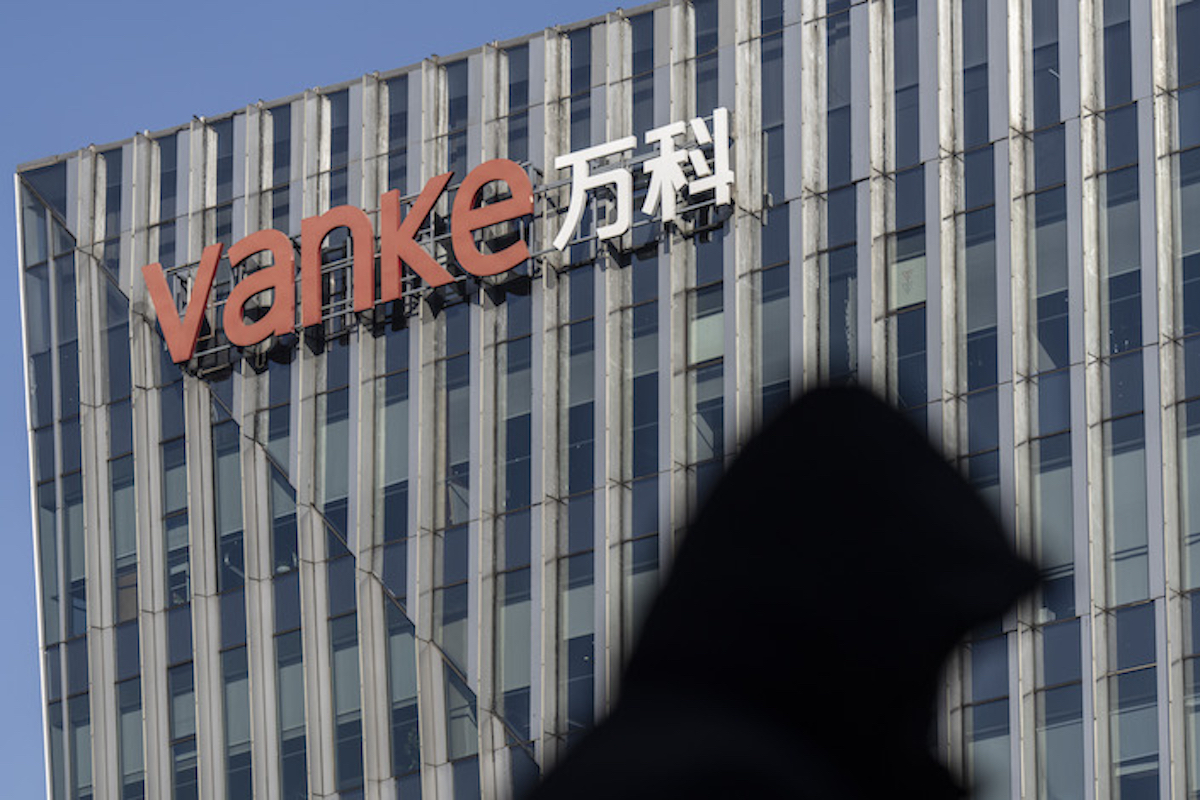
    As 2025 concludes, Fitch Ratings has delivered a stark warning to China investors with its downgrade of property giant China Vanke Co to ‘C’ status from ‘CCC-‘. This move highlights escalating pressures on one of China’s last major surviving developers amid a prolonged property sector crisis, raising fresh concerns about potential default risks.

    The deteriorating situation coincides with concerning November economic indicators showing broad-based momentum loss across China’s economy. New home sales in China’s 70 largest cities declined 0.39% from October, while prices dropped 0.45%—the sharpest monthly decrease in twelve months. These developments occur despite ambitious government pledges to stabilize the property market and as China enters its fourth consecutive year of deflation.

    Economic analysts express growing concerns about China’s trajectory. Capital Economics China economist Zichun Huang notes that while policy support might drive partial recovery in coming months, growth is likely to remain weak throughout 2026. Barclays economist Yingke Zhou warns that persistent deflation pressures could exacerbate trade tensions with non-US economies as China continues relying on export-led growth.

    The situation draws uncomfortable parallels with Japan’s economic stagnation since the 1990s, though comparisons remain imperfect. The property sector’s collapse—historically accounting for 25-33% of China’s annual growth—has sparked ‘Japanification’ concerns that will likely continue into 2026.

    Compounding these challenges, China faces a 47.5% US tariff that poses significant threats to its export-dependent economy. Despite this, China recorded its first-ever $1 trillion trade surplus in November, achieved through strategic market diversification to Southeast Asia and Europe since the Trump administration’s initial trade war.

    This massive trade surplus masks underlying domestic weaknesses. While exports grew 5.9% year-on-year in November, imports increased only 1.9%, reflecting Chinese households’ reluctance to spend their $22 trillion in savings. The return of default risks among major developers could further undermine consumer confidence.

    Paradoxically, global investors are returning to Chinese stocks, attracted by technology sector optimism and China’s latest Five-Year Plan (2026-2030) emphasizing high-quality growth, capital market reforms, and technological self-reliance. The plan’s focus on structural upgrades to boost domestic consumption through enhanced social safety nets has also improved market sentiment.

    However, household perspectives differ markedly from investor optimism. Chinese consumers face persistent trade tensions, weak wage growth, near-record youth unemployment, declining property values, and perceived insufficient government action. Many question the authenticity of official economic data, particularly the ‘around 5%’ growth target that appears disconnected from provincial-level realities.

    The Vanke situation presents particular concerns given its reputation as China’s best-managed developer. Its potential default could trigger approximately $50 billion in debt vulnerabilities. While few anticipate a ‘Lehman moment’ given previous defaults by larger developers like Evergrande and Country Garden, Vanke’s stumble significantly damages confidence in China’s property sector recovery.

    Deutsche Bank economist Yi Xiong highlights additional risks from China’s substantial dollar-denominated debt—approximately $750 billion in outstanding bonds, with one-third maturing within two years. How authorities handle Vanke’s crisis could set the tone for China’s 2026 economic approach, potentially reducing Beijing’s willingness to let market forces play a ‘decisive role’ in property price-clearing.

    Fitch Ratings analyst Tyran Kam notes that authorities appear to see limited systemic risk from Vanke’s situation, with policymakers prioritizing completion of unfinished housing projects over bailouts for non-state-owned developers. However, banks’ continued reluctance to lend reflects pessimistic outlooks for housing sales recovery, which Fitch expects to decline 7-8% in 2026.

    The fundamental challenge remains convincing Chinese households to increase spending amid persistent property sector uncertainty. As 2026 approaches, Chinese leadership faces critical decisions about embracing market forces and implementing structural reforms that could determine whether China avoids Japan’s prolonged economic stagnation.
  • What to know about the EU’s new $106 billion loan to Ukraine

    What to know about the EU’s new $106 billion loan to Ukraine

    BRUSSELS — In a critical overnight summit that stretched into Friday morning, European Union leaders reached a landmark agreement to extend a massive $106 billion interest-free loan to Ukraine, providing vital financial stability for the war-torn nation’s military and economic needs through 2027. The decision came after intense negotiations failed to secure Belgian support for an alternative plan that would have utilized frozen Russian assets.

    The original proposal, championed by European Commission President Ursula von der Leyen and supported by German Chancellor Friedrich Merz and French President Emmanuel Macron, sought to leverage approximately $246 billion in Russian assets frozen across Europe, predominantly in Belgium. This approach would have required only a two-thirds majority among the 27 member states. However, Belgian Prime Minister Bart de Wever maintained firm opposition throughout the night, citing legal vulnerabilities and potential retaliation from Moscow following Russia’s Central Bank filing a lawsuit against Euroclear, the Brussels-based financial institution holding the majority of these assets.

    Facing political impasse, leaders pivoted to Article 20 of the Treaty of Europe, enabling the EU to borrow directly from capital markets—a mechanism previously deployed during the COVID-19 pandemic for the bloc’s $750 billion recovery fund. This alternative required unanimous approval, achieved through strategic concessions to Hungary, Slovakia, and the Czech Republic, which opposed assuming additional debt but agreed not to block the package in exchange for financial liability protections.

    Hungarian Prime Minister Viktor Orbán, Russian President Vladimir Putin’s closest EU ally, declared a dual victory on social media, claiming he prevented “a declaration of war on Russia” through asset seizure and protected Hungarian families from approximately $3 billion in potential financial burdens.

    Despite the setback on immediate asset utilization, EU leaders emphasized that frozen Russian funds remain a prospective repayment mechanism. The official statement clarified that Ukraine’s repayment obligation would only trigger after Russia compensates for war damages, estimated by Ukrainian President Volodymyr Zelenskyy at over $700 billion. Pending reparations, the EU reserves the right to apply frozen assets toward loan repayment in accordance with international law.

    President Zelenskyy, speaking from Warsaw, hailed the agreement as providing “financial certainty for the coming years,” indicating funds would prioritize defense if conflict persists or reconstruction should peace emerge. The International Monetary Fund estimates Ukraine requires $161 billion through 2027 to avert governmental collapse and address urgent needs from ammunition to infrastructure.

  • Sichuan breaks 100-m-kw mark in hydropower installed capacity

    Sichuan breaks 100-m-kw mark in hydropower installed capacity

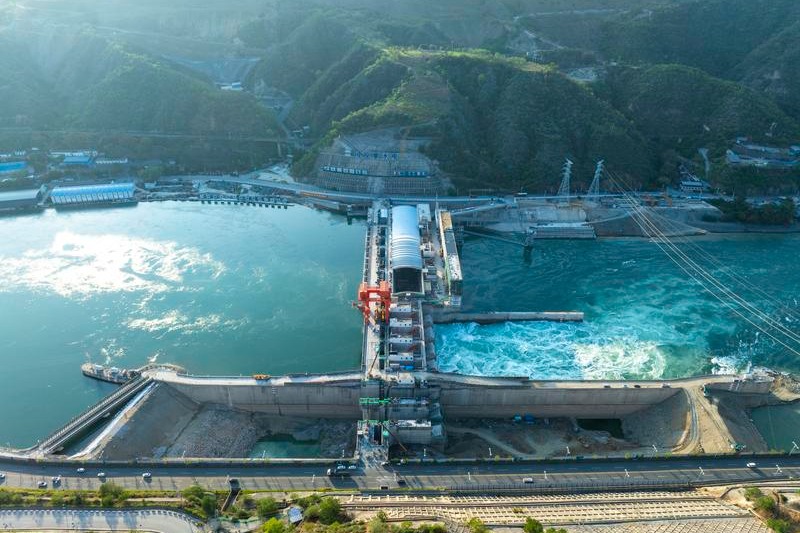
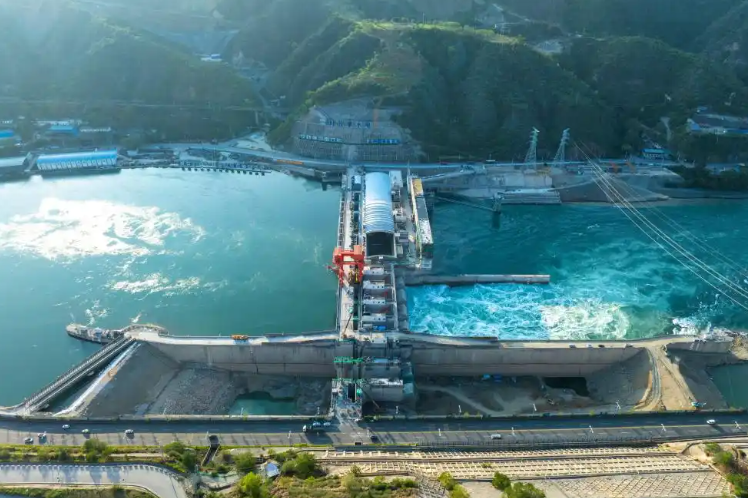
    Southwest China’s Sichuan province has reached a historic milestone in renewable energy development, with its total installed hydropower capacity exceeding 100 million kilowatts (100 GW) on December 19, 2025. This achievement represents approximately one-quarter of China’s total hydropower capacity and establishes Sichuan as the nation’s preeminent hydropower generation hub.

    The milestone was reached when the final generating unit at the Yinjiang Hydropower Station in Panzhihua City was successfully connected to the power grid. Located on the Jinsha River, this facility boasts a total installed capacity of 390,000 kilowatts. Once fully operational, the station is projected to deliver over 1.6 billion kilowatt-hours of clean electricity annually, reducing carbon dioxide emissions by an estimated 1.3 million tonnes.

    Sichuan has served as the cornerstone of China’s ambitious west-to-east power transmission initiative since 1998. The province annually transmits approximately one-third of its generated electricity to other regions. According to State Grid Sichuan Electric Power Company, Sichuan has delivered more than 1.9 trillion kilowatt-hours of clean electricity to central and eastern China over the past 27 years—sufficient to power Jiangsu, Zhejiang, and Anhui provinces combined for an entire year.

    The province’s remarkable hydropower development stems from its abundant water resources, earning it the nickname ‘province of a thousand rivers.’ This natural advantage has positioned Sichuan as a critical component in China’s transition toward cleaner energy and carbon reduction goals.