博客

  • Sinner, Djokovic kept apart in French Open draw

    Sinner, Djokovic kept apart in French Open draw

    The 2025 French Open draw was unveiled Thursday, delivering one of the most highly anticipated outcomes for men’s singles: in-form world No. 1 Jannik Sinner and 24-time Grand Slam champion Novak Djokovic have been placed in opposite halves of the bracket, meaning the two title favorites will not face off before the tournament’s final match on Sunday, May 25. As the sport’s second Grand Slam of the year prepares to kick off this Sunday, the draw also set up tantalizing potential matchups in the women’s draw, including a potential semifinal clash between defending champion Coco Gauff and world No. 1 Aryna Sabalenka, while a simmering pay dispute between players and Grand Slam organizers has cast a shadow over pre-tournament festivities.

    For Sinner, who enters Roland Garros as the odds-on favorite to claim his first French Open crown following the withdrawal of injured Spaniard Carlos Alcaraz, his title run will get underway against French wildcard entry Clement Tabur, the world-ranked 165th player who earned his spot through domestic qualifying. The Italian has been on a historic hot streak as of late: earlier this month, he claimed his sixth consecutive ATP Masters 1000 title at the Italian Open, becoming just the second men’s player in tennis history — after Djokovic himself — to win all nine active Masters 1000 events over his career. If Sinner advances as seeded, he is projected to face fifth-seeded American big hitter Ben Shelton in the quarterfinals, with a potential semifinal showdown against Russian star Daniil Medvedev, who pushed Sinner to three tight sets in the Italian Open semifinals earlier this month before ultimately falling.

    On the opposite side of the men’s bracket, third-seeded Djokovic will begin his bid for a record-breaking 25th Grand Slam singles title against French home player Giovanni Mpetshi Perricard. The 38-year-old Serb, who turns 39 the day after the tournament kicks off, is tied with Margaret Court for the most Grand Slam singles titles in tennis history, and has not won a major since the 2023 US Open. Projected to meet Djokovic in the semis is second-seeded Alexander Zverev, who will open his campaign against Frenchman Benjamin Bonzi. Zverev has fallen to Djokovic in French Open quarterfinals twice before — in 2019 and 2024 — and is still chasing his first career Grand Slam title after multiple deep runs in majors.

    The draw also featured emotional storylines for veteran players set to retire after the tournament. The standout opening-round men’s match pits in-form French No. 1 Arthur Fils against 41-year-old former champion Stan Wawrinka, who will play Roland Garros for the final time before hanging up his racket. Fan-favorite Frenchman Gael Monfils, a 2008 Roland Garros semifinalist, will also play his farewell tournament, opening against compatriot Hugo Gaston.

    In the women’s draw, defending champion and fourth-seeded Gauff will open her title defense against American compatriot Taylor Townsend, looking to repeat her 2024 final upset victory over Sabalenka. For Sabalenka, who has never claimed the French Open singles title, the draw handed her one of the toughest paths to the final in the field. A potential third-round matchup against four-time Grand Slam champion Naomi Osaka is on the cards, even though Osaka has never advanced past the second week of Roland Garros in her career. Fifth seed Jessica Pegula or rising Canadian prospect Victoria Mboko could await Sabalenka in the quarterfinals, with a projected semifinal against Gauff if both advance.

    Other key women’s projected matchups see third-seeded four-time champion Iga Swiatek of Poland potentially facing Italian Open winner Elina Svitolina in the quarterfinals, while second-seeded Elena Rybakina — the 2025 Australian Open champion — is projected to meet Swiatek in the semis. Swiatek opens against 17-year-old Australian wildcard Emerson Jones, while Rybakina starts her campaign against Slovenia’s Veronika Erjavec. A rare all-Southeast Asian second-round matchup is also on the cards, between Indonesia’s Janice Tjen and the Philippines’ Alexandra Eala, with the winner set to potentially face Osaka in the third round.

    Beyond the on-court draw projections, the pre-tournament period has been marred by unrest, as a group of players has threatened to boycott select media obligations over an ongoing pay dispute with Grand Slam organizers. Tournament director Amelie Mauresmo pushed back on the threats Thursday, saying organizers would not change their stance on the issue. “We are not going to budge,” Mauresmo told reporters at the draw ceremony in Paris, adding that she was “a little saddened” by the player unrest. She noted that Grand Slam prize money has doubled over the last 10 years and has seen significant increases in recent years, pushing back on player claims that compensation for media work and player support is inadequate.
  • US threatens to revoke Palestinian UN ambassador’s visa, report says

    US threatens to revoke Palestinian UN ambassador’s visa, report says

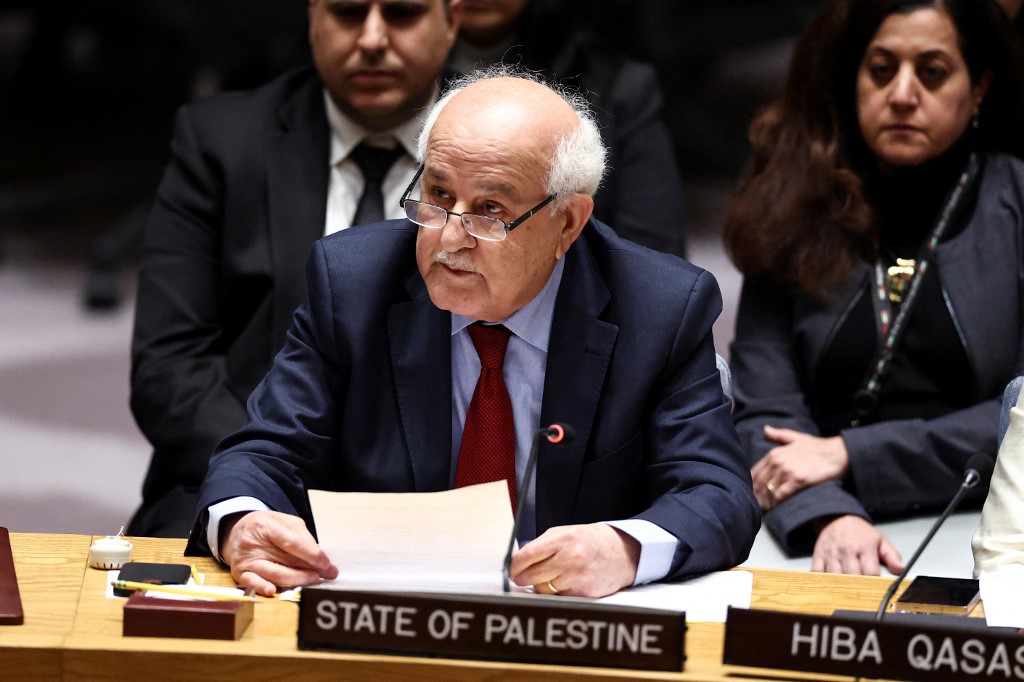
    In a stark escalation of diplomatic pressure on the Palestinian Authority, the United States has issued an ultimatum: revoke Riyad Mansour’s candidacy for vice-president of the UN General Assembly, or face the revocation of visas for the entire Palestinian delegation to the United Nations, National Public Radio reported Thursday.

    The threat is laid out in a confidential US State Department cable obtained by NPR, dated May 19, which instructed American diplomatic personnel based in Jerusalem to formally press Palestinian leadership to pull Mansour’s name from the race ahead of the June 2 election. Twenty-one candidates are vying for the vice-presidential posts in this vote.

    The cable frames Mansour as a problematic candidate, pointing to his long record of public accusations that Israel is committing genocide in Gaza. It argues that his elevation to the vice-presidential role would inflame regional tensions and directly undermine the Gaza peace plans advanced by former US President Donald Trump.

    “A bully pulpit for Mansour would not improve the lives of Palestinians and would significantly damage U.S. relations with the PA [Palestinian Authority]. Congress will take it extremely seriously,” the cable reads. It also reminds Palestinian officials of a 2025 decision by the State Department to waive existing visa sanctions and entry restrictions for Palestinian officials assigned to the Palestine Liberation Organization’s UN Observer Mission in New York, adding that “it would be unfortunate to have to revisit any available options.”

    This is not the first time US lobbying has derailed Mansour’s bid for a top UN leadership role. The cable confirms that Mansour was forced to withdraw his candidacy for UN General Assembly president back in February after intensive US pressure. The Trump administration has a long history of using visa restrictions to push back against Palestinian diplomatic efforts at the UN: last year, Washington refused to grant entry visas to Palestinian Authority President Mahmoud Abbas and more than 80 other senior Palestinian officials who planned to attend the annual UN General Assembly gathering in New York.

    That 2024 visa ban came on the heels of announcements from multiple Western nations that they planned to recognize Palestinian statehood during the high-level assembly meeting. US officials justified the move at the time by citing the Palestinian Authority’s support for ongoing war crimes and genocide investigations against Israel and its senior leaders at the International Court of Justice and International Criminal Court. The Abbas’ office pushed back against the ban, arguing it violated the UN Headquarters Agreement, which legally requires the US, as the host nation of the UN’s New York headquarters, to grant unimpeded entry visas for official UN business.

    The new ultimatum has drawn immediate criticism from foreign policy experts and former US diplomatic officials. Hady Amr, who served as a senior State Department official covering Palestinian affairs during both the Obama and Biden administrations, called the threat of visa revocation counterproductive to long-term diplomatic efforts.

    “It’s counterproductive because you need diplomats to work out problems between countries and by expelling diplomats, you’re undermining not only their ability to solve problems, but the abilities of the United States as well,” Amr said.

  • US-bound plane diverts to Canada after person from Ebola-hit region boards ‘in error’

    US-bound plane diverts to Canada after person from Ebola-hit region boards ‘in error’

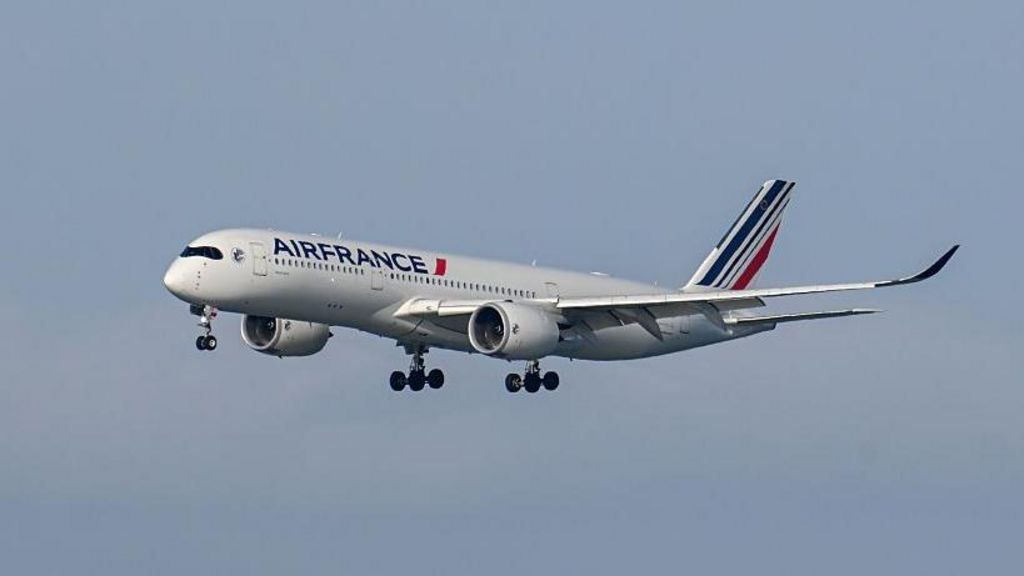
    A transatlantic commercial flight traveling from Paris to Detroit was forced to make an unscheduled diversion to Montreal, Canada, after airline staff incorrectly allowed a passenger who had recently traveled from the Ebola-stricken Democratic Republic of Congo (DRC) to board the aircraft, according to official statements. U.S. Customs and Border Protection (CBP), the agency that oversees U.S. border entry rules, confirmed to the BBC that the passenger should never have been allowed onto the Air France jet under current public health entry restrictions designed to curb the spread of the deadly virus. The ongoing Ebola outbreak across central Africa has already claimed nearly 140 lives, with health officials documenting more than 600 suspected infections across affected regions. As of the report’s release, authorities have not released key details about the passenger, including whether they were displaying visible Ebola symptoms, or the exact date of their most recent stay in the DRC. Air France later verified the diversion to U.S. media outlets, confirming that the plane was rerouted to Montreal Pierre Elliott Trudeau International Airport at the explicit request of U.S. public health and border authorities, after the Congolese passenger was formally denied entry to the United States. “Air France boarded a passenger from the Democratic Republic of Congo in error on a flight to the United States,” CBP said in an official statement. The agency added that it acted quickly to block the flight from landing at its intended destination, Detroit Metropolitan Wayne County Airport, prompting the 500-mile (800-kilometer) diversion north to Canadian soil. To reduce the risk of Ebola importation, the U.S. currently enforces strict entry rules: non-U.S. passport holders who have visited the DRC, South Sudan, or Uganda in the 21 days prior to travel are barred from entering the country. U.S. citizens and legal permanent residents who have traveled to these three countries are only allowed to enter through Washington-Dulles International Airport in Virginia, where they undergo mandatory enhanced public health screening. The World Health Organization (WHO) has already designated this current Ebola outbreak a Public Health Emergency of International Concern, the highest global alert level for infectious disease events. The U.S. Centers for Disease Control and Prevention (CDC) has noted that the overall risk of Ebola spreading widely within the U.S. remains relatively low, but the agency has still moved to implement layered precautionary measures to stop the virus from crossing U.S. borders. To date, one American has tested positive for Ebola in this outbreak: a physician who was working with a medical missionary organization in the DRC. He is currently receiving treatment in a specialized isolation ward at a hospital in Germany. On Wednesday, WHO officials added another layer of context to the outbreak, confirming that the specific variant driving the current outbreak—the Bundibugyo strain—does not currently have a licensed vaccine available for widespread use. According to the agency’s timeline, it could take as long as nine months before a targeted vaccine for this strain is developed and cleared for deployment. The incident has drawn attention to the challenges of enforcing cross-border public health measures during a global infectious disease emergency, highlighting how even a single administrative error can trigger major disruptions to international air travel.

  • Vanessa Trump, former wife of Donald Trump Jr, diagnosed with breast cancer

    Vanessa Trump, former wife of Donald Trump Jr, diagnosed with breast cancer

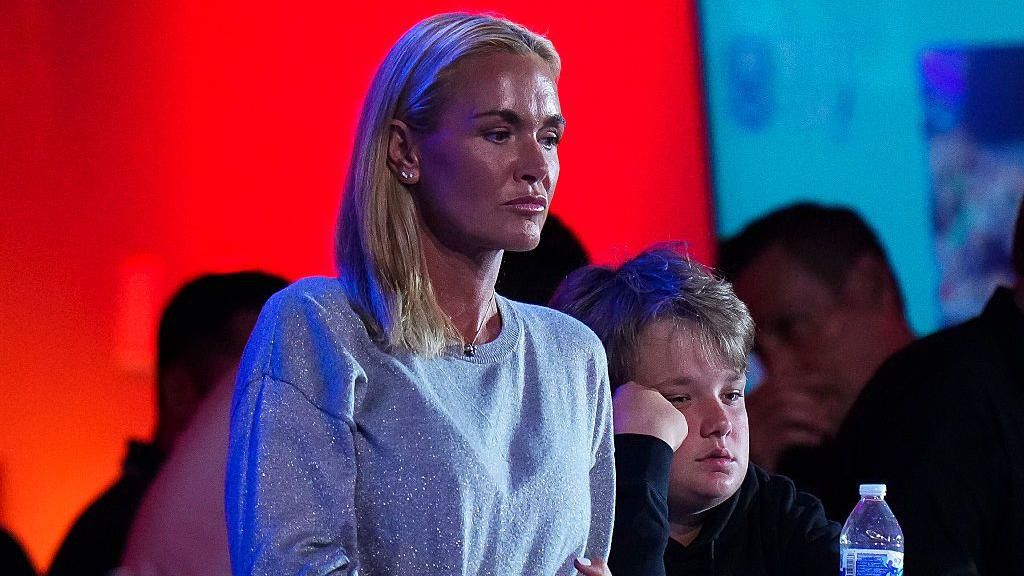
    Vanessa Trump, the former spouse of Donald Trump Jr. – eldest son of United States President Donald Trump – has publicly revealed that she has received a breast cancer diagnosis, sharing the news via her personal social media account.

    In an Instagram post published Wednesday, Vanessa acknowledged that a cancer diagnosis is never an outcome anyone anticipates, confirming that she is currently collaborating closely with her medical care team to develop a tailored treatment strategy. She added that she already completed an initial medical procedure earlier this week, and respectfully asked the public and media to grant her privacy as she redirects her energy to prioritizing her health and working toward a full recovery.

    A former model by profession, Vanessa first met Donald Trump Jr. in the early 2000s through a deliberate introduction by the current U.S. president. In a 2006 interview with The New York Times, she recalled the chance meeting at a fashion show: Donald Trump Sr. approached her with his son and said, “Hi, I’m Donald Trump. I wanted to introduce you to my son Donald Trump Jr.” The pair went on to marry at Mar-a-Lago, Donald Trump’s private Florida estate, in 2005. During their marriage, they welcomed five children, whose ages currently span from 11 to 19 years old. The couple separated in 2018. Most recently, Vanessa made headlines last year when she and professional golf legend Tiger Woods confirmed they were in a romantic relationship.

    Despite the unexpected health challenge, Vanessa maintained a resolute, hopeful tone in her announcement. “I am staying focused and hopeful while surrounded by the love and support of my family, my kids, and those closest to me,” she wrote. “Thank you for your kindness and support it truly means more than I can express.”

    Within hours of her post going live, hundreds of messages of encouragement and well-wishes flooded the comment section, including a public note of support from Ivanka Trump, the U.S. president’s eldest daughter and Vanessa’s former sister-in-law. “Praying for your continued strength and a swift recovery. Love you mama,” Ivanka wrote.

    Among the couple’s five children, their eldest 19-year-old daughter Kai Trump has carved out a notable public profile of her own, boasting a large following on social media and making frequent public appearances alongside her grandfather at the White House.

  • Air France and Airbus found guilty of manslaughter over 2009 plane crash

    Air France and Airbus found guilty of manslaughter over 2009 plane crash

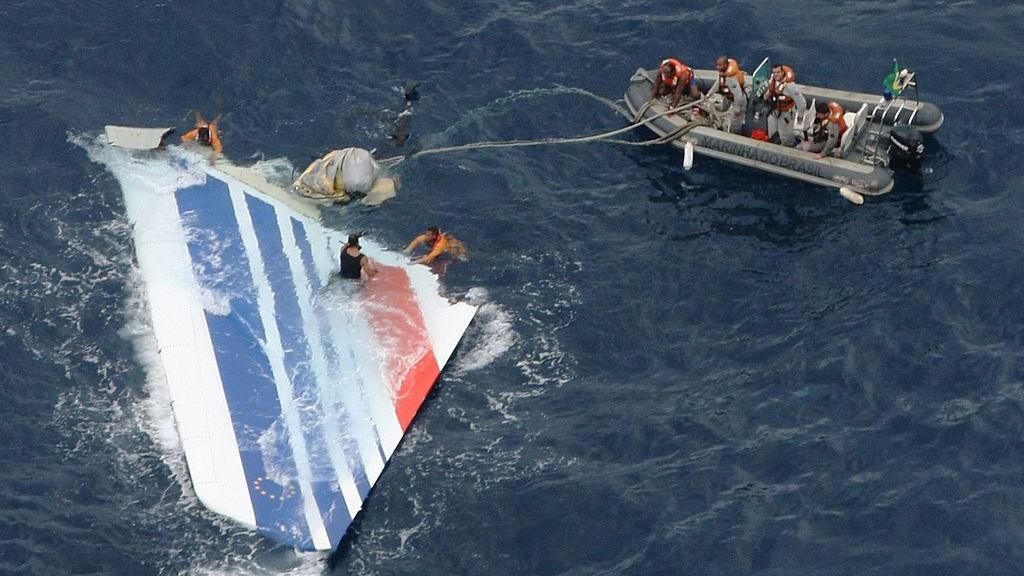
    Fifteen years after one of the deadliest aviation disasters in French history, a French appellate court has handed down a landmark guilty verdict against two major industry players: Air France and aerospace giant Airbus. On Thursday, the Paris Appeals Court reversed a 2023 lower court ruling that had cleared both companies of wrongdoing, finding them liable for corporate manslaughter in the June 1, 2009 crash of flight AF447.

    The ill-fated flight, traveling from Rio de Janeiro to Paris, crashed into the Atlantic Ocean roughly 700 miles off the coast of South America, after its speed sensors failed during a storm, triggering an aerodynamic stall that sent the Airbus A330 plummeting 38,000 feet into the water. All 216 passengers and 12 crew members on board lost their lives, with victims hailing primarily from France, Brazil, and Germany.

    The crash sparked one of the most complex and extensive search operations in aviation history. For nearly two years, the plane’s wreckage lay undisturbed on the deep ocean floor, spread across a 10,000-square-mile search area. It was only in 2011, after months of targeted deep-sea exploration, that investigators recovered the flight’s black box, which revealed the critical sequence of sensor failures and crew errors that led to the disaster.

    Recovery efforts for victims’ remains were equally grueling. In the first three weeks of operations, just 51 bodies were pulled from the water, leaving many families waiting years to lay their loved ones to rest. Nelson Marinho, a father of one victim, told BBC News Brasil in 2019 that he did not get to bury his 40-year-old engineer son, Nelson Marinho Filho – the last passenger to board the flight that day – until more than two years after the crash.

    When the first trial concluded in April 2023, the lower court had ruled there was insufficient evidence to prove the two companies bore legal responsibility for the disaster. Prosecutors and families of victims appealed that ruling, leading to the new verdict this week.

    The court sentenced each company to pay the maximum possible fine under French law: €225,000 (approximately $261,700) apiece. But the fine has drawn sharp criticism from many victim families, who have dismissed the penalty as little more than a symbolic token. Even so, the guilty verdict marks a significant reputational blow to both companies, which have spent 15 years denying all liability in the crash.

    During closing arguments in November, deputy prosecutors called the companies’ conduct “unacceptable,” accusing them of advancing baseless, unsubstantiated arguments to evade responsibility. Legal analysts in France now widely expect both firms to appeal the new ruling to France’s highest court. The BBC has reached out to both Air France and Airbus for public comment following the verdict, but has not yet received a response.

  • EU countries urge sanctions on Israeli minister for activists’ treatment

    EU countries urge sanctions on Israeli minister for activists’ treatment

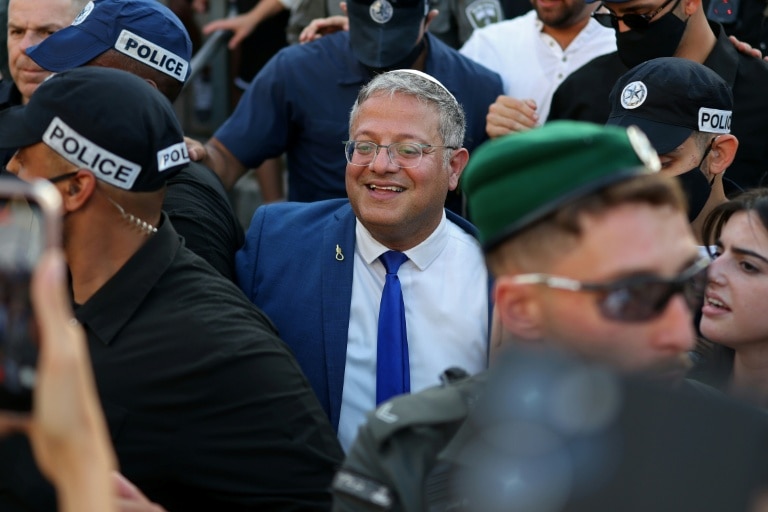
    A diplomatic firestorm has swept across Europe this week after Israel’s far-right National Security Minister Itamar Ben Gvir published shocking footage of detained Gaza-bound activists, prompting three key European Union countries to formally call for EU-level sanctions against the senior Israeli official.

    The incident centers on the latest Global Sumud Flotilla, a convoy of roughly 50 vessels carrying international activists that set out from Turkey last week in an effort to break Israel’s long-running air, land and sea blockade of the Gaza Strip. Israeli forces intercepted the flotilla at sea, detaining all on board and transferring them to the southern Israeli port of Ashdod to await deportation.

    On Wednesday, Ben Gvir shared a video of the detained activists on his public social media accounts, captioned “Welcome to Israel”. The footage, which shows Ben Gvir waving an Israeli flag while heckling the bound detainees, has drawn widespread international condemnation. In the video, dozens of activists are forced to kneel with their foreheads pressed to the ground and their hands bound behind their backs.

    By Thursday, Italy, Ireland and Spain had all joined together to push for formal punitive measures from the EU against Ben Gvir, with other European countries also registering sharp condemnation of the incident.

    Italian Foreign Minister Antonio Tajani announced Thursday on the social platform X that he had requested sanctions against the minister, saying the interception of activists in international waters and their subsequent “harassment and humiliation” violated the most fundamental standards of human rights. Tajani’s statement followed a remark one day earlier from Italian Prime Minister Giorgia Meloni, who called the activists’ treatment “intolerable” and demanded a formal public apology from the Israeli government.

    Spanish Prime Minister Pedro Sanchez also took to X on Wednesday to condemn the footage, saying the images of Ben Gvir humiliating international activists who support Gaza were completely unacceptable. “We will not tolerate anyone mistreating our citizens,” Sanchez added, noting that Madrid had already implemented a national entry ban on Ben Gvir back in September. For the EU, he added, sanctions against the minister are “a matter of urgency” for the European leadership in Brussels.

    In Ireland, a confidential letter from Prime Minister Micheal Martin to European Council President Antonio Costa was leaked to AFP Thursday by an anonymous government source, revealing Martin’s call for “further action” from the EU over the incident. In the letter dated Wednesday, Martin condemned what he called the “shocking treatment of EU citizens” and the “unacceptable behaviour” by Ben Gvir, and called for the incident to be added to the agenda for the next European Council meeting scheduled for June.

    Martin went further than his Italian and Spanish counterparts, stating that the bloc should consider sweeping measures against Israel: “At the very least, this must include the banning of products from Israeli settlements and the suspension of parts if not all of the EU’s Association Agreement with Israel.” The 2000 association agreement, which forms the legal framework for EU-Israel cooperation, includes a binding clause that requires both parties to uphold fundamental human rights standards.

    Beyond the EU, the United Kingdom also joined the international outcry Thursday, announcing it had summoned Israel’s most senior diplomatic representative in London over what UK officials called “the inflammatory video”.

    This incident marks the latest escalation in tensions between Europe and Israel over the ongoing humanitarian crisis in Gaza, following months of growing friction over Israeli military operations and restrictions on aid access to the besieged enclave. This latest flotilla attempt was the second such action in as many months, after Israeli forces intercepted a smaller activist convoy last May.

  • Germany charges alleged Iranian agent for scouting out Jewish figures with a view to attacks

    Germany charges alleged Iranian agent for scouting out Jewish figures with a view to attacks

    BERLIN – German federal prosecutors announced Thursday that two men have been formally charged with espionage and attempted murder conspiracy, alleging the pair were directed by an Iranian intelligence agency to collect intelligence on prominent German Jewish and pro-Israel figures ahead of planned deadly attacks.

    In accordance with German privacy regulations, the first defendant, a Danish national arrested last June in Danish territory, is only publicly identified as Ali S. His alleged accomplice, an Afghan national named Tawab M., was taken into custody in Denmark this past November. Prosecutors confirmed that the indictment was officially filed with the Hamburg State Court on May 7 this year.

    Court documents and official statements outline the full scope of the alleged plot: Ali S. stands accused of operating as a covert agent for the Intelligence Organization of Iran’s Islamic Revolutionary Guard Corps (IRGC), maintaining direct and regular contact with the IRGC’s elite Quds Force – the branch of the Iranian military responsible for extraterritorial operations. By early 2025, the defendant received explicit orders to surveil and gather detailed operational information on four high-priority targets.

    The named targets include Josef Schuster, president of the Central Council of Jews in Germany – the country’s largest umbrella organization representing Jewish communities – and Volker Beck, a former veteran German lawmaker and current head of the German-Israeli Society. The plot also targeted two unnamed Jewish grocery store owners based in Berlin. German prosecutors emphasized in their official statement that all surveillance activities were explicitly carried out to prepare for upcoming assassination attacks and arson operations on German soil.

    Investigators add that Ali S. conducted pre-attack reconnaissance of multiple locations across Berlin throughout 2024, and actively worked to recruit additional co-conspirators to carry out the violent plot. By May 2025, he had established contact with Tawab M., who allegedly agreed to source a firearm for an unnamed third party and coordinate that individual’s attempt to assassinate Beck.

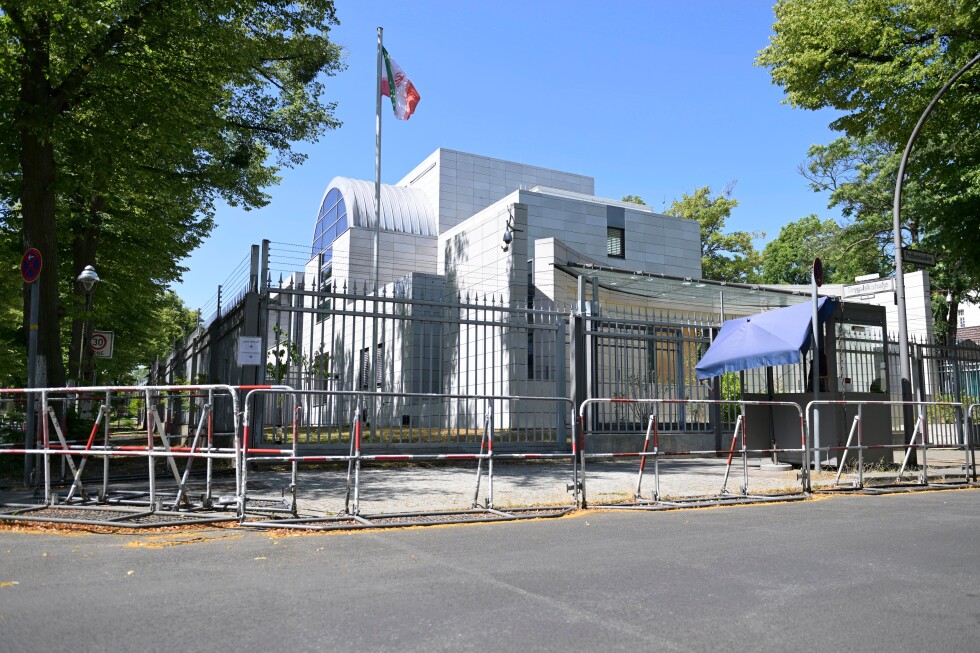
    Following Ali S.’s arrest last year, German officials immediately summoned Iran’s ambassador to Berlin to the German Foreign Ministry to address the allegations. At that time, the Iranian Embassy in Berlin issued a formal rejection of the claims, dismissing them as “unfounded and dangerous allegations” of a planned attack against Jewish targets in Germany.

  • Mane named in Senegal’s World Cup squad

    Mane named in Senegal’s World Cup squad

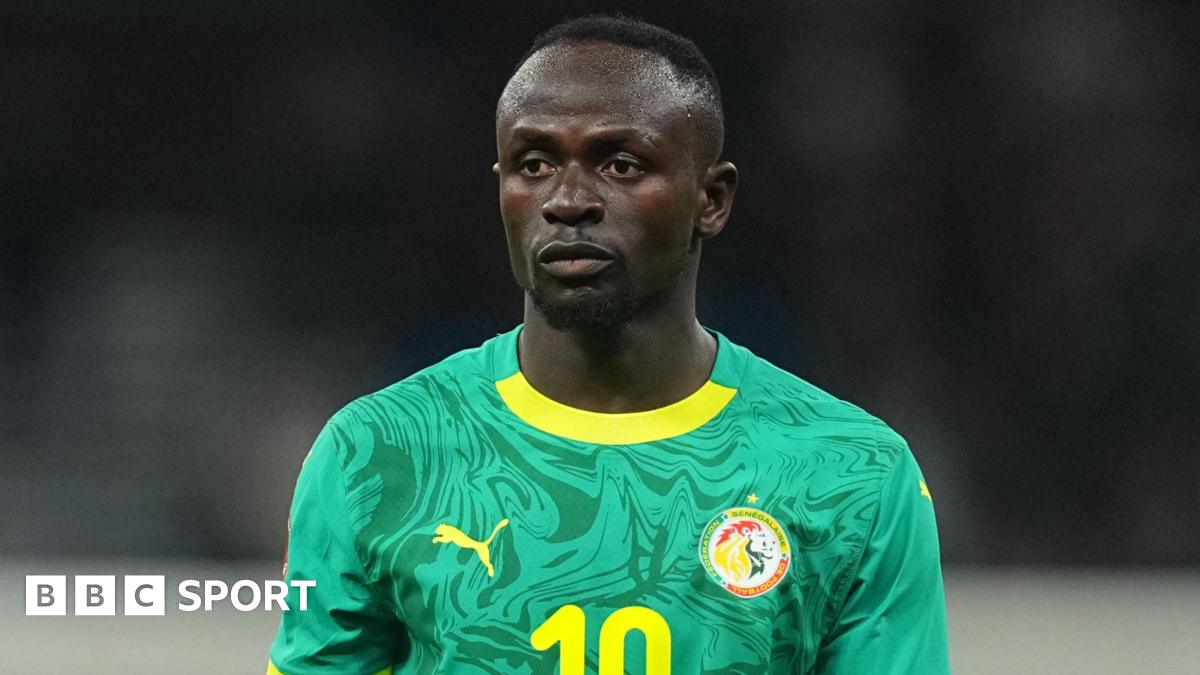
    Four years after a devastating knee injury ruled him out of the 2022 Qatar World Cup, Senegalese football star Sadio Mane has earned a spot in his nation’s preliminary 28-man squad for the 2026 FIFA World Cup co-hosted by the United States, Canada, and Mexico.

    The 34-year-old Al-Nassr forward, who boasts top-flight experience across Liverpool and Bayern Munich, is no stranger to last-minute World Cup heartbreak: he was originally named to Senegal’s 2022 squad before a pre-tournament knee injury forced him to withdraw entirely, leaving the West African nation without its talismanic attacking leader.

    Beyond his World Cup story, Mane has recently been at the center of one of African football’s most controversial moments. In January 2025’s Africa Cup of Nations final against Morocco, most of Mane’s Senegalese teammates walked off the pitch in protest after Morocco was awarded a stoppage-time penalty. It was Mane who remained on the field and convinced his protesting teammates to return to complete the match, which Senegal went on to win 1-0 via an extra-time goal from Pape Gueye. However, a subsequent appeal from the Confederation of African Football (CAF) overturned the result, awarding Morocco the tournament title in a decision that remains widely debated.

    Mane will lead a star-studded attacking group that includes Bayern Munich’s Nicolas Jackson, Everton’s Iliman Ndiaye, and Crystal Palace winger Ismaila Sarr. Head coach Pape Thiaw’s preliminary squad also features high-profile names across other positions: Everton midfielder Idrissa Gueye, Sunderland rising star Habib Diarra, and Tottenham Hotspur fan favorite Pape Matar Sarr all earned call-ups, alongside key defensive leaders Kalidou Koulibaly of Al-Hilal and Chelsea’s Mamadou Sarr.

    Under FIFA regulations, Thiaw is required to cut his preliminary squad down to the mandatory 26-player maximum by the final registration deadline of June 2, 2025.

    Senegal will kick off their 2026 World Cup campaign in New Jersey on June 16, with a tough opening group stage clash against defending champions France. They will then face Norway on June 22 before wrapping up group play against Iraq on June 26. This edition of the World Cup marks a historic milestone as the first expanded 48-team tournament, running across the three North American host nations from June 11 to July 19, 2026.

  • Russia holds nuclear drills on land, sea and air, joined by its ally Belarus

    Russia holds nuclear drills on land, sea and air, joined by its ally Belarus

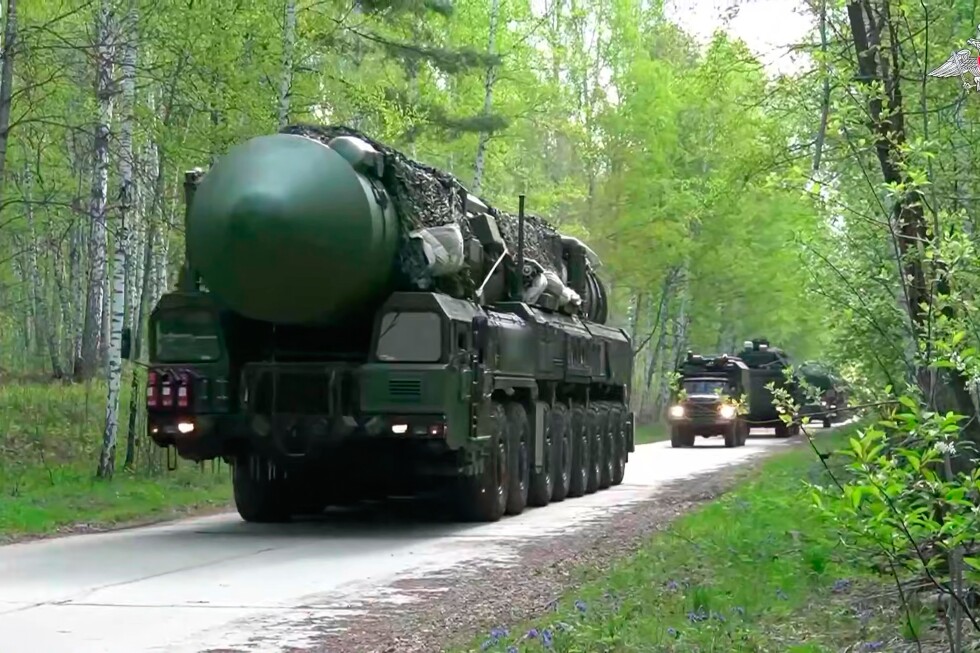
    In the final stretch of a high-stakes joint military exercise focused on nuclear capabilities, heavy military convoys transporting intercontinental ballistic missiles (ICBMs) rolled through forested training grounds Thursday, as nuclear-powered submarines departed their Arctic and Pacific basins and combat aircrews scrambled to their alert positions across Russia and its western ally Belarus.

    The three-day drill, which launched Tuesday, unfolds against a sharply escalated backdrop of long-range Ukrainian drone attacks deep into Russian territory. Recent strikes targeting Moscow’s outer suburbs have left three civilians dead and damaged multiple residential and industrial structures, eroding the Kremlin’s long-held narrative that the ongoing conflict in Ukraine — now stretching into its third year — remains a distant threat that does not disrupt ordinary Russian life.

    During a visit to a Belarusian military unit participating in the exercise, Belarusian President Alexander Lukashenko personally inspected Russian-made Iskander short-range ballistic missiles, which are modified to carry nuclear warheads. “I dreamed about this machine a long time ago,” Lukashenko told reporters during the inspection.

    Russian defense officials released detailed figures on the scale of the exercise: more than 64,000 military personnel, over 200 missile launch systems, more than 140 fixed-wing and rotary aircraft, 73 surface combat vessels, and 13 submarines, eight of which are outfitted with nuclear-armed ICBMs. According to the ministry, the core training objective of the drills is to practice “preparation and use of nuclear forces under the threat of aggression,” while also strengthening combined operational coordination between Russian and Belarusian military units. Belarus has served as a key Russian ally since the 2022 full-scale invasion of Ukraine, and currently hosts Russian nuclear weapons on its territory, including the advanced, nuclear-capable intermediate-range Oreshnik missile system.

    This exercise marks the latest iteration of the Russian government’s public demonstration of its nuclear deterrent capabilities, a strategy that Russian President Vladimir Putin has leaned on repeatedly since ordering the full-scale invasion of Ukraine in February 2022. The core goal of this posture is to dissuade Western nations from expanding military support to Kyiv, particularly by restricting Ukraine’s access to longer-range strike weapons that can hit targets deep inside Russia.

    Earlier this year, Putin signed off on a revised Russian nuclear doctrine that introduced a key new provision: any conventional attack on Russia backed by a nuclear-armed power will be treated as a combined attack on the Russian state. Analysts widely view this revision as a deliberate lowering of the threshold for potential Russian nuclear use, explicitly designed to deter Western nations from approving Ukrainian long-range strikes against Russian territory. The updated doctrine also extends the Russian nuclear umbrella to cover Belarus, with Putin confirming that while Moscow will maintain ultimate control over nuclear weapons deployed in the ally’s territory, Belarus would be allowed to participate in target selection in the event of armed conflict.

  • Air France, Airbus guilty of manslaughter in 2009 Paris-Rio crash: French court

    Air France, Airbus guilty of manslaughter in 2009 Paris-Rio crash: French court

    Fourteen years after one of the deadliest aviation disasters in French history, Paris’s appellate court has delivered a landmark ruling holding both Air France and aircraft manufacturer Airbus criminally responsible for the 2009 crash of Flight AF447 that claimed 228 lives.

    On June 1, 2009, the Airbus A330 operated by Air France was en route from Rio de Janeiro to Paris when a catastrophic sequence of failures unfolded over the mid-Atlantic. During a storm, ice crystals blocked the plane’s pitot tubes—small instruments critical for measuring airspeed. The malfunction triggered cockpit alarms and automatically disengaged the autopilot system. Confused by incorrect speed readings, the flight crew mistakenly put the aircraft into a steep climb that induced an unrecoverable stall, sending the jet plummeting into the ocean. There were no survivors among the 216 passengers and 12 crew members, with victims hailing from more than 30 countries, including 72 French nationals and 58 Brazilians.

    The case wound through France’s legal system for more than a decade, after a lower court acquitted both companies of involuntary manslaughter charges in 2023. That initial verdict sparked widespread outrage from families of the victims, who spent years pushing for accountability. Thursday’s appellate ruling overturned the lower court’s decision, finding the two companies solely and fully liable for the tragedy, and ordering each to pay the maximum possible fine for corporate involuntary manslaughter: 225,000 euros, or approximately $261,000.

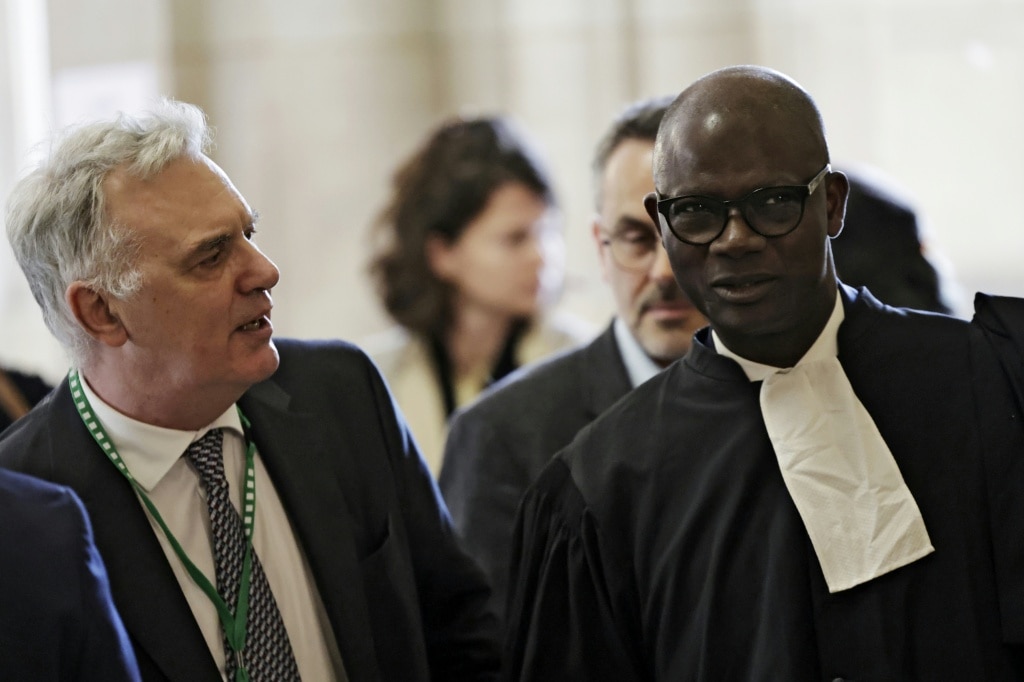
    While the financial penalties are widely viewed as symbolic, the conviction carries severe reputational consequences for both Air France, France’s national flag carrier, and Airbus, Europe’s largest aerospace manufacturer. Throughout the legal proceedings, both firms had denied criminal wrongdoing, framing the crash as a case of pilot error. In arguments during the eight-week appeal trial held between September and December 2024, lead prosecutor Rodolphe Juy-Birmann delivered a scathing rebuke of the companies’ conduct in the years following the disaster. “Nothing has come of it — not a single word of sincere comfort,” he said, dismissing the companies’ aggressive legal defense as “indecency.”

    Lawyers representing victim families argued that both entities had prior knowledge of potential pitot tube failure risks on the A330 model, but failed to take appropriate corrective action. The court’s ruling backed those claims, faulting Airbus for underestimating the severity of known sensor issues and failing to clearly communicate the risks to operating flight crews. For its part, Air France was found negligent for failing to develop and deliver specialized pilot training to handle emergencies caused by pitot tube icing, a shortcoming that left crew unprepared when the crisis unfolded. In court statements during the trial, Airbus counsel Christophe Cail reiterated the company’s commitment to a “zero accident” safety standard, while Air France representative Pascal Weil admitted the carrier had opted not to implement high-altitude emergency training for this scenario, saying “we sincerely believed it was unnecessary” at the time.

    Both companies have not yet announced whether they will challenge the appellate ruling in further legal proceedings. For the families of the 228 victims, the conviction marks a long-awaited turning point in their 15-year fight for official recognition of the corporate negligence that led to the disaster.