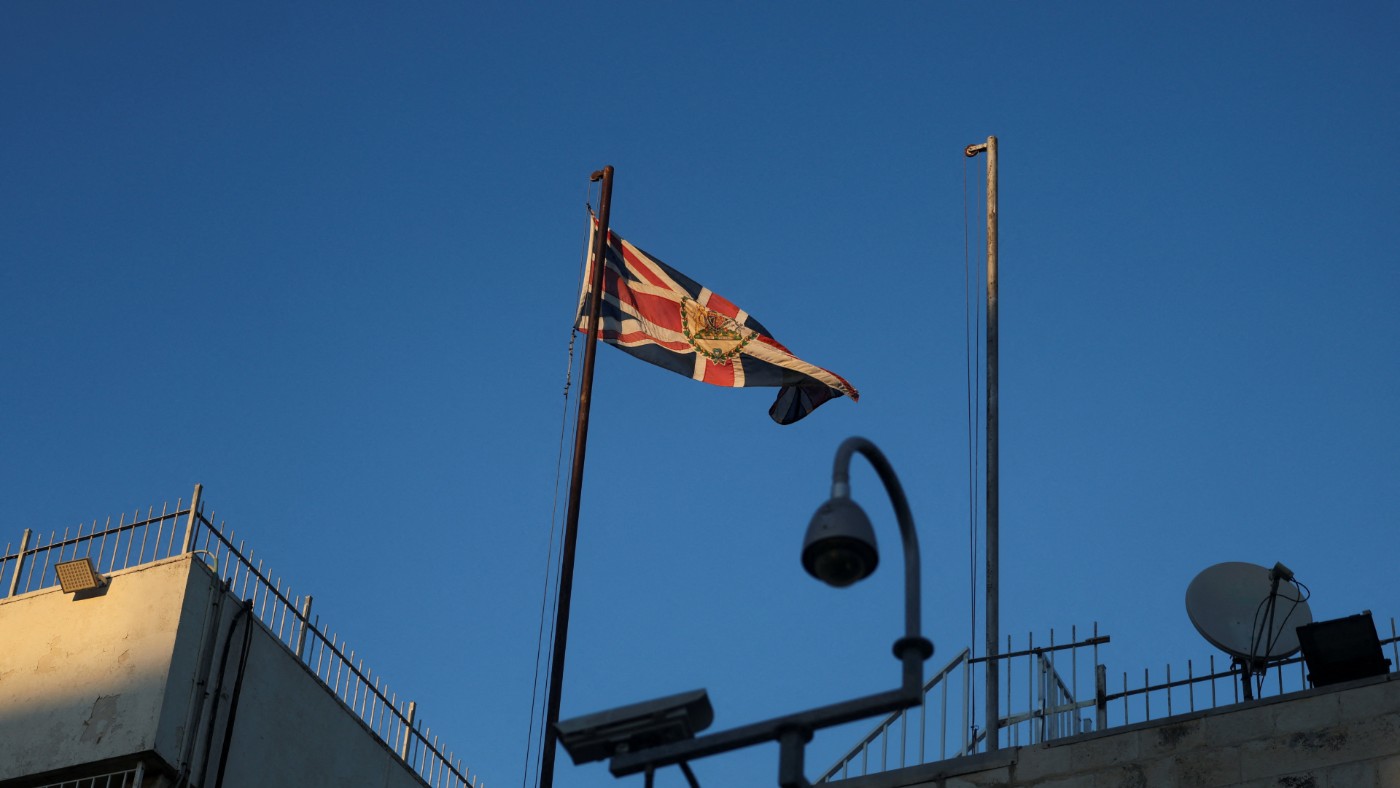
More than 130 prominent British legal figures—including senior barristers, retired judges, and leading international law academics—have publicly challenged Prime Minister Andy Burnham’s administration, arguing that the new Israeli settlement sanctions unveiled last week by Foreign Secretary Ed Miliband do not fulfill the United Kingdom’s binding duties under international law.
In a detailed six-page open letter delivered to Downing Street on Tuesday, the legal signatories first acknowledged the government’s step to coordinate its action alongside Canada and France, a rare unified international response to Israel’s long-standing settlement expansion. But the letter makes clear that the limited targeted trade measures announced are nowhere near the comprehensive action required by the 2024 binding ruling from the International Court of Justice (ICJ), which ordered all states to actively end their complicity in Israel’s occupation of Palestinian territory.
Last week’s policy shift marked a historic turning point for British foreign policy: the UK officially formally recognized that Israel’s decades-long occupation of Palestinian territory violates international law. In his address to parliament announcing the new rules, Miliband also went further than any prior British foreign secretary, confirming that he believes a campaign of ethnic cleansing against Palestinian communities is currently underway in the occupied West Bank.
Off-the-record government briefings to Middle East Eye (MEE) confirmed that the new sanctions will cover Israeli settlements across all occupied Palestinian territories, including not just the West Bank, but also the illegally annexed Golan Heights and East Jerusalem. The UK is not acting alone: eleven additional nations—Canada, Denmark, Finland, France, Iceland, Ireland, Norway, Poland, Portugal, Spain and Sweden—have already joined the UK in either implementing similar restrictions or actively considering their own sanctions on goods produced in Israeli settlements.
The list of signatories backing the criticism of the UK’s limited measures includes some of the country’s most respected legal voices: high-profile human rights barrister Michael Mansfield, former Lord Justice of Appeal Alan Moses, SOAS University of London law professor Nimer Sultany, and University College London international law professor Ralph Wilde, among many others.
The letter lays out a clear roadmap for what comprehensive compliance with international law would look like for the UK. It calls on the government to expand the scope of sanctions beyond just trade in physical goods to include critical service sectors that enable settlement growth: insurance, accountancy services, and digital infrastructure that supports Israeli settlement expansion. The legal experts also demand that the government issue a public, binding confirmation that no UK public body, public sector pension scheme, or national sovereign fund maintains any investments linked to Israeli settlements. Most notably, the letter calls for the imposition of a full, complete arms embargo on Israel, a step that would mark a dramatic break from decades of close UK-Israeli military cooperation.
Ralph Wilde, the UCL international law professor, emphasized that while the government’s recent formal recognition of the occupation’s illegality is a welcome shift after years of British diplomatic inaction, the limited response does not match the scale of the legal duty the ICJ imposed on all UN member states. “The government’s decision to finally acknowledge that Israel’s occupation of the Palestinian Gaza Strip and West Bank is illegal is welcome,” Wilde said. “But the consequences of this illegality for the UK and other states—special legal duties to take comprehensive action to bring this and other illegal actions by Israel, including its genocide in Gaza, to an end—are far more wide-ranging than the important but limited actions against settlements and settlers announced.”
Nimer Sultany, the SOAS law professor, framed the core issue at the heart of the UK’s half-measures, noting that Israel’s occupation is not an unintended side effect of regional conflict, but a core, intentional policy. “The elephant in the room is that the occupation is not a bug, it’s a feature,” Sultany said. “Israel’s political consensus uniformly opposes the creation of a sovereign Palestinian state. Thus, ending Israel’s occupation of the Palestinian territories, as determined by the International Court of Justice, requires immediate, effective and comprehensive actions by the UK government, not a piecemeal approach that leaves the foundations of the occupation intact.”
The letter anchors its call for a full arms embargo in the UK’s existing obligations under the Arms Trade Treaty, specifically Article 6(3), which strictly prohibits any arms transfers when a state knows the weapons will be used to commit genocide, crimes against humanity, or grave breaches of the Geneva Conventions. “Having made that finding [that ethnic cleansing is occurring and the occupation is illegal], the UK Government cannot treat that knowledge as absent,” the letter argues. The legal experts also draw a sharp contrast between the UK’s robust, sweeping sanctions on Russia following its 2022 full-scale invasion of Ukraine, and the half-measures applied to Israel’s decades-long occupation. The Russian sanctions covered all major sectors of the Russian economy: major banks, energy firms, shipping networks, all arms exports, private investment activity, and cross-border financial services—all on the explicit grounds that these sectors enable and finance illegal occupation. That same logic, the letter points out, has not been extended to Israel’s occupation of Palestinian territory, despite matching the same legal threshold.
The letter also adds one more demand: the UK government must implement strict oversight to ensure that funds raised by UK-registered charities are not diverted to support illegal settlement activities. This call comes after a June statement from Labour MP Melanie Ward revealing that Israeli settlements have received at least £28 million in donations from 32 charities registered in England and Wales. In response to that disclosure, the UK Charity Commission launched a fact-finding inquiry into charities operating in Israeli-occupied settlement territories in August.
This report was published by Middle East Eye, a media organization that produces independent, on-the-ground coverage and analysis of the Middle East, North Africa and surrounding regions.