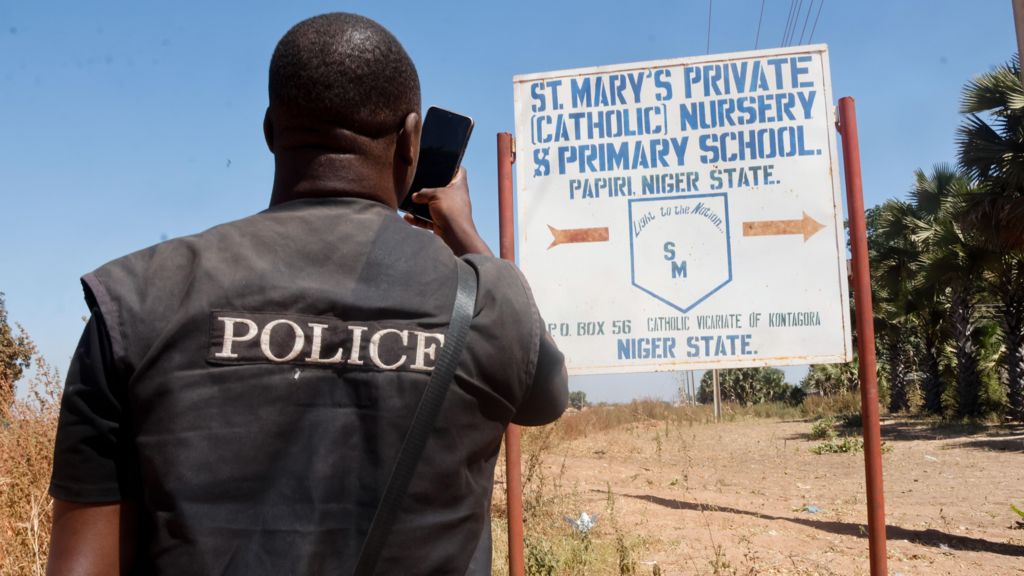
Approximately 100 students kidnapped from St Mary’s Catholic school in Nigeria’s central Niger state last month have been successfully released, according to official confirmations from both religious and law enforcement authorities. The development marks a partial resolution to one of the latest mass abductions that have gripped the nation.
Niger State Police Commissioner Adamu Abdullahi Elleman and Bishop Bulus Dauwa Yohanna, the local Catholic leader overseeing the school, independently verified to BBC that they received official notification regarding the children’s liberation. Government authorities indicated that the reunification process between the freed students and their families would commence on Monday, though specific operational details remain classified.
The November 21st assault on St Mary’s Catholic school in Papiri resulted in the abduction of more than 250 students alongside 12 staff members, representing merely one incident in an escalating pattern of coordinated kidnappings targeting educational and religious institutions across northern and central Nigeria.
Critical aspects surrounding the release operation remain shrouded in secrecy. Authorities have not disclosed whether the children’s freedom was achieved through tactical military intervention or negotiated settlement, nor have they confirmed if financial ransoms were exchanged. Abdullahi Sule, Governor of neighboring Nasarawa state, acknowledged the federal government’s pivotal involvement while emphasizing that operational sensitivities prevent full transparency regarding the rescue methodology.
The liberation follows last week’s visit to Papiri by National Security Adviser Nuhu Ribadu, who personally assured community representatives led by Bishop Yohanna that authorities were prioritizing the safe recovery of all captives.
This incident occurs within a broader context of intensified attacks against soft targets. Mere days before the St Mary’s abduction, parallel incidents unfolded at the Christ Apostolic Church in Kwara state (resulting in two fatalities and 38 kidnappings) and Government Girls’ Secondary School in Kebbi state (where two were killed and 25 Muslim students captured). While victims from these prior attacks have since gained freedom, the systematic targeting continues unabated.
Just last week, armed assailants seized approximately 20 individuals across two separate events—including worshipers at a newly established church in Kogi state and wedding participants in predominantly Muslim Sokoto state.
Analytical consensus predominantly attributes these kidnappings to criminal syndicates seeking monetary gains, though presidential representatives have alternatively suggested jihadist involvement. Nigeria’s official prohibition of ransom payments intends to disrupt terrorist financing, though widespread noncompliance reportedly persists.
The security crisis attracted international scrutiny when former US President Donald Trump recently threatened potential military intervention should Christian persecutions continue. Nigerian officials counter that violence affects all religious communities equally, rejecting allegations of sectarian targeting.