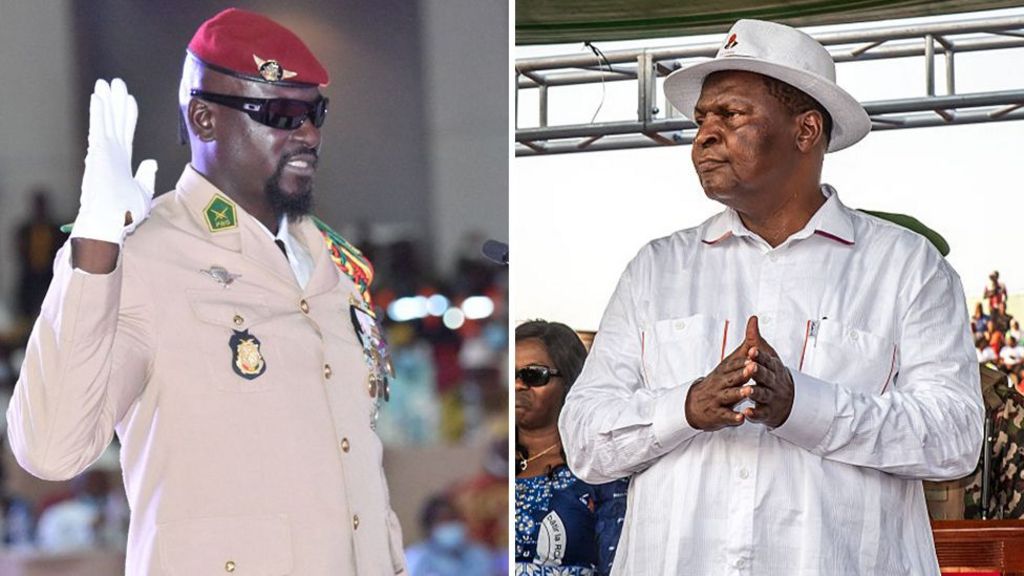
This Sunday marks a pivotal moment for two African nations as Guinea and the Central African Republic (CAR) conduct presidential elections under dramatically different political circumstances, yet with striking parallels in their incumbents’ pursuit of extended power.
In the Central African Republic, President Faustin-Archange Touadéra seeks a controversial third term following constitutional amendments that eliminated term limits. The mathematician-turned-politician, initially elected as a consensus figure following periods of rebel rule, now faces opposition boycotts despite the unexpected participation of his main rival, Anicet-Georges Dologuélé. The landlocked nation, among Africa’s poorest, has endured decades of instability but maintains fragile multi-party politics with recent progress in rebel disarmament and a hybrid national-international court addressing human rights crimes.
Meanwhile, Guinea presents a contrasting narrative of military transition. General Mamadi Doumbouya, who seized power in a 2021 coup that ousted 83-year-old President Alpha Condé, now seeks constitutional legitimacy through elections. Despite allowing eight challengers, Doumbouya has dominated the campaign while excluding prominent opposition leader Cellou Dalein Diallo. His methodical constitutional review and maintained Western relations distinguish him from neighboring juntas that have embraced Russian partnerships.
The elections carry significant implications for regional stability. The Economic Community of West African States (ECOWAS) views Guinea’s electoral process with relief following the withdrawal of Mali, Burkina Faso, and Niger from the bloc. Both nations’ transitions—despite concerns about democratic backsliding and human rights records—represent cautious steps toward normalization in a region battered by coups and jihadist insurgencies. International partners appear inclined to support these imperfect processes rather than risk further destabilization, particularly with Sudan’s conflict looming near CAR’s border and security challenges persisting across the Sahel.