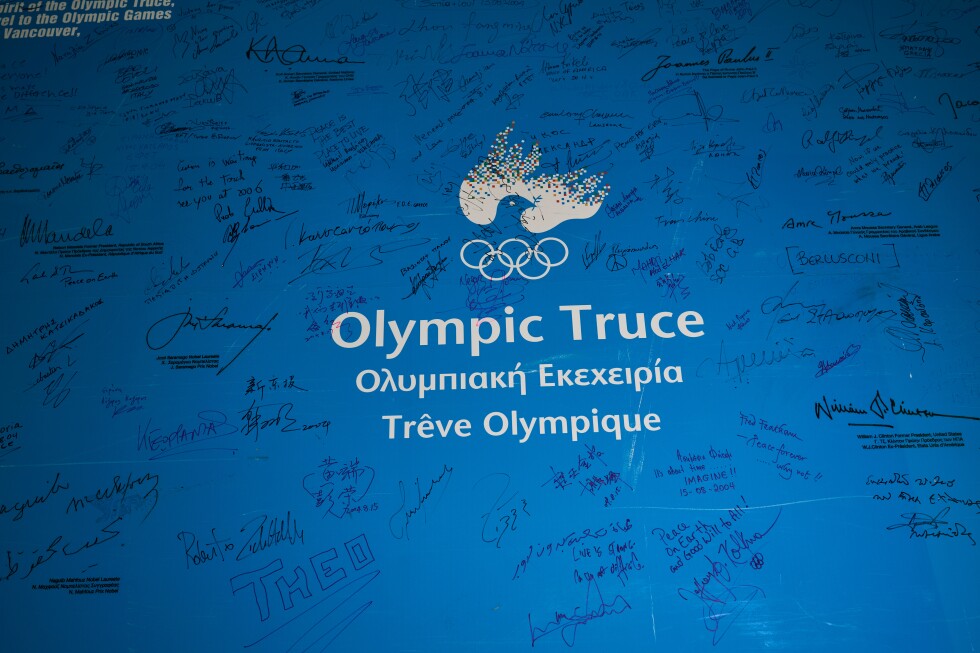
As the Milan Cortina Winter Olympics approach, the United Nations and Olympic organizers have renewed their call for a worldwide cessation of hostilities—a modern interpretation of the ancient Greek tradition known as the Olympic Truce. This seven-week pause, scheduled to begin one week prior to the February 6 opening ceremonies and extend through the Paralympics’ conclusion, represents a symbolic appeal for peace during a period of unprecedented global conflict.
The concept originates from ancient Greece, where warring city-states would halt combat to ensure safe passage for athletes and spectators traveling to Olympia. Revived in modern form during the 1994 Lillehammer Winter Games amid the Yugoslav Wars, the truce has since become a ceremonial tradition backed by UN resolutions—though it has failed to stop any conflicts in its 17 attempts.
Despite its imperfect record, the truce has occasionally produced meaningful moments: a one-day humanitarian pause during the Sarajevo siege allowed aid delivery in 1994, and the 2000 Sydney Games witnessed a unified march by North and South Korean athletes. Constantinos Filis, director of the International Olympic Truce Center, acknowledges the practical challenges but emphasizes the importance of the symbolic message reaching global audiences.
This appeal for peace comes against a troubling backdrop documented by Uppsala University’s conflict researchers, who reported 61 active armed conflicts in 2024—the highest number recorded in modern history. Their upcoming report indicates even greater conflict numbers for 2025, with particular concern about Western Africa where extremist groups continue expanding operations.
The Bulletin of the Atomic Scientists reinforced this grim assessment by moving their symbolic Doomsday Clock closer to midnight, reflecting increased existential threats to humanity. Meanwhile, the gap between Olympic ideals and reality remains starkly evident—Russia’s full-scale invasion of Ukraine began during a truce period in 2022.
UN Secretary-General António Guterres and International Olympic Committee President Kirsty Coventry maintain that the Games represent a unique opportunity to transcend geopolitical divisions. Coventry, reflecting on her childhood in Zimbabwe, emphasized how witnessing peaceful competition can inspire hope and celebrate shared humanity even during times of profound division.