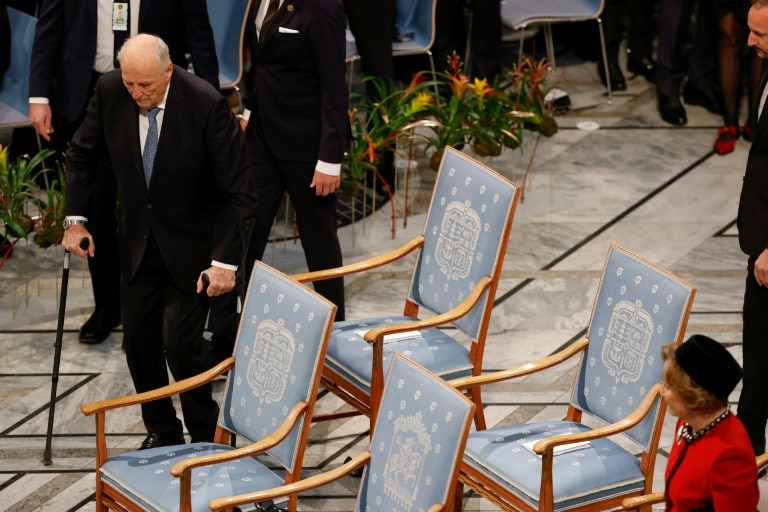
At 89 years old, Norway’s King Harald V — the longest-reigning living monarch in Europe — has seen his health worsen over the weekend while receiving inpatient care at Oslo University Hospital, the Norwegian Royal Palace confirmed in an official public statement released Sunday. The king was first admitted to the facility one week prior after experiencing dangerous fluid retention linked to ongoing cortisone treatment for his chronic blood condition, haemolytic anaemia, and was initially placed on a two-week medical leave from all official duties. Haemolytic anaemia develops when red blood cells break down faster than the body can replace them, triggering persistent fatigue, skin paleness, and difficulty breathing for affected patients. Since admission, the king has also developed a secondary bacterial blood infection, which medical teams are treating with antibiotic therapy. The palace noted in its update that the monarch has shown initial positive responses to this antibiotic regimen, despite the overall decline in his health status. Following the deterioration, the royal household has already scrapped a planned official visit to Norway’s central Trondelag region, scheduled for September 1 and 2 — a trip that was slated to take place after the original two-week leave period was set to end. Multiple senior members of the Norwegian royal family have visited the king at his hospital bedside in recent days. According to local Norwegian newspaper Verdens Gang, visitors on Sunday included the king’s wife, 89-year-old Queen Sonja; his son and heir Crown Prince Haakon, who has stepped into the role of regent during the king’s medical leave; Crown Princess Mette-Marit, Haakon’s wife; and the king’s sister. All family members declined to comment on the king’s condition to reporters after leaving the hospital. King Harald has navigated a series of serious health challenges in recent years, which have already forced him to adjust his public role: he previously received a pacemaker to manage a heart condition and has gradually reduced the volume of his official engagements over time. Despite these struggles, the king has repeatedly rejected calls for him to abdicate the throne, noting that he swore a lifelong oath of office to the Norwegian Parliament when he ascended to the throne in 1991. This is not the king’s first unplanned hospitalisation in 2024: in February, he was admitted for treatment of an infection and dehydration while on a private holiday in Tenerife with Queen Sonja, who herself had a brief hospital stay for heart concerns in May. The king’s declining health comes at a period of unprecedented turmoil for the entire Norwegian royal household, which has faced overlapping scandals and personal crises in recent months. Crown Princess Mette-Marit, the next queen consort of Norway, has faced intense public and media scrutiny over her documented past connections to disgraced American financier and convicted sex offender Jeffrey Epstein, who died in prison in 2019. Court documents released in the United States earlier this year revealed that Mette-Marit maintained regular, at times intimate, correspondence with Epstein between 2011 and 2014 — years after Epstein had already been convicted of a sex offense in Florida. Further adding to the household’s stress, Mette-Marit’s son from her first relationship, Marius Borg Hoiby, was convicted in June on dozens of criminal charges including two counts of rape and multiple counts of violence against a former partner, resulting in a four-year prison sentence. Borg Hoiby has since filed an appeal challenging the conviction. Mette-Marit herself has also faced a major personal health crisis: living with a chronic serious lung condition, she underwent a life-saving lung transplant in July. Despite the string of personal challenges and scandals facing the royal family, the institution remains broadly popular among the Norwegian public. Polling and public sentiment consistently reflect high approval for the monarchy, a trend widely attributed to King Harald’s longstanding reputation as a unifying national figure during his 33-year reign.