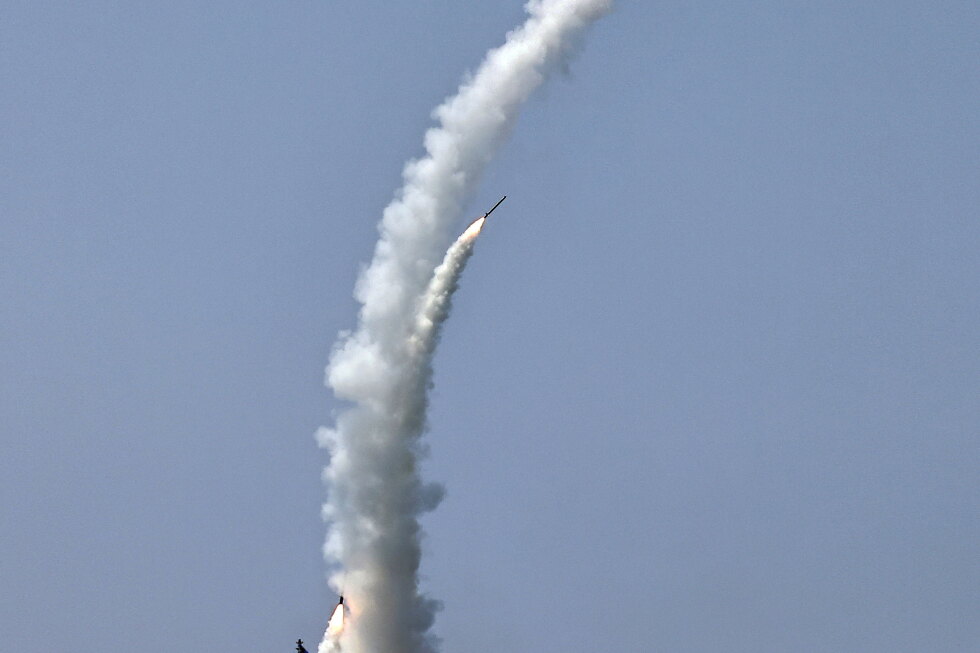
In a latest demonstration of North Korea’s push to develop a nuclear-capable navy, leader Kim Jong Un supervised live weapons tests and operational evaluations on the newly repaired 5,000-ton guided-missile destroyer Kang Kon, state media reported over the weekend. The country’s official Korean Central News Agency (KCNA) detailed that Friday’s trials included test-firings of a nuclear-capable strategic cruise missile, live firings of the warship’s main naval gun and automatic cannons, alongside comprehensive checks of its electronic warfare infrastructure, target-tracking systems and on-board information processing capabilities. Kim observed the full sequence of tests from a coastal observation post before issuing a formal directive: military and shipbuilding officials must wrap up all remaining sea trials and deploy the Kang Kon to active frontline service within a two-month timeline. This latest set of military assessments comes just weeks after Pyongyang formally commissioned its first 5,000-ton guided-missile destroyer, the Choe Hyon, in late June. That milestone was marked by a high-profile ceremony, where Kim reaffirmed that his goal of outfitting the entire North Korean Navy with nuclear-capable weapons systems was progressing on schedule. The Choe Hyon was first publicly unveiled in April 2025, with Kim framing the vessel as a transformative step that would dramatically extend the North Korean military’s operational range and bolster its ability to carry out preemptive strikes against adversary targets. According to KCNA’s official disclosures, the warship is outfitted with a layered suite of weapons, including anti-air and anti-ship defense systems, as well as both nuclear-capable ballistic and cruise missiles. South Korean defense officials and independent military analysts broadly suspect the Choe Hyon class of destroyers was developed with significant technical assistance from Russia, amid a rapid deepening of military and defense cooperation between Moscow and Pyongyang over the past two years. However, some outside experts have cast doubt on the actual combat effectiveness of the newly built vessels once deployed. The Kang Kon, the second ship of North Korea’s new 5,000-ton destroyer class, was first presented to the public in May 2025, one month after the Choe Hyon’s debut. But the vessel suffered serious damage during a botched launch ceremony at the northern North Korean port of Chongjin, an incident that triggered a public rebuke from Kim. Pyongyang confirmed the destroyer had completed repairs and was relaunched in June, but outside defense analysts continue to question whether the vessel meets the technical standards required for reliable active service. Kim’s push to expand North Korea’s naval capabilities marks a notable strategic shift after years of prioritizing development of land-based ballistic missile programs. Today, his military modernization agenda includes construction of a domestically built nuclear-powered attack submarine and development of intercontinental ballistic missiles capable of being launched from underwater platforms, priorities he outlined when laying out his five-year national defense goals at the Workers’ Party Congress held last February. Looking ahead, Kim has set an ambitious production target: Pyongyang aims to construct two new 5,000-ton guided-missile destroyers every year for the next five years, alongside development of a larger 10,000-ton destroyer class to further expand the navy’s blue-water operational capabilities.