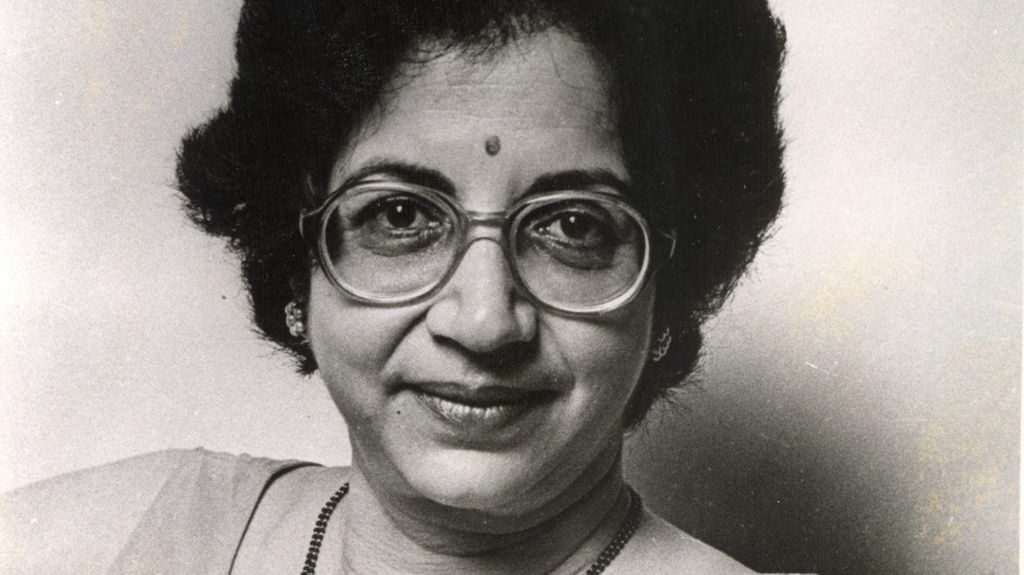
The Indian performing arts community is mourning the loss of one of its most transformative figures, Vijaya Mehta, who passed away last week at the age of 92 after a decades-long career that redefined the trajectory of Marathi theatre.
Born in 1934 in Vadodara, located in modern-day Gujarat, Mehta grew up in a family rooted in acting. Despite a clear path opening up to her in mainstream commercial cinema, she made the deliberate choice to dedicate her life to theatre, a decision that would reshape regional performing arts for generations. Her introduction to Marathi stage work came during her college years, when a professor encouraged her to pursue acting, and she later honed her craft under the mentorship of Ebrahim Alkazi and Adi Marzban, two foundational pioneers of modern Indian theatre, absorbing their commitment to bold creative experimentation.
Widely credited with spearheading the modernization of Marathi theatre through the 1960s and 1970s, Mehta broke dramatically from the field’s long-held traditions of over-the-top melodrama and opulent, unrealistic sets. Instead, she crafted experimental works centered on the everyday lives of ordinary people, bringing layered, flawed, authentic characters to the stage that resonated deeply with Maharashtra’s growing middle-class audience, who for the first time saw their own experiences reflected truthfully in theatrical performances.
In 1960, the same year that the Bombay Reorganisation Act established the new state of Maharashtra, Mehta co-founded Mumbai’s landmark experimental theatre collective Rangayan. The group went on to stage some of the most daring productions in Marathi theatre history, while nurturing a new generation of acting and writing talent. Mehta also expanded the boundaries of Marathi theatre by introducing audiences to fresh takes on Sanskrit classics, new productions from iconic Marathi playwrights such as Vijay Tendulkar, and innovative adaptations of works by global theatrical legends including Bertolt Brecht and Anton Chekhov.
Beyond her work on the stage, Mehta built an acclaimed career in film as a director and actor. Her best-known features include 1985’s *Rao Saheb*, a period drama following a 19th-century reformist lawyer in Maharashtra, and 1988’s *Pestonjee*, a nuanced exploration of love, infidelity, and friendship among the Parsi community of 1950s Mumbai. For more than a decade, she also served as chairperson of Mumbai’s National Centre for the Performing Arts (NCPA), collaborating with leading Indian artists and iconic international theatre figures such as Peter Brook and Eugenio Barba.
Throughout her career, Mehta mentored countless artists who would go on to find fame across Indian stage and cinema, including well-known Bollywood actors Nana Patekar and Anupam Kher. In tributes shared following her death, peers, protégés, and public figures have celebrated her enduring legacy. Maharashtra politician Raj Thackeray noted that Mehta emerged at a pivotal moment when Maharashtra was undergoing rapid social change, industrialization, and expanding access to education, and that she filled a critical need for a new, modern approach to Marathi theatre. Playwright Mahesh Elkunchwar, whose early one-act works Mehta directed and produced through Rangayan, recalled that the collective prioritized artistic exploration over fame or profit, writing “When I joined hands with Bai [Madam], as Vijaya was called, I knew that I had found my home ground. We were not interested in entertaining; fame and money were not even on our radar. We wanted to explore theatre, art and life through our work.”
Veteran actor Anupam Kher, who led the cast of *Rao Saheb*, recalled Mehta’s rigorous, insightful approach to directing, writing “I had already done a few films by then and thought I understood something about acting. But every rehearsal with her reminded me how vast the ocean of this craft really is. In front of her wisdom, her understanding of human behaviour, and her extraordinary sensitivity, I happily became a student again.”
Mehta leaves behind an unmatched body of work and an indelible mark on Indian performing arts. Her death has left an unfillable void in the Indian theatre community, with actress Sonali Kulkarni summarizing the widespread grief and gratitude: “To say that your passing is our loss would be too small a thing to say. We would only diminish what you truly gave us. The richness your presence brought, the abundance you gifted to the theatre is something we can never fully repay.” Over her career, Mehta earned some of India’s highest arts honors, including multiple National Film Awards for acting and direction, and the Padma Shri, a top civilian award granted by the Indian government, in recognition of her transformational contribution to modern Indian theatre.