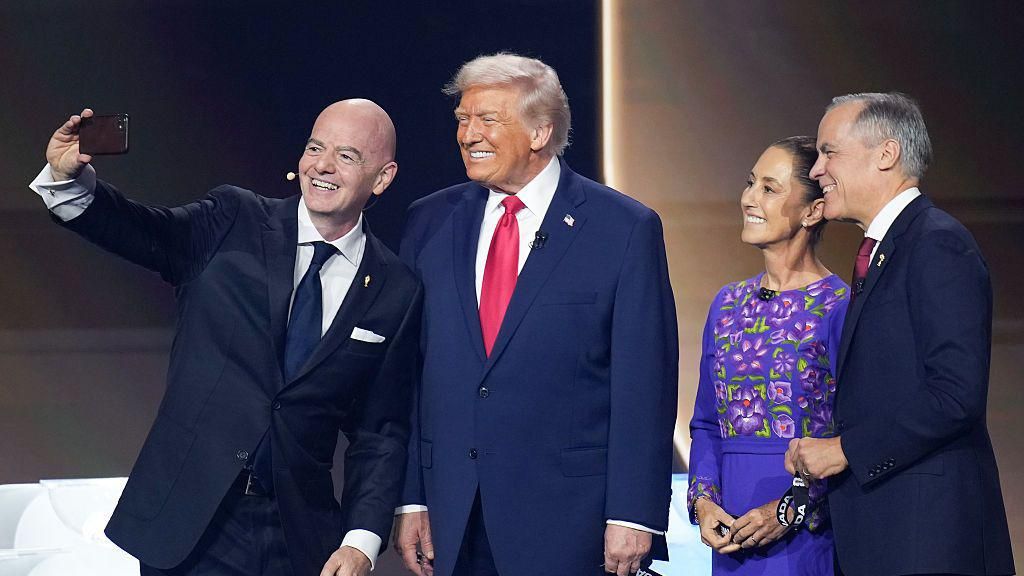
In a display of diplomatic theater, the leaders of the United States, Mexico, and Canada shared the stage at Washington DC’s Kennedy Centre for the 2026 World Cup draw, projecting unity while navigating complex trade negotiations behind the scenes. President Donald Trump, Mexican President Claudia Sheinbaum, and Canadian Prime Minister Mark Carney participated in the ceremonial selection of tournament groups, marking their first trilateral appearance since their respective administrations began.
The event facilitated the inaugural meeting between President Trump and President Sheinbaum, who leads Mexico as America’s largest trading partner. While Prime Minister Carney had previously engaged with Trump on multiple occasions, substantive trade discussions between the nations have remained suspended pending policy reviews.
Beneath the cordial public interactions lies significant uncertainty regarding the future of the US-Mexico-Canada Agreement (USMCA), which faces a mandatory review in 2026. The Trump administration has signaled potential dramatic changes to North American trade architecture, including possibly separating the trilateral pact into distinct bilateral agreements. US Trade Representative Jamieson Greer publicly questioned the economic rationale behind maintaining a unified trade framework, noting the fundamentally different relationships America maintains with each neighbor.
Despite these underlying tensions, the leaders maintained warm public decorum throughout the event. They collectively posed for photographs with FIFA President Gianni Infantino and engaged in limited sideline discussions about trade matters, particularly concerning steel, aluminum, and automobile tariffs. President Sheinbaum confirmed brief bilateral engagement with President Trump to address these specific trade issues.
The event also featured President Trump receiving the inaugural FIFA Peace Prize, which he described as “one of the honours” of his life. Infantino presented the award in recognition of Trump’s “exceptional and extraordinary actions to promote peace and unity around the world.”
Meanwhile, American business interests have overwhelmingly advocated for maintaining the current trade framework. During recent public hearings on the USMCA review, representatives from agricultural, business, and policy groups testified about the agreement’s critical role in facilitating access to Canadian and Mexican markets.
The World Cup draw provided a temporary respite from trade negotiations, but the fundamental questions regarding North American economic integration remain unresolved as the 2026 review deadline approaches.