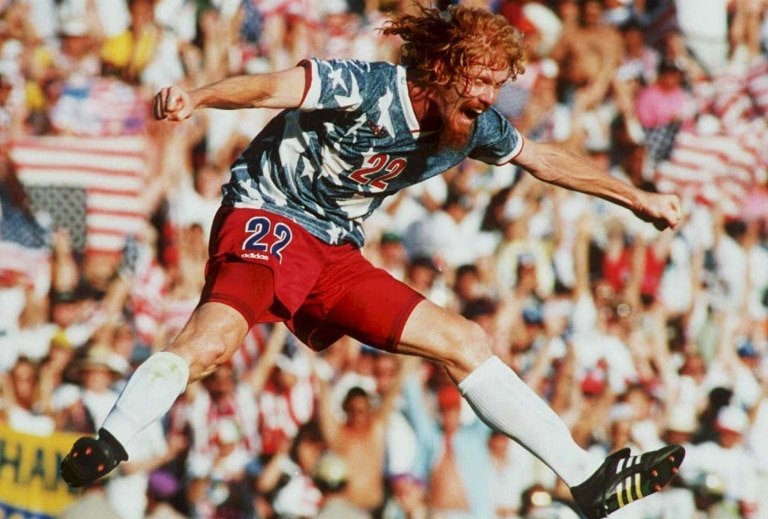
As the United States prepares to co-host the 2026 FIFA World Cup alongside Mexico and Canada, the nation’s soccer community confronts unprecedented pressure to finally achieve the long-awaited breakthrough for the sport. The tournament’s return to American soil after 32 years represents a critical inflection point for soccer’s development in a country that has dramatically evolved since the 1994 World Cup.
Alexi Lalas, the iconic red-bearded defender from the 1994 squad turned television analyst, encapsulates the heightened expectations: “We can no longer have low expectations. The opportunities and infrastructure we’ve built since 1994 have gone into producing better soccer players—anything less than the round of 16 is ultimately a failure.”
The transformation since the 1990s has been remarkable. When FIFA initially awarded the 1994 World Cup to the United States, it came with the mandatory condition of establishing a top-tier professional league—a leap of faith that has yielded substantial returns. Major League Soccer has now attracted global superstars like Lionel Messi and consistently outperforms many European leagues in average attendance.
Bettina Garibaldi, Chief Marketing Officer for the FIFA World Cup 26 New York New Jersey Host Committee, reveals significant progress: “It’s actually the third most popular sport in the US—it beats baseball. That officially came out as of January. So you can see how much the sport, in and of itself, is growing.”
The statistical evidence supports this growth narrative. Nuria Tarre, Chief Marketing Officer at Manchester City and City Football Group, notes: “There are already 100 million people interested in soccer in the United States. Some 32 million say they’re interested in Manchester City. The numbers are crazy.”
However, former US international Jozy Altidore emphasizes that structural challenges remain: “Academies abroad are by far more robust. It’s almost like a factory—Messi leaves Barcelona, here comes Yamal. It’s not an accident.” He argues that developing elite talent requires creating challenging environments rather than coddling players, alongside comprehensive grassroots investment beyond merely providing equipment.
Broadcaster and former midfielder Stu Holden acknowledges the legitimate shift in expectations: “We’ve invested so much more in the game, and our expectations should not be that of the past. It’s based in realism now that we should expect this group can get to a fourth and final.”
Two-time World Cup winner Carli Lloyd offers a different perspective on success metrics: “The measure of success with this team… is going to be how much they inspire the country. That is the power that they have—and that is in their control.” This sentiment reflects the broader recognition that the 2026 tournament represents not just a competitive opportunity but a cultural moment that could permanently reshape soccer’s place in American sports consciousness.