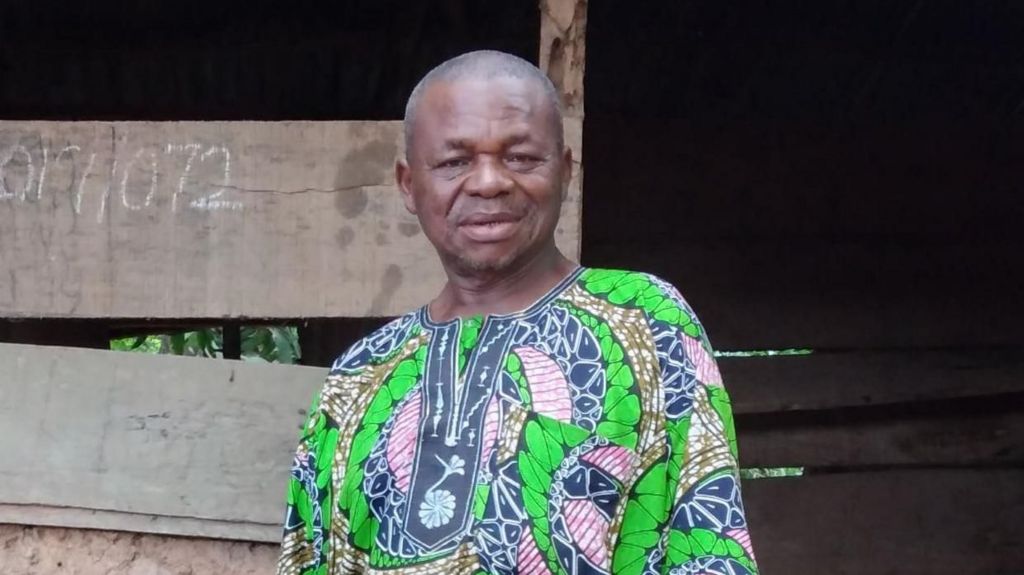
The global art community mourns the passing of Kasali Akangbe Ogun, the renowned Nigerian wood carving master who transformed Yoruba cultural traditions into monumental artistic achievements. Ogun, who died recently after a brief illness, was laid to rest this week, leaving behind a legacy that bridges sacred art practices and contemporary cultural preservation.
Hailing from Osogbo in southwestern Nigeria, Ogun emerged from a long lineage of Yoruba wood carvers, revitalizing a family tradition that had skipped two generations before his birth around 1945. Despite receiving only one week of formal education due to his father’s early death, Ogun’s innate talent propelled him to international recognition, eventually lecturing university students in the United States through his artistic mastery.
Ogun became a pivotal figure in the New Sacred Art Movement, founded by Austrian-Nigerian artist and Yoruba priestess Susanne Wenger in the 1960s. This collective dedicated itself to protecting the 75-hectare Osun Forest and its sacred river, which gained UNESCO World Heritage status in 2005 for its profound cultural significance in Yoruba cosmology. The forest is regarded as the abode of Osun, the goddess of fertility in the Yoruba pantheon.
The artist developed a distinctive style characterized by lean, elongated faces and dynamic, flowing forms that transformed traditional Yoruba devotional practice into contemporary artistic expression. His craftsmanship is visible throughout the Osun Grove in ritual figures, majestic pillars, and exquisitely crafted shrine roofs that blend spiritual depth with visual poetry.
Beyond his local impact, Ogun achieved international acclaim with exhibitions at prestigious venues including Iwalewa Haus in Germany (1989), Africa Centre in London (1990), Edinburgh Fringe (1994), and throughout the 1990s at the National Black Theatre in Harlem, New York. In 2013, he served as Distinguished Africana Artist-in-Residence at the University of North Carolina at Charlotte.
Despite his global recognition, Ogun maintained a simple life among the people of Osogbo, committed to preserving his living environment as a model of traditional Yoruba culture. He actively safeguarded the sacred forest, sometimes confronting those attempting to fish in the prohibited waters of the Osun River.
The artist’s legacy continues through his children, who have inherited his wood carving tradition, and through his works currently featured in the landmark Nigerian Modernism exhibition at Tate Modern. His influence extended unexpectedly to popular culture, with tributes coming from figures including Wayne Barrow, manager of hip-hop legend The Notorious B.I.G.
As Ogun himself poignantly described his role: “I am a dot, just a dot, connecting the past to the present, and the future.” His artistic vision has ensured that Yoruba cultural heritage remains vibrantly alive for generations to come.