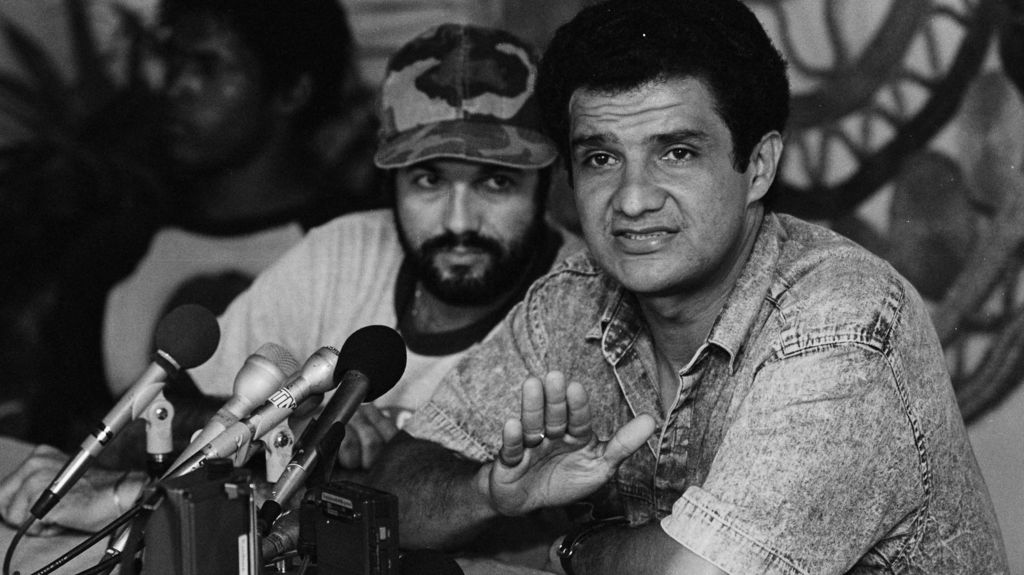
The death of Brooklyn Rivera, a prominent Nicaraguan indigenous rights leader and founder of the nation’s key indigenous movement Yatama, while in the custody of President Daniel Ortega’s authoritarian government has triggered widespread international condemnation over ongoing human rights abuses in the Central American nation. The 73-year-old activist, who spent nearly three years arbitrarily detained by the regime, died following progressive physical and neurological decline tied to a previous COVID-19 infection, Nicaragua’s Ministry of Health confirmed Sunday.
Opposition media reports have highlighted disturbing irregularities surrounding Rivera’s death: the Ortega administration waited 15 hours to announce the passing and has refused to hand Rivera’s remains over to his grieving family. Rivera first fell into detention in September 2023 when he returned to his Nicaraguan home, but the regime only acknowledged holding the activist more than a year later, after sustained diplomatic pressure from the international community. No updates on his health were provided until earlier this week, when officials confirmed he had been hospitalized in Managua, the nation’s capital, since March.
According to government statements, Rivera suffered from multiple severe, life-threatening conditions including cerebral edema linked to serious neurological damage, respiratory infection, and renal failure. The Ministry of Health also released an image of the emaciated activist, lying semi-conscious in a hospital bed with a tracheal ventilation tube. News of his declining health triggered a last-minute wave of global calls for his immediate and unconditional release, all of which went unanswered by the Ortega administration.
A veteran of Nicaraguan politics, Rivera first rose to prominence in the 1980s when he led an indigenous militia that aligned with the Contras to oppose Ortega’s Sandinista revolutionary government, a lifelong mission advocating for indigenous territorial autonomy across the country. He went on to serve four terms in Nicaragua’s National Assembly and held the post of autonomous development minister during the 1990s. After Ortega returned to national power in 2007, Rivera’s Yatama party briefly aligned with the ruling regime, but the party was banned from participating in national elections just one month after Rivera’s 2023 detention.
International and regional actors have rapidly condemned Rivera’s death and placed direct blame on the Ortega government for his passing. The U.S. Department of State called Rivera’s detention “unjust imprisonment” and argued the health ministry’s statement amounted to a deliberate attempt to cover up the regime’s role in the activist’s cruel treatment and eventual death. “This repression, violence and lack of humanity is abominable,” the State Department noted in its official statement.
Prior to Rivera’s death, Amnesty International’s regional spokesperson César Marín had warned that the activist’s rapidly declining health in state custody proved he faced extreme and avoidable risk, repeating longstanding demands for his immediate release. Nicaraguan human rights activist Bianca Jagger, speaking to BBC World Service’s *Newshour*, held the Ortega regime directly responsible for Rivera’s death, noting he was far from the first political dissident to die in state custody under the authoritarian government.
Local indigenous organizations from Rivera’s ancestral homeland of Moskitia also issued a scathing rebuke of the regime. The Indigenous Youth Association of Moskitia expressed “profound indignation at the inhuman, cruel and unjust treatment he endured in his final years.” The organization emphasized that holding an elderly person in detention for years without due process or adequate medical care violates every core principle of human rights, adding that Rivera’s passing in these circumstances will leave a lasting legacy of pain and sustained demands for truth, justice, and reparations.
The Inter-American Legal Assistance Center for Human Rights, an Argentina-based NGO supporting victims of Ortega’s repression, joined the condemnation, calling for all officials responsible for Rivera’s detention and death to face full criminal accountability. Since Ortega and his wife Vice President Rosario Murillo consolidated absolute control over Nicaragua following his 2007 return to power, their administration has faced persistent global criticism for widespread authoritarian tactics, violent crackdowns on political dissent, and systematic censorship of independent media. Rivera is now one of a growing number of political dissidents to die while in state custody under the Ortega regime.