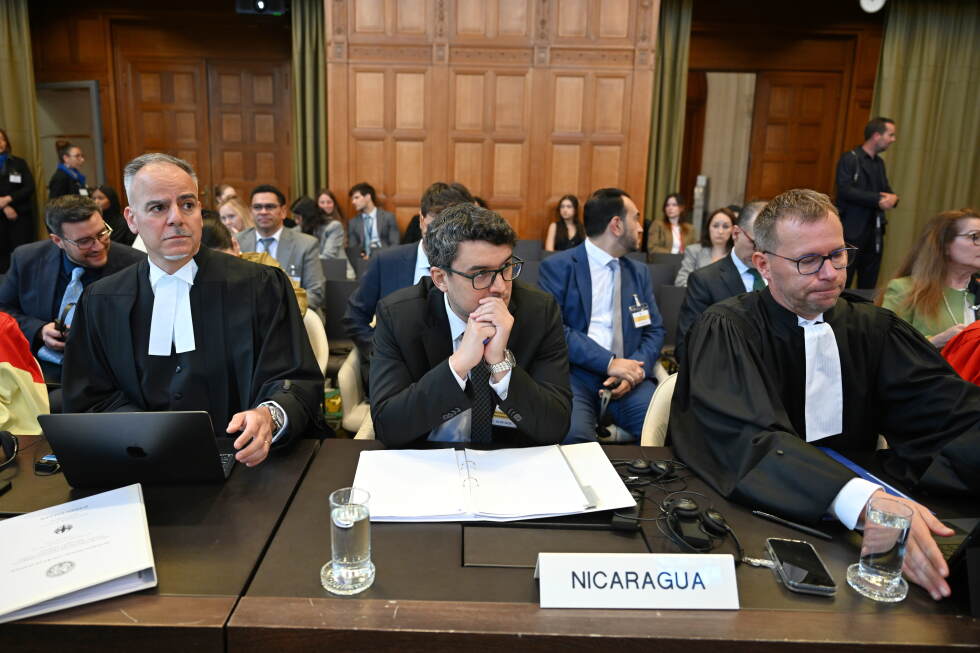
THE HAGUE, Netherlands — In landmark proceedings opening Tuesday at the International Court of Justice (ICJ), the United Nations’ highest judicial body for state-to-state disputes, Nicaragua has leveled a serious legal accusation against Germany: that Berlin violated the Genocide Convention by supplying Israel with weapons deployed in its ongoing military campaign in Gaza.
Nicaragua’s legal team argued before the court that Germany’s provision of arms and broader military backing to Israel amounts to active facilitation of potential acts of genocide in the Gaza Strip, a clear violation of binding international law. Germany has forcefully rejected all claims brought forward in the case.
While the legal dispute directly targets Germany’s military support policies, it indirectly puts the spotlight on Israel’s 10-month military operation in Gaza, launched in response to Hamas’ deadly October 7, 2023, cross-border attacks that killed roughly 1,200 people, mostly civilians, and took around 250 hostages. Israel is not a participating party in these proceedings, and has repeatedly and emphatically denied that its military actions in Gaza constitute genocide.
These preliminary hearings are focused not on the substance of Nicaragua’s genocide allegations, but rather on a threshold question: does the ICJ hold jurisdiction to hear the case at all? This legal action marks the second time in less than a year that a state has brought a Gaza-related genocide case before the ICJ. In 2023, South Africa first filed a similar direct genocide case against Israel, setting off a global wave of legal and political debate over the conduct of the war.
Nicaragua’s longstanding ideological and political ties to Palestinian causes stretch back to the 1979 Sandinista revolution, when the movement received support from Palestinian organizations. That historical connection frames Nicaragua’s decision to bring this case. Addressing the panel of ICJ judges, Carlos José Argüello Gómez, Nicaragua’s lead legal counsel, emphasized that Germany could not plausibly claim ignorance of the risks tied to its arms transfers. “It is impossible that with the type of political, commercial and military relations of Germany with Israel, they could not be aware, or normally should have been aware, of the serious risk that acts that could amount to genocide were being committed by Israel,” Argüello Gómez told the court.
Germany has maintained unwavering, staunch support for Israel for decades, and stands as the world’s second-largest supplier of military equipment to Israel, trailing only the United States. On Monday, one day before Nicaragua opened its arguments, Germany’s legal team urged the court to dismiss the case entirely, arguing that it was filed improperly under ICJ rules. Under standard court procedure, states are expected to pursue bilateral negotiations to resolve disputes before initiating formal litigation. “Nicaragua’s conduct indicates that it was not interested in hearing Germany’s view on its allegations, but simply in bringing Germany before this court,” Julia Monar, Germany’s lead lawyer, told judges.
Nicaragua’s legal team pushed back against this claim, pointing to official correspondence sent to Germany’s foreign ministry outlining the dispute and public press releases that put Berlin on notice of Nicaragua’s concerns ahead of the filing. The ICJ is expected to issue its ruling on jurisdictional standing later this year. If the court rules in Nicaragua’s favor and allows the case to proceed, full merits proceedings could stretch on for years, legal analysts note.