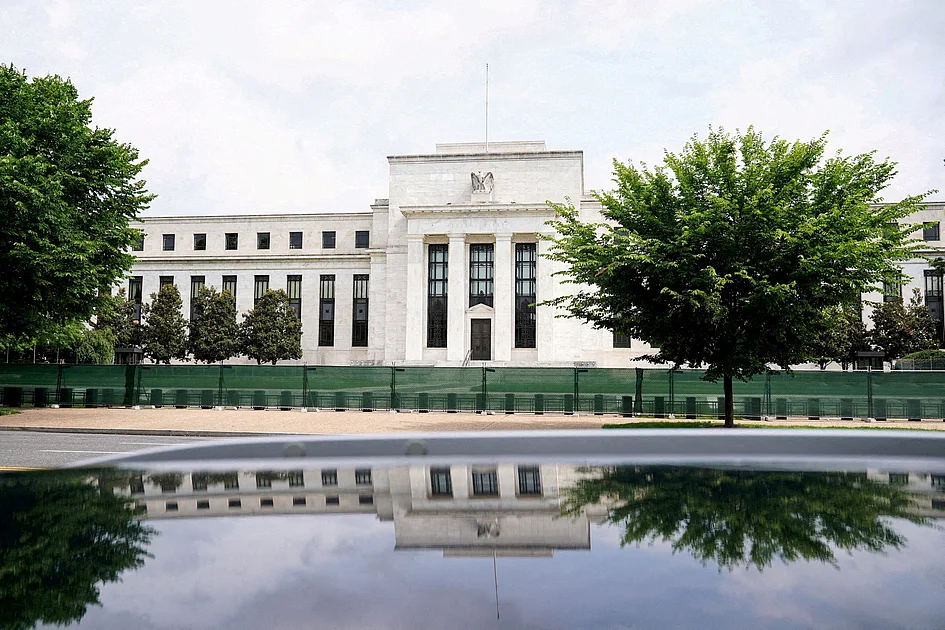
As President Donald Trump’s decision on the next Federal Reserve chair approaches its final stage, the selection process has evolved into what analysts describe as a ‘no-win scenario’ for potential candidates. The president, who elevated Jerome Powell to the position in 2017, has expressed clear regret about that decision and now seeks a more compliant successor who will implement his preferred monetary policies.
The contest has narrowed to two primary contenders: Kevin Hassett, Trump’s longtime economic adviser and director of the White House National Economic Council, and Kevin Warsh, a former Fed governor who nearly secured the position during Trump’s first term. Both face significant challenges regarding their perceived independence and credibility.
Financial experts warn that any chair perceived as beholden to presidential influence risks undermining public confidence in the Fed’s decision-making process. Such erosion of trust could paradoxically lead to higher borrowing costs—the exact opposite outcome Trump desires from his selection.
Andy Laperriere of Piper Sandler captured the dilemma starkly: ‘Anyone who gets the job is damaged goods. You’re either going to be the guy who succeeds in getting what the president wants, which will not bode well for your treatment in the history books, or you’re going to be the guy who doesn’t get what the president wants, and he’s going to probably turn on you.’
The selection process has taken unexpected turns in recent weeks. While Hassett initially appeared to be the frontrunner, Trump’s recent meeting with Warsh and praise for his qualifications has reintroduced uncertainty. Additionally, the president met with current Fed governor Christopher Waller, who is viewed as a strong defender of the institution’s independence but remains a long-shot candidate.
Hassett has attempted to address concerns about his independence, stating in a recent CBS News interview that while he would listen to Trump’s opinions on interest rates, the president would have ‘no weight’ on final decisions. However, market reactions suggest Wall Street remains skeptical, with long-term Treasury yields rising since Hassett emerged as the likely pick.
Warsh presents his own complications, having only recently adopted the low-interest-rate position favored by Trump. His historical warnings about inflation and criticism of the Fed’s bond-buying programs contrast sharply with the president’s current preferences.
The broader context includes Trump’s aggressive efforts to influence Fed policy since returning to office, including attempts to remove governors and publicly criticize Powell. These actions have raised fundamental questions about the institution’s independence, with a pending Supreme Court case regarding the president’s authority to fire Fed officials potentially reshaping the central bank’s operational freedom.
As Ellen Zentner of Morgan Stanley Wealth Management noted, the next chair will face unprecedented pressure: ‘Will the new chair be just as unflappable as Chair Powell and be able to cut through the criticism and make the decisions that are best for the economy and its people? That is the greater test of a Fed chair than if they can please the president.’