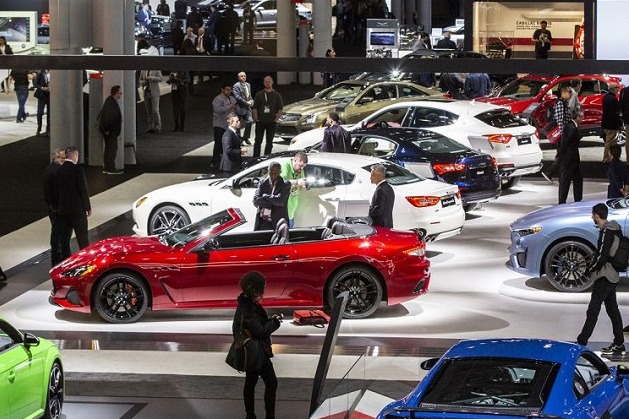
The 2026 New York International Auto Show kicked off Wednesday at Manhattan’s Javits Center, bringing together automakers from every corner of the globe to unveil their latest cutting-edge vehicle models and concept designs, with electric vehicle innovation taking center stage. The 10-day event, open to the public through April 12, opens against a tense backdrop for the U.S. electric vehicle market: overall EV sales have slumped and consumer demand remains stagnant, following the federal government’s elimination of the popular $7,500 electric vehicle tax credit at the end of last year.
Even as U.S. industry stakeholders work to navigate these ongoing headwinds, a growing consensus has emerged among show attendees: Chinese electric vehicle manufacturers have cemented their growing global influence and are reshaping the future of the international auto sector.
Many industry leaders argued that opening the U.S. market to Chinese EV brands would foster healthy, productive competition that pushes all manufacturers to innovate. Jens Sverdrup, chairman and chief commercial officer of Denmark-based luxury hypercar maker Zenvo Automotive, shared his positive views of Chinese EV brands in an interview with China Daily on the show floor.
“Competition is good. We see plenty of Chinese brands in Europe and they’re really, really good,” Sverdrup said. “A brand like BYD, every time I see one, I’m impressed by the build, quality, you know, they drive well — they definitely have a sort of a head start in terms of efficiency and production.”
Sverdrup was at the show showcasing Zenvo’s latest offering: the $3 million Aurora, a light blue V12 hybrid hypercar crafted with the brand’s signature Danish design precision. For the small Danish manufacturer, overseas markets are the backbone of its business: at least 60 percent of all Zenvo vehicles are sold to customers in the U.S. (primarily in California), with the remainder going to buyers across Europe and Asia.
While Sverdrup highlighted the unique appeal of Zenvo’s handcrafted luxury vehicles, he emphasized that Chinese-made EVs have earned their widespread global popularity through consistent quality and innovation. Instead of erecting trade barriers to block Chinese EVs, he argued, global markets should embrace competition to drive progress. “Instead of protecting ourselves, we should just not get in the way of progress, and we should actually embrace the Chinese, and just try to do as good or better, right? Competition is good. And they are great cars, you know, like there’s nothing wrong with any of them. I’m thoroughly impressed,” he added.
The event also included a panel of U.S. auto industry experts, who called on federal policymakers in Washington to implement more consistent, stable regulatory and policy frameworks to support long-term growth of the domestic auto sector. Multiple attendees echoed a shared sentiment: the entire global automotive ecosystem benefits from open, inclusive participation from all major manufacturing nations.
Trade policy for Chinese EVs remains in flux in the U.S. In 2024, former President Joe Biden implemented a sharp tariff hike, raising duties on imported Chinese electric vehicles to 100 percent in a move widely interpreted as a preemptive measure to block Chinese brands from expanding into the U.S. market. Even before the tariff increase, Chinese EVs held only a tiny share of the U.S. market, but the higher duties, paired with new federal restrictions on connected vehicle technology, have effectively eliminated any near-term path for major Chinese market entry.
Current U.S. President Donald Trump has signaled a potential shift in policy, saying in a January speech at the Detroit Economic Club that he would allow Chinese automakers to access the U.S. market over the next two years, provided they build vehicles in U.S. factories using American labor.
Alongside the discussion of global EV policy, major global automakers used the New York show to celebrate milestones and debut new offerings. U.S.-based Ford Motor Company marked three decades of its popular full-size Expedition SUV with a special 30th anniversary limited-edition 2027 model, featuring a unique tricolor iridescent paint originally developed for a Mustang performance variant. Since the Expedition first launched in 1996, Ford has sold nearly 3 million units of the full-size SUV globally. Mike Levine, Ford’s North America product communications director, noted that China remains a critical overseas market for the automaker, which operates Ford China with headquarters in Shanghai.
South Korean automaker Hyundai, which is celebrating 40 years of operations in the U.S. market, used the show to unveil its new Boulder Concept, a rugged off-road SUV designed for outdoor enthusiasts. Jose Munoz, Hyundai’s president and CEO, emphasized that rebuilding consumer confidence remains the top priority for the brand as it navigates current market headwinds.
Beyond industry displays, the show also drew celebrity car enthusiasts: Korean-American actor Sung Kang, best known for his role as Han Lue in the *Fast & Furious* film franchise, was on hand promoting his upcoming independent film *Drifter*, a car-focused project he wrote, directed, and stars in.