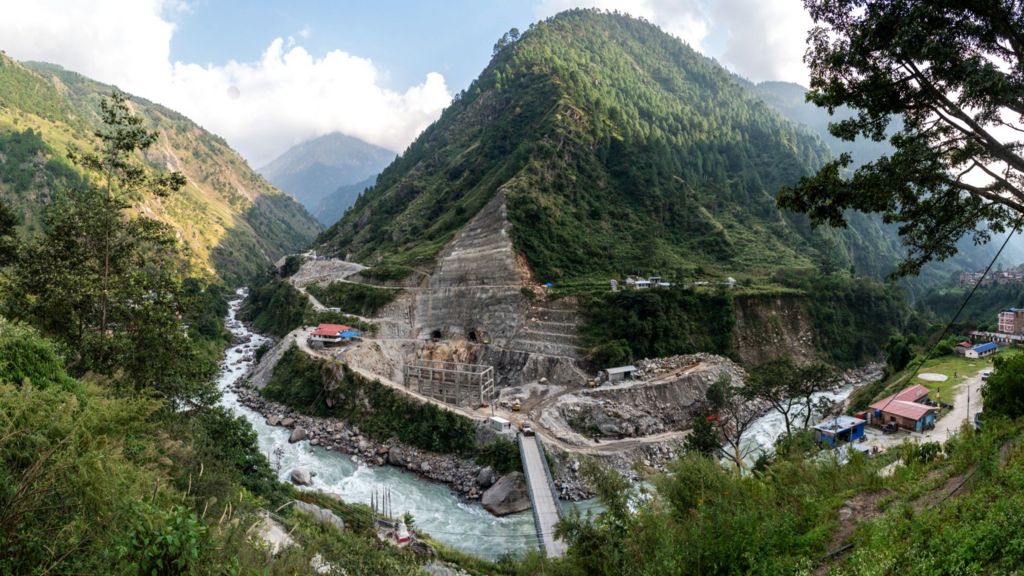
Eight years ago, Nepal grappled with crippling energy insecurity: just two-thirds of its population had access to electricity, and connected homes endured up to 16 hours of blackouts daily. Through aggressive expansion of its hydropower sector, paired with anti-corruption reforms and strategic seasonal energy imports from India, Nepal pulled off a remarkable energy turnaround by 2018, delivering 24/7 power to nearly the entire country.
Today, Nepal’s energy sector is almost entirely powered by the fast-flowing glacial rivers of the Himalayas, with 225 operational hydropower plants holding 3,900 megawatts of installed capacity—enough to power 3 million households simultaneously. Hundreds more projects are under construction or planned, and the nation earns nearly $200 million annually exporting surplus clean electricity to neighboring India and Bangladesh. This natural advantage, however, has turned into a critical vulnerability as climate change rapidly reshapes the Himalayan landscape, where temperatures are rising 50% faster than the global average.
Last week’s catastrophic flash floods on the Nepal-Tibet border laid bare this existential risk. The disaster, which preliminary investigations trace to a collapsed glacial formation and bedrock collapse, has killed more than 1,300 people and left thousands more missing. Entire villages were wiped off the map, and 12 hydropower plants in the Trishuli River basin—including major international investment projects—sustained severe damage, knocking out more than 10% of Nepal’s total electricity generation capacity. Plant operators say it remains unclear whether any of the damaged facilities can be restored to service.
The Nepal Electricity Authority (NEA), which owns six of the damaged plants, has moved to reassure domestic consumers that current power supplies remain adequate. But NEA spokesman Rajan Dhakal acknowledges that the rising frequency of climate-linked disasters has forced a long-overdue reckoning: “The time has come for a rethink of our hydropower policy.”
Most of Nepal’s existing and planned hydropower projects are built high in the Himalayan mountains, relying on fast-flowing currents without large water storage systems. This design keeps construction costs low but leaves infrastructure extremely vulnerable to glacial outburst floods and flash floods. Between 2018 and 2024, more than 90% of all disaster events recorded in Nepal were climate-related, a trend that has accelerated in recent years: the Trishuli River basin has already been hit by two major flood events in the past two years, first in 2024 from a cloudburst and again in 2025 from a glacial lake outburst in Tibet that killed 11 people and closed a key Nepal-China border crossing for six months.
Even with that history of hazard, critics say project planners and international lenders failed to take adequate preventive action. The $647 million Upper Trishuli-1 project, one of Nepal’s largest foreign direct investment ventures backed by the Asian Development Bank and International Finance Corporation, was all but destroyed in the latest floods. Another major project, Upper Trishuli 3A, funded by China’s Export-Import Bank, also suffered severe damage. Himanshu Thakkar, coordinator of the South Asia Network on Dams, Rivers & People, says international lenders were fully aware of the extreme risks but ignored repeated warnings and failed to implement stringent safety measures.
“Their own reports repeatedly highlighted it. But they did not take any preventive steps, did not demand stringent checks and balances, nor were they prepared for a calamity they knew could occur,” Thakkar says.
Dhakal of NEA concedes that even when climate risks were correctly assessed, hydropower plant designs were not adjusted to account for them: “Clearly we will need to improve in the way we build and operate our hydropower plants.”
The conversation around rethinking Nepal’s energy strategy has split stakeholders into two broad camps, though all agree that change is needed. One path, proposed by the NEA, is shifting to reservoir-based hydropower projects that do not need to be sited in high-risk mountain areas, allowing for controlled water storage and release. But this approach carries steep economic and environmental costs that could slow Nepal’s energy expansion.
Many energy and climate experts argue the country needs to move beyond overreliance on hydropower and diversify into wind and solar energy. A report from a German aid agency found Nepal’s total technical potential for solar power is roughly 10 times greater than its hydropower potential. “We should not be putting all our eggs in one basket in these dangerous times,” says Kushal Gurung, founder of clean tech firm WindPower Nepal. “We need to seriously embrace other alternatives as well, like solar and wind. And for that we will need to revise our energy policy that is at the moment very pro-hydropower.”
Vivek Shastry, a researcher at Columbia University’s Center on Global Energy Policy, echoes this view, noting that adding wind and solar capacity acts as a built-in resilience strategy that can prevent widespread system failure if a major hydropower facility is knocked offline.
Other analysts note that while diversification makes sense, hydropower will remain Nepal’s core competitive advantage in South Asian energy markets for the foreseeable future. “While there is untapped capacity in wind and solar, hydropower really is the one that gives Nepal massive competitive advantage vis-a-vis its South Asian neighbours,” says Puspa Sharma, a senior research fellow at the National University of Singapore’s Institute of South Asian Studies.
The financial toll of rising climate disasters is already hitting Nepal’s private hydropower sector. Over the past three years, insurers have paid out roughly $40 million in flood damage claims for more than 20 privately owned plants, and insurance premiums have risen so sharply that many operators say doing business is becoming unfeasible.
Beyond Nepal’s borders, the disaster highlights the global inequity of climate change: Nepal is responsible for a tiny fraction of the greenhouse gas emissions driving glacial melt, yet it faces disproportionate climate risk. Manjeet Dhakal, a member of Nepal’s UN climate delegation, says climate risks are cross-border and cannot be managed by Nepal alone.
“Nepal is among the least responsible for the greenhouse emissions that led to these exacerbated risks. Ironically, our hydropower industry is an attempt to reduce our already minimal emissions… We cannot, and should not, be made to respond to these risks alone,” he says, calling for global cooperation on shared data collection, impact assessment, and cross-border early-warning systems.