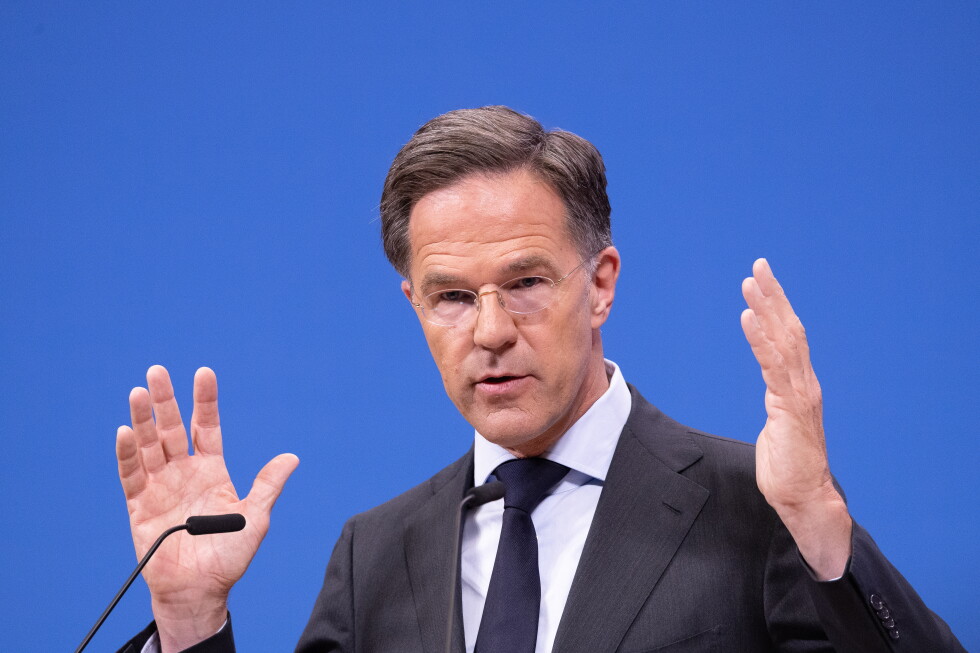
BRUSSELS — Ahead of a pivotal gathering of NATO defense ministers that he will chair this week, alliance Secretary-General Mark Rutte has sought to ease allied anxiety over the Trump administration’s decision to scale back the U.S. military contribution to collective defense contingency plans for Europe.
On June 3, the Pentagon notified NATO partners that the United States would no longer commit a suite of high-value military assets — including an aircraft carrier and its accompanying support vessels, aerial refueling tankers, and dozens of fighter jets — to European defense in the event of a crisis triggered under Article 5 of NATO’s founding charter. In response to this shift, NATO’s American supreme allied commander has begun developing alternative contingency plans to rebalance alliance defense posturing across the continent.
Rutte was quick to frame the adjustment as a procedural update to planning, not a drawdown of existing U.S. military presence on the continent. “This is not about where forces and assets are currently located,” Rutte told reporters Wednesday, clarifying that the change only revises commitments for when collective defense plans are activated. “It’s about who would do what if our defense plans were activated. So, let’s say in case of an Article 5 situation.”
Article 5, the cornerstone of NATO’s collective security guarantee, binds the alliance’s 32 member states to treat an armed attack on one ally as an attack on all. While the provision does not legally mandate any member to deploy military force, a broad majority of allies would typically contribute to a collective response. The U.S. currently maintains the largest military force and most expansive defense capabilities across the alliance, and the Trump administration has confirmed it has no plans to withdraw U.S. nuclear weapons deployed in Europe — a core component of NATO’s nuclear deterrence strategy. The shift in commitments comes as the U.S. reorients its global military focus to counter growing strategic competition from China in the Indo-Pacific region.
NATO’s core operational framework for coordinating collective defense, the NATO Force Model, outlines which assets from member states will be made available to alliance commanders across the first six months of a conflict, spanning peace, crisis, and full war. According to Rutte, alliance commander U.S. General Alex Grynkewich has assessed that existing and upcoming capabilities from other NATO member states are largely sufficient to fill the gaps created by the U.S. drawdown in planning commitments. “The overall picture is looking good,” Rutte said.
Even so, some European allies have expressed surprise at the range of assets being withdrawn from U.S. commitments, as many of these capabilities are already in short supply across European armed forces. The Trump administration has set a deadline for allies to outline their plans to replace the missing assets or adjust defense planning to account for the gap in advance of the July 7-8 NATO summit scheduled to be held in Ankara, Turkey. Ahead of the summit, European and Canadian allies are expecting to receive more detailed clarification of U.S. plans from U.S. Defense Secretary Pete Hegseth at this week’s Brussels meeting, after Hegseth skipped the alliance’s previous defense minister gathering in February.
The recent policy shift has already sown confusion among allies. Last month, Trump announced plans to deploy an additional 5,000 U.S. troops to Poland, a move that bewildered alliance partners even as his administration continues to reiterate its goal of reducing, not expanding, the overall U.S. military footprint in Europe.
Separate from the changes to collective defense planning, additional U.S. troop drawdowns are already underway in the Balkans. Last Friday, NATO military headquarters announced it would downsize the alliance’s Kosovo Security Force (KFOR), with U.S. troops expected to make up a significant portion of the departing personnel. Currently, 590 U.S. troops are deployed with KFOR, making the U.S. the second-largest contributing nation to the mission behind Italy, which deploys 907 personnel. The U.S. also maintains a contingent of Black Hawk helicopters at its large Camp Bondsteel base in Kosovo.
KFOR first deployed to the region in 1999 to maintain peace between Kosovo and Serbia after the end of the Kosovo War. At its peak, the mission counted more than 50,000 personnel across all contributing nations, and force levels have been gradually reduced for decades as regional tensions eased. In 2023, however, NATO deployed an additional 1,000 troops to the region after a new wave of violent unrest erupted. On Wednesday, Rutte confirmed the latest drawdown will see more than 1,000 total personnel depart KFOR, consistent with Grynkewich’s assessment that security conditions in Kosovo are now stable enough to “optimize” the mission’s size.