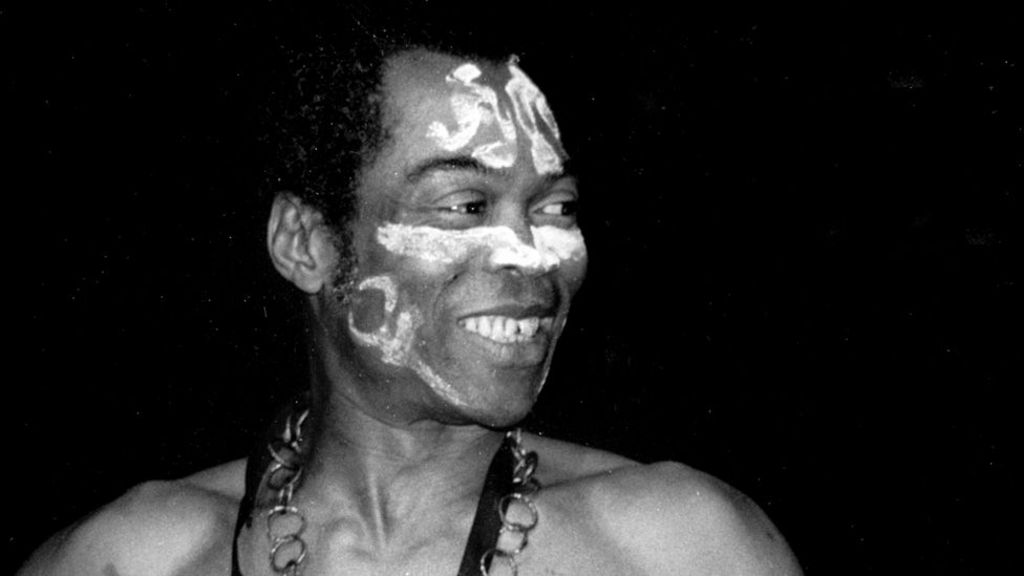
In a landmark recognition of African musical excellence, the Recording Academy will posthumously honor Nigerian icon Fela Kuti with the Grammy Lifetime Achievement Award—marking the first time an African artist receives this prestigious accolade. The announcement comes nearly three decades after the Afrobeat creator’s death in 1997, signaling a transformative moment in the global music industry’s engagement with African artistry.
Fela Kuti’s musical legacy, characterized by its fusion of West African rhythms, jazz, and politically charged lyricism, has experienced a global resurgence through the contemporary Afrobeats movement. His son, musician Seun Kuti, described the recognition as “a double victory” that brings “balance to the Fela story.” Longtime manager Rikki Stein echoed this sentiment, noting that while “Africa hasn’t in the past rated very highly in their interests,” the Grammys’ evolving perspective reflects meaningful progress.
The honor arrives alongside the Grammys’ introduction of the Best African Music Performance category in 2024, acknowledging the genre’s explosive global popularity. Nigerian superstar Burna Boy, whose work carries clear influences of Fela’s pioneering sound, also receives a nomination in the Best Global Music Album category this year.
Beyond his musical innovations, Fela Kuti emerges as a figure of profound cultural and political significance. His performances at Lagos’ legendary Afrika Shrine blended musical spectacle with political rally and spiritual ceremony, creating immersive experiences where “nobody applauded” because “the audience wasn’t separate—they were part of it,” according to Stein.
Fela’s activism came at tremendous personal cost. His 1977 album “Zombie,” which satirized Nigeria’s military regime, triggered a violent raid on his Kalakuta Republic compound that resulted in his mother’s death from sustained injuries. Rather than retreat, Fela transformed his grief into protest, delivering her coffin to government offices and releasing the incendiary “Coffin for Head of State.”
His musical evolution was shaped by West African cultural exchange, particularly Ghana’s highlife tradition. Artists like E.T. Mensah and Ebo Taylor provided the melodic foundation that Fela would fuse with jazz, funk, and Yoruba rhythms to create Afrobeat’s distinctive sound.
Today, Fela’s influence resonates through artists from Burna Boy to Kendrick Lamar and Idris Elba, who recently curated a vinyl box set of Fela’s work. Elba has compared his unique artistry to icons like Sade and Frank Sinatra while emphasizing its irreducible originality.
The award ceremony will see Fela’s family, friends, and collaborators accepting the honor on his behalf—not merely as a personal tribute but as recognition of what Seun Kuti describes as a broader human tapestry: “The global human tapestry needs this, not just because it’s my father.”