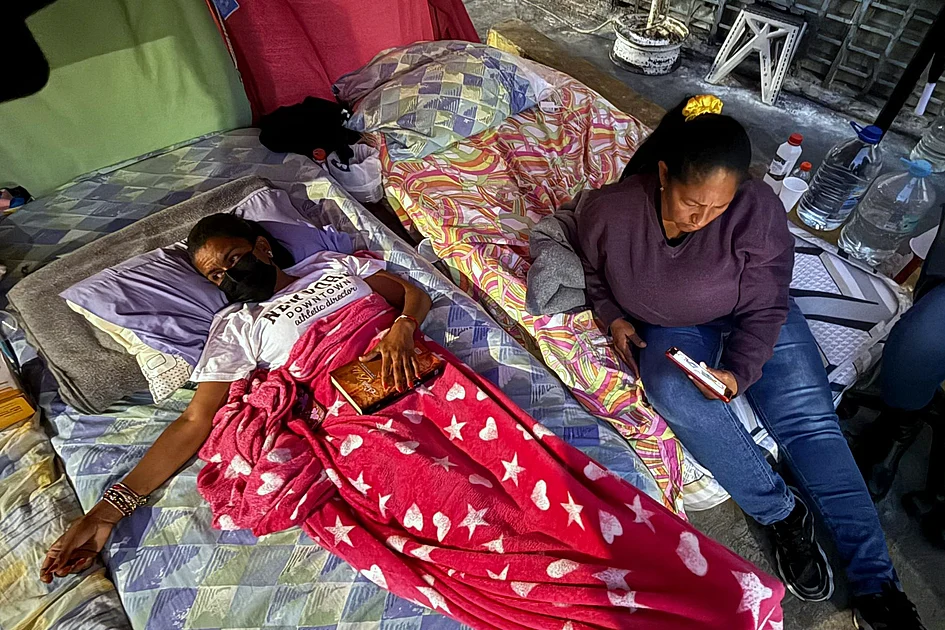
In a significant demonstration of protest, more than 200 political prisoners in Venezuela have initiated a hunger strike at Rodeo I prison near Caracas, demanding inclusion in the newly enacted amnesty legislation. The strike, which commenced on Friday night, represents a direct challenge to the limitations of the reform measures promoted by the United States following the dramatic capture of former president Nicolás Maduro on January 3rd.
The amnesty law, ratified by Venezuela’s congress on Thursday, has faced substantial criticism for its exclusionary provisions. Notably, the legislation does not apply to cases involving military personnel or terrorism charges—precisely the categories encompassing most detainees at Rodeo I. This has left approximately 214 individuals, including both Venezuelan citizens and foreign nationals, without the prospect of release under the current framework.
Family members of the prisoners have confirmed the widespread participation in the protest action. Yalitza Garcia, mother-in-law of detained Argentine police officer Nahuel Agustin Gallo—who faces terrorism accusations—verified the scale of the hunger strike. Similarly, Shakira Ibarreto, daughter of a policeman arrested in 2024, emphasized that the exclusions within the amnesty law prompted the drastic measure.
The International Committee of the Red Cross (ICRC) conducted a landmark visit to Rodeo I on Sunday, marking the first time the organization has been granted access to the facility. Filippo Gatti, ICRC’s health coordinator for Venezuela, characterized the visit as ‘a first step’ toward improved humanitarian oversight.
Interim leader Delcy Rodriguez, who engineered the amnesty under Washington’s pressure following Maduro’s capture, has faced opposition criticism over the legislation’s selective application. The law explicitly excludes those accused of ‘promoting or facilitating armed or forceful actions’ against Venezuela’s sovereignty—charges that have been leveled against Nobel Peace Laureate Maria Corina Machado.
Despite these exclusions, the amnesty has already benefited thousands. Legislative officials reported that over 1,500 political prisoners have applied for amnesty, with hundreds already released prior to the bill’s formal approval. On Sunday, five individuals were released from Rodeo I to emotional reunions with families, while the NGO Foro Penal documented 23 total releases nationwide.
The situation underscores the complex transition underway in Venezuela following Maduro’s extradition to the United States, where he and his wife await trial on drug trafficking charges. While the amnesty law represents a significant step toward addressing human rights concerns, the ongoing hunger strike highlights the limitations of current reforms and the persistent challenges in achieving comprehensive justice for all political detainees.