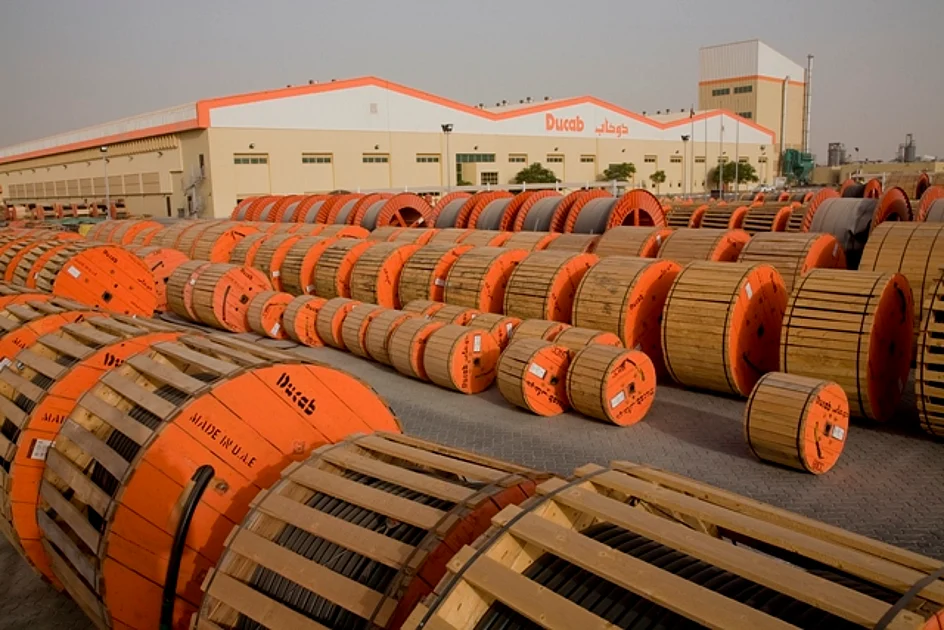
The Middle East’s wires and cables market is poised for significant growth, with projections indicating a surge from $23 billion to over $32 billion within the next five years. This expansion is fueled by a robust infrastructure boom, encompassing real estate, renewable energy, industrial development, and electrification initiatives across the region. The UAE and Saudi Arabia are leading this charge, with the UAE accelerating advancements in real estate, clean energy, and manufacturing, while Saudi Arabia’s mega-projects like NEOM, The Line, and Qiddiya are driving unprecedented demand for power cables and specialized conductors. The International Energy Agency underscores the importance of grid modernization and transmission upgrades in achieving the region’s renewable energy goals, further boosting the need for high-performance cables. Globally, the wires and cables sector is expected to reach $281 billion by 2030, growing at an annual rate of 4.1%, driven by urbanization and the energy transition. In the Gulf, investments are even more substantial, with $147 billion in construction projects underway and $60 billion earmarked for renewable energy over the next five years. Additionally, rail and transport upgrades could require over $6.6 billion by 2033, while charging infrastructure and e-mobility development may attract between $10 billion and $20 billion. Regional manufacturers like Ducab in the UAE and Bahra Electric in Saudi Arabia are expanding their capacity and product lines to meet the rising demand for specialized cables used in solar plants, offshore wind farms, hydrogen projects, high-voltage transmission corridors, and smart mobility systems. Industry leaders emphasize the importance of higher safety standards, fire-resistant materials, efficiency gains, and sustainability certifications. Daniel Ryfisch, project director at Messe Dusseldorf, highlights the Middle East’s wires and cables sector as being on the cusp of a decade-long expansion, driven by ongoing energy transition efforts, electrification, and large-scale urban development. Manufacturers are not only scaling production for domestic markets but also expanding their export reach into Africa, Asia, and Europe. Several leading Gulf producers are set to participate in the wire & Tube trade fairs in Düsseldorf in April 2026, which will serve as a global networking and sourcing platform.